Chinese EV Tariffs Canada Change the Global EV Market
The phrase Chinese EV tariffs Canada has become one of the most talked-about topics in North American automotive circles — and for good reason. In early 2026, Canada made a decision that sent shockwaves through the global electric vehicle industry: it dramatically reduced the tariff wall on Chinese-made electric vehicles, opening a controlled but real path for Chinese automakers to reach Canadian consumers for the first time.
This isn’t just a trade story. It’s a story about the future of affordable transportation, the reshaping of global supply chains, and the way one country’s policy choice can ripple across an entire continent. Whether you’re a car buyer, an investor, a policy watcher, or simply someone curious about what’s coming to Canadian dealerships, understanding Chinese EV tariffs Canada is essential reading right now.
In this article, we’ll walk through everything you need to know — what the new policy actually says, why Canada made this move, which Chinese brands are likely to arrive first, what certification rules they need to meet, and what it all means for Canadian drivers looking for a more affordable EV. Let’s dive in.
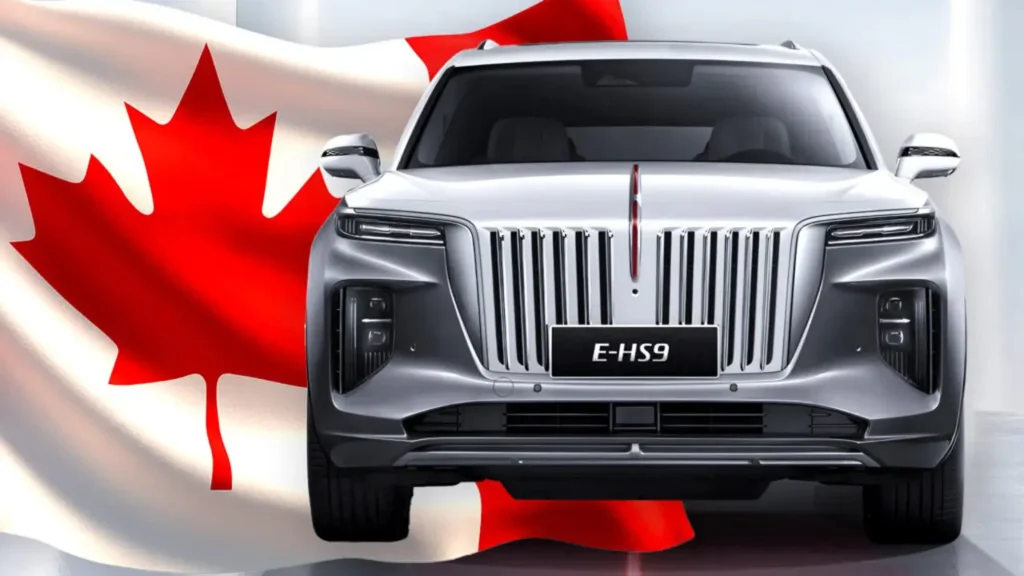
2. Chinese EV Tariffs Canada: What Exactly Changed
If you haven’t been following the Canada EV import tariff story closely, here’s a quick recap of how we got here.
Back in October 2024, Canada followed the lead of the United States and imposed a 100% surtax on Chinese-made electric vehicles. Combined with the existing 6.1% most-favoured-nation (MFN) tariff, this meant Chinese EVs faced a combined import duty of 106.1% — effectively making them too expensive to sell competitively on Canadian roads. The 100-percent-plus levy the government slapped on Chinese EVs in 2024 made direct imports financially impractical.
Then, in January 2026, everything shifted. Canada announced it would allow up to 49,000 Chinese EVs into the Canadian market at the most-favoured-nation tariff rate of 6.1%, exempt from the 100% surtax introduced in October 2024.
The 49,000 units are not a randomly determined figure — they match the volume from the year before the recent trade conflicts over these imports. In other words, Canada is essentially resetting to pre-tariff levels, not opening the floodgates.
The practical mechanics are equally important. The Canadian government began accepting import permit applications for Chinese-made EVs on March 1, 2026, formally launching a quota system. Under the new framework, the first 24,500 vehicles can enter Canada between March 1 and August 31 on a first-come, first-served basis. A second allocation of 24,500 vehicles, plus any unused first-half permits, covers the period from September 1 through February 28, 2027. Import permits are shipment-specific, valid for up to 60 days, and can be filed up to 30 days before a shipment’s expected arrival.
By 2030, Canada will allow 70,000 Chinese vehicles a year, including all-electric, hybrid, and plug-in hybrid models.
Here’s a quick summary of the new tariff structure:
| Parameter | Before (2024) | After (2026) |
|---|---|---|
| Tariff rate (within quota) | 106.1% | 6.1% |
| Annual quota (Year 1) | None (tariff applied to all) | 49,000 units |
| Tariff beyond quota | 106.1% | 100% surtax resumes |
| Quota by 2030 | N/A | 70,000 units/year |
| Vehicle types covered | BEV, PHEV, hybrid | BEV, PHEV, hybrid |
| Permit system | None | First-come, first-served |
3. Chinese EV Market Canada: Why This Market Matters
Understanding Chinese EV market Canada dynamics requires zooming out for a moment. Canada sold approximately 1.95 million new vehicles in 2025, making it one of the larger automotive markets in the Western Hemisphere. Yet its EV segment has been under significant pressure.
The end of the federal Incentives for Zero-Emission Vehicles program in 2025 increased EV prices by roughly 8 to 12 percent. Higher upfront costs slowed demand, and EVs now account for about 9 percent of new vehicle sales, down from 15 percent in 2024.
This decline is a serious policy problem. According to a C.D. Howe Institute policy paper published in November 2025, EVs accounted for only around 9% of total vehicle sales in the first half of 2025, far below the 20% requirement set for 2026 under the federal Electric Vehicle Availability Standard, with an estimated 110,000-unit shortfall even if EV penetration rises to 14% next year.
In short, Canada needs more affordable EVs on the market — and Chinese automakers are the most capable of providing them at scale. By opening the market to innovative EVs from China, the new policy should expand access to lower-cost models and help revive demand.
The broader strategic picture also matters. The agreement also signals an effort to reduce Canada’s dependence on the United States, which is the destination for about 92 percent of Canada’s auto and auto parts exports. By diversifying trade relationships and attracting Chinese joint-venture investment, Canada is hedging against an uncertain North American trade environment.
4. Chinese Electric Cars Canada: The Price Advantage
When people talk about Chinese electric cars Canada, the conversation always comes back to one word: affordability.
Chinese EVs are typically 20 to 30 percent cheaper for comparable range and performance. This isn’t a minor gap. It’s a structural difference that comes from several compounding advantages. Chinese EV makers make significant use of industrial robotics, even to the point of building so-called “dark factories” that can operate with minimal human intervention. Development cycles are also dramatically shorter. From initial concept models to actual factory rollout, BYD takes 18 months — half as long as U.S. and other global automakers.
The result is a lineup of vehicles that simply doesn’t exist in the current Canadian market. Chinese companies produce several sub-$25,000 USD EVs, including the XPeng M03, the BYD Dolphin, and the MG4.
The new Canada-China deal explicitly addresses affordability. A line in the new deal between the two countries states a part of the annual quota will be reserved for vehicles costing less than CAD $35,000 (approximately USD $26,000).
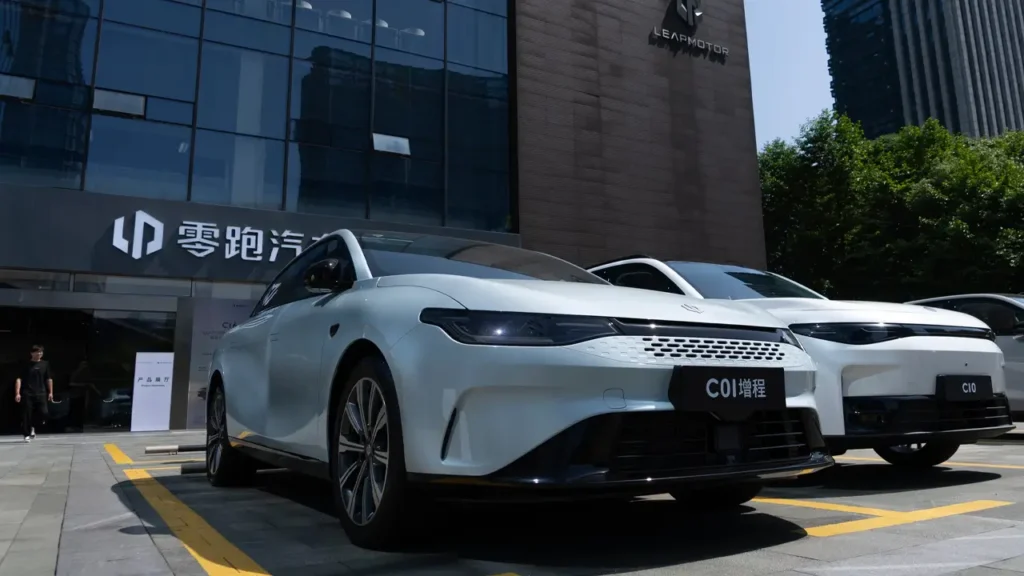
Although details of the agreement are still evolving, the deal earmarks part of the quota for EVs with price tags of $35,000 or less. Industry analysts suggest Chinese automakers will focus on compact and subcompact SUV segments, which together currently make up about half of the Canadian market. The BYD Atto 2, for example, would likely sell in the high $30,000 range. The larger BYD Atto 3, as well as the Leapmotor C10, would likely retail in the low- to mid-$40,000s.
For Canadian buyers who’ve been watching the average new EV price creep well above $50,000, these figures represent a fundamentally different proposition.
5. EV Trade Policy Canada: Political and Economic Background
EV trade policy Canada didn’t develop in a vacuum — it emerged from a complex web of domestic politics, international pressure, and shifting trade alliances.
The original 100% surtax in 2024 was explicitly designed to mirror U.S. trade policy under the Biden administration, which maintained its own 100% tariffs on Chinese EVs. The U.S. maintains its own 100% tariffs on Chinese EVs alongside restrictions banning Chinese-made software and hardware in connected vehicles. U.S. Trade Representative Jamieson Greer called the Canadian agreement “problematic” when it was first announced in January 2026.
Canada’s pivot in early 2026 was partly triggered by retaliation from China. In retaliation for earlier Canadian tariffs, China had imposed duties on more than C$2.6 billion worth of Canadian farm products, contributing to a 10.4% fall in China’s imports from Canada in 2025.
Prime Minister Mark Carney’s January 2026 visit to Beijing — the first by a Canadian prime minister since 2017 — produced the breakthrough. The reduction in import barriers is expected to unlock nearly C$3 billion in export orders for Canadian producers of agricultural and seafood goods. Chinese commerce officials confirmed they are adjusting anti-dumping measures on canola as well as removing certain trade restrictions in response to Canada’s lowering of EV tariffs.
The domestic political reaction has been sharply divided. Ontario Premier Doug Ford has called for a Canada-wide boycott of Chinese EVs, labeling them “spy vehicles” and warning the agreement gives Beijing a “foothold in the Canadian market.” Unifor, Canada’s largest private-sector union, has said the deal “puts Canadian auto jobs at risk.” On the other side, economists and consumer advocates point out that Canadians have been denied access to affordable vehicles for too long, and that competitive pressure from Chinese brands will ultimately benefit the broader market.
6. Chinese EV Brands Entering Canada: Who Might Arrive First
The question everyone in the Canadian automotive world is asking about Chinese EV brands entering Canada is: who gets here first?
The early front-runners are not necessarily the brands most associated with “Chinese EVs” in public discourse. Tesla, along with Volvo and Buick, are already set up to make vehicles that meet Canada’s safety, environmental, and technical standards, giving them an advantage out of the gate. Tesla imported over 44,000 EVs from its Shanghai factory into Canada in 2023 alone, and is widely expected to be among the first to use the new quota permits.
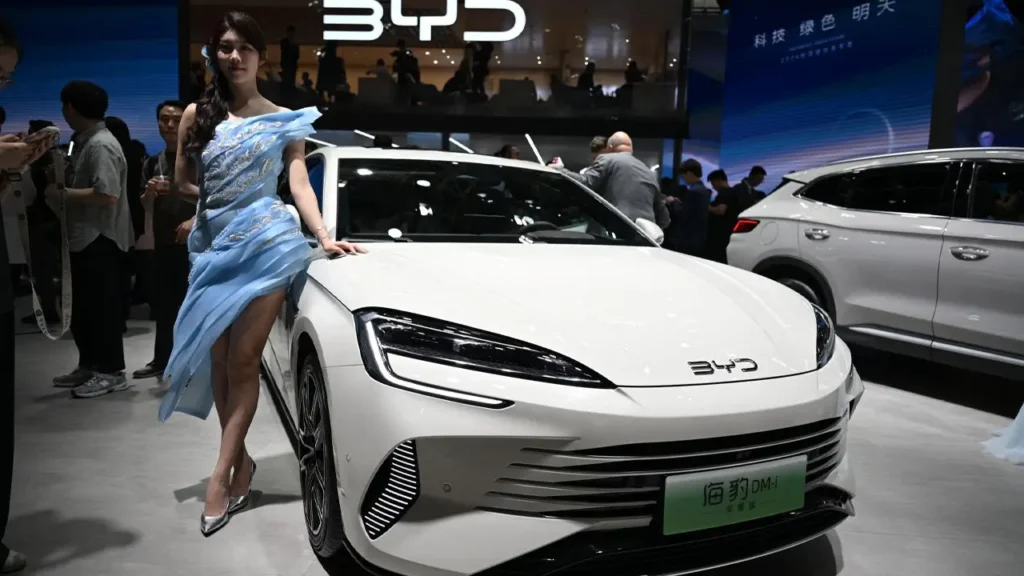
For native Chinese brands, BYD is the strongest contender. BYD enters the new quota regime with a structural advantage built over more than a decade. The company began engaging the Canadian market in 2013 with first road tests in Montreal and established its first Canadian factory in Ontario in 2019, focusing on the assembly of fully electric buses. As of March 2026, BYD has applied to export electric vehicles to Canada under the new 6.1% tariff rate.
SAIC, primarily through its MG brand, would likely take around 20% of the quota, or about 9,800 vehicles annually. MG’s success in Europe, Australia, and Southeast Asia highlights SAIC’s core advantage: decades of joint ventures with Volkswagen and General Motors have ingrained Western compliance, dealer management, and warranty expectations into its operating culture.
Here’s a snapshot of the key brands and their Canadian prospects:
| Brand | Parent Company | Segment Focus | Canada Readiness |
|---|---|---|---|
| BYD | BYD Co. Ltd. | Affordable/mid-range | High — applied for permits March 2026 |
| MG | SAIC Motor | Affordable/mid-range | High — strong EU/AU experience |
| Zeekr | Geely Holdings | Premium | Medium — cold-weather engineering advantage |
| XPeng | XPeng Inc. | Tech/premium | Medium — EU presence, no Canada plans announced |
| NIO | NIO Inc. | Luxury | Low — pricing exceeds affordable quota threshold |
| Chery (Omoda/Jaecoo) | Chery Automobile | Mid-range SUV | Emerging — actively recruiting Canadian staff |
| Polestar / Volvo | Geely Holdings | Premium | High — already CMVSS-certified |
Zeekr is built on Geely’s SEA (Sustainable Experience Architecture) platform, which underpins not just Zeekr but also Polestar and other Geely EVs, giving it access to proven battery thermal management and high-voltage fast-charging systems. Zeekr is engineered for cold-weather resilience and long-distance driving — well suited to Canada’s climate.
7. Canada China EV Trade: What the New Agreement Means
The Canada China EV trade agreement announced in January 2026 is more than just a tariff number — it represents a strategic repositioning of the relationship between the two countries.
According to Canadian officials, the agreement “will drive considerable new Chinese joint-venture investment in Canada with trusted partners to protect and create new auto manufacturing careers for Canadian workers, and ensure a robust build-out of Canada’s EV supply chain.” The import of vehicles is intended to drive further investments in Canada — not only in the sale and maintenance of imported cars but also in production and raw material deals. Canada is rich in raw materials and has access to green energy to enable clean production.
The deal is structured to be mutually beneficial. Canada gets affordable EVs, competitive pressure on existing players, and the prospect of new manufacturing investment. China gets a foothold — however small — in the North American market and the removal of retaliatory measures that had been crippling Canadian agricultural exports.
BYD has already begun evaluating Blade Battery production in Halifax, a step that could lower costs, reduce geopolitical exposure, and strengthen its long-term North American position.
One important note for those watching U.S.-Canada trade dynamics: China’s Foreign Ministry stated that the trade deal with Canada is not intended to target or affect any other nation. Whether Washington accepts that framing is another matter entirely.
8. EV Import Regulations Canada: Certification and Compliance
For any Chinese automaker eyeing the Canadian market, EV import regulations Canada represent the most practical hurdle between a trade deal and actual vehicles reaching consumers.
Canada’s vehicle approval system is governed by the Canadian Motor Vehicle Safety Standards (CMVSS), administered by Transport Canada. Every new vehicle model must demonstrate compliance before it can legally be sold. Vehicles aren’t approved for sale simply because tariffs allow them in. Every new vehicle must comply with CMVSS, and Transport Canada controls how compliance is demonstrated.
The good news for Chinese brands is that the new agreement specifically addresses approval timelines. As part of the updated agreement, Transport Canada will approve new Chinese EV models within eight weeks. This eight-week fast-track commitment is a significant departure from the more open-ended timelines that previously applied.
The Canada Border Services Agency issued a customs notice reminding importers that vehicles must comply with all Canadian safety regulations before hitting the road.
From a safety standards perspective, Chinese EVs are not starting from zero. Most Chinese EV brands now meet or exceed European NCAP and Australian ANCAP safety standards. Vehicles like BYD Seal, MG4, and NIO ET5 have earned strong reliability ratings in international markets. Several models have earned five-star Euro NCAP ratings, including the BYD Seal, MG4, XPeng G9, and Zeekr X and 7X, with strong sub-scores for adult and child protection.
The practical implication is that brands with existing certification in Europe or Australia are far better positioned to obtain Canadian approval quickly than those entering Western markets for the first time.
9. Affordable Chinese EV Canada: The Consumer Perspective
What does all of this mean for the average Canadian driver? When we talk about affordable Chinese EV Canada, we’re talking about a potential shift in the economics of going electric.
When rebates lapsed, annual EV sales declined by more than one quarter, falling from 264,000 in 2024 to 191,000 in 2025. The market is clearly price-sensitive. Canadians want EVs — they just can’t always afford the ones currently on offer.
The good news is that consumer sentiment is shifting in a direction that favors Chinese brands. A Nanos Research Group poll of 1,009 Canadians taken in late January and early February 2026 found that 53% of respondents said it wouldn’t affect their buying decision if an EV were made in China. In fact, 15% said it would make them more likely to buy one.
Canada has also reinstated a purchase incentive to complement the new imports. Canada has reinstated its EV purchase incentive, now called the Electric Vehicle Affordability Program (EVAP). The incentive is CAD $5,000 for pure EVs and CAD $2,500 for plug-in hybrids, granted on vehicles priced under CAD $50,000.
The competitive effect could be broader than just Chinese EVs themselves. A wider set of affordable models should lift demand and, as the customer base expands, strengthen the case for faster charging network expansion. It not only reduces the need for public spending but also reduces the future cost of adoption by putting pressure on incumbents such as Tesla and GM to cut prices to compete with new entrants like BYD.
For budget-conscious Canadians, the prospect of a capable EV in the CAD $35,000–$42,000 range — instead of the current CAD $50,000+ baseline — is genuinely transformative. Even through the narrow slit of Ottawa’s new, low trade quota, Chinese-made cars are likely to speed Canada along the path toward $35,000 electric vehicles.
10. Global Expansion Chinese EV Brands: The Strategic Future
Stepping back from the day-to-day policy details, what does this all mean for the global expansion of Chinese EV brands — and what role does Canada play in the bigger picture?
China’s automotive industry has reached a scale that makes international expansion not just desirable but necessary. Chinese EV manufacturers are eager to sell abroad because their factories can produce far more than the 25 million vehicles they can sell within China each year — perhaps twice as much. Export markets are developing across Western Europe, Southeast Asia, Latin America, and Australia. The largest market where Chinese vehicles — whether gasoline or electric — are not being sold remains North America.
Canada’s new policy creates a unique opening. While the United States maintains its tariff fortress and shows no sign of relaxing it, Canada has deliberately chosen a different path. Canada is quietly emerging as the most realistic entry point into North America for Chinese EV manufacturers. It combines stringent safety and environmental regulations, a consumer base already primed for electrification, and crucially, slightly more regulatory flexibility than the United States.
The strategic logic for Chinese brands is compelling: establish a presence in Canada, build a dealer network, refine North American compliance processes, and create brand awareness — all while the U.S. market remains closed. If and when U.S. policy ever shifts, those brands will already have a North American foothold.
This could help Canada return to its mandate of 50 percent EV sales by 2030 and 100 percent by 2035. The quota system itself is designed to grow: from 49,000 units today to 70,000 by 2030, with the expectation that local joint-venture production will supplement imported volumes over time.
The global picture is already striking. In 2024, China surpassed Japan to become the world’s largest exporter of cars. In Britain, BYD’s share of new car registrations now rivals Germany’s Audi and BMW. Australia, New Zealand, and most of Europe now have established Chinese EV dealerships. Canada is simply the latest — and perhaps most strategically significant — domino to fall.
For Canadian consumers, the message is simple: more choice, more competition, and more affordable EVs are on their way. For Chinese automakers, Canada is not just a new market — it’s the front door to North America.
In Summary
The story of Chinese EV tariffs Canada is one of the most consequential policy developments in the North American automotive sector in years. From the dramatic tariff cut from 106.1% down to 6.1%, to the structured quota of 49,000 vehicles growing to 70,000 by 2030, to the emergence of BYD, MG, Zeekr, XPeng, and others as potential market entrants — Canada is now at the center of a global EV transformation. The Canadian consumer stands to benefit most, with affordable EVs finally moving from theoretical possibility to practical reality.

Discover more from AutoChina
Subscribe to get the latest posts sent to your email.

