Introduction – Why NIO Battery Swap Models Matter
If you’ve been following the electric vehicle world lately, you’ve probably heard a lot about charging speeds, range anxiety, and the race to build better batteries. But NIO — the Chinese premium EV brand that’s been turning heads globally — took a completely different approach. Instead of just making batteries charge faster, they made them swappable. And that one decision has shaped everything about how NIO battery swap models are designed, sold, and experienced.
NIO battery swap models are electric vehicles built from the ground up to support a physical battery exchange system. Rather than waiting at a charging station, NIO drivers pull into a Power Swap Station, and within minutes — literally about three minutes — a fully charged battery replaces the depleted one automatically. No cables, no waiting rooms, no coffee-while-you-wait. Just drive in, swap, drive out.
But the story doesn’t stop there. Behind this technology sits a fascinating financial and structural innovation called Mirattery, and a business model called BaaS — Battery as a Service. Together, these elements transform not just how NIO cars are powered, but how they’re owned and paid for. This article walks you through all of it: the technology, the models, the company structure, and why it matters for anyone thinking about the future of electric mobility.
How NIO Battery Swap Technology Works
To understand NIO battery swap technology, it helps to think about the problem it was designed to solve. Conventional EV charging — even fast charging — takes time. A 30-minute session at a DC fast charger is considered impressive. For many drivers, especially those on long trips or tight schedules, that wait is a genuine barrier.
NIO’s answer was to treat the battery not as a permanent part of the car, but as a replaceable module — almost like a fuel tank that you swap rather than refuel.
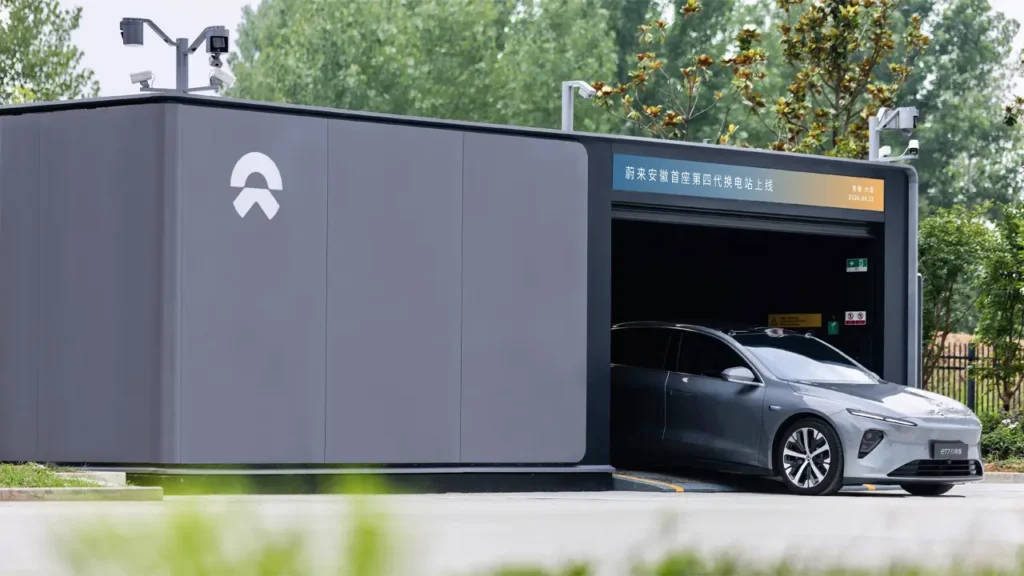
Here’s how NIO battery swap technology actually works in practice. NIO’s Power Swap Stations (PSS) are purpose-built robotic facilities, roughly the size of a large shipping container, that can be installed in parking lots, highway service areas, and urban locations. When a NIO driver pulls in, the automated system takes over completely.
The car drives onto a platform. Robotic arms underneath the vehicle unlatch the depleted battery pack, slide it out, and replace it with a fully charged pack — all without the driver leaving the seat. The entire process takes approximately three minutes, which is comparable to a gasoline fill-up. The station then recharges the swapped-out battery at its own pace, using off-peak electricity when possible, which also has environmental and cost benefits.
The stations themselves are smart infrastructure. They communicate with the vehicle, verify battery compatibility, manage charging cycles, and track the health of each battery pack in the system. NIO has invested heavily in standardizing battery dimensions across its lineup precisely so this system works seamlessly across multiple models.
From a driver’s perspective, the experience is remarkably simple. You book a swap through the NIO app, arrive at the station, and the automation handles everything. The interface is intuitive, the process is consistent, and the result is a car with a full charge ready to go.
Mirattery Battery Asset Company Explained
One of the most innovative — and perhaps least understood — parts of NIO’s ecosystem is the Mirattery battery asset company. This is not just a catchy name; it represents a genuinely novel approach to how battery ownership works in the EV industry.
Mirattery is a dedicated battery asset management company established to hold, manage, and deploy the physical battery packs used in NIO vehicles. Instead of the batteries being owned by the individual car buyer, they are owned by Mirattery as financial assets. This separation between the vehicle and the battery is the structural foundation that makes BaaS possible.
Think of it this way: when you buy a NIO vehicle under the BaaS program, you are buying the car — the body, the motors, the electronics, the interior. But you are not buying the battery. That stays with Mirattery. You pay a monthly subscription fee to use a battery, and you can swap, upgrade, or change battery sizes as needed.
Why does this matter? Because the battery is typically the most expensive single component in an electric vehicle. It can account for a large portion of the total purchase price. By removing the battery from the transaction, NIO can offer its vehicles at a significantly lower upfront price. Mirattery absorbs the battery cost and recoups it through subscription fees over time.
The Mirattery structure also has implications for battery lifecycle management. Since Mirattery owns all the batteries as centralized assets, they can monitor health data across the entire fleet, optimize charging cycles, retire aging packs systematically, and eventually feed used batteries into second-life applications like stationary energy storage. This is a much more efficient and sustainable approach than thousands of individual owners each managing the aging battery in their own car.
For investors and the broader financial ecosystem, Mirattery represents an interesting asset class — battery infrastructure with predictable subscription income streams. NIO has worked with various financial partners to fund Mirattery, spreading the capital requirements and creating a scalable model for battery fleet expansion.
NIO Battery as a Service Model (BaaS)
The NIO battery as a service model, known universally as BaaS, is the commercial expression of everything Mirattery was built to enable. Launched in 2020, BaaS fundamentally changed the pricing and ownership experience for NIO customers.
Under the NIO battery as a service model, a customer purchasing a NIO vehicle has a choice. They can buy the car outright including the battery — the traditional approach. Or they can buy the car without the battery at a lower price and then subscribe to BaaS, paying a monthly fee that covers battery usage, swapping access, and battery maintenance.
The implications of this choice are significant. When you subscribe to BaaS, you’re not locked into the battery technology that existed when you bought your car. As NIO develops higher-capacity, more energy-dense battery packs, subscribers can upgrade to the new batteries through the swap network — without buying a new car. Your vehicle effectively gets a performance and range upgrade simply by swapping to a newer battery pack at a Power Swap Station.
This is a radical departure from how most consumer electronics and vehicles work. Normally, the hardware you buy is the hardware you keep. BaaS creates a dynamic where the energy storage component of your car can evolve independently of the rest of the vehicle.
From a financial planning perspective, BaaS also converts what would be a large one-time capital outlay (the battery purchase) into a predictable monthly operating expense. For many buyers, this makes a premium NIO vehicle more accessible. The lower purchase price can reduce loan amounts, insurance costs, and the psychological barrier of committing to an expensive technology that might depreciate or become outdated.
NIO has positioned BaaS not just as a financial product but as a service promise — the assurance that your battery will always be in good health, always be charged when you need it, and always be up to date with the best available technology in their ecosystem.
NIO BaaS Battery Subscription and Cost Benefits
Let’s talk numbers and practical benefits, because the NIO BaaS battery subscription is genuinely interesting when you break down what it offers versus what it costs.
Under the NIO BaaS battery subscription, NIO vehicle buyers who choose not to purchase the battery pay a reduced price for the car itself. The exact discount varies by market and model, but the principle is consistent: the vehicle price is meaningfully lower when the battery is excluded. Subscribers then pay a monthly fee that grants access to battery usage and a set number of free swaps per month, with additional swaps available at modest cost.
The cost benefits of the NIO BaaS battery subscription work on several levels. First, the lower upfront vehicle price reduces the financing burden immediately. If you’re taking out a loan to buy your EV, a lower principal means lower monthly payments and less total interest paid over the life of the loan.
Second, the subscription model shifts battery maintenance responsibility to Mirattery. Battery degradation, health monitoring, warranty concerns — all of that is handled centrally. As a subscriber, you are insulated from the uncertainty of how your specific battery pack is aging, because you’re essentially always using a battery from the managed fleet, not a single unit you personally own.
Third, and perhaps most excitingly, the BaaS subscription gives you upgrade flexibility. As NIO releases higher-capacity batteries, subscribers can access them through the swap network. This means that an ET5 purchased today can, over time, operate with batteries that didn’t even exist when the car was built — extending the vehicle’s practical lifespan and competitive relevance.
From a total cost of ownership perspective, the NIO BaaS battery subscription can make strong economic sense, particularly for drivers who use their vehicles heavily and value both convenience and technological currency. The monthly fee structure is transparent, the swap network is expanding, and the service promise is backed by Mirattery’s infrastructure.
Which NIO Models Support Battery Swap
One of the most practical questions for anyone considering a NIO purchase is: which NIO models support battery swap? The good news is that NIO has built battery swap compatibility into its entire current lineup, making it a core architectural feature rather than an optional add-on.
Here is a clear overview of the key models:
| Model | Segment | Swap Support |
|---|---|---|
| ET5 | Midsize Sedan | Yes |
| ET7 | Luxury Sedan | Yes |
| ES8 | Flagship SUV | Yes |
| EC6 | Coupe SUV | Yes |
| ET9 | Executive Sedan | Yes |
The fact that which NIO models support battery swap covers the entire lineup — from the accessible ET5 to the flagship ET9 — is a strategic statement. NIO isn’t treating swap as a niche feature for certain tiers; it’s a universal capability. Every NIO model is designed around a standardized battery interface that fits into the Power Swap Station ecosystem.
This standardization required significant engineering discipline. Battery packs need to be a consistent shape, weight distribution, and connector interface across different vehicle sizes and architectures. NIO has invested years in developing this common battery platform, and the payoff is a swap network that can serve any NIO vehicle regardless of which model drives in.
It’s worth noting that while all these models support battery swap, they’re compatible with different battery capacities. The physical swap mechanism is the same, but the energy capacity of the pack you swap can vary — 75 kWh, 100 kWh, or the impressive 150 kWh ultra-long-range pack available on certain models.
NIO ET5 Battery Swap Example
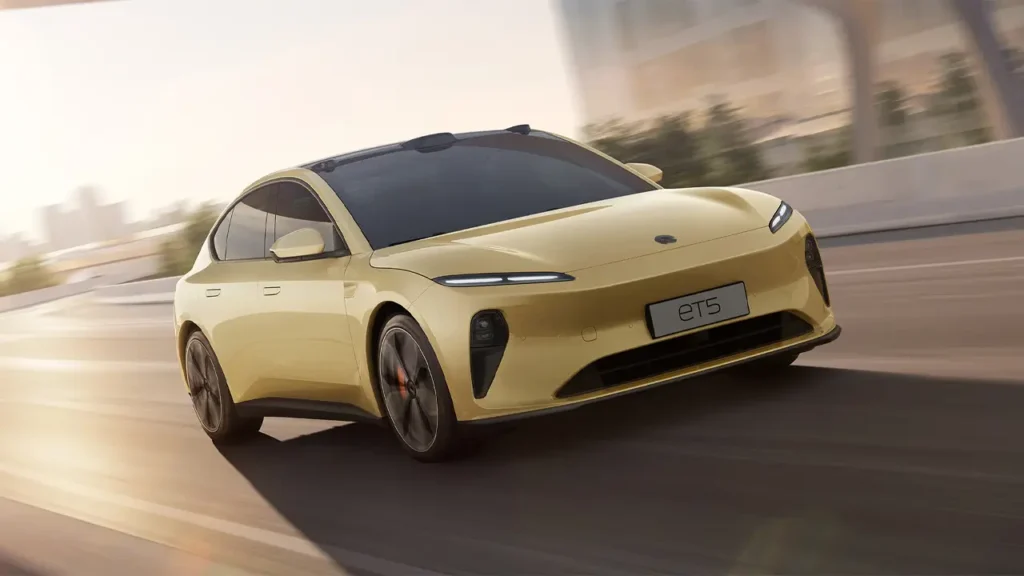
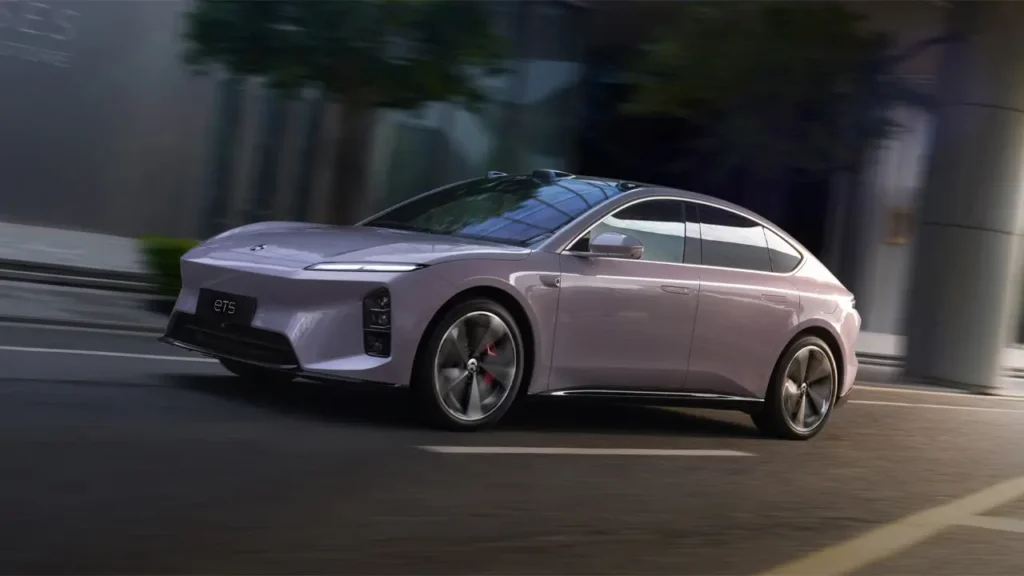
The NIO ET5 is perhaps the best illustration of how NIO battery swap models work in everyday life, because it’s the model most likely to be a driver’s first NIO experience. The ET5 is a sleek midsize sedan that launched to strong reviews, and its battery swap implementation is a showcase for the entire system.
The NIO ET5 battery swap capability covers three different battery options: 75 kWh, 100 kWh, and 150 kWh. This range of options is significant. When you buy an ET5, you’re not committing to a single range figure for the life of the vehicle. Through the BaaS subscription and the swap network, an ET5 driver can use a 75 kWh pack for daily commuting, swap to a 100 kWh pack for a weekend road trip, and eventually upgrade to a 150 kWh pack as that technology matures and becomes more widely available in the station network.
The NIO ET5 battery swap experience at a Power Swap Station is intentionally frictionless. The NIO app shows you the nearest stations, their current availability, and the battery sizes they have charged and ready. You can reserve a swap slot in advance, and the station guides you through the process on screen when you arrive. The robotic system handles the physical exchange — no staff intervention required, no manual connections to make.
For the ET5 specifically, the swap process takes around three minutes from the moment the car is positioned on the platform to the moment the driver pulls away with a full battery. This is a real-world figure, not a marketing claim — it reflects the engineering precision that went into standardizing the battery interface and perfecting the robotic exchange mechanism.
The ET5 also supports conventional charging for situations where a swap station isn’t nearby — home charging overnight, for instance, or a public charger on a trip. The swap system and charging system are complementary, not mutually exclusive, which gives ET5 drivers maximum flexibility.
NIO ET7 Battery Swap Flagship Technology
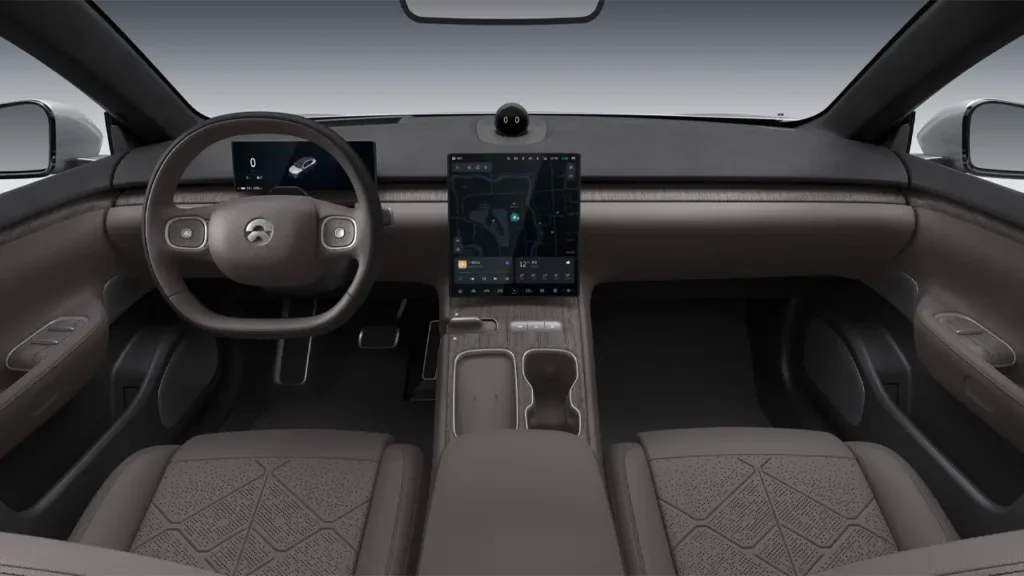
If the ET5 is NIO’s accessible entry point, the NIO ET7 is where the brand’s ambitions really come into focus. The ET7 is a full-size luxury sedan competing with the best from traditional premium European brands, and its NIO ET7 battery swap implementation reflects the level of engineering sophistication the model demands.
The NIO ET7 battery swap architecture supports the same range of battery capacities as other models in the lineup, including access to the 150 kWh ultra-long-range battery pack. For an executive sedan intended for long-distance driving in comfort, the ability to swap to a fully charged 150 kWh pack in three minutes is a compelling alternative to a 40-minute fast charging session.
The ET7 was also notable for being one of the first NIO models to feature the brand’s next-generation intelligent driving system, with a powerful sensor array including LiDAR. This combination of cutting-edge autonomous driving technology and battery swap infrastructure positions the ET7 as a flagship demonstration of what NIO’s integrated technology ecosystem looks like at its most advanced.
From a BaaS perspective, the ET7 is particularly well-suited to the subscription model. Buyers in the luxury segment are often sensitive to the total cost of ownership and the long-term value proposition of their vehicles. The ability to upgrade batteries as technology evolves — maintaining the ET7’s competitive range and performance over years of ownership — is a meaningful value argument for a vehicle at this price point.
The ET7’s battery swap compatibility also means that as NIO continues developing next-generation battery chemistry, ET7 owners are not left behind. The swap infrastructure is designed to be forward-compatible, meaning new battery packs can be deployed into the network and become available to all compatible vehicles, including the ET7.
NIO Battery Swap Stations Global Expansion
The NIO battery swap stations network is the physical backbone that makes everything else possible. Without a dense, reliable network of Power Swap Stations, the entire BaaS and Mirattery ecosystem would be theoretical rather than practical.
NIO has been building out its NIO battery swap stations network at a remarkable pace. The network spans thousands of stations across China, with international expansion progressing into Europe — including Norway, Germany, the Netherlands, Denmark, and Sweden — as NIO grows its presence in global markets.
The scale of activity across this network is striking. NIO battery swap stations collectively handle hundreds of thousands of swap operations daily. This volume reflects both the growing NIO vehicle fleet and the genuine adoption of swap as a preferred energy replenishment method among NIO drivers.
Each Power Swap Station is designed for high throughput. Third-generation stations can house multiple battery packs simultaneously, managing their charge cycles intelligently to ensure that charged batteries are always ready when drivers arrive. The stations communicate with NIO’s cloud systems continuously, sharing data on battery health, demand patterns, and grid conditions.
NIO’s strategy for siting swap stations mirrors how fuel station networks were historically built — starting with high-traffic routes, highway corridors, and urban centers, then expanding to cover secondary roads and suburban areas. In China, where the network is most mature, coverage has reached a level where many NIO drivers report rarely needing to use home charging at all, relying almost entirely on the swap network.
For European markets, the expansion of NIO battery swap stations represents a more significant logistical challenge, given different regulations, property markets, and grid infrastructure. But NIO has committed to building out European swap coverage as a condition of its market entry strategy, recognizing that the swap network isn’t just a feature — it’s the foundation of the entire NIO ownership experience.
NIO Electric Car Battery Swap vs Charging
So how does the NIO electric car battery swap approach actually compare to conventional fast charging? This is the question that comes up most often when people encounter the NIO model for the first time, and it deserves a clear, honest answer.
Here’s a direct comparison:
| Feature | Battery Swap | Fast Charging |
|---|---|---|
| Time to full energy | ~3 minutes | 30–40 minutes |
| Battery upgrade possible | Yes | No |
| Battery degradation concern | Managed by Mirattery | Owner’s responsibility |
| Infrastructure type | Swap stations | Charging points |
| Grid impact | Optimized off-peak | On-demand peak load |
| Vehicle compatibility | NIO models only | Most EVs |
The time advantage of NIO electric car battery swap is obvious and dramatic. Three minutes versus thirty to forty minutes is not a marginal improvement — it’s a fundamentally different experience. For drivers accustomed to the speed of a gasoline fill-up, swap times feel natural and familiar. Fast charging, even at its best, still requires a meaningful pause in the journey.
The battery upgrade advantage is subtler but arguably more significant over a vehicle’s lifetime. Fast charging locks you into the battery you purchased. The NIO electric car battery swap system, connected to the Mirattery fleet and BaaS subscription, means your energy storage can improve as the technology improves. A car bought today can access batteries that are better, denser, and more capable tomorrow.
The grid impact point is worth highlighting. When NIO battery swap stations charge their battery inventory, they can do so during off-peak hours when electricity is cheaper and the grid is under less strain. A driver plugging in for fast charging at 6 PM on a weekday is adding load at exactly the moment the grid is already under pressure. Swap stations smooth out that demand profile in a way that individual fast charging cannot.
The main limitation of the NIO electric car battery swap approach is the current network coverage. Fast charging infrastructure is more widespread globally, built across many brands and networks. Swap stations are, for now, a NIO-specific asset — a strength within the NIO ecosystem but a constraint for anyone outside it. This is why NIO continues to invest heavily in expanding the network, because coverage density is what determines whether swap is a convenience or a necessity for their drivers.
Conclusion: NIO Battery Swap Models and the Future of Electric Mobility
NIO battery swap models represent something genuinely different in the EV landscape — not just a feature, but a complete rethinking of how electric vehicles are powered, owned, and experienced. The combination of the swap technology itself, the Mirattery battery asset structure, and the BaaS subscription model creates an ecosystem that addresses the real pain points of EV ownership: upfront cost, range anxiety, charging time, and long-term battery obsolescence.
Whether you’re looking at the accessible ET5, the flagship ET7, the family-oriented ES8, the stylish EC6, or the executive ET9, every NIO battery swap model is built on this same philosophy. The engineering standardization that makes a single swap station serve any NIO vehicle is a competitive moat that took years to build and represents a durable advantage.
The expansion of NIO battery swap stations globally signals that this isn’t a regional experiment — it’s a technology and business model that NIO is betting its future on. As the network grows, as battery technology improves, and as the Mirattery model matures, the case for NIO’s approach only gets stronger.
For drivers, the bottom line is straightforward: NIO battery swap models offer a combination of speed, flexibility, and financial structure that no other EV ecosystem currently matches. And with every new Power Swap Station that comes online, that advantage becomes a little more accessible to a little more of the world.

Discover more from AutoChina
Subscribe to get the latest posts sent to your email.