The automotive world never stops surprising us. Just when you think you’ve seen every possible collaboration between tech giants and car manufacturers, something genuinely fresh comes along. Enter the Seres Saidou Crossover — a bold new vehicle that brings together one of China’s most powerful AI companies and an established electric vehicle maker. This isn’t just another EV launch. It’s a statement about where smart mobility is heading, and it’s aimed squarely at a generation that grew up scrolling, streaming, and expecting their devices to just get them.
Whether you’re a tech enthusiast, an EV follower, or simply curious about what China’s automotive industry is cooking up next, this is a story worth knowing. Let’s dig in.
What Is the Seres Saidou Crossover?
The Seres Saidou SUV represents a fresh chapter in Chinese electric mobility. Saidou is a newly established sub-brand under Seres Group — the Chongqing-based automaker that many people already know from its long-standing partnership with Huawei on the AITO vehicle line. With Saidou, Seres is stepping into a different lane entirely.
Rather than targeting premium buyers or family-focused consumers, the Saidou brand has been designed from the ground up with younger drivers in mind — specifically the Gen Z and millennial demographic that places enormous value on digital connectivity, personalized experiences, and smart technology. The brand name itself, “Saidou” (赛道), translates roughly to “racetrack” in Chinese, hinting at the sporty and dynamic character the company wants to project.
The vehicle’s positioning is deliberately youthful. Think of it less like a luxury crossover and more like a smartphone on wheels — a device that fits naturally into a lifestyle built around apps, content, and always-on connectivity. The Seres Saidou Crossover sits in the compact-to-midsize crossover segment, a fiercely competitive space in China where dozens of models compete for the attention of budget-conscious but tech-hungry buyers.
What makes the launch particularly notable is the partnership behind it. Seres didn’t build the Saidou brand alone — it brought in one of the biggest names in the global tech industry to help shape the car’s intelligence layer.
Seres ByteDance Car: Why This Partnership Matters
When the news broke that ByteDance — the parent company of TikTok and Douyin — was entering the automotive space through a partnership with Seres, it turned heads across the industry. This is, after all, a company whose core business is content algorithms, short-form video, and AI-driven recommendation systems. What does that have to do with cars?
As it turns out, quite a lot.
The Seres ByteDance car partnership is built on a very specific idea: that the in-car experience should be as intelligent and personalized as the apps people already love. ByteDance isn’t manufacturing vehicles or managing production lines. Instead, it’s contributing its AI capabilities, data infrastructure, and software expertise to power the cockpit experience inside the Saidou.
This is meaningfully different from the Seres-Huawei collaboration that produced the AITO series. With Huawei, the focus was heavily on premium positioning, advanced driver assistance, and hardware integration across the full stack. The Saidou partnership with ByteDance leans more specifically into content, lifestyle, and AI-driven personalization — reflecting ByteDance’s core strengths.
The strategic logic makes sense for both sides. ByteDance gains a physical platform to deploy its AI and content ecosystem beyond smartphones and tablets. Seres gains access to one of the world’s most sophisticated AI recommendation and interaction systems, giving the Saidou a software identity that no competitor can easily replicate. It’s an AI-first strategy from the very beginning — not an afterthought bolted on during development.
AndreevWebStudio.com
Professional web development and design services. Custom WordPress sites, landing pages, e-commerce solutions, and 3D printing content creation for businesses and creators.
- • WordPress Development
- • Custom Web Design
- • E-Commerce Solutions
- • 3D Printing Content
ByteDance Electric Car and Volcengine AI Features
The most technically fascinating part of the Saidou story is what happens inside the cabin. The ByteDance electric car experience is powered in significant part by Volcengine — ByteDance’s enterprise cloud and AI services platform, which the company has been developing and expanding rapidly over the past several years.
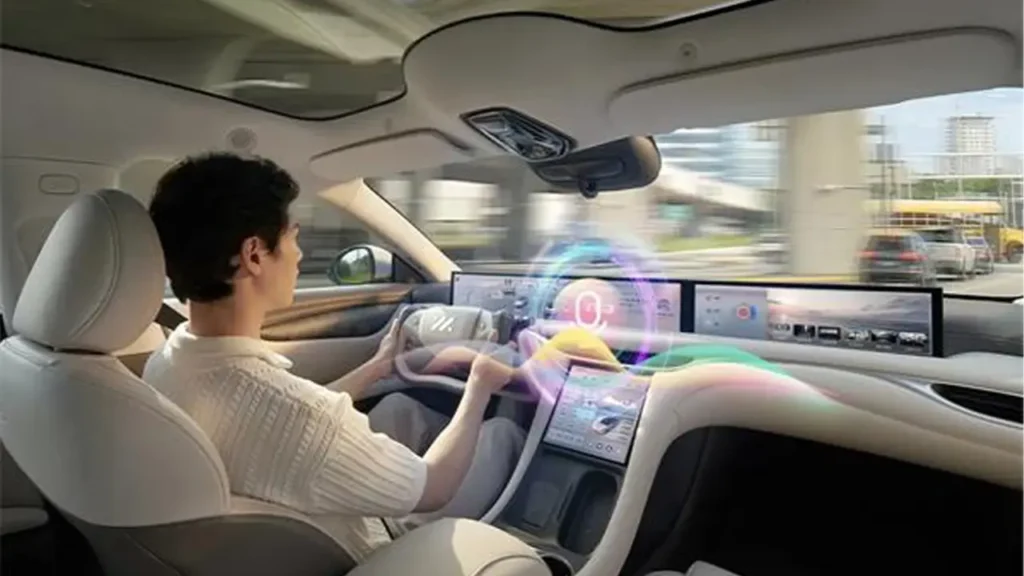
Volcengine is ByteDance’s answer to platforms like AWS or Google Cloud, but with a particular emphasis on AI inference, large language model deployment, multimodal interaction, and real-time data processing. Inside the Saidou, this technology translates into what the company describes as an intelligent cockpit built around genuine AI interaction rather than simple voice commands.
The Volcengine AI car system is designed to support multimodal interaction — meaning the car can understand and respond to a combination of voice, gesture, and contextual inputs simultaneously. Instead of waiting for a specific wake word and then processing a single instruction, the system is built to maintain conversational context, understand natural language, and adapt to the preferences of individual users over time.
Personalization is a central theme here. Given ByteDance’s deep expertise in building recommendation systems that learn from user behavior, the expectation is that the Saidou’s cockpit will become progressively more attuned to each driver’s habits, preferences, and routines. The system learns what music you play on your morning commute, what kind of navigation assistance you prefer, and how you like your driving environment set up — and it adapts accordingly.
Content integration is another key feature. ByteDance’s ecosystem includes Douyin, Toutiao (a major Chinese news aggregator), Xigua Video, and other platforms with enormous user bases. The Saidou cockpit is expected to offer seamless integration with these services, making the car a natural extension of the digital lifestyle its target audience already lives.
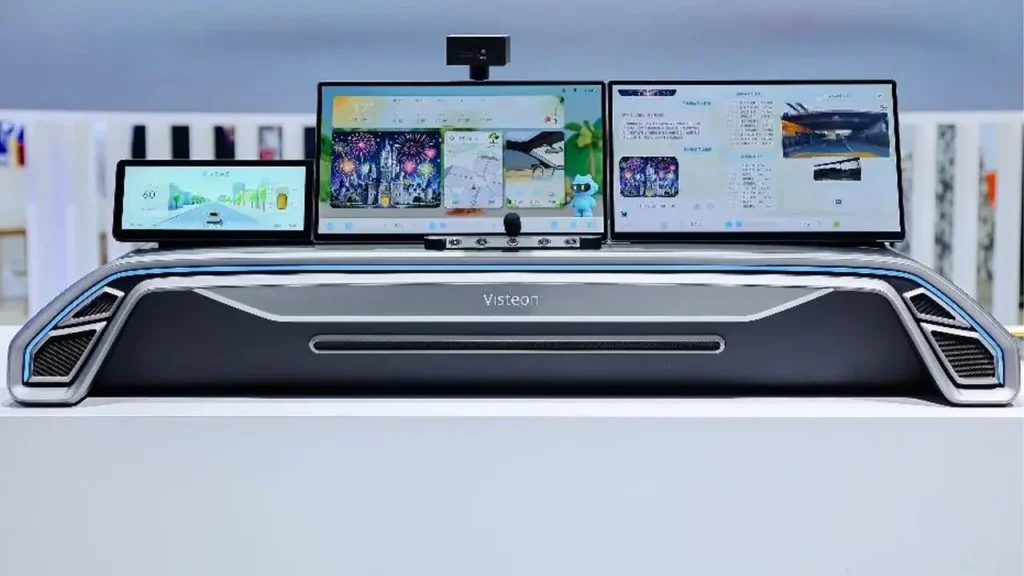
The hardware supporting all of this hasn’t been fully detailed yet, but the expectation is a large central touchscreen, a high-resolution instrument cluster, and potentially a head-up display — all tied together through the Volcengine AI backbone.
Seres AI Crossover: BEV and EREV Powertrain Options
One of the most practical and appealing aspects of the Seres AI crossover is the flexibility it offers in terms of powertrain. Seres has confirmed that the Saidou will be available in two distinct configurations: a fully electric BEV version and an extended-range electric vehicle EREV version.
This dual-powertrain strategy is increasingly common among Chinese automakers and for good reason. China is a geographically enormous country with significant variation in charging infrastructure between major cities and smaller towns or rural areas. Offering both a Seres BEV crossover and a Saidou EREV allows the brand to speak to buyers across this entire spectrum.
The BEV version is expected to appeal to urban drivers who have reliable access to home charging or public charging networks. For this audience, a fully electric drivetrain offers the cleanest, quietest, and most technologically satisfying driving experience. Estimated range figures haven’t been officially confirmed at the time of writing, but the competitive expectation for this segment places the target somewhere around 500–600 kilometers on the CLTC cycle.
The Saidou EREV configuration, on the other hand, uses a small petrol generator to extend the vehicle’s range beyond what the battery alone can provide. This makes long-distance travel far less stressful and removes range anxiety almost entirely — a major consideration for buyers who live in cities but regularly travel to areas with limited charging infrastructure. Extended-range systems have proven enormously popular in China, with brands like Li Auto building their entire identity around this technology.
| Feature | BEV Version | EREV Version |
|---|---|---|
| Powertrain | Fully electric | Electric + range extender |
| Target buyer | Urban commuters | Mixed urban/rural drivers |
| Range anxiety | Depends on infrastructure | Minimal |
| Estimated range (CLTC) | ~500–600 km | 1,000+ km combined |
| Emissions | Zero tailpipe | Low (generator use) |
Both versions are expected to share the same Volcengine-powered cockpit system and overall design language, meaning the choice between them is purely practical rather than a compromise on the technology experience.
Saidou Electric SUV Design and Youth Appeal
Design is where the Saidou electric SUV makes its most direct appeal to younger buyers. While official renders and full specifications hadn’t been publicly released in complete detail at the time of publication, the design philosophy communicated by the brand points clearly toward a sporty, modern aesthetic that draws from both automotive and consumer electronics influences.
Expect clean, sharp lines — the kind of exterior language that photographs well and looks at home in an urban environment. Chinese automakers have become genuinely world-class at exterior design over the past decade, and the Saidou is expected to reflect that maturity. The “racetrack” brand identity suggests lower, wider proportions than a traditional family SUV, with details that signal performance even when the car is standing still.
Inside, the cockpit is expected to feel more like a premium tech product than a conventional car interior. Large screens, minimalist physical controls, ambient lighting, and premium material choices are all consistent with what the target demographic expects. The AI interface isn’t tucked away in a menu — it’s the centerpiece of the interior experience.
The Gen Z and millennial focus also shows up in how the brand plans to communicate. Social media integration, content-sharing features, and a design language that works well in photos and videos are all deliberate choices. In a market where buyers research vehicles on Douyin and share their ownership experiences in short clips, a car that looks good on camera is a car that markets itself.
Affordable Smart SUV China: Price and Market Position
Perhaps the most compelling detail for potential buyers is the expected pricing. The Saidou is anticipated to launch in the ¥120,000–150,000 range (approximately $16,500–$20,700 USD at current exchange rates), positioning it firmly in the affordable smart SUV China segment.
This price point is strategically chosen. It places the Saidou above the most basic budget EVs — where quality and features often disappoint — but well below the premium crossovers from brands like NIO or the higher-end AITO models. It’s the sweet spot for young professionals buying their first car or upgrading from an entry-level vehicle.
| Model | Brand | Price Range (CNY) | AI System |
|---|---|---|---|
| Saidou Crossover | Seres | ¥120,000–150,000 | Volcengine / ByteDance |
| AITO M5 | Seres / Huawei | ¥250,000–300,000 | HarmonyOS |
| BYD Seal U | BYD | ¥139,800–165,800 | DiLink |
| Zeekr X | Zeekr | ¥149,900–175,900 | Snapdragon-based |
At this price point, Seres is directly competing with some well-established names. The advantage the Saidou holds is its unique software identity — no other car in this price range offers a ByteDance-powered AI cockpit. For buyers who are already deep in the ByteDance content ecosystem, that could be the deciding factor.
Main Advantages and Possible Drawbacks
Every new vehicle launch deserves an honest look at both sides of the picture. The Saidou has genuine strengths, but there are also real questions worth considering before getting too carried away with the excitement.
What works in its favor:
The ByteDance partnership is genuinely differentiating. No competitor in this price segment can offer an AI cockpit with the same depth of content integration and personalization capability. For a buyer whose digital life already runs through Douyin, Toutiao, and ByteDance’s other platforms, the Saidou cockpit will feel like a natural extension of that world.
The BEV and EREV powertrain choice is smart and practical. It means the Saidou can serve a much wider range of buyers than a pure EV would, without forcing anyone to compromise on the technology experience.
The price positioning is competitive. At ¥120,000–150,000, Seres is asking buyers to pay for something genuinely different, not just a rebadged budget car with a tech sticker on it.
Where caution is warranted:
The Saidou brand has no track record. Established competitors have years of real-world reliability data, service network maturity, and customer trust behind them. A brand-new sub-brand with no ownership history is always a leap of faith for early buyers.
Technical specifications are still incomplete. Until official figures are released and independently tested, range claims, performance numbers, and cockpit capabilities should be treated as targets rather than guaranteed outcomes.
Competition in this segment is fierce and getting fiercer. BYD, Geely, SAIC, and dozens of other manufacturers are all fighting for the same young buyer. Having a compelling story isn’t enough — the execution has to match it.
User Expectations and First Community Reactions
The response from the Chinese automotive and tech community to the Saidou announcement has been genuinely enthusiastic, particularly among younger audiences who are already fans of ByteDance’s products. Social media discussions have been lively, with many users expressing particular interest in how the Douyin and Toutiao integrations will work in practice.
There’s also significant curiosity about the Chinese AI electric vehicle positioning more broadly — the Saidou isn’t just a car, it’s a signal that China’s AI companies are taking automotive seriously as a long-term platform for deploying intelligence and building user relationships.
The questions most frequently raised by early observers center on a few key areas: How good is the AI interaction in real-world driving conditions? How well will the system work for buyers outside major cities with inconsistent data connectivity? And perhaps most importantly — will ByteDance’s involvement remain deep and sustained, or is this a marketing arrangement that fades once the launch buzz dies down?
On the question of international sales, the picture is uncertain. Seres has international ambitions, and the AITO brand has been discussed in the context of overseas expansion. Whether the Saidou follows a similar path will depend heavily on regulatory environments, trade conditions, and how the domestic launch performs. For now, the Chinese market is clearly the priority.
FAQ About the Seres Saidou Crossover
What is the Seres Saidou Crossover?
The Seres Saidou Crossover is a new compact-to-midsize electric crossover SUV developed by Seres Group under the newly created Saidou sub-brand. It is co-developed with ByteDance and features an AI-powered intelligent cockpit built on ByteDance’s Volcengine platform. The model targets young, tech-oriented buyers in China.
Is the Seres Saidou SUV electric?
Yes — the Saidou is available in two powertrain configurations. The BEV version is fully battery-electric. The EREV version uses an electric drivetrain with a small petrol-powered range extender that generates additional electricity to extend the vehicle’s range beyond what the battery alone provides.
Does the ByteDance electric car use AI?
Yes, AI is central to the Saidou’s identity. The vehicle’s cockpit is powered by ByteDance’s Volcengine AI infrastructure, enabling multimodal interaction, natural language processing, personalized content recommendations, and a cockpit experience that adapts to individual user preferences over time.
What is Volcengine AI car technology?
Volcengine is ByteDance’s enterprise cloud and AI platform. In the context of the Saidou, it powers the intelligent cockpit system — enabling the car to process voice and gesture inputs, maintain conversational context, integrate with ByteDance’s content ecosystem (including Douyin and Toutiao), and personalize the driving experience for each user.
Will the Saidou EREV be available outside China?
As of the time of publication, the Saidou has been announced for the Chinese domestic market. No confirmed plans for international sales have been officially announced. Whether export plans follow will likely depend on the success of the domestic launch and the broader trade environment for Chinese EVs in target markets.
How much will the affordable smart SUV China cost?
The Seres Saidou Crossover is expected to be priced in the range of approximately ¥120,000 to ¥150,000, which is roughly equivalent to $16,500–$20,700 USD at current exchange rates. This positions it as an accessible but feature-rich option in the competitive Chinese smart EV crossover segment. Official pricing will be confirmed closer to the production launch date.
The Seres Saidou Crossover is, in many ways, a window into what the next generation of intelligent vehicles looks like. It’s not trying to be the fastest, the most luxurious, or the most technically advanced car on the road. What it’s trying to be is the most connected — the vehicle that fits most naturally into a life already shaped by AI, content, and digital experience.
Whether it delivers on that promise depends on execution. But the vision is clear, the partnership is credible, and the timing — with AI becoming central to how cars are defined and differentiated — couldn’t be better. Keep an eye on the Saidou. This one is just getting started.
🇬🇧 1. English Review
👤 Michael Turner
⭐⭐⭐⭐⭐ 5/5
Excellent article! I was looking for information about the new Seres Saidou Crossover, and this was one of the few websites with clear details about the ByteDance partnership and AI features. The content is easy to understand, well-structured, and updated with the latest Chinese EV news. I’ve already bookmarked the site for future reading.
🇪🇸 2. Reseña en Español
👤 Carlos Ramírez
⭐⭐⭐⭐⭐ 5/5
¡Muy buen artículo! Me gustó la explicación sobre el nuevo Seres Saidou Crossover y la integración de inteligencia artificial de ByteDance. La información es clara, moderna y fácil de leer. Si te interesan los coches eléctricos chinos, este sitio es una excelente fuente de noticias y análisis.
🇸🇦 3. مراجعة باللغة العربية
👤 أحمد الخالدي
⭐⭐⭐⭐⭐ 5/5
موقع رائع ومقال مميز جدًا عن Seres Saidou Crossover. أعجبني الشرح المبسط لتقنيات الذكاء الاصطناعي والتعاون مع ByteDance. المحتوى احترافي ويتم تحديثه باستمرار، وهو من أفضل المواقع التي وجدتها لمتابعة أخبار السيارات الكهربائية الصينية.
🇨🇳 4. 中文评价
👤 李伟 (Li Wei)
⭐⭐⭐⭐⭐ 5/5
这是一篇非常精彩的文章!我一直在寻找关于 Seres Saidou Crossover 和字节跳动合作项目的信息,终于在这个网站找到了详细介绍。内容专业、易懂,而且更新速度很快。对于关注中国新能源汽车的人来说,这是一个值得收藏的网站。
🇫🇷 5. Avis en Français
👤 Julien Moreau
⭐⭐⭐⭐⭐ 5/5
Excellent site et excellent article ! J’ai découvert beaucoup d’informations intéressantes sur le Seres Saidou Crossover et les technologies d’IA développées avec ByteDance. Les articles sont bien rédigés, faciles à lire et très utiles pour suivre les nouveautés des voitures chinoises.
🇩🇪 6. Deutsche Bewertung
👤 Lukas Schneider
⭐⭐⭐⭐⭐ 5/5
Toller Artikel und eine wirklich informative Website! Der Beitrag über den Seres Saidou Crossover erklärt die neuen KI-Funktionen und die Zusammenarbeit mit ByteDance sehr verständlich. Wer sich für chinesische Elektroautos interessiert, sollte AutoChina.blog definitiv regelmäßig besuchen.
Discover more from AutoChina
Subscribe to get the latest posts sent to your email.

