1. Introduction: Why Geely Emgrand i-HEV Is Making Headlines
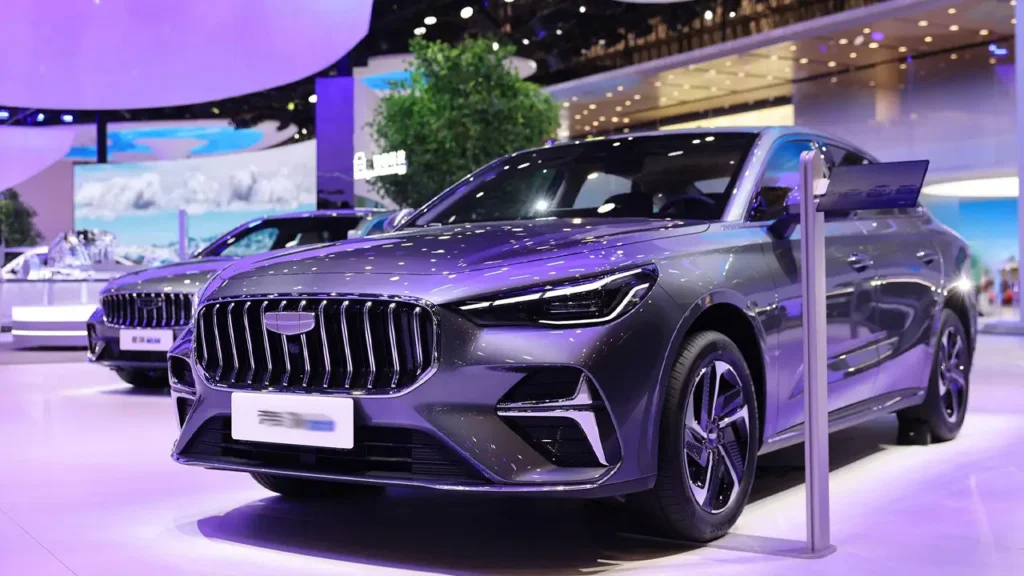
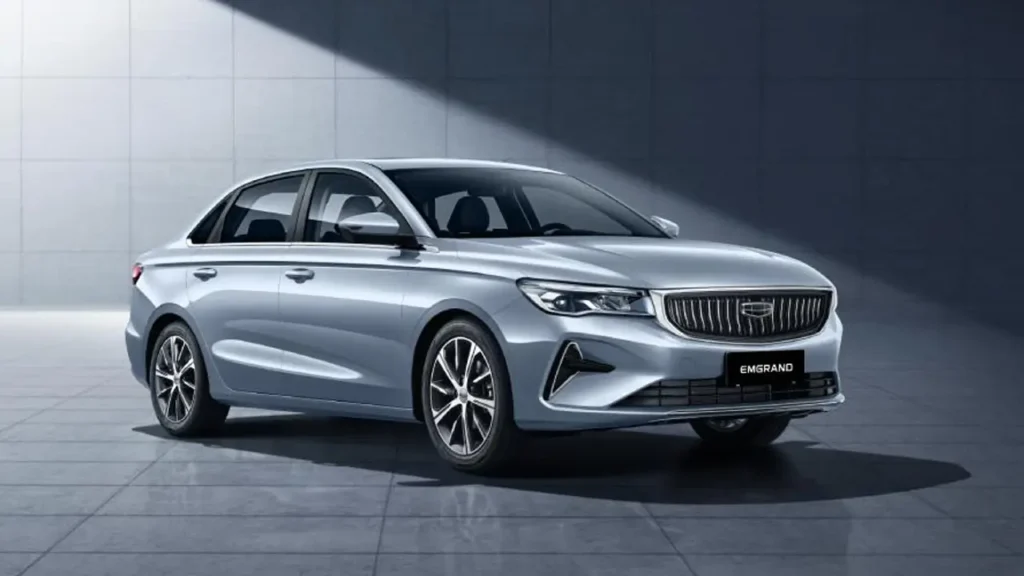
If you have spent any time browsing automotive news over the past few months, chances are you have already stumbled across the name Geely Emgrand i-HEV. This unassuming sedan, the fifth generation of Geely’s long-running Emgrand nameplate, has quietly become one of the most talked-about cars in the global hybrid segment — and for good reason. Geely Emgrand i-HEV thermal efficiency has reached a figure that engineers once considered nearly impossible for a mass-produced engine: 48.41%.
To put that number into perspective, most gasoline engines on the road today operate somewhere between 30% and 40% thermal efficiency. Even the most advanced hybrid systems from established giants like Toyota and Honda typically top out in the low-to-mid 40s. Geely’s engineers have managed to push past that ceiling, landing in territory that automotive journalists have compared to Formula 1 power units, which themselves rarely exceed 50% efficiency under race conditions.
But the thermal efficiency record is only part of the story. The Emgrand i-HEV also walked away with a Guinness World Record for fuel economy, recording a real-world consumption figure of just 2.22 liters per 100 kilometers during a highway test loop on Hainan Island. That works out to roughly 106 miles per gallon in US terms, a number that would have sounded like science fiction just a decade ago.
What makes this story even more compelling is the price tag. The Emgrand i-HEV launched in China at a starting price of around 87,900 yuan, or roughly 13,010 USD, positioning it firmly as an entry-level family sedan rather than a halo or flagship model. In other words, Geely has not built a one-off efficiency showcase reserved for a limited production run. It has packaged record-breaking hybrid technology into one of its most affordable, mainstream vehicles.
In this article, we will walk through exactly what thermal efficiency means, how Geely’s i-HEV hybrid system actually works under the hood, why the company believes it has built the world’s most efficient hybrid engine, and how this technology compares to the long-established hybrid systems from Toyota. We will also look at the full specification sheet, the AI software that helps the car save fuel in real time, and the official Guinness World Record details. By the end, you should have a clear, friendly, and complete picture of why this car is generating so much buzz.
2. What Does 48.41% Thermal Efficiency Mean?
Thermal efficiency sounds technical, but the underlying idea is actually quite simple. Every time an internal combustion engine burns fuel, only a portion of that chemical energy gets converted into usable mechanical power that actually moves the car forward. The rest is lost as heat, escaping through the exhaust pipe, the radiator, and engine friction.
Thermal efficiency is the percentage of fuel energy that successfully becomes useful work. A 48.41% thermal efficiency engine means that for every unit of energy stored in the fuel, just under half of it is converted into motion, while the rest is lost to heat and friction. This might not sound like a dramatic number at first glance, but the engineering reality is quite different.
Conventional gasoline engines found in everyday cars typically achieve thermal efficiency in the 25% to 35% range. Even well-optimized hybrid engines from major manufacturers have historically struggled to break past the mid-40s. Toyota’s celebrated hybrid engines, long considered the benchmark in this field, have publicly stated efficiency figures in the low-to-mid 40% range for their latest generation units. Geely’s claim of 48.41%, certified by the China Automotive Technology and Research Center, effectively pushes the bar several points higher than anything previously achieved in mass production.
Why does this matter to an everyday driver? Higher thermal efficiency translates directly into lower fuel consumption, reduced emissions, and more range from every tank of gas. It also means less wasted heat, which can contribute to a cooler-running engine bay and, in some cases, improved long-term reliability. For Geely, achieving this figure on a dedicated hybrid engine — rather than a heavily modified conventional engine — represents a genuine engineering milestone rather than a marketing footnote.
It is worth noting that this efficiency figure applies specifically to the dedicated hybrid engine itself, not the complete vehicle system. The overall vehicle efficiency, which includes the electric motors, battery, and software management layer, is where the rest of the story comes together — and that is exactly what we will explore next.
3. How Geely i-HEV Hybrid Technology Works
Geely i-HEV hybrid technology is built around what the company calls a P1+P3 dual-motor decoupled layout, paired with an integrated 11-in-1 electric drive unit. While the naming convention might sound complicated, the concept is fairly approachable once broken down.
In a P1+P3 layout, one electric motor (P1) is positioned closer to the engine, primarily helping with engine starting, generation, and smoothing out power delivery. A second, more powerful motor (P3) sits closer to the wheels, handling the bulk of propulsion duties, especially at lower speeds and during pure electric driving. This dual-motor decoupled design allows the engine and motors to work together or independently, depending on what the driving situation calls for.
The system supports three distinct operating modes: pure electric driving, hybrid parallel mode, and direct drive mode. At lower speeds, the car can run entirely on electric power, with the gasoline engine staying completely disengaged. As speed and power demand increase, the system can blend electric and combustion power together in parallel mode, or shift to a direct drive configuration where the engine connects straight to the wheels for maximum efficiency at steady highway speeds.
The drive motor in this configuration delivers a peak output of around 230 kW, a figure Geely says is roughly 1.72 times more powerful than the motors found in typical Japanese hybrid competitors. This extra electric muscle allows the car to lean on electric propulsion far more aggressively than older hybrid designs, reducing how often and how hard the gasoline engine needs to work.
Under WLTC testing conditions, the electric drive system reportedly handles more than 80% of typical driving scenarios, which results in roughly a 27% reduction in total engine operating time compared to conventional hybrid systems. The car can also sustain pure electric driving at speeds up to 66 km/h, which covers the vast majority of city and suburban commuting.
This combination of a highly efficient dedicated engine, a powerful dual-motor electric system, and intelligent mode-switching is the foundation of how Geely has managed to extract such impressive real-world fuel economy from what is, on paper, a fairly modest and affordable family sedan.

AndreevWebStudio.com
Professional web development and design services. Custom WordPress sites, landing pages, e-commerce solutions, and 3D printing content creation for businesses and creators.
- • WordPress Development
- • Custom Web Design
- • E-Commerce Solutions
- • 3D Printing Content
4. Why This Is Considered the World’s Most Efficient Hybrid Engine
Calling something the world’s most efficient hybrid engine is a bold claim, so it is fair to ask what evidence backs it up. In Geely’s case, the claim rests on independent, third-party verification rather than internal marketing numbers alone.
The 48.41% thermal efficiency figure was certified by the China Automotive Technology and Research Center, a recognized national testing authority. This is not a number Geely simply published in a press release; it underwent formal evaluation. Separately, the real-world fuel consumption figure of 2.22 liters per 100 kilometers was independently verified by Guinness World Records, an organization with no commercial stake in Geely’s success and a long history of rigorously auditing record claims before certifying them.
What pushes this engine ahead of its closest rivals is the combination of a genuinely efficient combustion engine with an unusually capable electric drive system layered on top. Many hybrid systems rely primarily on a reasonably efficient engine paired with a relatively modest electric assist motor. Geely’s approach pairs an engine already operating near the top of the industry with a substantially more powerful 230 kW electric drive system, allowing the car to minimize engine usage far more aggressively than typical competitors.
The endurance testing behind this claim is also worth highlighting. Geely says the powertrain underwent 15,000 hours of bench testing, equivalent to roughly 4.8 million kilometers of real-world driving, with functionality also verified at altitudes up to 4,650 meters. This level of validation suggests the efficiency figures were not achieved through a fragile, lab-only configuration, but through a system designed to hold up under genuinely demanding long-term conditions.
Taken together, an independently certified thermal efficiency record, a Guinness-verified fuel consumption record, and extensive durability testing form a fairly compelling case for why Geely’s i-HEV system currently sits at the top of the mass-production hybrid efficiency rankings.
5. Geely Hybrid Engine Explained in Simple Terms
Let’s step back from the technical jargon for a moment and explain, in plain language, why this Geely hybrid engine performs so well.
Think of a traditional gasoline engine like a person trying to run a marathon at a single, fixed pace, regardless of the terrain. Sometimes that pace is too fast for an uphill section, wasting energy through wheel spin or excessive revving. Sometimes it is too slow for a flat, easy stretch, leaving performance on the table. A hybrid system, at its core, is about letting an electric motor handle the awkward, inefficient moments — stop-and-go traffic, slow acceleration, idling at a red light — while reserving the combustion engine for the conditions it is naturally good at, like sustained, steady-speed cruising.
Geely’s dedicated hybrid engine was designed from the ground up specifically for this kind of partnership, rather than being adapted from an existing conventional engine. That distinction matters. An engine built exclusively to work alongside a powerful electric motor can be tuned with a much narrower, more efficient operating range, since it no longer needs to handle the full spectrum of driving conditions on its own.
Layered on top of this hardware is an artificial intelligence system that constantly senses real-world conditions and adjusts how the engine and motors share the workload. Instead of relying on a fixed, pre-programmed strategy, the software adapts in real time, squeezing out additional efficiency that a static system would simply miss.
The result is an engine that spends more of its operating time in its efficient sweet spot, an electric motor that handles the inefficient stop-and-go moments, and a software brain coordinating the two seamlessly. That combination, more than any single breakthrough component, is what allows the Geely Emgrand i-HEV to post such remarkable real-world numbers.
6. Geely Emgrand Hybrid Sedan: Key Specifications
For readers who want the hard numbers in one place, here is a breakdown of the Geely Emgrand hybrid sedan’s key specifications, gathered from official Geely launch information.
| Specification | Detail |
|---|---|
| Platform | BMA Evo global modular architecture |
| Engine | 1.5L naturally aspirated, dedicated hybrid engine |
| Engine power | 82 kW (110 hp) |
| Thermal efficiency | 48.41% (CATARC certified) |
| Electric motor configuration | P1+P3 dual-motor, 11-in-1 integrated drive unit |
| Combined drive motor output | Up to 230 kW (308 hp) |
| 0-30 km/h acceleration | 1.84 seconds |
| Pure electric driving limit | Up to 66 km/h |
| Official fuel consumption | 3.83 L/100km (rated cycle) |
| Record fuel consumption | 2.22 L/100km (Guinness World Record test) |
| Dimensions (L/W/H) | 4815 / 1885 / 1480 mm |
| Wheelbase | 2,755 mm |
| Wheel size | 17-inch |
| Battery | Flat-plate liquid-cooled hybrid battery, IP68 rated |
| Starting price (China) | 87,900 yuan (approx. 13,010 USD) |
These figures show a car that is not chasing extreme performance numbers, but rather extracting maximum real-world value out of a sensible, family-friendly package. The combination of a relatively small 1.5L engine with a genuinely powerful electric drive system is the core reason this sedan punches so far above its price class in terms of efficiency.
7. AI Hybrid Technology Geely Uses to Save Fuel
One of the more fascinating, and often overlooked, aspects of the Emgrand i-HEV is its software layer. AI hybrid technology Geely has implemented under the name Galaxy AI Cloud Power 2.0 is what allows the hardware described above to perform at its theoretical best in real-world conditions, rather than only in a controlled lab environment.
This system works by continuously monitoring a range of external variables in real time: ambient temperature, humidity, altitude, and even road gradient. Based on this constantly updating stream of data, the AI model automatically selects the optimal balance between gasoline and electric power for the exact conditions the car is experiencing at that moment. Geely states this intelligent management improves overall energy efficiency by more than 10% compared to a fixed, non-adaptive control strategy.
To understand why this matters, consider how driving conditions change throughout a single trip. A cold morning start requires a different energy strategy than a hot afternoon highway cruise. Climbing a mountain pass calls for a different power distribution than descending the other side. A traditional hybrid system, programmed with a one-size-fits-all logic, cannot fully account for this variability. An AI-driven system, by contrast, recalculates its strategy continuously, adapting almost instantly to whatever the road and environment present.
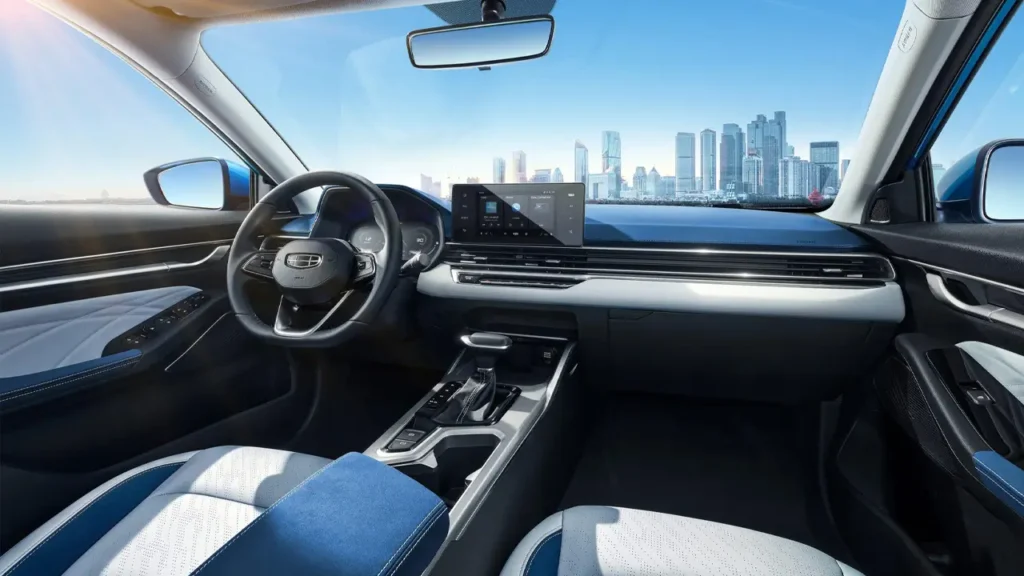
This intelligent control system sits on top of Geely’s broader Full-domain AI 2.0 platform and the i-CMA centralized architecture, which links intelligent driving, cockpit functions, and chassis control into a single coordinated system. The practical upshot for everyday drivers is a car that feels seamless to operate, with power delivery and fuel-saving decisions happening invisibly in the background, without requiring the driver to select different modes manually.
In many ways, this software layer represents the difference between a hybrid system that is merely well-engineered and one that is genuinely intelligent — constantly learning from its environment and adjusting accordingly, rather than relying on a static set of pre-programmed rules.

AutoChina.blog
Your trusted guide to Chinese automotive technology. Expert reviews, comparisons, and insights on electric vehicles, hybrids, and innovative automotive solutions from China’s leading manufacturers.
- • EV & Hybrid Reviews
- • Tech Comparisons
- • Industry News & Trends
- • Buying Guides
8. Record Fuel Economy: 2.22L Per 100km Fuel Consumption
Perhaps the single number that has captured the most public attention is the headline 2.22L per 100km fuel consumption figure achieved during real-world testing. This translates to roughly 106 miles per gallon by US measurement standards, an extraordinary figure for a gasoline-powered hybrid sedan.
This record was set during a highway loop test conducted on Hainan Island, China, under real-world driving conditions rather than a purely synthetic laboratory cycle. The test route involved sustained highway driving, allowing the car’s direct-drive and parallel hybrid modes to operate under realistic, repeatable conditions. Guinness World Records independently verified the result, officially recognizing it as the lowest fuel consumption ever recorded by a mass-produced hybrid vehicle.
It is worth distinguishing this record figure from the car’s official, rated fuel consumption, which sits at 3.83 liters per 100 kilometers under standard testing cycles. The 3.83 L/100km figure represents what an average owner can realistically expect across typical mixed driving, including city traffic, stop-and-go conditions, and varied terrain. The 2.22 L/100km figure, by contrast, represents a best-case scenario achieved under optimized, sustained highway conditions specifically designed to showcase the system’s maximum efficiency potential.
This distinction matters for setting realistic expectations. While most owners won’t replicate the exact 2.22 L/100km figure in daily driving, the underlying technology that enabled that record — the powerful electric motor, the highly efficient dedicated engine, and the adaptive AI energy management — is the same technology present in every Emgrand i-HEV that rolls off the production line. Even under normal mixed-use conditions, that translates into real, tangible fuel savings compared to a conventional gasoline vehicle or even many competing hybrid models.
9. Geely Hybrid Powertrain vs Toyota Hybrid Systems
No discussion of hybrid efficiency would be complete without addressing the elephant in the room: how does Geely’s hybrid powertrain actually stack up against Toyota, the company widely credited with popularizing hybrid technology and long considered the gold standard in this space?
According to Geely’s own published comparison testing, the Emgrand i-HEV’s Guinness-verified fuel consumption of 2.22 L/100km came out more than 12% lower than a Toyota Prius tested under comparable conditions, where the Prius recorded 2.53 L/100km. On thermal efficiency specifically, Geely’s certified 48.41% figure sits noticeably above the low-to-mid 40% range typically associated with Toyota’s latest-generation hybrid engines.
| Metric | Geely Emgrand i-HEV | Toyota Prius (comparable test) |
|---|---|---|
| Fuel consumption (record test) | 2.22 L/100km | 2.53 L/100km |
| Engine thermal efficiency | 48.41% | Low-to-mid 40% range |
| Drive motor power | Up to 230 kW | Typically lower than Geely’s system |
| Energy management | AI-driven, real-time adaptive | Fixed, rules-based strategy |
It is important to approach this comparison with a bit of balanced perspective. Toyota’s hybrid systems have an enormous, decades-long track record of proven reliability across hundreds of millions of real-world miles, something a newer system like Geely’s i-HEV has not yet had the chance to demonstrate at the same scale. Geely’s advantage on paper comes largely from pairing a slightly more efficient engine with a substantially more powerful electric motor and a more sophisticated, AI-driven energy management layer — rather than from a single, isolated breakthrough.
Still, the comparison illustrates a broader shift happening across the global auto industry. Chinese manufacturers like Geely are no longer simply following the hybrid playbook written by Toyota and Honda decades ago; they are actively pushing the technology forward, often with the benefit of more powerful modern electric motors and increasingly capable AI control systems integrated from the ground up.
10. Guinness World Record Hybrid Car: Final Verdict
So where does all of this leave us? The Geely Emgrand i-HEV has earned its place as an officially recognized Guinness World Record hybrid car, backed by independently verified figures rather than internal marketing claims alone. Its 48.41% thermal efficiency stands as the highest certified figure among current mass-production engines, while its 2.22 L/100km real-world fuel consumption result represents the lowest ever recorded for a mass-produced hybrid vehicle.
What makes this story particularly compelling is the accessibility of the technology. Rather than reserving these innovations for an expensive flagship model, Geely has built this system into an entry-level family sedan priced around 13,000 USD, and has already confirmed plans to roll the same i-HEV technology out across several additional models throughout 2026, including the Xingrui, Xingyue L, Boyue L, Preface, Monjaro, and Starray.
For everyday drivers, the practical takeaway is straightforward: this is a genuinely efficient, AI-enhanced hybrid powertrain, independently verified by recognized testing authorities, available at a price point that puts it within reach of mainstream buyers rather than limiting it to a niche or premium segment. Whether or not Geely’s technology ultimately challenges Toyota’s decades of accumulated reliability data remains to be seen over the coming years, but as a snapshot of where hybrid engineering stands today, the Emgrand i-HEV represents a genuinely impressive achievement.
Frequently Asked Questions
What is Geely Emgrand i-HEV thermal efficiency?
Geely Emgrand i-HEV thermal efficiency refers to the percentage of fuel energy converted into usable mechanical power by its dedicated hybrid engine. The figure stands at 48.41%, certified by the China Automotive Technology and Research Center, making it the highest thermal efficiency currently recorded for a mass-produced engine.
How does the 48.41% thermal efficiency engine work?
The engine was purpose-built to work alongside a powerful electric drive system, allowing it to operate primarily within its most efficient range rather than handling the full spectrum of driving demands alone. This dedicated design, combined with reduced friction losses and optimized combustion, allows nearly half of the fuel’s energy to be converted into usable power.
Is Geely i-HEV hybrid technology better than Toyota Hybrid?
On specific metrics, Geely’s system shows an advantage, including more than 12% lower fuel consumption than a comparably tested Toyota Prius and a higher certified thermal efficiency figure. However, Toyota’s hybrid systems carry decades of proven, large-scale reliability data that Geely’s newer system has not yet accumulated, so the comparison depends on which factors matter most to a given buyer.
What fuel economy does the Geely Emgrand i-HEV achieve?
The car’s official rated fuel consumption is 3.83 liters per 100 kilometers under standard testing. During an optimized real-world highway test, it achieved a Guinness World Record figure of 2.22 liters per 100 kilometers, equivalent to roughly 106 miles per gallon.
Why did the Emgrand i-HEV receive a Guinness World Record?
It received the record for achieving the lowest fuel consumption ever recorded by a mass-produced hybrid vehicle, with a verified result of 2.22 L/100km during a real-world highway test conducted on Hainan Island, independently confirmed by Guinness World Records.
Will Geely i-HEV technology be used in other models?
Yes. Geely has confirmed plans to expand the i-HEV system across multiple models throughout 2026, including the Xingrui, Xingyue L, Boyue L, Preface, Monjaro, and Starray, alongside the Emgrand.
🇬🇧 John Miller — ⭐⭐⭐⭐⭐
Excellent article about the Geely Emgrand i-HEV. The explanation of the 48.41% thermal efficiency engine was clear and easy to understand. I especially liked the comparison with other hybrid technologies. AutoChina Blog continues to be one of the best sources for Chinese car news and reviews.
🇪🇸 Carlos Rodríguez — ⭐⭐⭐⭐⭐
Artículo fantástico y muy bien explicado. Me impresionó conocer cómo Geely logró una eficiencia térmica del 48,41%. El sitio ofrece información detallada y actualizada sobre vehículos chinos. Lo recomiendo para cualquier aficionado al mundo automotriz.
🇸🇦 أحمد العتيبي — ⭐⭐⭐⭐⭐
مقال رائع ومفيد للغاية. شرح تقنية المحرك الهجين في Geely Emgrand i-HEV كان واضحًا وسهل الفهم. أحببت التفاصيل حول كفاءة الوقود والأرقام القياسية العالمية. موقع مميز لكل من يهتم بالسيارات الصينية الحديثة.
🇨🇳 王伟 — ⭐⭐⭐⭐⭐
这是一篇非常专业的文章。关于吉利 Emgrand i-HEV 48.41% 热效率发动机的解释非常详细,而且容易理解。我经常访问 AutoChina Blog,因为这里总能找到最新的中国汽车资讯和深度评测。
🇫🇷 Pierre Dubois — ⭐⭐⭐⭐⭐
Très bon article sur la Geely Emgrand i-HEV. Les informations techniques sont présentées de manière simple et intéressante. J’ai particulièrement apprécié les explications sur l’efficacité thermique record du moteur hybride. Un excellent site pour suivre l’actualité automobile chinoise.
🇩🇪 Markus Schneider — ⭐⭐⭐⭐⭐
Hervorragender Beitrag über den Geely Emgrand i-HEV. Die technischen Details wurden verständlich erklärt, ohne zu kompliziert zu sein. Besonders interessant fand ich die Informationen zur Rekord-Wärmeeffizienz von 48,41 %. AutoChina Blog ist eine ausgezeichnete Quelle für aktuelle Nachrichten über chinesische Fahrzeuge.
Discover more from AutoChina
Subscribe to get the latest posts sent to your email.