Introduction
Something remarkable has been unfolding in the global automotive industry — and it is not happening in Stuttgart, Detroit, or Tokyo. It is happening in Hefei, China, inside a joint engineering lab where Volkswagen and XPeng are quietly rewriting the rulebook on how cars get built.
The VW XPeng CEA collaboration is one of the most fascinating technology partnerships in the modern automotive era. It is not just two companies working together on a side project. It is a fundamental shift in who holds the keys to the future of vehicle technology — and the answer, increasingly, is pointing East.
For decades, the standard model was clear: Western brands brought technology into China, set up joint ventures with local partners, and dominated the market with their engineering heritage. That model is now running in reverse. The VW XPeng partnership is perhaps the clearest and most high-profile example of this reversal. Volkswagen, one of the world’s largest automakers, has chosen to build its next-generation vehicle architecture in China, with a Chinese company, for deployment across its entire China fleet — and potentially well beyond. That is not a minor strategic tweak. That is a paradigm shift.
In this article, we will walk through exactly what the CEA platform is, why Volkswagen made this move, how the technology works under the hood, and what it means for the future of the global EV industry. Whether you are an automotive enthusiast, an industry professional, or simply curious about where cars are headed, this story has something genuinely important to tell.
Platform Comparison: Where Does VW XPeng CEA Stand?
Before going deep into the technical details, let us place the VW XPeng CEA collaboration in the broader context of Chinese tech-driven automotive partnerships. Here is how the three most significant collaborations in the market compare today:
| Collaboration | Tech Share Level | IP Ownership Model | Market Focus |
|---|---|---|---|
| VW–XPeng CEA | High | Shared / Co-developed | Global EV |
| Huawei–AITO | Medium | Huawei dominant | China premium |
| CATL–NIO | Battery-focused | Supplier-driven | EV infrastructure |
What makes the VW XPeng partnership stand out immediately is the depth of the technology share and the explicit co-development model. Unlike the Huawei–AITO arrangement, where Huawei essentially provides a full-stack solution and the automaker assembles around it, the CEA is genuinely built together by both parties. That shared IP structure has significant implications — for both sides, and for the wider industry.
VW XPeng CEA Platform Collaboration: Technology Sharing Economics and IP Structure Analysis
Who Owns What?
One of the most interesting questions about the VW XPeng CEA collaboration is the IP structure — who actually owns the technology that gets created through this partnership?
The CEA architecture was jointly developed by Volkswagen China Technology Company (VCTC), CARIAD China, and XPeng. This three-party development model is important to understand clearly. It is not a simple licensing deal where Volkswagen pays XPeng for the right to use existing, off-the-shelf technology. It is an active, ongoing co-development effort with engineers from all three entities working side by side.
According to official statements from both Volkswagen Group and XPeng, the partnership ensures the construction of a comprehensive zonal electrical and electronic architecture that includes zone controllers, central computers, cloud and backend connectivity, and fast, cost-efficient development pipelines. Both parties contribute their respective best competencies: XPeng brings its deep software expertise and speed of development, while Volkswagen brings its manufacturing scale, global supply chain, and quality engineering standards.
The Reverse Knowledge Flow
This brings us to what many analysts are calling the “reverse knowledge flow” — the idea that technology is now moving from China outward to global automakers, rather than the traditional direction.
The production launch of the CEA architecture marks a substantive breakthrough in what industry observers describe as the “reverse joint venture” model. For decades, Western companies brought technology into China as a condition of market access. Now, a Chinese smart EV company is providing the foundational architecture that one of the world’s largest automakers will deploy across its entire China fleet — and potentially export to global platforms over time.
For XPeng, the financial rewards are real and growing. XPeng Motors recorded service and other sales revenue of RMB 5.0369 billion in 2024, and RMB 1.44 billion in the first quarter of 2025 alone, primarily driven by income from technology research and development services related to the platform, software strategy, and electronic and electrical architecture cooperation with the Volkswagen Group. This is not charity — Volkswagen is paying for genuine, competitive technology.
Advanced Polymer Engineering Solutions

Discover modern polymer technologies, industrial materials, and engineering solutions designed for high-performance manufacturing and innovative industries.
Visit Polimerukr.com →
Architecture Deep Dive: What Exactly Is the XPeng CEA Platform?
The Software-First Approach
The China Electronic Architecture — CEA for short — is not simply a new wiring diagram for a car. It represents a fundamental rethinking of how the electronic and electrical systems of a modern vehicle are organized, updated, and extended over time.
At its core, the CEA adopts a zonal control design combined with a central high-performance computing platform. In traditional vehicle architecture, a car might contain dozens or even hundreds of individual electronic control units (ECUs), each responsible for a specific function — one for the brakes, one for the windows, one for the infotainment system, and so on. This fragmented approach makes software updates slow, expensive, and complicated.
The CEA architecture consolidates this complexity. According to official announcements from Volkswagen Group China, the CEA system can reduce the number of electronic control units by approximately 30 percent compared with the previous generation of electronic architecture, significantly lowering system complexity and cost.
Hardware-Software Decoupling
Perhaps the most strategically important feature of the CEA is its hardware-software decoupling approach. By separating the software layer from the physical hardware, the architecture allows engineers to update, improve, and add new features to a vehicle without requiring physical changes to the car itself. This is the foundation of what the industry calls the software-defined vehicle.
Through hardware-software decoupling and virtual validation technology, the CEA increases overall vehicle development efficiency by 30 percent and reduces the development cost for key new models by 50 percent, according to official figures released by Volkswagen Group China. In a market where development cycles are measured in months rather than years, these numbers are not incremental improvements — they are competitive game-changers.
Volkswagen China EV Strategy Shift
Why Did Volkswagen Go to China for Technology?
To understand why Volkswagen made this move, you need to understand the pressure the German automaker was under in the Chinese market — by far its largest single market globally.
The partnership traces back to July 2023, when Volkswagen announced a $700 million investment in XPeng, acquiring a 4.99 percent equity stake. The investment came with plans to jointly develop two B-segment electric vehicles for sale in the Chinese market under the Volkswagen brand, with production expected to begin in 2026. At the time, this was remarkable news — a legacy European automaker taking a significant stake in a Chinese EV startup. But the full strategic picture only became clear over the months that followed.
In 2024, the Volkswagen brand delivered over two million vehicles to Chinese customers. Approximately 90 percent of those were internal combustion engine models. Meanwhile, Chinese EV brands were rapidly gaining ground with software-rich, fast-updating, competitively priced vehicles that resonated deeply with tech-savvy Chinese consumers. Volkswagen’s existing software division, CARIAD, had struggled to deliver on its ambitions at the pace the market demanded.
The answer was a strategic pivot. Rather than continuing to develop China-specific software capabilities entirely in-house from Europe, Volkswagen chose to embed itself directly into China’s fast-moving technology ecosystem — with XPeng as the primary technology partner.
Ralf Brandstätter, Member of the Management Board of Volkswagen AG responsible for China, framed it clearly in official statements: by expanding the partnership with XPeng and consistently integrating with China’s industrial ecosystem, Volkswagen can align its products faster to the needs of Chinese customers, with both partners bringing their strengths to the table — increasing efficiency, optimizing cost structures, and accelerating the speed of development.
Software and Integration Layer: OTA, ADAS, and AI
What the CEA Enables in Practice
The CEA is not just an engineering exercise in cost reduction. It is the foundation for a set of software capabilities that modern Chinese consumers now consider baseline expectations in a premium vehicle.
According to official Volkswagen Group announcements, the CEA equipped with central computing units enables advanced driver assistance systems (ADAS) for enhanced safety, a state-of-the-art smart cockpit with AI-powered in-car driver assistant, and seamless over-the-air (OTA) updates. These three capabilities — ADAS, smart cockpit, and OTA — are precisely what Chinese EV buyers have come to expect as standard, not optional.
The OTA capability is particularly significant. In traditional vehicle development, a software bug or a new feature request might require a dealership visit, a hardware change, or simply a long wait for the next model cycle. With OTA updates baked into the CEA, Volkswagen can push improvements directly to vehicles already on the road, keeping the product fresh and competitive over its entire lifecycle.
In a further expansion of the software layer, XPeng’s in-house Turing AI chips have been reported for potential integration into selected Volkswagen models, and in early 2026, Volkswagen confirmed it would adopt XPeng’s second-generation Vision-Language-Action autonomous driving solution — VLA 2.0. This marked the first time a major Western automaker formally adopted a China-developed autonomous driving software platform, a milestone that He Xiaopeng himself described as carrying meaning far beyond the cooperation itself.
VW XPeng CEA Platform Collaboration: Quality Control Harmonization and Brand Positioning Strategy
German Engineering Meets Chinese Speed
One of the most interesting tensions at the heart of the VW XPeng collaboration is the cultural and operational gap between two very different development philosophies. Volkswagen is an organization built on precision engineering, rigorous testing cycles, and brand heritage stretching back nearly ninety years. XPeng is a company that has gone from startup to global technology exporter in roughly a decade, with a culture of rapid iteration, fast failure, and even faster recovery.
The phrase that has become something of a motto for this collaboration is “China Speed.” Volkswagen’s own official communications reference developing smart vehicles at “China speed” — an acknowledgment that the pace of product development in China’s EV market has no real equivalent in the traditional Western automotive world.
The quality harmonization challenge is real. Volkswagen cannot simply adopt Chinese development cadences wholesale without risking the engineering standards that underpin its global brand reputation. The solution, as reflected in the collaboration structure, is a deliberate division of responsibility. XPeng and VCTC lead on software architecture, AI integration, and rapid iteration. CARIAD China and Volkswagen’s engineering standards teams are responsible for ensuring that the output meets the durability, safety, and quality benchmarks that Volkswagen customers worldwide expect.
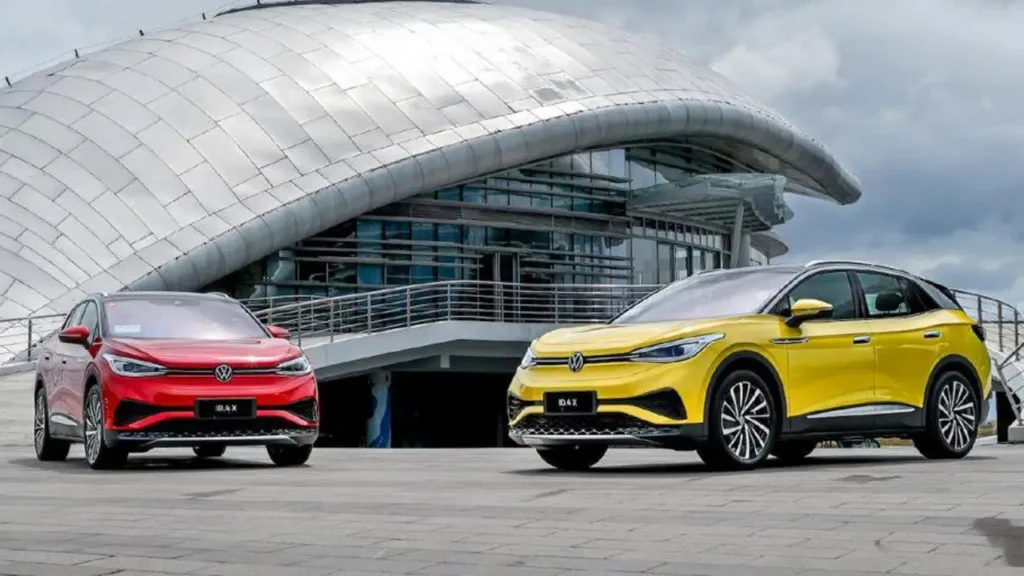
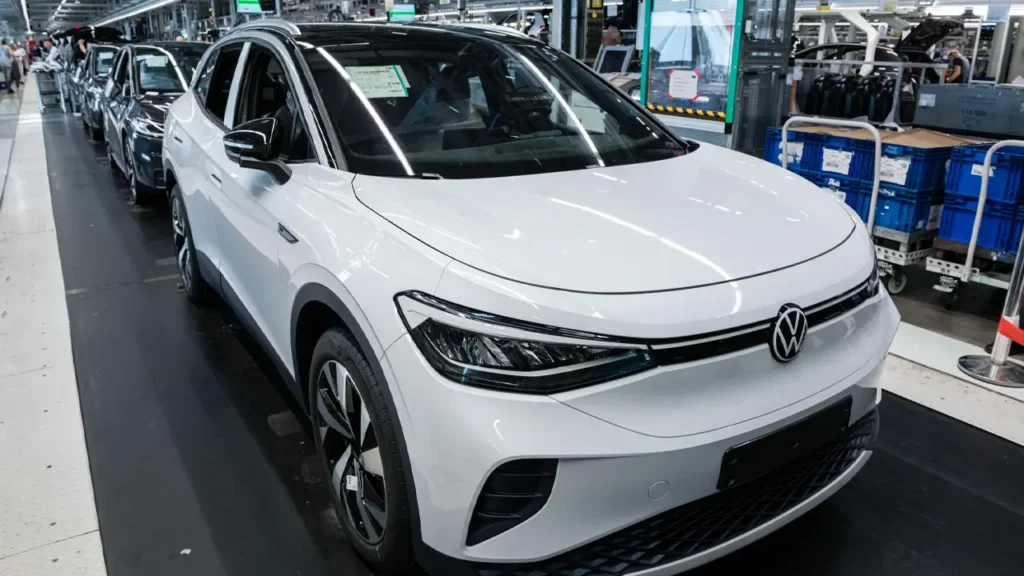
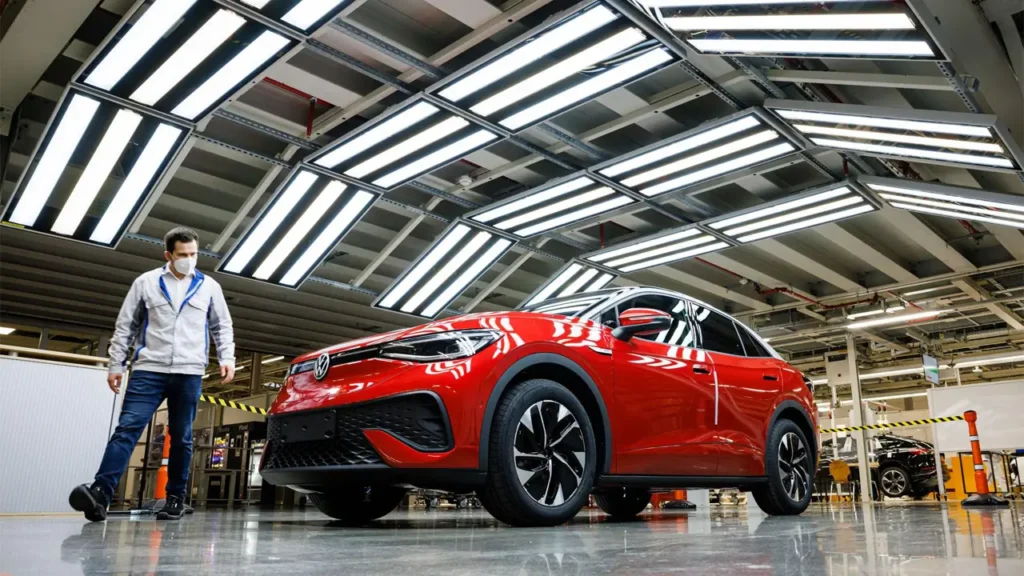
The first production vehicle to carry the CEA architecture — the ID. UNYX 07 — is a mid-size sedan produced at the Volkswagen Anhui factory. It entered production at the end of 2025, delivered on schedule, which is itself a signal that the quality harmonization process is functioning.
Platform Economics and Scaling
The Business Case for CEA at Scale
The economics of the VW XPeng CEA collaboration become most compelling when viewed through the lens of scale. Volkswagen is not building a niche technology platform for a handful of specialty vehicles. It is building the foundational architecture for its entire China product range — across all powertrain types, across multiple joint ventures, and across vehicle segments from compact to large.
In 2026, Volkswagen Group’s three joint ventures in China — SAIC Volkswagen, FAW-Volkswagen, and Volkswagen Anhui — plan to launch five new models featuring the CEA architecture, covering A- to B-class segments. That is an immediate deployment at meaningful volume, which drives down per-unit technology costs rapidly.
The agreement signed in August 2025 expanded the scope even further. Starting from 2027, the CEA architecture will be extended from locally developed pure electric models to internal combustion engine and plug-in hybrid models as well. Given that approximately 90 percent of Volkswagen’s China deliveries in 2024 were gasoline-powered, this expansion means the CEA will eventually touch the vast majority of Volkswagen’s China output.
Standardizing CEA across the full model range creates what Volkswagen executives describe as dual benefits: accelerating the rollout of digital services and software-defined features across the fleet, while simultaneously reducing development costs through shared architecture investment. The cross-platform and cross-powertrain platformization enables faster software iteration and OTA updates, significantly shortening vehicle development cycles company-wide.
VW XPeng CEA Platform Collaboration: Implications for Other Foreign-Chinese Automotive Partnerships
The Domino Effect
The VW XPeng CEA model does not exist in isolation. It is part of a broader pattern emerging across the global automotive industry — one where the traditional assumption that Western technology flows into China is being systematically replaced by a new reality of Chinese technology flowing outward.
Volkswagen itself is pursuing what it calls a multi-pronged strategy in China, maintaining partnerships with long-term partners like SAIC and FAW while forging new relationships with technology companies like XPeng and Horizon Robotics. The message is clear: in the era of intelligent connected vehicles, technology partnerships are not a supplement to the core business — they are the core business.
Other foreign automakers are watching closely. The VW XPeng collaboration demonstrates that it is not only possible but commercially viable for a legacy global automaker to build its next-generation platform in partnership with a Chinese tech-driven EV company — and to do it quickly. The 18-month development timeline from initial agreement to production-ready architecture is a benchmark that the wider industry will be measuring itself against.
For Chinese EV companies, the implications are equally significant. XPeng’s revenue from technology services — over RMB 5 billion in 2024 — shows that Chinese automotive technology can be commercialized globally, not just domestically. XPeng is already targeting 1 million overseas vehicle sales by 2030, with exports expected to generate over 70 percent of profits. The VW partnership accelerates that trajectory by establishing XPeng’s technology credentials with one of the most scrutinized automotive brands in the world.
The domino effect is already visible: if Volkswagen can succeed with this model, pressure will build on Toyota, Stellantis, Hyundai, and others operating in China to adopt similar approaches. The alternative — continuing to rely on in-house Western software development that cannot match Chinese iteration speed and cost efficiency — becomes harder to justify with each passing product cycle.
Final Verdict: VW XPeng CEA Is the New Reality
Why This Changes Everything
The VW XPeng CEA collaboration is not a temporary workaround or an experiment. It is a structural response to a permanent shift in the geography of automotive innovation. China has become the world’s most competitive and technologically demanding EV market, and the companies that are winning in that market — companies like XPeng — have developed capabilities that legacy automakers genuinely need.
The numbers tell the story plainly. A 30 percent reduction in electronic control units. A 50 percent reduction in key model development costs. A 30 percent improvement in overall development efficiency. An architecture that covers electric, hybrid, and combustion vehicles under a single software umbrella. OTA updates, AI-powered cockpits, and advanced driver assistance as standard features deployable across millions of vehicles.
For Volkswagen, the CEA represents the fastest and most cost-effective path to remaining competitive in China while freeing up engineering and financial resources for broader global innovation. For XPeng, it represents validation on the world stage — proof that a Chinese smart EV company can provide the technological backbone for one of Europe’s most iconic automotive brands.
The old model of foreign technology flowing into China is over. The new model — collaborative, reciprocal, software-defined, and built at China speed — is already in production. The ID. UNYX 07 is rolling off the line at the Volkswagen Anhui factory right now, running on architecture co-created by a Chinese EV company.
That is not the future. That is the present. And for anyone following the global EV industry, the VW XPeng CEA story is the most important case study to understand right now.
For more in-depth coverage of China’s automotive revolution, visit www.autochina.blog.
Discover more from AutoChina
Subscribe to get the latest posts sent to your email.

