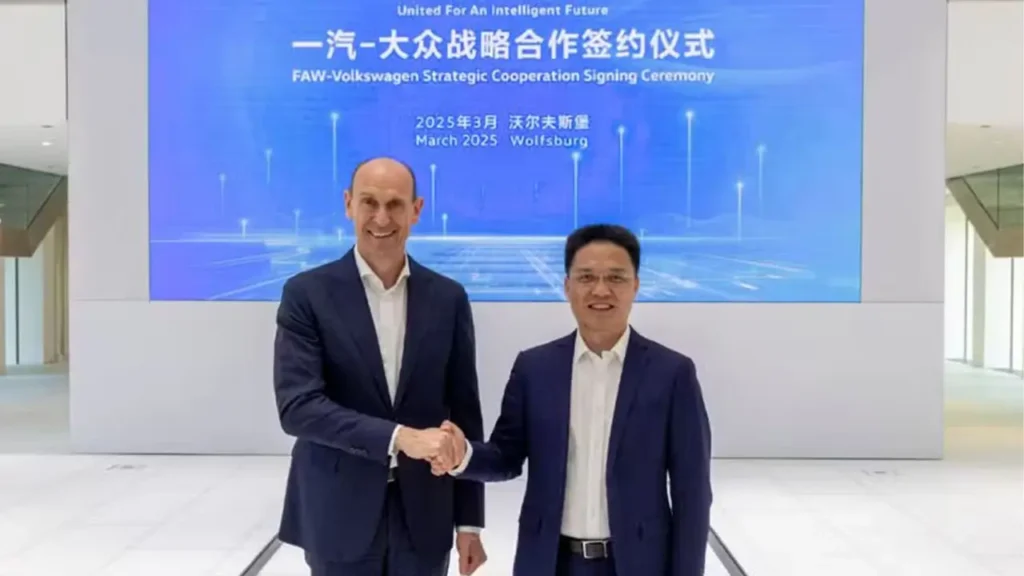
When Volkswagen announced its €700 million investment in XPeng back in July 2023, it wasn’t just another partnership—it was a white flag. The German automaker acquired a 4.99% stake in the Guangzhou-based EV maker and confirmed they were working on two mid-size SUVs expected to launch in 2026. This Volkswagen China tech partnership 2026 represents something far more profound than corporate collaboration. It’s a complete strategic pivot that acknowledges a brutal truth: in China’s electric vehicle market, German engineering legacy isn’t enough anymore.
For decades, owning a Volkswagen in China meant status, reliability, and German craftsmanship. But by 2023, something had fundamentally shifted. Chinese buyers with money were choosing local EVs, while those looking to save went for discounted ID cars. The roles had reversed entirely. This Volkswagen China tech partnership 2026 initiative emerged from that uncomfortable reality—and it’s reshaping how one of the world’s largest automakers builds cars.
Volkswagen China tech partnership 2026 and “In China, for China” — Why VW Decided to Play by Chinese Rules
The phrase “In China, for China” might sound like marketing speak, but it represents a fundamental transformation in how Volkswagen operates in its second-largest market. This partnership strengthens Volkswagen Group’s approach to efficiently cater to the needs of Chinese customers and tap new market segments, with collaboration reducing time to market by more than 30 percent.
What does this actually mean? It means Volkswagen stopped treating China as simply another export market and started building a parallel innovation ecosystem there. The company is investing €2.5 billion in its production and innovation hub in Hefei, Anhui Province, where production of the first XPeng-developed model will begin in 2026. This isn’t about transplanting German engineering to Chinese factories—it’s about letting Chinese innovation define the product from day one.
The Volkswagen In China for China strategy acknowledges that Chinese consumers don’t want yesterday’s German technology wrapped in local aesthetics. They want cutting-edge software, seamless connectivity, and autonomous driving features that work on Chinese roads, developed at Chinese speed. Volkswagen aims to remain the number one international OEM in China and be a leader in the era of Intelligent Connected Vehicles. That ambition required partnering with companies already winning that race.
Volkswagen’s China-tech reset is about speed and local ecosystems—but the next battlefield is connectivity. When cars get always-on, satellites become the new “mobile network in the sky.” Tesla’s Starlink integration patent hints at exactly that, and China’s response could be wild. Dive in here: https://autochina.blog/tesla-starlink-integration-patent-china-satellite/
Volkswagen China tech partnership 2026 — Speed vs Legacy (What’s Changing)
The contrast between traditional automotive development and the Volkswagen China localization fast development cycle is stark. Here’s what the transformation looks like:
| Aspect | Traditional VW Approach | China-Tech Partnership Model |
|---|---|---|
| Development Cycle | 48-60 months from concept to production | 24-30 months (30% faster time to market) |
| Software Architecture | Centralized German development through CARIAD | Local integration with XPeng, Horizon, ThunderSoft |
| Tech Partners | Traditional Tier 1 suppliers (Bosch, Continental) | Chinese tech startups and EV specialists |
| Decision Making | Wolfsburg headquarters approval required | Local autonomy in Hefei R&D center |
| User Experience | German-designed interfaces adapted for China | China-first design with local UX expectations |
| Cost Structure | High due to complex architecture, global sourcing | 40% reduction through simplified E/E architecture |
The new Test Workshops in Hefei feature over 100 state-of-the-art laboratories across around 100,000 square meters, for the first time allowing Volkswagen to develop and validate new vehicle platforms outside Germany. This represents a dramatic decentralization of power within Volkswagen’s global structure.
The speed transformation isn’t just about working faster—it’s about thinking differently. VCTC aims to reduce time to market for vehicles and components by 30 percent through efficient development processes and cutting-edge technologies. When your competitors can iterate monthly and push over-the-air updates weekly, traditional automotive timelines become a competitive liability.
Volkswagen China tech partnership 2026 — Alliance with XPeng: The “German Startup Mode”
The Volkswagen XPeng software collaboration goes far deeper than most observers realize. This isn’t a licensing deal or a technology transfer—it’s an operational fusion. The Sino-German team is working on a new EV platform called China Electronic Architecture (CEA), which will underpin Volkswagen-badged cars in China, based on an E/E platform XPeng already uses for its EVs.
What makes this remarkable is the decision-making structure. XPeng and Volkswagen established project centers in Guangzhou and Hefei, where engineers from both companies work closely to accelerate the development process. These aren’t liaison offices—they’re integrated development teams where hundreds of Volkswagen engineers now work directly from XPeng’s headquarters.
The scope of the collaboration expanded significantly in 2024. All battery EVs of the Volkswagen brand in China will be equipped with the China Electronic Architecture from 2026, and the master agreement paves the way for potential expansion of collaboration on E/E architecture. Originally planned for just two jointly developed models, the CEA architecture will now power every Volkswagen electric vehicle sold in China.
But perhaps the most telling aspect of this partnership is the autonomous driving integration. Volkswagen is already testing XPeng’s XNGP on the first EV, which will start mass production in 2026, with the ADAS first used on the two EVs co-developed with XPeng. For a company that spent years developing its own autonomous systems through CARIAD, licensing a Chinese startup’s technology represents an acknowledgment of where the real innovation is happening.
The software transformation goes even deeper. German media outlet Golem reported that CARIAD is now primarily focused on coordinating Volkswagen’s joint ventures with XPeng and Rivian, rather than jointly developing the software itself. CARIAD, once envisioned as Volkswagen’s answer to Tesla’s integrated software approach, has effectively become an integration coordinator rather than a primary developer. That’s a massive strategic shift that signals the company’s willingness to abandon pride in favor of speed.
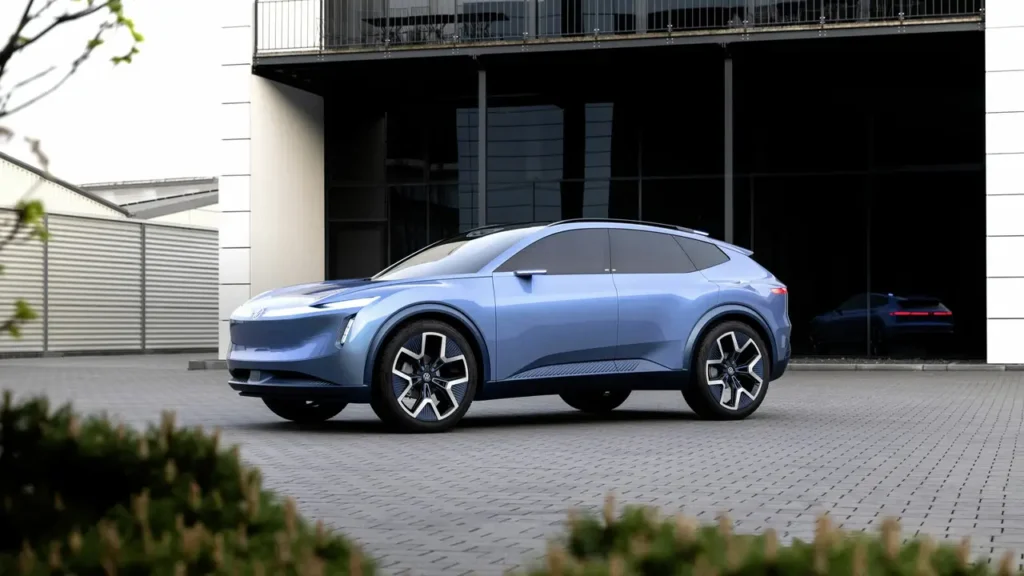
Volkswagen China tech partnership 2026 — New E/E Architecture: Zonal Computing and Rapid Updates
The Volkswagen China E/E architecture CEA represents more than just new electronics—it’s a completely different approach to vehicle computing. Traditional automotive architectures use dozens of control units, each managing specific functions. The biggest benefit of XPeng’s involvement will be a significant reduction in costs, with Volkswagen expecting a 40% drop compared to the current MEB platform thanks to reduced complexity and lower number of control units.
Zonal architecture groups computing by physical location in the vehicle rather than by function. Instead of separate units for climate control, infotainment, power management, and driver assistance—each with its own wiring harness—zonal systems use regional computing hubs that handle everything in their area of the car. This dramatically simplifies wiring, reduces weight, and makes software updates far more flexible.
Software updates for the system can be developed and installed on customer vehicles much more efficiently due to the smaller number of control units, enabling rapid expansion of digital services and functions at any time. This means Volkswagen can add new features, improve autonomous driving capabilities, or fix issues without requiring dealership visits.
The architecture’s development timeline showcases the partnership’s efficiency. The first vehicle with the jointly developed E/E architecture will start production in about 24 months from the framework agreement announcement. By comparison, Volkswagen’s previous in-house E/E development projects typically took 4-5 years.
CARIAD China’s role in this transformation is crucial. Based on partnerships with Chinese high-tech companies such as Horizon Robotics and ThunderSoft, it is developing state-of-the-art autonomous driving systems and smart cockpit functions, including AI-based driver support. Rather than being locked out of the development process, CARIAD China acts as the integration specialist, ensuring these various Chinese technologies work together seamlessly in Volkswagen vehicles.
Volkswagen China tech partnership 2026 — Smart Cockpit and Local UX: Why the “Chinese Screen” Matters More Than “German Leather”
The Volkswagen Thundersoft smart cockpit partnership tackles something German automakers traditionally struggled with: digital user experience. Chinese car buyers don’t just want screens in their cars—they want ecosystems that integrate seamlessly with their digital lives. ThunderSoft and CARIAD formed a partnership to accelerate the development of connectivity and infotainment systems in China, with the two parties planning to establish a joint venture in which ThunderSoft holds a 51% stake.
That 51% detail is significant. Unlike the Horizon Robotics joint venture where Volkswagen holds 60%, here ThunderSoft maintains control. It signals that in user-facing software, Volkswagen recognizes Chinese companies understand the market better than they do. The partnership will leverage CARIAD’s vehicle software and hardware integration capabilities, Volkswagen Group’s platform synergy, and ThunderSoft’s expertise in operating systems as well as smart cockpit.
What does a Chinese smart cockpit actually deliver that’s different? Voice control that understands context and regional dialects. Integration with WeChat, Alipay, and other essential Chinese digital services. Karaoke features built into the car’s audio system. Advanced voice assistants that can control nearly every vehicle function. Augmented reality navigation that overlays directions onto the real world through the windshield display.
In the field of UX/UI design, CARIAD China established one strong in-house team through purchasing the local design company ARK. The acquisition of ARK wasn’t just about hiring designers—it was about acquiring cultural understanding of what makes interfaces feel native to Chinese users.
The joint venture, called CARThunder, has a clear mission. CARThunder focuses on R&D, integration and testing of software products and solutions in the field of intelligent cockpit and intelligent connectivity systems, providing software development services for operating systems, human-machine interfaces, cockpits, and cloud computing. This isn’t peripheral functionality—it’s the primary way customers interact with their vehicles daily.
Volkswagen China tech partnership 2026 — Chips and ADAS on the Chinese Side: CARIZON and the Horizon Bet
The Volkswagen Horizon Robotics CARIZON chip partnership might be the most strategically important piece of the China-Tech transformation. Autonomous driving requires massive computing power, and chip supply has become a critical competitive advantage. In 2023 Volkswagen’s software subsidiary CARIAD and Horizon established a joint venture called CARIZON, to help speed up development of Advanced Driver Assistance System and Autonomous Driving systems for the Chinese market.
Volkswagen’s investment here is substantial. Volkswagen announced it would invest €2.4 billion (partly in Horizon Robotics and partly in the JV) and hold a 60 percent stake in the joint venture. But money wasn’t the only investment—they committed top engineering talent to Beijing-based development.
The immediate goal is deploying existing Horizon technology. CARIZON, which now employs some 500 engineers, is developing a Level 2+ autonomous driving system based on Horizon Robotics’s Journey 6 chip. Journey 6 delivers 560 TOPS of computing power, significantly more capable than previous generations and competitive with offerings from Nvidia and Mobileye.
But the long-term vision is even more ambitious. CARIZON is developing the first self-designed System-on-Chip in China, with single-chip computing power of around 500 to 700 TOPS, expected to be delivered within the next three to five years. This isn’t just licensing someone else’s chip—it’s building in-house capability to design automotive computing at the silicon level.
The SoC’s specifications reveal serious engineering ambition. According to Volkswagen, the chip will be produced with a processing hub of 3-4 nanometers; currently there are few companies that can mass-produce it. Moving to advanced process nodes means better performance and efficiency, crucial for managing the computational demands of autonomous driving while maintaining acceptable power consumption.
Why does chip development matter so much? Because it determines the ceiling for what your vehicles can do. Designed for China’s complex road environments and diverse driving scenarios, the SoC will significantly enhance real-time decision-making, computing performance, and system efficiency. Chinese urban environments—with their dense traffic, mixed vehicle types, and unique road infrastructure—present challenges that require solutions optimized for local conditions.
The partnership with Horizon also opens doors to rapid technology adoption. Xpeng announced at its Tech Day that Volkswagen will adopt Xpeng’s in-house ‘Turing’ chips and latest-generation ADAS, to be integrated into upcoming VW models in China. By 2026, Volkswagen vehicles will have access to some of the most advanced autonomous driving hardware available in any production car globally.
Volkswagen China tech partnership 2026 — R&D in China as a “Speed Factory”: Hefei, Local Teams, Early Partner Integration
The Volkswagen China R&D Anhui development center transformation represents the physical manifestation of the “In China, for China” strategy. Hefei, the capital of Anhui Province, has evolved from a regional manufacturing hub into Volkswagen’s most important development center outside Germany. For the first time in Volkswagen Group’s history, new vehicle platforms and key technology can be fully developed and brought to market readiness with all approval processes outside Germany.
The scale of the investment is remarkable. Volkswagen is investing €2.5 billion in its production and innovation hub in Hefei, Anhui Province, including expansion of R&D capacity and preparations for production of two Volkswagen brand models developed with XPENG. This isn’t a satellite office—it’s a complete automotive development ecosystem.
The facility’s capabilities are comprehensive. The new Test Workshops feature over 100 state-of-the-art laboratories across around 100,000 square meters, delivering software-hardware integration, battery and powertrain testing, and full vehicle-level validation. Everything from initial software development to final vehicle validation happens on-site, eliminating the delays inherent in coordinating between China and Germany.
But infrastructure alone doesn’t create speed—organizational structure does. The Volkswagen Group China Technology Company (VCTC) is bundling central development units and decision-making processes for local vehicle and technology projects, while coordinating developmental processes with the R&D units of joint ventures. VCTC has the authority to make critical decisions without routing everything through Wolfsburg, a level of autonomy unprecedented in Volkswagen’s hierarchical culture.
The supplier integration strategy further accelerates development. VCTC integrates state-of-the-art technologies from local suppliers in the early product development phase to benefit from the innovative strength of the market, with a 450,000 square meter supplier park being built in Hefei and around 1,100 local suppliers providing hardware and software. Early supplier involvement means potential technical issues get resolved during development rather than discovered during production, dramatically reducing rework.
The partnership integration is physical, not just contractual. XPeng engineers work directly in Volkswagen facilities and vice versa. Hundreds of Volkswagen engineers have begun working at XPeng’s headquarters in Guangzhou, signaling the upgrade of the tech partnership between the two. This level of operational integration is rare in automotive partnerships, where companies typically maintain strict boundaries around intellectual property.
The results speak to the approach’s effectiveness. The design of the new SUV took Volkswagen and XPeng 30 months to complete—more than 30 percent faster than usual, according to the German manufacturer. That 30% improvement isn’t aspirational—it’s already been demonstrated with real products approaching market launch.
Looking ahead, the capabilities will only expand. The Functions Integration Test Laboratory comes online in mid-2026—one of only two in the Group—to simulate extreme environment conditions. This facility will allow testing vehicles under conditions that would be impossible to replicate in real-world testing, further compressing development timelines.
Volkswagen China tech partnership 2026 — Pros, Cons, and Market Reception: What Buyers Gain, What the Brand Risks
The Volkswagen China autonomous driving 2026 transformation creates clear winners and losers. For Chinese consumers, the benefits are tangible and significant. They’re getting Volkswagen’s build quality and global platform expertise combined with cutting-edge Chinese technology in software, connectivity, and autonomous driving. The two jointly developed e-models will be equipped with state-of-the-art software and hardware, offering Chinese customers an intuitive, connected digital experience and advanced automated driving functions.
Advantages for buyers:
The cost structure works in consumers’ favor. Volkswagen expects a 40% drop in costs compared to the current MEB platform thanks to reduced complexity, potentially translating to more competitive pricing. In a market where pricing pressure is intense and EVs from BYD, NIO, and others offer impressive specs at aggressive price points, this cost reduction matters.
The technology offering is genuinely premium. By 2026, Volkswagen buyers will access XNGP autonomous driving, which rivals Tesla’s Full Self-Driving system in scope and ambition, handling city streets and highways with minimal driver input using cameras and sensors. This puts Volkswagen vehicles on par with or ahead of most competitors in the Chinese market.
Update capabilities match consumer expectations. Modern Chinese car buyers expect continuous improvement through over-the-air updates, something traditional automakers struggled to deliver. With the China Electronic Architecture, Volkswagen can offer customized digital services even after purchase, such as temporary upgrades of automated driving functions or higher battery efficiency.
Risks and challenges:
Brand positioning becomes complicated. Volkswagen built its China reputation on German engineering excellence. When the core technology comes from Chinese partners, does that dilute the brand’s premium perception? Some traditional Volkswagen buyers may question what they’re actually paying for.
Technological dependency creates vulnerability. Volkswagen China stated they are continuing to develop their ADAS stack for China under CARIZON, scheduled to be used in a first vehicle at the beginning of next year, but in parallel, they will launch two fully electric models in 2026 that will use XPENG’s E/E architecture and ADAS stack. Running parallel development programs suggests uncertainty about the right path forward.
Organizational culture faces pressure. Volkswagen’s traditional engineering culture values systematic, thorough development. The China-Tech partnerships demand rapid iteration and accepting “good enough” solutions that can be improved later. These philosophies can clash, creating internal friction.
User perspectives on the transformation:
For EV buyers, the shift is broadly positive. They get access to technology that might otherwise take Volkswagen 3-4 more years to develop internally, delivered at competitive prices. The XPeng partnership particularly appeals to buyers who want premium build quality with cutting-edge software.
For PHEV and ICE buyers, the value proposition is less clear. The China Electronic Architecture and advanced software features are currently focused on battery electric vehicles. XPeng and Volkswagen extended the partnership to include development of hybrid and internal combustion engine models, but these applications are still developing.
For technology enthusiasts focused on interfaces and updates, the ThunderSoft collaboration delivers exactly what they’ve been asking for. Chinese smart cockpit systems from companies like NIO and XPeng have set high expectations, and Volkswagen’s previous infotainment offerings felt dated by comparison. The partnership closes that gap.
For buyers prioritizing autonomous driving, the CARIZON and XPeng ADAS integration is transformative. XNGP allows a car to handle city streets and highways with minimal driver input, using cameras and sensors to ‘see’ its surroundings, with no high-definition maps required. That mapless approach to autonomous driving is particularly valuable in China, where urban environments change rapidly.
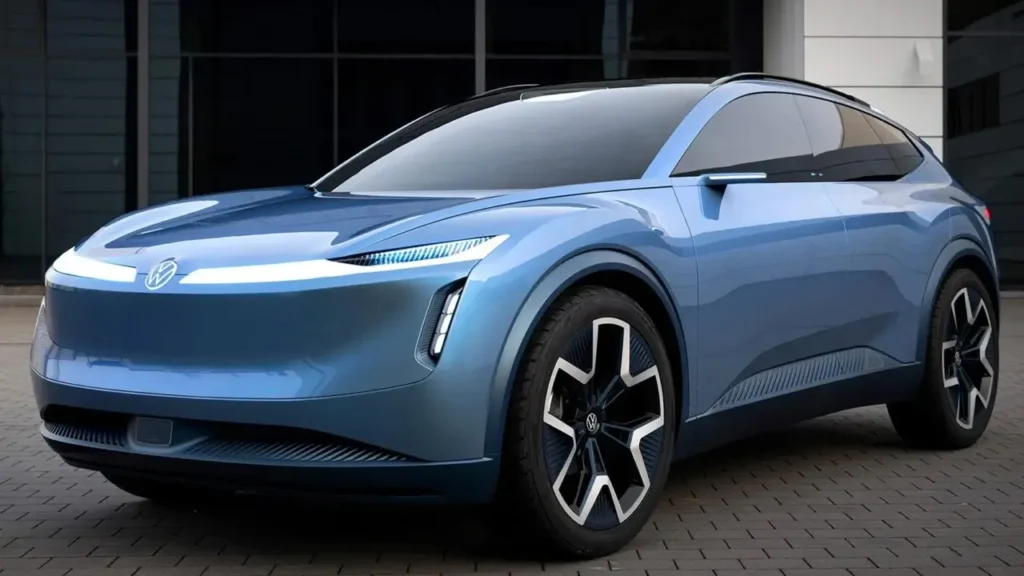
The market’s initial reception has been cautious but increasingly positive. The ID Unyx 08 has received government approval to begin production and is expected to enter the market in 2026. Pre-launch buzz suggests significant interest, particularly among younger buyers who care less about brand heritage and more about actual capabilities.
If Volkswagen can reinvent itself by embracing local tech speed, imagine what happens when you upgrade your own “memory stack.” That’s exactly what Screenpipe is about: an open-source Rewind-style AI that captures local context so you can search your day like a timeline. Full breakdown here: https://aiinovationhub.com/screenpipe-rewind-ai-alternative-local-memory/
Final Verdict: Who Benefits from the “Chinese VW,” and Why This Transformation Matters for www.autochina.blog
The Volkswagen software-defined vehicles China 2027 vision represents more than one company’s survival strategy—it’s a template for how global automakers must adapt to China’s transformed automotive landscape. The question isn’t whether other legacy manufacturers will follow similar paths, but how quickly they can implement comparable transformations.
Who wins from this transformation?
Chinese consumers win decisively. They get vehicles combining German manufacturing quality with Chinese software innovation at prices 40% lower than previous generation technology would have cost. The partnerships deliver products specifically designed for Chinese roads, Chinese digital ecosystems, and Chinese buyer expectations.
Volkswagen wins if—and only if—they successfully navigate the cultural and organizational challenges. The technical strategy is sound, but executing it requires changing decision-making processes, accepting dependency on partners, and potentially damaging brand positioning built over decades. Success means maintaining market leadership in China. Failure means becoming irrelevant in the world’s largest automotive market.
Chinese tech partners win significantly. XPeng, Horizon Robotics, and ThunderSoft gain validation, revenue, and the opportunity to influence how a global automotive giant builds vehicles. XPeng’s revenues from services and others jumped 93.1% year-on-year to RMB 1 billion in the first three months of this year, buoyed by its collaboration with the German giant. The partnerships provide scale and credibility that accelerates their growth trajectories.
Other global automakers face increased pressure. If Volkswagen successfully implements this strategy, it raises the bar for what Chinese consumers expect from international brands. Manufacturers still pursuing traditional development models will face even steeper competitive challenges.
Why this matters for following China’s automotive evolution:
The Volkswagen transformation illuminates broader trends that define China’s automotive industry. It demonstrates that traditional automotive advantages—manufacturing scale, legacy brand value, global platforms—are necessary but insufficient in the intelligent EV era. Software capabilities, ecosystem integration, and development speed have become equally or more important than traditional engineering strengths.
It shows that “localization” no longer means adapting global products for local markets. Real localization means building local development capabilities, empowering local teams to make decisions, and accepting that Chinese partners may lead in critical technologies. Half-measures don’t work—the market punishes companies that add Chinese features to German products rather than building Chinese products with German quality.
It reveals that the shift to electric vehicles is only the beginning. The deeper transformation is toward software-defined, continuously updating, ecosystem-integrated transportation. Companies that view EVs as simply cars with different powertrains miss the point entirely.
The partnerships also highlight China’s position as a technology innovator rather than just a manufacturer. Volkswagen isn’t licensing Chinese technology as a temporary expedient—they’re building joint ventures, investing billions, and betting their China future on Chinese partners’ R&D capabilities. That represents a dramatic shift from the historical view of China as a production location for technology developed elsewhere.
For anyone following China’s automotive industry, the Volkswagen China tech partnership 2026 initiative serves as a case study in adaptation under pressure. The speed of the transformation—from announcement in mid-2023 to production vehicles in 2026—demonstrates how compressed automotive development timelines have become in China. Traditional 5-7 year product cycles have compressed to 2-3 years, and companies unable to match that pace face existential challenges.
The organizational implications extend beyond automotive. Volkswagen’s experience shows that truly leveraging Chinese innovation requires more than signing partnership agreements. It demands changing decision-making structures, accepting reduced control over core technologies, and integrating teams across cultural and organizational boundaries. These challenges apply to any multinational company trying to remain competitive in China’s fast-moving technology sectors.
Looking toward 2027 and beyond, the success or failure of Volkswagen’s transformation will influence how the entire global automotive industry approaches the Chinese market. If the strategy succeeds—if sales grow, margins improve, and brand perception strengthens—expect accelerated adoption of similar approaches by other manufacturers. If it struggles, it may prompt reconsideration of how deeply Western companies should integrate with Chinese partners.
This is why tracking these developments on platforms like www.autochina.blog matters. The Volkswagen transformation isn’t just automotive news—it’s a real-time case study in industrial adaptation, technological integration, and cultural change at massive scale. The lessons extend far beyond cars to any industry facing rapid technological disruption and powerful local competition in China.
The bottom line: Volkswagen is betting €5+ billion and its entire China strategy on the hypothesis that partnering with Chinese tech companies offers better odds than trying to out-innovate them from Germany. By 2027, we’ll know whether that was visionary adaptation or costly capitulation. Either way, the implications will reshape global automotive competition for decades.
Discover more from AutoChina
Subscribe to get the latest posts sent to your email.

