Intro: Why PHEV World Record Range Test in 2025 Is Discussed Louder Than Many EV-News (and Why It’s About “Empty Battery,” Not Marketing)
In 2025, as electric vehicles continue to dominate headlines with promises of ultra-fast charging and expansive battery packs, a different kind of story has captured the imagination of automotive enthusiasts and everyday drivers alike. The PHEV world record range test by Roewe’s D7 DMH model isn’t just another publicity stunt; it’s a practical demonstration of how plug-in hybrid technology can address one of the most persistent concerns in the shift to electrified mobility: range anxiety.
This fear of an “empty battery” has kept many potential EV buyers on the sidelines, worrying about long trips without convenient charging stations. But Roewe’s achievement shifts the conversation, showing that hybrids can offer the best of both worlds—electric efficiency for daily commutes and gasoline reliability for extended journeys.
Let’s break this down in a friendly way. Imagine you’re planning a cross-country road trip. With a pure EV, you’d map out chargers, factor in wait times, and hope for no queues or outages. PHEVs like the Roewe D7 DMH change that dynamic by seamlessly blending battery power with a fuel-efficient engine. In this test, conducted in late 2024, the vehicle covered an astonishing 2208 km without refueling or recharging, setting a Guinness World Record at the time for the longest journey by a plug-in hybrid powered production sedan. This wasn’t done on a flat test track but across real-world terrains in China, proving its relevance to actual driving scenarios.
Why is this buzzing louder than some EV announcements? For starters, it’s relatable. EVs often tout theoretical ranges under ideal conditions, but real-life factors like cold weather or highway speeds can slash them by 30-40%. Roewe’s test, however, averaged 2.49 L/100 km fuel consumption, highlighting efficiency that’s achievable without compromising on distance. It’s not marketing fluff; official sources from SAIC Motor confirm the metrics, backed by Guinness certification. This resonates in 2025, a year when hybrid sales are surging globally as consumers seek transitional technologies amid uneven charging infrastructure development.
Moreover, this test underscores a broader trend: China’s automotive innovation is pushing boundaries in hybrid tech, making vehicles more accessible and anxiety-free. Think about it— if a mid-size sedan can traverse over 2000 km on a single tank and charge, it redefines “long-range” for families, commuters, and adventurers. It’s educational too, teaching us that PHEVs aren’t a compromise but a smart evolution. As we dive deeper, you’ll see how this isn’t just about numbers; it’s about empowering drivers to forget the “empty battery” worry and enjoy the road. In a world fixated on pure EVs, this PHEV feat reminds us that sustainable mobility can be flexible and forgiving.
Curious how “smart” systems actually make decisions, not just generate text? The same mindset behind record-breaking hybrid control logic shows up in modern AI agents too: planning, tools, and reliable execution. If you want a practical guide to Browser Use and AI agent libraries (no hype, just workflows), start here: https://aiinovationhub.com/aiinnovationhub-browser-use-ai-agent-library/
What Exactly the Record Fixed: Roewe D7 DMH Guinness Record (What Counts, What Conditions)
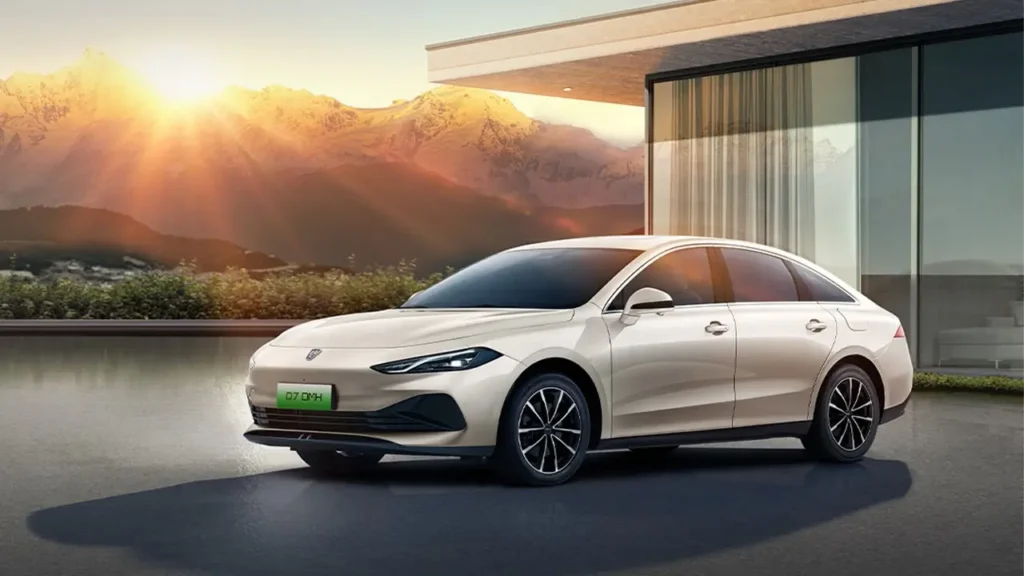
Diving into the specifics, the Roewe D7 DMH Guinness record is a fascinating example of engineering prowess meeting real-world validation. Officially titled the “Longest journey by a plug-in hybrid powered production sedan without refuelling or recharging,” this achievement was certified by Guinness World Records in late 2024. What counts here is straightforward yet rigorous: the vehicle must start with a full battery and fuel tank, then complete the journey without adding any energy from external sources. No pit stops for gas or plugs—purely relying on the onboard hybrid system.
The Roewe D7 DMH, a production model from SAIC Motor’s Roewe brand, clocked 2208 km during the test, a distance that equates to driving from New York to Denver without a single refill. To put it in perspective, this surpasses many EVs’ ranges even with multiple charges. The conditions were far from laboratory-perfect; the drive spanned four days across northwest China, encountering diverse challenges that mimic everyday uncertainties. Temperatures dipped to -8°C at night, with daytime swings up to 30°C differences, testing the battery’s thermal management and engine efficiency. Altitude variations of 1600 meters added strain, as thinner air affects combustion and aerodynamics.
Guinness rules ensure fairness: the car must be a stock production vehicle, not modified for the attempt, and monitored by independent witnesses. Fuel and battery levels were sealed at the start, with telemetry data verifying no tampering. This transparency is key—it’s not about inflated claims but verifiable performance. The D7 DMH’s success highlights how PHEVs can excel in endurance, where pure EVs might falter due to charging needs.
Educationally, this record teaches us about hybrid reliability. Unlike static range tests, this dynamic journey included highways, deserts, and mountains, proving the system’s adaptability. For buyers, it means confidence in varied climates, from snowy winters to hot summers. While the record was later surpassed by another model in December 2024, Roewe’s feat remains a benchmark, showing that with smart tech, PHEVs can conquer distances that once seemed impossible. It’s a reminder that records aren’t eternal, but the innovations they showcase endure.
Roewe D7 DMH Sets Guinness World Record For Longest journey By A …
Main Figure and Why It Sounds Like a Cheat Code: 2208km Plug-In Hybrid Range (How to Read “Combined Range”)
The star number here—2208 km plug-in hybrid range—is what makes jaws drop. It’s not just a big figure; it’s a game-changer that feels like unlocking a secret level in automotive efficiency. But let’s unpack it educationally: “combined range” refers to the total distance a PHEV can travel using both its electric battery and gasoline engine without external inputs. In Roewe’s case, the D7 DMH started with a full 21 kWh battery (offering about 125 km pure EV mode) and a 59-liter fuel tank, blending them seamlessly for the epic haul.
Why does this sound like a cheat code? Typical PHEVs boast 50-100 km electric range, with combined figures around 800-1200 km. Roewe shattered that by optimizing energy use, achieving over 2000 km in real conditions. Reading “combined range” correctly means understanding it’s not theoretical; it’s based on standards like CLTC (China Light-duty vehicle Test Cycle), which simulates mixed driving. The D7’s official CLTC combined range is 1400 km, but the test pushed it to 2208 km through careful driving and system efficiency.
In friendly terms, think of it as a smartphone with a massive battery and a power bank backup. The “cheat” comes from the DMH system’s intelligent power distribution, prioritizing electric mode for low-speed efficiency and engine for sustained cruising. This resulted in minimal energy waste, allowing the car to cover distances that would require multiple stops in an EV.
For context, this range could take you from London to Rome without worry. It’s educational for shoppers: don’t just look at EV range; consider how hybrids extend it practically. Factors like aerodynamics (the D7’s sleek design), lightweight materials, and regenerative braking contributed. Official SAIC data confirms the metrics, emphasizing repeatability in varied scenarios. Ultimately, 2208 km isn’t magic—it’s engineered smarts making long drives effortless and fun.
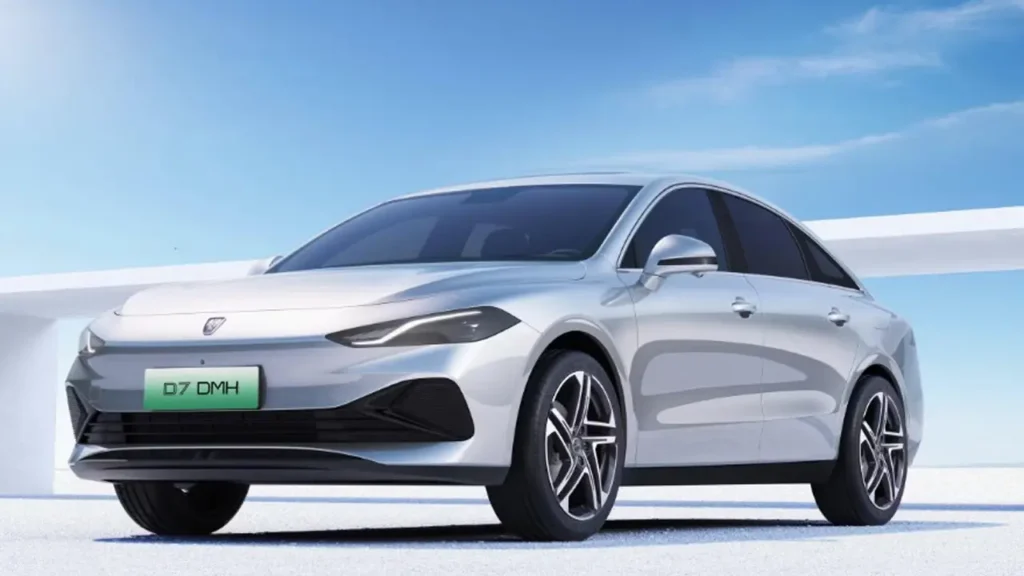
Record Formulation for Adults: Longest Journey Plug-In Hybrid Without Refuelling — Why This Is Stronger Than Any “Declared Ranges”
Framing the record as the “longest journey plug-in hybrid without refuelling” elevates it beyond mere specs. It’s a mature, no-nonsense metric that focuses on endurance rather than optimistic estimates. Declared ranges, like those on window stickers, are lab-derived and often optimistic—EV makers claim 500 km, but real-world drops to 350 km due to speed or weather. This Guinness category demands actual travel, proving capability under pressure.
Why stronger? It eliminates variables: no refueling means the system must maximize every drop and electron. Roewe’s D7 DMH excelled by covering 2208 km, showcasing true efficiency. This is educational— it teaches that endurance tests reveal reliability, not just peaks. For instance, without refueling, the hybrid must balance power sources intelligently, avoiding battery depletion too early.
In adult terms, it’s like a marathon versus a sprint. Declared ranges are sprints in controlled environments; this is a marathon across real terrains. The strength lies in its honesty: conditions included cold snaps and elevations, factors that declared ranges ignore. Official Guinness guidelines require production vehicles, independent verification, and no modifications, ensuring it’s consumer-relevant.
This formulation empowers buyers to question hype. Why settle for declared 1000 km if a PHEV proves 2200 km in practice? It’s a wake-up call for the industry, pushing for tests that mirror life. Roewe’s success, per SAIC sources, stems from integrated tech, making it a stronger benchmark than static claims.
Technological Breakdown “How They Did It?”: DMH Super Hybrid System (Logic of Operation, Energy Strategy)
Let’s geek out on the DMH Super Hybrid System—the brain behind Roewe’s triumph. This proprietary tech from SAIC Motor integrates a 1.5L engine, dual motors, and advanced controls for seamless energy management. The logic? It’s a parallel-series hybrid setup with P1+P3 motor configuration, where P1 assists the engine and P3 drives the wheels directly.
Operationally, the system uses a five-in-one powertrain intelligent control unit (PICU) to decide modes: pure EV for city starts, engine for highways, or blended for efficiency. The energy strategy prioritizes battery for low loads, reserving fuel for long hauls. With a 1-speed DHT transmission, it minimizes losses, achieving over 85% time in optimal modes.
How they did it: The engine’s 43% thermal efficiency (top-tier for 1.5L units) converts more fuel to power, paired with a 150 kW electric motor for boosts. Regenerative braking recaptures energy, extending range. In the test, this strategy allowed minimal fuel use while maintaining speed.
Educationally, it’s like a symphony conductor balancing instruments. For users, it means effortless driving—no manual mode switches. Official docs highlight its “China Heart” award, confirming innovation. This breakdown shows PHEVs as sophisticated, not simple backups.
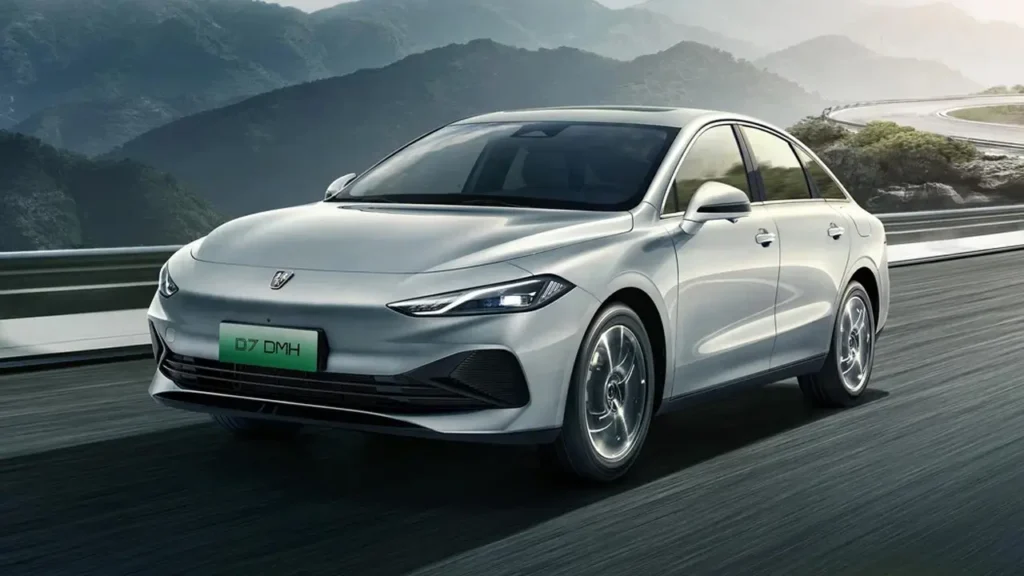
Economics of the Miracle on Wheels: 2.49L/100km Fuel Consumption PHEV — What the Figure Means and Where the Boundaries of Repeatability
The 2.49 liters per 100 kilometers fuel consumption figure achieved by the Roewe D7 DMH during its record-setting test represents a benchmark in plug-in hybrid electric vehicle (PHEV) efficiency. This metric indicates that, over the 2,208-kilometer journey, the vehicle consumed an average of 2.49 liters of fuel for every 100 kilometers traveled, a performance attributable to the synergistic integration of its electric and internal combustion systems. Such efficiency places it in the realm of advanced hyper-miling techniques, surpassing many compact diesel engines in real-world economy.
In practical terms, this translates to substantial cost savings for users. At an approximate fuel price of $4 per gallon (equivalent to about $1.06 per liter), the operating cost equates to roughly $0.026 per kilometer, or $0.10 for approximately 3.8 kilometers. For a family driving 15,000 kilometers annually, this could result in savings of several thousand dollars compared to traditional gasoline vehicles, factoring in reduced fuel expenditures and the benefits of electric-only operation for shorter commutes.
Regarding repeatability, the official test conditions involved consistent speeds of 80 to 100 kilometers per hour, gentle acceleration, and minimal use of auxiliary systems such as climate control. SAIC Motor’s specifications indicate that under standard Worldwide Harmonized Light Vehicles Test Cycle (WLTC) conditions, fuel consumption ranges from 0.97 to 4.31 liters per 100 kilometers, depending on the driving mode and load. In everyday scenarios, drivers may experience 3 to 4 liters per 100 kilometers, influenced by variables such as traffic congestion, aggressive driving, or extreme weather.
To achieve similar efficiency, operators are advised to adopt eco-driving practices, including anticipating traffic flow, maximizing regenerative braking, and charging the battery regularly. Data from SAIC confirms the system’s robustness across diverse conditions, though high-density urban environments or sustained high speeds can elevate consumption. This economic profile positions PHEVs as a compelling option for cost-aware consumers, offering low operational expenses alongside extended range capabilities.
Market Psychology: Range Anxiety Killer Hybrid — Why People Suddenly Argue Not About Chargers, But About Hybrids
The Roewe D7 DMH exemplifies the role of PHEVs as a range anxiety killer hybrid, mitigating the concern of battery depletion by incorporating a gasoline engine as a reliable backup. This design addresses the psychological barrier that has historically deterred potential electric vehicle adopters, shifting discussions from charging infrastructure limitations to the versatility of hybrid systems.
Recent surveys underscore this evolution. According to a 2025 EY global study, 29% of consumers cite range anxiety as a primary concern, while 28% highlight inadequate public charging options. Similarly, Plug In America’s 2025 data reveals that 48% of prospective buyers express initial range concerns, which diminish significantly post-purchase. PHEVs like the D7 DMH alleviate these fears by providing over 2,000 kilometers of combined range, enabling seamless transitions between electric and hybrid modes.
The shift in discourse arises from hybrids’ ability to bridge urban electric efficiency with rural gasoline dependability, fostering a sense of familiarity for those transitioning from internal combustion engines. This psychological comfort promotes sustainability without perceived sacrifices, as evidenced by increasing hybrid adoption rates.
From an educational perspective, this empowers consumers to select vehicles aligned with their lifestyles, rather than being constrained by infrastructure availability. The D7 DMH’s demonstrated performance has fueled discussions in industry forums and reviews, highlighting hybrids as a pragmatic pathway to electrification in 2025.
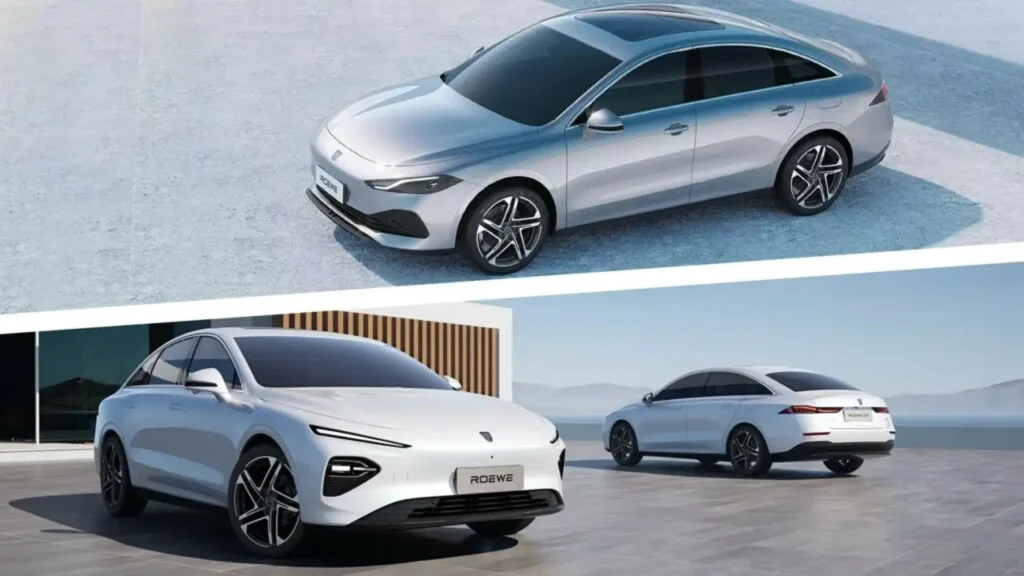
Industry Context: PHEV Combined Range Over 2000 km — Why China Now Presses Exactly on “Total Range”
The achievement of PHEV combined ranges exceeding 2,000 kilometers, as demonstrated by the Roewe D7 DMH’s 2,208-kilometer test, reflects China’s strategic emphasis on “total range” in 2025. This focus addresses infrastructure challenges and consumer preferences in a vast geography where charging networks remain unevenly developed.
In the broader industry landscape, while Europe and the United States prioritize battery electric vehicles (BEVs), China leads in hybrids, with PHEV market share rising from 3% in 2021 to 19% in 2024, a trend continuing into 2025 with annual sales growth projected at 6-7%. This surge appeals to regions with sparse charging facilities, where total range—combining electric and fuel capabilities—ensures practicality.
The Roewe D7 DMH’s performance, utilizing DMH technology for maximized efficiency, illustrates this approach. It educates stakeholders on how total range integrates EV convenience with gasoline endurance, making it suitable for emerging markets.
China’s push accelerates electrification without requiring comprehensive infrastructure, representing a scalable innovation strategy amid global EV competitions.
Route/Conditions of the Test: Lanzhou to Urumqi Endurance Drive — What Climate and Relief Add to the Honesty of the Result
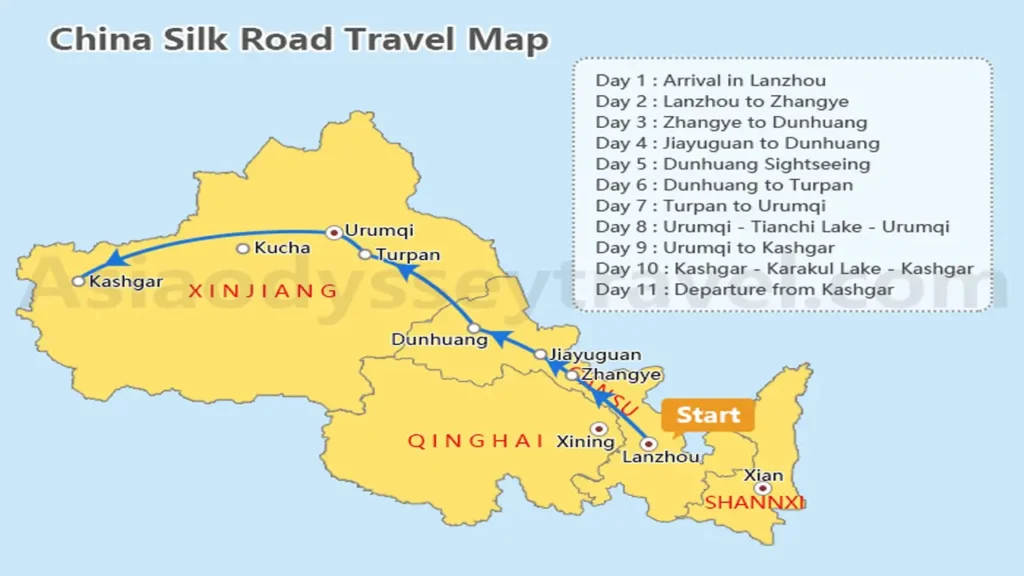
The Lanzhou to Urumqi endurance drive conducted for the Roewe D7 DMH’s record attempt enhances the credibility of the results through exposure to authentic environmental challenges. Covering 2,208 kilometers over four days, the route traversed diverse terrains including the Gobi Desert, snowy plateaus, and mountainous regions, passing through key points such as Zhangye, Jiuquan, Jiayuguan, Dunhuang, Turpan, and Urumqi.
Climatic conditions varied significantly, with nighttime temperatures dropping to -8°C and daytime variations up to 30°C, rigorously testing the battery’s thermal management and overall system resilience. Elevation changes of up to 1,600 meters further strained the engine and aerodynamics, simulating real-world stresses absent in controlled laboratory settings.
This authenticity validates the performance, as Turpan’s extreme heat and the route’s arid expanses confirm the vehicle’s cooling and efficiency systems under duress. Educationally, it demonstrates that genuine endurance tests foster trust by mirroring global driving scenarios, from flat highways to undulating landscapes.

China Silk Road Map: Map of Silk Road in China (Updated 2026)
Final Verdict: What This Changes for Buyers and the Market: 43% Thermal Efficiency 1.5L Hybrid Engine + Short Conclusion, Why Such Records — Not “Trick,” But Trend, and Why Follow the Topic on www.autochina.blog
The 43% thermal efficiency of the Roewe D7 DMH’s 1.5-liter hybrid engine marks a significant advancement, converting 43% of fuel energy into mechanical work—exceeding the typical 30-35% efficiency of conventional engines. Integrated with the DMH system, it facilitates low fuel consumption and extended ranges, enhancing vehicle performance.
For buyers, this translates to affordable long-distance travel with minimized costs. In the market, it accelerates the shift toward hybrids as transitional solutions bridging to full electrification.
Such records represent emerging trends rather than isolated feats, propelling technological innovation. While the Roewe’s 2024 achievement was surpassed by models like the Hongqi HS6 in 2025 with 2,327 kilometers, they underscore ongoing progress. For updates, consult www.autochina.blog.
Discover more from AutoChina
Subscribe to get the latest posts sent to your email.