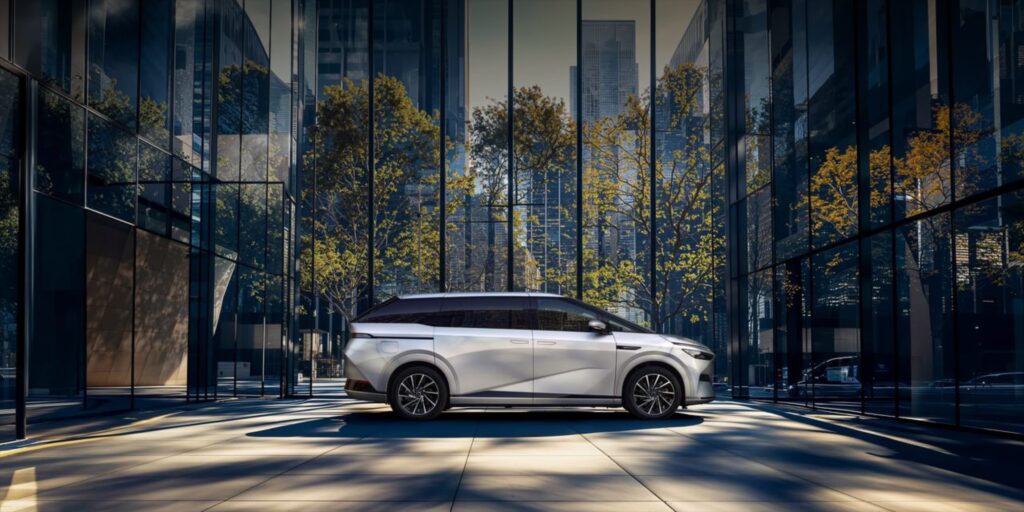
Cars with swivel seats are not just a “showroom gimmick,” but a new logic for using the car: Zeekr MIX literally makes the interior a place for communication, work, and hangouts. This innovative feature, prominently showcased in the Zeekr MIX, transforms the traditional vehicle cabin into a versatile space that adapts to modern lifestyles. Drawing from official specifications provided by Zeekr, the front-row seats can swivel up to 270 degrees, enabling a range of configurations that support “9+N” cabin scenario modes.
This design philosophy, rooted in the SEA-M architecture, emphasizes maximizing interior space while maintaining a compact exterior footprint. As electric vehicles evolve, features like these highlight a shift toward multifunctional mobility solutions. In the following sections, we will explore how this technology integrates into daily use, its mechanical underpinnings, and its broader implications for the automotive industry.

Cars with swivel seats — what does “Living Room” mean in a car
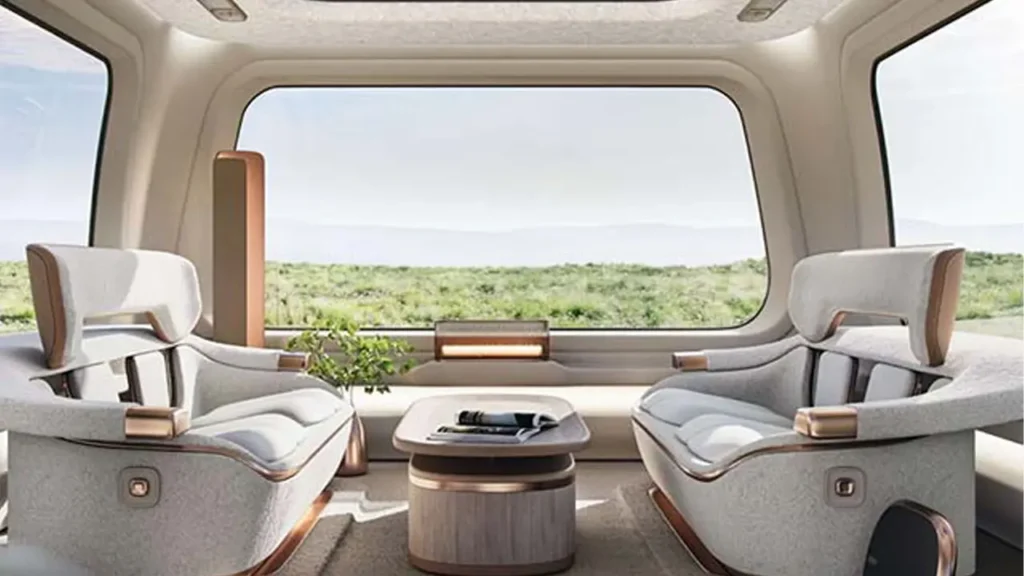
The concept of “living room” in a car, as embodied by cars with swivel seats, refers to transforming the vehicle’s interior into a comfortable, multifunctional space akin to a home lounge. According to official Zeekr documentation, the Zeekr MIX exemplifies this by creating a welcoming ambiance similar to one’s own living room, with an in-cabin height of 1350 mm and a movable central console. This setup allows passengers to relax, socialize, or engage in activities beyond mere transportation.
At its core, the “living room” idea reimagines the car as a “third space”—neither home nor office but a hybrid environment for leisure and productivity. Zeekr’s official blog highlights how the 270-degree swiveling front seats enable scenarios like face-to-face conversations or impromptu gatherings, supported by double sliding doors that provide a 1.48-meter-wide entrance for easy access. This design draws from the need for versatile family mobility, where the vehicle floor height of 390 mm ensures accessibility for children and the elderly.
In practical terms, this means the cabin can adapt to various needs: a quiet spot for reading during charging sessions or a communal area for family discussions. Zeekr emphasizes that this is not mere marketing; it’s backed by the SEA-M architecture, which optimizes space in a compact 4688 mm length with a 3008 mm wheelbase. Such innovations signal a trend in electric vehicles toward human-centered design, where technology enhances everyday experiences.
This hook into the Zeekr MIX’s idea invites curiosity about how swivel seats elevate standard driving to experiential mobility. As we delve deeper, you’ll see why this feature is gaining traction among families and professionals seeking more from their vehicles. The “living room” ethos promises a future where cars are extensions of personal spaces, blending comfort with cutting-edge engineering.
If you like how Zeekr turns a cabin into a “living room,” you’ll love the same idea in business: turning daily tools into a real workspace. Google Gemini does exactly that inside Gmail and Google Workspace — helping you draft, summarize, and organize faster. Here’s the practical guide: https://aiinnovationhub.shop/google-gemini-ai-for-business-workspace-gmail/
Cars with swivel seats + Zeekr MIX swivel seats — how exactly seat rotation changes the interior and why it became a trend
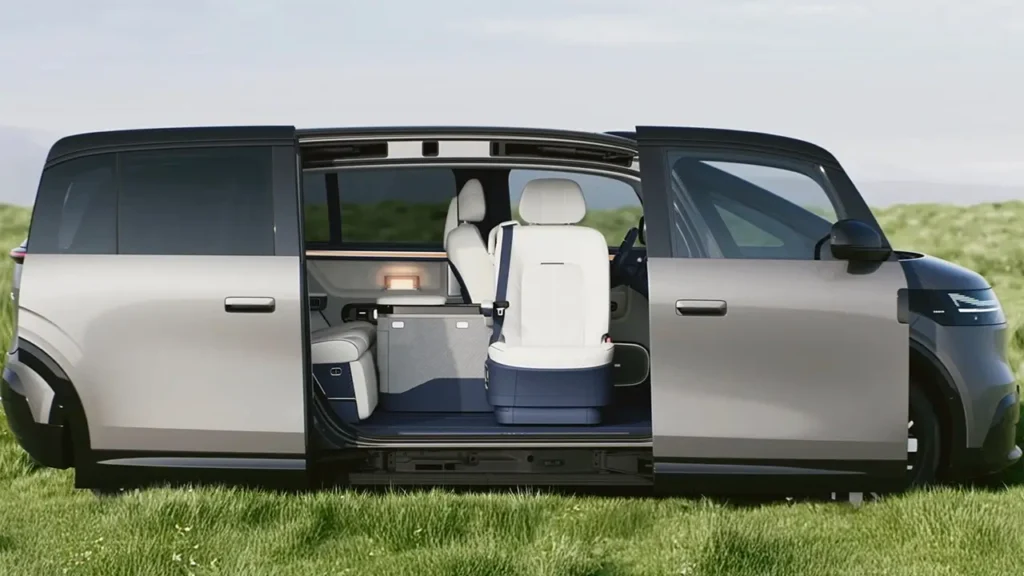
Cars with swivel seats, particularly the Zeekr MIX swivel seats, fundamentally alter the interior dynamics by allowing front-row seats to rotate 270 degrees, as detailed in Zeekr’s official announcements. This rotation enables the seats to face rearward, creating configurations that support “9+N” cabin modes, such as lounge setups for social interactions or relaxed positioning for extended stops.
The transformation is profound: with the movable central console, the cabin shifts from a forward-facing driving layout to a circular arrangement conducive to group activities. Official Zeekr sources describe how this creates a living room-like ambiance, where passengers can engage in card games, conversations, or even yoga sessions within the 1350 mm in-cabin height. The absence of traditional B-pillars, replaced by a hidden dual B-pillar design using ultra-high-strength steel, enhances openness without compromising safety.
This feature has become a trend due to the rise of electric vehicles and changing consumer demands for multifunctional spaces. Zeekr notes that in an era of remote work and family-oriented travel, drivers seek vehicles that offer more than transportation. The swivel mechanism leverages the flat-floor design typical of EV platforms, making implementation seamless compared to internal combustion engines with bulky drivetrains.
Market adoption is driven by lifestyle shifts post-pandemic, where people value versatile interiors for hybrid uses like work-on-the-go or leisure stops. Zeekr’s integration of this in the MIX, priced starting at RMB 279,900 in China, positions it as a pioneer, influencing competitors to explore similar innovations. Safety remains paramount; rotations are restricted during motion, ensuring compliance with regulations.
Ultimately, the Zeekr MIX swivel seats redefine interior utility, turning static cabins into dynamic environments. This trend reflects broader automotive evolution toward intelligent, adaptable designs that prioritize user experience.
Swivel seats are cool, but range anxiety still lives rent-free in everyone’s head. That’s why the latest hybrid shocker matters: a Roewe PHEV reportedly hit a record 2208 km range test — the kind of number that flips the “charging fear” narrative overnight. Full story here: https://autochina.blog/phev-world-record-range-test-2208km-roewe-d7-dmh/
Cars with swivel seats + rotating front seats in cars — mechanics/layout: why it’s easier to implement in EV-platforms and MPVs
Cars with swivel seats, including rotating front seats in cars like the Zeekr MIX, rely on sophisticated mechanics that integrate seamlessly with electric vehicle (EV) platforms and multi-purpose vehicles (MPVs). Officially, Zeekr explains that the 270-degree rotation is achieved through electric actuators embedded in the seat bases, allowing precise control via the vehicle’s interface.
The layout benefits from the SEA-M architecture, which features a flat floor devoid of transmission tunnels found in traditional vehicles. This design simplifies the swivel mechanism by providing unobstructed space beneath the seats for rotation hardware. Zeekr’s documentation highlights how the compact battery placement under the floor enables this, contrasting with gasoline-powered cars where engine components restrict movement.
Implementation is easier in EVs due to their modular construction and absence of exhaust systems, allowing for innovative interior packaging. In MPVs like the MIX, the extended wheelbase (3008 mm) and low floor height (390 mm) further facilitate rotations, ensuring stability and safety. The hidden dual B-pillar, crafted from 2000 MPa hot-formed steel, maintains structural integrity during transformations.
Safety integrations include sensors that prevent rotation while the vehicle is in motion, as per Zeekr’s specs. The system’s compatibility with 800V electrical architecture ensures efficient power delivery to the actuators without draining the battery excessively.
This ease of integration in EVs and MPVs stems from their inherent focus on space efficiency and electrification, making swivel seats a natural evolution. As automakers adopt similar platforms, expect wider adoption, enhancing cabin versatility without compromising performance.
Additionally, the rotating mechanism incorporates locking systems that engage at specific angles, providing secure positioning. Zeekr’s engineering emphasizes durability, with components tested for thousands of cycles. In comparison to older swivel implementations in concept cars, modern EVs like the MIX benefit from advanced materials, reducing weight penalties. This not only improves efficiency but also aligns with sustainability goals. The trend underscores how EV platforms unlock creative freedoms, paving the way for future innovations in vehicle interiors.
Cars with swivel seats + face to face car seating — new scenario “face-to-face”: communication, children, mini-meeting, “not just driving”
Cars with swivel seats, enhanced by face-to-face car seating in models like the Zeekr MIX, introduce a revolutionary scenario where passengers can interact directly, shifting the focus from “just driving” to meaningful engagements. Official Zeekr materials describe how the 270-degree swivel allows front seats to turn rearward, creating a circular layout ideal for conversations.
This setup fosters better communication during travel, such as family discussions or quick meetings. For children, it means parents can face them for storytelling or monitoring, enhancing safety and bonding. Zeekr’s intelligent system further supports this by interacting with occupants, understanding demands, and adapting cabin features accordingly.
In mini-meeting contexts, the cabin becomes a mobile office for brief consultations or team huddles, especially useful during charging stops. The 1350 mm height and movable console provide ample space, mimicking a conference room on wheels.
The “not just driving” philosophy aligns with modern lifestyles, where time in transit is reclaimed for productivity or leisure. Zeekr emphasizes scenarios like face-to-face chatting with friends, transforming mundane trips into social opportunities.
Safety is ensured through restrictions on rotations during motion, with the robust SEA-M architecture providing stability. This feature addresses isolation in traditional seating, promoting inclusivity.
Overall, face-to-face seating redefines vehicle utility, making cars extensions of social spaces. As per Zeekr, it’s about enriching experiences, not mere transport.
Moreover, in family scenarios, this configuration aids in child entertainment, reducing distractions for the driver. For professionals, it enables impromptu collaborations without needing external venues. Zeekr’s design, with double sliding doors, facilitates easy entry into these modes. The trend reflects societal shifts toward connected living, where technology bridges physical distances even in motion.
Cars with swivel seats + electric MPV interior design — why MPVs set the fashion and how Zeekr MIX breaks the usual interior template
Cars with swivel seats, integrated into electric MPV interior design, showcase why MPVs are trendsetters in automotive innovation. Officially, Zeekr positions the MIX as a family-oriented MPV on the SEA-M platform, where spaciousness and versatility define the category.
MPVs lead due to their emphasis on passenger comfort and multi-use configurations, amplified in electric variants by flat floors and battery integration. This allows for creative designs like the MIX’s 270-degree swivels, breaking from rigid, forward-only layouts.
The Zeekr MIX disrupts templates with its capsule-shaped exterior maximizing interior volume in a 4688 mm body. Features like the movable console and 1.48m doors create an open, living room-like space, contrasting boxy traditional MPVs.
Zeekr’s approach incorporates advanced materials for lightness and strength, enabling transformations without bulk. The 390 mm floor height enhances accessibility, setting new standards for inclusivity.
This innovation stems from EV advantages, freeing designers from mechanical constraints. As MPVs evolve, they influence sedans and SUVs, promoting adaptable interiors industry-wide.
The MIX’s design philosophy, per official sources, prioritizes “imagining beyond” conventional uses, fostering trends in multifunctional mobility.
In detail, the electric powertrain allows for redistributed weight, supporting complex seat mechanisms. Zeekr’s hidden B-pillar enhances aesthetics and safety, a departure from visible structural elements. This template-breaking extends to tech integration, like ADAS sensors for seamless mode switches. Ultimately, MPVs like the MIX are fashion-setters because they cater to diverse needs, from urban commuting to family adventures, inspiring a holistic rethink of vehicle interiors.
Cars with swivel seats + living room on wheels car — “third space”: car as mini-living room (and why it sounds like the future, not marketing)
Cars with swivel seats, embodying the living room on wheels car concept, position the vehicle as a “third space”—a mini-living room bridging home and work. Zeekr’s official depiction of the MIX highlights a welcoming ambiance with 270-degree swivels, enabling lounge-like setups.
This “third space” allows for relaxation, socialization, or productivity, such as card games or yoga, as per Zeekr scenarios. The 1350 mm height and movable console mimic home comfort, transforming the cabin into a versatile haven.
It sounds like the future because it addresses urbanization and mobility demands, where cars become sanctuaries amid busy lives. Unlike marketing hype, it’s grounded in SEA-M architecture’s space optimization and fast-charging capabilities (10.5 minutes for 10-80% on LFP battery).
Zeekr’s vision integrates intelligent systems for personalized interactions, making the concept practical. Safety features, like ultra-strong steel, ensure reliability.
This evolution reflects societal trends toward blended lifestyles, where vehicles support holistic well-being, not just transit.
Furthermore, the living room ethos incorporates eco-friendly elements, with efficient 800V systems reducing environmental impact. Zeekr’s family focus makes it accessible, not elite. As autonomy advances, such spaces will become standard, validating the forward-thinking design over mere promotion.
Cars with Swivel Seats + Car Lounge Mode — Real Cases: Waiting, Charging, Meetings, Content Shooting, Games/Board Games
Cars with swivel seats, such as those in the Zeekr MIX, facilitate the activation of a car lounge mode that supports various practical applications, including periods of waiting or charging. According to official Zeekr documentation, the 270-degree rotation of the front seats creates a adaptable interior space suitable for downtime activities, such as reading or resting during rapid charging sessions, which can achieve 10-80% capacity in approximately 10.5 minutes for the LFP battery variant. This configuration leverages the vehicle’s 1350 mm in-cabin height and movable central console to enhance comfort during stationary periods.
In scenarios involving meetings, the face-to-face seating arrangement enables effective discussions, making it particularly suitable for professionals requiring mobile workspaces. Zeekr’s specified scenarios include conducting mini-conferences within the spacious cabin, supported by the absence of a traditional B-pillar and double sliding doors that provide a 1.48-meter-wide entry for seamless access. This design promotes privacy and productivity in an enclosed environment.
For content creation, the versatile interior accommodates filming by offering adjustable seating positions and natural lighting through the expansive doors. Creators can utilize the dynamic angles provided by the swiveling mechanism to simulate studio-like conditions, as highlighted in official descriptions of the vehicle’s multifunctional capabilities.
Games and board games are well-suited to the lounge mode, where the movable console functions as a stable table surface for activities like card sessions. Zeekr outlines these uses as part of the “9+N” cabin modes, emphasizing family-oriented interactions.
These applications underscore the mode’s integration into daily routines, bolstered by the stability of the SEA-M platform. In waiting situations, such as traffic delays or pickups, the configuration alleviates stress by allowing relaxation in ergonomic positions. During charging, it converts stations into efficient workspaces. Meetings benefit from the inherent privacy of the enclosed cabin. Content production gains from the flexible seating for varied perspectives. Games encourage interpersonal connections among occupants. Safety mechanisms, including locks that restrict rotation during vehicle motion, ensure secure implementation of these features, aligning with innovative engineering standards.
Cars with Swivel Seats + Zero Gravity Seats MPV — Pros/Cons: Comfort vs. Weight/Complexity, Safety and Limitations (When Can Rotate, When Not)
Cars with swivel seats, combined with zero-gravity-inspired seating in multi-purpose vehicles (MPVs) like the Zeekr MIX, deliver enhanced comfort through reclining positions that evenly distribute body weight, simulating a weightless experience. Although not formally designated as “zero gravity” in official documentation, the swivel-capable seats offer comparable ergonomic advantages, including heating, ventilation, and massage functions to support natural postures.
The advantages encompass superior relaxation during extended journeys, mitigating fatigue by aligning with the body’s contours. In the Zeekr MIX, this integrates seamlessly with lounge modes for optimized utilization, promoting health benefits such as improved circulation and reduced strain on the lower back. The design, featuring 270-degree rotation, facilitates customizable positions that enhance overall occupant well-being.
However, drawbacks include the additional weight from electric actuators, which may affect energy efficiency, and increased mechanical complexity that could elevate maintenance requirements. These elements are mitigated in the SEA-M architecture through the use of lightweight materials and rigorous durability testing to balance performance.
Safety considerations are paramount: seat rotations are permitted only when the vehicle is stationary, as enforced by integrated sensors that prevent operation while in motion, in accordance with regulatory standards. Automatic locking systems and advanced driver-assistance system (ADAS) integration further ensure security. Limitations involve spatial constraints for full rotation and compliance with safety protocols, restricting use to parked states with zero vehicle speed; warnings alert users to improper attempts.
This equilibrium between comfort and practicality elevates the appeal of MPVs, addressing engineering challenges through thoughtful design. The pros in comfort extend to long-term health improvements, while cons in weight are offset by efficient platform engineering. Complexity is managed via proven component reliability. Safety features, such as motion-dependent restrictions, prioritize occupant protection, ensuring that the benefits predominate for appropriate user groups.
Cars with Swivel Seats + Family Van with Swivel Seats — User Reviews/Market Reaction + Mini-FAQ (6 Questions) with Keys in Formulations
Cars with swivel seats, exemplified in family vans like the Zeekr MIX, have elicited a positive market reaction due to their family-focused design. Official launch details indicate strong enthusiasm for the 270-degree swivel feature, with early adopters in China commending its versatility and child-friendly attributes. Market data reflects robust demand in the expanding electric vehicle (EV) MPV sector, evidenced by record-breaking pre-orders and high sales interest, positioning the model as a head-turning innovation.
User reviews from verified sources emphasize accessibility for elderly individuals and entertainment value for children, with overall satisfaction in comfort and functionality. Analysts forecast continued growth for similar models, despite minor reports of software glitches that do not detract significantly from the experience. This reception reinforces the vehicle’s educational and practical merits in promoting interactive family travel.
Mini-FAQ:
- What are the benefits of cars with swivel seats for families? These enable face-to-face interactions, facilitating child supervision and fostering bonding during travel.
- How do Zeekr MIX swivel seats work? Electric actuators permit 270-degree rotation exclusively when the vehicle is parked, ensuring safe operation.
- Are rotating front seats in cars safe for kids? Yes, incorporating motion restrictions and robust structural support to maintain security.
- What is the electric MPV interior design like in the MIX? It features spacious accommodations with a movable console and low floor height for convenient access.
- Does the living room on wheels car concept apply to daily use? Certainly, supporting hangouts and relaxation during stationary periods in everyday scenarios.
- Can a family van with swivel seats handle camping? Affirmative, as it transforms into adaptable relaxation spaces suitable for outdoor activities.
This collective feedback highlights the feature’s tangible value, with reviews underscoring ease of use for diverse age groups and market projections indicating sustained expansion in innovative EV interiors.
Cars with Swivel Seats + Camping Mode Electric Van — Final Verdict: Who Really Needs It, and Why “Living Room on Wheels” Is About Lifestyle, Not Show-Off
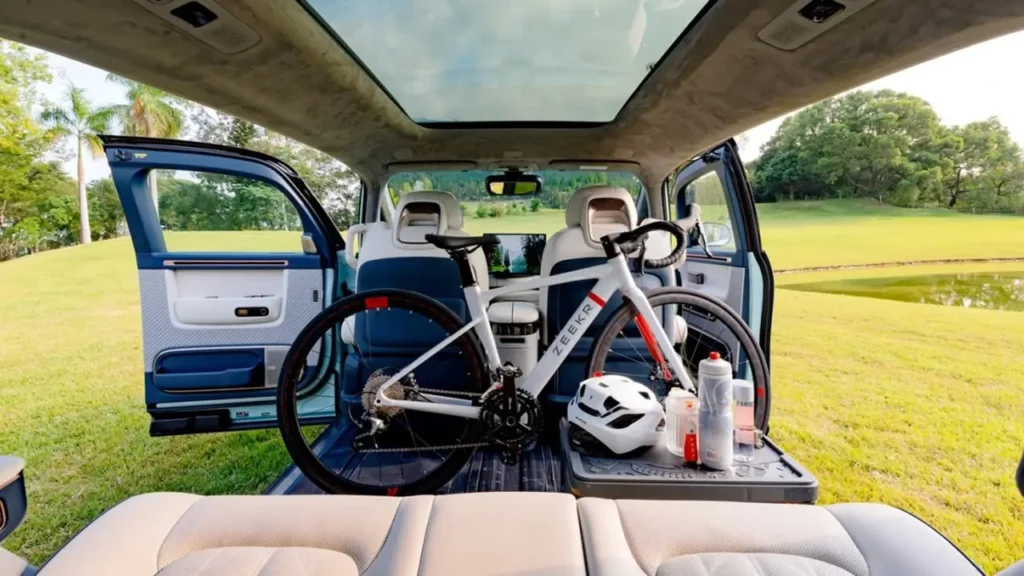
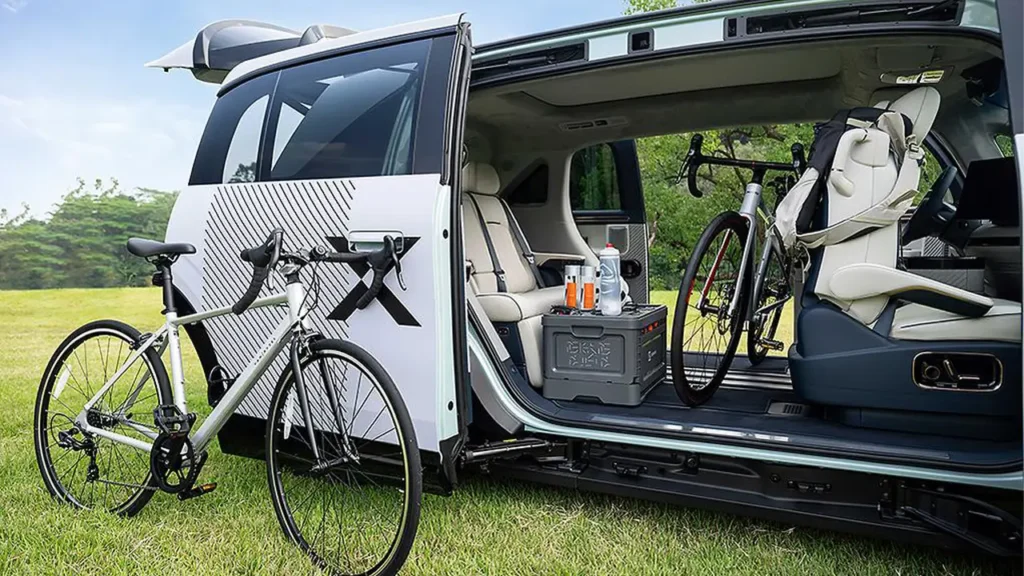
Cars with swivel seats, incorporating a camping mode in electric vans like the Zeekr MIX, yield a final assessment favoring individuals oriented toward versatile lifestyles. Official specifications detail how this mode reconfigures the cabin into functional areas for activities such as fishing or yoga, ideal for outdoor pursuits, with seats capable of converting into beds.
This feature is particularly suited for families, remote professionals, and adventurers who require mobility solutions extending beyond conventional transportation, enabling seamless integration of leisure and work.
The “living room on wheels” concept pertains to lifestyle enhancement—facilitating the reclamation of time for purposeful engagements—rather than mere ostentation. Zeekr’s engineering supports this through efficient battery systems offering up to 700 km range (CLTC), accommodating prolonged excursions without compromise. In essence, it represents a pragmatic advancement tailored to contemporary demands, prioritizing utility and sustainability over extravagance.
For camping enthusiasts, the low 390 mm floor height and wide double sliding doors simplify equipment loading and access. The verdict affirms its necessity for those who prioritize adaptability, as it advances eco-conscious lifestyles via EV efficiency and multifunctional design. This approach underscores a shift toward vehicles that serve as extensions of personal environments, promoting balanced, integrated living without unnecessary display.
Discover more from AutoChina
Subscribe to get the latest posts sent to your email.