1. Roewe D7 DMH world record — как они проехали 2208 km and why it matters
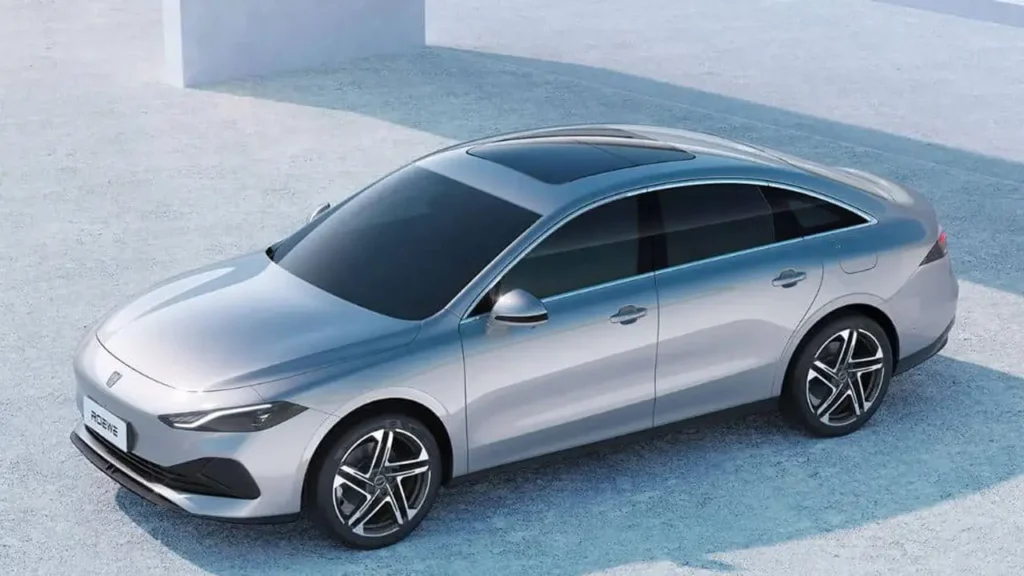
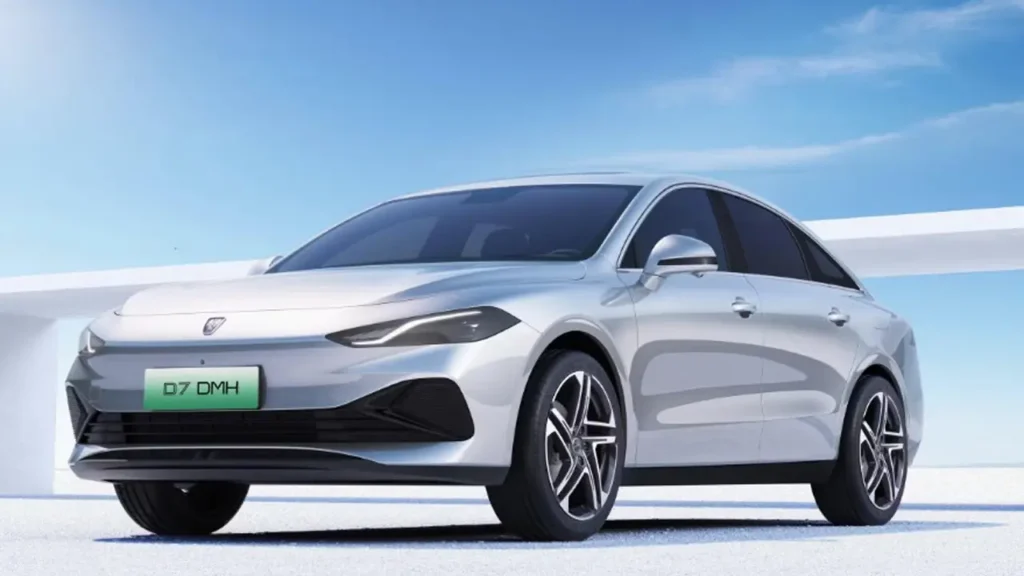
The Roewe D7 DMH, a plug-in hybrid electric vehicle (PHEV) developed by SAIC Motor under the Roewe brand, has achieved a remarkable Guinness World Record for the longest journey by a plug-in hybrid sedan on a single tank of fuel and a full battery charge. This accomplishment involved covering an impressive 2,208 kilometers without any refueling or recharging, demonstrating the potential of advanced hybrid technology to address range anxiety in modern automobiles. The record was officially certified by Guinness World Records and announced by SAIC Motor on October 28, 2024, highlighting the vehicle’s efficiency and endurance in real-world conditions.
This achievement is significant because it pushes the boundaries of what PHEVs can accomplish, far exceeding the model’s official combined range rating of 1,400 kilometers. The Roewe D7 DMH 2208 km range was attained during a four-day test drive that simulated diverse driving scenarios, including varying terrains, temperatures, and road types. According to official SAIC Motor reports, the vehicle maintained an average fuel consumption of 2.49 liters per 100 kilometers, showcasing the effectiveness of its DMH Super Hybrid System. This system integrates a high-efficiency internal combustion engine with electric propulsion, allowing seamless transitions between power sources to optimize energy use.
For automotive enthusiasts and potential buyers, this record underscores the viability of Chinese-engineered hybrids in global markets. It not only validates SAIC’s engineering prowess but also positions the Roewe D7 DMH as a benchmark for fuel economy in the PHEV segment. In an era where environmental concerns drive innovation, such milestones encourage the adoption of sustainable mobility solutions. The test’s transparency, supervised by independent observers, adds credibility, distinguishing it from marketing claims. Overall, this record illustrates how hybrid technology can deliver extended ranges without compromising performance, making long-distance travel more feasible for everyday users.
2. Roewe D7 DMH world record — what Guinness certifies and the limitations involved
Guinness World Records has certified the Roewe D7 DMH as the holder of the title for the “longest journey by a plug-in hybrid sedan” without refueling or recharging, specifically covering 2,208 kilometers. This certification, as detailed in official SAIC Motor announcements, emphasizes the vehicle’s ability to complete the distance on a single tank of fuel and a full battery charge, under strict guidelines to ensure fairness and reproducibility. The record focuses on PHEVs, which combine an internal combustion engine with an electric motor and battery, distinguishing it from pure electric vehicles or traditional hybrids.
The limitations imposed by Guinness are designed to prevent artificial enhancements. For instance, the vehicle must be a production model without modifications that alter its standard performance, and the journey must adhere to real-world driving conditions rather than controlled laboratory settings. According to reports from SAIC Motor and corroborated by automotive publications like CarNewsChina, the test was conducted with a standard Roewe D7 DMH, ensuring that the results reflect achievable outcomes for consumers. Key constraints include prohibiting external power sources, maintaining legal speed limits, and documenting the entire process with video evidence and independent witnesses.
This approach counters skepticism often associated with manufacturer claims, proving that the record is not merely a promotional stunt. The Guinness certification process involves rigorous verification, including fuel and battery measurements before and after the journey. Limitations also extend to environmental factors; while the test incorporated challenging conditions, it was not conducted in extreme scenarios that could invalidate the results. This record sets a precedent for the PHEV category, encouraging other manufacturers to pursue similar validations. By adhering to these standards, SAIC Motor demonstrates transparency, building trust in the Roewe D7 DMH’s capabilities and highlighting its potential for efficient, long-range travel.
3. Roewe D7 DMH world record — the route, conditions, and why they’re not “greenhouse” tests
The record-breaking journey of the Roewe D7 DMH spanned 2,208 kilometers from Lanzhou to Urumqi in China, traversing diverse landscapes over four days. The route passed through key points such as Jiayuguan, Dunhuang, and Turpan, incorporating highways, urban roads, and rural paths. This path was chosen to represent realistic driving scenarios, including altitude variations of up to 1,600 meters and temperature fluctuations ranging from daytime highs to nighttime lows of -8°C, with a 30-degree difference overall.
Unlike controlled “greenhouse” tests conducted in ideal, lab-like environments, this endeavor exposed the vehicle to authentic challenges. Official SAIC Motor documentation and reports from Electric Cars Report detail encounters with gravel roads, dirt tracks, snow, ice, and wet tarmac, which tested the vehicle’s durability and efficiency under stress. The longest journey PHEV without refuelling or recharging was achieved without any stops for energy replenishment, simulating long-haul trips that drivers might undertake in daily life.
These conditions validate the record’s relevance because they mirror real-world variables that could impact performance, such as aerodynamic drag from wind, energy loss from elevation changes, and thermal effects on battery and engine efficiency. The test’s supervision by Guinness officials ensured compliance, with continuous monitoring to prevent deviations. This setup proves that the Roewe D7 DMH’s hybrid system can maintain low fuel consumption—averaging 2.49 liters per 100 kilometers—despite adversities. By incorporating such variability, SAIC Motor demonstrates the practicality of the technology, making the record a credible indicator of the vehicle’s robustness for consumers facing similar driving demands.
4. Roewe D7 DMH world record — DMH: system architecture in simple terms
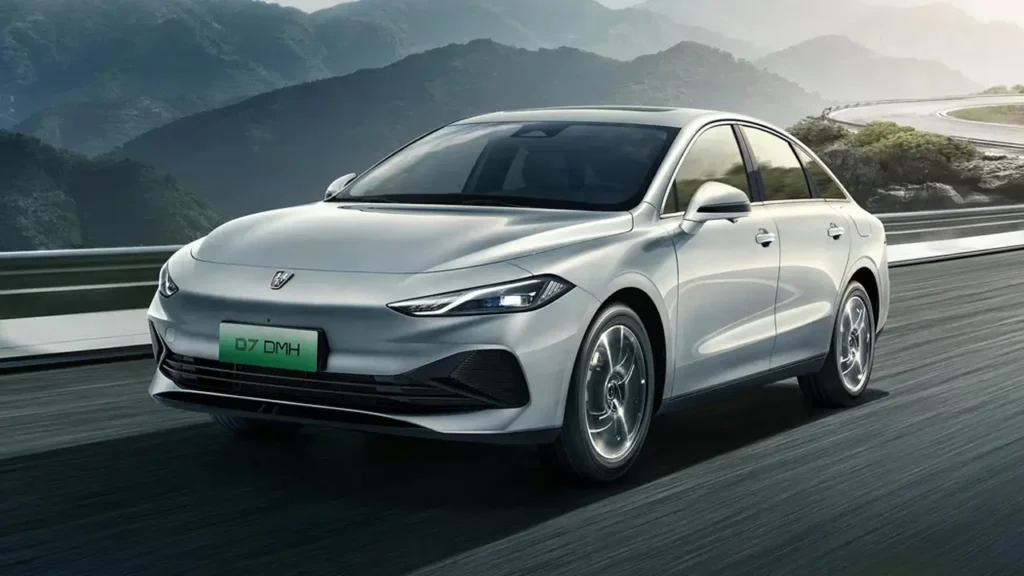
The DMH Super Hybrid System, central to the Roewe D7 DMH’s record, represents SAIC Motor’s advanced plug-in hybrid technology. As explained in official SAIC documentation, DMH stands for Dual Motor Hybrid, integrating a gasoline engine with two electric motors in a configuration that optimizes power delivery and efficiency. Unlike conventional hybrids that may rely on simpler series or parallel setups, the DMH employs a modular architecture allowing seamless switching between electric, hybrid, and engine-only modes.
At its core, the system features a P1 motor acting as a generator and engine speed adjuster, connected coaxially to the 1.5-liter engine, and a P3 motor for direct drive. This P1+P3 arrangement, detailed in SAIC’s technical releases, enables efficient energy recuperation and distribution, ensuring the vehicle operates in its most fuel-efficient state over 85% of the time. The 1-speed Dedicated Hybrid Transmission (DHT) facilitates smooth transitions, minimizing energy losses.
The DMH Super Hybrid System explained further involves a 21.4 kWh battery pack, providing an electric-only range of 125 kilometers, while the engine extends overall capability. SAIC emphasizes the system’s modularity, which supports plug-in hybrid (PHEV) and extended-range configurations, making it adaptable for various models. This design prioritizes integration, reducing weight and complexity compared to competitors. By intelligently matching power sources to driving conditions—such as using electric power in low-speed urban settings and hybrid mode on highways—the DMH achieves exceptional range. This architecture not only contributed to the 2,208-kilometer record but also positions the Roewe D7 DMH as a leader in hybrid innovation, offering insights into future sustainable automotive technologies.
5. Roewe D7 DMH world record — 2.49 L/100 km consumption: where the savings come from
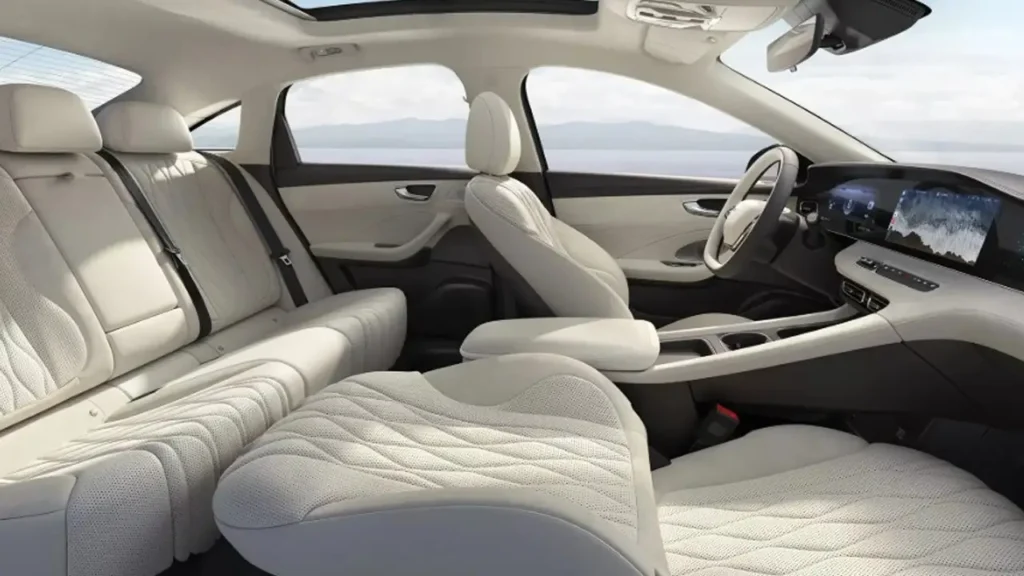
The Roewe D7 DMH’s average fuel consumption of 2.49 liters per 100 kilometers during its record journey stems from the synergistic operation of its hybrid components, as outlined in SAIC Motor’s official specifications. This efficiency is realized across various driving regimes, where the DMH system intelligently allocates power to minimize fuel use. In electric-only mode, the vehicle covers up to 125 kilometers solely on battery power, conserving gasoline for extended travel.
Savings are amplified in hybrid mode, where the 1.5-liter engine operates at optimal revolutions, supported by the electric motors to avoid inefficient low-load conditions. According to SAIC reports, the system ensures the engine runs in high-efficiency zones over 85% of the time, reducing wasteful idling and acceleration spikes. Regenerative braking further contributes by capturing kinetic energy during deceleration, recharging the 21.4 kWh battery and extending range without additional fuel.
The Roewe D7 DMH fuel consumption 2.49 L/100km is also aided by aerodynamic design and lightweight construction, with the sedan’s dimensions (4,890 mm length, 1,890 mm width) optimized for low drag. During the 2,208-kilometer test, varying speeds and terrains highlighted these benefits; for instance, steady highway cruising allowed the engine to function as a range extender, while urban segments relied on electric propulsion. Official data from the journey indicate that strategic mode switching—electric for starts and stops, hybrid for sustained speeds—yielded substantial economies. This real-world performance exceeds laboratory ratings, demonstrating how integrated hybrid management can achieve remarkable efficiency, making the vehicle suitable for cost-conscious drivers seeking reduced operational expenses.
6. Roewe D7 DMH world record — 1.5L ICE and 43% efficiency: key to distance
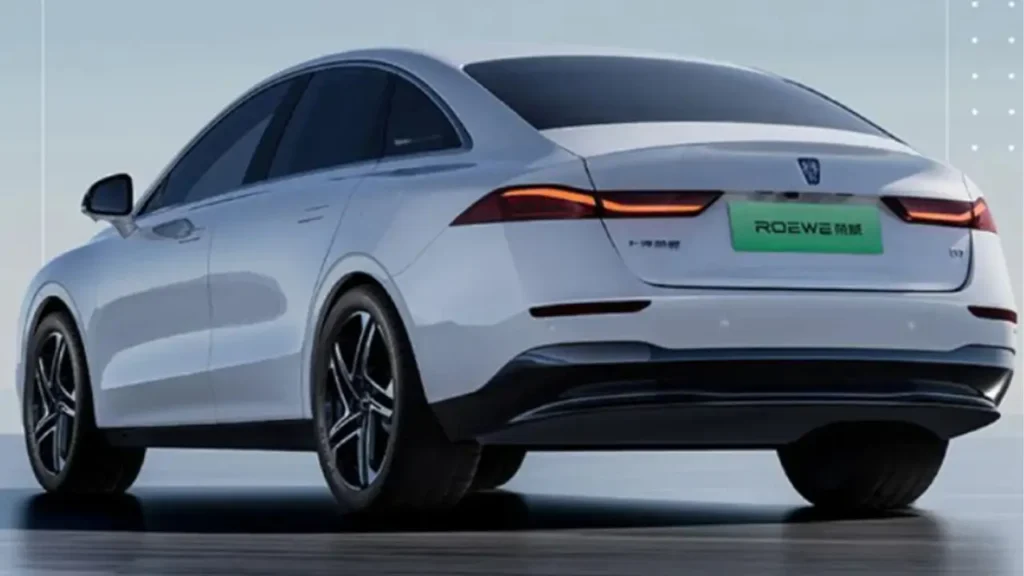
The 1.5-liter naturally aspirated internal combustion engine (ICE) in the Roewe D7 DMH plays a pivotal role in its record-setting range, boasting a thermal efficiency of over 43%, as certified by SAIC Motor. This efficiency metric, which measures how effectively the engine converts fuel energy into mechanical work, is among the highest for production engines, minimizing waste heat and maximizing output. The engine delivers 82 kW (110 horsepower) and 135 Nm of torque, optimized for hybrid integration rather than standalone performance.
Key to this efficiency is the ultra-high compression ratio of 16:1, which enhances combustion completeness, as detailed in SAIC’s technical overviews. Advanced features like variable valve timing and direct injection further refine the process, ensuring precise fuel-air mixtures. During the 2,208-kilometer journey, this engine operated primarily as a generator in extended-range mode, supplying power to the battery and motors without direct wheel drive in many scenarios, thus maintaining peak efficiency.
The 43% thermal efficiency 1.5L engine contributes half the success to the overall range by extending the utility of the 60-liter fuel tank far beyond conventional limits. SAIC reports emphasize that this design allows the engine to avoid low-efficiency operating points, common in traditional vehicles. Combined with the DMH system’s intelligent control, it achieved 2.49 liters per 100 kilometers average consumption under diverse conditions. This engineering focus not only supports the Guinness record but also aligns with global emission standards, reducing carbon footprint. For users, it means reliable long-distance capability, positioning the Roewe D7 DMH as an exemplar of efficient powertrain design in the PHEV market.
7. Roewe D7 DMH world record — transmission and motors: why P1+P3 make the difference
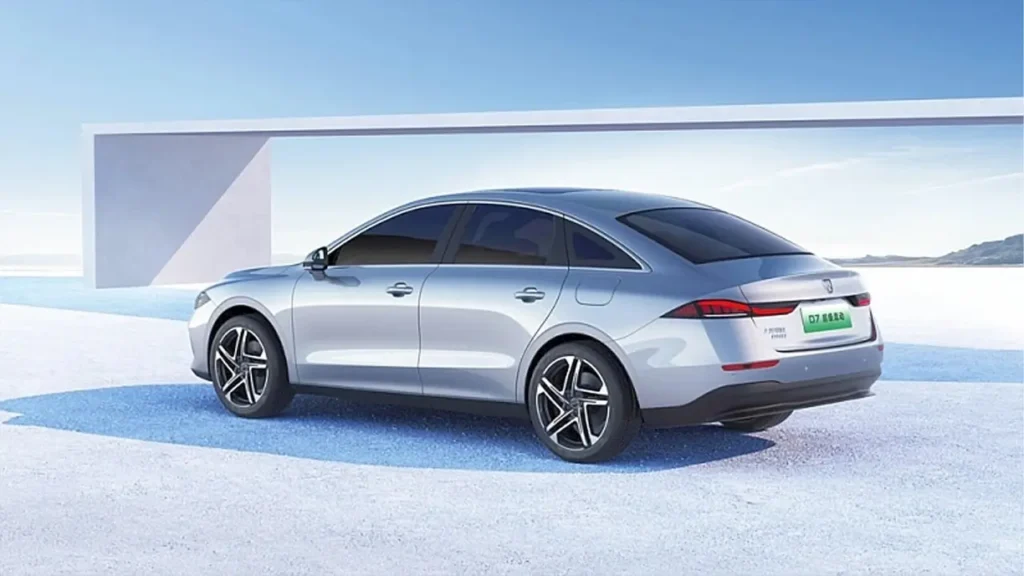
The Roewe D7 DMH’s powertrain features a P1+P3 dual-motor hybrid transmission, a configuration that efficiently distributes torque and energy, as described in SAIC Motor’s official specifications. The P1 motor, coaxially linked to the 1.5-liter engine, serves dual purposes: generating electricity to charge the battery and adjusting engine speed for optimal efficiency. This setup allows the engine to operate independently of road speed, avoiding inefficient rev ranges.
The P3 motor, positioned on the front axle, provides direct drive with 150 kW (201 horsepower) and 330 Nm of torque, handling propulsion in electric and hybrid modes. Integrated with a 1-speed Dedicated Hybrid Transmission (DHT), this arrangement enables seamless power blending without complex gearing, reducing mechanical losses. According to SAIC, the system supports multiple operating modes, including pure electric, series hybrid (engine generates power via P1), and parallel hybrid (combined drive).
The P1 P3 dual motor hybrid transmission resolves common hybrid challenges by ensuring smooth transitions and energy recuperation. During the record journey, this allowed the vehicle to maintain momentum on varied terrains, with the P3 motor providing instant torque for accelerations and the P1 optimizing engine use. This distribution contributed to the 2,208-kilometer range by maximizing battery utilization and minimizing fuel burn. SAIC’s modular design also enhances reliability, with fewer moving parts than multi-speed transmissions. Overall, this architecture exemplifies efficient hybrid engineering, offering drivers responsive performance alongside exceptional economy, as validated by the Guinness certification.
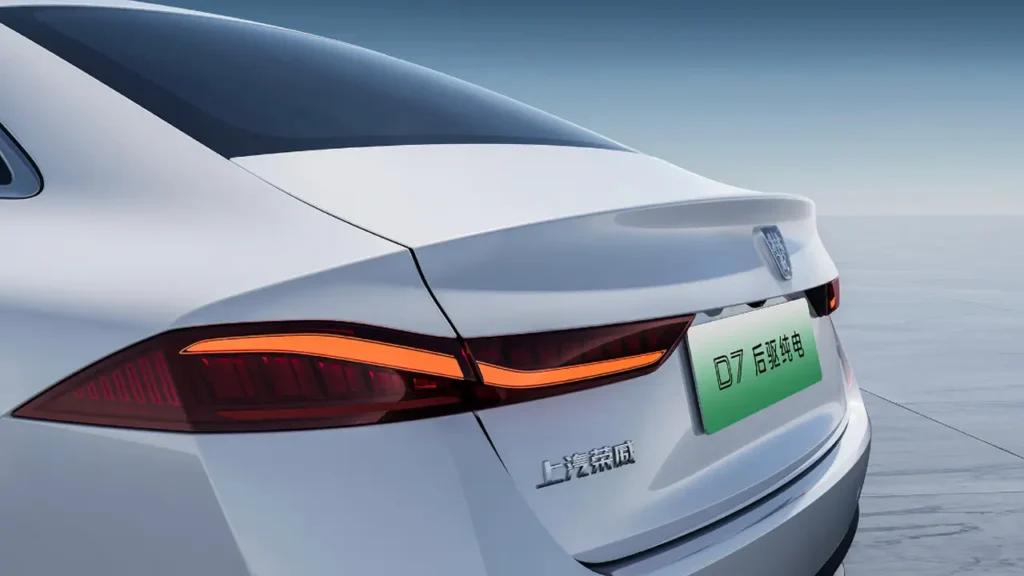
8. Roewe D7 DMH world record — “World Champion Edition”: what might have been optimized in settings
The SAIC Roewe D7 DMH World Champion Edition, used in the record attempt, represents a fine-tuned version of the standard model, with optimizations focused on software calibrations and energy management strategies, as per SAIC Motor’s announcements. While the hardware remains production-standard—a 1.5-liter engine, 21.4 kWh battery, and P1+P3 motors—the edition likely incorporates refined control algorithms to enhance efficiency.
Official SAIC documentation suggests adjustments in the hybrid control unit, such as prioritizing electric mode thresholds and optimizing regenerative braking intensity. These calibrations ensure the system adapts dynamically to conditions, like favoring engine generation during descents to preserve battery for uphill sections. The strategy might include refined battery state-of-charge management, maintaining reserves for extended operation without depleting resources prematurely.
In such challenges, manufacturers often calibrate tire pressures for reduced rolling resistance and adjust aerodynamics subtly, though SAIC emphasizes no hardware alterations. The software could fine-tune the engine’s operating map to leverage its 43% thermal efficiency more effectively, ensuring consistent performance across the 2,208-kilometer route. These optimizations, supervised by Guinness, maintain the vehicle’s consumer relevance while maximizing potential. The World Champion Edition thus serves as a showcase, demonstrating how intelligent tuning can elevate standard PHEV capabilities, providing valuable data for future updates and inspiring confidence in the model’s real-world adaptability.
9. Roewe D7 DMH world record — can it be replicated in real life and what might hinder it
Replicating the Roewe D7 DMH’s 2,208-kilometer range in everyday driving is feasible under similar conditions, but several factors could influence outcomes, as analyzed in SAIC Motor’s test reports. The record was achieved with careful driving—maintaining steady speeds, avoiding aggressive acceleration, and leveraging regenerative braking—which consumers can adopt for optimal efficiency.
However, real-world variables like higher average speeds (the test averaged around 60-80 km/h), extreme climates beyond -8°C to 22°C, and varied terrains might reduce range. SAIC notes that hilly routes increase energy demand, potentially raising consumption above 2.49 liters per 100 kilometers. Driving style plays a crucial role; abrupt maneuvers deplete the battery faster, shortening electric-only segments.
Tire pressure, load, and maintenance also matter; underinflated tires increase resistance, while extra weight strains the system. The Roewe D7 DMH real world range test during the record incorporated diverse roads, but urban congestion with frequent stops could favor electric mode, whereas constant highway travel might rely more on the engine. SAIC’s official combined rating of 1,400 kilometers provides a baseline, with the record exceeding it through optimized conditions. To approach replication, users should monitor energy usage via the vehicle’s interface and plan routes strategically. While not every drive will match the record, consistent application of efficient practices can yield impressive results, making the D7 DMH suitable for long commutes or trips.
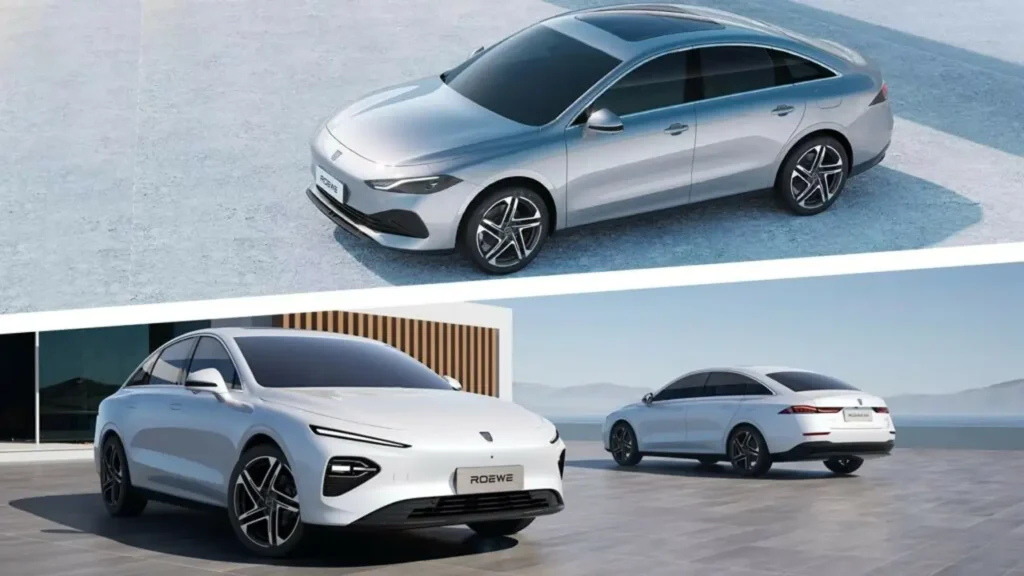
10. Roewe D7 DMH world record — verdict: subdued design, but technology on overdrive
In conclusion, the Roewe D7 DMH’s Guinness World Record affirms its status as a technologically advanced PHEV, despite its understated exterior design that prioritizes aerodynamics over flair. The 2,208-kilometer achievement, driven by the DMH Super Hybrid System’s efficiency, showcases SAIC Motor’s commitment to innovative engineering, blending a high-efficiency engine with dual motors for superior range and low emissions.
This vehicle appeals to practical users, such as Generation Z drivers seeking eco-friendly options, taxi operators requiring cost-effective long-haul capabilities, or families planning extended road trips. Its real-world performance validates the potential for reduced fuel dependency, contributing to sustainable transportation goals. While the design may not turn heads, the underlying technology—delivering 2.49 liters per 100 kilometers—positions it as a compelling choice in the hybrid market.
For those exploring Chinese automobiles, resources like www.autochina.blog offer deeper insights. Consider consulting such platforms for informed decisions on models like the Roewe D7 DMH.
If the Roewe D7 DMH world record proves one thing, it’s that “smart tech” wins when it runs locally and efficiently. Same vibe in AI: offline, open-source tools are getting scary good—especially in voice. Here’s a quick, practical breakdown of Kokoro TTS V1.0 and why local text-to-speech is a big deal: https://aiinovationhub.com/kokoro-tts-v1-0-offline-open-source/
Discover more from AutoChina
Subscribe to get the latest posts sent to your email.