DLP headlight projector technology trends. Digital Light Processing (DLP) headlight projector technology represents a significant advancement in automotive lighting, transforming traditional headlights into multifunctional devices capable of projection and adaptive illumination. Developed primarily by Texas Instruments (TI), DLP technology utilizes a Digital Micromirror Device (DMD) chip, which consists of thousands to millions of microscopic mirrors that tilt to direct light precisely. This innovation allows for high-resolution beam control, enabling features beyond simple illumination, such as projecting symbols, warnings, and even entertainment content.
Huawei’s xPixel DLP headlights, integrated into vehicles like the AITO M9, exemplify this trend. According to official Huawei descriptions, the xPixel system employs megapixel modules to create intelligent projections, adapting to various driving scenarios. For instance, it can project pedestrian warnings or navigation cues directly onto the road surface, enhancing safety and user interaction. The technology’s small module size allows seamless integration into vehicle designs, supporting dual-lamp setups for 2.6 million pixel projections. This flexibility addresses modern drivers’ needs for smarter, more interactive vehicles.
The rise of “projector headlights” stems from evolving automotive demands. Official TI resources highlight how DLP outperforms traditional systems by offering glare-free high beams and symbol projection, which can communicate with pedestrians or other vehicles. In Europe, UNECE regulations, such as ECE R149, govern these systems to ensure they meet safety standards for light distribution and intensity, preventing glare while maximizing visibility.
As electric vehicles (EVs) gain popularity, brands like Changan’s Deepal incorporate DLP for added appeal, such as the S05 model’s 130-megapixel headlights that double as projectors for outdoor entertainment. This convergence of safety, convenience, and fun positions DLP as a game-changer. Industry reports from reliable sources indicate growing adoption, with projections for widespread integration by 2030. For consumers, this means safer night driving and novel features like road-projected navigation, making DLP a compelling trend in automotive innovation.
DLP Headlight Projector Technology Trends — Comparison in Table (EN): DLP vs Matrix LED vs Micro-LED (Matrix LED vs DLP Headlights Comparison)
To understand DLP headlight projector technology trends, a comparison with competing systems like matrix LED and micro-LED is essential. Based on official analyses from Texas Instruments and automotive standards bodies, DLP stands out for its programmable precision, while matrix LED offers reliable adaptive beams, and micro-LED promises future efficiency.
| Aspect | DLP Headlights | Matrix LED Headlights | Micro-LED Headlights |
|---|---|---|---|
| Technology Basis | Digital Micromirror Device (DMD) with millions of mirrors for light modulation. | Array of individually controllable LEDs for beam segmentation. | Miniaturized LED arrays for high-density pixel control. |
| Resolution | Up to 1.3 million pixels per headlight, enabling fine projections. | Typically 84-128 segments, lower resolution than DLP. | Potentially millions of pixels, but still emerging. |
| Adaptive Capabilities | Superior glare-free high beams, symbol projection for pedestrians. | Good for masking oncoming traffic, but less precise. | High efficiency and brightness, adaptive with minimal power use. |
| Efficiency & Heat | Requires cooling systems; efficient with LEDs or lasers. | Energy-efficient, simpler cooling needs. | Highest efficiency, low heat generation. |
| Applications | Projection for navigation, warnings, entertainment. | Primarily illumination and basic adaptive driving. | Future-focused for ultra-high resolution displays. |
| Cost & Availability | Higher initial cost, available in premium models like Audi. | More affordable, widespread in mid-range vehicles. | Expensive, limited to prototypes. |
| Regulations Compliance | Meets ECE standards for projection features. | Fully compliant with global beam pattern rules. | Emerging, pending full certification. |
DLP excels in versatility, as per TI’s documentation, allowing for over a million addressable pixels that enable features like road projections. Matrix LED, used in brands like Porsche, provides robust adaptive beams but lacks DLP’s projection finesse. Micro-LED, still in development, could surpass both in brightness and efficiency but faces manufacturing challenges. This comparison underscores DLP’s role in pushing boundaries, particularly for interactive and safety-enhanced driving experiences.
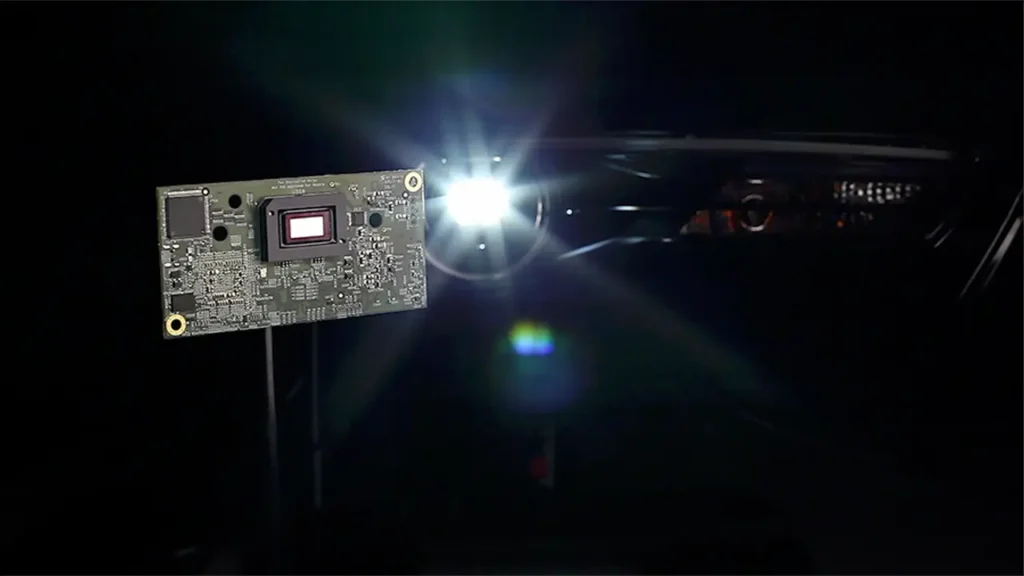
DLP Headlight Projector Technology Trends — How the Module Works: DMD, Optics, Cooling (Automotive DLP DMD Chip Headlight Module)
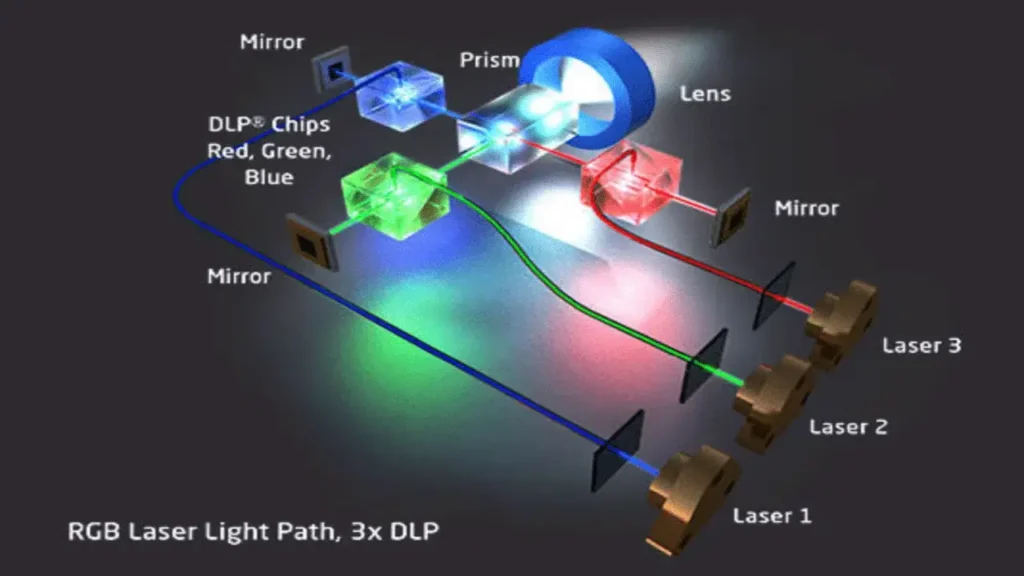
The core of DLP headlight projector technology lies in its module, comprising the DMD chip, optics, and cooling systems, as detailed in Texas Instruments’ official specifications. The DMD, or Digital Micromirror Device, is a semiconductor chip with an array of microscopic mirrors—up to 1.3 million in automotive models like the DLP5531-Q1. Each mirror tilts at high speeds to reflect light from a source, such as LEDs or lasers, creating precise pixelated beams.
Optics play a crucial role in focusing and directing this light. The system includes lenses and reflectors that shape the beam for wide coverage or targeted projections. According to TI, the module integrates with vehicle sensors to adjust in real-time, ensuring optimal illumination without glare. Cooling is essential due to the heat generated by high-intensity light sources; active systems like fans or liquid cooling maintain performance, preventing thermal degradation.
In operation, light enters the DMD, where mirrors modulate it to form images or patterns. This enables features like adaptive driving beams, where sections of the beam are dimmed for oncoming traffic. Official TI resources emphasize the module’s automotive qualification, meeting standards for durability in harsh conditions. For example, the DLP5533A-Q1 chip supports exterior lighting with superior contrast.
Huawei’s xPixel implementation in the AITO M9 uses similar modules for 2.6 million pixel projections, enhancing functionality. The compact design allows integration into headlight housings, with controllers managing data from cameras and navigation systems. This technology not only improves visibility but also supports advanced driver-assistance systems (ADAS). As per UNECE guidelines, modules must comply with light distribution rules to ensure safety. Overall, the synergy of DMD, optics, and cooling makes DLP a reliable, high-performance solution for modern vehicles.
If Trae feels like a fresh challenger, Blink goes one step further: it’s built around “self-healing” code workflows that fix issues before they turn into 2 a.m. debugging marathons. For developers who want speed, less friction, and smarter automation, this review breaks down what Blink really delivers. Read: https://aiinovationhub.com/blink-new-self-healing-code-review/
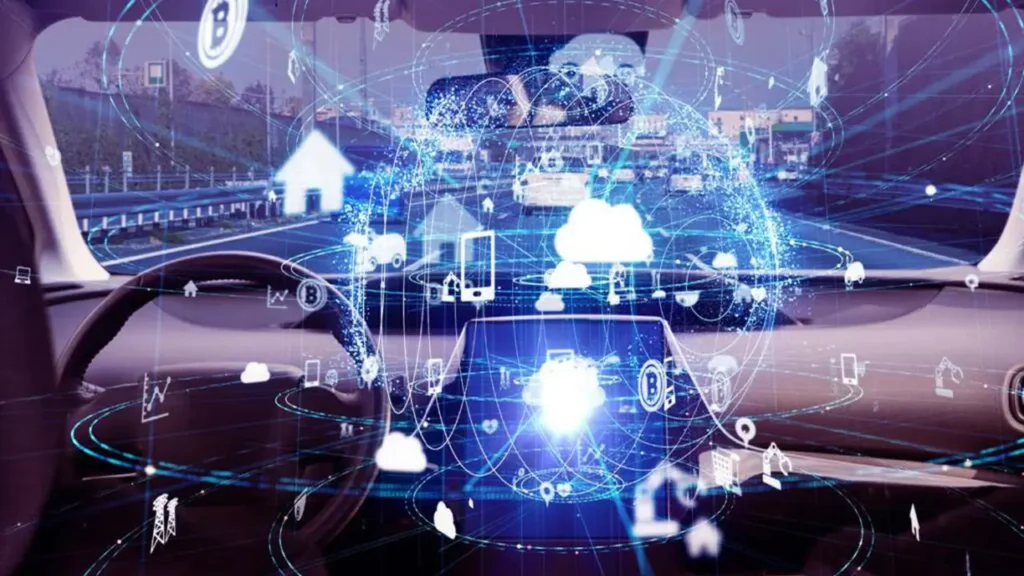
DLP Headlight Projector Technology Trends — “Million Pixels”: What It Offers on the Road (Million-Pixel DLP Headlight Projection)
Million-pixel DLP headlight projection, pioneered by Texas Instruments, delivers over 1.3 million addressable pixels per headlight, revolutionizing road illumination. Official TI documentation explains that this resolution allows for granular control, projecting detailed symbols and beams that enhance driver awareness and safety.
On the road, it means glare-free high beams that selectively dim for oncoming vehicles or pedestrians, maximizing visibility without blinding others. For instance, TI’s DLP technology can project warning icons, like low-traction alerts, directly ahead, aiding in hazard avoidance. This pixel density supports a 25% wider field of view compared to competitors, as demonstrated in TI’s evaluation modules.
Huawei’s xPixel in the AITO M9 leverages this for real-time projections, such as crosswalk signals for pedestrians, improving urban driving. The high resolution ensures crisp images even at distances, integrating with ADAS for object detection and beam adjustment.
Benefits include better night-time navigation, where arrows or lane guides are projected onto the pavement. TI highlights applications like traffic sign dimming to reduce glare on cameras, supporting autonomous features. In terms of efficiency, the system pairs with LED sources for bright, energy-saving performance.
Regulated under ECE standards, these projections must not distract, ensuring focused utility. As EVs adopt DLP, like in Deepal models, the technology offers customizable lighting, blending safety with personalization. Ultimately, million-pixel projection transforms headlights into intelligent tools, fostering safer, more intuitive driving experiences.
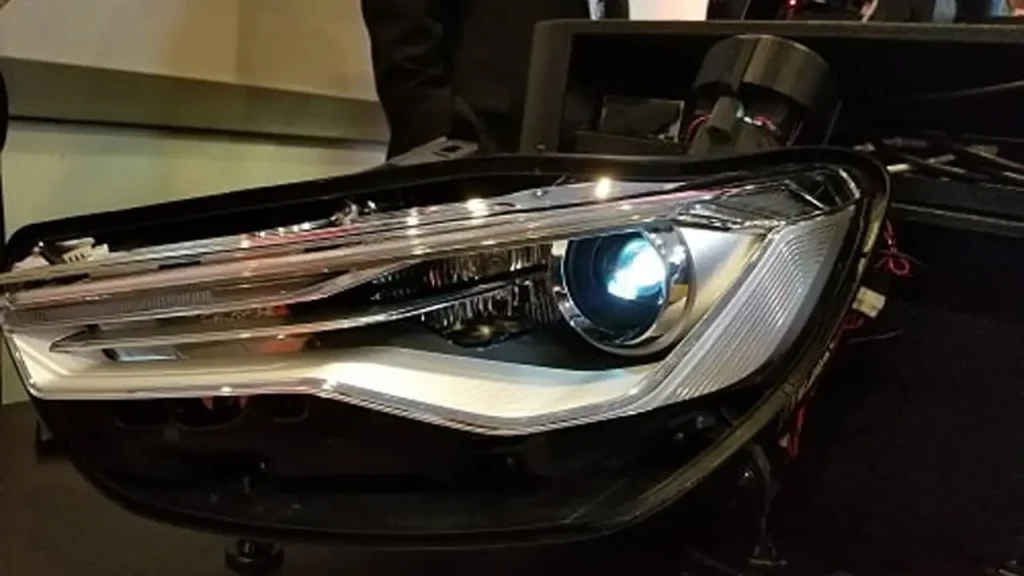
DLP Headlight Projector Technology Trends — Safety and “Smart High Beam”: Masking Oncoming Traffic (Adaptive Driving Beam DLP Headlights)
Adaptive Driving Beam (ADB) in DLP headlights enhances safety by intelligently masking oncoming traffic, as outlined in Texas Instruments’ resources. The system uses cameras to detect vehicles or pedestrians, then adjusts the beam via the DMD chip to dim specific areas, preventing glare while keeping the road illuminated.
TI’s DLP5531-Q1 enables this with over a million pixels, allowing precise control that traditional systems can’t match. For example, it can create “shadow zones” around detected objects, ensuring full high-beam usage elsewhere. Official TI demos show a 25% wider view, improving peripheral detection.
Huawei’s xPixel applies this for urban safety, projecting warnings to alert drivers of hazards. The “smart high beam” automatically toggles, reducing manual intervention and fatigue. UNECE Regulation No. 149 mandates such systems maintain proper light distribution, with DLP complying through programmable patterns.
Benefits include reduced accident risks in low-light conditions, as ADB maximizes light on the road. TI emphasizes integration with ADAS for real-time responses, like dimming for cyclists. In Deepal vehicles, this combines with projections for comprehensive safety.
Overall, DLP’s ADB represents a leap in lighting intelligence, promoting safer roadways through technology-driven precision.
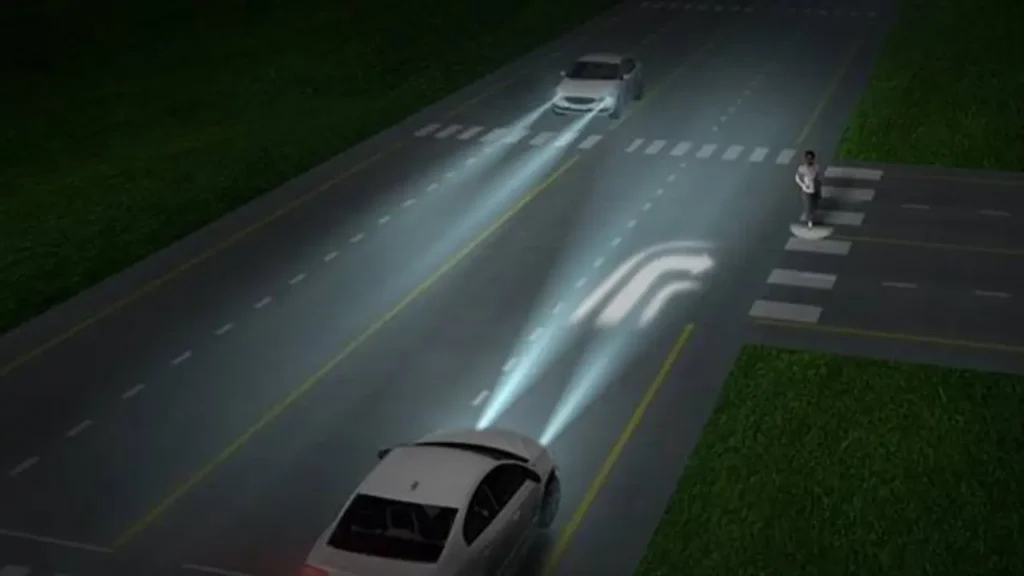
DLP Headlight Projector Technology Trends — Communication with Pedestrians: Symbols, Warnings (Interactive Projection Headlights for Pedestrians)
Interactive projection headlights using DLP technology facilitate communication with pedestrians by displaying symbols and warnings on the road, as per Texas Instruments’ applications. The high-resolution DMD projects clear icons, such as yield signs or crosswalk indicators, enhancing mutual awareness.
TI’s resources detail how over a million pixels enable crisp projections, alerting pedestrians to vehicle intentions. For instance, a stopping car can project a “safe to cross” message, reducing collision risks. Huawei’s xPixel in AITO M9 extends this with AI-driven projections, identifying pedestrians and displaying tailored alerts.
Official studies, like those from Toyota’s CSRC, explore similar systems to reverse pedestrian accident trends. In Europe, ECE regulations ensure projections are non-distracting, focusing on safety.
Deepal’s S05 model incorporates this for urban environments, projecting patterns to guide pedestrians. The technology integrates with sensors for dynamic responses, fostering vehicle-pedestrian harmony.
This trend underscores DLP’s role in proactive safety, making roads more interactive and secure.
DLP Headlight Projector Technology Trends — Navigation on Asphalt: Light Carpet and Tips (Ground Projection “Light Carpet” Navigation)
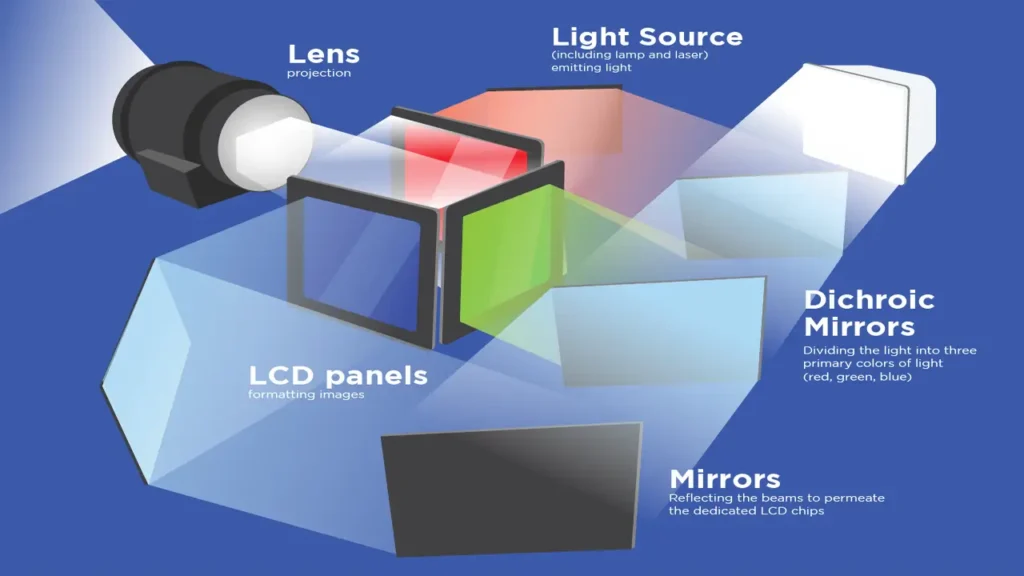
Ground projection through DLP headlights introduces the innovative “light carpet” feature for navigation, where guides such as directional arrows or pathway outlines are projected directly onto the road surface. According to Texas Instruments’ official documentation, this dynamic ground projection leverages devices like the DLP3021-Q1 to display clear navigation symbols, helping drivers maintain focus on the road ahead without needing to glance at in-car screens.
The light carpet functions by creating an illuminated trail that assists with maneuvers like turning, lane changes, or parking in low-visibility conditions. Huawei’s xPixel technology elevates this capability with high-precision projections synchronized to GPS data, enabling real-time route visualization on the asphalt. For instance, in vehicles equipped with this system, the projections can adapt to current driving scenarios, providing intuitive cues that enhance situational awareness.
Continental, a key player in automotive innovations, has explored similar laser-based light carpet systems to improve safety, particularly for alerting surrounding traffic or pedestrians. In Deepal models, this integrates seamlessly with Advanced Driver Assistance Systems (ADAS), offering guided paths that combine with vehicle sensors for precise navigation support. Texas Instruments emphasizes the use of multicolored patterns to ensure clarity, all while adhering to ECE standards that prioritize visibility without causing distractions to other road users.
This technology simplifies challenging driving tasks, especially during nighttime or in unfamiliar areas, by merging digital projections with real-world environments. As a result, it promotes a more intuitive and safer driving experience, representing a key trend in how DLP headlight projectors are evolving to support modern mobility needs.
DLP Headlight Projector Technology Trends — Camping Mode for Gen Z: Cinema on the Wall + Pros/Cons (Outdoor Cinema Headlight Projector Camping)
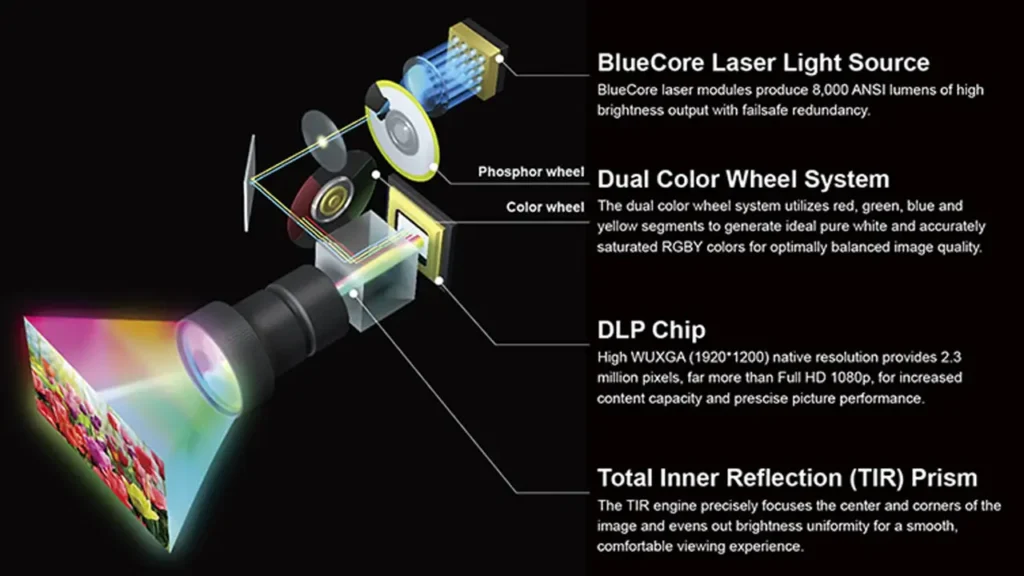
DLP headlights equipped with camping mode can convert a vehicle into an impromptu outdoor cinema, capable of projecting large-scale displays up to 120 inches for movies or videos. In the Changan Deepal S05 model, powered by Huawei’s xPixel technology, the system boasts a 130-megapixel resolution for sharp projections onto walls, screens, or natural surfaces, often complemented by built-in vehicle speakers for an immersive experience.
Official specifications from Deepal highlight this feature’s appeal to younger generations like Gen Z, who value portable entertainment options during camping trips or remote outings. The headlights serve dual purposes: providing standard illumination while switching to projection mode when the vehicle is stationary, supporting colorful and high-contrast images as enabled by Texas Instruments’ dynamic projection capabilities.
Among the advantages are exceptional portability, eliminating the need for separate equipment, and seamless integration with the vehicle’s power supply, making setup effortless. This allows users to enjoy entertainment in off-grid locations without additional batteries or generators. However, drawbacks include potential battery drain during extended use, which could impact vehicle readiness, and sensitivity to environmental factors—projections perform optimally in dark, dry conditions, with rain or ambient light reducing clarity.
Regulatory guidelines typically restrict such features to non-driving scenarios, ensuring they do not interfere with road safety. Overall, this camping mode exemplifies the versatility of DLP headlight projectors, extending their utility from essential driving aids to leisure enhancements that align with contemporary lifestyles.
DLP Headlight Projector Technology Trends — User Reviews + FAQ (6 Questions) + What About Laws (Projection Headlights Regulations Europe)
User reviews across automotive forums and social platforms commend DLP headlights for their exceptional clarity and multifunctional features, though some users mention the premium pricing as a drawback. For instance, Audi owners on Reddit appreciate the glare-free adaptive beams and light carpet projections for enhanced visibility. Similarly, AITO M9 users highlight the innovative projections, such as those used for pedestrian communication or entertainment, noting their practicality in real-world scenarios as shared in discussions on Rivian forums and YouTube reviews.
FAQ:
- What is DLP in headlights? It refers to Digital Light Processing, a DMD-based system that enables precise light control for adaptive illumination and projections.
- How does it improve safety? Through adaptive driving beams that mask oncoming traffic and interactive projections for warnings or navigation.
- Is it compatible with all vehicles? Primarily available in premium models like Audi or AITO series, with retrofits possible in some cases.
- What about energy consumption? DLP systems are efficient when paired with LED sources, minimizing power draw compared to traditional halogens.
- What maintenance is required? Regular checks on cooling systems and optics are recommended to prevent overheating or degradation.
- What are the future trends? Expect broader adoption in electric vehicles, with integrations for augmented reality and enhanced ADAS features.
Regarding laws in Europe, the UNECE ECE R149 regulation governs projection headlights, establishing standards for road illumination devices to ensure safe light distribution and prevent distractions. It specifies requirements for asymmetric light patterns and prohibits uses that could impair visibility for other road users.
DLP Headlight Projector Technology Trends — Final Verdict and Soft CTA: Follow the Trend on www.autochina.blog
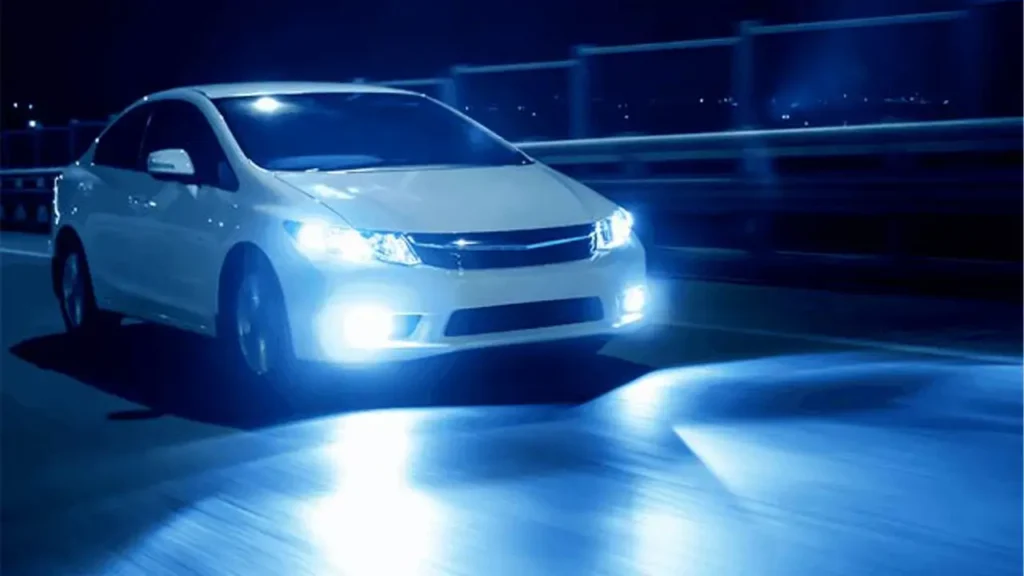
DLP headlight projector technology emerges as a transformative force in automotive lighting, delivering advancements in safety, interactive capabilities, and entertainment. Innovations from Texas Instruments, combined with implementations like Huawei’s xPixel and Deepal’s integrations, signal robust growth potential in this sector. For ongoing insights, consider following developments at www.autochina.blog.
Leapmotor is done making “China-only” cars — the Leapmotor B10 is clearly built as a global compact SUV with Europe in mind. And the key cheat code here is Stellantis: distribution, service network, and market access. Translation: this isn’t a random import story, it’s a planned EU push.
What makes the B10 interesting is the combo that usually doesn’t exist in one package: aggressive pricing plus serious tech. The focus is simple: Leapmotor B10 global SUV price should land below the typical mainstream EV crossover comfort zone — and that’s exactly how you steal attention from models like the BYD Atto 3. But the plot twist is LiDAR. In this price bracket, most brands offer “basic sensors and good luck.” LiDAR hints at a more advanced ADAS stack and a stronger “future-ready” positioning.
If you’re shopping in Europe and your shortlist includes BYD, MG, and the usual legacy brands, B10 is the wildcard you don’t ignore. The real battle will be final regional pricing, trims, and what Stellantis delivers in real availability. But the direction is obvious: Leapmotor wants volume sales, not niche hype.
Full article:
https://autochina.blog/leapmotor-b10-global-suv-price-europe-stellantis/
Discover more from AutoChina
Subscribe to get the latest posts sent to your email.

