Executive Summary
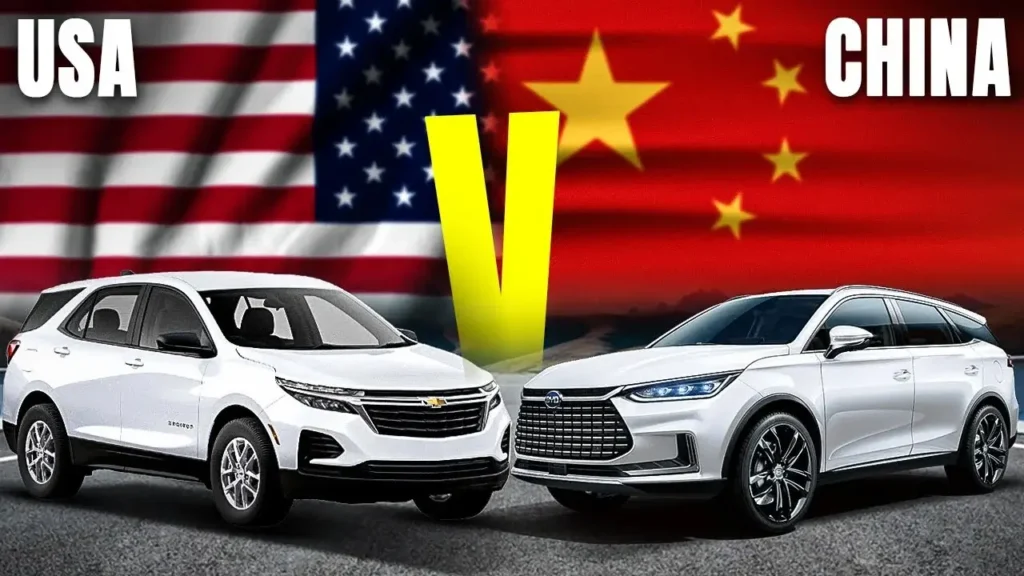
Chinese-made cars in the US market are already here. We explain which models are sold, how safe they are, and what Consumer Reports found.The automotive relationship between the United States and the People’s Republic of China has entered a period of profound complexity, characterized by a stark bifurcation between the visible and the invisible. To the casual observer walking the streets of New York, Los Angeles, or Chicago, the “Chinese car” appears to be a non-entity; the badges of BYD, Nio, and XPeng are notably absent, barred by a formidable wall of tariffs and regulatory exclusions.
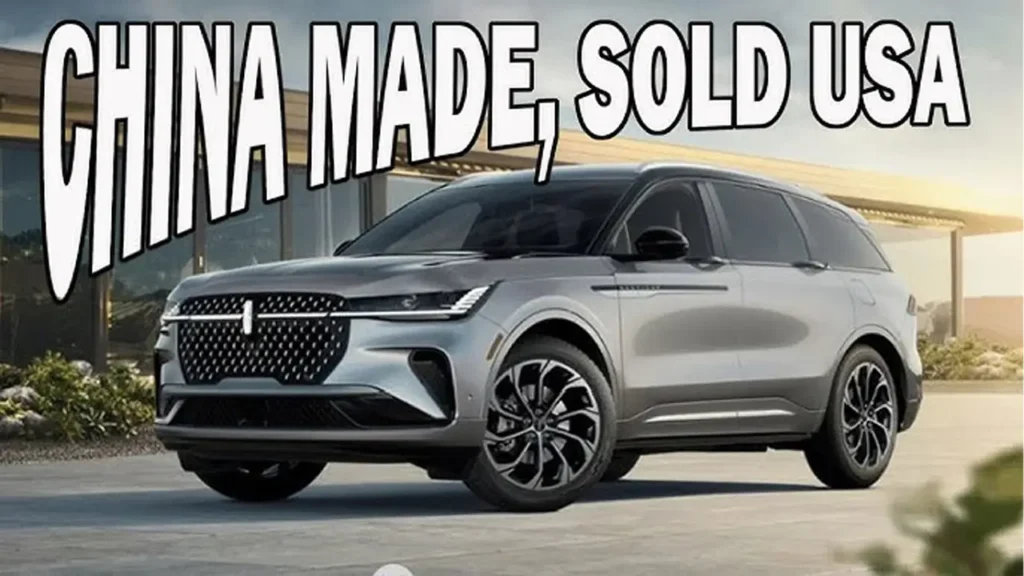
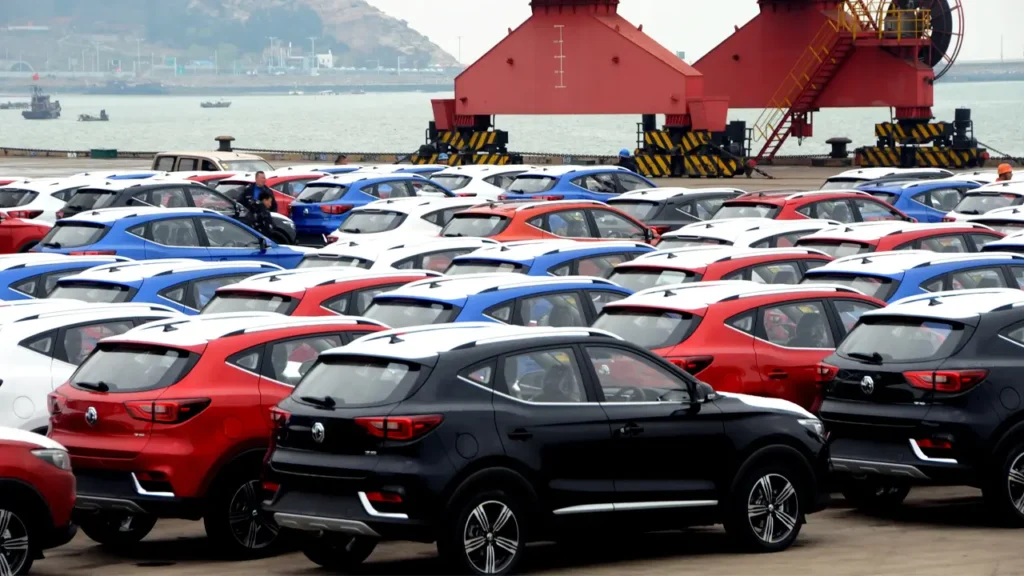
However, a deeper forensic analysis of the US automotive market reveals a different reality: China has become an integral, albeit camouflaged, manufacturing hub for heritage Western brands. As of late 2024 and heading into 2025, tens of thousands of vehicles sold under the banners of Buick, Lincoln, Volvo, and Polestar are assembled in Chinese provinces, utilizing Chinese supply chains, and are imported into the United States.
This report, based on an exhaustive review of market data, regulatory filings, consumer sentiment, and industry analysis, posits that the US market is currently experiencing a “Phantom Invasion.” While indigenous Chinese brands are effectively locked out by a 102.5% tariff wall on electric vehicles (EVs), the importation of internal combustion engine (ICE) vehicles manufactured in China by joint ventures continues to thrive, protected by a lower, though still significant, 27.5% tariff barrier that automakers have chosen to absorb.
The ramifications of this dynamic are multi-layered. On the surface, consumers are receiving vehicles like the Buick Envision and Lincoln Nautilus that lead their segments in initial quality and safety ratings, challenging historical stereotypes of Chinese manufacturing. The J.D. Power and Consumer Reports data analyzed herein suggests that plants in Yantai and Hangzhou are producing vehicles that statistically outperform many of their North American counterparts in fit, finish, and powertrain reliability.
However, a dangerous fragility lies beneath this veneer of quality. Our analysis of owner forums, service advisories, and parts availability data uncovers a growing crisis of “logistical reliability.” While the cars themselves rarely fail mechanically, when they do require repair—particularly for collision damage or specialized electronics like Head-Up Displays (HUDs)—owners face debilitating backorder times of up to two months. The “tariff stacking” on individual components, combined with the immense geographical distance and geopolitical friction, has created a scenario where a minor fender bender can render a brand-new vehicle inoperable for weeks.
Furthermore, the “Connected Vehicle” rule finalized by the US Department of Commerce introduces an existential threat to this trade. By targeting the software and hardware stacks that control automated driving and connectivity, this regulation threatens to sever the digital supply chains that modern vehicles rely on, potentially forcing a complete decoupling of US and Chinese automotive ecosystems by the 2027-2030 model years.
This report provides a granular examination of these forces. It details the specific manufacturing origins of key models, analyzes the crippling impact of tariffs on the pricing of vehicles like the Lotus Eletre, explores the “asset-light” manufacturing shifts of Polestar and Volvo, and documents the emerging grey market for micro-EVs. It serves as a definitive record of a market in transition, where geopolitical strategy and industrial logic are in a high-stakes collision.
If you’re curious how AI is reshaping cars, homes and everyday gadgets, check out our sister project at https://aiinovationhub.com/ — a hub for practical AI tools, reviews and step-by-step guides. It’s the perfect next stop after exploring Chinese-made cars in the US market and understanding where future mobility is heading.
Section 1: The Geopolitical and Regulatory Framework
To understand the market presence—or absence—of Chinese-manufactured vehicles in the US, one must first dissect the complex web of trade policies that govern the trans-Pacific automotive corridor. These policies are not merely taxes; they are instruments of industrial defense, designed to decouple the US automotive sector from its primary global competitor.
1.1 The Section 301 Tariff Regime: A Two-Tiered Wall
The primary mechanism controlling the flow of Chinese cars into the US is Section 301 of the Trade Act of 1974. Initially invoked by the Trump administration to address intellectual property theft and forced technology transfer, these tariffs have been maintained and expanded by the Biden administration, creating a bifurcated tariff structure based on the vehicle’s propulsion system.
1.1.1 The Internal Combustion Engine (ICE) Barrier
For gasoline-powered vehicles, the tariff structure remains punitive but surmountable for high-margin manufacturers. Vehicles such as the Buick Envision, the Lincoln Nautilus (gasoline variants), and the Volvo S90 are subject to the standard Most Favored Nation (MFN) import duty of 2.5%, applied to all passenger automobiles. On top of this, Section 301 imposes an additional ad valorem tariff of 25%.
This results in a total import duty of 27.5% assessed on the customs value of the vehicle at the port of entry. For a vehicle with a declared customs value of $30,000, this tariff adds $8,250 to the cost structure. Automakers like General Motors and Ford have made the strategic calculation that the savings achieved through lower labor costs, integrated supply chains, and massive economies of scale in China outweigh this 27.5% penalty. They choose to absorb this cost or amortize it across the vehicle’s pricing, rather than passing it directly to the consumer as a line item, thereby keeping these vehicles competitively priced against domestic rivals.
1.1.2 The Electric Vehicle (EV) Firewall
In May 2024, the geopolitical landscape shifted dramatically for electric vehicles. Recognizing the rapid ascendancy of the Chinese EV industry—typified by BYD’s cost-efficient vertical integration—the US administration raised the Section 301 tariff rate on Chinese EVs from 25% to 100%.
When combined with the standard 2.5% duty, the total tax burden on a Chinese-made EV entering the US is now 102.5%. This rate is prohibitive by design. It is not intended to generate revenue but to act as a de facto ban. For example, a BYD Seagull, which retails for approximately $10,000 in China, would effectively cost over $20,000 in the US before shipping and compliance modifications, eroding its primary competitive advantage. For premium vehicles, the math is even more destructive. The Lotus Eletre, discussed later in this report, saw its price balloon from a projected $107,000 to nearly $230,000 largely due to this pass-through cost.
1.2 The “Connected Vehicle” Ban: The Digital Iron Curtain
While tariffs address the cost of physical goods, a new regulatory front has opened regarding national security and data privacy. In late 2024 and finalized in early 2025, the US Department of Commerce issued rules prohibiting the import and sale of “connected vehicles” that incorporate software or hardware from “Foreign Entities of Concern” (FEOC), specifically targeting the People’s Republic of China.
This regulation is far more insidious for automakers than tariffs. Tariffs can be paid; software bans require re-engineering.
- Scope: The rule targets the Vehicle Connectivity Module (VCM) and the Automated Driving System (ADS) software stack. It effectively bans cars that “talk” to Chinese servers or run on Chinese code.
- Timeline: The restrictions on software are set to take effect for the 2027 model year, while hardware restrictions will kick in for the 2030 model year (or January 1, 2029, for units without model years).
- Impact: This forces brands like Lincoln and Volvo, which rely on globalized tech stacks often developed in Chinese R&D centers (like Geely’s operations), to bifurcate their software development. A Lincoln Nautilus sold in Shanghai can run on a Changan-developed operating system, but the same car sold in Los Angeles must be stripped of that code and run on a US- or ally-sourced alternative, adding immense complexity to the “One Ford” or global Volvo strategy.
1.3 Tariff Stacking and the Spare Parts Dilemma
The trade war extends deeply into the aftermarket. The Section 301 tariffs also apply to a vast array of automotive components, including engines, transmissions, printed circuit boards, and body panels.
This phenomenon, known as “tariff stacking,” occurs when a vehicle is imported (incurring the 27.5% duty) and then requires repair parts that are also imported (incurring their own 25% duty). This double taxation raises the total cost of ownership and insurance premiums for these vehicles. Furthermore, the logistical friction introduced by customs enforcement on these parts—checking for forced labor compliance or entity list violations—has created the “parts crisis” detailed in Section 7 of this report. A replacement bumper is no longer just a piece of plastic; it is a geopolitically sensitive good subject to scrutiny.
US Import Tariffs on Chinese Automotive Goods (Section 301)
| Tariff Category | Base Duty | Section 301 Rate | Total Effective Duty | Impacted Vehicles |
|---|---|---|---|---|
| ICE Passenger Vehicle | 2.5% | 25% | 27.5% | Buick Envision, Lincoln Nautilus (Gas), Volvo S90 |
| Electric Vehicle (EV) | 2.5% | 100% | 102.5% | Polestar 2 (China build), Lotus Eletre, Volvo EX30 |
| Auto Parts | Varies (0-2.5%) | 25% | ~25% - 27.5% | Replacement components for all above models |
Section 2: The Incumbents – Legacy Brands Manufacturing in China
Despite the hostile regulatory environment, three major legacy automakers—General Motors, Ford, and Volvo—maintain a robust pipeline of Chinese-manufactured vehicles into the US. These vehicles represent the "Old Guard" of the trade relationship: premium ICE vehicles that leverage China's mature industrial base.
2.1 The Buick Envision (SAIC-GM)
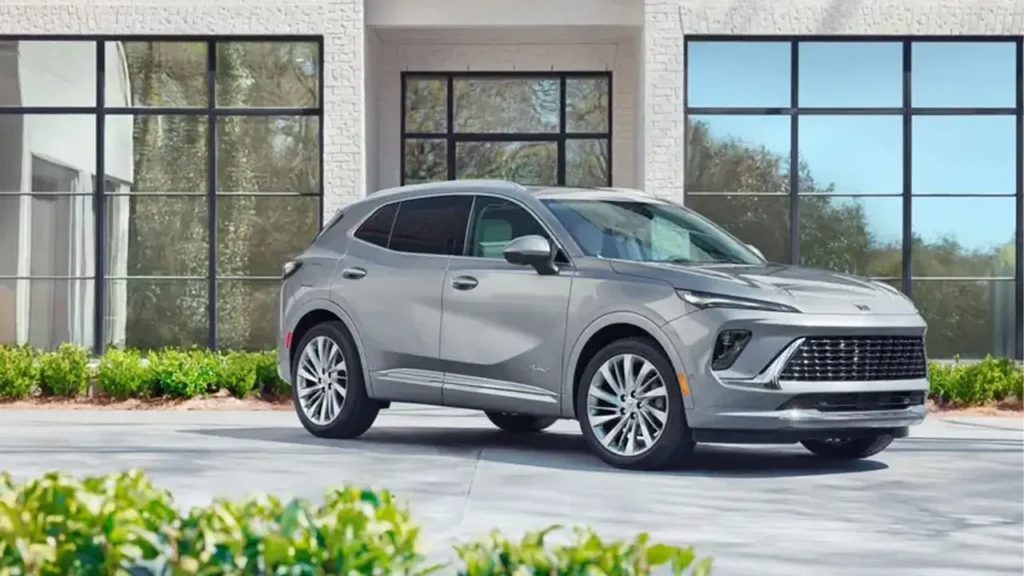
The Buick Envision is the quiet titan of Chinese imports in America. Produced exclusively at the SAIC-GM Dongyue plant in Yantai, Shandong province, it is a testament to the manufacturing prowess of the SAIC-GM joint venture.
2.1.1 Production and Positioning
The 2025 Buick Envision rides on GM's E2 platform, shared with the Cadillac XT4. It is powered by the LSY 2.0L Turbo ECOTEC engine, a unit widely used across GM's portfolio. By manufacturing in Yantai, GM leverages a localized supply chain for approximately 95% of the vehicle's components, significantly reducing the bill of materials (BOM). This cost advantage allows GM to price the 2025 Envision aggressively, starting at $37,895 for the Preferred trim. Even with the 27.5% tariff absorbed, the Envision undercuts European competitors like the Audi Q5 or BMW X3 by nearly $10,000, positioning it as a "value luxury" proposition.
2.1.2 The 2025 Refresh and Tech Integration
The 2025 model year introduced a significant mid-cycle refresh aimed at aligning the Envision with Buick's new "Wildcat" design language.
- The 30-Inch Screen: The centerpiece of the interior is a massive 30-inch diagonal ultra-wide display that integrates the instrument cluster and infotainment. This screen is likely sourced from Chinese suppliers (possibly BOE or similar), highlighting the vehicle's reliance on the Asian electronics supply chain.
- Super Cruise Omission: Notably, despite the high-tech interior, snippet indicates that GM's flagship hands-free driver assistance system, Super Cruise, is "notably absent" from the Envision's offerings. This omission is likely a strategic decision to avoid the complexities of validating Chinese-assembled hardware for US mapping data, or potentially to avoid "Connected Vehicle" scrutiny regarding the high-definition map modules required for Super Cruise.
2.2 The Lincoln Nautilus (Changan-Ford)
If the Envision is the quiet titan, the Lincoln Nautilus is the bold experiment. For the 2024 model year redesign, Ford shifted production from its Oakville, Ontario plant to the Changan-Ford Hangzhou Assembly Plant in China. This move was driven by the need to utilize the advanced C2 platform capabilities available in China and to free up Oakville for a (now delayed) EV transition.
2.2.1 The "Digital Sanctuary"
Lincoln's marketing strategy for the Chinese-made Nautilus is to overwhelm the consumer with interior luxury, effectively distracting from the country of origin.
- The 48-Inch Panoramic Display: The defining feature of the 2024/2025 Nautilus is a pillar-to-pillar 48-inch display that sits near the windshield, reducing eye refocus time. This display is powered by a computing stack that integrates Google Built-in technologies.
- Lincoln Rejuvenate: This feature turns the car into a wellness pod. It orchestrates the seat massage, climate control, ambient lighting, and—crucially—digital scents to create a relaxing environment. The car comes with scent cartridges (e.g., "Mystic Forest," "Ozonic Azure") located in the center armrest.
- Trim Levels and Themes: The top-tier Black Label trim (starting around $78,725) features exclusive themes like "Redwood," which mimics the atmosphere of the California redwoods with specific leather tones and wood inlays. These high-margin trims are essential for Ford to offset the tariff costs and shipping logistics.
2.2.2 The Hybrid Powertrain
Unlike the Envision, which is gas-only, the Nautilus offers a highly competitive hybrid powertrain. The 2.0L turbocharged hybrid setup delivers 310 horsepower, combining performance with efficiency (30 mpg combined). This powertrain is also assembled in China, demonstrating the capability of the Changan-Ford JV to produce complex electrified drivetrains that meet US EPA standards.
2.3 The Volvo S90 (Geely)
The Volvo S90 sedan occupies a unique niche. Since 2017, production of the S90 for the US market has been consolidated at Volvo's plant in Daqing, Heilongjiang province.
- The Long Wheelbase Advantage: The primary reason for this consolidation is the Chinese market's preference for long-wheelbase (LWB) sedans. Volvo builds the S90 in a long-wheelbase configuration as standard for China. Rather than building a separate short-wheelbase version for the US (where large sedans are a shrinking market), Volvo exports the LWB version to the US. This gives the S90 class-leading rear legroom, a unique selling point against the Mercedes E-Class or BMW 5-Series.
- Recharge Plug-in Hybrid: The S90 is available as a "Recharge" plug-in hybrid (PHEV), offering 455 horsepower and significant electric-only range. This complex powertrain is integrated at the Daqing plant, further proving the high technical competency of Volvo's Chinese operations.
Section 3: The EV Transition and Tariff Refugees
While ICE vehicles have found a stable, if taxed, existence, the electric vehicle sector is in a state of chaotic realignment due to the 102.5% tariff. Manufacturers are currently engaged in a game of "industrial hopscotch," moving production to avoid the US trade barriers.
3.1 Polestar: The Asset-Light Pivot
Polestar, the performance EV spinoff of Volvo, found itself in the crosshairs of the trade war with its Polestar 2, which is manufactured in Luqiao, China.
- The Pricing Trap: The Polestar 2 has faced immense pricing pressure. With the 2025 model starting at $66,200 for the Performance Pack version (as lower trims were consolidated), the tariff burden is evident. The inability to price the vehicle competitively against the Tesla Model 3 (which qualifies for US tax credits and faces no tariffs) has capped its sales potential.
- The South Carolina Solution: For the launch of the Polestar 3 SUV, the company adopted an "asset-light" strategy. Rather than building a new factory, Polestar is utilizing the existing Volvo assembly line in Ridgeville, South Carolina.
- Strategic Implication: By assembling the Polestar 3 in South Carolina, the vehicle bypasses the Section 301 tariffs entirely and potentially qualifies for IRA tax credits (depending on battery sourcing). Furthermore, the Ridgeville plant will serve as an export hub, sending Polestar 3s to Europe, effectively reversing the trade flow. This move is a direct response to the tariff wall: the only way to sell a "Chinese" EV in America is to build it in America.
3.2 Volvo EX30: The Victim of Timing
The Volvo EX30 was poised to be a game-changer: a premium compact electric SUV with a starting price around $35,000. However, its launch was derailed by the 2024 tariff hike.
- The Delay: Originally scheduled for mid-2024, the US launch was pushed to 2025. This delay was necessitated by the decision to shift production for the US market from Zhangjiakou, China, to Ghent, Belgium.
- The Cost: While the Belgium production avoids the 100% China tariff, it introduces higher labor and energy costs. Volvo has had to reconfigure its global supply chain to route US-bound units through Europe, a massive logistical undertaking that effectively killed the vehicle's momentum before it even arrived.
3.3 Lotus Eletre: The Hyper-Inflation of Price
The Lotus Eletre, the brand's first electric "Hyper-SUV," illustrates the raw mathematical impact of the tariffs. Manufactured in Wuhan at a new Geely-invested facility, the Eletre has no alternative production site.
- The Price Shock: Initial estimates placed the US starting price around $107,000. However, with the imposition of the 100% tariff, the confirmed pricing for the US-market Eletre Carbon is $229,900.
- Market Positioning: This massive price hike, driven almost entirely by the pass-through of the tariff, forces the Eletre out of the "luxury SUV" segment (competing with the Tesla Model X or BMW iX) and into the "exotic" segment (competing with the Lamborghini Urus or Ferrari Purosangue). While Lotus spins this as exclusivity, it is functionally a regulatory distortion that severely limits the vehicle's addressable market.
If you’re curious how Chinese brands perform in laptops, jump to our partner site https://bestchinagadget.com/ — a focused guide to Chinese notebooks, gaming machines and budget ultrabooks. Simple reviews, real-life tests and buying tips help you match your next laptop to the same value you expect from Chinese cars.
Section 4: The Phantom Market – Indigenous Brands and the Grey Market
A persistent question hangs over the industry: "Where are BYD and Nio?" Despite their dominance globally, their US presence is virtually non-existent.
4.1 BYD: The Explicit Rejection
BYD, now the world's largest producer of NEVs (New Energy Vehicles), has made a calculated decision to avoid the US passenger car market.
- Official Stance: Stella Li, CEO of BYD Americas, has stated unequivocally that BYD has "no plans" to enter the US market, citing "complications" and political toxicity.
- The Mexico Loophole Closed: Throughout 2023 and 2024, there was speculation that BYD would build a factory in Mexico to export cars to the US duty-free under the USMCA. However, intense pressure from Washington, including threats to apply tariffs to any Chinese-branded vehicle regardless of assembly location, led to the collapse of this strategy. BYD has since clarified that its Mexican investments are strictly for the local Latin American market.
4.2 Zeekr and Nio: IPOs without Product
Both Zeekr and Nio are publicly traded on the New York Stock Exchange (NYSE: ZK, NYSE: NIO), creating a paradox where US investors can own the company, but not the cars.
- Zeekr: Despite a partnership with Waymo to develop a robotaxi specifically for US deployment, Zeekr has stated it has no plans for consumer sales in the US. The tariff environment makes their business model—premium EVs at competitive prices—impossible.
- Nio: Nio's "2025 Plan" for US entry has been quietly shelved. The company has pulled back on hiring for its San Jose headquarters and is focusing on the European market, where tariffs are high but not yet prohibitive.
4.3 The Grey Market: The "Oklahoma Loophole"
While new sales are banned or tariffed into oblivion, a tiny "grey market" exists for low-speed Chinese EVs.
- The Wuling Mini EV: There are documented cases of individuals, such as a man in Oklahoma, importing the Wuling Mini EV (rebadged or modified) as a Low Speed Vehicle (LSV).
- Mechanics: By restricting the speed to 25-35 mph and avoiding highway certification, these vehicles can sometimes bypass standard FMVSS crash testing requirements. Some importers utilize Montana LLCs to register these vehicles in a state with lax inspection laws, allowing them to be driven in other states under reciprocity agreements. However, this is a legal grey area and does not represent a scalable market entry; it is a curiosity for enthusiasts willing to navigate a bureaucratic maze.
If you want to see how fast Chinese brands are moving globally, switch from the US market to Europe. Our BYD vs Tesla breakdown shows a real EV power shift, prices, and range battles. Read the story here: https://autochina.blog/byd-outsells-tesla-in-europe-ev-sales-shift/ for a wider view of Chinese EVs.
Section 5: Reliability and The Supply Chain Crisis
Analysis of consumer data reveals a stark contrast between the build quality of Chinese cars and the logistical reliability of owning one.
5.1 The Quality Paradox: Better Than Domestic?
J.D. Power and Consumer Reports data paint a surprising picture: Chinese-made cars are often more reliable than their US-assembled counterparts.
- Buick Envision: The 2025 Envision ranked #1 in the J.D. Power Compact SUV segment for initial quality, beating the Honda CR-V. Consumer Reports also lists it as one of the most reliable domestic nameplates. Owners consistently praise the tight panel gaps and paint quality, attributing it to the state-of-the-art automation at the SAIC-GM Yantai plant.
- Lincoln Nautilus: Initial feedback on the Chinese-built Nautilus praises the mechanical solidity and interior fit and finish. The "quietness" and material quality are often cited as superior to the previous generation built in Canada.
5.2 The "Parts Crisis": A Logistical Nightmare
However, the ownership experience is being marred by a severe breakdown in the parts supply chain. This is the "second-order" effect of the trade war.
- Backorder Timelines: Analysis of owner forums (Reddit, BlueOvalForums) reveals a consistent pattern of complaints regarding parts availability. Owners of 2024/2025 models report wait times of 3 to 8 weeks for collision parts like bumpers, mirrors, and headlights.
- HUD Failures: A specific defect regarding the Head-Up Display (HUD) in the 2025 Buick Envision has been reported by multiple owners. The replacement units are on severe backorder, with some owners driving loaner vehicles for over two months while waiting for a part to ship from China.
- The Cause: Unlike domestic vehicles where parts are stockpiled in regional distribution centers, parts for these low-volume imports are often shipped "just in time" from China. When tariff enforcement tightens (customs inspections for forced labor, etc.) or logistics are disrupted, the supply line is severed. The "Tariff Stacking" on parts adds cost, but the delay is the true penalty for the consumer.
- Service Advisor Fatigue: Service advisors at dealerships report frustration, noting that they have "no ETA" for parts coming from China, leading to poor customer satisfaction scores despite the car itself being well-made.
Section 6: Safety Ratings and Crashworthiness
Fears that Chinese-made cars would fail to meet US safety standards have been emphatically disproven by the latest rounds of crash testing.
6.1 Lincoln Nautilus: Top Safety Pick+
The 2025 Lincoln Nautilus achieved the Top Safety Pick+ award from the IIHS, the highest possible honor.
- Crashworthiness: It scored "Good" in the rigorous small overlap front test (driver and passenger side) and the updated side impact test.
- Pedestrian Safety: The vehicle's pedestrian crash prevention systems (likely utilizing cameras and radar sourced from global suppliers) received "Good" ratings, detecting and braking for pedestrians effectively. This confirms that the Changan-Ford plant is utilizing high-strength boron steels and advanced welding techniques identical to those used in Ford's US plants.
6.2 Buick Envision: 5-Star Safety
The Buick Envision holds a 5-Star Overall Safety Rating from the NHTSA.
- Consistency: It has maintained high safety ratings across multiple model years, proving that SAIC-GM's quality control is consistent over time.
- Active Safety: The standard suite of safety features (automatic emergency braking, lane keep assist) functions on par with domestic GM vehicles, indicating successful software integration despite the Chinese origin of the hardware.
Section 7: Conclusions and Future Outlook
The state of Chinese-made cars in the US market in 2025 is defined by a rigorous process of selection and exclusion. The "Invisible Invasion" of ICE vehicles is successful but fragile, while the "Visible Invasion" of EVs has been halted by a wall of tariffs.
7.1 Key Takeaways
- Tariffs Shape Geography: The 102.5% tariff has forced Polestar and Volvo to move production to South Carolina and Belgium, proving that protectionist policies can successfully repatriate (or at least relocate) manufacturing, albeit at a cost to consumer pricing and launch timing.
- The "Quality" Myth is Dead: The Buick Envision and Lincoln Nautilus prove that Chinese factories can produce world-class luxury vehicles. The stigma of "Chinese quality" is no longer supported by data; in fact, the data suggests these imports may be better built than some domestic peers.
- The "Service" Risk is Alive: The Achilles heel of these vehicles is the supply chain. Buying a Chinese-made car in 2025 is a gamble on parts availability. The logistical tether to China is long, thin, and easily disrupted by trade friction, leaving owners vulnerable to months-long repair delays.
- No Backdoor Entry: The US government has successfully plugged the "Mexico loophole," ensuring that brands like BYD cannot use NAFTA/USMCA to bypass tariffs.
- The Digital Iron Curtain: The "Connected Vehicle" ban will likely force the next generation of these cars (post-2027) to undergo radical software decoupling, potentially raising costs further as manufacturers maintain separate codebases for China and the US.
In conclusion, the Chinese car is already here, parked in American driveways, disguised as a Buick or a Lincoln. It is safe, reliable, and technologically advanced. But it exists on a geopolitical fault line. As trade tensions escalate, the owners of these vehicles may find themselves on the front lines of a supply chain war, waiting weeks for a part that sits in a container in Shanghai, held up by the invisible hand of trade policy.
Discover more from AutoChina
Subscribe to get the latest posts sent to your email.

