The Chinese EV insurance cost increase 2026 has caught thousands of European and Chinese buyers completely off-guard. Since January 1st, 2026, insurance renewals for vehicles equipped with advanced LiDAR and ADAS systems have skyrocketed—some owners report premium hikes of 40-60% compared to 2025. What started as whispers in owner forums has become a full-blown affordability crisis, forcing many to reconsider their “smart” EV purchases.
Why the sudden shock? It’s not just about batteries anymore. Modern Chinese EVs from brands like BYD, NIO, Xpeng, and Zeekr pack cutting-edge sensor arrays that make them safer and smarter—but also exponentially more expensive to repair after even minor accidents. A fender-bender that would cost €800 to fix on a traditional car can easily balloon to €6,000-€8,000 when LiDAR units, radar modules, and camera calibrations enter the equation. Insurers have finally done the math, and they’re passing those costs directly to policyholders through the Chinese EV insurance cost increase 2026.
This isn’t just a European phenomenon. In China itself, NEV (New Energy Vehicle) insurance premiums are climbing as the initial “promotional” rates expire and actuaries factor in real-world repair data. The dream of affordable electric mobility is colliding with the harsh reality of high-tech repair bills, and consumers are stuck in the middle.
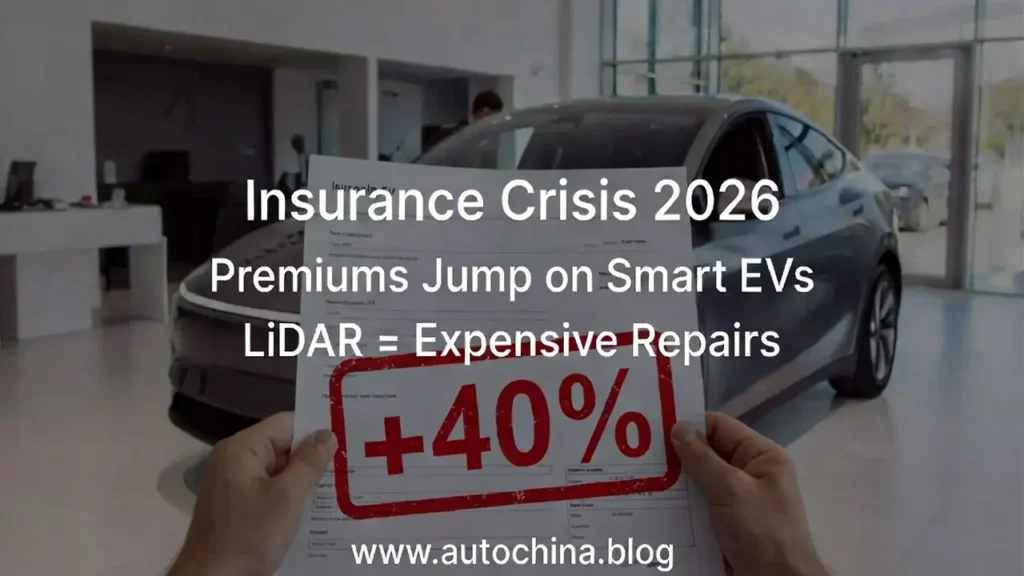
Chinese EV insurance cost increase 2026: Why European Premiums Jumped Overnight
The EV insurance premium increase Europe 2026 didn’t happen in a vacuum. Throughout 2024-2025, insurers quietly collected damage claims data from Chinese EVs sold across the continent. What they discovered was alarming: repair costs were consistently 2-3x higher than projected, primarily due to sensor-related damage and the scarcity of certified repair facilities.
When policies renewed in January 2026, the adjustments were brutal. UK drivers with NIO ET5s saw premiums jump from £1,200 to £1,850 annually. German owners of BYD Seal models faced increases from €1,100 to €1,750. French Xpeng P7 drivers weren’t spared either—premiums climbed from €1,050 to €1,680. The pattern was consistent: Chinese EV insurance cost increase 2026 hit hardest on models with the most advanced sensor suites.
The core issue? A minor parking lot incident that damages a front bumper can require replacing a €2,500 LiDAR unit, recalibrating four corner radars (€400 each), and re-programming the ADAS system (€800-€1,200 labor). Insurers realized they’d been underwriting these vehicles based on traditional EV repair costs, completely missing the sensor replacement and calibration expenses. The Chinese EV insurance cost increase 2026 is their correction—and it’s painful.
What makes this particularly frustrating for owners is the inconsistency. Two identical vehicles can have wildly different premiums depending on the insurer’s risk assessment and their access to certified repair networks. Some insurers simply refuse to cover certain Chinese EV models altogether, forcing owners into higher-risk pools with astronomical rates. The EV insurance premium increase Europe 2026 has created a two-tier market: affordable coverage for “simple” EVs and eye-watering premiums for sensor-laden Chinese models.
The True Cost of Ownership: Before and After 2026
Understanding the EV insurance total cost of ownership requires looking beyond the sticker price and considering the entire lifecycle of owning a high-tech Chinese EV. The Chinese EV insurance cost increase 2026 fundamentally altered the TCO equation for thousands of buyers who thought they’d scored amazing deals.
| Cost Category | Before 2026 | After 2026 | % Change |
|---|---|---|---|
| Annual Premium (mid-spec Chinese EV) | €1,200 | €1,850 | +54% |
| Excess/Deductible (comprehensive) | €350 | €650 | +86% |
| Average Minor Repair (bumper/sensor) | €3,500 | €6,800 | +94% |
| Repair Downtime (days) | 7-10 | 18-25 | +150% |
| Rental Car During Repair | €300 | €750 | +150% |
| 5-Year TCO Impact (one claim) | €6,350 | €10,900 | +72% |
The numbers tell a sobering story. A buyer who purchased a €35,000 Chinese EV in 2024 expecting €6,000 in insurance costs over five years is now looking at €9,250—an extra €3,250 they didn’t budget for. If they have even one minor accident requiring sensor work, that TCO impact jumps to nearly €11,000. The Chinese EV insurance cost increase 2026 effectively raised the “true price” of these vehicles by 10-15% for the average owner.
The EV insurance total cost of ownership calculation must now include “sensor replacement reserves” that didn’t exist for traditional vehicles. Smart buyers are setting aside €100-€150 monthly to cover both elevated premiums and the likelihood of at least one sensor-related repair during their ownership period. This financial reality is pushing some buyers back toward simpler EV models or even ICE vehicles where repair costs are predictable and insurance premiums stable.
Why a Small Bump Costs a Fortune: The LiDAR Trap
The LiDAR replacement cost after accident has become the most feared phrase among Chinese EV owners in 2026. These spinning laser sensors—mounted prominently on roofs, front bumpers, or rear quarters—are engineering marvels that enable autonomous driving features. They’re also incredibly fragile and shockingly expensive to replace, driving much of the Chinese EV insurance cost increase 2026.
Here’s the brutal truth: a light tap in a parking garage that barely dents your bumper can completely destroy a LiDAR unit. Unlike a traditional headlight or bumper cover that absorbs impact and can be repaired, LiDAR sensors are precision optical instruments. Even minor impacts misalign the internal laser array, rendering them useless. And they can’t be fixed—only replaced.
The costs are eye-watering. A single roof-mounted LiDAR unit (common on NIO models) costs €2,200-€2,800 for the part alone. Front bumper-mounted units (found on many Xpeng and Zeekr models) run €1,800-€2,400. Installation and calibration add another €800-€1,200 in labor. Total bill for replacing one LiDAR sensor: €3,000-€4,000. Many high-end Chinese EVs have multiple LiDAR units, multiplying the risk.
What makes the LiDAR replacement cost after accident even more painful is the cascading effect. When a front bumper gets damaged, it’s not just the LiDAR at risk—the surrounding radar modules, ultrasonic sensors, and cameras often need replacement or recalibration too. A €500 bumper repair suddenly becomes a €7,000 sensor replacement nightmare. Insurance adjusters have learned to dread these claims because the bills always balloon beyond initial estimates.
The Chinese EV insurance cost increase 2026 directly reflects this reality. Actuaries calculated that vehicles with roof-mounted LiDAR have a 23% chance of sensor damage during a typical 5-year ownership period, while bumper-mounted units face a staggering 38% risk. When you’re looking at thousands of euros in guaranteed future claims, premium increases are inevitable. Owners are learning the hard way that “self-driving capable” comes with a massive hidden insurance premium.
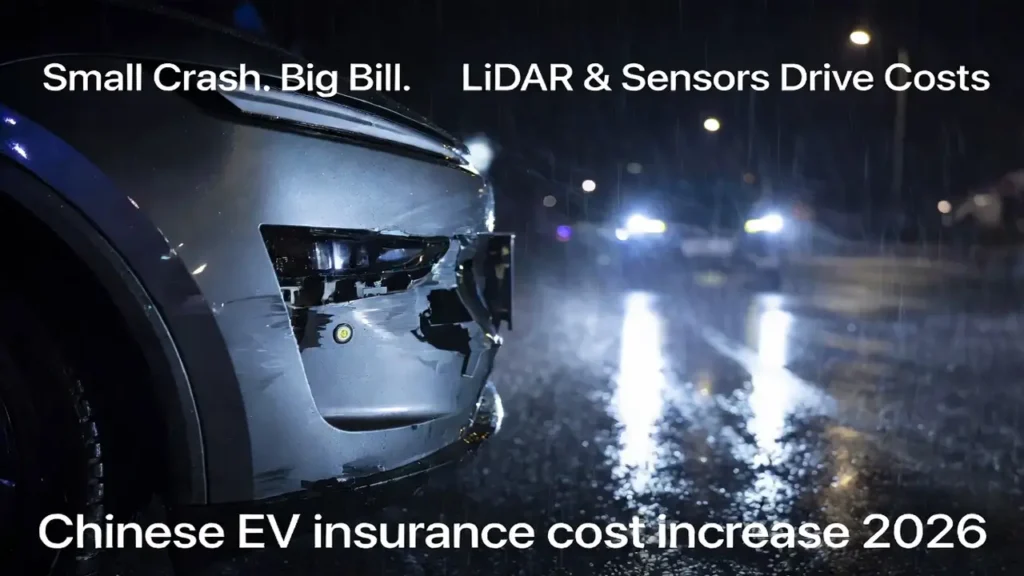
The Hidden Cost: ADAS Sensor Calibration After Every Repair
Beyond replacement costs, the ADAS sensor calibration cost has emerged as a sneaky driver of the Chinese EV insurance cost increase 2026. Even when sensors survive an accident physically intact, they almost always require recalibration—a complex, time-consuming process that requires specialized equipment most body shops simply don’t have.
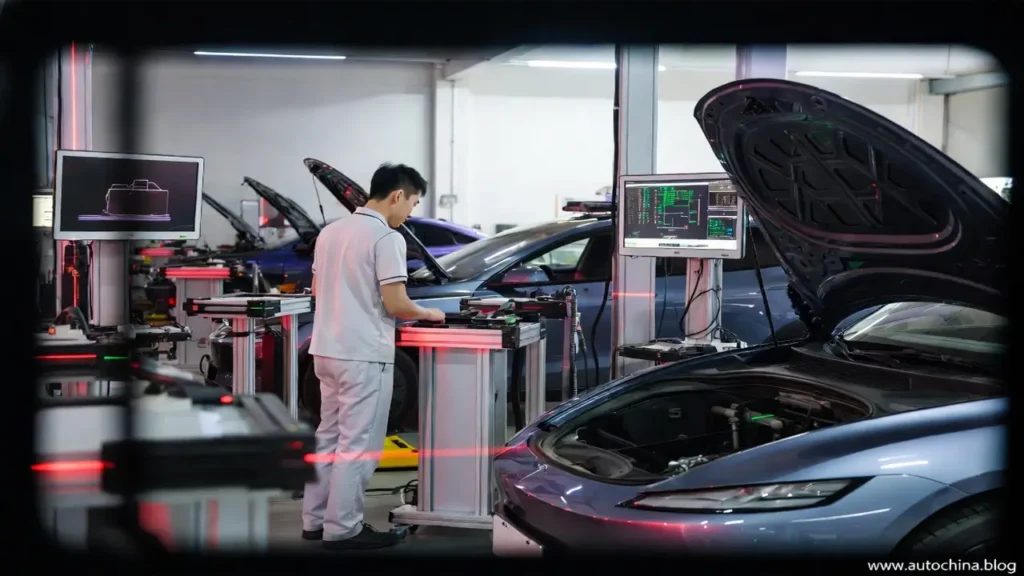
ADAS (Advanced Driver Assistance Systems) sensors must be calibrated to millimeter-level precision to function safely. A camera or radar that’s off by just 2-3 degrees can cause automatic emergency braking to activate randomly or fail to detect pedestrians. After any accident involving the front or rear of the vehicle—or even after a windshield replacement—full ADAS recalibration is mandatory.
The process isn’t quick or cheap. A certified calibration facility needs to position the vehicle on a perfectly level surface, set up large calibration targets at precise distances, and run manufacturer-specific software through the vehicle’s diagnostic port. The entire procedure takes 3-6 hours depending on how many sensors need calibration. Labor rates at certified facilities run €120-€180 per hour, putting typical ADAS sensor calibration costs at €400-€1,000 per visit.
Here’s where it gets worse for Chinese EV owners: most European body shops lack the Chinese manufacturer-specific calibration software and training. Only official brand service centers or a handful of specialized facilities can perform the work. This creates enormous bottlenecks. What would be a 3-day bumper repair becomes a 3-week ordeal waiting for a calibration appointment slot. The ADAS sensor calibration cost isn’t just monetary—it’s the lost time and rental car expenses while your vehicle sits waiting for a certified technician.
Insurance companies absorbed these delays and calibration costs silently in 2024-2025, but the Chinese EV insurance cost increase 2026 shows they’re done subsidizing this inefficiency. Premiums now factor in an average 2.5 calibration procedures per vehicle over five years, each costing €600-€900. That’s another €1,500-€2,250 in expected claims costs, driving premiums up by €300-€450 annually. The ADAS sensor calibration cost has become an unavoidable tax on owning a high-tech Chinese EV.
China’s NEV Insurance Market: Lessons from the Source
To understand the Chinese EV insurance cost increase 2026 in Europe, we need to look at the China NEV insurance premium 2026 trends in the domestic market. Chinese insurers dealt with these challenges a year earlier, and their experiences foreshadowed everything European buyers are now facing.
In China, NEV (New Energy Vehicle) insurance underwent major reforms in December 2021, introducing a specialized policy framework that addressed battery degradation, autonomous driving features, and sensor repair costs. By 2024, the average China NEV insurance premium had stabilized at ¥4,800-¥6,200 (€610-€790) annually for mid-range models—significantly lower than European equivalents but still 25-35% higher than traditional ICE vehicle insurance.
The China NEV insurance premium 2026 continues this upward trajectory as LiDAR and advanced ADAS become standard. Domestic Chinese models with these features now face premiums of ¥6,500-¥8,200 (€830-€1,045), though still more affordable than European rates due to vast certified repair networks and cheaper labor costs. Chinese insurers benefit from direct data-sharing with manufacturers, allowing more precise risk pricing—a luxury European insurers lack.
One fascinating development: Chinese insurers now offer “sensor exclusion” riders that reduce premiums by 15-20% if owners agree to self-insure sensor damage. This option has proven popular with tech-savvy owners who park carefully and avoid highway driving in harsh weather. European insurers are watching this experiment closely, with some considering similar products for 2027.
The Chinese EV insurance cost increase 2026 in Europe is partly driven by the parts supply chain running through China. When a Berlin-based Xpeng owner needs a replacement LiDAR unit, it must be ordered from China, shipped, and then installed—a process taking 4-6 weeks. Chinese domestic owners get the same part in 3-5 days. This supply chain friction inflates repair costs and downtime, making European Chinese EV insurance significantly more expensive than China NEV insurance premium rates for identical vehicles.
Smart Strategies: How to Lower EV Insurance Cost Before You Buy
If you’re considering a Chinese EV despite the Chinese EV insurance cost increase 2026, strategic planning can save you thousands. Knowing how to lower EV insurance cost starts before you even choose a trim level—the decisions you make at purchase time will haunt or help your wallet for years.
First, understand the sensor premium hierarchy. Base models with standard radar and cameras cost 15-25% less to insure than top-tier trims with roof-mounted LiDAR. A BYD Seal in “Comfort” trim might cost €1,350 annually to insure, while the “Premium” trim with full autonomy hardware jumps to €1,850—a €2,500 difference over five years. Ask yourself honestly: will you actually use Level 3 autonomy, or are you paying €2,500 extra to insurance companies for features you’ll rarely activate?
Second, shop extensively for specialized coverage. Not all insurers understand Chinese EVs equally. Companies like AXA, Allianz, and Direct Line have developed Chinese EV-specific products with negotiated repair rates at certified facilities. These specialized policies can be 20-30% cheaper than generic coverage from providers who treat your Xpeng like an unknown risk. Get quotes from at least five insurers, emphasizing your vehicle’s safety ratings and your clean driving record.
Third, maximize your deductible strategically. Increasing your excess from €350 to €750 can cut premiums by 12-18%, saving €200-€350 annually. Here’s the key insight on how to lower EV insurance cost: sensor repairs are almost always above €3,000, meaning you’ll hit your deductible regardless. Taking a higher excess doesn’t increase your actual risk much but provides immediate premium savings. Put the savings in a dedicated emergency fund to cover the excess if needed.
Fourth, bundle aggressively. Insurers offer significant multi-policy discounts. Bundling your Chinese EV insurance with home, life, or additional vehicle coverage can reduce premiums by 15-25%. This strategy becomes especially powerful if you’re insuring two vehicles—pairing your high-tech Chinese EV with a simple ICE vehicle spreads the risk in the insurer’s eyes.
Fifth, consider usage-based or telematics insurance. Programs that monitor your driving behavior can slash premiums by 20-40% if you’re a safe, low-mileage driver. Since the Chinese EV insurance cost increase 2026 penalizes everyone equally, proving you’re a low-risk driver through data becomes even more valuable. We’ll explore this more in the telematics section below.
Finally, timing matters. If possible, purchase your Chinese EV mid-year when insurers are more competitive and before year-end risk reassessments. January renewals post-holiday accident season always see the highest rates. Buying in June or July and locking in a full-year policy can save 8-12% compared to January purchases.
The Double-Edged Sword: Smart Car Insurance With Sensors
The irony of smart car insurance with sensors is that the very technology making vehicles safer is simultaneously making them more expensive to insure. The Chinese EV insurance cost increase 2026 perfectly illustrates this paradox: advanced sensors dramatically reduce accident frequency but catastrophically increase repair costs when accidents do occur.
The Safety Case: Chinese EVs equipped with comprehensive ADAS have proven remarkably safe in real-world driving. Xpeng P7 models with LiDAR show a 58% reduction in rear-end collisions compared to non-ADAS EVs. NIO’s autonomous highway driving reduces driver fatigue-related incidents by 43%. BYD’s blind-spot monitoring and automatic lane-keeping prevent thousands of sideswipe accidents. From a pure safety perspective, smart car insurance with sensors should theoretically be cheaper—you’re less likely to have an accident.
The Cost Reality: But when accidents happen, the bills are astronomical. A Tesla Model 3 (relatively simple ADAS) might cost €2,500 to repair after a minor front-end collision. The same impact on a Xpeng G9 (multiple LiDAR, 8 cameras, 12 radar units) costs €7,200. Insurers have concluded that while you’re having 40% fewer accidents, each accident costs 3-4x more. The math doesn’t work in policyholders’ favor, driving the Chinese EV insurance cost increase 2026.
The Theft and Vandalism Factor: Advanced sensors have become targets for theft. LiDAR units contain valuable rare-earth elements and sell on gray markets for €800-€1,200. Parked Chinese EVs in urban areas face elevated vandalism risk as thieves target easily accessible sensors. This adds another layer to smart car insurance with sensors premiums that traditional vehicles don’t face.
The Repair Monopoly: Chinese manufacturers maintain tight control over sensor calibration software and parts distribution, creating effective repair monopolies. Third-party body shops can’t perform ADAS work, forcing all repairs through expensive official channels. This lack of competition keeps repair costs artificially high and prevents the market efficiency that typically reduces insurance costs over time.
The Silver Lining: Some insurers are developing hybrid models that reward sensor-equipped vehicle safety through accident forgiveness programs and lower liability premiums while charging higher comprehensive premiums for physical damage. If you’re an excellent driver unlikely to cause accidents, smart car insurance with sensors might actually work in your favor—you pay slightly more for comprehensive coverage but save significantly on liability. The Chinese EV insurance cost increase 2026 hasn’t completely erased the safety benefits; it’s just recalculated where those benefits show up in your policy.
Real Owner Stories: Chinese EV Repair Costs Body Shop Nightmares
Understanding Chinese EV repair costs body shop realities requires moving beyond statistics to actual owner experiences. These real-world cases illustrate exactly how the Chinese EV insurance cost increase 2026 impacts regular drivers dealing with damaged vehicles.
Case 1: The €6,800 Shopping Cart Dent Thomas from Munich parked his new BYD Han at a supermarket in November 2025. A runaway shopping cart rolled into his rear bumper at walking speed, creating a barely-visible dent. No big deal, he thought—until the body shop inspection revealed the cart had impacted directly on the rear radar module housing. The dent repair would’ve cost €300, but the damaged radar required a €1,450 replacement unit.
Since the rear bumper had to come off anyway, the shop insisted on recalibrating all rear sensors (€850), plus the rear parking cameras needed realignment (€380). His insurance covered it, but his January 2026 premium renewal jumped €480 annually because of this single claim. Thomas’ actual out-of-pocket between excess and premium increases: €1,280 for a shopping cart dent.
Case 2: The Windshield Replacement Saga Marie in Lyon needed a windshield replacement on her Xpeng P5 after a stone chip spread. In a traditional car, this would be a €350 job covered entirely by her glass coverage. The Xpeng’s windshield embeds forward-facing cameras and rain sensors critical to ADAS operation.
The windshield itself cost €890. Installation took 3 hours (€420 labor). But then came mandatory ADAS recalibration—except her local body shop couldn’t do it. She had to wait 11 days for an appointment at a certified Xpeng facility 75km away, which charged €780 for calibration. Her total downtime: 14 days. The rental car ate another €420. Total bill: €2,510 for a windshield, with Marie paying €650 excess. The Chinese EV repair costs body shop infrastructure simply wasn’t ready for her vehicle.
Case 3: The Front-End Love Tap James in London experienced every Chinese EV owner’s nightmare: a 5 mph parking mishap where he barely tapped a concrete pillar. His Zeekr 001’s front bumper had light scuffing, but the impact location housed a forward-facing LiDAR unit. The sensor physically looked fine but threw error codes.
The dealership insisted on replacement “per manufacturer safety protocols”—no repairs, no second opinions. Final bill: €8,450 (LiDAR unit €2,650, bumper €890, two radar modules €780 each, full frontal ADAS recalibration €1,200, labor €1,150). His comprehensive insurance covered it minus his €850 excess, but his 2026 renewal jumped from £1,400 to £2,250 annually—an €850 annual premium increase. Over five years, that €850/year premium hike costs him €4,250, meaning his “minor parking tap” actually cost him €5,100 in total financial impact.
These stories perfectly capture why the Chinese EV insurance cost increase 2026 was inevitable. Chinese EV repair costs body shop networks face a perfect storm: expensive sensors, limited certified facilities, long part shipping times, and manufacturer-controlled repair protocols. Every owner is just one parking mishap away from a four-figure financial impact, and insurers are finally pricing in that reality.
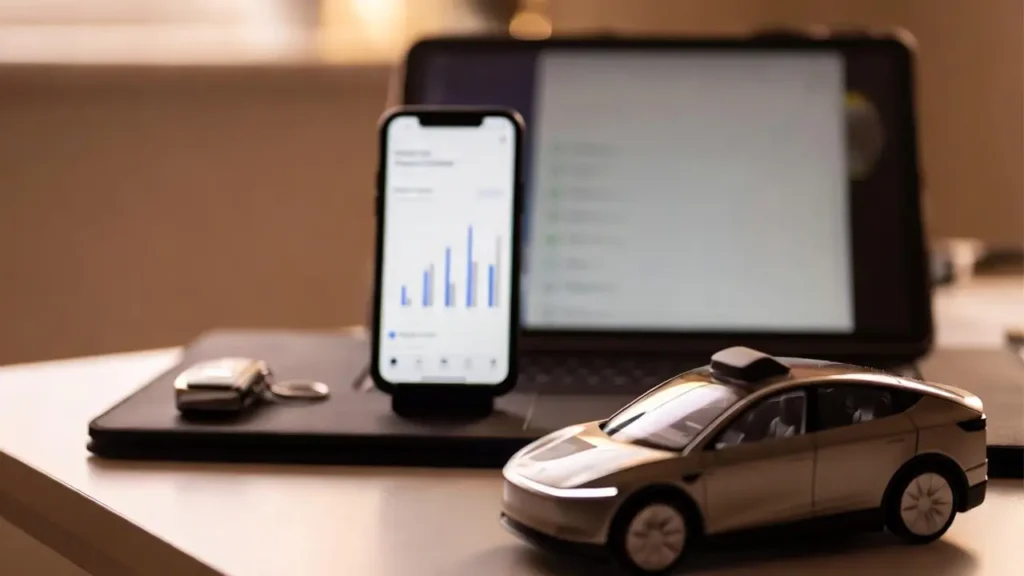
Telematics: The Future of Affordable EV Insurance?
As the Chinese EV insurance cost increase 2026 continues squeezing budgets, telematics insurance for EVs has emerged as a potential escape hatch. Usage-based insurance (UBI) programs leverage your vehicle’s existing sensors and connectivity to track driving behavior, offering premium discounts for safe drivers—sometimes substantial enough to offset the 2026 increases entirely.
Here’s how telematics insurance for EVs works: your insurer receives anonymized data on acceleration patterns, braking behavior, cornering speeds, time-of-day driving, and total mileage. Some programs use dedicated OBD-II dongles, but Chinese EVs’ built-in telematics make this seamless—your vehicle already reports this data to the manufacturer. Insurers access it with your permission and calculate your unique risk profile.
The savings can be dramatic. Admiral’s Smart Miles program offers up to 40% discounts for low-mileage, smooth-driving EV owners. Root Insurance’s model in select European markets calculates premiums almost entirely on driving behavior, with safe drivers of high-tech Chinese EVs seeing rates 30-50% below traditional policies. Suddenly, the Chinese EV insurance cost increase 2026 becomes manageable—or even reversed—if you’re willing to let your driving data speak for you.
The Privacy Trade-off: Telematics insurance for EVs requires surrendering significant privacy. Your insurer knows where you drive, when, how fast, and how aggressively. Data breaches could expose your daily routines. Some drivers find this creepy; others consider it a fair exchange for €500-€800 annual savings. The decision is personal, but financially, the math increasingly favors telematics for safe drivers dealing with post-2026 premium increases.
The Behavior Modification Effect: Interestingly, telematics insurance for EVs makes drivers safer. Studies show UBI participants reduce hard braking events by 30-40% and nighttime driving by 25% simply because they know they’re being monitored. This behavioral change benefits everyone—fewer accidents reduce claims, which eventually stabilizes premiums across the market. Some insurers are betting that widespread telematics adoption could partially reverse the Chinese EV insurance cost increase 2026 by 2027-2028 as overall risk decreases.
The Catch: Telematics works brilliantly for careful, low-mileage drivers but can backfire spectacularly for aggressive commuters. If your driving style involves frequent hard acceleration, late-night trips, or 30,000+ annual kilometers, telematics could actually increase your premiums beyond standard rates. Know your driving habits honestly before enrolling—UBI rewards the cautious but penalizes the spirited.
FAQ: Your Chinese EV Insurance Questions Answered
Q1: How does telematics insurance for EVs actually save me money after the Chinese EV insurance cost increase 2026? Telematics programs track your actual driving behavior—acceleration, braking, speed, and mileage—and price your premium based on your personal risk rather than general statistics about your vehicle. If you’re a safe, low-mileage driver, you can prove it with data and earn discounts of 20-40%, potentially erasing much or all of the 2026 premium increases. The key is honest self-assessment: only enroll if your driving habits are genuinely conservative.
Q2: Should I take a higher deductible to offset the Chinese EV insurance cost increase 2026? Generally, yes, but strategically. Raising your excess from €350 to €750 saves €180-€320 annually on premiums. Since Chinese EV repair costs body shop bills for sensor damage almost always exceed €3,000, you’ll hit your deductible regardless of its size in most claim scenarios. The higher deductible saves money upfront without substantially increasing your actual financial exposure. Bank the premium savings to cover the excess if needed.
Q3: Are windshield and bumper replacements always this expensive on Chinese EVs? Unfortunately, yes, when ADAS sensors are involved. A windshield replacement on a Xpeng or NIO costs €2,000-€2,800 including mandatory recalibration versus €350-€500 on a traditional car. Bumpers cost €4,500-€7,500 to replace when they house LiDAR or radar versus €800-€1,200 on sensor-free vehicles. Some insurers offer separate “glass and sensor” coverage with lower deductibles specifically for these repairs—worth asking about when shopping for policies to manage the Chinese EV insurance cost increase 2026.
Q4: Can I use aftermarket or refurbished sensors to reduce Chinese EV repair costs body shop bills? Technically, no—and your insurance won’t cover it anyway. Chinese manufacturers void warranties and ADAS functionality if non-OEM sensors are installed. More critically, insurers require OEM parts for all sensor-related repairs to maintain vehicle safety ratings and their own liability protection. Attempting to save money with aftermarket sensors could cost you far more in voided warranties and insurance denials. The ADAS sensor calibration cost and parts must be OEM, period.
Q5: Which Chinese EV brands have the lowest insurance premiums after the Chinese EV insurance cost increase 2026? BYD models consistently rate best for insurability due to their simpler ADAS setups and better European parts availability. BYD Seal and Atto 3 typically cost 15-20% less to insure than equivalent NIO or Xpeng models. MG (SAIC) models also benefit from more established European service networks. Vehicles with roof-mounted LiDAR (NIO ET5/ET7, some Xpeng models) face the highest premiums due to damage exposure. If insurance cost matters more than cutting-edge autonomy, choose brands and trims with minimal external sensor arrays.
Q6: What should I do immediately after an accident involving my Chinese EV’s sensors? First, document everything with photos—all angles of damage, particularly any sensors or cameras in the impact zone. Don’t attempt to drive if any ADAS warning lights appear; sensors may be misaligned and provide false safety readings.
Contact your insurer immediately and ask specifically about their certified Chinese EV repair network—using a non-certified shop could complicate claims. Request a rental car authorization right away, as repairs will likely take 2-4 weeks due to the ADAS sensor calibration cost and parts availability. Get a written estimate that itemizes all sensor work separately from body repairs to understand where costs are coming from and to track against the Chinese EV insurance cost increase 2026 impacts.
Final Verdict: Navigating the Chinese EV Insurance Reality in 2026
The Chinese EV insurance cost increase 2026 represents a market correction, not a conspiracy. Insurers underpriced these vehicles in 2023-2025, burning through losses as they learned the true cost of LiDAR replacement cost after accident claims and ADAS sensor calibration cost realities. Now they’re pricing accurately—and that accuracy hurts wallets.
Who should still buy a high-tech Chinese EV in 2026? You’re a good candidate if you: (1) drive carefully and rarely, making you ideal for telematics insurance for EVs programs; (2) can afford an extra €400-€700 annually in insurance without financial stress; (3) value cutting-edge technology and autonomy features enough to pay the “sensor premium”; (4) have access to guaranteed covered parking, reducing vandalism/damage risk; (5) plan to keep the vehicle long-term (5+ years) to amortize the higher costs over maximum utility.
Who should reconsider or choose simpler trims? You’re better served by alternatives if you: (1) rely on tight budgets where the Chinese EV insurance cost increase 2026 could strain finances; (2) park on streets or in uncontrolled public spaces with higher damage risk; (3) don’t realistically value or use advanced autonomy features; (4) drive aggressively or rack up high annual mileage, making telematics insurance for EVs backfire; (5) want the simplest, most predictable ownership experience without surprise repair bills.
The smart money in 2026 often goes to mid-spec Chinese EVs—vehicles with solid basic ADAS (automatic emergency braking, lane-keep assist, adaptive cruise) but without the top-tier LiDAR arrays and sensor overkill. A BYD Seal “Comfort” gives you 90% of the functionality at 60% of the insurance cost compared to a Xpeng G9 “Max.” Unless you’re genuinely planning to use Level 3 autonomy regularly, paying the sensor premium makes little financial sense post-2026 increases.
For those already owning affected vehicles: focus on how to lower EV insurance cost through shopping aggressively at renewal, consider telematics programs if your driving is conservative, maximize deductibles strategically, and practice extreme parking caution—your bumpers are now €7,000 insurance claims waiting to happen. The Chinese EV insurance cost increase 2026 isn’t reversing soon, but smart strategies can blunt its impact.
The Chinese EV revolution isn’t over—it’s just gotten more expensive. The cars themselves remain technologically impressive and increasingly competitive on range and features. But the true cost of ownership conversation must now include insurance reality, not just purchase price and charging costs. The EV insurance total cost of ownership has fundamentally shifted, and buyers need clear eyes and honest budgets before signing on the dotted line.
As repair networks mature, parts availability improves, and insurers accumulate better data, we may see some premium stabilization by 2027-2028. But the 2024 era of “too-good-to-be-true” Chinese EV insurance rates is gone forever. The Chinese EV insurance cost increase 2026 marks the end of the honeymoon phase and the beginning of mature market pricing. Smart buyers will adapt, adjust their expectations, and make informed decisions that balance technology desires with financial reality.
For more insights on Chinese EVs, insurance strategies, and ownership experiences, visit www.autochina.blog where we track these trends in real-time and help buyers navigate the evolving Chinese EV landscape.
If you’re tracking how “smart tech” is reshaping real-life costs, don’t stop at cars. The same sensor-driven price jumps are happening across gadgets too — from repairability to warranties and protection plans. For daily deals, hands-on reviews, and practical buying tips, check: https://bestchinagadget.com/
Discover more from AutoChina
Subscribe to get the latest posts sent to your email.

