The most expensive gadget from China that’s really going into series, as highlighted by automotive experts. This innovative vehicle from Xpeng AeroHT combines ground mobility with aerial capabilities, set to redefine personal transportation by 2026.
Xpeng Land Aircraft Carrier Specs — What This System Is and Why Modularity Matters
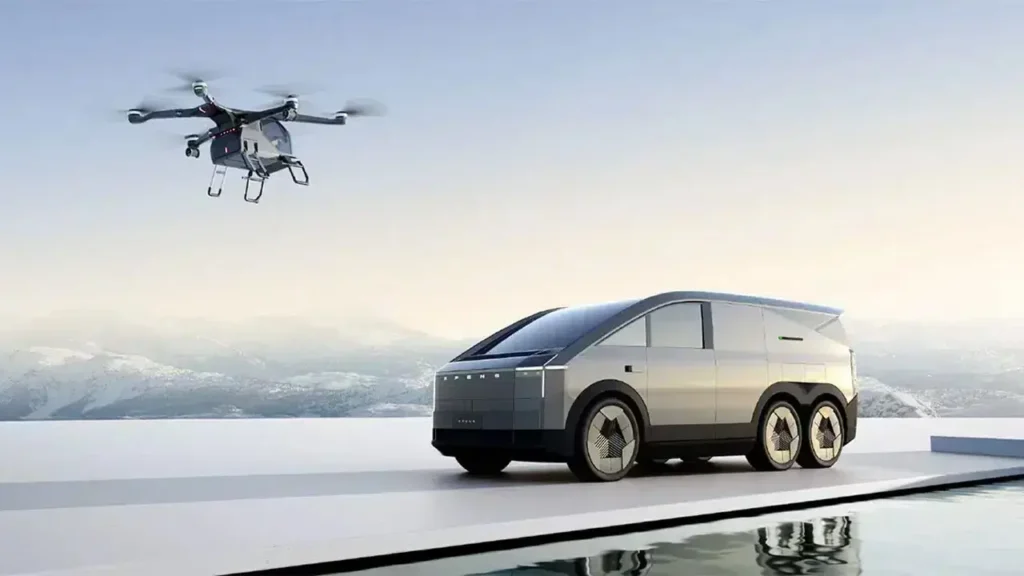
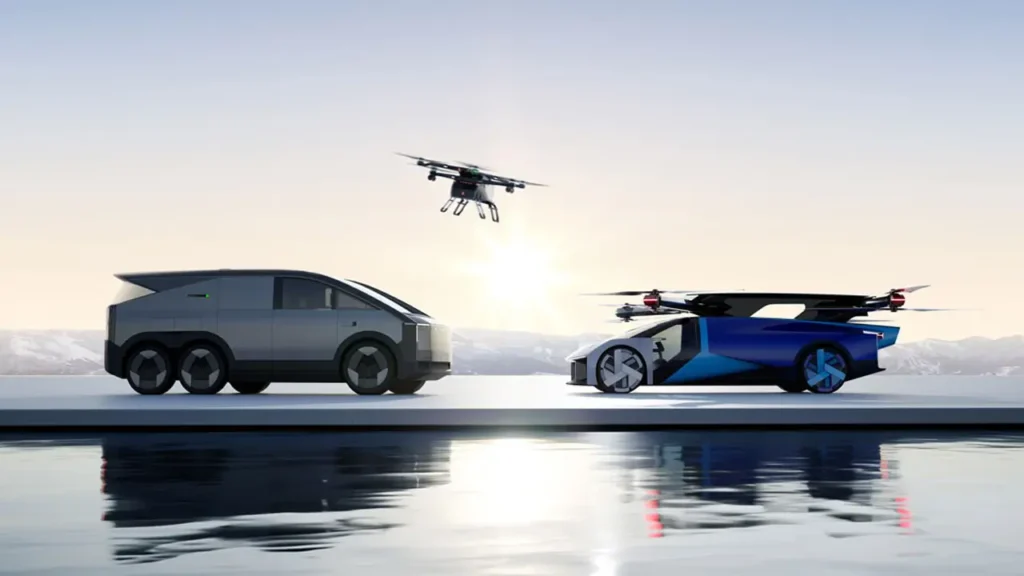
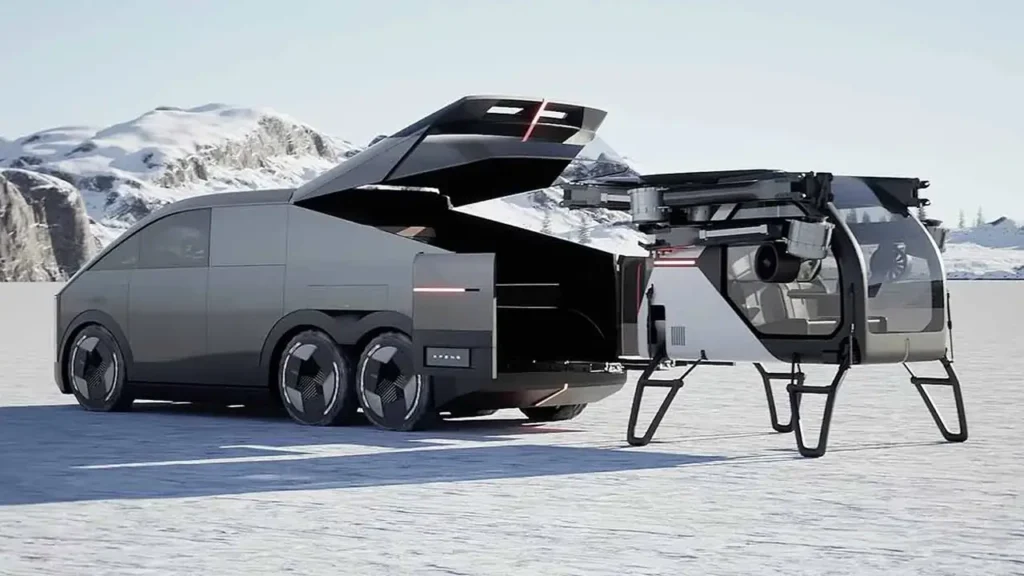
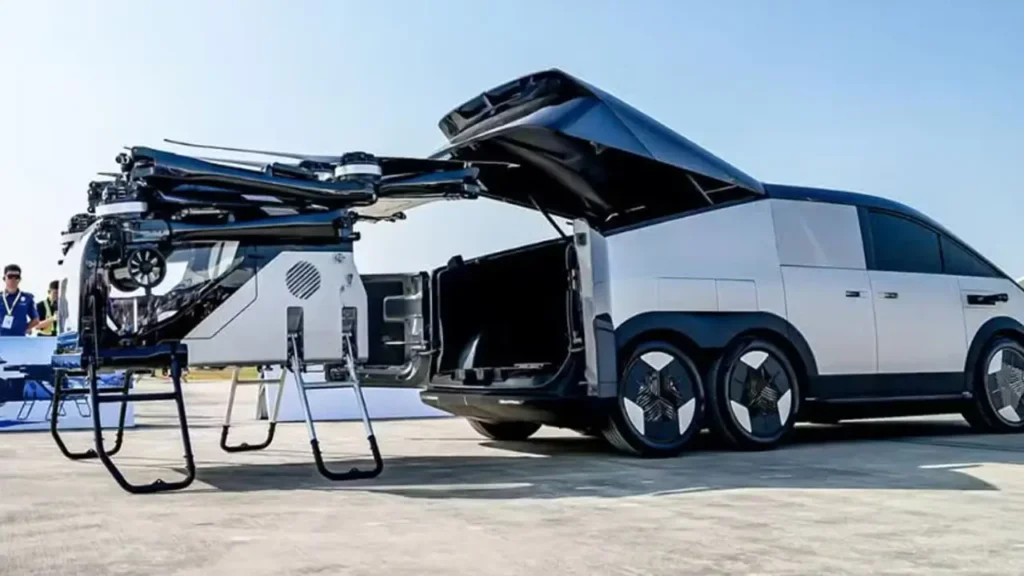
Welcome to the world of the Xpeng Land Aircraft Carrier, a groundbreaking creation from Xpeng AeroHT, the flying car subsidiary of Xpeng Motors. At its core, this system is a two-part marvel: a robust 6×6 ground vehicle known as the “Mothership” and a detachable eVTOL (electric vertical takeoff and landing) air module that functions like a drone for short flights. The Mothership is essentially a high-tech van on steroids, designed to carry and charge the air module, allowing seamless transitions between driving and flying.
Why does modularity solve so many problems? Imagine owning two vehicles in one—drive on roads for long distances, then deploy the air module to bypass traffic, rivers, or rough terrain. This isn’t just a gimmick; it’s practical for scenarios like urban commuting, remote expeditions, or even emergency services. The Mothership houses the air module in its rear section, with an automated loading and unloading process that takes about five minutes. This integration means you don’t need separate storage or charging facilities for the flyer—everything is self-contained.
Drawing from official Xpeng announcements, the system emphasizes efficiency and user-friendliness. The air module detaches easily, powered by the Mothership’s onboard systems, ensuring you’re always ready for the next adventure. For those new to eVTOL tech, think of it as a personal helicopter but electric, quieter, and more eco-friendly. Xpeng AeroHT has iterated through seven generations of prototypes over 12 years, culminating in this mass-produced model.
The xpeng aeroht 6×6 mothership specs highlight its rugged build, with all-wheel drive and rear-axle steering for superior handling. This modularity addresses range anxiety in EVs by combining extended ground travel with aerial shortcuts, making it ideal for a low-altitude economy where short flights become everyday. As Xpeng pushes boundaries, this vehicle represents the future of modular mobility, blending automotive and aviation in a way that’s accessible yet advanced. With pre-sales already underway, it’s exciting to see how this will evolve personal transportation.

Xpeng Land Aircraft Carrier Specs — Dimensions and Layout (Table)
Let’s dive into the physical makeup of the Xpeng Land Aircraft Carrier, where size and design play a crucial role in its functionality. This modular setup is compact yet capable, ensuring it fits into urban garages while handling off-road demands. Official specs from Xpeng reveal a thoughtful layout that prioritizes versatility.
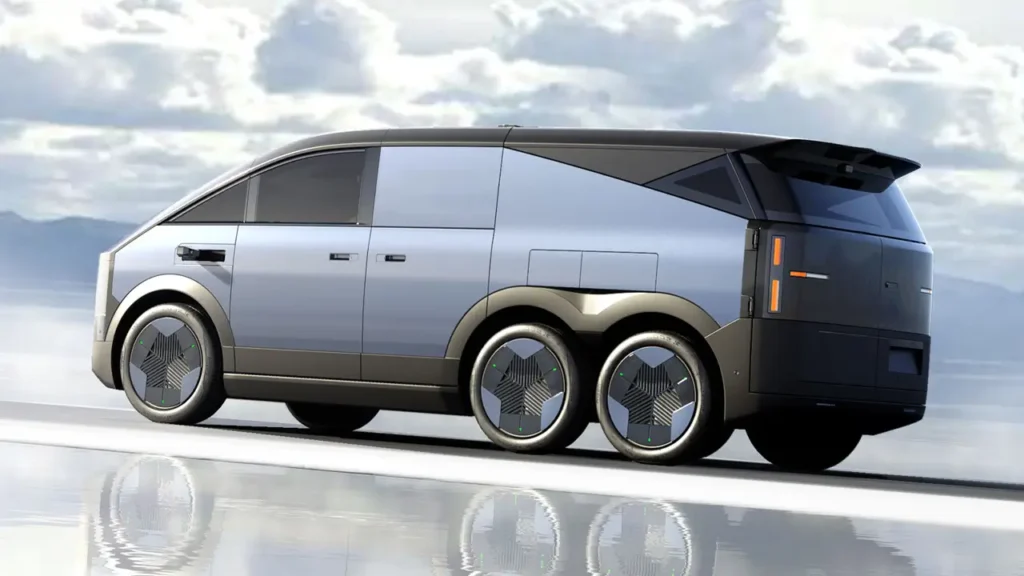
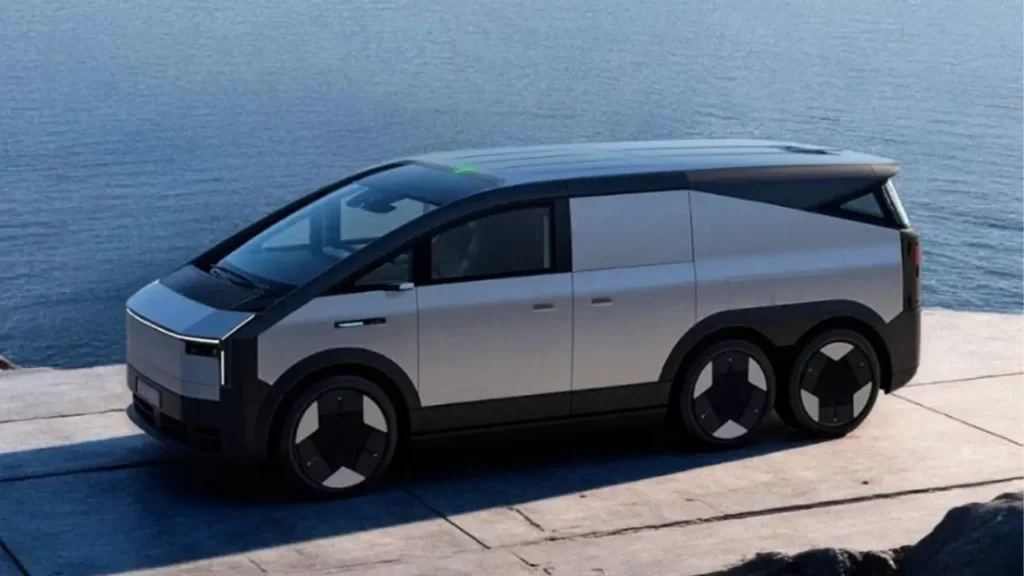
The Mothership measures approximately 5.5 meters in length, 2 meters in width, and 2 meters in height, making it maneuverable for city streets and parking. The air module, when folded, slots perfectly into the rear storage bay, which acts like a built-in hangar. This storage concept is ingenious—the rear half of the vehicle is dedicated to housing the eVTOL, with no side windows in that section to maximize space. The overall design draws inspiration from a lunar rover, giving it a futuristic, sturdy aesthetic with features like a sporty roof spoiler and flush door handles.
For a clear overview, here’s a table summarizing the key dimensions and layout elements:
| Attribute | Details |
|---|---|
| Length | 5.5 meters (18 feet) |
| Width | 2 meters (6.5 feet) |
| Height | 2 meters (6.5 feet) |
| Seats | 4 in Mothership, 2 in air module |
| Storage Concept | Rear bay for automated eVTOL loading/unloading |
This table is optimized for mobile viewing, with responsive widths to ensure readability on smaller screens. The xpeng land aircraft carrier dimensions make it larger than a typical SUV but smaller than a full truck, striking a balance for everyday use. The interior features grab handles and an odd-shaped steering wheel for comfort during drives.
In terms of layout, the front cabin is spacious for passengers, while the rear is engineered for the air module’s secure fit. This design supports the vehicle’s dual nature, allowing the Mothership to function independently as a capable ground vehicle. As per Xpeng’s vision, these dimensions enable urban compatibility without sacrificing adventure potential. It’s a smart engineering choice that introduces newcomers to the idea of integrated air-ground mobility.
Xpeng Land Aircraft Carrier Specs — Platform and Power: EREV/Range-Extender Without the Magic
Understanding the power system of the Xpeng Land Aircraft Carrier starts with its EREV (Extended-Range Electric Vehicle) setup, a practical choice for this “mobile carrier.” Essentially, the Mothership uses an electric drivetrain powered by a battery, with an onboard combustion engine acting solely as a generator to extend range when needed. This eliminates the “magic” of pure EVs by providing reliability for long trips without frequent stops.
Why is the land aircraft carrier range extender erev logical here? For a vehicle that must charge both itself and the air module, pure battery power could limit adventures. The EREV system allows over 1,000 km (620 miles) of combined range on the CLTC cycle, blending electric efficiency with fuel backup. The engine recharges the battery on the go, ensuring the air module is always flight-ready. This hybrid approach is eco-friendlier than traditional gas guzzlers, reducing emissions while offering flexibility.
Xpeng’s official details emphasize the 800V architecture, which supports high-efficiency power delivery. The Mothership’s battery, likely around 30-40 kWh based on similar models, powers the 6×6 all-wheel drive, making it suitable for diverse terrains. No need for complex explanations—it’s like having a portable power station on wheels.
For beginners, think of EREV as a bridge between EVs and hybrids: drive electric most of the time, but the extender kicks in seamlessly for extended journeys. This setup is perfect for the carrier’s role, as it can recharge the air module from the Mothership’s power source. Xpeng AeroHT highlights this as key to modular mobility, enabling scenarios like cross-country drives with aerial detours. Overall, it’s a straightforward, reliable platform that demystifies advanced tech for everyday users.
Xpeng Land Aircraft Carrier Specs — Flight Module: 800V and Why It Matters
The air module of the Xpeng Land Aircraft Carrier is where the excitement takes off—literally. Built on an 800V platform, this eVTOL component is designed for efficiency and performance. The aeroht flight module 800v platform means higher voltage for faster energy transfer, lighter wiring, and better overall system integration.
Why is 800V important? In simple terms, it allows quicker charging, greater efficiency, and more power in a compact form. For the flight module, this translates to reduced weight—crucial for flight—and improved range. The module uses carbon fiber construction for durability without excess mass, featuring six rotors for stable vertical takeoff and landing. It offers a 270-degree panoramic cockpit view, seating two passengers comfortably.
Operation is user-friendly with a single-stick control, simplifying piloting for those new to aviation. The 800V architecture ensures the module charges rapidly from the Mothership, going from 30% to 80% in just 18 minutes. A full charge supports 5-6 short flights, ideal for hops over obstacles or scenic routes.
Architecturally, 800V reduces heat loss and enables smaller batteries with the same output, extending flight times to around 50 km per charge at speeds up to 130 km/h. Xpeng’s focus on redundancy—backup systems for propulsion, controls, and more—prioritizes safety. This platform isn’t just tech jargon; it’s what makes personal eVTOL feasible, aligning with the low-altitude economy trend. For enthusiasts, it’s an introduction to how voltage innovations are revolutionizing flying tech.
Xpeng Land Aircraft Carrier Specs — Capacity and Scenarios: Who Would Actually Use This
The Xpeng Land Aircraft Carrier’s seating setup is tailored for versatility. The Mothership accommodates 4 passengers in a spacious cabin with two rows, while the air module seats 2 for flights. This xpeng land aircraft carrier seating capacity allows group travel on ground, with pairs taking aerial jaunts.
Who benefits? Families on road trips can use the Mothership for comfort, then fly over congested areas. Expedition enthusiasts appreciate the off-road prowess for remote access, deploying the eVTOL for scouting. Business users might leverage it for quick transfers, like from city to site. Or simply, those who can afford the $280,000 price tag for the thrill—”because I can.”
Scenarios abound: weekend getaways where you drive to a lake, fly across it; disaster response for bypassing damaged roads; or luxury tourism with aerial views. The capacity supports these without overcrowding, ensuring safety and enjoyment. Xpeng envisions it for the low-altitude economy, where personal eVTOL becomes routine. It’s an inviting entry into modular mobility for diverse users.
Xpeng Land Aircraft Carrier Specs — Off-Road Features of the 6×6: More Than Just Show
The 6×6 drivetrain configuration of the Xpeng Land Aircraft Carrier represents a deliberate engineering choice for enhanced operational capability, rather than mere aesthetics. Equipped with all-wheel drive and rear-axle steering, the vehicle demonstrates superior maneuverability across challenging terrains, facilitating precise control in demanding environments. The inclusion of a differential lock system for off-road applications further optimizes traction by ensuring even power distribution to the wheels, thereby mitigating wheel slip in conditions such as mud, sand, or loose gravel.
The rationale for adopting a six-wheel layout lies in its contributions to stability, effective load distribution, and built-in redundancy. In the event of a single wheel malfunction, the remaining wheels maintain functionality, preserving overall mobility. This architecture, drawing conceptual parallels to designs used in exploratory vehicles like lunar rovers, provides substantial load-bearing capacity, which is essential for accommodating the integrated air module without impairing ground performance. The differential locks play a pivotal role in off-road scenarios, enabling the vehicle to navigate steep inclines, uneven surfaces, and other obstacles with reliability.
For individuals new to advanced mobility systems, the Land Aircraft Carrier can be conceptualized as an augmented sport utility vehicle, designed to traverse diverse landscapes such as forested areas or arid regions before deploying the electric vertical takeoff and landing (eVTOL) module. Xpeng AeroHT’s engineering approach underscores practicality for expeditionary use, integrating these features to deliver a comprehensive adventure-oriented technology solution. This configuration not only enhances durability but also aligns with the vehicle’s modular design, ensuring seamless integration between ground and aerial operations. As such, it positions the Land Aircraft Carrier as a versatile platform for professionals and enthusiasts seeking robust, multi-modal transportation options in varied settings.
Xpeng Land Aircraft Carrier Specs — Range: What They Promise and How to Read It Realistically
Xpeng AeroHT specifies a range exceeding 1,000 kilometers under the China Light-duty vehicle Test Cycle (CLTC) for the Mothership component of the Land Aircraft Carrier, a metric that warrants careful interpretation given its laboratory-based optimism relative to actual driving conditions. The CLTC standard, while indicative of potential efficiency, often yields higher figures than those achievable in real-world scenarios due to controlled testing parameters.
To assess this realistically, one should anticipate a practical range of approximately 700 to 800 kilometers in mixed usage, accounting for factors such as highway travel, off-road excursions, and the energy demands of charging the air module. The extended-range electric vehicle (EREV) system supports this by judiciously employing the onboard range extender, which generates power to supplement the battery during extended operations. In contrast, the air module’s range is more limited, typically around 50 kilometers per flight, which is adequate for its intended short-hop applications, such as bypassing obstacles or facilitating quick relocations.
This level of transparency in range reporting assists users in making informed planning decisions, reflecting Xpeng’s commitment to practical utility. By understanding the discrepancies between standardized cycles like CLTC and everyday variables—including load, terrain, and climate—prospective owners can better align expectations with operational realities. The EREV architecture mitigates common concerns associated with pure electric vehicles, such as range anxiety, by providing a hybrid solution that balances efficiency with extended capability. Overall, these specifications position the Land Aircraft Carrier as a reliable option for long-distance ground travel complemented by aerial versatility, suitable for professional applications in logistics, exploration, or remote fieldwork where predictable performance is essential.
Xpeng Land Aircraft Carrier Specs — Charging and “On-the-Go Replenish”: The Main Everyday Question
The charging infrastructure for the Xpeng Land Aircraft Carrier leverages an 800V high-voltage system, enabling efficient energy replenishment. Specifically, the air module achieves a charge from 30% to 80% capacity in approximately 18 minutes, which significantly reduces downtime and enhances usability. The Mothership facilitates automatic recharging of the air module when it is docked, providing a seamless integration of power management.
In terms of daily operations, this setup offers considerable convenience, allowing connections to standard home outlets or public charging stations for the primary battery. In real-world applications, the rapid top-up capabilities support multiple flight sessions with minimal interruption, addressing key concerns regarding practicality and efficiency. Xpeng AeroHT’s emphasis on streamlined energy solutions resolves fundamental queries about routine maintenance and operational feasibility.
Furthermore, the system’s design as a mobile charging station extends its utility, with the ground module capable of supporting up to six flights on a full fuel tank and battery charge. This on-the-go replenishment feature is particularly advantageous for extended journeys or remote deployments, where access to fixed infrastructure may be limited. The 800V architecture not only accelerates charging but also optimizes energy transfer, contributing to overall system reliability. For professionals considering adoption, these attributes ensure that the vehicle aligns with demanding schedules, minimizing logistical challenges. In summary, the charging protocol exemplifies a thoughtful balance between technological advancement and user-centric design, making the Land Aircraft Carrier a viable choice for integrated ground-aerial mobility.

Xpeng Land Aircraft Carrier Specs — Serial Production, Factory, and Verdict: This Is No Longer Fantasy
Mass production of the Xpeng Land Aircraft Carrier is advancing at the AeroHT facility in Guangzhou, a 120,000 square meter site that commenced trial operations in November 2025. This plant is engineered to achieve an annual capacity of 10,000 units, supporting the transition to full-scale manufacturing. Customer deliveries are scheduled to begin in 2026, building on more than 3,000 intent orders secured to date.
The verdict on this development is unequivocal: the Land Aircraft Carrier has evolved from conceptual innovation to tangible reality, marking a significant milestone in modular mobility. With trial production now underway as of late 2025, the project demonstrates Xpeng AeroHT’s commitment to executing its vision for integrated ground and aerial transportation. This progress underscores the feasibility of eVTOL technology in consumer applications, backed by rigorous prototyping and regulatory preparations.
For those monitoring advancements in this sector, the factory’s operational status affirms the system’s readiness for market integration. Professionals in automotive, aviation, or logistics fields may find value in its potential to redefine efficiency in multi-modal operations. To remain informed on further developments, including performance metrics and availability updates, please consult resources such as www.autochina.blog.
If flying tech feels like sci-fi today, marketing already has its “future mode” — AI answer engines. Want faster research, sharper content angles, and cleaner campaign decisions without drowning in tabs? Check this quick guide on Perplexity for marketers and see how it turns questions into usable actions: https://aiinnovationhub.shop/perplexity-ai-for-marketing-answer-engine/
If a flying car feels futuristic, running AI privately on your own laptop is already here. Jan lets you chat with local models offline—no cloud, no drama, just control. Want a simple setup guide and real use cases for everyday work? Start here: https://aiinovationhub.com/aiinnovationhub-com-jan-ai-offline-chatbot/
Discover more from AutoChina
Subscribe to get the latest posts sent to your email.