The Policy That Turned the Market Upside Down
If you have been following China’s electric vehicle industry, you already know it has been moving at a breathtaking pace. But 2026 brought something genuinely different — not a new model launch or a battery breakthrough, but a sweeping policy change that quietly reshuffled the entire competitive order of the world’s largest EV market.
The China EV price floor policy 2026 is not a single law passed on a single day. It is the result of several interlocking decisions from Beijing that, taken together, send a very clear signal: the era of cheap-at-any-cost electric vehicles is over. The government wants profitable, technologically advanced automakers — not subsidised manufacturers racing each other to the bottom. If you are a buyer, an investor, or simply someone watching this industry from the outside, understanding this policy is essential. It changes what you should buy, what you should invest in, and where the market is heading over the next several years.
The China EV subsidy policy 2026 is at the heart of this transformation. By restructuring how financial incentives flow to buyers and by tightening the conditions under which subsidies can be claimed, Beijing has effectively introduced a price architecture — a soft but very real floor — below which the economics of buying a budget EV no longer make sense. The result is a market that looks very different heading into mid-2026 than it did just twelve months ago.
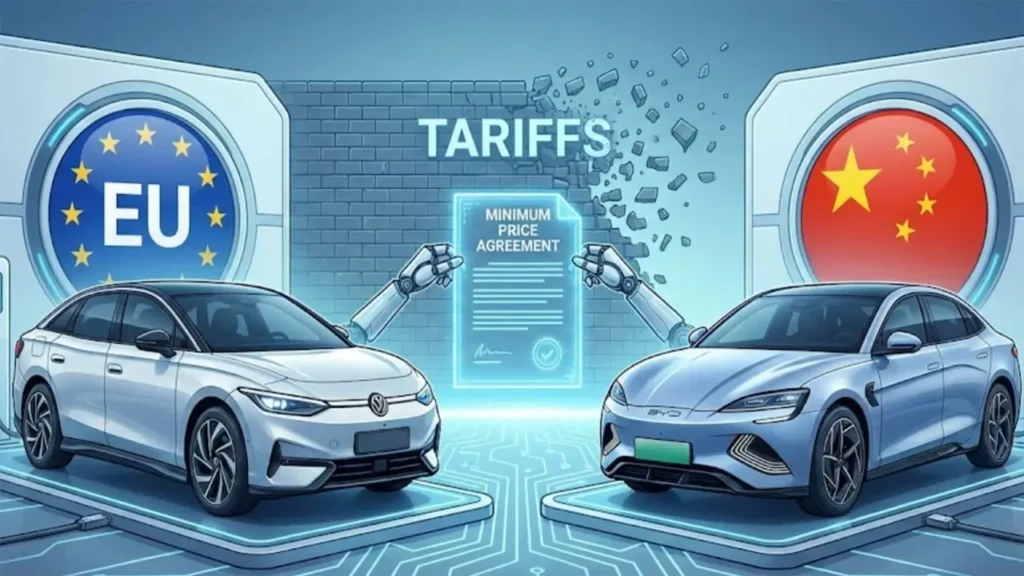
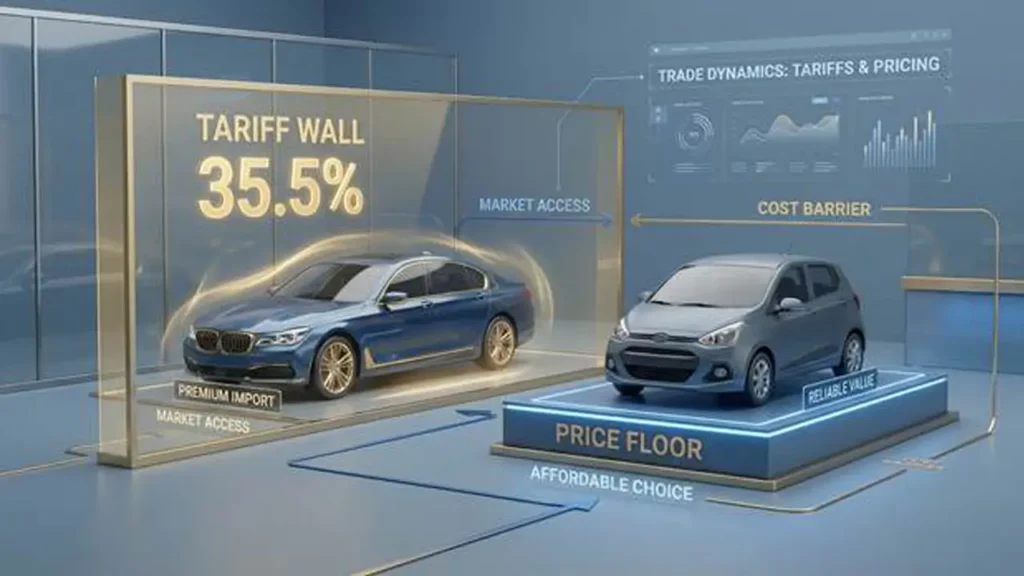
China EV Price Floor Policy 2026 — Core Mechanism Explained
To understand what changed, let us start with the mechanics. China has run a vehicle trade-in subsidy programme — commonly called a “cash-for-clunkers” scheme — for several years. In 2025, the system was straightforward: scrap an old vehicle, buy a new one, receive a fixed rebate of up to 20,000 yuan. The subsidy amount did not depend much on the price of the new car you were buying. Even if you traded in an old petrol vehicle and purchased a BYD Seagull priced at around 69,800 yuan, you could still claim the maximum rebate.
China’s National Development and Reform Commission and Ministry of Finance announced fundamental adjustments to the vehicle trade-in subsidy programme for 2026, shifting from fixed subsidies to a percentage-based model with maximum caps, providing more tailored support across different vehicle price ranges.
For new energy passenger vehicles under the updated rules, the trade-in subsidy is 8 percent of the vehicle price, capped at 15,000 yuan. For buyers trading in an older vehicle and purchasing a new gasoline passenger vehicle with an engine displacement of 2.0 liters or less, the subsidy is 6 percent, capped at 13,000 yuan.
That might sound like a modest technical adjustment, but the practical impact is enormous. To access the full 20,000 yuan incentive available under the scrappage route, the new vehicle must now be priced at a minimum of approximately 166,700 yuan. This is the EV subsidy threshold in China that matters most in 2026 — the point at which the financial deal for buyers dramatically improves.
At the same time, a parallel change was introduced regarding purchase tax. The nationwide policy that fully exempted EVs from China’s 10 percent vehicle purchase tax expired on December 31, 2025. From January 1, 2026, EVs began facing an initial minimum tax rate of 5 percent. For mass-market NEVs, a 50 percent tax reduction applies through the end of 2027, as long as the reduction per vehicle does not exceed 15,000 yuan.
Premium and luxury NEVs, however, saw the full 10 percent tax reinstated from the start of 2026. China has allocated 62.5 billion yuan — approximately 8.9 billion US dollars — in special ultra-long-term government bonds to support the 2026 consumer goods replacement programme, which includes automobiles alongside home appliances and digital products.
Taken together, these two changes — the percentage-based subsidy system and the revised purchase tax rules — create a clear price architecture. The government is not banning cheap EVs, but it is decisively making premium ones the financially smarter choice for anyone trading in an older vehicle.
Policy Impact on Mass Market — Under 150,000 Yuan
The segment that feels the sharpest pain under the China EV price floor policy 2026 is the mass market — vehicles priced under roughly 150,000 yuan. This is a category that includes some of China’s most popular and high-volume models, from compact hatchbacks to entry-level sedans.
Under the old fixed-subsidy system, a buyer scrapping a pre-2019 registered vehicle and purchasing a BYD Seagull hatchback — priced from around 69,800 yuan — would have qualified for a 20,000 yuan rebate. That subsidy represented nearly 29 percent of the vehicle’s price, making it an extraordinary deal. Under the new percentage-based framework, that same buyer now receives approximately 8,400 yuan — less than half of what was previously available.
The shift from fixed to percentage-based EV price segmentation in China has therefore dramatically reduced the attractiveness of budget vehicles as trade-in purchases. Mass-market brands including BYD, Leapmotor, and Geely are the most exposed to this change. BYD’s average selling price stood at around 107,000 yuan in late 2025, placing a significant portion of its volume squarely in the most disadvantaged subsidy bracket.
There is a secondary problem as well. The tighter subsidy criteria were partly designed to address a specific form of fraud that had emerged under the old system: some dealers were purchasing low-cost EVs in bulk and reselling them as “zero-mileage” used cars to claim incentives, accelerating the depletion of subsidy funds in various regions of China. The new rules make this practice far less economically viable.
The combined effect on EV price segmentation in China is clear: budget models that were once artificially attractive due to generous subsidies now stand on their own merits — and those merits are being weighed against a much smaller financial incentive. For buyers who were on the fence between a 70,000 yuan EV and spending more, the calculation has shifted.

AndreevWebStudio.com
Professional web development and design services. Custom WordPress sites, landing pages, e-commerce solutions, and 3D printing content creation for businesses and creators.
- • WordPress Development
- • Custom Web Design
- • E-Commerce Solutions
- • 3D Printing Content
Middle Segment Shift — 150,000 to 200,000 Yuan
If the mass-market segment loses attractiveness, one might expect buyers to move into the middle tier, roughly between 150,000 and 200,000 yuan. In practice, however, this band has become something of a hesitation zone — a region of the market experiencing its own form of pressure related to China EV demand elasticity.
Here is the problem: this price range sits above the worst of the subsidy losses, but just below the point where the most generous government incentives kick in. A buyer considering a 180,000 yuan EV does receive a better subsidy under the percentage system than someone buying a 70,000 yuan car. But they are also aware that spending just a bit more — crossing the approximately 167,000 yuan threshold to qualify for the full 20,000 yuan rebate, or pushing further toward the 200,000 yuan range — significantly improves the financial equation.
This creates a classic demand elasticity squeeze. Buyers in this range are often urban professionals who are price-conscious but aspirational. They can stretch their budgets if there is a compelling reason to do so. And under the 2026 policy structure, there absolutely is a compelling reason: the closer you get to and above 200,000 yuan, the more the government incentives work in your favour.
The middle segment is also caught between two aggressive competitive forces. From below, manufacturers are desperately trying to maintain volume by improving features and adding technology to vehicles in the 100,000 to 150,000 yuan range. From above, premium brands are stretching downward with entry-level offerings that now come with significant subsidy advantages. The middle is being squeezed from both directions, and China EV demand elasticity data suggests buyers are responding by either trading down to fully accept budget positioning or trading up to capture the premium incentives.
China EV Price Floor Policy 2026 — Premium Segment Explosion Over 200,000 Yuan
If there is a clear winner under the China EV price floor policy 2026, it is the premium segment. Vehicles priced above 200,000 yuan — roughly 28,000 US dollars — are now the primary beneficiaries of the government’s restructured incentive framework, and the China premium EV market trends in early 2026 are already reflecting this reality.
Under the new subsidy structure, buyers of higher-priced new energy vehicles receive subsidies that are calculated as 12 percent of the purchase price under the scrappage route, with the maximum cap of 20,000 yuan applying uniformly. For a vehicle priced at 200,000 yuan, that cap is reached smoothly and efficiently — the buyer gets the best deal the system offers. For a vehicle priced at 300,000 yuan, the same cap applies, meaning the proportional cost of the subsidy relative to the vehicle price falls, but the absolute financial benefit remains identical.
This creates a powerful psychological and financial pull toward the premium end. Brands like NIO, Li Auto, Huawei’s HIMA alliance vehicles, Xiaomi’s SU7 and upcoming full-size SUV, and BYD’s premium Yangwang sub-brand are all positioned in or near this zone. NIO’s ES8 SUV recorded retail sales of over 13,000 units in April 2026 alone, demonstrating sustained demand at the upper end of the market. Huawei’s HIMA alliance delivered nearly 33,000 units in the same month. These are not trivial numbers.
The China premium EV market trends reflect a structural shift, not just a temporary spike. Wood Mackenzie research analyst Alasia Zhang noted that the evolution of consumer demand during 2026, in response to the Chinese government’s anti-involution stance and price floor regulation, will “move focus to a high-end, value-driven consumption.” Before the price floor, fierce competition pushed automakers toward a quantity-over-quality approach. With low prices becoming unsustainable and subsidy advantages shifting upward, manufacturers now have both the incentive and the pressure to offer genuinely superior products.
The premium segment above 200,000 yuan is now where technology leadership, brand investment, and government incentive alignment all converge. It is a powerful combination.
OEM Strategy Transformation
Automakers across China’s EV landscape are rethinking their playbooks in response to the new policy environment, and the China EV pricing strategy shifts are visible across the industry. The days when a brand could grow simply by undercutting competitors on sticker price are effectively over — or at least, the subsidy framework no longer rewards that approach.
BYD, the market leader, offers perhaps the most instructive case study. The company’s average selling price of around 107,000 yuan places much of its volume in the budget-to-mid segment, where the 2026 subsidy changes hit hardest. BYD has responded on multiple fronts: investing in its premium Yangwang sub-brand, launching the Seal 08 and Sealion 08 targeting higher price points with its Ocean Aesthetic 2.0 design language, and continuing to invest heavily in proprietary technology such as its second-generation Blade Battery and the “God’s Eye” DiPilot intelligent driving system. BYD is also aggressively expanding exports, targeting 1.6 million overseas sales in 2026.
Geely, China’s second-largest NEV seller, is leveraging its multi-brand architecture — which includes the premium Zeekr line — to capture demand at different price points. Zeekr’s 001 model received a major update featuring a 900-volt platform and ultra-fast charging capability, squarely targeting the premium-conscious buyer who wants both performance and technological sophistication.
NIO has doubled down on a multi-brand strategy that covers different price ranges: the core NIO brand for premium buyers, the Onvo sub-brand for family-oriented mainstream customers, and the compact Firefly brand for urban mobility. This segmentation allows the company to serve multiple tiers without cannibalising its premium identity.
Xiaomi, which famously entered the EV market with the SU7 sedan and scaled to over 200,000 deliveries in less than a year, is reportedly preparing a full-size SUV to compete directly with NIO and Li Auto in the segment above 200,000 yuan. The company already reached profitability faster than Tesla did in its early years, and its technology-forward brand image aligns naturally with the premium positioning that the 2026 policy rewards.
According to Wood Mackenzie’s analysis, companies in China can no longer rely on minor, incremental improvements and must rapidly commercialise advanced technologies. Automakers will need to offer more technology-intensive, high-quality products and services to attract consumers and gain market share.
China EV Price Floor Policy 2026 — Model Positioning Shifts
One of the most practically visible consequences of the China electric vehicle pricing policy changes is the repositioning of specific models within the market. Manufacturers are not merely changing their marketing language — they are physically moving models upmarket, adding features, upgrading specifications, and in some cases re-pricing vehicles to position them more favourably within the new subsidy structure.
The logic is straightforward. If a vehicle can be enhanced and repriced to cross a key subsidy threshold, the manufacturer gains a competitive advantage: the buyer receives a better government incentive, which improves the perceived value of the vehicle even as the sticker price rises. The manufacturer, meanwhile, captures better margins. Both sides benefit — as long as the technology and features justify the higher price.
This is exactly the kind of outcome the Chinese government’s anti-involution policy is designed to produce. The term “involution” — or neijuan in Chinese — refers to the destructive cycle in which excessive competition forces companies to lower prices to gain market share, pushing competitors to do the same, until the entire industry operates at or below profitability. The Central Financial and Economic Affairs Commission explicitly determined to “curb low-price competition, promote the orderly exit of outdated capacity, improve the overall market and foster healthy industrial development.”
The China electric vehicle pricing policy for 2026 is therefore not just a subsidy programme — it is an industrial policy tool designed to guide the entire market toward a higher-value equilibrium. The government is using financial incentives to reward buyers who make more expensive choices, which in turn rewards manufacturers who invest in quality and technology rather than racing to produce the cheapest possible product.
In the battery sector, this plays out in the accelerating commercialisation of semi-solid-state and solid-state battery technology. Several automakers announced plans to introduce solid-state batteries to premium models in 2026, while semi-solid-state batteries are already available across mid-to-high-end products. New national battery safety standards from China’s Ministry of Industry and Information Technology will apply to new vehicle applications from July 2026, further accelerating consolidation toward top-tier producers like CATL and BYD that can absorb the associated costs.
AutoChina.blog
Your trusted guide to Chinese automotive technology. Expert reviews, comparisons, and insights on electric vehicles, hybrids, and innovative automotive solutions from China’s leading manufacturers.
- • EV & Hybrid Reviews
- • Tech Comparisons
- • Industry News & Trends
- • Buying Guides
Consumer Behavior Rewiring
Perhaps the most fascinating dimension of the China EV price floor policy 2026 is what it does to the psychology of buyers. The restructured China EV government incentives are not merely changing what people can afford — they are actively changing what people want to buy.
When the subsidy system was flat and generous across price points, there was no financial incentive to spend more. A buyer could get the same government rebate whether they bought a 70,000 yuan city car or a 200,000 yuan premium sedan. In that environment, rational consumers naturally gravitated toward the cheaper option. The 2026 system inverts this logic: the more you spend — up to a point — the more the government supports your purchase.
This creates a powerful “stretch effect.” Buyers who might previously have settled comfortably at 130,000 yuan are now doing the math and discovering that moving their budget up to 170,000 or 200,000 yuan unlocks meaningfully better government support, access to more advanced technology, and vehicles that are objectively more capable. The psychological distance between “I can’t quite afford that” and “actually, with the subsidy, it almost makes sense” has shrunk considerably.
This is particularly relevant in China’s tier-one cities — Beijing, Shanghai, Shenzhen, Guangzhou — where EV penetration already exceeds 60 percent and where buyers tend to be more financially flexible and brand-conscious. In these markets, the premium EV segment is not a niche. It is a mainstream aspiration, and the 2026 policy has made that aspiration more financially accessible than ever before.
The technology dimension reinforces this behavioral shift. Intelligent driving systems — once exclusive to high-end models — are rapidly spreading across the market. BYD’s “God’s Eye” system brought semi-autonomous driving capabilities to more accessible price points, while Huawei’s automotive systems, integrated across multiple brands, have raised buyer expectations for what a connected vehicle should offer. Consumers now expect AI-powered cockpits, over-the-air software updates, and advanced driver assistance as standard features. These expectations are most fully met at the premium end of the market, further pulling buyers upward.
Market Forecast 2026–2028
Looking ahead, the data and expert analysis point to a market continuing its overall growth trajectory while undergoing significant structural change at the segment level.
The China EV market is estimated at approximately 418 billion US dollars in 2026, growing from around 358 billion dollars in 2025. Industry projections see the market reaching approximately 908 billion dollars by 2031, representing a compound annual growth rate of around 16.8 percent over the 2026 to 2031 period. This is, by any measure, extraordinary growth — but it is increasingly growth concentrated in higher-value segments.
The China EV market analysis for 2026 reveals a particularly striking trend in the premium tier. Vehicles priced above the equivalent of 50,000 US dollars — well into the premium zone — are expanding at a compound annual growth rate of 21.5 percent, the fastest of any price band. The mid-range bracket of vehicles priced between 30,000 and 50,000 US dollars is growing at around 14.2 percent annually, supported by rising interest in advanced driver-assistance features and premium branding. The mass-market segment below 20,000 US dollars, while still volumetrically dominant, is facing the sharpest pressure from the subsidy restructuring.
The China EV luxury segment growth is being driven by multiple converging forces: government incentives that reward higher spending, rapidly advancing technology in intelligent driving and battery performance, growing consumer wealth and aspiration in tier-one and tier-two cities, and a global brand-building push by Chinese automakers who understand that premium positioning is essential for long-term profitability and international credibility.
Market concentration is also increasing sharply. The top ten manufacturers now account for approximately 95 percent of the Chinese new energy vehicle market — up dramatically from around 60 to 70 percent just two or three years ago. This consolidation is exactly what the anti-involution policy intends: the elimination of marginal players and the strengthening of capable, financially healthy champions.
Over the 2026 to 2028 period, analysts at firms including Wood Mackenzie, Morningstar, and T. Rowe Price broadly agree that the most successful companies will be those that have invested in proprietary technology — particularly solid-state battery development, intelligent driving systems, and AI-powered vehicle software — while building brands capable of commanding genuine price premiums. Companies that relied primarily on cost leadership and aggressive discounting face an increasingly difficult environment as the policy architecture reduces the subsidy advantage of cheap vehicles.
EV Price Segmentation Table — China 2026
| Price Tier | Subsidy Impact | Consumer Incentive | OEM Strategy |
|---|---|---|---|
| Under ¥150K | Minimal / Significantly Reduced. Percentage-based system cuts subsidies from ~¥20,000 to ~¥8,400 for entry-level models | Low motivation to buy. Government incentive no longer offsets low price advantage | Aggressive cost cutting, risk of margin collapse, exit risk for weaker brands |
| ¥150K – ¥200K | Moderate. Buyers receive improved percentage subsidy but fall short of the maximum ¥20,000 scrappage incentive threshold | Hesitation zone. Buyers aware that spending slightly more unlocks significantly better incentives | Feature upgrades, technology stacking, repositioning models toward upper boundary |
| Over ¥200K | Maximum benefit. Full ¥20,000 scrappage rebate accessible. Purchase tax halved for eligible NEVs up to ¥15,000 cap | Strong push to upgrade. Government incentives align with aspirational spending. Best financial and technological deal | Premium repositioning, solid-state battery investment, intelligent driving as standard, brand prestige building |
Final Verdict — Cheap EVs Are Fading, Premium Is Rising
The China EV price floor policy 2026 is one of those rare policy shifts that changes not just market conditions but market logic. It does not ban cheap electric vehicles. It does not force consumers to spend more. What it does is use the structure of financial incentives to make premium EVs the smarter choice for a growing proportion of buyers — and to make the business of selling cheap EVs increasingly unviable for manufacturers who have not invested in technology and brand.
For buyers, the message is clear: if you are in the market for a new electric vehicle in China and you have any flexibility in your budget, the 2026 policy actively rewards you for spending more. The subsidy calculus, the technology gap between segments, and the accelerating consolidation of the market all point in the same direction. Crossing the 167,000 to 200,000 yuan threshold is not just an aspirational choice — it is a financially defensible one.
For investors, the story is equally readable. The companies best positioned to thrive are those with strong technology portfolios, vertical integration advantages, and the ability to command genuine price premiums: BYD at scale, NIO in battery-swap innovation, Geely through its multi-brand architecture including Zeekr, and Xiaomi with its technology-forward brand identity. Morningstar has specifically identified BYD, Geely, and NIO as among the best-positioned companies to benefit from anti-involution consolidation.
For industry observers, the broader lesson is that China’s government has once again demonstrated its willingness and ability to reshape an entire industry through policy design. The shift from a race-to-the-bottom subsidy model to one that explicitly rewards higher-value consumption is not accidental. It is deliberate industrial governance — and it is already working.
The cheap EV era in China is not ending with a bang. It is ending with a quiet, carefully designed change in the rules — one that makes premium the new normal, and leaves budget brands to either evolve upward or exit gracefully. For anyone paying attention to the future of electric mobility, that is the most important story of 2026.
🇺🇸 English Review
Name: Michael Carter
Rating: ⭐⭐⭐⭐⭐
This article about the China EV price floor policy 2026 is incredibly insightful. It clearly explains how the ¥200K threshold impacts buyers and the premium EV market. I like how complex economic ideas are made simple and practical. Definitely one of the best EV strategy breakdowns I’ve read.
🔗 https://autochina.blog
🇪🇸 Reseña en Español
Nombre: Carlos Méndez
Calificación: ⭐⭐⭐⭐⭐
Excelente análisis sobre la política de precios de vehículos eléctricos en China. Explica perfectamente cómo el umbral de ¥200K cambia el comportamiento del consumidor y las estrategias de las marcas. El contenido es claro, útil y muy actual.
🔗 https://autochina.blog
🇸🇦 مراجعة باللغة العربية
الاسم: أحمد العلي
التقييم: ⭐⭐⭐⭐⭐
مقال رائع يشرح سياسة تسعير السيارات الكهربائية في الصين لعام 2026 بشكل بسيط وواضح. أعجبني تحليل السوق وتأثير الحد الأدنى للسعر على المشترين. موقع احترافي ومفيد جدًا لأي شخص مهتم بالسيارات الكهربائية.
🔗 https://autochina.blog
🇨🇳 中文评价
姓名: 李伟
评分: ⭐⭐⭐⭐⭐
这篇关于中国电动车价格政策2026的文章非常有深度。对20万元门槛如何影响高端市场的分析非常清晰。内容专业且易于理解,是了解中国电动车市场趋势的优秀资源。
🔗 https://autochina.blog
🇫🇷 Avis en Français
Nom: Julien Moreau
Note: ⭐⭐⭐⭐⭐
Analyse très professionnelle de la politique des prix des véhicules électriques en Chine. L’article explique parfaitement l’impact du seuil de ¥200K sur le marché premium. Contenu clair, structuré et très utile.
🔗 https://autochina.blog
🇩🇪 Bewertung auf Deutsch
Name: Lukas Schneider
Bewertung: ⭐⭐⭐⭐⭐
Sehr informativer Artikel über die China EV Preisstrategie 2026. Besonders interessant ist die Analyse des ¥200K-Schwellenwerts und wie er das Kaufverhalten verändert. Klare Struktur und leicht verständlich erklärt.
🔗 https://autochina.blog
Discover more from AutoChina
Subscribe to get the latest posts sent to your email.

