1. Introduction to Geely Super Eva Tech Ecosystem
The automotive world is changing faster than ever before, and one company is moving at a pace that is genuinely turning heads globally. The Geely Super Eva Tech Ecosystem is not just a product launch or a software update — it represents a complete reimagining of what a car can be in the age of artificial intelligence. If you have been watching the electric vehicle space and wondering who is going to challenge Tesla on a global level with a truly unified AI-driven platform, Geely Auto Group has a very compelling answer.
Founded in 1986 and headquartered in Hangzhou, China, Geely Auto Group has transitioned from the initial stages of developing AI technology into what the company itself describes as the “explosive growth phase” of the 2.0 era, leveraging AI to empower the entire automotive value chain and incorporating intelligence in every domain of vehicle operation. That is an ambitious statement, but the facts on the ground increasingly support it.
At the heart of this evolution sits the Geely Super Eva Tech Ecosystem, anchored by the WAM (World Action Model) and an industry-exclusive “1+2+N” full-domain intelligent agent architecture, which coordinates intelligent cockpit and advanced driver assistance across all sub-domains. In plain terms, this means that your car does not just respond to commands — it thinks, learns, and acts as a unified intelligent system. Smart mobility is no longer a distant promise. With the Geely Super Eva Tech Ecosystem, it is rapidly becoming a production reality across Zeekr, Lynk & Co, and Geely NEV model lines.
In 2025, Geely Auto Group achieved cumulative sales of 3,024,567 units, exceeding its full-year sales target with a year-on-year growth of 39%. New energy vehicle sales reached 1,687,767 units, a year-on-year increase of 90%. These numbers matter because they show that the Geely Super Eva Tech Ecosystem is not a concept exercise — it is powering vehicles that real customers are already buying in enormous volumes.
2. How the Geely AI Ecosystem Works
To understand what makes the Geely AI ecosystem unique, you have to look at the infrastructure behind it. Most carmakers bolt AI features onto existing architectures as afterthoughts. Geely built its AI infrastructure from scratch over five years, and the results speak for themselves.
As the world’s first automaker to establish a comprehensive Full-Domain AI layout, Geely Auto Group pioneered research into foundational large models as early as 2021, launching the Xingrui AI Large Model — the world’s first full-stack, independently developed, full-scenario AI large model for the automotive industry. That same year saw the official launch of the Smart Geely 2025 strategy.
The backbone of the entire Geely AI ecosystem is its computing infrastructure. The Geely Xingrui Intelligent Computing Center — the automotive industry’s first integrated cloud-data-AI supercomputing center, established in 2022 — now boasts a comprehensive computing power of 23.5 EFLOPS, ranking first among all Chinese automakers. Think of this as the cloud brain that powers everything from predictive navigation to real-time safety decisions across millions of connected vehicles simultaneously.
In 2025, Geely Auto Group unveiled the automotive industry’s first comprehensive Full-Domain AI technology system. By applying AI technologies extensively across every aspect of vehicles, the company introduced technological breakthroughs such as Xingrui AI Cloud Power, AI Digital Chassis, and AI Intelligent Architecture. Shortly after, Geely partnered with StepFun, Geespace, SiEngine, Xingji Meizu, and AFARI Technology to establish an open and innovative AI ecosystem that no single competitor has yet managed to replicate at this scale.
Then, at CES 2026, Geely unveiled its WAM — the World Action Model. This model achieved something genuinely new: seamless cross-domain collaboration across the entire vehicle. For the first time in production automotive AI, a system was endowed with a continuously evolving worldview and judgment capability, ushering the Full-Domain AI technology system into its 2.0 era. The WAM serves as the vehicle brain, managing the Smart Egg Cockpit and Advanced Driver Assistance Systems while simultaneously coordinating numerous sub-domain agents covering chassis, powertrain, and body control.

AndreevWebStudio.com
Professional web development and design services. Custom WordPress sites, landing pages, e-commerce solutions, and 3D printing content creation for businesses and creators.
- • WordPress Development
- • Custom Web Design
- • E-Commerce Solutions
- • 3D Printing Content
3. Geely Smart Car Technology Features
Geely smart car technology is where the engineering philosophy becomes something the driver actually experiences every day. This is not a list of checkbox features — it is a cohesive intelligence layer that connects every system in the vehicle.
The centerpiece of the smart car experience is Super Eva itself. Debuting in 2025 as the world’s first hyper-anthropomorphic emotional agent scaled for mass deployment, Super Eva gets a major upgrade under Full-Domain AI 2.0. Super Eva is rapidly moving beyond a capable cockpit assistant to become a vehicle-level perception, decision, and execution hub with memory and simulation capabilities. Its evolution targets three dimensions: more human-like, more intelligent, and more useful.
What does this mean practically? Super Eva learns your preferences over time, remembers your routines, and makes proactive suggestions before you even ask. Want to adjust the cabin temperature? Super Eva anticipates it based on weather data and your past behavior. Planning a route? It cross-references traffic patterns, your schedule, and charging infrastructure in real time.
The voice interaction system is powered by the Step 3.5 large language model, which features 196 billion parameters and a 350 tokens-per-second inference speed. This makes conversations with the car feel natural and responsive rather than mechanical. Geely describes the result as a new mobility experience where dialogue translates directly into action — you speak, the car responds intelligently, not just literally.
Adaptive systems extend throughout the vehicle. The G-ASD 4.0 driver assistance suite uses a new lateral-longitudinal integrated model that improves detour reaction speed by 82%, reduces point braking by 60%, and increases ride smoothness by 38% compared to the previous generation. These are not marketing figures — they reflect a fundamental architectural change in how the car processes movement decisions.
4. Geely EV Platform and Architecture
The Geely EV platform is one of the most technically advanced in the world right now, and it is worth taking a close look at what sits underneath the software intelligence.
At Auto China 2026, Geely showcased the world’s first full-stack 900V high-voltage hybrid architecture. This 900V platform is significant because it dramatically accelerates charging speeds. The company simultaneously demonstrated 12C ultra-fast charging technology, which represents a major leap forward in reducing the time a driver spends waiting at a charging station.
The electrical and electronic architecture underpinning the most advanced Geely vehicles is called EEA 4.0, or the Quantum-Grade AI Electrical/Electronic Architecture. This system empowers vehicles with top-tier performance and security. Leveraging quantum encryption technology, EEA 4.0 establishes end-to-end, quantum-grade security protection across both vehicle and cloud platforms. This covers high-frequency application scenarios such as Bluetooth keys, remote vehicle control, OTA (over-the-air) updates, and data privacy. The vehicle also features SOVD — Service-Oriented Vehicle-Cloud Integrated Diagnostics technology — which creates a proactive protection system that spans the vehicle’s entire lifecycle.
On the battery side, Geely is making equally bold moves. The company has confirmed it will complete production of its first in-house developed all-solid-state battery pack in 2026 and conduct vehicle installation verification. Experimental cells have already reached energy densities of approximately 400 Wh/kg. For comparison, conventional lithium-ion batteries in current EVs typically deliver 250 to 300 Wh/kg. Geely is also introducing a new lithium-manganese-iron-phosphate battery that achieves over 15% higher energy density than previous versions without adding extra weight.
Geely’s longer-term battery roadmap is equally ambitious. By 2027, the company aims to achieve small-scale industrialization of solid-state batteries with 1,000 demonstration vehicles in operation. The long-term objective is to complete the full industrial layout for solid-state batteries by 2030, targeting mass production for high-end models, with cell energy density expected to exceed 500 Wh/kg.
The modular nature of the EV platform means these advances flow across all of Geely’s brands — Zeekr, Lynk & Co, Volvo, and the core Geely NEV lineup all benefit from shared architecture development. That kind of vertical integration gives Geely a speed and cost advantage that is very difficult for rivals to match quickly.
AutoChina.blog
Your trusted guide to Chinese automotive technology. Expert reviews, comparisons, and insights on electric vehicles, hybrids, and innovative automotive solutions from China’s leading manufacturers.
- • EV & Hybrid Reviews
- • Tech Comparisons
- • Industry News & Trends
- • Buying Guides
5. Geely Autonomous Driving Innovations
Geely autonomous driving technology is where the Geely Super Eva Tech Ecosystem shows its most dramatic ambition. And the company has the hardware and software to back it up.
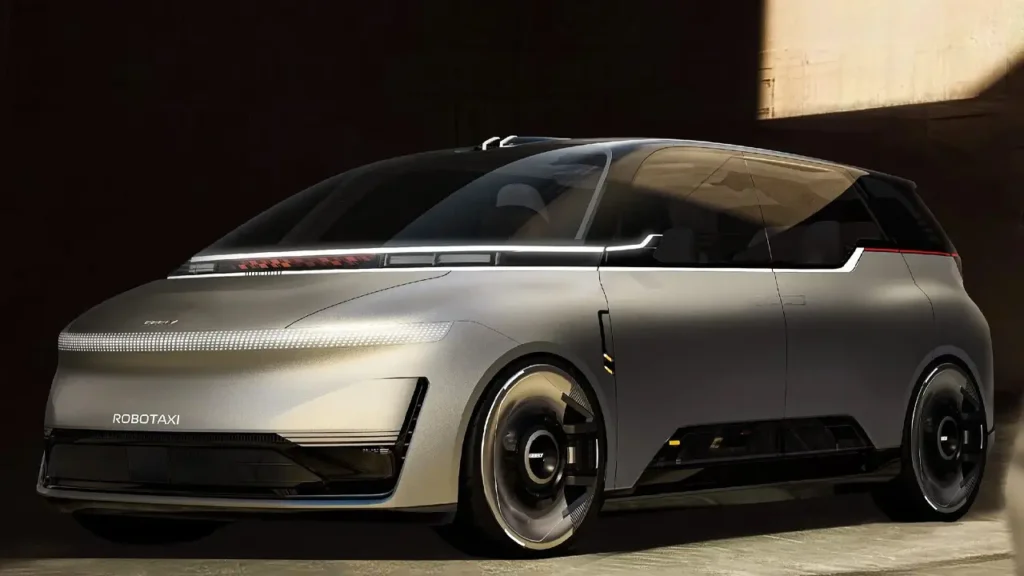
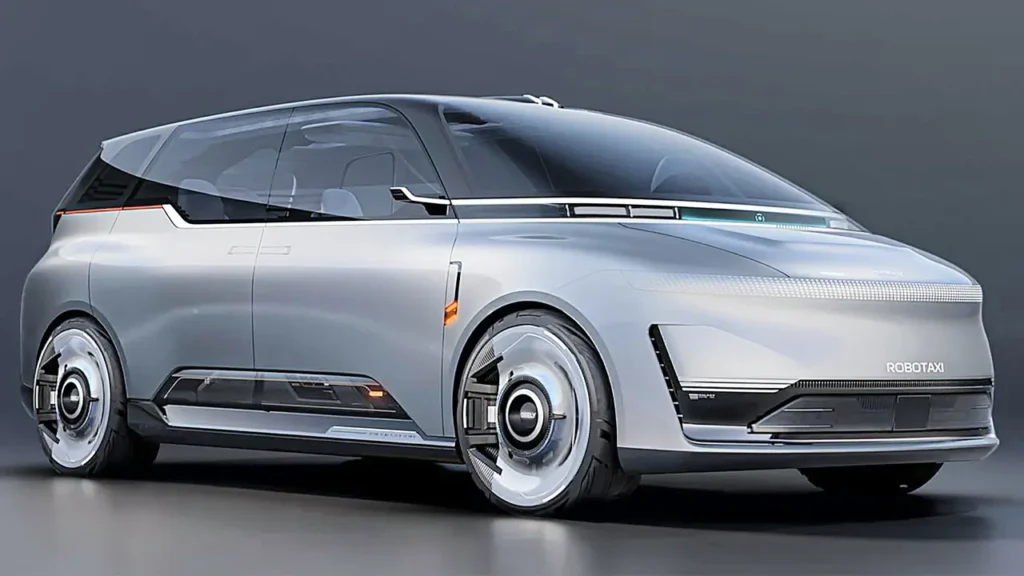
The flagship demonstration of autonomous capability is the EVA Cab — China’s first purpose-built Robotaxi prototype, jointly unveiled at Auto China 2026 by Geely Auto Group, AFARI Technology, and CaoCao Mobility. This vehicle is not a concept showpiece. It has already been validated through pilot operations in Hangzhou and Suzhou for over a year.
The EVA Cab hardware is genuinely extraordinary. It features the world’s first 2,160-line digital LiDAR system, boasting ultra-high imaging capabilities of 25.92 million points per second and a detection range extending up to 600 meters. For context, most premium production vehicles today use LiDAR systems with significantly lower point resolution and shorter detection ranges.
The computing platform inside the EVA Cab integrates three flagship chips — the NVIDIA SuperChip, NVIDIA Thor U, and Qualcomm Snapdragon 8397 — delivering a combined computing power exceeding 3,000 TOPS (Tera Operations Per Second). This abundant computing power has boosted the parameter count of the WAM model sevenfold and its inference frame rate threefold, making it more than sufficient to meet the computational demands of L4 autonomous driving.
The software driving autonomy is the AFARI G-ASD L4 system — the industry’s first mass-production-ready L4-level assisted driving software solution, enabling fully unmanned shuttle services on open public roads. Notably, Geely has become the first global automaker to obtain the ISO 8800 AI Safety certification, setting a new benchmark for intelligent safety standards across the industry.
The AFARI G-ASD 4.0 system also benefits from a uniquely rich training dataset: data from 8.5 million Geely vehicles, 10 billion kilometers of real-world driving scenarios, and Volvo’s 55-year safety database. That combination of breadth and depth in training data gives Geely’s autonomous driving systems a real-world robustness that is very hard to replicate from scratch.
Geely plans to launch the CaoCao Mobility customized edition of the EVA Cab commercially in 2027, accelerating the large-scale deployment and commercialization of Robotaxi services.
6. Geely Intelligent Cockpit Experience
The Geely intelligent cockpit is where technology meets human experience, and it is one of the most thoughtfully designed aspects of the entire ecosystem.
Building upon the WAM architecture, Super Eva serves as a hyper-intelligent agent — the vehicle’s central intelligence hub — endowed with memory and inferential capabilities. It is natively integrated with underlying systems such as intelligent driving, chassis control, and powertrain management. This deep integration is what makes the cockpit experience feel genuinely different from competitors: the cabin intelligence and the driving intelligence are not separate systems that occasionally talk to each other. They are a single unified brain.
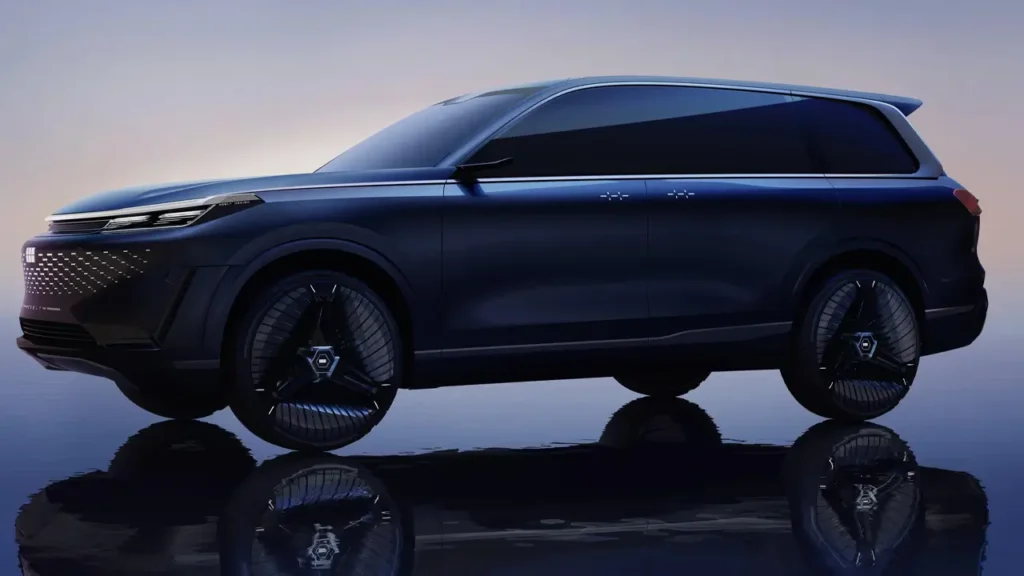
The Zeekr 8X, launched in April 2026, features the industry’s first cabin-driving integrated Super Eva intelligent agent. This means that when you give a voice command in the cabin, the car does not just adjust the music or set a destination — it can coordinate a complete behavioral response involving navigation adjustments, driving style changes, and cabin climate in a single fluid interaction. Geely calls this experience one where dialogue translates directly into action.
The G-ASD 4.0 system extends cockpit interaction into the physical world through Gesture Summon capability and AI Navigation, which are rolling out across the Zeekr, Lynk & Co, and Geely NEV lineups. Gesture Summon allows drivers to call the vehicle to them without touching an app or key.
In terms of comfort and design, the EVA Cab demonstrates Geely’s vision for the intelligent cabin of the future. The interior features the Galaxy Skyroof ceiling, Drifting Galaxy door panels, and a face-to-face seating layout that maximizes interior space. The philosophy is described as Tech-Driven Mobility Leading to a Better Life — meaning the intelligent cockpit should feel warm and human, not cold and mechanical.
7. Geely Electric Vehicle Ecosystem Connectivity
The Geely electric vehicle ecosystem extends far beyond the car itself. Connectivity is built into every layer of the platform, making the vehicle a node in a much larger intelligent network.
OTA (over-the-air) updates are a fundamental part of how Geely keeps its vehicles improving after purchase. The EEA 4.0 architecture handles OTA updates with quantum-grade security, meaning the process is protected end-to-end from potential interference. Every software improvement — whether to the driver assistance system, the cockpit AI, or the powertrain management — can be delivered wirelessly without a dealership visit.
The Geely ecosystem connectivity strategy is built around what the company calls a Space-Ground intelligent technology ecosystem. This integrates satellite connectivity via Geespace — Geely’s satellite subsidiary — with ground-based vehicle systems. Satellite connectivity allows vehicles to maintain positioning and communication even in areas where conventional networks are weak, which is particularly relevant for the expanding deployment of autonomous and semi-autonomous driving features in rural or remote environments.
Smartphone integration is deeply embedded. The quantum encryption layer that protects cloud communication also covers Bluetooth key functionality, meaning your phone becomes a secure, verified interface with your vehicle. Remote vehicle control — locking, pre-conditioning the cabin, checking charging status — is handled through the same security architecture.
Smart home interaction is an emerging dimension of the ecosystem. As the WAM model continues to evolve, the ability to coordinate with smart home devices and external mobility services is expected to deepen. CaoCao Mobility, Geely’s ride-hailing subsidiary, is already integrated into the broader ecosystem, with the EVA Cab Robotaxi set to provide seamless on-demand mobility through the platform.
The Geely electric vehicle ecosystem also encompasses Smart Cities and Smart Energy infrastructure, which were displayed at Auto China 2026. This signals that Geely sees the vehicle not as an isolated product but as a participant in a broader intelligent city network.
8. Geely Connected Car System vs Competitors
How does the Geely connected car system and the broader Geely digital vehicle platform measure up against the most serious competitors in the space? Here is a clear comparison based on publicly available information.
| Feature | Geely Super Eva | BYD | Xiaomi EV | Huawei HarmonyOS |
|---|---|---|---|---|
| AI Architecture | Full-Domain AI 2.0, WAM World Action Model, 1+2+N agent system | DiLink smart system, proprietary OS | HyperOS automotive, Xiaomi AI assistant | HarmonyOS 4 Cockpit, cross-device ecosystem |
| Autonomous Driving | G-ASD 4.0, L4-ready, 2160-line LiDAR, active Robotaxi pilot | God’s Eye L2+/L3 system, no L4 Robotaxi yet | Xiaomi Pilot, L2+ urban NOA | ADS 3.0, city NOA, no confirmed L4 Robotaxi |
| Computing Power | 3,000+ TOPS (EVA Cab), 23.5 EFLOPS cloud center | Not publicly disclosed at this level | 508 TOPS (SU7 Ultra) | 400+ TOPS per vehicle |
| Battery Technology | 900V platform, 12C ultra-fast charging, solid-state in validation 2026 | Blade LFP, solid-state targeted 2027 | CATL-supplied, 800V on select models | Partner-supplied batteries, no own cell production |
| Security | Quantum encryption EEA 4.0, ISO 8800 AI Safety certified (world first) | Standard automotive cybersecurity | Standard automotive cybersecurity | Huawei-grade security, enterprise background |
| Ecosystem Reach | Geely, Zeekr, Lynk & Co, Volvo, Polestar portfolio + CaoCao Mobility | BYD brands only | Xiaomi device ecosystem | Multiple partner brands (AITO, LUXEED) |
What the table makes clear is that while competitors each have genuine strengths, the Geely connected car system and Geely digital vehicle platform stand out in the combination of vertically integrated AI infrastructure, L4-ready autonomous capability, quantum-grade security, and multi-brand ecosystem reach. No single rival currently checks all of these boxes simultaneously.
9. Why Geely Smart Mobility Could Dominate 2026 and Beyond
The case for Geely smart mobility becoming a dominant force in the next-generation EV tech landscape is built on several converging factors, and it is worth examining each one honestly.
First, the timeline advantage is real. Geely started building its AI infrastructure in 2021 — years before most Western or even Chinese rivals committed to a full-domain AI strategy. The Xingrui Intelligent Computing Center, the Xingrui AI Large Model, and the Smart Geely 2025 strategy were not reactive moves. They were proactive bets that are now paying off with mature, deployable technology rather than conceptual demos.
Second, the scale of Geely next-generation EV tech development is staggering. By December 2025, Geely had established the Comprehensive Safety 2.0 framework, expanding the scope of safety from the individual vehicle to the entire transportation ecosystem. The company also opened the Geely Safety Center — the world’s largest and most comprehensive safety testing facility, holding five Guinness World Records. This level of investment in physical and digital safety infrastructure signals a company that is thinking about long-term market leadership, not short-term headlines.
Third, the Robotaxi deployment through CaoCao Mobility gives Geely a real-world proving ground that most competitors simply do not have. Active pilot operations in Hangzhou and Suzhou mean that the G-ASD L4 system is accumulating real-world miles in complex urban environments right now. The commercial CaoCao Mobility edition of the EVA Cab is planned for launch in 2027, which gives Geely a first-mover advantage in large-scale commercial autonomous mobility in China.
Fourth, the global brand portfolio amplifies everything. When a breakthrough happens in Geely’s AI or battery development, it flows through Zeekr, Lynk & Co, Volvo, Polestar, and the core Geely NEV lineup simultaneously. That shared platform efficiency means Geely can spread development costs and accelerate deployment at a pace that pure-play brands cannot match.
The Geely smart mobility vision is clearly articulated: zero wait, zero congestion, and zero accidents. Whether that is achievable in a reasonable timeframe is a question, but the infrastructure being built today makes it more plausible than it might sound.
10. Conclusion — Is Geely Building China’s Tesla Killer?
The question of whether the Geely Super Eva Tech Ecosystem represents a genuine threat to Tesla’s global position is not as simple as comparing sales figures or battery ranges. The more interesting comparison is at the ecosystem level — and that is exactly where the Geely Super Eva Tech Ecosystem makes its strongest argument.
Tesla’s advantage has always been its integrated approach: hardware, software, data, and energy working as one system. What Geely is building under the Super Eva umbrella is essentially the same philosophy, executed with Chinese scale, multi-brand reach, and an AI infrastructure that has been under construction for five years.
The facts are compelling. Geely is the world’s first automaker to achieve ISO 8800 AI Safety certification. It operates the automotive industry’s most powerful AI computing center at 23.5 EFLOPS. Its EVA Cab is China’s first purpose-built production-grade L4 Robotaxi. Its 900V platform and 12C ultra-fast charging are industry-leading specifications. And Super Eva — the hyper-intelligent agent at the center of it all — is already being deployed in production vehicles starting with the Zeekr 8X.
None of this means Geely has already won. Execution at commercial scale is always harder than prototype demonstrations. The transition from impressive technology showcases to reliable, affordable, mass-market products involves challenges that no amount of computing power can fully anticipate. Competition from BYD, Huawei-backed brands, Xiaomi EV, and indeed Tesla itself remains fierce and technically serious.
But the Geely Super Eva Tech Ecosystem represents something genuinely new: a comprehensive, vertically integrated, AI-native approach to mobility that is backed by real sales volumes, real infrastructure investment, and a clear long-term roadmap. For anyone following the future of smart electric vehicles, Geely is no longer just a name to watch — it is a force to reckon with.
Want to stay up to date with the latest developments in China’s AI-powered automotive revolution? Follow more in-depth coverage at www.autochina.blog.
- 🇬🇧 English
This article about the Geely Super Eva Tech Ecosystem is seriously impressive. The explanations are clear, modern, and actually useful — not just hype. The site autochina.blog feels like a go-to hub for anyone interested in Chinese EV innovation. Definitely bookmarking this.
- 🇪🇸 Español
El artículo sobre Geely Super Eva Tech Ecosystem está muy bien explicado y es fácil de entender incluso si no eres experto. Me sorprendió la calidad del contenido. El sitio autochina.blog tiene información muy актуальная sobre coches eléctricos chinos. Muy recomendable.
- 🇸🇦 العربية
مقال رائع عن نظام Geely Super Eva Tech Ecosystem، الشرح واضح وسلس ويعطي صورة قوية عن مستقبل السيارات الذكية. موقع autochina.blog غني بالمعلومات ويستحق المتابعة لكل مهتم بالتكنولوجيا والسيارات الكهربائية.
- 🇨🇳 中文 (Chinese)
这篇关于Geely Super Eva Tech Ecosystem的文章内容非常专业,同时又容易理解。网站 autochina.blog 提供了很多关于中国电动车和智能技术的优质内容,非常值得关注。
- 🇫🇷 Français
Un excellent article sur le Geely Super Eva Tech Ecosystem. Le contenu est clair, structuré et très informatif. Le site autochina.blog devient rapidement une référence pour suivre les innovations automobiles chinoises.
- 🇩🇪 Deutsch
Sehr informativer Artikel über das Geely Super Eva Tech Ecosystem. Alles wird verständlich erklärt und modern präsentiert. Die Website autochina.blog ist eine starke Quelle für News und Trends rund um chinesische Elektroautos.
Discover more from AutoChina
Subscribe to get the latest posts sent to your email.