When Tesla announced the removal of traditional steering column stalks from their vehicles, the automotive world didn’t just raise eyebrows—it erupted into heated debate. The stalkless steering wheel safety conversation has become one of the most contentious topics in modern electric vehicle design, touching everything from driver ergonomics to fundamental road safety concerns.
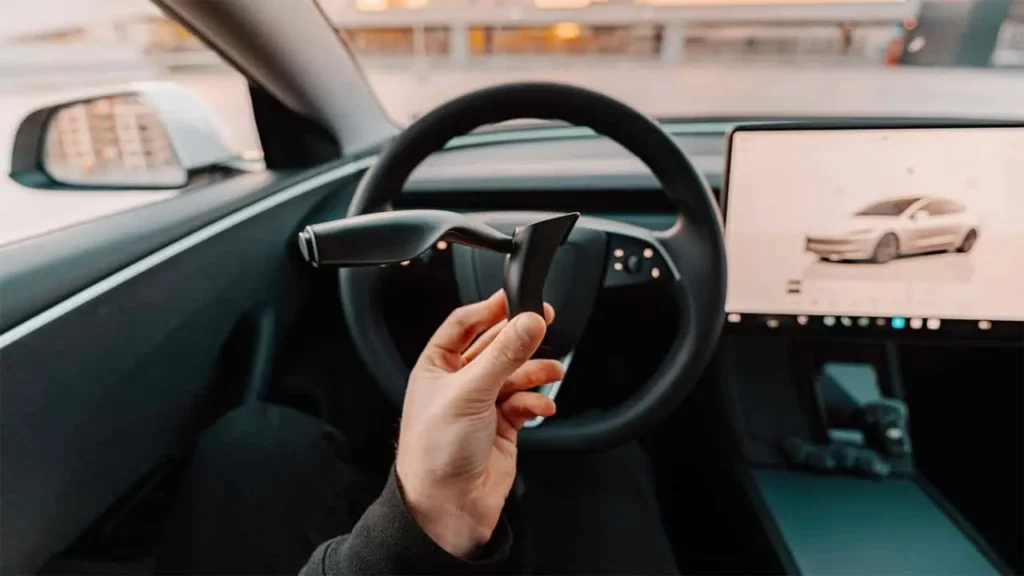
Picture this: you’re approaching a busy roundabout, hands positioned at 10 and 2 on your steering wheel. Traditionally, your right hand would instinctively reach for the turn signal stalk without thinking—a motion so ingrained it’s become muscle memory for millions of drivers worldwide. Now imagine that stalk simply isn’t there. Instead, you’re expected to press buttons on the steering wheel itself, buttons that rotate with the wheel, potentially ending up in completely different positions by the time you need them.
This is the reality Tesla owners face with newer models like the updated Model 3 Highland, and it’s a design philosophy rapidly spreading to Chinese EV manufacturers like JiYue. The initial reaction from users has been mixed at best—ranging from cautious adaptation to outright frustration. But beyond individual preferences lies a more pressing question: does removing physical stalks genuinely improve the driving experience, or does it sacrifice safety at the altar of minimalist design?
Let’s dive deep into this controversy, exploring the history, the heated arguments on both sides, real-world user experiences, and what safety agencies are saying about this bold design direction.
1. The History: How Tesla Pioneered Tesla Steering Wheel Signal Control
Tesla has never been a company afraid of challenging automotive conventions. From eliminating traditional instrument clusters to creating massive center touchscreens, Elon Musk’s electric vehicle empire has consistently pushed boundaries—sometimes to the delight of tech enthusiasts, other times to the dismay of traditionalists.
The journey toward stalkless steering began gradually. Early Tesla models like the original Model S and Model X featured conventional steering column stalks for turn signals, high beams, and windshield wipers—exactly what drivers expected. However, as Tesla refined its design philosophy centered on minimalism and technological advancement, these physical controls became targets for elimination.
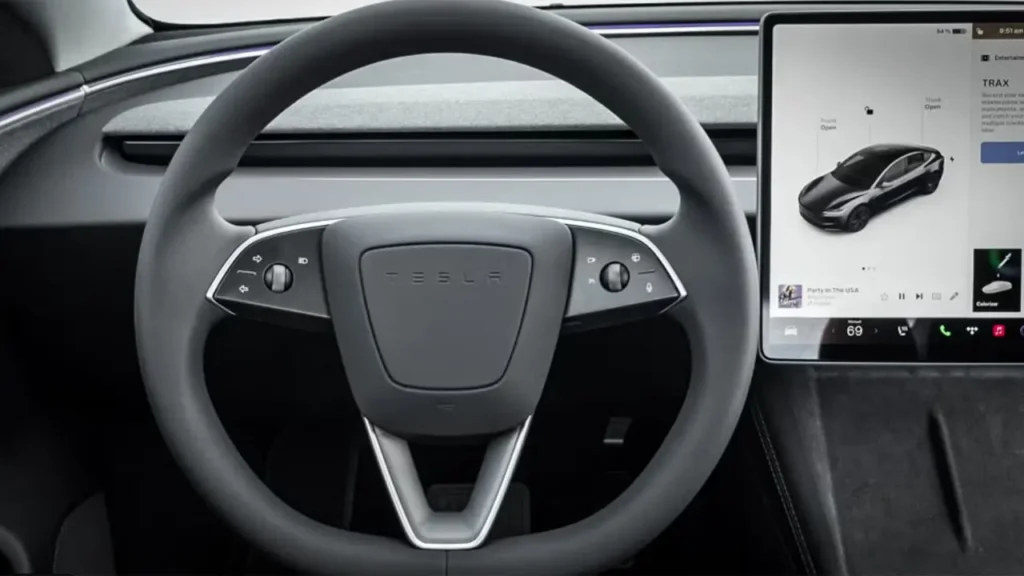
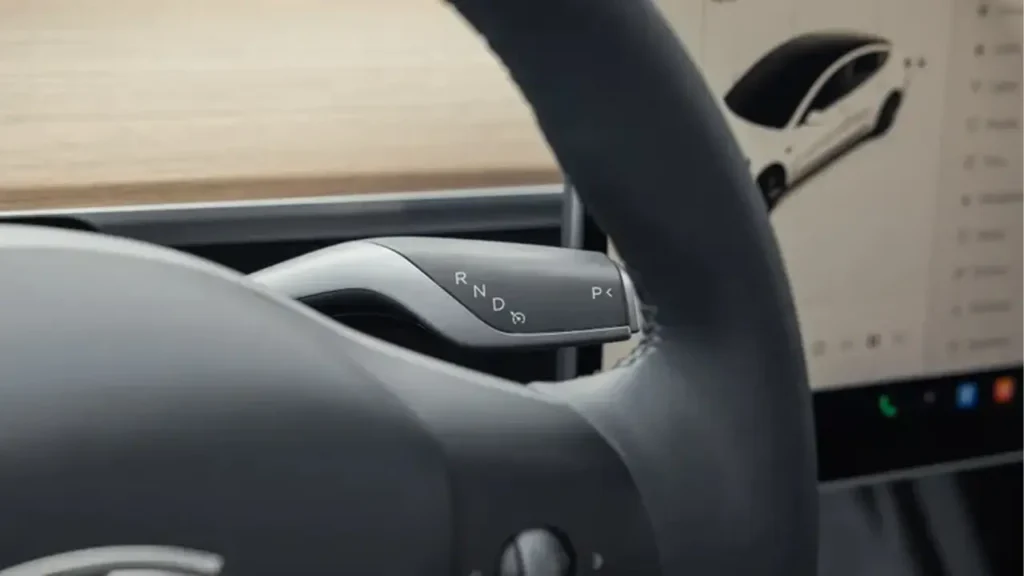
The significant shift occurred with the introduction of the updated Model 3 and Model Y variants. Tesla replaced the traditional turn signal and gear selection stalks with buttons integrated directly into the steering wheel. Turn signals moved to capacitive touch buttons on the left and right sides of the wheel’s horizontal spokes, while gear selection became primarily screen-based with backup buttons on the center console.
This wasn’t merely an aesthetic choice. Tesla argued that removing stalks created a cleaner steering column, reduced manufacturing complexity, and aligned with their vision of autonomous driving futures where human intervention would become minimal. The company maintained that drivers would quickly adapt to the new system, much like iPhone users adapted to touchscreen keyboards replacing physical buttons.
But here’s where the controversy ignited: unlike a smartphone, which you use while stationary or with your full attention, a car demands split-second decisions while managing numerous variables—speed, surrounding traffic, road conditions, and pedestrians. The comparison many Tesla critics made was simple yet damning: this wasn’t innovation; it was removing a solution that had worked perfectly for over a century.
2. Why the Controversy: Stalkless Turn Signals Controversy Explained
The stalkless turn signals controversy isn’t just about resistance to change—it cuts to the heart of automotive safety and human factors engineering. Several key concerns have fueled this ongoing debate:
Muscle Memory Disruption: Millions of drivers have spent decades developing automatic responses to driving situations. Reaching for a turn signal stalk happens without conscious thought, leaving cognitive resources available for monitoring traffic. Forcing drivers to relearn this fundamental action introduces a learning curve that, critics argue, creates a dangerous transitional period.
Rotational Position Problem: Perhaps the most significant technical critique involves the fact that steering wheel-mounted buttons rotate with the wheel itself. On traditional stalks, the turn signal lever remains in the same position relative to the driver regardless of steering wheel angle. With button-based systems, turning your wheel 180 degrees means your “left turn” button is now on the right side of the wheel, potentially in an awkward position. This creates confusion precisely when drivers need clarity most—during turns and roundabouts.
Tactile Feedback Loss: Physical stalks provide unmistakable tactile feedback. You can feel the distinct click as the stalk engages, confirming your signal is active without taking your eyes off the road. Capacitive touch buttons, by their nature, provide minimal physical feedback, requiring drivers to visually confirm the signal activated via dashboard indicators—an extra step that diverts attention from the road.
Emergency Situation Performance: During emergency maneuvers, drivers need controls that work instinctively. When swerving to avoid an obstacle or navigating a sudden hazard, fumbling for a button in an unfamiliar location could delay critical signaling to other drivers, potentially causing secondary accidents.
Accessibility Concerns: Drivers with certain physical limitations, arthritis, or reduced fine motor control may find precise button pressing more challenging than the simple mechanical motion of moving a stalk. This raises questions about universal design principles and whether EVs are inadvertently becoming less accessible.
The controversy intensified when automotive forums, Reddit communities, and YouTube reviewers began documenting real-world frustrations. Videos showed experienced drivers repeatedly pressing wrong buttons, missing turn signals entirely during complex maneuvers, or expressing genuine safety concerns during test drives.
3. Turn Signal Usability Issues: Real-World Ergonomic Problems
When discussing turn signal usability issues, it’s essential to move beyond theoretical concerns and examine documented real-world problems. The feedback from actual Tesla owners paints a concerning picture of the learning curve and ongoing challenges.
Roundabout Nightmares: Multiple Tesla Model 3 Highland owners have reported particular difficulties navigating roundabouts and circular intersections. As you enter a roundabout and begin turning the wheel, the signal buttons rotate with it. By the time you need to signal your exit, the button you need might be positioned at 4 o’clock or 8 o’clock on the wheel—far from the intuitive 3 and 9 o’clock positions where your hands naturally rest. This has led to missed signals, delayed signaling, or drivers simply giving up and not signaling at all—a dangerous precedent.
Dense Traffic Complications: In heavy urban traffic requiring frequent lane changes, the additional cognitive load becomes apparent. Drivers report needing to glance down at the wheel to locate buttons, momentarily diverting attention from surrounding vehicles. One Reddit user described it as “having to pat yourself on the head to find your nose”—technically possible but unnecessarily complicated.
Accidental Activation: The capacitive nature of the buttons means they can be triggered by incidental contact. Several owners reported accidentally activating turn signals while adjusting their grip or during normal steering movements, leading to confusion for surrounding drivers who see random signal flashing.
Learning Curve Duration: While Tesla maintains drivers adapt within days, user reports suggest a much longer adjustment period. Many owners report it taking several weeks or even months before the new system feels natural, and some never fully adapt, consistently preferring the traditional stalk system they had in older vehicles.
Lack of Physical Confirmation: Traditional stalks remain in the “on” position until manually turned off or automatically canceled after completing a turn. This provides continuous physical feedback about signal status. With buttons, there’s no physical indicator—drivers must remember they’ve activated a signal and consciously deactivate it, or rely on automatic cancellation that doesn’t always work correctly, especially during gentle turns or lane changes.
| Issue Type | Traditional Stalks | Stalkless Buttons |
|---|---|---|
| Muscle Memory | Instant, unconscious activation | Requires conscious thought, especially initially |
| Position Consistency | Always same relative position | Rotates with wheel, variable position |
| Tactile Feedback | Strong mechanical click, stays engaged | Minimal haptic response, no physical retention |
| Visual Confirmation Required | Minimal – feel and position confirm | Often necessary to verify activation |
| Accidental Activation | Rare due to mechanical resistance | More common with touch-sensitive buttons |
| Learning Curve | Virtually none for experienced drivers | Several weeks to months reported |
4. EV UX Design Problems: When Minimalism Meets Practicality
The stalkless steering wheel debate exemplifies broader EV UX design problems facing the electric vehicle industry. As automakers race to differentiate their products and create “futuristic” experiences, there’s a growing tension between innovation and usability.
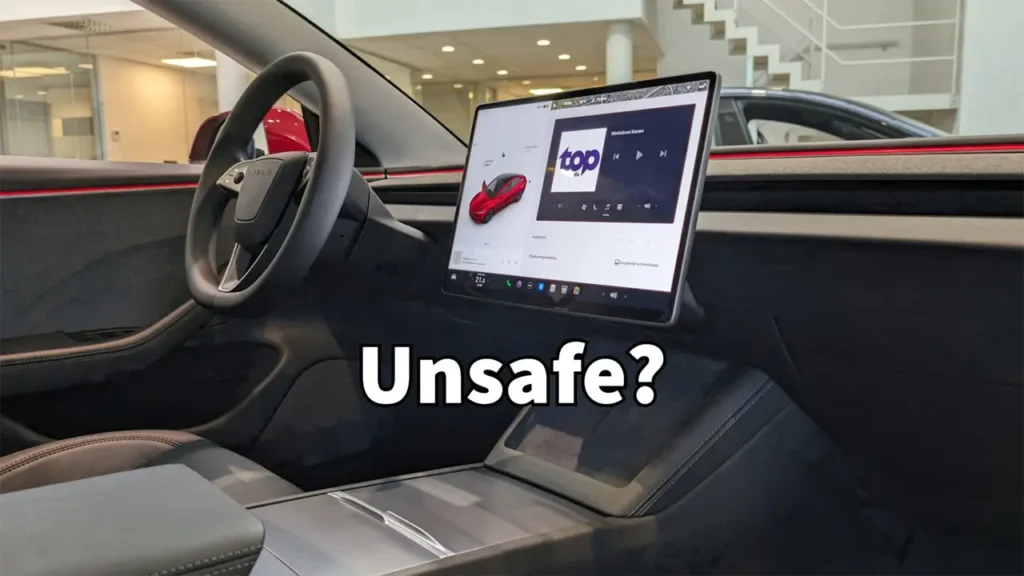
The Touchscreen Overload: Tesla pioneered the massive center touchscreen approach, consolidating virtually all vehicle functions into software interfaces. While this creates flexibility and reduces physical buttons, it introduces significant usability problems. Adjusting climate control, changing radio stations, or accessing vehicle settings now requires multiple menu navigations rather than tactile button presses. This isn’t just inconvenient—it’s potentially dangerous, as drivers spend more time looking at screens and less time watching the road.
The National Highway Traffic Safety Administration (NHTSA) has expressed concerns about this trend, noting that overly complex touchscreen interfaces increase driver distraction. European safety testing organizations have begun penalizing vehicles that bury critical functions in touchscreen menus, recognizing the safety implications.
Form Over Function: Many modern EV designs prioritize aesthetic minimalism and technological showcase over proven ergonomic principles. The removal of physical controls isn’t driven by drivers requesting simpler interfaces—traditional car controls work exceptionally well. Instead, it’s driven by design philosophy that values visual cleanliness and the appearance of innovation.
This represents a fundamental misunderstanding of user experience design. True UX excellence isn’t about how few buttons you have or how sleek your interface looks—it’s about how efficiently and safely users can accomplish their goals. In automotive contexts, those goals include operating the vehicle safely while maintaining awareness of surroundings.
The Haptic Feedback Gap: Human factors research consistently demonstrates that physical, tactile controls outperform touch-based interfaces for tasks requiring divided attention. Physical buttons and stalks provide:
- Distinct tactile landmarks for blind operation
- Mechanical feedback confirming activation
- Resistant engagement preventing accidental activation
- Muscle memory development for unconscious operation
Touch-based systems sacrifice all these advantages for visual aesthetics. While haptic feedback technology exists, the subtle vibrations of capacitive buttons cannot replicate the unmistakable mechanical engagement of physical controls.
Cognitive Load Increase: Every design decision in a vehicle’s interface either reduces or increases the cognitive load on drivers. Traditional automotive controls evolved over decades to minimize this load—standardized positions, intuitive mechanical actions, and consistent feedback. Modern EV interfaces often increase cognitive load by requiring drivers to:
- Remember button locations that change with wheel rotation
- Navigate touchscreen menus while driving
- Visually confirm actions lacking physical feedback
- Learn manufacturer-specific control schemes that differ from established standards
This cognitive overhead might seem minor in isolation, but driving already demands substantial mental resources—monitoring speed, maintaining lane position, tracking surrounding vehicles, anticipating hazards, and planning routes. Adding unnecessary complexity to basic vehicle controls is poor human factors engineering.
5. Tesla Model 3 Highland Review: The Stalkless Experience
The Tesla Model 3 Highland review discussions across automotive media and owner forums provide invaluable insight into how the stalkless design performs in real-world conditions. The Highland refresh, introduced in 2023, represented Tesla’s most significant commitment yet to stalkless controls, removing both turn signal and gear selection stalks entirely.
First Impressions: Initial reviews were divided. Tech-focused reviewers often praised the minimalist aesthetic and futuristic feel, suggesting the change represented bold innovation. However, automotive journalists with decades of driving experience across multiple vehicles expressed immediate concerns about the learning curve and safety implications.
One consistent theme emerged: the first test drive was nearly universally awkward. Reviewers repeatedly found themselves reaching for stalks that weren’t there, fumbling with button locations, and expressing frustration during complex maneuvers. This initial difficulty didn’t surprise anyone—the question was whether extended use resolved these issues.
Extended Use Reports: Owners who’ve had several months with their Highland Model 3s report mixed outcomes. Some genuinely adapted, claiming the system becomes second nature after a few weeks. Others maintain that while they’ve learned to use it, they still prefer traditional stalks and wouldn’t choose stalkless controls if given the option.
Interestingly, many reviews noted that drivers develop compensating behaviors:
- Pre-positioning the steering wheel at specific angles before activating signals
- Signaling earlier than necessary to allow time for button location
- Gripping the wheel awkwardly to keep thumbs positioned near buttons
- Developing elaborate mental rules about which position activates which button at different wheel angles
These compensations work, allowing drivers to function safely, but they represent additional cognitive and physical effort compared to the effortless stalk operation drivers have used for decades.
The Rental Car Problem: Several reviewers highlighted a concerning scenario: rental vehicles and car-sharing services. When an unfamiliar driver sits in a Tesla with stalkless controls, there’s virtually no intuitive discovery. With traditional stalks, even someone who’s never driven that specific car can immediately identify the turn signal because it’s exactly where they expect it. With stalkless buttons, new drivers face genuine confusion about how to perform basic signaling—a problem that doesn’t exist with conventional designs.
Positive Aspects: To be fair, the Highland Model 3 excels in many areas. The ride quality improvements, updated interior materials, and refined exterior design received widespread praise. The steering wheel itself—aside from the control button controversy—is well-crafted with excellent grip material. The issue isn’t that the car is poorly designed overall; it’s that one specific design decision undermines otherwise excellent engineering.
6. Steering Wheel Ergonomics Debate: Arguments From Both Sides
The steering wheel ergonomics debate around stalkless controls features passionate advocates on both sides, each with legitimate arguments worth examining objectively.
Pro-Stalkless Arguments:
Cleaner Visual Design: Supporters argue that removing stalks creates a cleaner, more modern aesthetic. The uncluttered steering column provides better visibility of the instrument panel and creates a more spacious feel in the driver’s area.
Adaptation Precedent: Proponents point to other automotive changes that initially faced resistance but became standard—automatic transmissions, electronic throttle control, and electric power steering all had skeptics who eventually adapted. They argue stalkless controls will follow the same adoption curve.
Manufacturing Efficiency: Fewer mechanical parts mean simplified manufacturing, reduced failure points, and potentially lower costs. In mass production, eliminating stalks could save substantial money while reducing warranty claims on mechanical components.
Future-Proofing: For fully autonomous vehicles, many traditional controls become obsolete. Designing vehicles that don’t rely on stalks prepares manufacturers for a future where human driving intervention decreases.
Customization Potential: Software-based controls allow button functions to be customized or updated via firmware, providing flexibility impossible with mechanical stalks.
Anti-Stalkless Arguments:
Safety Compromises: Critics maintain that removing proven safety controls for aesthetic reasons is fundamentally irresponsible. Decades of human factors research support physical, stationary controls for safety-critical functions.
Universal Design Violation: Traditional stalks represent universal design—anyone from any country, with any physical abilities, can immediately use them. Proprietary button systems fragment this universality and potentially exclude drivers with certain disabilities.
No Actual Problem Solved: Perhaps the strongest criticism: stalks worked perfectly. There was no widespread complaint about turn signal stalks being problematic. This change doesn’t solve an existing problem; it creates new ones while claiming innovation.
Emergency Response Concerns: In accident situations, first responders and other drivers need to understand vehicle controls quickly. Standardized controls facilitate this; proprietary systems complicate it.
Regulatory Risk: As safety agencies scrutinize these systems, manufacturers face the possibility of forced recalls or redesigns if regulators determine stalkless controls create unacceptable safety risks.
The Middle Ground: Some observers suggest the real issue isn’t whether buttons can work—clearly they can—but whether they work better than the established alternative. The question isn’t “Can drivers adapt?” but rather “Should drivers have to adapt to a system that offers no functional advantages and several disadvantages?”
This middle position acknowledges that stalkless controls aren’t inherently dangerous but questions whether the trade-offs justify the change. It’s similar to smartphone keyboards: touchscreen keyboards work, but many users still prefer physical keyboards for certain tasks, and it would be absurd to claim touchscreen keyboards are objectively superior in all contexts.
7. Driver Feedback Tesla Signals: What Owners Actually Say
The most telling evidence about stalkless controls comes from driver feedback Tesla signals discussions across forums, social media, and review sites. Real owners, using these systems daily, provide unfiltered perspectives on living with the technology.
Reddit Testimonials: The Tesla subreddit features extensive discussions about stalkless controls. A representative sampling reveals:
“Six months in and I still hate it”: Multiple owners report never fully adapting. One user described it as “death by a thousand cuts”—individually, each signal activation isn’t a big deal, but the cumulative annoyance and mental overhead across hundreds of signals per week creates genuine frustration.
“You get used to it… but that doesn’t mean it’s good”: This sentiment appears frequently—acknowledging adaptation while maintaining that the old system was superior. One owner compared it to eating with your non-dominant hand: you can learn to do it, but why would you choose to?
“Roundabouts are still a nightmare”: Even long-term owners report continued difficulty with circular intersections and complex turns where the wheel position changes dramatically.
“I specifically traded in my 2024 for a 2022 to get stalks back”: Several owners reported doing exactly this—voluntarily moving to older models to regain traditional controls. This speaks volumes about the strength of preference against stalkless designs.
Positive Adaptors: Not all feedback is negative. Some owners genuinely prefer the new system:
“After two weeks, it’s completely natural”: Certain drivers report quick, successful adaptation with no ongoing issues. These tend to be younger drivers or those with extensive touchscreen device experience.
“I love the clean look”: Some owners value the aesthetic benefits enough that they accept the usability trade-offs.
“The auto-cancel works great”: Some users appreciate features like automatic signal cancellation after lane changes, though others note this sometimes fails to activate or cancels prematurely.
The Demographic Split: An interesting pattern emerges when analyzing feedback demographics. Younger drivers (under 30) and tech enthusiasts generally adapt more quickly and report higher satisfaction. Older drivers and those with extensive experience in various vehicles tend to express more frustration and preference for traditional controls. This suggests the issue may partly be generational, though safety concerns remain regardless of age.
Professional Driver Concerns: Taxi and ride-share drivers using Teslas professionally report particular challenges. These drivers make hundreds of turns daily, often in unfamiliar areas while navigating apps and communicating with passengers. The additional cognitive load of stalkless controls is especially problematic in this high-distraction context.
8. Auto Safety Agency Reaction: Regulatory Perspectives
The auto safety agency reaction to stalkless controls has been cautious but increasingly critical as these systems proliferate. Safety regulators worldwide are evaluating whether these designs comply with existing standards and whether new regulations are necessary.
NHTSA Position: The National Highway Traffic Safety Administration in the United States hasn’t issued an outright ban on stalkless controls but has expressed concerns about control standardization and driver distraction. NHTSA’s Federal Motor Vehicle Safety Standards (FMVSS) require that “controls for turn signals, hazard warning signals, headlamps, windshield wipers, and washers shall be capable of being activated by one hand movement without removing the hand from the steering wheel.”
Tesla’s button implementation technically meets this requirement, but some safety advocates argue the spirit of the regulation—ensuring controls are easily accessible during steering maneuvers—is violated when buttons rotate with the wheel.
European Testing Organizations: Euro NCAP, the European New Car Assessment Programme, has taken a firmer stance. In recent updates to their assessment protocols, they’ve begun deducting points from vehicles that place critical controls exclusively in touchscreens or lack intuitive physical controls. While this doesn’t specifically ban stalkless designs, it signals regulators’ growing concern about over-digitization of vehicle controls.
The United Nations Economic Commission for Europe (UNECE), which sets vehicle standards for much of the world, is reviewing whether new regulations specifically addressing steering wheel-mounted controls are necessary.
Safety Research Findings: Independent automotive safety research organizations have begun studying stalkless controls. Preliminary findings suggest:
- Reaction time to activate turn signals increases by an average of 0.3-0.7 seconds with button-based systems during the first month of ownership
- Error rates (wrong button, missed activation) are 3-5 times higher with stalkless controls compared to traditional stalks
- Drivers exhibit increased glance time toward the steering wheel with button systems, indicating visual verification needs
- Long-term adaptation reduces but doesn’t eliminate these differences
These findings are preliminary, and longitudinal studies tracking accident rates between vehicles with different control schemes are underway. However, the initial data suggests measurable usability differences exist.
| Safety Agency/Organization | Position on Stalkless Controls | Actions Taken |
|---|---|---|
| NHTSA (USA) | Cautious monitoring; no formal ban but expressed distraction concerns | Reviewing compliance with FMVSS standards; monitoring incident reports |
| Euro NCAP (Europe) | Increasingly critical; prefers physical controls for critical functions | Point deductions in safety ratings for over-reliance on touchscreens |
| UNECE (International) | Under review; considering new standards | Evaluating whether regulations specifically addressing wheel-mounted critical controls needed |
| IIHS (USA) | Concerned about distraction and standardization | Conducting independent research on usability and safety impacts |
| Transport Canada | Monitoring situation; following international developments | No specific actions yet; awaiting research outcomes |
Potential Regulatory Outcomes: Several regulatory scenarios could emerge:
- Mandatory retention of physical stalks for certain critical controls
- Requirements for fixed-position (non-rotating) control buttons if stalks are eliminated
- Standardization requirements ensuring control consistency across manufacturers
- Enhanced driver training or orientation requirements for vehicles with non-standard controls
- Age or experience restrictions for drivers operating vehicles with stalkless controls
The regulatory landscape remains uncertain, but the trend suggests increasing scrutiny rather than acceptance of manufacturer freedom to eliminate traditional controls.
9. Chinese EV Stalkless Controls: A Global Perspective
The Chinese EV stalkless controls phenomenon adds an important international dimension to this debate. Chinese electric vehicle manufacturers have rapidly adopted stalkless designs, both following Tesla’s lead and innovating their own variations.
JiYue and NIO Implementations: JiYue, a Geely-affiliated brand, introduced stalkless steering wheels similar to Tesla’s approach but with modifications based on Chinese driver feedback. NIO, another major Chinese EV manufacturer, experimented with stalkless designs before partially retreating, offering stalks as options on certain models.
This willingness to iterate based on feedback contrasts with Tesla’s more rigid approach. Chinese manufacturers, operating in a highly competitive domestic market with demanding consumers, appear more responsive to usability concerns.
BYD’s Hybrid Approach: BYD, the world’s largest EV manufacturer by volume, has taken a middle path. Some models feature traditional stalks, others use wheel-mounted buttons, and some offer both options. This flexibility acknowledges that no single approach satisfies all drivers while allowing the market to determine preferences.
Regulatory Environment in China: Chinese automotive safety regulations, while comprehensive, have historically been less prescriptive about specific control implementations than European standards. This regulatory flexibility allowed rapid experimentation with alternative control schemes.
However, as Chinese EVs increasingly target export markets—particularly Europe—manufacturers face the challenge of either creating market-specific versions with different controls or adopting configurations that satisfy the most stringent global standards.
Cultural Differences in Acceptance: Anecdotal evidence suggests Chinese consumers may be more accepting of touch-based controls than Western markets, possibly due to:
- Younger average age of EV buyers in China
- Higher familiarity with touchscreen interfaces across all life domains
- Stronger cultural embrace of technological innovation
- Less attachment to automotive tradition in a market where mass car ownership is relatively recent
However, these generalizations require careful consideration—plenty of Chinese drivers express the same frustrations as Western drivers about stalkless controls.
The Copy-and-Innovate Pattern: Chinese EV manufacturers have a track record of adopting Tesla innovations and then rapidly iterating improvements. The stalkless steering wheel may follow this pattern, with Chinese brands experimenting with enhanced button designs, better haptic feedback, fixed-position buttons, or hybrid approaches that address the core usability concerns while maintaining modern aesthetics.
Global Market Implications: As Chinese EVs flood global markets, bringing various control schemes with them, the standardization question becomes increasingly urgent. Drivers might soon face a confusing landscape where each manufacturer implements turn signals differently—a regression from the universal standardization automotive controls achieved decades ago.
10. stalkless steering wheel safety Conclusion: Progress or Danger?
So where does this leave us on the central question of stalkless steering wheel safety—is this design direction progress or a dangerous mistake?
The honest answer is complex. Stalkless controls aren’t inherently dangerous in the sense of being impossible to use or inevitably causing accidents. Millions of Tesla drivers operate these systems daily without incident. Human adaptability is remarkable, and drivers can learn nearly any control scheme given sufficient time and motivation.
However, learning to use something and that something being well-designed are entirely different propositions. The core critique of stalkless controls isn’t that they’re impossible—it’s that they’re worse than what they replaced, offering no functional advantages while introducing measurable usability and safety disadvantages.
The Trade-Offs Aren’t Worth It: Proponents cite aesthetic benefits and manufacturing efficiency, but these advantages pale compared to the fundamental importance of intuitive, reliable safety controls. A slightly cleaner steering column or marginally lower production costs cannot justify increased cognitive load, longer reaction times, and reduced accessibility.
Innovation Isn’t Inherently Good: The automotive industry often conflates change with progress, assuming that newer automatically means better. True innovation solves problems or creates meaningful improvements. Stalkless controls solve no problems that drivers actually had—they create new problems while claiming innovation.
The Path Forward: Several outcomes seem possible:
Regulatory Intervention: Safety agencies may establish requirements that effectively mandate physical stalks or fixed-position controls for critical safety functions. This would force manufacturers to reverse course or develop alternative implementations.
Market Rejection: If enough consumers refuse to purchase or express dissatisfaction with stalkless vehicles, market forces could drive manufacturers back to traditional controls. Early signs of this exist, with some buyers specifically avoiding newer Tesla models to get stalks.
Improved Implementation: Manufacturers might develop better versions—fixed-position buttons that don’t rotate, enhanced haptic feedback that better replicates physical stalks, or hybrid approaches combining benefits of both systems.
Fragmentation and Confusion: Worst case scenario: each manufacturer develops proprietary control schemes, destroying the universal standardization that made automotive controls intuitive and safe across all vehicles.
A Call for Evidence-Based Design: Ultimately, this debate highlights the need for evidence-based automotive design. Human factors research, safety testing, and real-world driver feedback should drive control design decisions, not aesthetic preferences or pursuit of novelty for its own sake.
Manufacturers have a responsibility to prioritize safety and usability over marketing differentiation. Regulators have a responsibility to establish standards that preserve the universal usability of safety-critical controls. And consumers have a right to expect that the vehicles they purchase are designed with their safety and usability as paramount concerns.
The Verdict: Stalkless steering wheels as currently implemented represent a step backward in automotive ergonomics. While not catastrophically dangerous, they sacrifice proven functionality for questionable benefits. Progress would be improving on traditional controls—making them more intuitive, more accessible, or more reliable. Simply removing them and declaring victory isn’t progress; it’s regression disguised as innovation.
For now, drivers shopping for EVs should carefully consider whether they’re willing to accept this trade-off. Test drive vehicles with stalkless controls extensively, particularly in challenging scenarios like roundabouts and dense traffic. And if you find them awkward or concerning, vote with your wallet—choose vehicles that retain traditional controls, sending a clear market signal about what constitutes acceptable design.
The automotive industry has a proud history of genuine innovation that improved safety and usability—anti-lock brakes, airbags, stability control, backup cameras. Stalkless steering wheels don’t belong in this distinguished lineage. They’re a case study in how not to innovate, a reminder that just because we can change something doesn’t mean we should.
Perhaps in the future, better implementations will emerge that address current concerns. Until then, the traditional turn signal stalk—humble, unglamorous, and over a century old—remains the superior solution, a testament to the enduring wisdom of simple, well-designed mechanical controls.
Curious how China leads not only in EV innovation but also in smart everyday tech? Explore the latest gadgets, AI devices, and trending electronics at https://bestchinagadget.com/. It’s a fast, practical way to discover what’s next in Chinese innovation — beyond cars, into the future of connected living and smart technology.
Discover more from AutoChina
Subscribe to get the latest posts sent to your email.