If you’ve been following the electric vehicle world lately, you’ve probably noticed that something genuinely exciting is happening in China — and it has nothing to do with yet another incremental range upgrade or a fancier infotainment screen. The shift we’re talking about is deeper, more fundamental, and arguably more consequential for the global EV market than anything we’ve seen since lithium-ion chemistry became the industry standard.
Sodium-ion battery commercialization in China has moved from a laboratory curiosity to an industry-defining race, and the pace of announcements in early 2026 has been nothing short of remarkable. In February, CATL and Changan Automobile unveiled what they described as the world’s first mass-produced passenger EV powered by sodium-ion batteries. Just weeks later, Beijing Automotive Group — better known as BAIC — announced its own prototype with specifications that are frankly hard to believe until you read the data twice: a full charge in 11 minutes, a driving range of 450 km, and the ability to operate at temperatures so extreme they would bring most lithium batteries to their knees.
So what exactly is going on? Why is China leading this transition so decisively? And what does sodium-ion technology actually mean for everyday drivers, fleet operators, and the broader future of electrification? Let’s dig in.
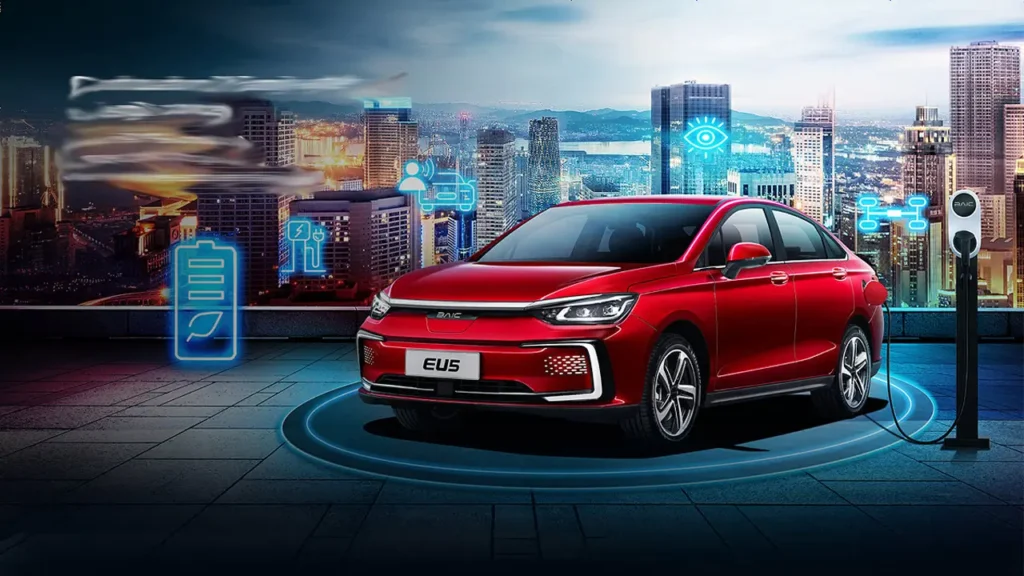
Sodium-Ion Battery Commercialization China: Market Overview
To understand why sodium-ion battery commercialization in China is happening now, it helps to understand the context that made it inevitable.
Global sodium-ion battery shipments reached 9 GWh in 2025, representing a 150% year-on-year increase. That is a staggering growth rate for any technology, let alone one that was largely confined to research papers just three years ago. According to Precedence Research, the global sodium-ion battery market could grow from $1.39 billion in 2025 to $6.83 billion by 2034, with analysts viewing 2026 as a turning point when sodium-ion technology begins large-scale commercialization in vehicles and energy storage.
Looking further ahead, that market volume is expected to surpass 1,000 GWh within four years — a leap of more than 100 times in roughly half a decade.
China’s dominance in this space is not accidental. It is the product of years of sustained investment in battery research, a deeply integrated EV supply chain, and a national strategic interest in reducing dependence on lithium — a mineral that, despite its ubiquity in today’s batteries, is geopolitically concentrated in a handful of countries. Sodium, by contrast, is one of the most abundant elements on Earth, with a concentration in Earth’s crust roughly 400 times that of lithium. It is widely distributed, domestically available for most countries, and extracted from common salt — making it an extraordinarily resilient raw material base for a technology that the whole world will eventually need.
China’s battery giants — CATL, BYD, BAIC, EVE Energy, and others — recognized this strategic advantage early. CATL began sodium-ion research as far back as 2016, investing nearly RMB 10 billion into the program and assembling a dedicated R&D team of more than 300 engineers, including 20 PhDs. That decade-long commitment is now paying dividends. BYD has commissioned a 30 GWh sodium-ion battery production line. EVE Energy has launched a 1 billion-yuan sodium-ion project. The industry is not hedging — it is accelerating.
China’s broader EV ecosystem is also uniquely positioned to absorb and scale this technology. With millions of EVs already on the road, robust charging infrastructure, an established battery swapping network, and government policy support aligned with advancing new energy vehicle standards, China has the industrial environment needed to take sodium-ion from prototype to mass-market reality faster than any other country on the planet.
Sodium-Ion Battery Commercialization China: BAIC Breakthrough Explained
On March 19, 2026, BAIC Group announced that it had completed development of a sodium-ion battery prototype and established a mass-production process for prismatic cells — and the technical specifications it shared with the world immediately set the industry buzzing.
The battery uses a prismatic cell format, a flat rectangular design well-suited for automotive packaging. It achieves a single-cell energy density of over 170 Wh/kg, placing it among the highest-performing sodium-ion cells currently in development anywhere in the world. The system supports 4C ultra-fast charging, meaning it can accept charge at four times its rated capacity — and the result is a full recharge completed in approximately 11 minutes under ideal conditions.
To put that in perspective: most current EV fast chargers, even DC rapid chargers, take 20 to 45 minutes to charge a battery to 80%. Getting to 100% in 11 minutes is a number that belongs in the same conversation as refueling a conventional car at a petrol station.
The BAIC battery also achieves a CLTC-certified driving range of 450 km on a single charge. CLTC is China’s Light-duty vehicle Test Cycle, the official standard used for range certification in the Chinese market. A 450 km result places this battery comfortably within the range that urban and suburban drivers expect from a modern EV.
The safety testing results are equally impressive. BAIC subjected the prototype to overcharging at 200% of its rated capacity — double what any battery should ever experience — and it produced no fire and no explosion. It was also exposed to sustained heat of 200°C during thermal abuse testing and remained stable. These results are reported to exceed China’s current national safety standards for EV traction batteries.
This achievement is part of BAIC’s “Aurora Battery” program, a multi-chemistry platform that now spans lithium-ion, solid-state, and sodium-ion technologies. The company has filed approximately 20 patents covering electrode materials, electrolyte formulations, cell design, manufacturing processes, and testing methods — signaling that this is not a one-off prototype exercise but a serious, sustained technological commitment.
It is worth noting for full transparency: as of the time of writing, no specific vehicle model or commercial launch timeline has been officially confirmed for BAIC’s sodium-ion battery. The technology is in a pre-commercial stage. However, the completion of mass-production process validation means the path from prototype to production vehicle is considerably shorter than it was even six months ago.
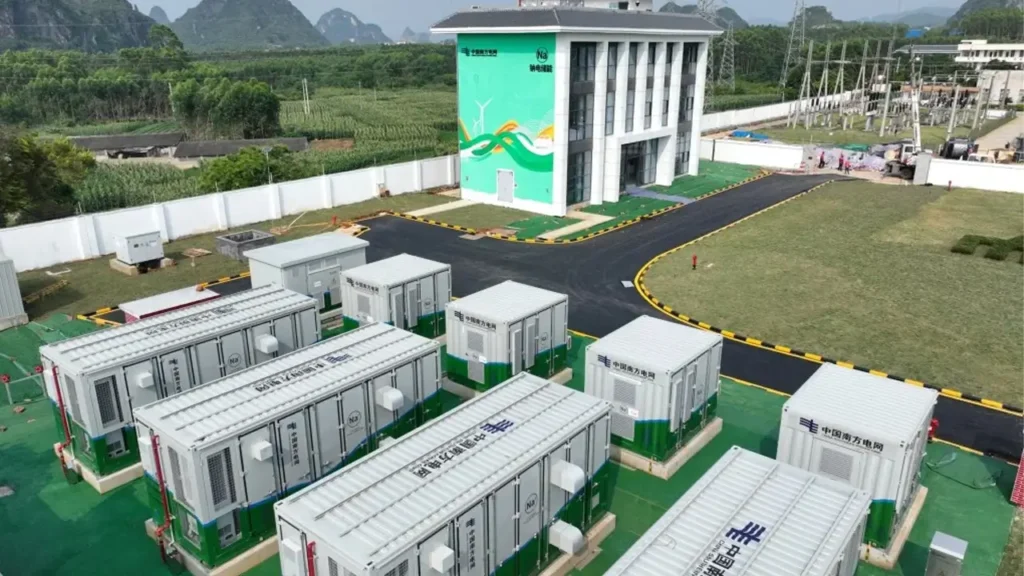
Sodium-Ion Battery Commercialization China: Cost Advantages vs LFP and NMC
One of the most frequently cited advantages of sodium-ion chemistry is cost. The argument is straightforward: sodium is vastly more abundant than lithium, the raw materials required to build sodium-ion cells are cheaper, and the chemistry allows the use of aluminum — rather than the more expensive copper — as the current collector for the anode. This combination, in theory, should translate into significantly lower battery costs.
The reality in 2026 is more nuanced — and that nuance is worth understanding honestly.
As of 2026, sodium-ion battery prices generally fall in the range of $70 to $100 per kWh. Lithium iron phosphate batteries, the dominant low-cost lithium chemistry, currently hover around $70 to $80 per kWh. The cost gap that many industry observers predicted three or four years ago has not yet materialized in the way they expected, primarily because sodium-ion is still in relatively early-stage mass production while LFP benefits from extraordinarily mature, optimized supply chains built over more than a decade.
However, the forward-looking picture is compelling. Morgan Stanley forecasts that when sodium-ion production capacity reaches 100 GWh — a threshold the industry is approaching rapidly — sodium battery prices could be more than 30% lower than LFP batteries. Academic cost modeling from a 2026 ScienceDirect study found that sodium-ion cells based on certain cathode chemistries are already the most cost-effective option at $54 to $62 per kWh at cell level, primarily due to cheaper anode materials and aluminum current collector foils. That study also projected utility-scale battery system costs of roughly 28 to 52 euros per kWh by 2050.
The structural cost advantage is real even if it has not fully arrived yet. Sodium carbonate — the primary sodium raw material — is priced in the hundreds of dollars per metric ton. Lithium carbonate commands thousands of dollars per metric ton. That roughly 10-to-1 raw material cost difference is a permanent, structural advantage that will increasingly assert itself as production scales. Industry experts predict that with sufficient scale, sodium-ion production costs could reach 0.4 to 0.5 yuan per Wh, with further potential reductions to 0.3 yuan per Wh — making them genuinely cheaper than today’s LFP batteries.
There is also a less-discussed but equally important form of cost advantage: supply chain resilience. A battery technology that does not depend on lithium, cobalt, or nickel eliminates exposure to the kind of price spikes that sent lithium carbonate prices up by more than 500% between 2020 and 2022. For fleet operators, energy storage companies, and automakers planning decades-long capital commitments, the predictability of sodium-based supply chains has real economic value beyond the raw per-kWh price.
Battery Technology Comparison Table
| Battery Type | Cost (2026) | Energy Density | Charge Speed | Cold Weather | Safety | Best Use Case |
|---|---|---|---|---|---|---|
| Sodium-Ion | $70–$100/kWh (dropping fast) | 160–175 Wh/kg | 4C–5C / ~11 min full charge | Excellent: 90%+ capacity at −40°C | Very High — lower thermal runaway risk | Urban EVs, fleets, cold climates, storage |
| LFP (Lithium Iron Phosphate) | $70–$80/kWh | 120–205 Wh/kg | Up to 12C in advanced versions | Good: ~60–70% capacity at −20°C | High — decomposes at ~270°C | Mass-market EVs, energy storage, buses |
| NMC (Nickel Manganese Cobalt) | Higher — cobalt/nickel premium | 200–300 Wh/kg | Moderate — typically 1C–2C | Moderate: ~70–80% capacity at −20°C | Moderate — higher thermal runaway risk | Long-range premium EVs, performance cars |
Sodium-Ion Battery Commercialization China: Energy Density Reality
Let’s address the elephant in the room: energy density. This is the metric where sodium-ion has historically lagged behind lithium, and it remains the most important technical limitation for anyone considering this chemistry for high-performance or long-range applications.
Sodium ions are physically larger than lithium ions. The sodium atom’s mass is approximately three times that of lithium, which means a sodium-ion battery stores less energy per unit of weight than an equivalent lithium-ion battery. Standard sodium-ion cells have typically delivered around 100 to 160 Wh/kg — fine for some applications, limiting for others.
But the energy density story in 2026 is no longer as one-sided as it used to be. BAIC’s new prototype achieves over 170 Wh/kg at the cell level. CATL’s Naxtra sodium-ion battery achieves up to 175 Wh/kg — a figure the company says puts it on par with mainstream LFP batteries. HiNa, another Chinese sodium-ion specialist, reports 165 Wh/kg from its commercial products.
For context: standard LFP batteries range from about 120 to 180 Wh/kg, with high-performance versions reaching 205 Wh/kg. NMC batteries occupy the 200–300 Wh/kg range and above. So sodium-ion is now genuinely competitive with mid-range LFP, and sits clearly below premium NMC.
The important question is not whether sodium-ion matches NMC — it doesn’t, and that gap is real. The better question is whether 170 Wh/kg is “good enough” for the majority of real-world EV use cases. The answer is increasingly yes. The average daily driving distance for passenger car users in most markets is well under 100 km. A battery capable of 400 to 450 km of range — which is precisely what BAIC and CATL are now demonstrating with sodium chemistry — comfortably covers several days of typical driving without any compromise in practical usability.
The mass market does not need a 600 km battery in the same way it does not need a car that can do 300 km/h. It needs a battery that is safe, affordable, charges quickly, and works reliably in all weather. Sodium-ion is closing in on that sweet spot with remarkable speed. CATL has stated it expects future sodium-ion EVs to reach 500 to 600 km per charge as the technology continues to mature.
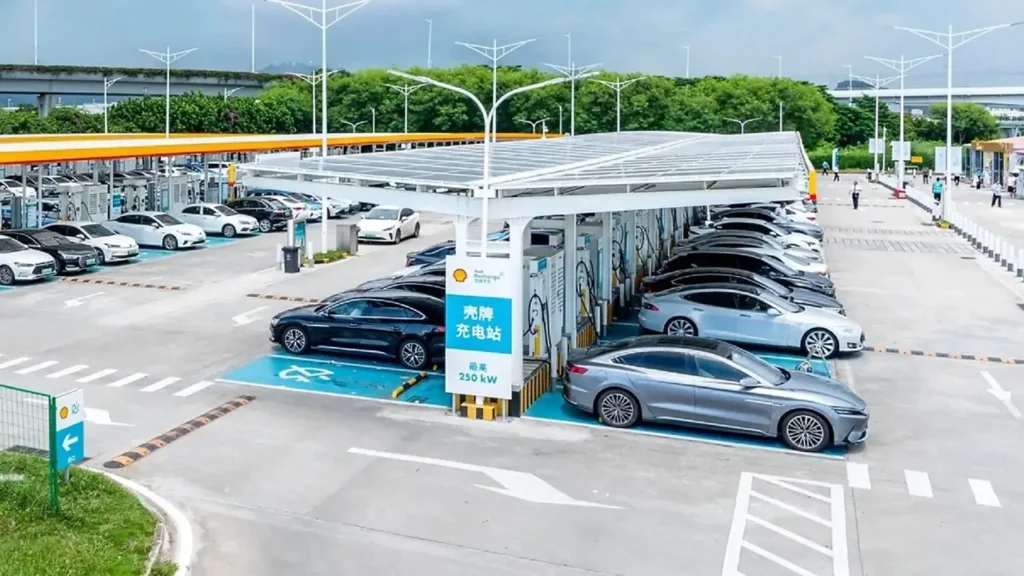
Sodium-Ion Battery Commercialization China: Fast Charging Revolution
The 11-minute full charge demonstrated by BAIC’s prototype is not a marketing headline — it is an engineering result with profound implications for how we think about the entire EV ownership experience.
The fundamental reason sodium-ion batteries can charge so quickly lies in the electrochemical behavior of sodium ions themselves. Sodium ions facilitate faster ion transfer between the cathode and anode compared to lithium-ion systems. This means the battery can physically accept charge at a higher rate without experiencing the thermal stress or degradation that would result from pushing lithium chemistry to the same extremes.
BAIC’s system supports 4C charging — meaning it can accept charge at four times its rated capacity simultaneously. CATL’s Naxtra batteries support 5C charging rates in their current commercial generation, with CATL previously noting that its sodium-ion technology can achieve 80% state of charge in just 15 minutes at room temperature. These are numbers that fundamentally change the calculus around public charging infrastructure.
For everyday drivers, the implications are straightforward. A 10 to 15 minute charging stop — similar in duration to a coffee break or a petrol station fill — eliminates the most common psychological barrier to EV adoption: range anxiety combined with charging time anxiety. For fleet operators running taxis, delivery vehicles, or logistics networks, the ability to recharge quickly during natural operational breaks rather than taking vehicles out of service for 30 to 45 minutes is a direct commercial advantage.
There is also an infrastructure efficiency argument. A charging station that can serve a vehicle in 11 minutes can theoretically serve five or six times more vehicles per day than one designed around 45-minute charging sessions. This means fewer chargers are needed to serve the same number of drivers — a significant cost reduction for grid operators and charging network providers.
Critically, CATL has confirmed that its sodium-ion batteries maintain fast-charging performance across a temperature range of −40°C to 70°C. Traditional lithium-ion batteries often require pre-conditioning before they can accept fast charging in cold weather, adding precious minutes to charging sessions in winter months. The sodium-ion advantage here is not just comfort — it is genuine operational capability.
Sodium-Ion Battery Commercialization China: Cold Climate Advantage
Cold weather is the Achilles heel of conventional lithium-ion batteries — particularly LFP, the chemistry that currently dominates the affordable EV market. Understanding why sodium-ion performs so much better in cold conditions requires a brief look at the underlying electrochemistry.
In cold temperatures, the electrochemical reactions inside any battery slow down. Ions move more sluggishly, internal resistance increases, and effective capacity drops. For LFP batteries at −20°C, this typically means operating at around 60 to 70% of their room-temperature capacity. NMC does somewhat better, retaining around 70 to 80%. Neither figure is acceptable for drivers in genuinely cold climates — Scandinavia, Canada, northern Russia, northeastern China, Korea — where winter temperatures regularly reach −20°C and below.
Sodium-ion chemistry behaves fundamentally differently at low temperatures. The sodium ion’s larger size, which is a disadvantage for energy density, turns out to be an advantage for low-temperature ion mobility. BAIC’s sodium-ion prototype maintains an energy retention rate of over 92% at −20°C — comfortably above what either LFP or NMC can deliver. The battery operates stably across a range from −40°C to 60°C.
CATL’s Naxtra batteries tell a similar story. According to CATL’s official specifications, its sodium-ion cells still charge effectively at temperatures as low as −30°C and retain 90% of usable capacity at −40°C. To put that in perspective: most lithium batteries retain around 80% of their capacity at that temperature, and many struggle to accept fast charging at all.
For China specifically, this matters enormously. A substantial portion of China’s population lives in northern and northeastern provinces where winter temperatures routinely drop well below −10°C. These regions have historically been among the most resistant to EV adoption, precisely because cold-weather performance degradation made battery electric vehicles unreliable for everyday use. Sodium-ion chemistry, with its superior low-temperature performance, removes that barrier.
For global markets in cold climates — from Norway to Canada to Russia — this advantage translates directly into broader addressable market and reduced reliance on active thermal management systems, which add weight, complexity, and cost to current EV battery packs.
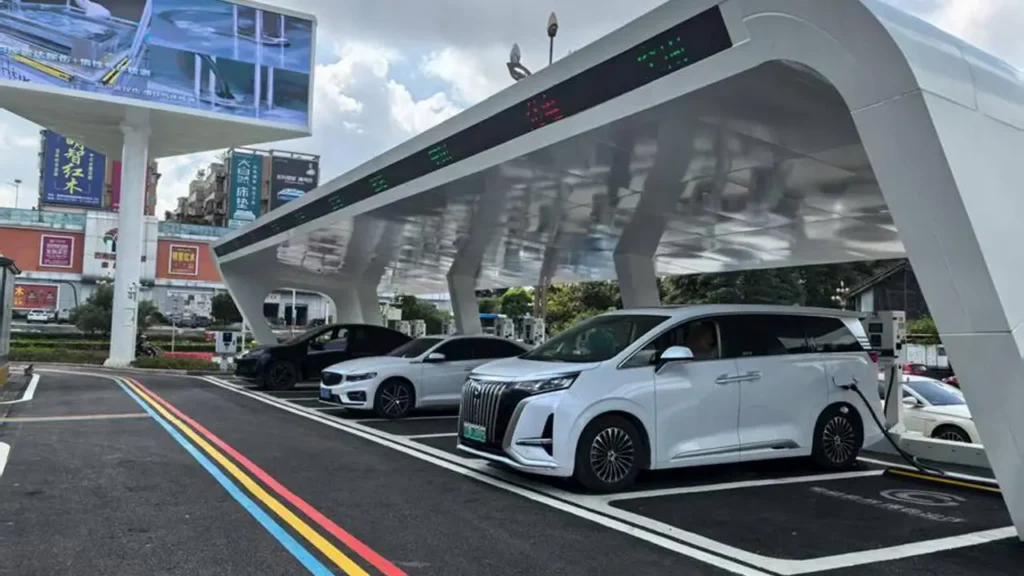
Sodium-Ion Battery Commercialization China: Fleet and Commercial Applications
While the consumer EV headlines focus on passenger cars, some of the most immediately compelling applications for sodium-ion battery technology are in commercial and fleet settings — and this is where the economics of the technology become genuinely transformative.
CATL has been explicit about its strategy. At its supplier conference in December 2025, the company confirmed plans to deploy sodium-ion batteries at scale across four key sectors in 2026: battery swap systems, passenger vehicles, commercial vehicles, and energy storage. The commercial vehicle segment is particularly interesting.
CATL has already launched a 24V integrated sodium-ion battery solution specifically designed for heavy trucks — a segment where battery weight, charging downtime, cold-weather reliability, and total cost of ownership are all critical factors. The company has also been deploying sodium-ion batteries in light commercial vehicles, including the logistics and delivery van segments that are growing rapidly alongside e-commerce.
For taxi fleets and ride-hailing operators, the combination of 11-minute charging times and excellent cold-weather performance is close to ideal. These vehicles operate continuously, with very little tolerance for long charging stops. A vehicle that can be fully charged during a driver’s meal break — and that performs reliably at −20°C in winter — is a fundamentally more commercially viable tool than one dependent on 40-minute DC fast charging sessions and reduced winter range.
CATL has noted that its “vehicle-battery separation” battery swapping model has already reduced initial vehicle purchase costs by 10% and usage costs by another 10% for light trucks and vans. When sodium-ion chemistry is integrated into this battery-swapping ecosystem — a direction CATL has explicitly confirmed — the operational economics for fleet electrification become compelling even compared to diesel alternatives in many use cases.
Energy storage is the other massive frontier. Sodium-ion’s abundant raw materials, strong safety profile, wide temperature operating range, and improving cycle life — with BYD’s third-generation sodium-ion platform targeting 10,000 charge-discharge cycles — make it an attractive option for grid-scale stationary storage. This is particularly relevant as the intermittency of renewable energy creates growing demand for large-scale battery storage solutions.
Pros, Cons, and Final Verdict: Sodium-Ion vs. The Field
After everything we have covered, it is worth stepping back and being clear-eyed about where sodium-ion battery technology genuinely stands today — and where it is realistically heading.
The real advantages of sodium-ion batteries:
Abundant, low-cost raw materials with structural supply-chain stability that lithium simply cannot match. Exceptional cold-weather performance, retaining 90%+ capacity at temperatures where lithium batteries struggle significantly. Ultra-fast charging capability enabled by favorable ion transport chemistry. A strong safety profile with lower thermal runaway risk compared to many lithium chemistries. Rapidly improving energy density now reaching 170–175 Wh/kg in the latest commercial prototypes. Genuine suitability for the mass-market EV segment — urban commuters, taxi fleets, delivery vehicles — where range requirements are moderate but reliability and cost sensitivity are high.
The honest limitations:
Energy density still lags behind premium NMC batteries by a significant margin, making sodium-ion unsuitable for high-performance, long-range applications where every kilogram of battery weight matters. Current pricing at $70–$100 per kWh has not yet delivered the dramatic cost advantage over LFP that many predicted, because LFP prices also fell sharply in 2024–2025. True mass-production scale has not yet been achieved for sodium-ion, which means the projected cost advantages are still partially theoretical. Cycle life data at genuine commercial scale is still accumulating.
The verdict:
Sodium-ion batteries are not going to replace lithium-ion overnight, and they are not going to make NMC chemistry obsolete for premium long-range vehicles anytime soon. What they are doing — right now, in 2026 — is establishing themselves as the ideal chemistry for a specific and enormous segment of the EV market: affordable urban vehicles, fleet electrification, cold-climate applications, and grid-scale energy storage.
CATL’s framing of a “dual-star” future, where sodium-ion and lithium-ion technologies develop in parallel and serve complementary markets, is probably the most accurate picture of where the industry is heading. Sodium-ion will not win everything. But it does not need to. The segment it is optimized for — cost-sensitive, reliability-focused, cold-climate-capable mass transportation — represents hundreds of millions of vehicles and gigawatt-hours of storage capacity that the world needs to electrify.
BAIC’s 11-minute charge is not just a technical achievement. It is a signal that the alternative battery technology race in China has entered a new phase — one where real-world products, real safety certifications, and real commercial deployments are replacing press releases and roadmaps. For anyone paying attention to the future of electric mobility, this is the story worth watching.
Discover more from AutoChina
Subscribe to get the latest posts sent to your email.