Introduction — Why Roewe Jiayue AI Series Matters
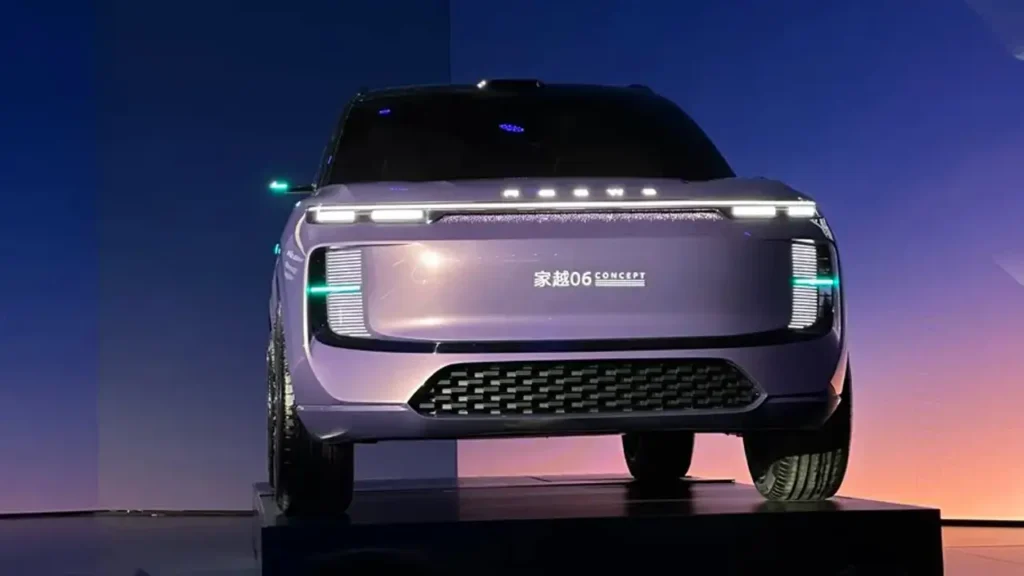
There are moments in the automotive world when something genuinely new appears — not an upgrade, not a facelift, but a complete rethinking of what a car is supposed to be. The Roewe Jiayue AI Series is one of those moments. On April 21, 2026, Roewe unveiled the fruits of its strategic partnership with Volcengine — “Jiayue,” the world’s first AI-native vehicle series, with three flagship concept cars debuting alongside the announcement.
The timing is no accident. China’s automotive market is in the middle of a fierce technological race, and Chinese AI car technology has become the new battleground. Every major automaker talks about smart cabins and connected driving. But what Roewe and its partner Volcengine have done with the Jiayue series goes considerably deeper than the competition. Centered on the motto “Born of AI, Built for Families,” Jiayue aims to put superior AI vehicles within reach of more Chinese households — not as a luxury niche product, but as a family-first, AI-first vision for the next generation of personal transportation.
The Roewe Jiayue AI Series is important for several reasons. It represents the first time a major automaker has partnered with one of the world’s largest AI platforms — ByteDance’s enterprise cloud division Volcengine — to co-develop a car from the very first design meeting, not bolt AI onto an existing vehicle afterward. It introduces a philosophy called “AI go first,” where artificial intelligence defines the product rather than being added as a feature.
And it signals a broader shift in how Chinese automakers are thinking about the car of the future: not as a vehicle with apps, but as a mobile intelligent companion that learns, remembers, and grows with its owner. If you want to understand where the global auto industry is heading, the Roewe Jiayue AI Series is an excellent place to start.
SAIC and Volcengine Partnership Explained
To understand the Jiayue series, you need to understand who built it and why this ByteDance car partnership is genuinely different from what other brands have attempted.
SAIC Motor — one of China’s largest and most established automakers — owns the Roewe brand. Roewe itself has an interesting backstory: it was born in 2006 after SAIC acquired the rights to the British Rover brand from BMW, and has since developed into a well-respected line of sedans and SUVs. On the technology side, Volcengine is ByteDance’s enterprise cloud and AI platform — the infrastructure giant behind one of China’s most powerful AI ecosystems, including the Doubao large language model family.
The partnership between SAIC and Volcengine is structured differently from typical automotive tech deals. Rather than Roewe buying a software license and integrating it into a finished car, the two companies formed a joint R&D task force at the very beginning of the design process. They co-defined the interaction experience together, built the AI platform together, and established what they describe as a more integrated, early-stage collaboration model. The result is what Roewe calls an SAIC AI vehicle that is genuinely AI-native — meaning the artificial intelligence is not sitting on top of the car’s systems like an app, but woven into the electronic and electrical architecture itself.
The scale of Volcengine’s AI infrastructure matters here. As of early 2026, the Doubao large model reached daily token usage exceeding 120 trillion — representing the majority of China’s entire LLM public-cloud consumption. This is the AI engine now powering the Jiayue series. When Roewe says its vehicles are deeply connected to one of the world’s most capable AI platforms, the numbers back that claim up. Volcengine also launched the Automotive Large Model Ecosystem Alliance in 2024, pulling together automotive industry partners to build a shared foundation for AI-powered vehicle experiences. The Roewe Jiayue series is the most ambitious product to emerge from that ecosystem to date.
AutoChina.blog
Your trusted guide to Chinese automotive technology. Expert reviews, comparisons, and insights on electric vehicles, hybrids, and innovative automotive solutions from China’s leading manufacturers.
- • EV & Hybrid Reviews
- • Tech Comparisons
- • Industry News & Trends
- • Buying Guides
Roewe AI Cockpit Features
The centerpiece of the Jiayue experience is the Roewe AI cockpit — a smart cockpit ecosystem built around Volcengine’s Doubao Large Model 2.0 Series. This is not a voice assistant bolted onto a touchscreen. It is a deeply integrated intelligent cockpit that can understand complex instructions, execute multi-step tasks, remember user preferences across time, and proactively respond to the needs of the driver and passengers.
Here is what makes this cockpit genuinely impressive: the system can detect driver fatigue and automatically adjust seating and climate controls. It can identify when children are present in the vehicle and activate specialized safety and entertainment modes. When the ADAS intelligent driving assistance system is activated, cameras on both sides of the vehicle automatically pop out to enhance both interactive feedback and real-time driving safety. These are not gimmicks. They are examples of AI accessing physical hardware directly — what the engineers describe as “AI first, car follows AI.”
The Roewe AI cockpit is also defined by three key characteristics: wisdom, universality, and vitality. Wisdom refers to active learning and real-time decision-making without requiring the user to adapt to the system. Universality means the AI can manage a wide range of cabin functions from a single unified interface. Vitality means the system evolves over time through OTA (over-the-air) updates, continuously integrating the latest capabilities from the Doubao model family. Roewe has confirmed that the full Jiayue series will receive continuous OTA evolution, ensuring vehicles stay current with the AI platform’s development.
Privacy has also been taken seriously from the start. Roewe has implemented industry-leading privacy protection technology, strictly partitioning AI access levels to ensure that personal memories, preferences, and interactions remain secure and under the owner’s control.
How Volcengine Changes Smart Driving
The Volcengine smart car platform is the technical backbone that makes everything in the Jiayue series possible. To understand why this matters, it helps to contrast the traditional approach with what Volcengine and Roewe have built together.
In the traditional “AI-on-board” model — still the industry standard for most automakers globally — an AI system is integrated into a vehicle’s infotainment system as a separate layer. It can play music, answer questions, and maybe control climate settings via voice commands. But it cannot access the vehicle’s core systems, make decisions about hardware, or learn over time in a meaningful way. It is, fundamentally, a smartphone interface transplanted into a car dashboard.
The Volcengine approach starts from a completely different premise. By integrating the Doubao large model directly into the car’s electronic and electrical architecture, Volcengine enables the AI to access and control the vehicle’s physical systems — seating, climate, cameras, suspension settings, and more — through a unified AI decision layer. The platform features over 2,000 SOA (Service-Oriented Architecture) interfaces, giving the AI an extraordinarily broad reach into the vehicle’s functions. SAIC has invested tens of billions of yuan into developing this underlying platform.
The result is an AI-powered infotainment system that is not just a display, but a genuine cognitive layer running through the entire vehicle. The Doubao model handles natural language understanding, contextual reasoning, task execution, and memory. Volcengine’s cloud infrastructure handles the compute-heavy workloads, vehicle-cloud integration, and continuous model updates. Together, they create a connected car experience that is fundamentally more capable and more personal than anything the traditional automotive industry has produced.

Interior Design and Digital Experience
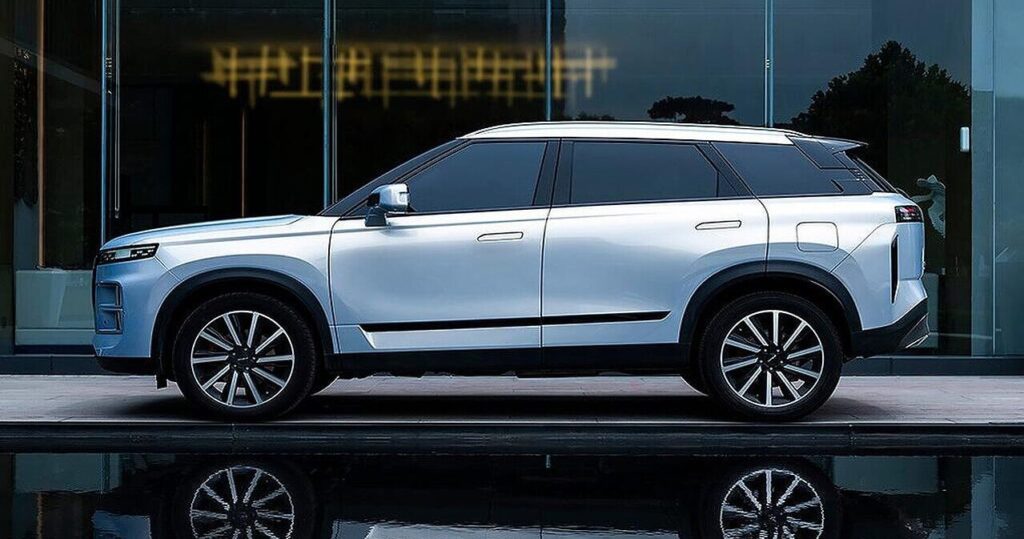
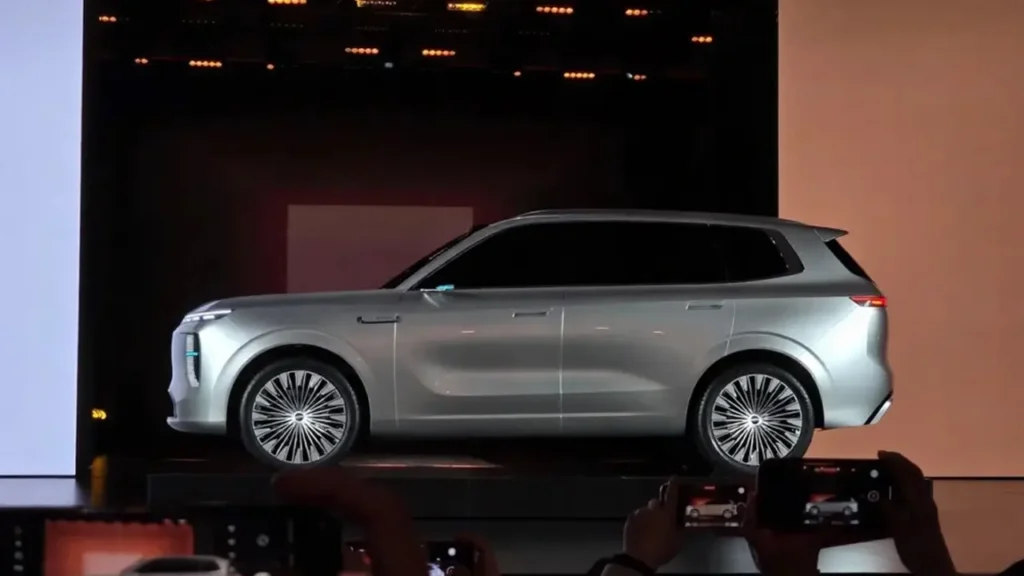
The Roewe intelligent cabin of the Jiayue series is designed with family life at its center. The lead concept — the Jiayue 07 — is a large five-seat SUV measuring approximately five meters in length, designed by Jozef Kabaň, SAIC Group’s Vice President of Global Design and formerly lead designer of the BMW X7 and Rolls-Royce range.
Inside, the Jiayue 07 emphasizes domestic comfort and digital living. Amenities include a refrigerator, a television, and sofa-style seating. The exterior features semi-hidden door handles and streaming digital rearview mirrors that combine aerodynamics with digital functionality. The body uses body-colored metallic paint and fully electroplated window trim — a deliberate step away from the cheap black plastic cladding common in even premium segments.
The vehicle adopts Roewe’s “Uplifting Aesthetics” philosophy, featuring a 1.2-meter-high front end paired with a sweeping roofline and a robust D-pillar. High-mounted through-type lights, “Long Star” light strips, and “Star Link” headlights complete an exterior that feels genuinely distinctive. Each side features three sets of seven LED beads — a design detail that also carries symbolic meaning, representing good fortune — while 28 vertical U-shaped light strips create a strong visual sense of forward momentum.
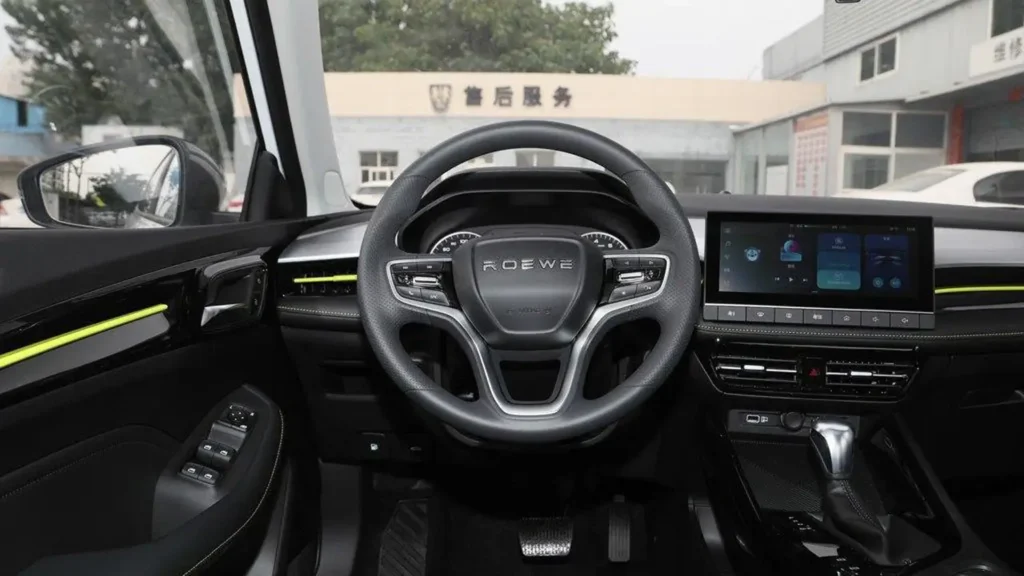
The existing Roewe M7 DMH production model gives a useful preview of the interior experience that the Jiayue series will build upon. It features a 10.25-inch full LCD instrument panel and a 15.6-inch 2.5K central control screen powered by a Qualcomm Snapdragon 8155 chip. The Jiayue series will take these foundations considerably further, with the AI cockpit acting as the primary interface for everything from navigation to climate to entertainment, all controlled through natural conversation rather than menus and button presses.
AI Voice Assistant and Connectivity
One of the most immediately tangible features of the Roewe connected car experience is the AI voice assistant powered by the Doubao Deep Thinking AI model. This is not a basic command-and-response system. The assistant has been co-developed by Roewe and the Doubao team specifically for the automotive environment, with reasoning ability, emotional perception capability, and contextual awareness built in from the ground up.
A simple example illustrates the difference: on the Roewe M7 DMH — a production model already on sale that previews the Jiayue technology — saying the command “help me get my child to sleep” automatically adjusts the cabin temperature, changes the fan speed, closes the windows, and plays a bedtime story. That is not a voice command triggering a preset. It is an AI interpreting intent, reasoning about context, and executing a multi-step action across multiple vehicle systems simultaneously.
The Jiayue series takes this capability further with the Doubao Large Model 2.0 Series, which enables the assistant to understand even more complex, multi-layered requests; remember past interactions and preferences across trips; and proactively suggest adjustments based on passenger patterns and driving conditions. The system also deeply integrates next generation AI vehicles connectivity through vehicle-cloud integration, meaning the assistant can pull real-time information, update its knowledge base, and grow smarter over time through OTA updates.
For family users specifically, this connectivity layer creates a genuinely useful Roewe connected car experience: parents can set up child-safe entertainment environments that activate automatically, the system can recognize regular routes and prepare the cabin accordingly, and driver fatigue detection allows the AI to intervene proactively before safety becomes an issue.
Roewe Jiayue AI Series vs Traditional EVs
It is worth stepping back to compare where the Jiayue series sits relative to conventional electric vehicles — because the differences are significant and go beyond technology specifications.
| Feature | Traditional EV | Roewe Jiayue AI Series |
|---|---|---|
| AI Integration | Voice assistant layer added post-design | AI co-defined from first design meeting |
| AI Model | Third-party or basic proprietary | Doubao Large Model 2.0 (Volcengine) |
| Hardware Access | Limited to infotainment controls | 2,000+ SOA interfaces across all systems |
| Learning Over Time | Minimal or session-based only | Continuous OTA evolution with memory |
| Family Features | Standard passenger settings | Child detection, fatigue monitoring, sofa cabin |
| Design Leadership | Varies | Jozef Kabaň (ex-Rolls-Royce, ex-BMW X7) |
| Privacy Architecture | Varies by brand | Partitioned AI access levels by design |
The smart cockpit ecosystem built into the Jiayue series represents a genuine architectural shift, not a feature upgrade. Most traditional EVs — even premium ones — still treat the car as a vehicle that happens to run software. The Jiayue series treats the car as a software platform that happens to have wheels. That distinction drives every design decision, from the 2,000+ SOA interfaces to the co-developed AI model to the OTA update roadmap.
Pros and Cons of Roewe Jiayue AI Series
No product launch is without its considerations, and it is worth looking at both sides of the Roewe AI cockpit and the broader Jiayue proposition honestly.
| Pros | Cons / Considerations |
|---|---|
| World’s first AI-native vehicle series, co-developed from design phase | Jiayue 06, 07, and 09 are still concept cars; production timelines for the full range are ongoing |
| Powered by Doubao — one of China’s most capable and fastest-growing large models | Heavily cloud-dependent; connectivity quality will affect the depth of the AI experience |
| Over 2,000 SOA interfaces give AI broad and deep hardware access | Greater AI access to vehicle systems means cybersecurity and data privacy require constant vigilance |
| Designed by Jozef Kabaň with genuine luxury SUV DNA | Premium interior and tech positioning may push pricing above initial family-market targets |
| Continuous OTA updates keep the car evolving after purchase | OTA dependency means long-term software support commitments from both SAIC and Volcengine are critical |
| Family-specific AI features are genuinely practical, not just marketing | International availability has not been confirmed; currently positioned for the Chinese domestic market |
| Industry-leading privacy partitioning built into the AI architecture | As an AI-first platform, some buyers may need time to adapt to intention-based rather than button-based control |
The honest picture is that Chinese AI car technology has moved very fast, and the Jiayue series sits at the leading edge of that movement. Like any first-generation leap, it carries both exciting possibilities and unanswered questions. What is clear is that the underlying foundations — the Doubao model, the Volcengine platform, the SOA architecture, and the SAIC engineering base — are genuinely capable.
User Expectations and Market Impact
So what are real buyers and the broader automotive market likely to make of the Roewe connected car proposition?
On the user side, the Jiayue series is clearly designed for China’s growing family-oriented new-energy vehicle market. The name itself encodes this: “Jia” means family, and “Yue” means leap — together communicating a promise to use AI to achieve a meaningful improvement in the quality of family travel. This is not a sports-oriented EV or a performance product. It is a comfort-first, intelligence-first, family-first vehicle.
The ByteDance car partnership gives the Jiayue series an interesting advantage in terms of ecosystem familiarity. Doubao is already the first AI large model application in China to have exceeded 100 million total downloads, reaching that milestone in September 2024. Many potential Jiayue buyers will already have used Doubao on their phones, which creates a natural sense of continuity and trust between the in-car experience and the broader digital life of the owner. That ecosystem familiarity is difficult to replicate for automakers working with less established AI partners.
On the market impact side, the Jiayue series represents a challenge to every automaker still working with the traditional “AI-on-board” model. Volcengine launched its Automotive Large Model Ecosystem Alliance in July 2024, building a coalition of automotive partners committed to a deeper, more integrated approach to AI in vehicles. The Jiayue series is the first vehicle to demonstrate what that coalition can produce at a product level. Other manufacturers who have signed up to work with Volcengine — including other major Chinese brands — will be watching closely to see how the market responds.
The commercial stakes are significant. Volcengine generated over 12 billion yuan in revenue in 2024 and is targeting more than 25 billion yuan in 2025. The automotive sector is becoming an increasingly important part of that growth story, and the success of the Jiayue series will directly influence how aggressively Volcengine and ByteDance pursue automotive partnerships going forward.
BestChina3DPrinters
Expert Reviews & Rankings
Independent 3D Printer Reviews
Your trusted source for Chinese 3D printer reviews, rankings, and comparisons. We buy, test, and review every printer so you can make informed decisions.
Final Verdict — Is Roewe Jiayue AI Series the Future?
After reviewing everything — the technology, the partnership, the design, the features, and the market context — the answer to that question is a qualified but genuine yes. The Roewe Jiayue AI Series represents the most serious attempt yet to build a car that is genuinely AI-native, rather than AI-adjacent.
What makes this verdict credible is not the marketing language but the structural reality. A joint R&D task force formed at the very start of the design process. An AI platform — Doubao — with daily token usage exceeding 120 trillion, growing at one of the fastest rates in the world. An electronic and electrical architecture with over 2,000 SOA interfaces giving the AI direct access to physical systems. A designer — Jozef Kabaň — whose previous work speaks for itself. And a commercial partner in Volcengine that has the infrastructure, the financial resources, and the technical depth to support a decade-long product roadmap.
The questions that remain are mostly practical: how quickly will the production versions of the Jiayue 06, 07, and 09 reach the market? How will the AI experience hold up in real-world driving conditions? And how will pricing land relative to competing family EVs from BYD, Geely, and others? Roewe has signaled an ambitious pace — planning to launch a new model every three months to complete its next-generation lineup.
For now, the Roewe Jiayue AI Series stands as the clearest proof yet that the future of next generation AI vehicles is not about adding intelligence to cars. It is about building cars around intelligence. That shift in thinking — from “car plus AI” to “AI native car” — is the defining idea of this product and potentially of the next era of personal transportation altogether. Whether you are a car enthusiast, a technology watcher, or a family looking for your next vehicle, the Jiayue series is worth following closely. Something genuinely new has arrived.
🇬🇧 English Review
“Finally, a car website that explains Chinese AI vehicles without boring technical overload. The Roewe Jiayue AI Series article was actually fun to read, and the future cockpit technology looks crazy impressive. Definitely following this site now.”
👉 https://autochina.blog/
🇪🇸 Reseña en Español
“El artículo sobre Roewe Jiayue AI Series fue increíble. Me gustó cómo explican la tecnología AI de una manera simple y moderna. Autochina.blog se está convirtiendo en uno de mis sitios favoritos sobre coches chinos.”
👉 https://autochina.blog/
🇸🇦 مراجعة باللغة العربية
“موقع رائع جداً لعشاق السيارات الصينية الحديثة. مقال Roewe Jiayue AI Series شرح تقنيات الذكاء الاصطناعي داخل السيارة بطريقة سهلة وممتعة. التصميم والمحتوى احترافي للغاية.”
👉 https://autochina.blog/
🇨🇳 中文评价
“这篇关于 Roewe Jiayue AI Series 的文章非常有意思。网站内容专业,而且很容易理解。特别喜欢关于 AI 智能座舱的介绍,感觉未来感十足。”
👉 https://autochina.blog/
🇫🇷 Avis en Français
“Très bon article sur la Roewe Jiayue AI Series. Le site explique parfaitement les nouvelles technologies automobiles chinoises avec un style moderne et dynamique. Franchement impressionnant.”
👉 https://autochina.blog/
🇩🇪 Deutsche Bewertung
“Die Roewe Jiayue AI Series klingt wie die Zukunft des Fahrens. Der Artikel war modern, klar geschrieben und sehr spannend. Autochina.blog liefert wirklich starke Inhalte über chinesische Autos und KI-Technologien.”
👉 https://autochina.blog/
Discover more from AutoChina
Subscribe to get the latest posts sent to your email.