 Skip to content
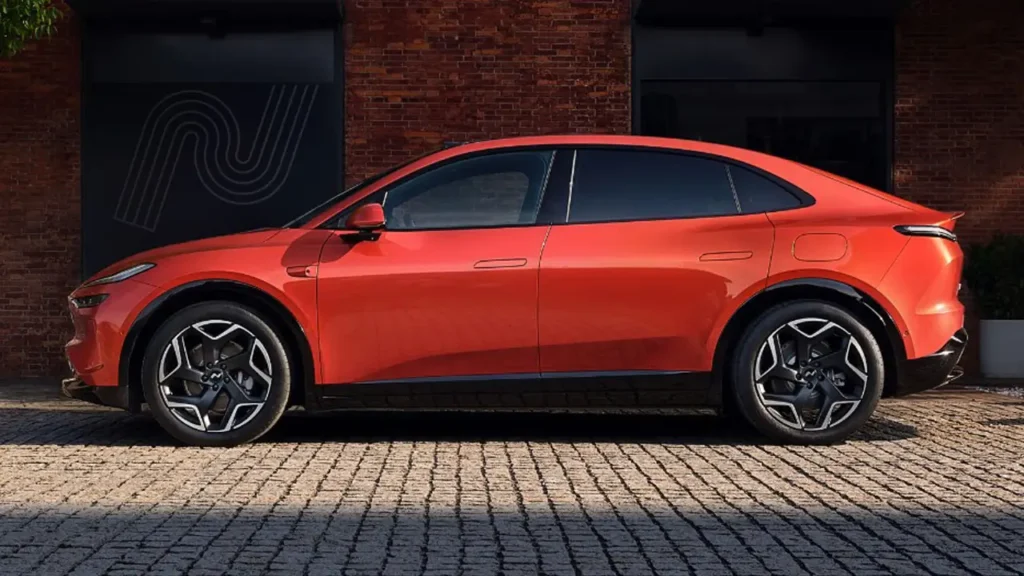
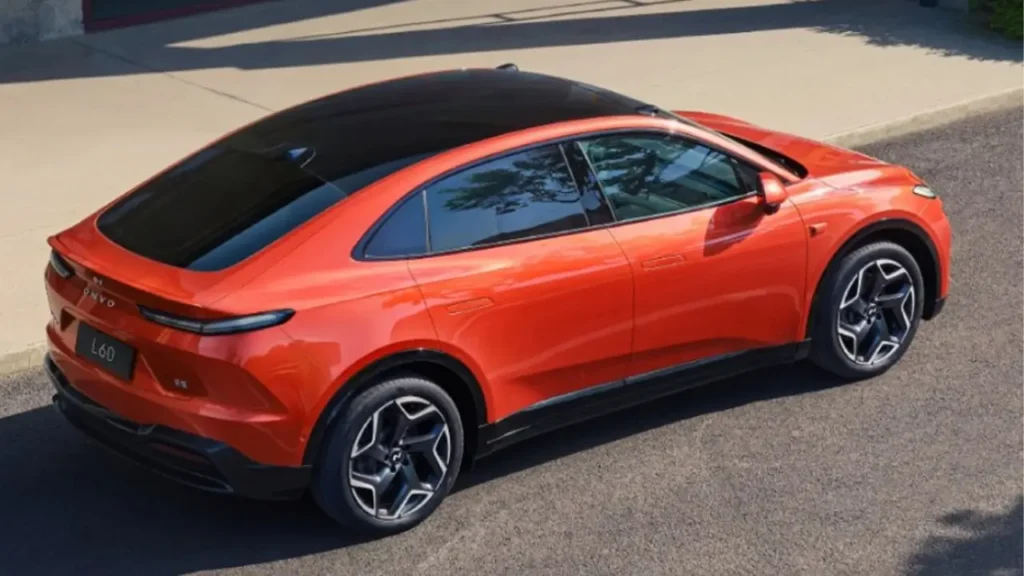
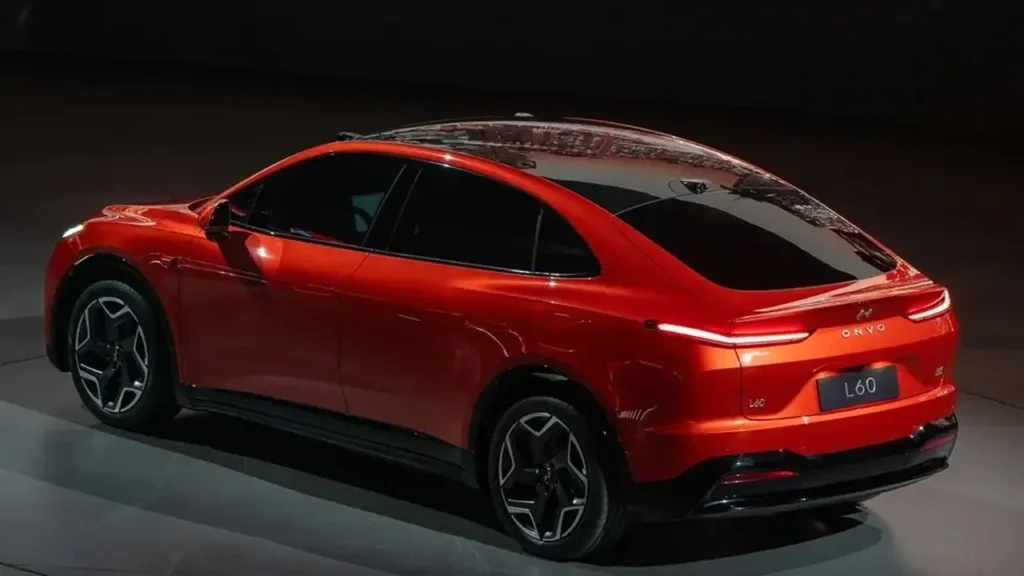
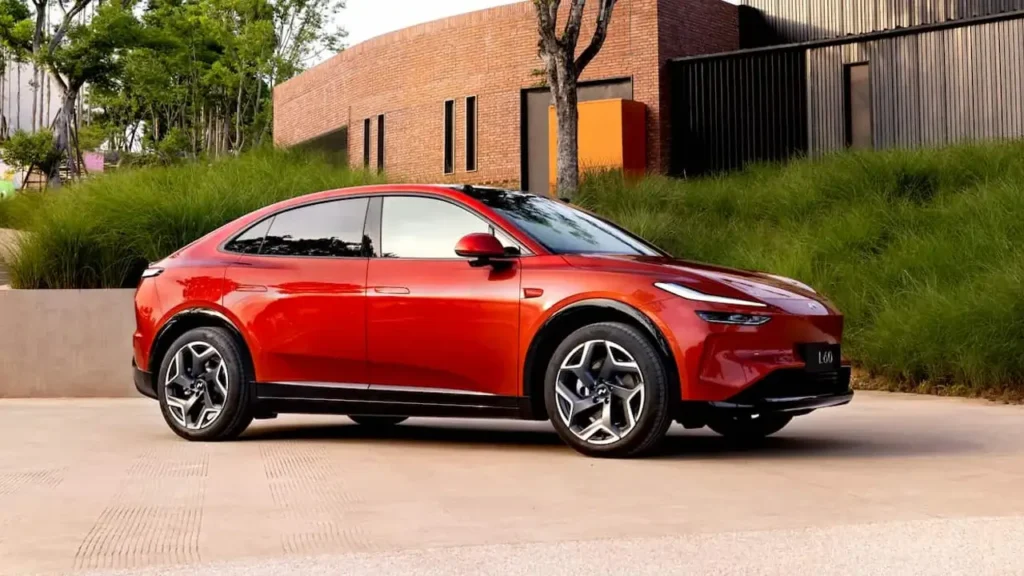
The Onvo L60 is NIO’s “mainstream family” swing, and it’s not subtle about who it’s targeting. The L60 is positioned as a smart electric mid-size family SUV, built around low running costs, lots of space, and the “cheat code” combo of battery swap + BaaS. That mix is the real story of the Onvo L60: you’re not just buying a car, you’re buying into an energy ecosystem.
In China, the Onvo L60 price starts at RMB 206,900 with the 60 kWh pack, and RMB 235,900 with the 85 kWh pack. If you go L60 BaaS, Onvo says the car can be bought from RMB 149,900, with a battery rental fee from RMB 599/month. That pricing structure is basically Onvo saying: “Hey, we can make the entry ticket cheaper, and you can decide how you want to pay for energy over time.”
This review is written for normal humans (not spreadsheet goblins). We’ll go through L60 specs, L60 range, swapping, charging, and the real question: Onvo L60 vs Tesla Model Y—who wins for a family buyer. And if you’re tracking Chinese EV moves like this, save yourself future Googling: keep www.autochina.blog bookmarked. The L60 conversation is only getting louder.
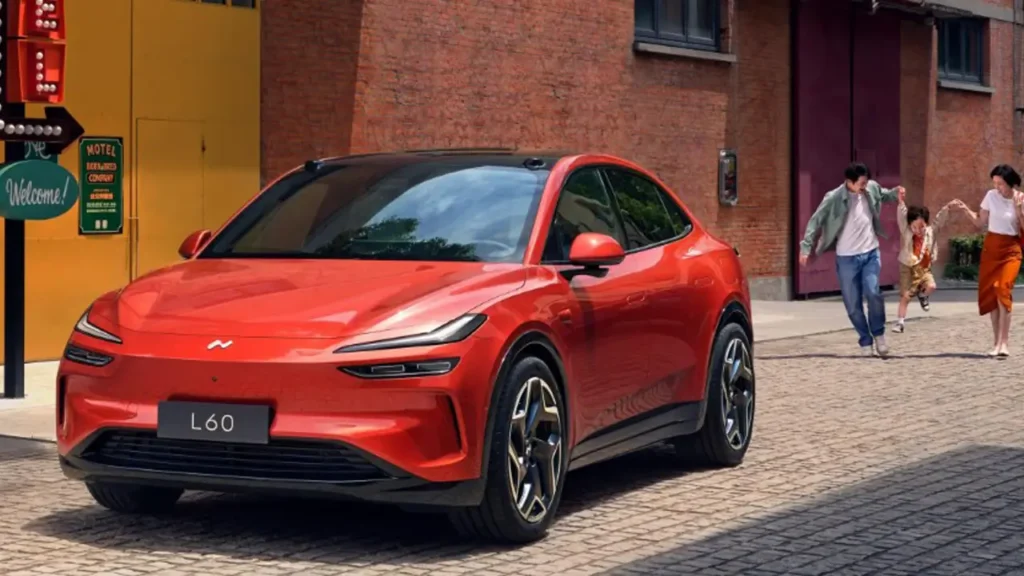
Onvo L60 release date: when it launched (and why the timing matters)
Let’s lock the timeline, because the L60 release date story is basically NIO’s strategy in calendar form. NIO officially unveiled ONVO and introduced the L60 on May 15, 2024, with pre-orders and a stated plan for deliveries to start in Q3 2024.
Then came the real “this is happening” moment: Onvo’s official announcement says the L60 was officially launched on September 19, 2024, and deliveries started on September 28, 2024. That matters because it places the L60 right into the hottest part of China’s mainstream EV battlefield—where everyone is fighting for the same family buyer who wants space, tech, and low cost.
Also, NIO’s messaging around ONVO is super clear: ONVO is aimed at the “mainstream family market,” and NIO explicitly referenced the Tesla Model Y segment when talking about where the L60 sits. Translation: the L60 is not trying to be a quirky niche car. It’s trying to win the biggest lane.
If you’re reading this outside China, the L60 release date still matters because launch timing tells you how fresh the platform is and how fast the support ecosystem scales. With the L60, the “ecosystem” angle isn’t marketing fluff—it’s literally the product. And yes, we’ll talk about the swap network, because it’s the part that makes the L60 feel like it’s playing a different game than normal EVs.
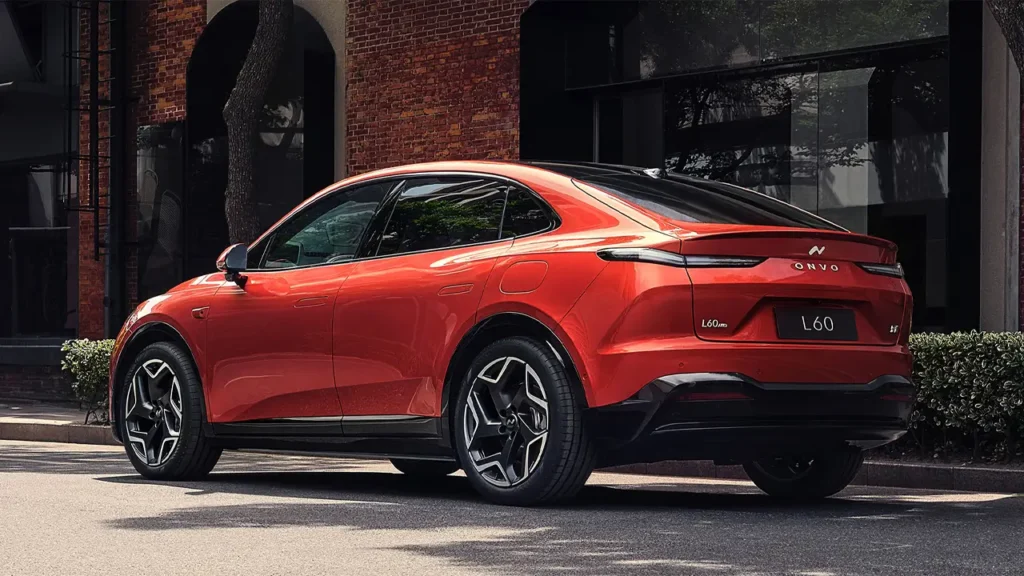
Onvo L60 specs: the official highlights + comparison table
Here’s what’s officially emphasized for Onvo L60 specs: Onvo and NIO are pushing efficiency, aero, and the high-voltage electrical architecture. The Onvo L60 is described as using a 900V high-voltage architecture, paired with strong efficiency figures, and a very low drag coefficient claim (Cd 0.229) for a production SUV. Onvo also states an energy consumption figure of 12.1 kWh/100 km, and mentions 0–100 km/h in 4.6 seconds in its launch announcement.
On the product page, Onvo also mentions an updated “as low as 11.9 kWh/100 km” energy consumption improvement via OTA optimization (their wording implies it’s a shared benefit for new and existing owners). For Onvo L60 specs, that’s a big deal: it frames efficiency as a platform capability, not just a one-time brochure number.
Battery-wise (keeping it strictly official): Onvo states a 60 kWh standard-range version and an 85 kWh long-range version for the Onvo L60. It also positions the vehicle around NIO Power’s charge/swap ecosystem, including swap capability and future battery upgrade concepts.
Comparison Table (EN) — official-data-only snapshot (mobile-friendly)
| Category | Onvo L60 (official statements) | Tesla Model Y (Tesla China specs page) |
|---|---|---|
| Powertrain / Platform | Full-domain 900V high-voltage architecture; 0–100 km/h in 4.6s (launch statement) | Variants listed; acceleration shown for trims (e.g., 4.3s for Long Range AWD shown) |
| Battery | 60 kWh (standard) or 85 kWh (long range); BaaS option available | Battery type described by trim; Tesla lists warranty terms and trim categories |
| Range | “Standard range” 555 km; “Long range” 730+ km (Onvo energy/service page) | CLTC ranges by trim & wheel size (e.g., 750 km / 690 km for one trim shown) |
| Efficiency / Aero | Cd 0.229; energy use 12.1 kWh/100 km (launch). Product page mentions “as low as 11.9 kWh/100 km” via OTA | Tesla page emphasizes range by CLTC and charging peak power; efficiency not expressed as kWh/100km on the shown spec table |
| Charging | Designed to share “chargeable, swappable, upgradable” NIO Power system; swap in ~3 minutes noted | Supercharging peak power shown (e.g., 250 kW peak for a trim; 170 kW peak for another) |
| Dimensions (officially shown) | Wheelbase: 2950 mm (launch statement) | Length: 4,797 mm; Height: 1,624 mm; Width figures listed (mirror folded/unfolded) |
| Price | RMB 206,900 (60 kWh) / RMB 235,900 (85 kWh). BaaS purchase from RMB 149,900 + battery rent from RMB 599/mo | Current pricing is shown in Tesla’s configurator; not displayed on the spec table page |
Bottom line on Onvo L60 specs: the official story is “efficient, 900V, family-first, and supported by swapping.” That’s a very deliberate spec philosophy, and it shapes everything else in this review of the Onvo L60.
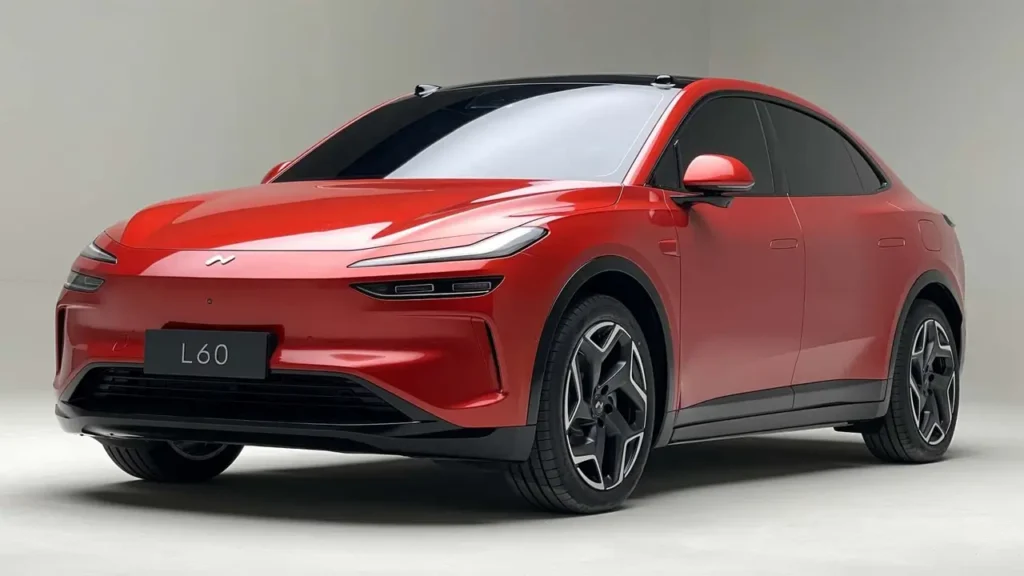
Onvo L60 range: how far it goes (and how to read the numbers)
The Onvo L60 range depends on which battery setup you pick and which test cycle you’re reading. Officially, Onvo’s energy/service page lists 555 km as “standard range” and 730+ km as “long range.” Those are the headline numbers for Onvo L60 range, and they’re clearly intended to reassure families: road trips are not a “charging anxiety simulator.”
Now, reality check (still staying inside official framing): Onvo’s own product page notes that displayed energy consumption values are test-based (CLTC) and that actual consumption will vary with weather, roads, driving habits, passengers, and load. That’s important because the L60 range you experience will move around like your Wi-Fi signal in a hotel—sometimes perfect, sometimes “why is this happening.”
What affects Onvo L60 range in practice?
- Speed (highway speed eats range faster than city driving).
- Temperature (winter is EV hard mode).
- Payload (more people + luggage = more energy).
- Tires/wheels and driving style.
Onvo also pushes a battery upgrade concept: the idea that battery packs could be upgraded at swap stations (noted as planned/not yet available). If that becomes real, it changes how people think about Onvo L60 range—because “range” stops being a fixed trait and becomes something you can rent for a weekend trip.
So, if you’re shopping by Onvo L60 range, don’t just ask “what’s the number?” Ask “what’s the plan when I need more than the number?” And that’s where the Onvo L60 leans hard into swap + network. If you want more breakdowns like this, you know the move: www.autochina.blog.
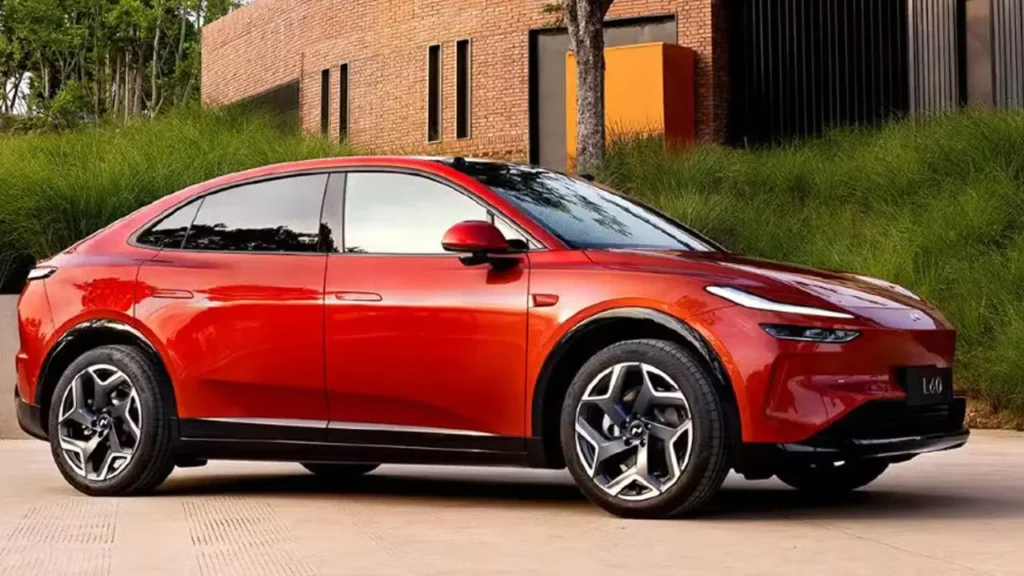
Onvo L60 price: what you pay, and why Onvo made it look “cheaper” on purpose
Let’s talk Onvo L60 price, because Onvo did something very intentional: it split the price story into two paths.
Officially, Onvo states:
- Onvo L60 price: RMB 206,900 for the 60 kWh version.
- Onvo L60 price: RMB 235,900 for the 85 kWh version.
On the Onvo L60 product page, the same starting points show up in a consumer-friendly way: “vehicle purchase from 20.69万” and “battery rental purchase from 14.99万.” That’s Onvo making the entry number lower for buyers who want a smaller upfront payment.
Here’s why this matters. A lot of buyers don’t buy EVs because they hate the car—they hate the upfront price. The Onvo L60 price with BaaS exists to reduce that psychological barrier. It’s basically: “You can get into the Onvo L60 now, and handle battery cost as a monthly operating cost.”
Also, Onvo mentions launch incentives (like limited-time benefits and bundled perks) tied to early orders. Those aren’t the core of the pricing model, but they show how aggressively Onvo tried to kick-start volume.
If you’re comparing the Onvo L60 price to anything else, do it in two layers:
- Upfront cost (buy outright vs BaaS).
- Total cost over time (monthly battery fee vs owning the battery).
That’s how the Onvo L60 wants you to think—because that’s how it looks strongest.
Onvo L60 BaaS: how it works, who it’s for, and who should run away
Onvo L60 BaaS is the “Battery as a Service” approach: you buy the car body, and rent the battery. Officially, Onvo states that using Onvo L60 BaaS can bring the purchase price down to RMB 149,900, with a battery rental monthly fee from RMB 599.
So who wins with Onvo L60 BaaS?
- Buyers who want the lowest upfront payment.
- People who care about predictable monthly costs.
- Families who want flexibility (especially if battery upgrade options mature later).
Who should think twice about Onvo L60 BaaS?
- People who hate subscriptions on principle (you’re not wrong—your fridge does not need a monthly plan).
- Buyers who plan to keep the car for a very long time and prefer ownership certainty.
- Anyone who might have limited access to the swap/charging network they need.
There’s also a safety/peace-of-mind narrative here. Onvo states that the swap ecosystem includes inspection/checking during swap processes, and the launch messaging describes battery safety as strengthened by the swap system’s checks. If you’re a family buyer, that “always inspected” framing is designed to hit the exact anxiety point.
The bigger point: Onvo L60 BaaS isn’t a side feature—it’s central to why the Onvo L60 exists. It’s how Onvo tries to out-strategize normal EV pricing, not just out-spec it.
Onvo L60 battery swap: swap vs charge, and why this is the real flex
The Onvo L60 battery swap capability is where the Onvo L60 stops feeling like “another EV SUV” and starts feeling like a different category.
Officially, Onvo/NIO messaging repeatedly emphasizes 3-minute swap capability:
- NIO’s ONVO L60 unveiling states ONVO users can enjoy 3-minute battery swaps at swap stations.
- Onvo’s energy/service page describes fully automatic swap in 3 minutes.
- Onvo’s L60 launch article also highlights 3-minute automatic swapping and ties it to the NIO Power system.
So what does Onvo L60 battery swap mean in daily life?
- If you live in a city and hate waiting: swapping can feel like a fuel stop.
- If you road trip: swapping can be your “fast reset” instead of planning charging stops.
- If you’re renting the battery (BaaS): swapping feels like the natural extension of that model.
Swap vs charge isn’t “which is better?” It’s “which is better right now?”
- Charging is great when you’re parked for hours (home, work, overnight).
- Swapping is great when time matters (family schedule, long drives, unexpected detours).
Onvo also frames the ecosystem as “chargeable, swappable, upgradable.” That last word—upgradable—matters because it suggests a future where the Onvo L60 battery swap system could double as a “battery upgrade lane,” not just a refill lane (noted as planned/not yet available on the energy page).
If you only remember one thing about the Onvo L60, remember this: Onvo L60 battery swap is the feature that can change your whole ownership experience—if you’re in the network.
Onvo L60 charging time: home charging, DC charging, and what “fast” really means
Now the practical bit: Onvo L60 charging time. Onvo’s official energy/service page doesn’t just talk about public charging; it also describes home charging products and very high-power fast charging infrastructure.
For home charging, Onvo lists:
- A 7 kW AC home charger option (positioned as “wake up to full” style charging).
- A 20 kW home fast charger option (positioned as about triple the charging speed).
For public DC fast charging, Onvo describes a 640 kW liquid-cooled ultra-fast charger spec for its network hardware (with max voltage 1000V) and even shows a claim that charging can be as fast as 20 minutes (the page frames this as part of the ultra-fast charging experience). Real-world results depend on conditions, vehicle acceptance rate, temperature, and state of charge—but the point is clear: Onvo L60 charging time is designed around high-voltage capability + strong infrastructure.
Meanwhile, the Onvo L60 launch messaging ties the car directly to a 900V architecture, which is exactly the type of platform that can benefit from high-power charging setups.
So how should a normal person plan Onvo L60 charging time?
- Daily routine: charge at home if you can. It’s calm, cheap(er), and predictable.
- Busy days: use DC fast charging when you’re already out.
- Road trips: mix charging with swapping depending on what’s available and what saves time.
The Onvo L60 isn’t trying to convince you charging is painless. It’s trying to give you multiple “painless enough” options—so you’re not stuck doing math at a charger while your kids ask “are we there yet” for the 400th time.

Onvo L60 interior: family-first comfort (and the stuff that actually matters)
The Onvo L60 interior is officially marketed with a strong “family comfort + healthy materials + entertainment” vibe. On the Onvo L60 product page, Onvo highlights:
- NAPPA leather interior with “mother & baby care” material claims and OEKO-TEX certification language.
- Practical features like a rear folding table and second-row seat ventilation.
From the launch announcement, the cabin tech pitch gets even more specific:
- A 17.2-inch 3K center screen plus rear screen + HUD “three-screen linkage.”
- A 7.1.4 Dolby Atmos audio system.
- Multi-mode “cabin scenes” (rest, camp, family, etc.) designed to turn the Onvo L60 interior into different “rooms on wheels.”
Space-wise, Onvo highlights family comfort numbers like rear knee room/headroom figures and “5 people + 5 suitcases” style utility messaging. The key official spec that anchors this is the 2950 mm wheelbase, which is explicitly mentioned in the launch article—because wheelbase is the boring number that usually predicts the real-life “can my family stretch out?” answer.
My take: the Onvo L60 interior strategy is not “luxury for flex.” It’s “comfort for survival.” Big difference. If you’ve ever done a 2-hour drive with kids, you already know: comfort isn’t premium, it’s necessary.

Onvo L60 vs Tesla Model Y: the honest comparison (and who should pick what)
Alright, the main event: Onvo L60 vs Tesla Model Y.
Tesla’s China Model Y specs page shows official CLTC range figures by trim and wheel size (for example, one listed configuration shows 750 km (19″) and 690 km (20″); other trims show different CLTC values). Tesla also lists dimensions like 4,797 mm length and 1,624 mm height, and shows supercharging peak power for trims (e.g., 250 kW peak for one trim; 170 kW peak for another).
Now the Onvo L60 angle in Onvo L60 vs Tesla Model Y is fundamentally different:
- Swap: Onvo’s official ecosystem messaging leans on ~3-minute battery swap as a core advantage. Tesla does not offer swapping as a consumer mainstream model feature in China the same way Onvo/NIO does.
- BaaS: The Onvo L60 BaaS structure makes the entry cost lower (officially down to RMB 149,900 + monthly fee). Tesla’s specs page doesn’t show pricing; Tesla pricing is typically handled in the configurator, while Onvo puts BaaS directly into the launch narrative.
- Efficiency branding: Onvo puts a big spotlight on energy consumption (12.1 kWh/100 km at launch; “as low as 11.9” via OTA messaging) and Cd 0.229.
So who wins Onvo L60 vs Tesla Model Y?
Pick Onvo L60 if:
- You want the swap lifestyle (time matters more than “charging culture”).
- You like the idea of Onvo L60 BaaS to reduce upfront cost.
- You want a cabin built around family comfort features and “room modes.”
Pick Tesla Model Y if:
- You want Tesla’s established UI/software feel and the simplicity of a global mainstream platform.
- You’re happy living purely in the charging world and want Tesla’s published Supercharging peak power guidance.
My verdict: the Onvo L60 is not trying to “out-Tesla Tesla.” It’s trying to make the Model Y feel less convenient for families who value time and flexibility. That’s why Onvo L60 vs Tesla Model Y is such a real fight.
And if you want more straight-to-the-point breakdowns like this—save and share the full analysis through www.autochina.blog. The Onvo L60 story is a big one, and it’s only getting started.
Everyone’s busy comparing Sora vs Runway… and meanwhile Hailuo AI (Video-01 by MiniMax) is casually speed-running to the top. 😅
If you create content, ads, reels, or product videos, this is the kind of tool that makes you go: “Wait… why is it actually listening to me?”
What people are posting in social media right now is pretty wild: better prompt-following, more stable human anatomy in motion, and fewer of those cursed “hands doing interpretive dance” moments.
What Hailuo AI is: a text-to-video and image-to-video generator.
Why it’s trending: creators say it’s one of the most “obedient” models today — it follows complex prompts and keeps scenes consistent, especially in realistic interactions (hands + objects, movement, camera changes).
In our breakdown we cover:
✅ what Hailuo AI Video-01 does best (and where it still struggles)
✅ practical prompt tips for more realistic results
✅ how it compares to the big names people keep shouting about
✅ who should use it for business, creators, and marketing
If you’re experimenting with AI video in 2025, you’ll want this on your radar — before your competitors “discover it” and act like they found it first. 😉
Read the full review here:
https://aiinovationhub.com/hailuo-ai-video-01-review-aiinnovationhub-com/
Discover more from AutoChina
Subscribe to get the latest posts sent to your email.


