 Skip to content
1. The 2025 Market Shock: Divergence from the Linear Roadmap
EREV vs BEV popularity 2025. The global automotive sector entered the mid-2020s with a singular, widely accepted thesis: the transition from internal combustion engines (ICE) to new energy vehicles (NEV) would be linear, moving from hybrids to pure battery electric vehicles (BEVs). However, the market realities of 2025 have defied this deterministic roadmap. Instead of a smooth consolidation around pure electrification, the industry is witnessing a sophisticated bifurcation.
“surprising comeback” of Extended Range Electric Vehicles (EREVs) in 2025 is not a retrograde step but a market-driven correction that prioritizes utility and energy security over drivetrain purity. This report analyzes the structural, economic, and psychological factors driving this trend, with a specific focus on the Chinese market as the primary incubator of this global shift.
1.1 The Quantitative Landscape of 2025
Data from the third quarter of 2025 reveals a market in the midst of a profound recalibration. While the prevailing narrative in Western media often centers on a “cooling” of EV demand—exemplified by revised adoption timelines in the US shifting to 2039 and stagnation in Germany following subsidy withdrawals—the Chinese market tells a story of aggressive acceleration and diversification.
In September 2025 alone, China’s retail sales of New Energy Vehicles (NEVs) reached 1.296 million units, marking a 15.5% year-on-year increase and a 16.2% rise from the previous month. Within this massive volume, a critical nuance emerges: while BEVs hit a record 826,000 units, the hybrid category—comprising Plug-in Hybrid Electric Vehicles (PHEVs) and EREVs—maintained a robust volume of nearly 470,000 units. This is not a niche; it is a market segment larger than the entire automotive markets of many developed nations.
The resurgence is particularly visible in the “Gold Nine, Silver Ten” peak sales season of 2025. The data indicates that while BEVs dominate the pure volume metrics (63.7% share), the growth rate and strategic importance of EREVs have surged, particularly in the B-class and C-class SUV segments. This trend is forecasted to push China’s NEV penetration past 50% well before the end of 2025, effectively ending the dominance of the traditional internal combustion engine in the world’s largest auto market.
1.2 The Failure of the “Transition” Narrative
The industry’s previous assumption was that hybrids (PHEVs/EREVs) were merely “training wheels” for consumers not yet ready for BEVs. The 2025 data challenges this. EREVs are no longer viewed merely as transitional bridge technologies but as a distinct destination architecture for specific demographics—primarily single-car households and families requiring unrestricted mobility during holidays.
This shift is underscored by the strategic pivots of technology-native entrants. Companies like Xiaomi and Avatr, which built their brand equity on high-tech, futuristic identities naturally aligned with pure BEVs, have aggressively expanded into EREVs for their 2025 and 2026 roadmaps. This is a tacit admission that for a significant portion of the market, the utility of a fuel tank combined with electric propulsion offers a superior value proposition to a massive battery that relies on a still-maturing charging grid.
1.3 Global Divergence: A Tale of Three Markets
The 2025 landscape is defined by regional heterogeneity:
- China: A dual-track explosion where BEVs and EREVs coexist, optimized for different use cases (urban commuting vs. family touring). BEVs have achieved price parity with ICE cars, yet EREVs command premium pricing in the luxury segment.
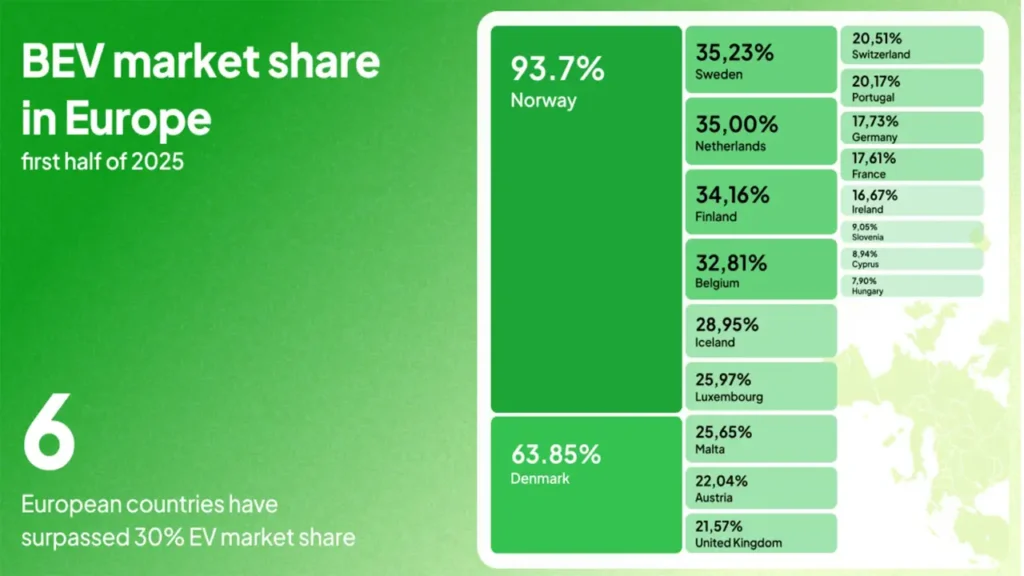
- Europe: A market in stasis. The removal of incentives in Germany caused a sharp 61% drop in EV sales in August 2024, a hangover that persists into 2025. Here, the lack of diverse EREV options (beyond legacy PHEVs) has left a gap that Chinese exports are beginning to target.
- United States: A reversion to hybrids. With EV adoption timelines slipping and political uncertainty clouding the IRA tax credits, the US market is pivoting back to HEVs and PHEVs, though often with legacy parallel hybrid architectures rather than the advanced series-hybrid EREV setups dominating China.
If you’re also curious how Chinese brands are reshaping laptops, not just cars, you’ll find the same energy on LaptopChina. At https://laptopchina.tech/ we break down Chinese Windows and ARM notebooks, gaming machines, and student laptops with simple, real-world reviews, specs, and buying tips so your next device fits your life.
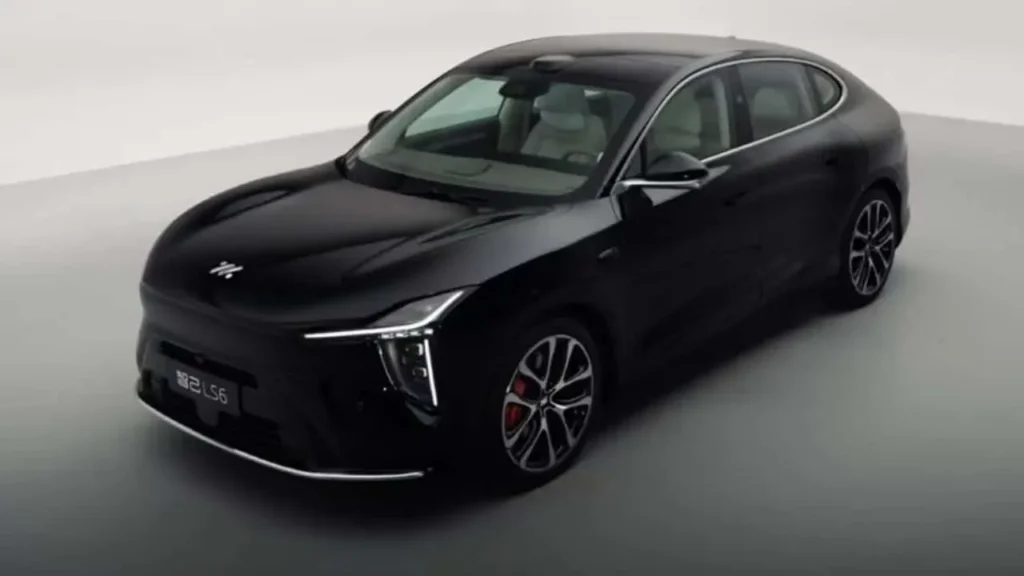
2. Defining the Technology: EREV vs. BEV Architecture
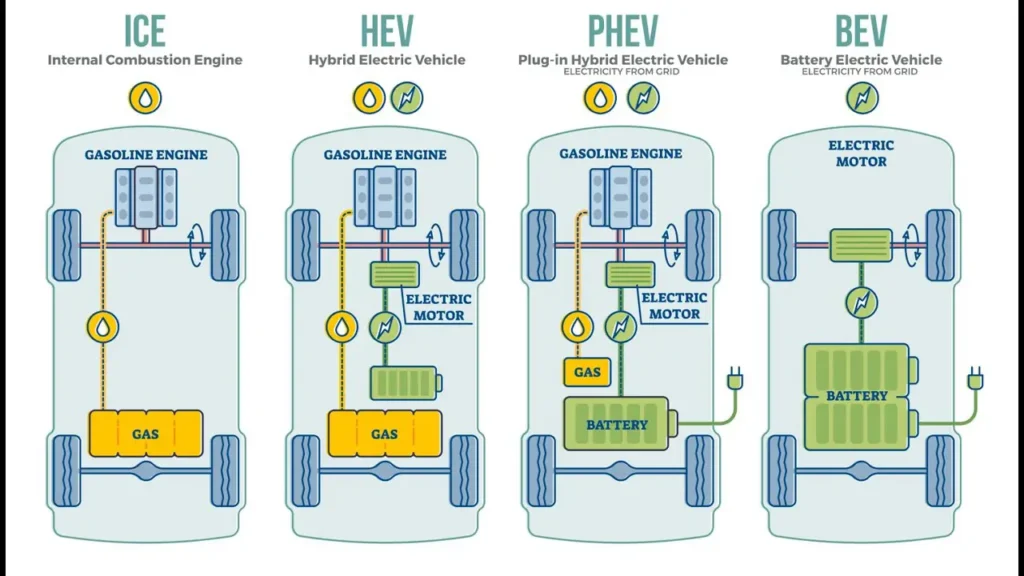
To understand the 2025 market dynamic, one must first dismantle the conflation of “Hybrids.” In the mind of the 2025 consumer, an EREV is fundamentally different from the Toyota Prius-style parallel hybrids of the past two decades.
2.1 The Battery Electric Vehicle (BEV)
The BEV remains the engineering ideal for efficiency. In 2025, the standard for premium BEVs—such as the Xiaomi SU7 Ultra or the Avatr 12—involves 800V high-voltage architectures, Silicon Carbide (SiC) inverters, and battery packs ranging from 75 kWh to 100 kWh.
- Mechanism: Energy is stored chemically in the battery and converted to mechanical energy via motors. There is zero local emission.
- The 2025 Constraint: Despite improvements, the energy density of commercial LFP and NMC batteries means that achieving a real-world highway range of over 500km requires a massive, heavy, and expensive battery pack. This weight penalty impacts handling and efficiency, creating a “diminishing returns” curve for long-range BEVs.
2.2 The Extended Range Electric Vehicle (EREV)
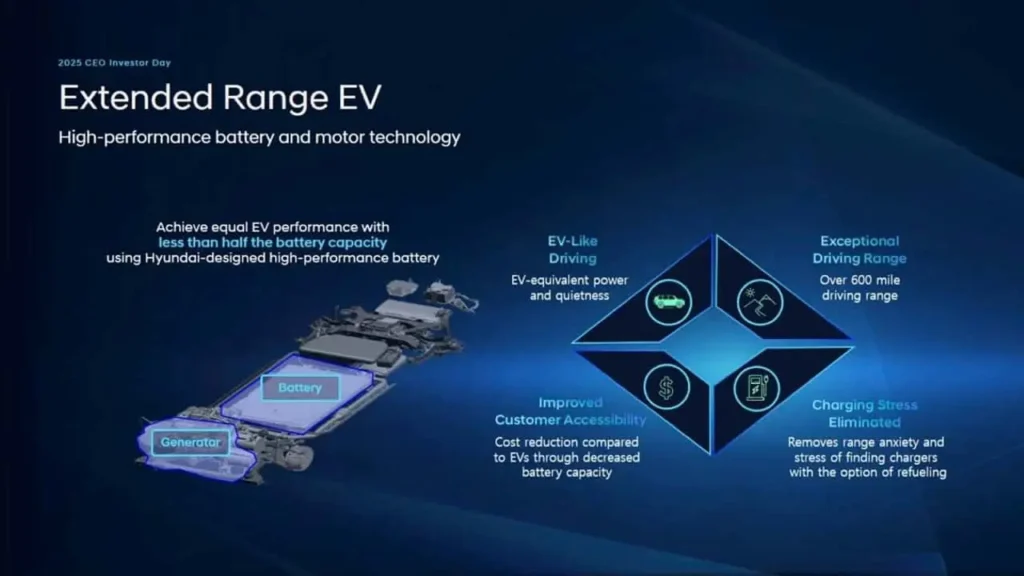
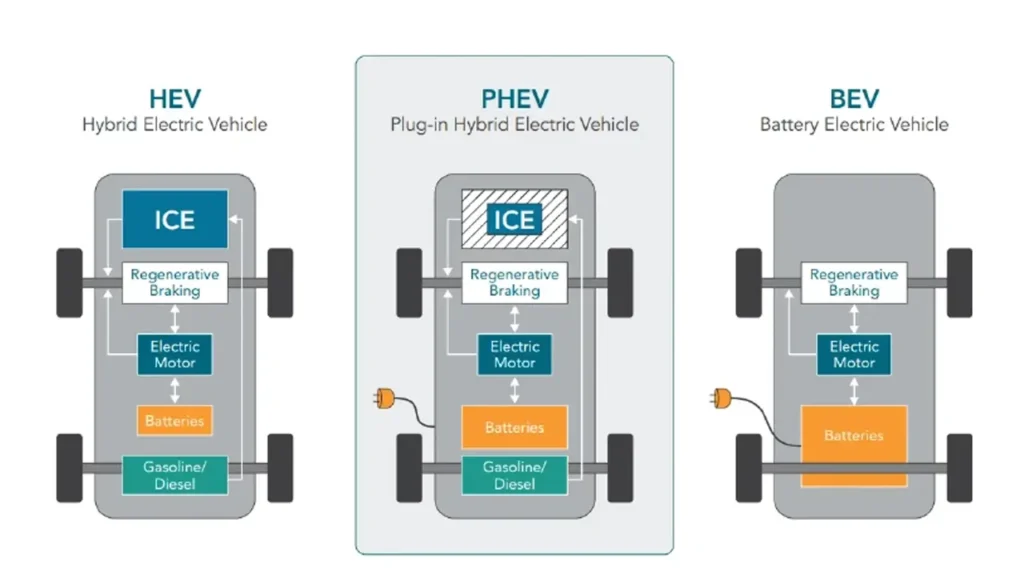
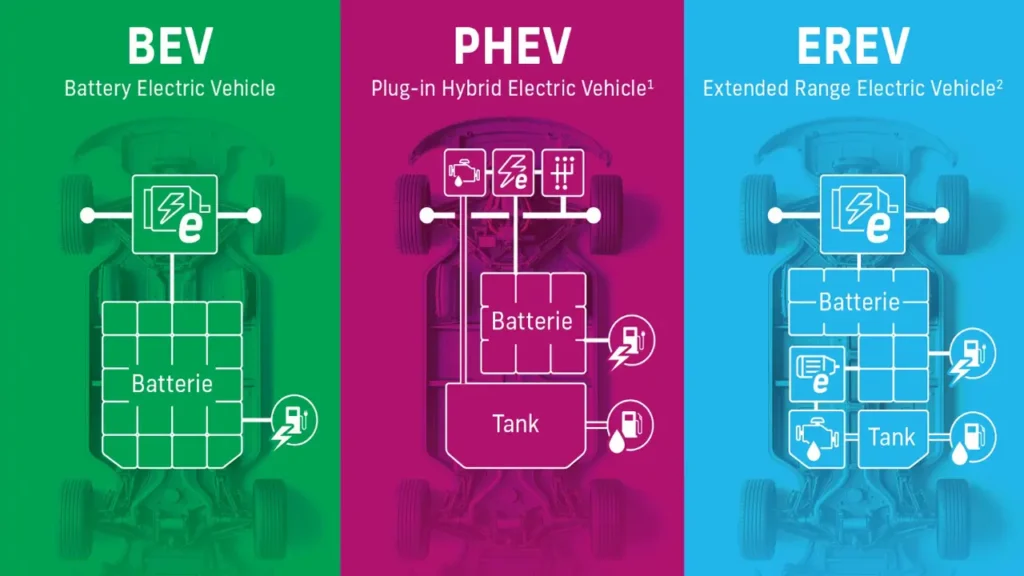
The EREV is a Series Hybrid. The distinction is non-negotiable. In an EREV, the internal combustion engine (ICE) has no mechanical connection to the wheels.
- The “Generator” Role: The engine acts solely as a portable power plant. Because it is decoupled from the wheels, it can operate at a fixed, highly efficient RPM (its “sweet spot”), regardless of whether the car is stuck in traffic or cruising at 120 km/h.
- The Driving Experience: Because the wheels are driven 100% by electric motors, the EREV delivers the exact same driving characteristics as a BEV: instant torque, linear acceleration, and regenerative braking. This separates it from parallel PHEVs, which often experience “gear hunting” or engine drone under load.
- Battery Strategy: In 2025, EREVs have upsized their batteries significantly. Unlike the 10-15 kWh batteries of early PHEVs, modern Chinese EREVs (like the Avatr 07 or Li Auto L9) carry 39-52 kWh packs. This grants a pure electric range of 200-300 km (CLTC), covering 95% of daily driving needs without ever starting the engine.
2.3 The “Super Hybrid” Evolution
A key technological breakthrough in 2025 is the “Super Hybrid” battery, such as CATL’s Freevoy pack. Historically, EREVs suffered from reduced performance when the battery was low (the “limp home” mode where the engine couldn’t generate enough power for the motors).
- The 2025 Solution: The new generation of batteries allows for high discharge rates (up to 9C) even at low states of charge. This ensures that a vehicle like the Avatr 07 EREV can accelerate from 0-100 km/h in 6.6 seconds even with a depleted battery, maintaining the “EV feel” consistently.
Electric Vehicle Powertrain Comparison (BEV vs EREV vs PHEV)
| Feature | BEV (2025 Standard) | EREV (2025 Standard) | Traditional PHEV |
|---|---|---|---|
| Drivetrain | Motor Only | Motor Only (Series) | Engine + Motor (Parallel) |
| Engine Link | None | Generator Only [Image of series hybrid electric vehicle powertrain diagram] | Mechanical Link to Wheels [Image of parallel hybrid electric vehicle powertrain diagram] |
| Battery Size | 75 - 100+ kWh | 35 - 55 kWh | 15 - 25 kWh |
| Pure Range | 600 - 800 km | 200 - 350 km | 80 - 120 km |
| Fast Charging | 4C/5C (10-15 min) | 3C/4C (15-20 min) | Often Slow (AC only) |
| Primary Fuel | Electricity | Electricity (90%) | Gas/Elec Mix |
3. The Chinese Context: Why Here, Why Now?
The resurgence of the EREV is a phenomenon specifically incubated by the unique geographical and infrastructural characteristics of China, which then radiates outward.
3.1 The "Golden Week" Stress Test
China’s domestic tourism is defined by massive, synchronized migrations during the Lunar New Year and National Day (Golden Week). During these periods, millions of vehicles flood the highway network.
- The Choke Point: While China has the world's largest charging network, it cannot withstand the surge demand of these holidays. Reports and social media from late 2024 and 2025 show EVs waiting in four-hour queues at highway service stations.
- The EREV Advantage: An EREV owner bypasses these lines entirely. The ability to refuel in three minutes at a gas pump becomes the ultimate luxury during these peak travel times. For the Chinese middle class, who often own only one car, the vehicle must be capable of this annual pilgrimage without friction.
3.2 The Urban/Rural Divide
While Tier 1 cities (Shanghai, Beijing, Shenzhen) have ubiquitous charging, the infrastructure quality drops precipitously in Tier 3 and 4 cities and rural villages. An EREV allows a Shanghai resident to drive to their ancestral village in rural Anhui province without worrying about the availability of high-speed DC chargers at the destination. This "range security" is a primary driver for the EREV’s popularity in the family SUV segment.
3.3 The Policy Shift
Initially, cities like Shanghai offered free license plates (a value of ~$14,000) to PHEVs and EREVs. While some of these incentives have been rolled back for hybrids in strict locales, the national policy continues to support them as NEVs. Furthermore, the Chinese government’s push for "rural revitalization" aligns with the EREV’s ability to operate in areas with weak grid infrastructure, keeping them relevant in the policy discussion.
If you enjoy deep dives into EV trends, you’ll probably love our AI side too. At https://aiinovationhub.com/ we analyse AI tools, automation and monetization strategies that boost content, marketing and online business, helping you turn tech curiosity into traffic, sales and long-term digital freedom for your projects, brand and future.
4. Case Study A: Xiaomi's Strategic Pivot (MX11 & N3/Kunlun)
Xiaomi’s entry into the automotive space is the most significant disruption of 2024-2025. After the massive success of the SU7 sedan, Xiaomi’s roadmap reveals a deep understanding of consumer pragmatism.
4.1 The SU7 Foundation
The Xiaomi SU7, launched as a pure BEV, validated Xiaomi’s ability to build a car with driving dynamics comparable to a Porsche and a smart cabin superior to a Tesla. The subsequent SU7 Ultra prototype, with its triple-motor setup (two V8s, one V6) producing 1,138 kW, established Xiaomi as a performance leader.
4.2 The MX11: The Model Y Fighter (2025)
Scheduled for release in early 2025, Xiaomi’s second model (codenamed MX11) is a BEV crossover designed to compete directly with the Tesla Model Y.
- Design: Spy shots and renders suggest a Ferrari Purosangue-inspired aesthetic—low-slung, sporty, and focused on performance.
- Powertrain: As a pure BEV, it leverages the 800V Modena platform from the SU7. It targets the urban professional who prioritizes style and tech integration.
- Market Role: The MX11 serves to capture the existing BEV enthusiast base and converts specifically looking for a "sportier Model Y."
4.3 The N3 (Kunlun): The Flagship EREV (2026)
The true strategic pivot is the third model, codenamed N3 or Kunlun, slated for a 2026 launch.
- Form Factor: Unlike the sleek SU7 and MX11, the N3 is described as a large, boxy, six-seat SUV. This puts it squarely in the ring with the Li Auto L9 and Aito M9.
- The EREV Decision: Xiaomi’s decision to use an Extended Range powertrain for this flagship is a calculation based on physics and economics.
- Weight: A 6-seater SUV is heavy. To give it a 700km+ real-world highway range as a BEV would require a 140 kWh battery, making it prohibitively heavy and expensive.
- Usage Profile: Families buying 6-seaters do road trips. They are the demographic most sensitive to charging anxiety.
- Tech Specs: The N3 will utilize "Intelligent Power Braking" (Gen 2) from Bosch and likely features rear-wheel steering to manage its bulk.
- Implication: Xiaomi recognizes that while its fans want tech (BEV), its families want security (EREV). The "Kunlun" platform demonstrates that Xiaomi is not dogmatic about drivetrains; they are obsessed with user experience. If the best user experience for a large family hauler involves a generator, Xiaomi will build the best generator-equipped car on the market.
Curious what comes after EREV and classic BEVs? Our next step is solid-state tech. In this article we break down safety risks, cost barriers and supply issues Chinese brands face with next-gen cells: https://autochina.blog/solid-state-battery-challenges-2025-china-ev/ — a realistic look at why mass rollout isn’t here for drivers, investors and skeptics alike.
5. Case Study B: Avatr's Dual-Track Attack (Avatr 07)
Avatr—the premium joint venture between Changan (manufacturing), Huawei (smart tech), and CATL (batteries)—offers the clearest window into the BEV vs. EREV battle because they offer the Avatr 07 in both configurations.
5.1 The Strategic Correction
Avatr launched as a "pure" brand with the 11 and 12. However, seeing the sales dominance of Li Auto, they pivoted. In late 2024/2025, they introduced the Avatr 07, a mid-size SUV, with the "Kunlun" range extender option.
5.2 Deep Dive: The Avatr 07 Specs
The comparison between the two versions of the Avatr 07 is a perfect A/B test for the 2025 market.
Avatr 07 Powertrain Comparison: BEV vs EREV
The Avatr 07 comparison highlights the strategy of using a highly efficient EREV (Series Hybrid) system to minimize cost and maximize total range while retaining high-speed DC charging capability, a feature often absent in traditional plug-in hybrids.
| Specification | Avatr 07 BEV (RWD) | Avatr 07 EREV (RWD) | Analysis |
|---|---|---|---|
| Battery Capacity | 82.16 kWh (Shenxing) | 39.05 kWh (Freevoy) | The EREV battery is ~48% the size, saving massive cost and weight. |
| CLTC Range (Elec) | 650 km | 230 km | EREV electric range covers 3-4 days of typical commuting without engaging the generator. |
| Total CLTC Range | 650 km | 1,150 km | The EREV offers **near-double the total range** thanks to the integrated generator. |
| 0-100 km/h | 6.3 seconds | 6.6 seconds | Negligible performance penalty for the EREV. |
| Charging Rate | 4C | 3C | The EREV still charges extremely fast (30-80% in 15 mins), unlike slow traditional PHEVs. |
| Price (Starting) | 229,900 RMB ($32.5k) | 219,900 RMB ($31k) | **Crucial:** The EREV is cheaper, providing a price/range advantage over the pure EV. |
5.3 The "Kunlun" Advantage
Avatr markets the EREV not as a "gas car" but as an EV with an onboard power plant. The system features a 1.5T engine dedicated to power generation.
- Noise Control: A major complaint of early EREVs was engine drone. Avatr’s system uses active noise cancellation and a "7-in-1" rear drive unit to mask the engine's operation, claiming it is imperceptible at highway speeds.
- The "No Power Loss" Guarantee: Using the CATL Freevoy battery, the Avatr 07 EREV can discharge at high rates even at low SoC. This solves the safety issue of trying to overtake a truck on a highway with a dead battery and finding the car has no power.
6. The Mass Market Battleground: Deepal and Leapmotor
While Xiaomi and Avatr fight for the premium segment ($30k - $50k+), the war for the mass market ($15k - $25k) is being fought by Deepal and Leapmotor, who have democratized the EREV.
6.1 Deepal (Changan Shenlan)
The Deepal S07 (updated Sept 2025) is a critical volume seller.
- Pricing: Starting at just 156,900 RMB ($22,000), it offers a mid-size SUV experience for the price of a compact sedan.
- The Mix: Deepal offers both BEV and EREV. Sales data indicates a heavy skew toward EREV in inland provinces, while coastal cities with better infrastructure see higher BEV uptake.
- Global Export: Deepal is spearheading the export of EREVs to markets like Australia and Europe. The Deepal S07 is positioned in Europe as a "worry-free" electric SUV, attempting to bypass the continent's charging anxiety issues.
6.2 Leapmotor: The Value King
Leapmotor has been a quiet achiever, overtaking Li Auto in monthly sales during parts of 2025.
- Strategy: They focus on the 100k-150k RMB bracket. The C11 and C10 models offer "good enough" luxury at rock-bottom prices.
- Growth: In the first seven months of 2025, their sales grew 150% YoY. The C10 (a global model backed by Stellantis) is their spearhead.
- The EREV Logic: For a buyer with a $20,000 budget, a long-range BEV is impossible (batteries are too expensive). An EREV allows them to buy a large, comfortable SUV within budget. Leapmotor proves that EREV is the key to affordable electrification.
7. Consumer Psychology: The Anxiety Spectrum
To understand the comeback, we must analyze the changing psychology of the consumer.
7.1 From "Range Anxiety" to "Charging Anxiety"
In 2020, consumers feared the car running out of juice (Range Anxiety). In 2025, with 600km BEVs common, the fear has shifted to Charging Anxiety—the fear of broken chargers, queues, and slow speeds.
- The JD Power Survey: The 2025 China NEV Initial Quality Study shows that "charging experience" remains a top complaint. As EV adoption hits the mass market (early majority), these users are less forgiving than early adopters. They view charging as a chore, not a lifestyle.
7.2 Energy Security as a Feature
Psychologically, the fuel tank in an EREV acts as an insurance policy. Even if the user charges 99% of the time, the presence of the tank eliminates the mental load of route planning. This "cognitive unburdening" is a major selling point for families.
7.3 The "Smart Living" Space
Chinese consumers view cars as "third living spaces." Features like "Camp Mode" (powering AC and appliances while parked) are standard.
- EREV Advantage: In a BEV, running the AC for 10 hours while camping drains the range needed to get home. In an EREV, the engine can cycle on for 20 minutes to top up the battery, allowing for unlimited "hotel mode" capability. This lifestyle compatibility drives sales among younger demographics.
8. Economic Realities: TCO and Resale
The economics of 2025 favor the EREV in specific scenarios.
8.1 Total Cost of Ownership (TCO)
- Purchase Price: EREVs are generally cheaper to buy than equivalent range BEVs due to smaller batteries.
- Running Cost: With electricity prices in China often around $0.08 - $0.12 per kWh (home charging), the daily running cost of an EREV is identical to a BEV (near zero). The fuel cost is only incurred on long trips.
- Comparison: A pure ICE SUV consumes ~$15/100km in fuel. An EREV, even when running on gas, consumes ~$8-10/100km. When running on electric (90% of the time), it costs ~$1.50/100km. The weighted average TCO destroys pure ICE vehicles.
8.2 The Resale Value Paradox
Historically, EVs depreciated like stones. In 2025, this is stabilizing, but a new fear exists.
- Obsolescence Risk: Consumers worry that 2025 BEVs will be worthless when solid-state batteries arrive in 2028.
- The EREV Hedge: Ironically, EREVs are holding value relatively well in the used market (Li Auto models specifically) because their utility is not tied solely to battery health. A 5-year-old EREV with a degraded battery can still be driven as a hybrid; a 5-year-old BEV with a degraded battery is a city car.
9. The "Super Hybrid" Battery Revolution
The comeback of the EREV is intrinsically linked to battery innovation. It is a mistake to think battery tech only benefits BEVs.
9.1 CATL Freevoy & Shenxing
CATL’s introduction of the Freevoy battery (specifically designed for hybrids) uses a mix of sodium-ion and lithium-ion chemistries in some configurations to improve cold-weather performance.
- The Sodium Advantage: Sodium-ion batteries perform better at -20°C. For EREVs in northern China, this is crucial. It ensures the battery can still accept regenerative braking current and provide power to the motor in freezing temps, delaying the need for the engine to start cold.
9.2 Charging Speed Parity
The 2025 crop of EREVs supports DC fast charging at rates previously reserved for BEVs. The ability to pull into a highway charger and add 150km of range in 10 minutes means EREV owners often compete for charger space, blurring the lines between the two user groups.
10. Future Outlook: The Global Ripple Effect
Is the EREV a "Chinese peculiarity" or a global harbinger?
10.1 The Export Potential
As Chinese OEMs face tariffs in the US and Europe, EREVs offer a unique loophole.
- Europe: The ban on ICE sales is set for 2035. This leaves a 10-year window where EREVs can dominate the transition. Models like the Deepal S07 are entering Europe now. If European consumers—who are currently skeptical of BEVs due to price and infrastructure—experience the "EV drive with gas convenience," adoption could be swift.
- USA: While Chinese brands are blocked, the idea is taking root. Stellantis (Ram) is launching the Ramcharger (an EREV truck). Scout Motors (VW) is considering range extenders. The US geography (vast distances) is perfectly suited for EREVs.
10.2 2026-2030: The Golden Age of EREV?
The consensus among analysts in 2025 is that EREVs will enjoy a "Golden Age" until at least 2030.
- Solid State Threat: The only technology that threatens EREVs is the affordable, mass-produced solid-state battery with 1,000km range. However, even optimistic forecasts place mass adoption of this tech post-2030.
- Synthetic Fuels: In the long term, EREVs could transition to carbon-neutral status by burning synthetic fuels or hydrogen in their generators, potentially outliving the "ICE Ban" deadlines.
Conclusion
The 2025 "surprise comeback" of the EREV is a triumph of consumer pragmatism over engineering idealism. While the industry aimed for the moon (pure BEV), the consumer asked for a car that could simply get them home without hassle. Companies like Li Auto, Xiaomi, and Avatr have succeeded by listening to this request.
The EREV of 2025 is not a compromise; it is a "Super-Hybrid" that combines the best traits of electric propulsion with the energy density of liquid fuel. As Xiaomi prepares to launch its Kunlun SUV and Avatr expands its dual-track lineup, the message is clear: The path to a fully electric future is not a straight line, and for the next decade, the most popular electric cars might still carry a fuel tank.
Statistical Appendix: 2025 Key Metrics
China NEV Market Sales Split (Latest CPCA Data)
This data shows the breakdown of New Energy Vehicle sales, demonstrating that while BEVs maintain the majority share, the PHEV/EREV segment accounts for over one-third of the market, indicating strong consumer demand for plug-in vehicles with extended range capability.
| Vehicle Type | Units Sold | Share of NEV Market | YoY Growth |
|---|---|---|---|
| BEV | 826,000 | 63.7% (Majority) | +Strong |
| PHEV/EREV | 469,000 | 36.3% | +Robust |
| Total NEV | 1,296,000 | 100% | +15.5% |
| Source: CPCA Data | |||
EREV Model Comparison (Extended Range Electric Vehicles)
EREVs are Series Hybrids that rely exclusively on electric motors for propulsion, using the gasoline engine only to generate power for the battery. This ensures a consistent electric driving experience while eliminating range anxiety.
| Model | Battery | Pure Range (CLTC) | Engine | Drive System |
|---|---|---|---|---|
| Avatr 07 | 39 kWh (CATL) | 230 km | 1.5T (Turbocharged) | RWD/AWD (7-in-1 integrated) |
| Li Auto L9 | 52.3 kWh | 280 km (Highest Range) | 1.5T (4-cyl) | AWD Dual Motor |
| Deepal S07 | 31.7 kWh | 200 km | 1.5L (Naturally Aspirated) | RWD |
| Xiaomi N3 | Est. 45-50 kWh | Est. 300 km | Est. 1.5T | RWD/AWD (Hyper) |
Global EV vs. Gas Car Price Comparison (Jato/Visual Capitalist)
This data illustrates the economic tipping point for mass EV adoption: China has achieved price parity, making the average EV cheaper than the average gas car, whereas Western markets still face a significant EV price premium.
| Region | Avg. BEV Price (USD) | Avg. Gas Car Price (USD) | Price Difference |
|---|---|---|---|
| China | $25,465 | $26,163 | **BEV is 3% Cheaper** |
| USA | $60,465 | $46,395 | **BEV is 31% More Expensive** |
| Germany | $63,837 | $47,558 | **BEV is 34% More Expensive** |
| Source: Jato Dynamics / Visual Capitalist | |||
Discover more from AutoChina
Subscribe to get the latest posts sent to your email.


