Introduction: Why the Battery Swapping EV System Is Changing Everything
If you’ve ever sat at a public charging station watching the minutes tick by, you already understand the single biggest frustration with electric vehicles. Charging takes time — sometimes a lot of it. But what if you could simply pull into a station, swap your depleted battery for a fully charged one, and drive away in under five minutes? That’s exactly what the battery swapping EV system promises, and in 2024–2025 it has moved from a niche experiment to a mainstream movement reshaping the global EV industry.
China is leading this charge — pun intended. The country already operates thousands of battery swap stations, and its biggest battery manufacturer, CATL, has thrown its full weight behind the concept with the launch of the Choco-Swap platform. The numbers are hard to argue with: China’s battery swapping market is growing at a compound annual rate exceeding 30%, and major automakers are lining up to participate. The battery swapping EV system is no longer a futuristic concept. It’s here, it’s scaling, and it’s worth understanding properly.
What Is a Battery Swapping EV System and How It Works
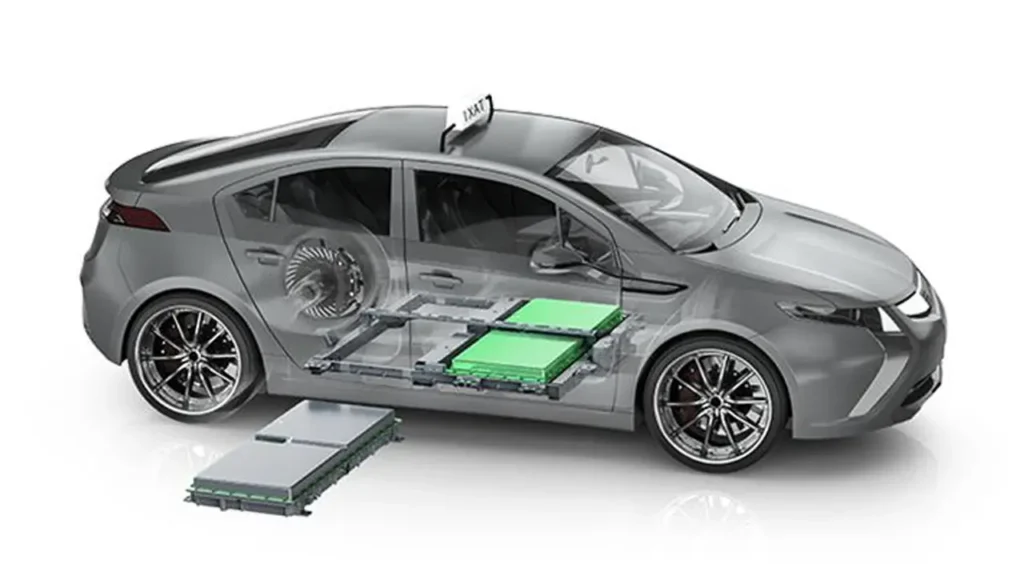
At its core, a battery swapping EV system is elegantly simple. Instead of recharging a battery while it remains inside the car, the driver pulls into a dedicated swap station. Robotic arms — working with precision and speed — unlatch the depleted battery pack from the vehicle’s undercarriage, slide it out, and install a fully charged replacement pack in its place. The entire process typically takes between 3 and 5 minutes, which is comparable to refueling a conventional petrol car.
The EV battery swapping technology relies on several interconnected components working in harmony:
- Standardized battery compartments built into the vehicle chassis, designed for rapid mechanical connection and disconnection
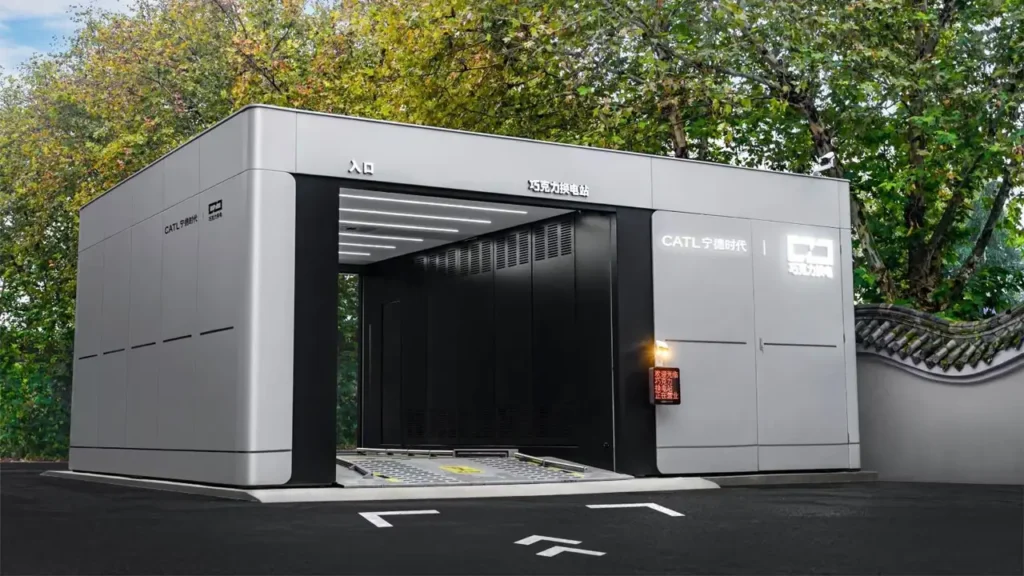
- Robotic swap stations equipped with automated arms, battery storage racks, and an onboard charging system that recharges the depleted packs for the next customer
- Battery management software that tracks the state of health, charge level, and ownership of every battery in the network
- Cloud connectivity that allows the station to communicate with the vehicle, verify compatibility, and log the transaction
A key feature of this model is the separation of the battery from the car itself. Under most battery-as-a-service (BaaS) programs, the driver does not own the battery — they pay a monthly subscription or per-swap fee. This lowers the upfront purchase price of the vehicle significantly, since the battery is typically the most expensive component of any EV.
The concept of EV battery swapping technology is not entirely new — Israel-based Better Place tried it a decade ago and failed, largely due to lack of scale and automaker buy-in. What makes today’s ecosystem different is standardization, volume, and the involvement of industry giants like CATL.

AutoChina.blog
Your trusted guide to Chinese automotive technology. Expert reviews, comparisons, and insights on electric vehicles, hybrids, and innovative automotive solutions from China’s leading manufacturers.
- • EV & Hybrid Reviews
- • Tech Comparisons
- • Industry News & Trends
- • Buying Guides
CATL Choco-Swap Platform Explained
In April 2023, CATL officially unveiled the Choco-Swap platform at the Shanghai Auto Show, and the EV world took notice. The name is playful — inspired by the idea of snapping off and replacing a chocolate block — but the technology behind it is serious engineering.
The CATL battery swap architecture is built around a modular battery unit called the “chocolate block.” Each block is a self-contained battery module that can be combined in different configurations to match the energy requirements of different vehicle types — from compact city cars to SUVs and light commercial vehicles. This modularity is what gives the system its flexibility.
Here are the core specifications and features of the Choco-Swap platform as officially announced by CATL:
| Feature | Detail |
|---|---|
| Swap Time | Under 1 minute (target); typically 3–5 min in real use |
| Battery Chemistry | LFP (lithium iron phosphate) and NMC options |
| Modular Design | Chocolate-block units combinable in multiple configurations |
| Multi-brand Support | Designed for compatibility across different automakers |
| BaaS Integration | Full battery-as-a-service subscription model supported |
| Charging at Station | Slow, optimized charging for battery longevity |
| Cloud Management | Real-time battery health and fleet monitoring |
One of the most forward-thinking aspects of the CATL battery swap system is how it manages battery degradation at the station level. Because the batteries are charged slowly and consistently — optimized by CATL’s battery management algorithms — they experience far less wear than batteries that are fast-charged repeatedly inside vehicles. CATL claims this approach can significantly extend overall battery lifespan, which has major implications for total cost of ownership and environmental sustainability.
The Choco-Swap platform also supports over-the-air updates to battery firmware, meaning the intelligence of the pack improves over time without any physical intervention required.
Why the Battery Swapping EV System Beats Traditional Charging
Let’s be honest about the pain points of conventional EV charging. Even the fastest DC fast chargers available today — capable of delivering 150 kW to 350 kW — still require a minimum of 20 to 45 minutes to bring a large battery pack from near-empty to 80%. For everyday commuting that may be acceptable, but for long-distance travel, taxi fleets, or ride-hailing drivers whose income depends on vehicle uptime, it’s a real problem.
The EV charging vs battery swapping debate comes down to a few critical variables:
| Criteria | Fast Charging | Battery Swapping |
|---|---|---|
| Time to full range | 20–45+ minutes | 3–5 minutes |
| Battery degradation | Higher with repeated fast charging | Lower (batteries charged slowly at station) |
| Vehicle downtime | Significant | Minimal |
| Upfront vehicle cost | Higher (battery included) | Lower (battery subscription) |
| Grid stress | High peak demand spikes | Distributed, manageable load |
| Infrastructure cost | Moderate per charger | Higher per station, but multi-vehicle capable |
| User experience | Wait required | Near-seamless |
From a grid management perspective, the battery swapping EV system offers a subtle but powerful advantage. The batteries stored at each station act as a distributed energy buffer. They can be charged during off-peak hours when electricity is cheap and abundant, smoothing out demand spikes and reducing strain on local grid infrastructure. As renewable energy penetration increases, this kind of flexible load management becomes increasingly valuable to utility companies and grid operators.
Multi-Brand EV Compatibility: A Real Breakthrough
For battery swapping to become a mainstream solution rather than a proprietary one, it needs to work across vehicles from different manufacturers — not just one brand’s lineup. This is the holy grail of the battery swapping EV system world, and it’s precisely the challenge that the Choco-Swap platform was designed to address.
Historically, each automaker with a swap system built it exclusively for their own vehicles. NIO, the Chinese premium EV brand and a pioneer of battery swapping, built an impressive network of over 2,300 swap stations — but they only work with NIO vehicles. That’s a closed ecosystem.
CATL’s approach with multi-brand EV compatibility is fundamentally different. As the world’s largest battery manufacturer — supplying cells to Tesla, BMW, Volkswagen, Toyota, Honda, and dozens of others — CATL sits in a unique position. They supply batteries to almost everyone, which gives them the leverage to propose a cross-brand standard.
By 2024, CATL had formally partnered with multiple Chinese automakers including BAIC, Chery, GAC, SAIC, and others to adopt the Choco-Swap standard. The vision is a network of swap stations that any participating brand’s vehicle can use — similar to how any petrol car can use any petrol station, regardless of make or model.
Multi-brand EV compatibility creates a flywheel effect: more brands joining the standard means more vehicles on the road that can use the network, which justifies building more swap stations, which in turn makes the system more attractive for additional brands to join. It’s the kind of network effect that transforms a technology from a curiosity into an industry standard.
Standardized EV Batteries: The Key to Scaling
The entire promise of the battery swapping EV system rests on one foundational requirement: the batteries must be interchangeable. You cannot run a swap network if every vehicle uses a differently shaped, differently sized, differently connected battery pack. This is where standardized EV batteries become not just helpful, but essential.
Modular EV batteries like CATL’s Choco-Swap blocks address this through a tiered standardization approach. The physical dimensions, mounting points, electrical connectors, and communication protocols are all defined in a common specification. Automakers who join the ecosystem must design their vehicle platforms to accommodate this standard battery bay — a significant but one-time engineering investment that pays dividends in access to the swap network.
China’s government has been actively supportive of this direction. The Ministry of Industry and Information Technology (MIIT) has published guidelines encouraging the development of standardized EV batteries and has identified battery swapping as a priority technology in its EV infrastructure planning documents. State-owned energy companies including State Grid Corporation of China and China National Petroleum Corporation have both announced investments in swap station infrastructure.
The economics of standardization are compelling. A swap station operator who can serve vehicles from 10 different brands with a single battery format achieves dramatically better asset utilization than one locked into a proprietary format. The modular EV batteries in the Choco-Swap system also allow for graceful capacity upgrades — as battery energy density improves over time, new higher-capacity blocks can be introduced into the network without requiring a wholesale redesign of vehicles or stations.
Polimerukr.com
Ukraine
3D Printing Materials & Supplies
Your trusted source for high-quality 3D printing materials in Ukraine. Wide selection of filaments, resins, and accessories for all printer types with fast local shipping.
Infrastructure: Fast Battery Swap Stations Network
Building a viable battery swapping EV system requires more than great technology — it requires a dense, reliable, widely accessible network of fast battery swap stations. This is the infrastructure challenge, and it’s where significant capital is being deployed.
As of 2024, China had over 3,500 operational battery swap stations, with projections suggesting this number could reach 30,000 by 2030 according to industry analysts tracking the space. NIO alone operates one of the world’s largest private networks. CATL’s Choco-Swap ambitions, backed by the company’s enormous financial resources and manufacturing scale, aim to build a national network covering highways, urban centers, and logistics corridors.
A modern fast battery swap station is a sophisticated facility. Here’s what a typical Choco-Swap-compatible station contains:
| Component | Function |
|---|---|
| Robotic swap arm | Removes depleted pack and installs charged replacement |
| Battery storage racks | Hold 10–20+ packs in various states of charge |
| Charging infrastructure | Slowly recharges depleted packs using optimized algorithms |
| Vehicle alignment system | Guides the vehicle into precise position for robotic access |
| Cloud management terminal | Verifies vehicle compatibility, logs swap, manages BaaS billing |
| Safety monitoring system | Thermal and structural checks on all batteries |
The footprint of a swap station is typically comparable to a small car wash or a single-bay service center — manageable in urban environments and easily integrated into existing petrol station or highway rest stop facilities. Some operators are pursuing co-location strategies, pairing fast battery swap stations with convenience stores, restaurants, or fast-charging bays for non-compatible vehicles, maximizing commercial viability of the real estate.
Logistics and commercial vehicle operators are particularly enthusiastic about the infrastructure buildout. A heavy-duty truck that previously needed 1–2 hours of charging can now swap its battery pack in under 10 minutes and return to the road. For freight operators calculating cost-per-kilometer, that difference is transformational.
Pros and Cons of Battery Swapping EV System
No technology is perfect, and the battery swapping EV system has genuine trade-offs worth examining honestly. The electric vehicle battery replacement model offers compelling advantages but also faces real challenges that explain why adoption has been slower outside China.
Advantages:
- Speed: A 3–5 minute swap genuinely rivals petrol refueling and demolishes fast charging in time-to-range terms
- Battery longevity: Station-controlled slow charging is gentler on cells than repeated DC fast charging, extending battery life and reducing total lifetime cost
- Lower purchase price: Separating the battery from the vehicle via BaaS subscriptions can cut EV sticker prices by 20–30%
- Grid friendliness: Distributed charging at stations can be scheduled around off-peak periods and renewable generation windows
- Upgrade path: As better batteries become available, owners can access improved range without buying a new car — just subscribe to a higher-spec pack
Disadvantages:
- High station capex: A single swap station costs significantly more to build than a fast charger — estimates range from $500,000 to over $1 million per station depending on capacity
- Standardization dependency: The entire model collapses if automakers don’t agree on common standards — a historically difficult problem in the automotive industry
- Vehicle redesign required: Cars must be purpose-built or significantly re-engineered to accommodate a swappable battery bay, which adds complexity for existing platforms
- Geographic concentration: The electric vehicle battery replacement via swap model only makes sense where station density is high; in rural or low-density areas, charging remains more practical
- Battery quality uncertainty: Some early consumers expressed concern about receiving a degraded or lower-quality pack — an issue that robust battery management systems and transparent health reporting are designed to address
User Opinions and Real-World Adoption in China
China’s real-world experience with the CATL battery swap ecosystem and the broader swapping market provides the most honest data available. The reception has been largely positive, particularly among commercial and fleet operators.
NIO’s customer base — arguably the most vocal and data-rich group of swap system users in the world — consistently ranks battery swapping as one of the brand’s top differentiators. NIO reports that its swap stations have completed over 40 million swaps cumulatively as of 2024, with user satisfaction scores consistently above 90% in internal surveys. Taxi and ride-hailing drivers in cities like Guangzhou, Chengdu, and Beijing have been early and enthusiastic adopters of CATL battery swap programs, citing dramatically improved earnings due to reduced downtime.
Consumer feedback highlights a few recurring themes:
What users love: The convenience is the number-one cited benefit. Drivers describe the experience of pulling in, watching the automated system do its work, and driving out fully charged as genuinely satisfying — something closer to the familiar experience of visiting a petrol station than anything the EV charging world has previously offered.
What users want improved: Station availability during peak hours remains a friction point in some cities. Unlike a fast charger where a second unit can serve a second car simultaneously, a swap station serves one vehicle at a time. During rush hours near commercial hubs, queues can form — though operators are addressing this with larger battery inventories and multi-bay station designs.
Subscription pricing models have also been a topic of consumer discussion. Most BaaS programs tie users to specific station networks and battery grades, and some users feel the pricing structures could be more transparent and flexible. CATL and its partners have been iterating on commercial models in response to this feedback.
The broader Chinese market data tells a compelling story. According to the China Automotive Technology and Research Center (CATARC), battery swapping accounted for a growing share of new energy vehicle energy replenishment events in 2023 and 2024, with the commercial vehicle segment — trucks, buses, taxis — showing the strongest adoption curves.
International interest is building, though adoption outside China remains in early stages. South Korea, Israel, and several European countries have announced pilot programs or feasibility studies. The key question for global markets is whether the standardization challenge can be solved through industry consortia or regulatory mandates — something China achieved partly through government coordination that may be harder to replicate elsewhere.
Final Verdict: The Future of EV Infrastructure
After walking through the technology, the economics, the infrastructure challenge, and the real-world evidence, where does the battery swapping EV system stand in the future of EV infrastructure?
The honest answer is: it’s a genuine, significant, and growing part of the solution — not a replacement for charging, but an important complement to it.
The future of EV infrastructure will almost certainly be pluralistic. Fast charging will continue to improve and will remain the dominant solution for private passenger vehicles in markets where home charging is accessible. But for commercial fleets, high-utilization vehicles, urban taxis, and markets where charging infrastructure is still sparse, the battery swapping EV system offers advantages that pure charging cannot match.
CATL’s Choco-Swap platform represents the most technically sophisticated and commercially ambitious attempt yet to make battery swapping a cross-brand, scalable reality. The company’s position as the world’s dominant battery supplier gives it unique leverage to drive standardization — the single biggest obstacle that has historically prevented this model from reaching its potential.
Several conditions need to hold for the optimistic scenario to materialize:
- Standardization must broaden: More automakers adopting the Choco-Swap or a compatible open standard is essential. If the ecosystem fragments into competing proprietary standards, the network effect breaks down.
- Station economics must improve: As manufacturing scales and operational experience accumulates, the capex and opex of swap stations should decrease, improving the business case for operators outside China.
- Regulatory support must continue: Government backing — through standards mandates, permitting streamlining, and infrastructure subsidies — has been crucial in China and will likely be necessary to bootstrap the model in new markets.
- Consumer education must advance: Many potential users outside China are simply unaware of how battery swapping works or remain skeptical about battery quality and ownership issues. Clear communication and transparent health reporting will be important.
The battery swapping EV system is not a silver bullet, and it’s not going to make fast charging obsolete. But it is solving a real problem — the time and convenience gap that remains one of the most commonly cited barriers to EV adoption — in a way that is technically sound, commercially tested, and increasingly well-funded.
For anyone tracking the future of EV infrastructure, CATL’s Choco-Swap platform and the broader battery swapping movement deserve serious attention. China has shown it can work at scale. The question now is how far, how fast, and through what partnerships the model can travel beyond its current home market.
The battery swapping EV system has earned its place in the conversation — and quite possibly, in the infrastructure landscape of the next decade.
Discover more from AutoChina
Subscribe to get the latest posts sent to your email.