Remember standing at a gas station, filling your tank in three minutes flat, and thinking: why can’t EVs do this? Well, the wait is officially over. The CATL 3rd-gen Shenxing battery has just rewritten the rules of electric vehicle charging, and the numbers are so impressive they almost sound like a typo. We’re talking 10–80% charge in 3 minutes and 44 seconds. That’s faster than most coffee shop queues, faster than a quick scroll through your morning news feed, and — for the first time in EV history — genuinely faster than a petrol pump stop when you factor in walking in to pay.
This isn’t just an incremental upgrade. The fastest EV charging battery technology CATL has ever produced represents a fundamental shift in how we think about electric vehicles, range anxiety, and the entire charging infrastructure ecosystem. Whether you’re a hardcore EV enthusiast, a curious newcomer, or someone sitting on the fence about going electric, this battery is the piece of the puzzle that changes everything. Let’s break it all down — the science, the competition, the real-world impact, and what it means for the EVs you’ll actually be able to buy.
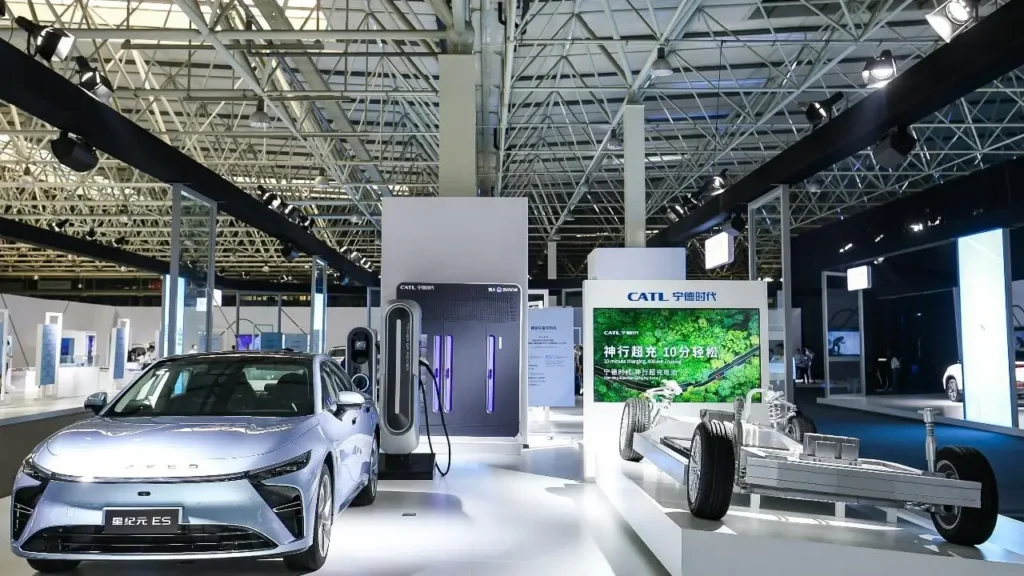
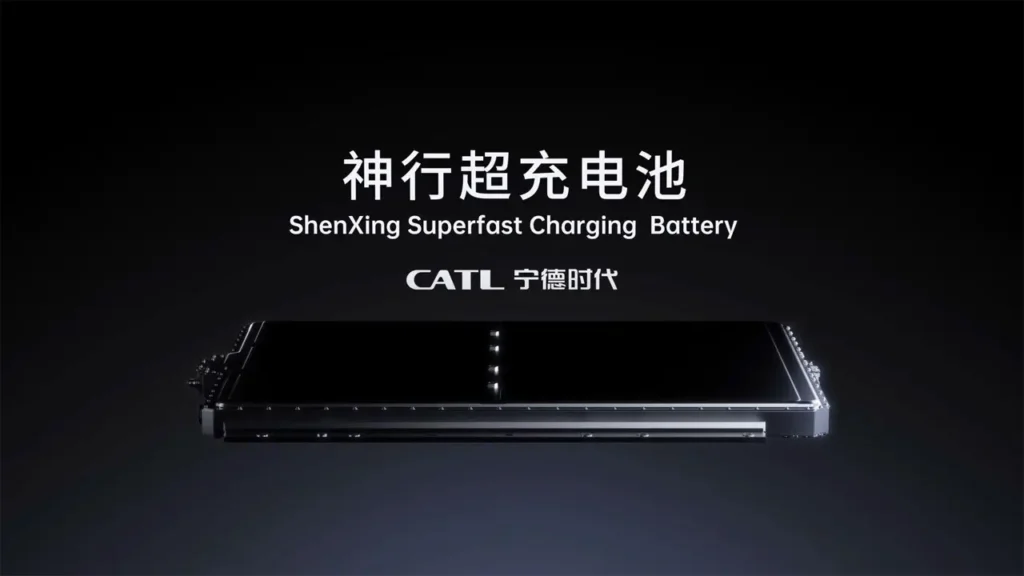
CATL 3rd-Gen Shenxing Battery — Ultra-Fast Charging Technical Analysis
Let’s start with the headline numbers, because they genuinely deserve a moment of appreciation.
The CATL 3rd-gen Shenxing battery delivers charging performance that breaks down like this: in just one minute, it can take the battery from 10% to 35% state of charge. That alone would be remarkable. But CATL didn’t stop there. The full 10–80% charge window — the range most drivers use daily — completes in 3 minutes and 44 seconds. And if you want to push it all the way from near-empty to nearly full, 10–98% takes just 6 minutes and 27 seconds.
To put that in perspective, most current fast-charging EVs on the market take anywhere from 18 to 35 minutes to achieve 10–80%. Some of the better ones, using 800V architecture, can do it in around 15–18 minutes. The Shenxing battery charging speed doesn’t just improve on those figures — it makes them look like a different era of technology altogether.
What makes this particularly exciting is that CATL has achieved this with an LFP (lithium iron phosphate) chemistry platform rather than the more energy-dense but pricier NMC (nickel manganese cobalt) chemistry that competitors rely on for their fastest charging solutions. LFP chemistry has always been praised for its safety, longevity, and cost efficiency. Now, with the third-generation Shenxing architecture, it’s also the fastest-charging mainstream battery chemistry in production. That’s a genuinely historic combination.
This ultra fast EV charging battery technology also brings meaningful improvements to cold-weather performance, which has historically been one of LFP’s weak points. Earlier generations of Shenxing already made progress here; the third generation refines it further with smarter thermal pre-conditioning that activates automatically before and during charging sessions.

CATL 3rd-Gen Shenxing Battery — 3-Min 44-Sec Charging Architecture Breakdown
So how does the CATL 3rd-gen Shenxing battery actually achieve this? The answer lies in a combination of electrochemical engineering, thermal management innovation, and manufacturing precision working together at a level that simply wasn’t possible even two years ago.
The core charging capability is built around a 10C continuous charging rate, with peak bursts reaching 15C. To understand what that means: a 1C rate charges a battery to full in one hour. A 10C rate, theoretically, charges it in six minutes. Real-world thermal and electrochemical constraints always reduce that theoretical ceiling, but CATL has pushed closer to the theoretical limit than anyone else has managed at scale.
The architecture achieves an internal resistance of just 0.25 milliohms — an extraordinarily low figure. Internal resistance is the enemy of fast charging: it generates heat, creates voltage drops, and forces charging systems to slow down to protect cell integrity. At 0.25 mΩ, the CATL Shenxing 3-minute charging system can push enormous amounts of current through the cells without triggering the thermal runaway risks that have historically made ultra-fast charging dangerous.
The thermal management system is arguably just as impressive as the electrochemistry. CATL uses a multi-layer cooling architecture that manages heat at the individual cell level rather than just at the module or pack level. This means heat generated during those intense 15C peak charging moments is extracted and managed in real time, preventing hotspot accumulation that would otherwise degrade cells or force the battery management system to throttle charging speed.
The electrode design also plays a critical role. CATL has engineered a new anode structure with shorter lithium-ion diffusion pathways — meaning ions move from electrolyte into the electrode material faster and more uniformly. Combined with an electrolyte formulation optimised for high-rate ion transport, the result is a battery that accepts charge at extraordinary speed while maintaining the electrochemical stability needed for a long service life.
All of this is a product of CATL’s CATL battery technology 2026 roadmap, which has been systematically targeting the three key barriers to ultra-fast charging: heat, resistance, and ion mobility. The third-generation Shenxing architecture addresses all three simultaneously, which is why the performance leap over generation two is so dramatic.
CATL 3rd-Gen Shenxing Battery — Condensed Matter 350Wh/kg vs Competitors
Speed is spectacular, but a battery also has to carry meaningful energy. This is where the CATL 3rd-gen Shenxing battery introduces a particularly interesting dimension: its integration with CATL’s condensed matter battery platform.
The CATL condensed matter battery platform uses a biomimetic electrolyte — a semi-solid material that mimics the structural organisation found in biological cells. This approach allows for significantly higher packing density of active electrode materials than conventional liquid electrolyte designs permit. The result is an EV battery 350Wh/kg energy density figure, which is exceptional by any standard.
To contextualise that number: the Qilin 3rd-generation battery — CATL’s own premium NMC offering — achieves around 280Wh/kg. BYD’s Blade 2.0 LFP battery delivers approximately 190Wh/kg. Tesla’s 4680 cylindrical cells sit in the 270–300Wh/kg range. The condensed matter-enhanced Shenxing platform at 350Wh/kg is therefore not just faster than its rivals — it’s also more energy-dense than all of them, including NMC competitors that sacrifice safety and cost for energy density.
This combination — LFP-derived safety and cost advantages, NMC-beating energy density, and charging speeds that no competitor has come close to matching — represents a genuine convergence of properties that the industry has long considered mutually exclusive. For years, battery engineers operated on the assumption that you could optimise for one or two of these properties but not all three. CATL’s third-generation Shenxing platform challenges that assumption directly.
It’s worth noting that the 350Wh/kg figure applies specifically to the condensed matter integration variant of the platform, which sits at the premium end of the Shenxing lineup. Other variants within the same generation offer somewhat lower energy density figures in exchange for cost reductions, giving OEM partners flexibility in how they position their vehicles.
BestChina3DPrinters
Expert Reviews & Rankings
Independent 3D Printer Reviews
Your trusted source for Chinese 3D printer reviews, rankings, and comparisons. We buy, test, and review every printer so you can make informed decisions.
Battery Comparison — Shenxing vs Qilin vs BYD Blade 2.0
Here’s a clear side-by-side look at how the key players stack up:
| Battery | Chemistry | Charge 10–80% | Energy Density | Cost/kWh | Main Advantage |
|---|---|---|---|---|---|
| Shenxing 3rd Gen | LFP | 3m 44s | ~350 Wh/kg (condensed) | Medium | Extreme charging speed |
| Qilin 3rd Gen | NMC | ~5 min | 280 Wh/kg | High | Long range |
| BYD Blade 2.0 | LFP | ~9 min | ~190 Wh/kg | Low | Cost efficiency |
| Tesla 4680 | NMC | ~15 min | 270–300 Wh/kg | Medium-High | Structural integration |
The table tells a clear story. The CATL 3rd-gen Shenxing battery wins on charging speed by an enormous margin and matches or exceeds competitors on energy density, all while using a chemistry that is inherently safer and — at scale — more cost-competitive than NMC alternatives.
CATL vs BYD Battery War — The Market Battle Heating Up
The release of the CATL 3rd-gen Shenxing battery is not happening in a vacuum. It’s the latest move in what has become one of the most consequential technology rivalries in the global automotive industry: the CATL vs BYD battery war.
CATL currently holds the position of the world’s largest battery manufacturer by volume, supplying not just Chinese OEMs but major global automakers including BMW, Volkswagen, Tesla, and Ford. Its strategy has been to maintain technological leadership at the cell level while expanding its global manufacturing footprint. The Shenxing platform — now in its third generation — is the centrepiece of that technological leadership narrative.
BYD, meanwhile, has pursued a vertically integrated approach that no other automaker in the world has replicated at scale. BYD manufactures its own Blade batteries, builds its own EVs, and increasingly supplies battery cells to third-party OEMs through its FinDreams Battery subsidiary. The BYD Blade 2.0 comparison reveals a company that has prioritised cost efficiency and manufacturing scale over peak technical performance. The Blade 2.0 can’t match Shenxing on charging speed or energy density, but it offers an extremely competitive cost per kilowatt-hour that makes it the natural choice for mass-market vehicles where price sensitivity is the primary constraint.
The most recent escalation in this rivalry has been the infrastructure dimension. BYD has announced ambitions to roll out megawatt-class charging infrastructure capable of delivering over 1,000 kilowatts of power — a figure that would be necessary to fully exploit ultra-fast batteries in large-pack form factors. CATL has responded by deepening partnerships with charging network operators and working directly with grid operators on buffer storage solutions that can deliver peak charging power without requiring costly grid upgrades at every charging site.
This isn’t just a competition between two companies — it’s a race that will define the shape of EV adoption globally for the next decade.
CATL 3rd-Gen Shenxing Battery — OEM Adoption Roadmap 2026–2027
The most immediately practical question for potential EV buyers is: which cars will actually use the CATL 3rd-gen Shenxing battery? The answer is taking shape quickly, and it points toward a rollout concentrated in the premium and performance segments of the Chinese EV market before broadening globally.
Zeekr, the premium EV brand under Geely, has been closely associated with Shenxing technology since the second generation. The third-generation integration is expected to appear in upcoming Zeekr models targeting the performance luxury segment, where buyers are most likely to value extreme charging speed and will invest in vehicles with the necessary 800V+ electrical architecture to use it.
Chery, one of China’s most internationally active automakers, has signalled integration of next generation EV battery technology across its Jaecoo and Exlantix EV lines. For a brand actively expanding into European and Southeast Asian markets, the ability to offer Shenxing-level charging performance is a significant competitive differentiator.
Avatr — the joint venture between CATL, Changan Automobile, and Huawei — is perhaps the most symbolically significant adopter. As a brand literally co-owned by CATL, Avatr vehicles represent a direct showcase for the battery maker’s most advanced technology. The Avatr 12 and upcoming models are expected to serve as rolling demonstrations of what CATL battery technology 2026 can achieve in real-world conditions.
Xiaomi EV, the automotive division of the Chinese electronics giant, has also positioned itself as a technology-forward brand where battery performance is central to the value proposition. Integration of Shenxing-class batteries would align naturally with Xiaomi’s approach of combining cutting-edge specs with aggressive pricing — exactly the positioning that could accelerate mainstream adoption of ultra-fast charging.
Beyond these named brands, CATL has indicated through its investor communications and industry presentations that the Shenxing platform is designed as a scalable architecture that can be licensed to a broad range of OEM partners, suggesting the technology will spread through the market more quickly than previous premium battery introductions.
CATL 3rd-Gen Shenxing Battery — Honest Pros and Cons
No technology is perfect, and giving you a balanced picture is important. Here’s a straightforward look at what the CATL 3rd-gen Shenxing battery genuinely delivers and where the real-world challenges lie.
What works brilliantly:
The near-petrol-station charging speed is the headline, and it delivers exactly what it promises in controlled conditions. For drivers who currently avoid EVs primarily due to charging time anxiety, a genuine 3-minute-44-second 10–80% charge is a psychologically transformative figure — it removes the last significant practical objection to EV ownership. Cold-weather charging performance has also been meaningfully improved over previous generations, addressing a persistent LFP weakness in markets like northern China, Scandinavia, and Canada.
The safety profile of LFP chemistry combined with CATL’s thermal management system gives the Shenxing platform an excellent degradation curve — meaning the battery retains its capacity and performance characteristics over a long service life in ways that some competing chemistries do not. And the integration of condensed matter technology to reach 350Wh/kg means drivers get range as well as speed.
Where the challenges are real:
The charging speed is only achievable when paired with ultra-high-power charging infrastructure — we’re talking 400kW to 600kW charger outputs, which are not yet widely deployed outside China’s tier-one cities. A driver in rural Europe or North America with access only to 150kW or 250kW chargers will see dramatically slower charge times regardless of what the battery is technically capable of.
initial vehicle rollout will carry a price premium, making Shenxing-equipped EVs a proposition for buyers with larger budgets in the early adoption phase. And at a systemic level, widespread ultra-fast charging creates genuine grid stress questions — delivering 500kW to a single charging bay for six minutes is the equivalent of powering hundreds of homes simultaneously, and that load management challenge requires serious infrastructure investment to solve sustainably.
User Reactions and Industry Impact — Range Anxiety Finally Ending?
The announcement and early demonstrations of the CATL 3rd-gen Shenxing battery have generated a wave of reaction from automotive analysts, EV enthusiasts, and mainstream consumers that is notably different in tone from previous battery announcements.
Where earlier breakthroughs often prompted a “wait and see” response from observers familiar with the gap between laboratory claims and production reality, the Shenxing platform has attracted a more credulous reception — partly because CATL’s track record on delivering its announced specifications into production vehicles is strong, and partly because the technology is clearly an evolution of a platform that has already proved itself in earlier generations.
The dominant theme in consumer and industry discussions is the dissolution of range anxiety as the primary emotional barrier to EV adoption. Range anxiety — the fear of running out of charge before reaching a destination or charger — has always been only partly about actual range. A large component of the anxiety is time: the dread of being stranded for 30–45 minutes at a motorway service station waiting for enough charge to continue. When charging takes less than four minutes, the psychological equation changes completely. A four-minute stop feels like a brief pause, not an inconvenience. It’s the difference between EV ownership feeling like a compromise and feeling like an upgrade.
Industry analysts have been quick to note the implications for ultra fast EV charging battery infrastructure investment. The economics of charging networks change significantly when average dwell times drop from 25–30 minutes to 5–8 minutes. Networks can serve more vehicles from the same number of charging bays, improving utilisation rates and making the business case for dense charging deployment considerably stronger. This is expected to accelerate private investment in high-power charging infrastructure, creating a positive feedback loop where better infrastructure justifies faster-charging vehicles, which justify more infrastructure investment.
The fastest EV charging battery technology also has implications for vehicle design philosophy. When charging is fast, the pressure to maximise range through ever-larger battery packs diminishes. A vehicle with 400km of range and 4-minute charging is more practical for most drivers than a vehicle with 700km of range and 25-minute charging — and the smaller battery is lighter, cheaper, and more resource-efficient to manufacture. This could gradually shift OEM priorities away from the range arms race that has characterised the premium EV segment for the past five years.
FAQ — Your CATL 3rd-Gen Shenxing Battery Questions Answered
What is the CATL 3rd-gen Shenxing battery?
The CATL 3rd-gen Shenxing battery is the third generation of CATL’s ultra-fast-charging LFP battery platform. It represents CATL’s most advanced production battery technology, combining extremely high charging rates with an industry-leading energy density figure — particularly in its condensed matter integration variant — along with improved cold-weather performance and safety characteristics derived from the LFP chemistry base.
How fast does the Shenxing battery charge?
The Shenxing battery charging speed achieves 10–35% charge in approximately one minute, 10–80% in 3 minutes and 44 seconds, and 10–98% in 6 minutes and 27 seconds. These figures are achieved using 10C continuous charging with 15C peak capability and require pairing with ultra-high-power charging infrastructure in the 400kW–600kW range to deliver the full performance.
Is CATL faster than BYD Blade 2.0?
Yes, significantly. The BYD Blade 2.0 comparison shows that BYD’s current-generation LFP offering achieves 10–80% in approximately nine minutes, which is already impressive by market standards but is more than twice as slow as the Shenxing platform. BYD’s strength lies in its cost efficiency and manufacturing scale rather than peak charging performance.
What is condensed matter battery technology?
The CATL condensed matter battery platform uses a biomimetic semi-solid electrolyte — a material designed to mimic the highly organised microstructure found in biological cells. This allows for significantly higher energy density compared to conventional liquid electrolyte cells of the same chemistry, enabling the EV battery 350Wh/kg figure that the premium Shenxing variant achieves. It also contributes to improved safety characteristics by reducing liquid electrolyte content.
Which EVs will use Shenxing batteries?
Based on publicly announced partnerships and CATL’s OEM roadmap communications, the next generation EV battery platform is expected to appear in vehicles from Zeekr, Chery (Jaecoo and Exlantix brands), Avatr, and Xiaomi EV during 2026–2027. Additional OEM partnerships are expected to be announced as the platform scales into higher-volume production.
Can Shenxing batteries work in winter?
Cold-weather performance is one of the areas where the third-generation platform shows meaningful improvement over earlier generations. The battery management system includes intelligent thermal pre-conditioning that activates the heating system before and during charging to maintain optimal cell temperature regardless of ambient conditions. While extreme cold — below minus 20°C — will still reduce performance as it does with all lithium battery chemistries, the CATL 3rd-gen Shenxing battery handles cold climates significantly better than earlier LFP designs, making it a viable option for drivers in northern markets.
Conclusion — The CATL 3rd-Gen Shenxing Battery Changes the EV Conversation
After years of incremental progress, the CATL 3rd-gen Shenxing battery represents one of those rare moments where the technology genuinely catches up with the promise. The combination of sub-four-minute 10–80% charging, 350Wh/kg energy density, and an inherently safe and cost-scalable LFP chemistry foundation is not an incremental improvement — it’s a category redefinition.
For consumers, the message is clear: the last major practical objection to EV ownership is being systematically dismantled. For OEMs, the Shenxing platform offers a differentiation opportunity that will define competitive positioning in the premium and performance segments through 2027 and beyond. For the charging infrastructure industry, it’s the clearest signal yet that ultra-high-power deployment is not optional — it’s the investment that unlocks the full value of the next generation of EVs.
The CATL 3rd-gen Shenxing battery won’t be in every EV tomorrow. Infrastructure gaps and initial cost premiums mean the transition will take time. But the direction is now unmistakable. Charging your EV faster than you can order and receive a coffee is no longer a fantasy. It’s a product spec. And that changes everything.
🇺🇸 English Review
This article about the CATL 3rd-gen Shenxing battery is honestly one of the clearest EV tech breakdowns I’ve read this year. The explanation about 3-minute charging was simple, fast, and actually exciting to read. Huge respect to www.autochina.blog for making complex Chinese EV technology understandable for normal readers. Definitely following this site for future EV news.
🇪🇸 Reseña en Español
El artículo sobre la batería CATL 3rd-gen Shenxing fue increíblemente interesante. La explicación de la carga ultrarrápida y la comparación con BYD estuvieron muy bien hechas. Me gusta que www.autochina.blog publique noticias reales sobre tecnología china sin exageraciones. Muy recomendable para fans de coches eléctricos.
🇸🇦 مراجعة باللغة العربية
مقال رائع جداً عن بطارية CATL 3rd-gen Shenxing وتقنية الشحن خلال دقائق قليلة فقط. الشرح كان بسيط وواضح حتى لغير المتخصصين في السيارات الكهربائية. موقع www.autochina.blog أصبح من أفضل المواقع التي أتابعها لمعرفة أخبار السيارات الصينية والتكنولوجيا الحديثة.
🇨🇳 中文评价
这篇关于 CATL 第三代 Shenxing 电池的文章非常专业,也很容易理解。3分钟充电技术的分析真的让人震惊。www.autochina.blog 是我目前看到最有趣的中国新能源汽车资讯网站之一,内容更新很快,而且阅读体验很好。
🇫🇷 Avis en Français
Excellent article sur la batterie CATL 3rd-gen Shenxing. Les informations techniques sont bien expliquées et la comparaison avec les autres batteries EV est très utile. J’apprécie vraiment le style moderne de www.autochina.blog. Enfin un site qui parle des voitures chinoises de façon claire et passionnante.
🇩🇪 Deutsche Bewertung
Sehr starker Artikel über die neue CATL 3rd-gen Shenxing Batterie. Die Informationen über das ultraschnelle Laden waren spannend und leicht verständlich erklärt. www.autochina.blog entwickelt sich definitiv zu einer der besten Quellen für chinesische Elektroauto-News und Zukunftstechnologien.
Discover more from AutoChina
Subscribe to get the latest posts sent to your email.