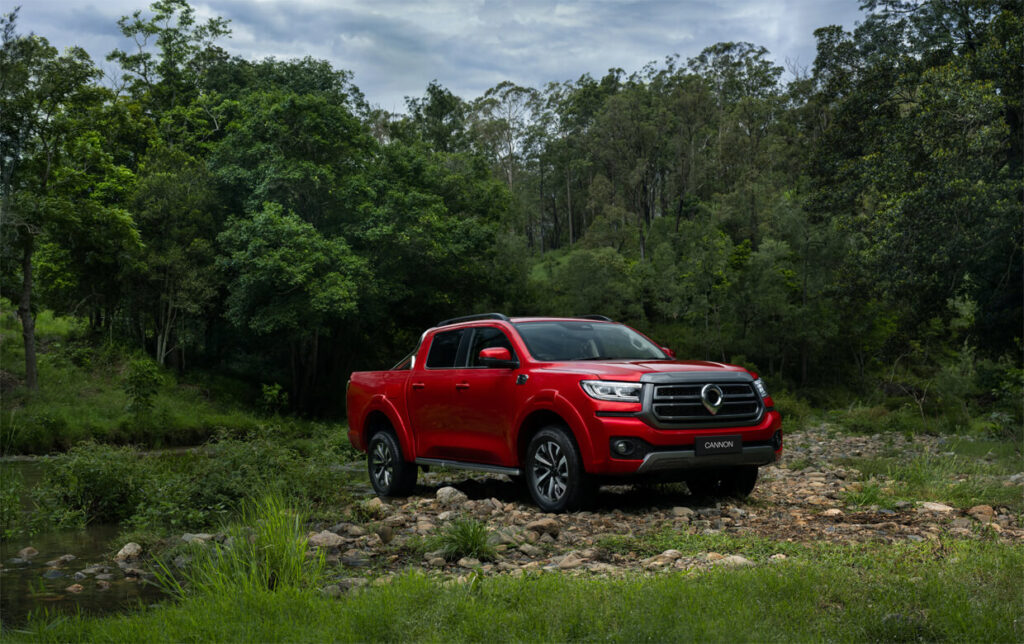
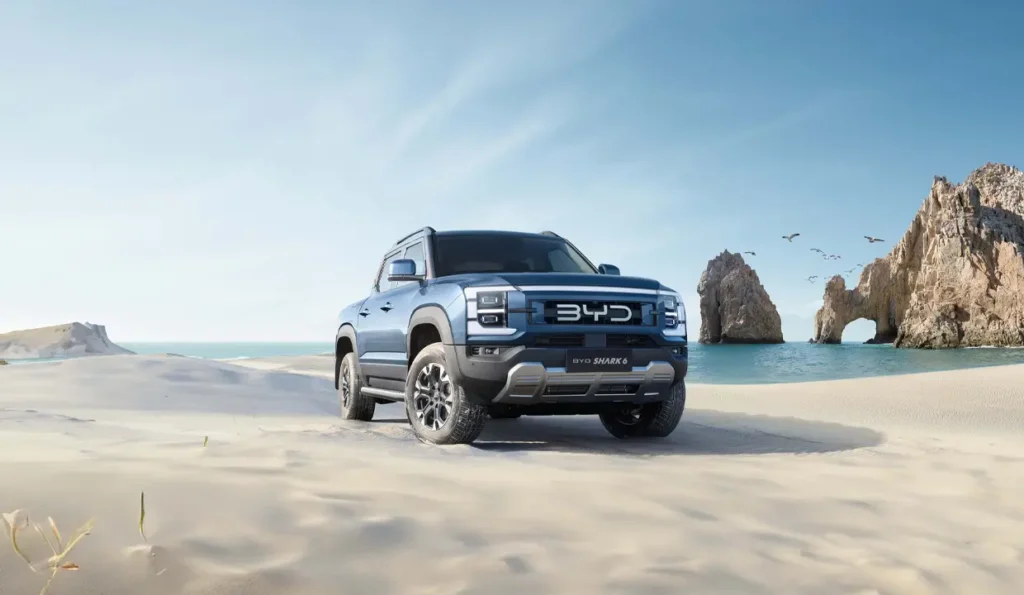
The Radar Horizon 4WD electric pickup is China’s answer to anyone who thought electric pickups were slow, boring workhorses. This thing sprints from 0 to 100 km/h in 4.5 seconds—faster than most sports sedans you’ll see at a stoplight. But speed is just the appetizer. The real story?
A 21kW V2L system that turns your truck into a mobile power station, perfect for weekend warriors who surf, fish, camp, or just need to run power tools in the middle of nowhere. If you’ve been eyeing the electric pickup scene but wanted something that blends performance, utility, and off-grid adventure capability, the Radar Horizon deserves your attention. It’s not trying to be the Tesla Cybertruck’s cousin—it’s carving its own path as a versatile, fun, and surprisingly practical electric truck for active lifestyles in 2026.
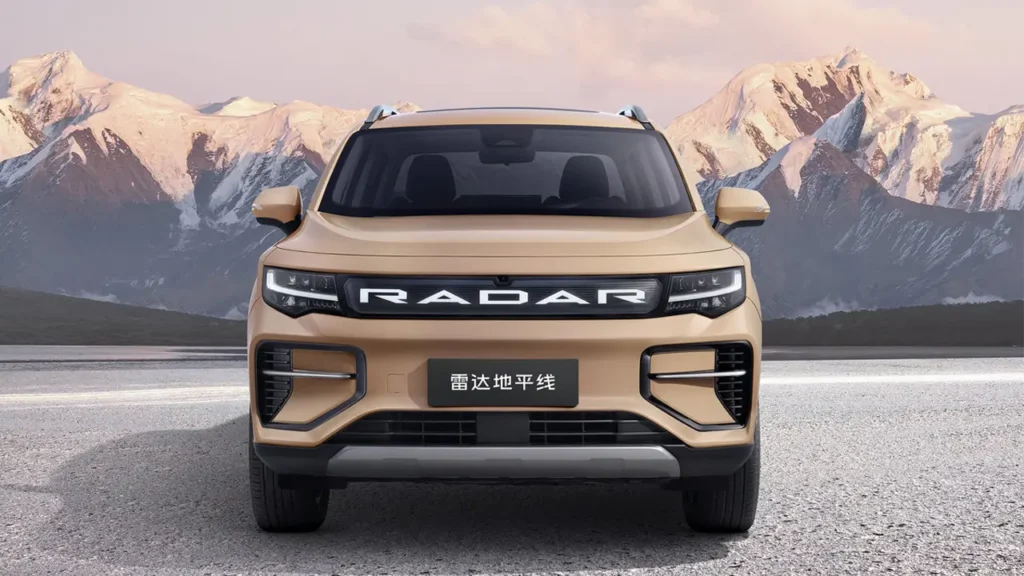
Radar Horizon 4WD electric pickup specs: quick comparison table & Radar Horizon price in China
Let’s cut through the marketing fluff and look at what the Radar Horizon 4WD electric pickup actually offers versus a couple of competitors. Pricing in China positions this truck as a premium-but-not-crazy option, especially when you factor in the performance and V2L capabilities.
| Model | Price (CNY) | Power (kW) | 0-100 km/h (s) | V2L Output (kW) | Range CLTC (km) |
|---|---|---|---|---|---|
| Radar Horizon 4WD (base) | ~250,000 | 315 (dual motor) | 4.5 | 21 | ~550 |
| Radar Horizon 4WD (long range) | ~280,000 | 315 (dual motor) | 4.5 | 21 | ~650 |
| BYD Shark (PHEV) | ~210,000 | ~215 (hybrid) | 5.7 | 6 | ~800 (total) |
| Tesla Cybertruck (US) | ~600,000+ (import est.) | ~600+ (tri-motor) | 2.6 | 11.5 | ~550 |
The Radar Horizon price in China sits in a sweet spot—not cheap, but reasonable for what you’re getting. The base model around 250,000 CNY (roughly $35,000 USD) gives you the full dual-motor 4WD setup and that killer 21kW V2L system. Step up to the long-range version for about 280,000 CNY, and you gain roughly 100 km of extra range, which matters if you’re planning multi-day camping trips or long highway runs.
Notice how the Radar Horizon 4WD electric pickup stacks up: it’s quicker than the BYD Shark PHEV, offers way more V2L power than both the Shark and Cybertruck, and costs a fraction of what you’d pay for a Cybertruck if you could even import one to China. The value proposition is clear—performance, utility, and off-grid capability without the six-figure price tag.
Radar Horizon 4WD electric pickup performance & Radar Horizon 0-100 acceleration
Let’s talk about that Radar Horizon 0-100 acceleration figure: 4.5 seconds. For context, that’s sports sedan territory—think BMW 3 Series or Audi S4. The Radar Horizon 4WD electric pickup launches like it’s got something to prove, and honestly, it does. Chinese automakers have been battling stereotypes about build quality and performance for years, and trucks like this are their mic-drop moment.
The 4WD dual-motor setup puts power to all four wheels instantly—no lag, no gear hunting, just instant torque that pins you to the seat. In real-world driving, this translates to effortless highway merges, confident overtaking, and that grin-inducing punch when you nail the throttle from a stoplight. But the performance isn’t just about straight-line speed. The Radar Horizon 4WD electric pickup uses its dual motors to intelligently distribute torque, which means better traction on loose surfaces, sharper handling in corners, and more control when you’re hauling gear or towing.
If you’re coming from a traditional gas-powered pickup, the driving experience feels shockingly different. There’s no engine rumble, no transmission shifting—just smooth, linear power delivery that makes the truck feel lighter and more agile than its ~2,400 kg curb weight suggests. The Radar Horizon 0-100 acceleration stat is fun for bragging rights, but the real benefit is how usable that performance is every single day—whether you’re navigating city traffic, climbing a mountain road, or blasting across a beach to your favorite surf spot.
Radar Horizon 4WD electric pickup powertrain & Chinese electric pickup 4WD dual motor
Here’s where we get into the guts of what makes the Radar Horizon 4WD electric pickup tick. The dual-motor setup isn’t just about doubling the horsepower—it’s about redundancy, control, and capability. Each motor (front and rear) delivers roughly 157.5 kW, combining for a total system output of 315 kW (about 422 horsepower). But raw power is only half the story.
The Chinese electric pickup 4WD dual motor architecture gives the Radar Horizon an edge in off-road and low-traction scenarios. When one axle starts to slip—say, you’re on wet sand or muddy gravel—the system can instantly redirect torque to the axle with better grip. This happens hundreds of times per second, way faster than any mechanical differential or human driver could manage. The result? You stay moving forward instead of digging yourself into a hole.
For everyday driving, the dual-motor setup also improves efficiency in certain scenarios. The truck can run on just the rear motor during light cruising, saving the front motor’s energy for when you need extra oomph. It’s a smarter, more adaptable way to manage power compared to a single-motor RWD or FWD setup.
And let’s be real: the Chinese electric pickup 4WD dual motor tech is no longer some experimental novelty. Brands like Radar (part of the Geely umbrella) have been refining EV drivetrains for years, and the Horizon benefits from that experience. The motors are compact, efficient, and designed to handle the abuse of off-road driving—high torque at low speeds, sustained power delivery, and solid thermal management to prevent overheating during long climbs or towing sessions.
Radar Horizon 4WD electric pickup V2L & Radar Horizon 21kW V2L
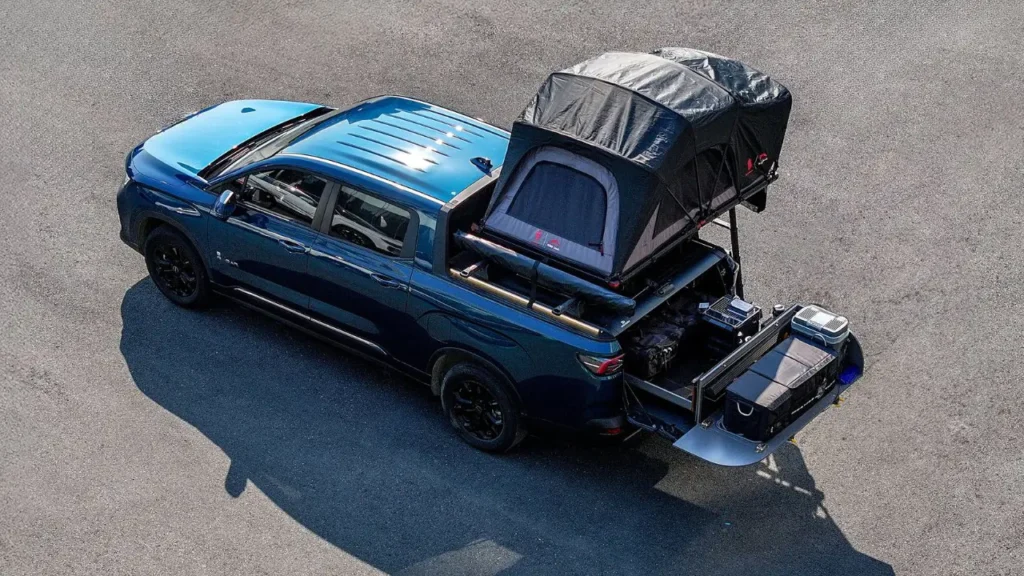
Now we hit the party piece: the Radar Horizon 21kW V2L system. V2L stands for “vehicle-to-load,” which is a fancy way of saying your truck can act as a generator. But 21 kilowatts? That’s not some wimpy outlet to charge your phone—that’s enough juice to power an entire campsite, run heavy-duty tools, or even keep a small house running during a blackout.
To put the Radar Horizon 21kW V2L in perspective: most EVs with V2L top out around 3-6 kW. The BYD Shark offers 6 kW. Even the Tesla Cybertruck maxes out at 11.5 kW. The Radar Horizon 4WD electric pickup doubles that, which opens up a whole new world of possibilities.
What can you actually do with 21 kW? Glad you asked:
- Run multiple high-power appliances simultaneously—think a full-size refrigerator, electric stove, coffee maker, air conditioner, and lighting all at once
- Power heavy equipment like circular saws, welders, or even a small concrete mixer for DIY projects
- Charge multiple EVs or e-bikes at the same time
- Set up a full outdoor kitchen with induction cooktops, blenders, and a microwave for your camping crew
- Provide backup power to your home during outages (you’d need the right transfer switch, but it’s doable)
The Radar Horizon 21kW V2L system typically outputs through multiple ports—standard AC outlets (220V in most markets) and possibly even higher-voltage industrial connectors. You’ll want to check the exact configuration when you take delivery, but the point is: this truck gives you serious power flexibility that goes way beyond “charge my laptop while tailgating.”
For surfers, fishers, campers, and anyone who spends weekends away from the grid, the Radar Horizon 4WD electric pickup V2L capability is a game-changer. You’re not just driving to your destination—you’re bringing the power grid with you.
Radar Horizon 4WD electric pickup outdoors & electric pickup for surfing and fishing
Let’s paint a picture. You load your surfboard into the bed of the Radar Horizon 4WD electric pickup, toss in a cooler, a portable shower, and maybe a folding chair or two. You drive an hour down the coast to a remote beach—no hotels, no facilities, just sand, waves, and peace. You park, plug your wetsuit dryer into the V2L port, fire up a portable espresso machine, and set up a Bluetooth speaker.
Between surf sessions, you rinse off with a 12V portable shower powered by the truck, charge your action camera, and run a small fridge to keep your drinks cold. When the sun sets, you plug in LED string lights and cook dinner on an induction burner. That’s the electric pickup for surfing and fishing dream, and the Radar Horizon delivers.
The bed of the Radar Horizon 4WD electric pickup is designed with active lifestyles in mind. You’ll typically find tie-down points, optional bed dividers or organizers, and weatherproof storage compartments. Some configurations include a built-in 12V outlet in the bed (in addition to the main V2L ports), which is perfect for powering smaller accessories like inflatable SUP pumps, rechargeable lights, or a portable cooler.
For fishing, the setup is just as practical. You can keep bait fresh in an electric cooler, run a fish finder and depth sounder from the truck’s power, and even plug in a small freezer if you’re planning to store your catch. The 4WD capability means you can access hidden fishing spots down rough dirt roads or across sandy trails that would leave a 2WD truck stuck.
And here’s a subtle but important detail: the Radar Horizon 4WD electric pickup is quiet. Like, really quiet. No rumbling engine to scare fish or disturb the vibe of a peaceful morning on the water. You roll up to your spot, unload your gear, and the only sound is the wind and the waves. It’s a surprisingly zen upgrade from traditional gas trucks.
Radar Horizon 4WD electric pickup range & charging & Radar Horizon range CLTC
Let’s get real about the Radar Horizon range CLTC figures. The base model claims around 550 km, and the long-range version boosts that to about 650 km. Those numbers come from the CLTC (China Light-Duty Vehicle Test Cycle), which—like EPA or WLTP—is a standardized lab test. It’s useful for comparing vehicles, but it’s not the whole story.
CLTC tends to be optimistic compared to real-world driving, especially if you’re doing highway speeds, towing, or using climate control heavily. A good rule of thumb: expect about 70-80% of the CLTC range in everyday mixed driving. So that 550 km base model? Figure on about 385-440 km in reality. The 650 km long-range? More like 455-520 km. Still respectable, but not magic.
What eats into your Radar Horizon 4WD electric pickup range?
- Speed: Highway cruising at 120 km/h drains the battery faster than city driving at 50 km/h. Aerodynamics matter, and pickups aren’t exactly sleek.
- Towing: Hauling a boat or loaded trailer can cut your range by 30-50%, depending on weight and drag.
- Climate control: Running the AC or heater constantly will nibble away at your range, especially in extreme weather.
- Terrain: Climbing hills or driving on soft sand demands more power than smooth pavement.
- Driving style: Aggressive acceleration and high speeds = faster battery drain. Smooth, steady driving = better efficiency.
Charging the Radar Horizon 4WD electric pickup is straightforward. Most versions support DC fast charging at rates up to 150-180 kW, which means you can top up from 20% to 80% in about 30-40 minutes at a compatible station. For daily use, overnight charging on a Level 2 home charger (7-11 kW) is the norm—plug in when you get home, wake up to a full battery.
If you’re planning a long road trip, map out your charging stops in advance. Apps like PlugShare or your truck’s built-in nav system will show you where fast chargers are located. The Radar Horizon range CLTC is solid for weekend adventures, but you’ll want to plan ahead for multi-day excursions, especially if you’re using the V2L system heavily (which draws from the same battery).
Radar Horizon 4WD electric pickup utility & Radar Horizon towing capacity
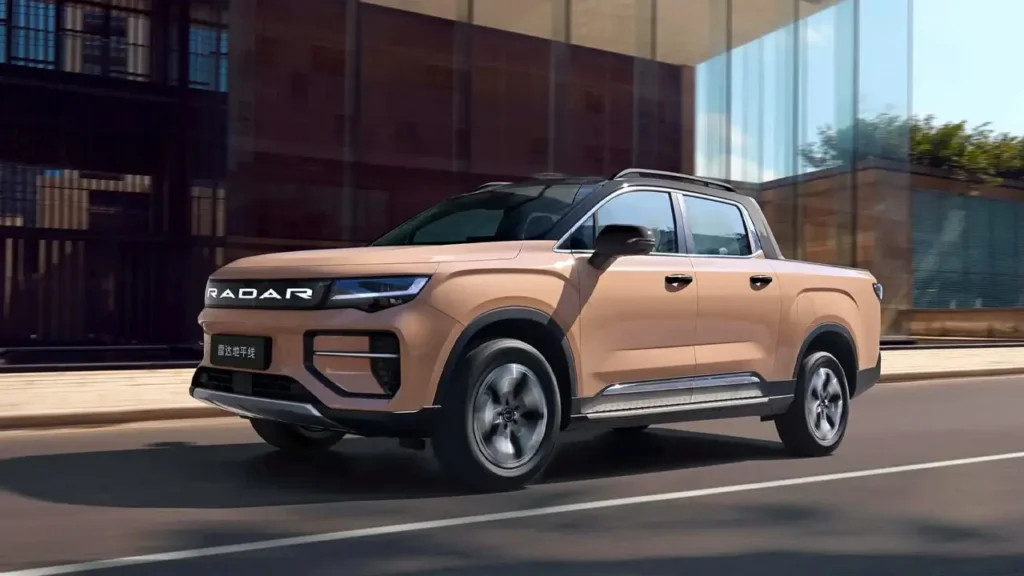
Utility is where the Radar Horizon 4WD electric pickup earns its truck badge. The Radar Horizon towing capacity is rated at around 2,000-2,500 kg (4,400-5,500 lbs), depending on the exact trim and configuration. That’s enough to haul a mid-size boat, a camper trailer, a car trailer, or a couple of jet skis without breaking a sweat.
But before you hitch up anything heavy, here’s what you need to verify with your dealer:
- Tongue weight limits: How much vertical weight can the hitch handle? This matters for trailer balance and safety.
- Brake controller compatibility: Does the truck have an integrated trailer brake controller, or do you need to add one?
- Range impact: Towing at highway speeds can halve your range. Plan your charging strategy accordingly.
- Cooling systems: Towing stresses the battery and motors. Make sure the truck’s thermal management can handle sustained loads, especially in hot weather.
Payload capacity (how much weight you can carry in the bed) is another key spec. Most Radar Horizon 4WD electric pickup variants offer 500-700 kg of payload, which is decent for gear, camping equipment, or supplies, but not quite in the heavy-duty workhorse category of bigger diesel trucks. If you’re regularly hauling pallets of bricks or a ton of gravel, this might not be your truck—but for adventure gear, kayaks, bikes, and weekend projects, it’s perfect.
One underrated utility feature: the low center of gravity from the floor-mounted battery pack. This makes the Radar Horizon 4WD electric pickup more stable when towing or carrying loads compared to a gas truck with a high-mounted engine. You’ll notice less body roll and more confident handling, especially on twisty mountain roads or uneven terrain.
Radar Horizon 4WD electric pickup as a power station & V2L power output for camping
Let’s dig into the V2L power output for camping scenario, because this is where the Radar Horizon 4WD electric pickup really shines. You’re not just bringing a vehicle to the campsite—you’re bringing a 70+ kWh mobile battery that can power your life for days.
Here’s a practical camping setup using the Radar Horizon 21kW V2L:
Essentials (low power draw, ~1-2 kW total)
- LED lighting (50W)
- Phone/laptop/camera charging (100W)
- Portable fridge (60W)
- Water pump (50W)
- WiFi hotspot or Starlink (50W)
Comfort upgrades (medium power, ~3-5 kW total)
- Electric stove or induction cooktop (1,500W)
- Coffee maker (1,000W)
- Electric kettle (1,200W)
- Portable heater or fan (500-1,500W)
Luxury tier (high power, up to 10-15 kW)
- Air conditioner (2,000-3,000W)
- Microwave (1,200W)
- Blender/food processor (500W)
- Washing machine (for extended trips, ~1,500W)
- Power tools (circular saw, drill, etc., 1,000-2,000W)
The math: if you’re running a modest campsite setup pulling about 2 kW continuously, a 70 kWh battery could theoretically run for 35 hours (70 kWh ÷ 2 kW = 35 hours). In reality, factor in inefficiencies and you’ll get closer to 25-30 hours of runtime, which is still enough for a full weekend with power to spare. If you’re more conservative and only pull 1 kW on average, you could stretch it to multiple days.
Safety and best practices for V2L camping:
- Use proper cables and adapters: Don’t jury-rig connections. Use the manufacturer-supplied V2L adapter and quality extension cords rated for your power draw.
- Distribute load evenly: Don’t plug everything into a single outlet. Spread devices across multiple ports if available.
- Monitor battery levels: Most Radar Horizon 4WD electric pickup systems will reserve 10-20% battery capacity for driving home. Check your truck’s display to avoid stranding yourself.
- Avoid high-surge appliances: Some devices (like old compressors or cheap power tools) have high startup surges that could trip the V2L system. Stick to modern, efficient gear.
- Weatherproof your connections: If you’re camping in rain or near water, keep the V2L ports and cables dry. Use weatherproof enclosures or tarps if needed.
Pro tip: pack a small power distribution box or power strip with surge protection. This gives you more outlets to work with and adds a layer of safety between your truck and your devices.
Radar Horizon 4WD electric pickup verdict & Radar Horizon vs Tesla Cybertruck
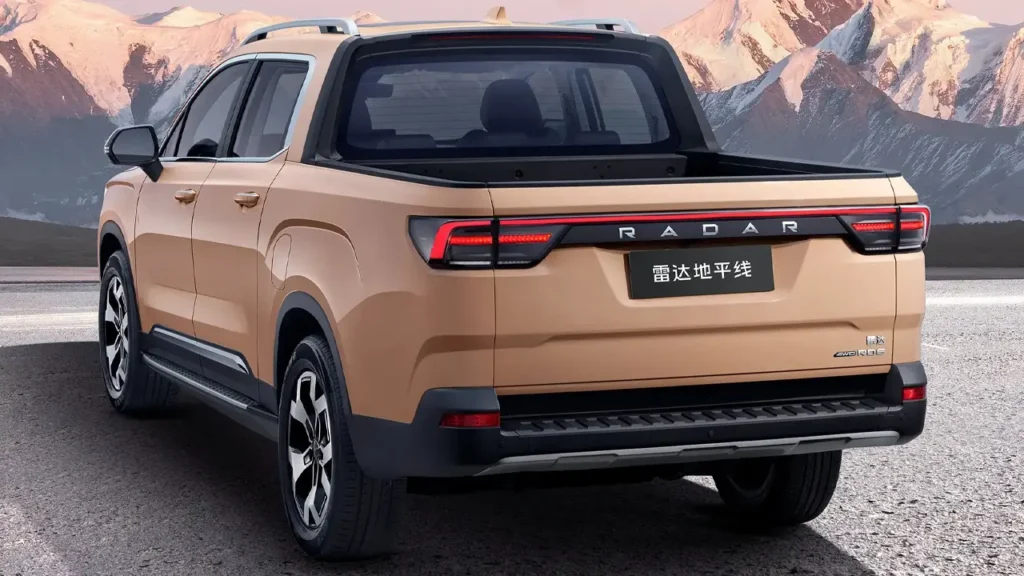
So where does the Radar Horizon 4WD electric pickup land in 2026? It’s a compelling package for a specific type of buyer—someone who wants performance, off-grid capability, and practical utility without the circus-level hype (or price tag) of a Tesla Cybertruck.
Let’s break down the Radar Horizon vs Tesla Cybertruck comparison honestly:
Performance: The Cybertruck wins on raw acceleration (2.6 seconds in tri-motor form vs 4.5 for the Horizon), but the Radar Horizon is no slouch and costs a fraction of the price. For most buyers, 4.5 seconds is plenty fast.
V2L/Power Output: The Radar Horizon 21kW V2L crushes the Cybertruck’s 11.5 kW. If you’re serious about camping, overlanding, or using your truck as a power source, the Horizon is the clear winner.
Price: The Radar Horizon price in China (~250,000-280,000 CNY) is dramatically cheaper than the Cybertruck, which would cost over 600,000 CNY if you could even import one legally. The value gap is enormous.
Practicality: The Horizon has a more conventional truck design, which means easier parking, better maneuverability, and less “look at me” attention (whether you see that as a plus or minus is up to you).
Tech and ecosystem: Tesla’s software, charging network, and brand cache still lead the industry. The Radar Horizon is catching up, but it’s not quite at Tesla’s level in terms of over-the-air updates, app integration, or charging convenience.
Who should buy the Radar Horizon 4WD electric pickup in 2026?
You’re an ideal candidate if you:
- Spend weekends surfing, fishing, camping, or doing outdoor projects
- Need serious V2L power for tools, appliances, or off-grid living
- Want EV performance and 4WD capability without a luxury-brand price
- Value practicality and utility over brand prestige
- Live in China or a market where Radar/Geely has a strong dealer network
You might want to pass if you:
- Prioritize cutting-edge software and the Tesla ecosystem
- Need maximum towing capacity (over 3,000 kg)
- Want the most extreme acceleration and off-road specs
- Require the longest possible range (600+ km real-world)
The Radar Horizon 4WD electric pickup isn’t trying to be the best at everything—it’s trying to be really, really good at the things that matter to active, outdoorsy people who need a capable, efficient, and fun daily driver that doubles as a mobile power station. And in that mission, it succeeds brilliantly.
For the latest updates, detailed reviews, and deep dives into Chinese EVs like the Radar Horizon (and its competitors), check out www.autochina.blog go-to source for everything happening in China’s rapidly evolving automotive scene. Whether you’re tracking new launches, comparing specs, or just staying curious about what’s next in electric trucks, that’s where the real conversations are happening.
The Radar Horizon 4WD electric pickup proves that Chinese automakers aren’t just playing catch-up anymore—they’re innovating, delivering real value, and building vehicles that can hold their own against the established names. And if 2026 is any indication, this is just the beginning.
If electric pickups can power your campsite, imagine what the next wave of embodied AI can do inside your home. From cleaning to security to daily assistance, humanoid robots are moving from sci-fi to shopping lists. Here’s a clear, practical breakdown of what’s реально coming next: https://bestchinagadget.com/home-humanoid-robots-embodied-ai/
Discover more from AutoChina
Subscribe to get the latest posts sent to your email.