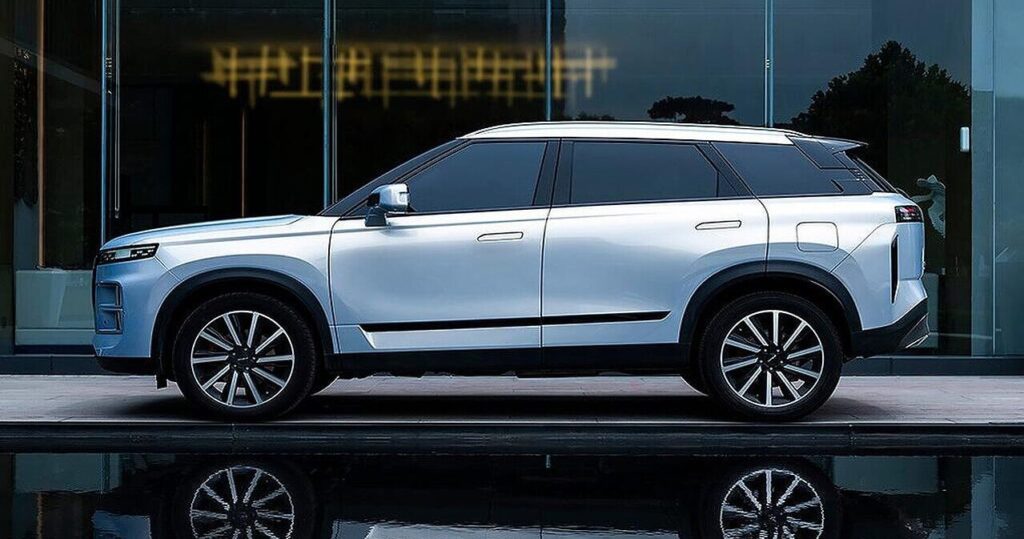
If you’ve been following the electric vehicle scene lately, you’ve probably noticed Xiaomi doing something a little different. After building its reputation on sleek, sporty EVs like the SU7 and YU7, the company just revealed a car that looks nothing like either of them. Say hello to the Xiaomi SkyNomad N90 — a boxy, upright, family-focused SUV that trades lap times for living-room comfort. Let’s break down exactly what this vehicle is, why it matters, and whether it’s worth getting excited about.
What Is the Xiaomi SkyNomad N90?
The Xiaomi SkyNomad N90 is the first model in an entirely new product line called SkyNomad, and it represents a genuine turning point for Xiaomi’s automotive ambitions. Up until now, Xiaomi Auto had built its identity around performance-driven, battery-electric cars. The SU7 and YU7 are both sleek, curvy, and clearly designed with the driver in mind. The SkyNomad N90 flips that script entirely.
Positioned as an “intelligent, reconfigurable, large-space SUV,” the N90 is Xiaomi’s second vehicle series and its very first model built around a range-extended powertrain rather than a pure battery setup. Instead of chasing 0-60 times, Xiaomi is chasing something else: family road trips, weekend camping, and the kind of cabin flexibility that turns a car into a genuine second living space.
The N90 was developed under the internal codename Kunlun, and it rides on an entirely new platform called the Kunlun Architecture — built from scratch specifically to support a flat floor and a reconfigurable cabin. Xiaomi officially confirmed the SkyNomad N90 name in July 2026, alongside the first official exterior images shared by CEO Lei Jun himself.
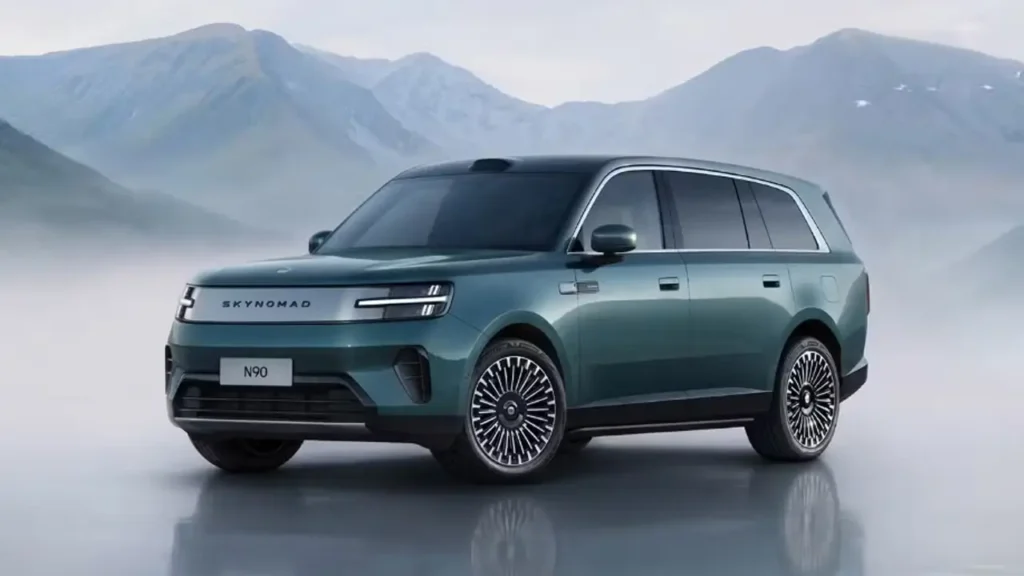
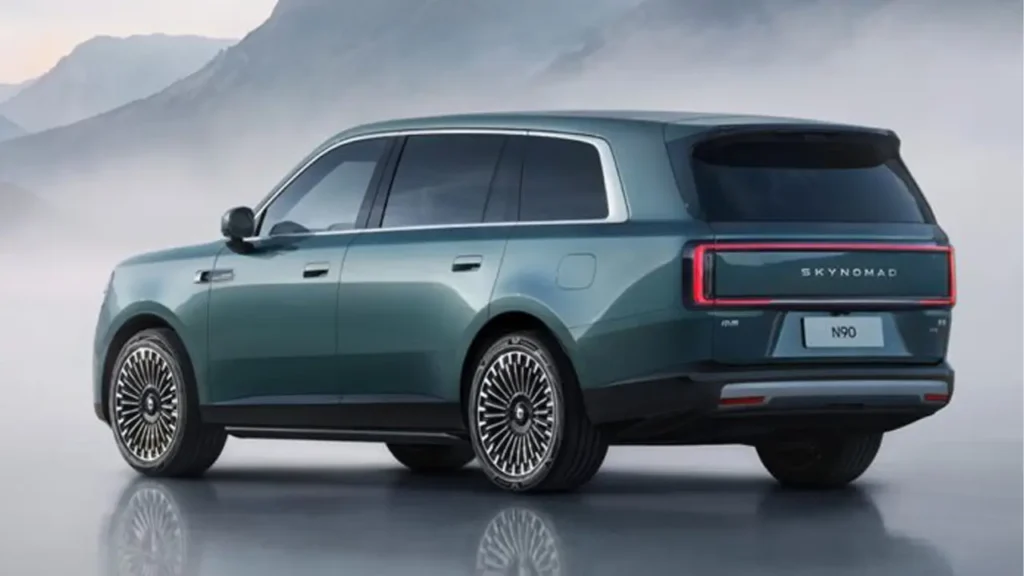
If you’re picturing something similar to the SU7, think again. The design language borrows some familiar touches — like the “Mi”-shaped LED light signature — but the overall silhouette is boxy, upright, and clearly built to maximize interior room over aerodynamic elegance. It’s a full-size, three-row SUV, and at roughly 208 inches long, it’s genuinely massive — about 10 inches longer than a Kia EV9.
| Category | Details |
|---|---|
| Model Name | Xiaomi SkyNomad N90 |
| Series | SkyNomad (second Xiaomi Auto series) |
| Body Type | Full-size, three-row SUV |
| Powertrain | Extended-range electric (EREV) |
| Platform | Kunlun Architecture |
Xiaomi SkyNomad N90 Release Date and Launch Timeline
Timing has been one of the more interesting parts of this story, mostly because things moved incredibly fast. Xiaomi teased the “Sky Nomad” name, and within roughly twenty-four hours, the company had already revealed the finished vehicle. That’s an unusually quick turnaround for a full production reveal.
Here’s how the rollout has unfolded so far. The Ministry of Industry and Information Technology in China approved Xiaomi to build extended-range vehicles at its Beijing plant back in June 2026. Shortly after, on July 10, 2026, MIIT published a new vehicle catalogue that listed four SkyNomad variants, officially confirming the N90 name.
Reservation inquiries opened on July 9, 2026, giving early interested buyers a chance to express interest before pricing was finalized. Then, on July 30, 2026, Xiaomi opened official pre-sales for both the SkyNomad N90 and its smaller sibling, the N70. The full commercial launch, complete with confirmed pricing and delivery timelines, is expected in September 2026.
So if you’re hoping to get behind the wheel of this SUV, September 2026 is the date to circle. That’s when Xiaomi is expected to lock in final specs, confirm delivery timing, and start fulfilling orders for buyers who reserved a unit during the pre-sale window.
Design and Xiaomi SkyNomad N90 Interior Highlights
This is genuinely where the SkyNomad N90 sets itself apart, and honestly, it might be the most exciting part of the whole reveal. Xiaomi built this SUV around what it calls a “Living Space” cabin philosophy, and the execution backs that phrase up.
The interior features a completely flat floor combined with ultra-long seat rails that run the entire length of the cabin. That combination is what allows the interior layout to be rearranged on the fly. The front seats can rotate a full 180 degrees to face the second row, instantly turning the front of the car into a conversation area rather than a driving cockpit.
There’s also a small floor-standing table that can be deployed between the first and second rows. Xiaomi has been pretty playful about describing what this transforms the cabin into — depending on how you set it up, it can become a studio for one person, a café-style seating area for two, a meeting room for three, or a full playground for the whole family.
The seating configuration is another standout detail. While most premium three-row SUVs in this segment lean toward a 2-2-2 six-seat layout, Xiaomi went a different direction with a 2-2-3 seven-seat configuration — the same layout famously used in vehicles like the Buick GL8. According to Lei Jun, this setup was chosen deliberately because it handles real-world family scenarios well, whether that’s three generations traveling together or a business setting that calls for a bit more formality.
Additional comfort features include:
- Second-row zero-gravity comfort seats with leg rests and 16-point massage functionality
- A center armrest that slides on rails and can convert into an island or bar-counter-style surface
- An in-car fridge
- Overhead speakers built into the cabin
- Split panoramic sunroofs
- A ceiling-mounted entertainment screen
There’s also a Camping Edition variant of the N90 Max that adds a pop-up lifting roof, clearly aimed at buyers who want to take this SUV well beyond city driving.
On the exterior, the front end features Xiaomi’s signature “Mi”-shaped LED light clusters, integrated directly into the front grille to form one continuous panel with the SkyNomad wordmark embedded in it. The front apron includes triangular ventilation openings flanking a large trapezoidal air intake, and around back, looped lightbar taillights give the rear a premium, cohesive look — reportedly drawing comparisons to the Zeekr 9X. A roof-mounted LiDAR unit rounds out the exterior, supporting the vehicle’s advanced driver assistance features.

AndreevWebStudio.com
Professional web development and design services. Custom WordPress sites, landing pages, e-commerce solutions, and 3D printing content creation for businesses and creators.
- • WordPress Development
- • Custom Web Design
- • E-Commerce Solutions
- • 3D Printing Content
Full Xiaomi SkyNomad N90 Specs Overview
Let’s talk numbers, because there are quite a few worth knowing if you’re seriously considering this SUV.
The N90 Max, which is the flagship trim, measures 5,285 mm in length, 1,998 mm in width, and 1,825 mm in height, riding on a 3,080 mm wheelbase. For comparison, the smaller N70 sibling measures 4,960 mm long, 1,998 mm wide, and 1,785 mm tall, with a shorter 2,950 mm wheelbase. Both cars share the same width, but the N90 stretches noticeably longer and taller, which tracks with its positioning as the larger, more spacious flagship.
Curb weight for the N90 Max comes in at 2,800 kg, which is substantial but not surprising given the size of the vehicle and its dual battery-and-engine setup. Top speed is rated at 190 km/h, and the SUV is offered in both five-seat and seven-seat configurations depending on buyer preference.
| Spec | N90 Max |
|---|---|
| Length | 5,285 mm |
| Width | 1,998 mm |
| Height | 1,825 mm |
| Wheelbase | 3,080 mm |
| Curb Weight | 2,800 kg |
| Top Speed | 190 km/h |
| Seating | 5 or 7 seats |
On the suspension side, the N90 uses a double-wishbone setup up front paired with a multi-link rear suspension, a combination that tends to favor ride comfort and stability, both of which matter a lot for a heavier, family-oriented SUV like this one.
Driver-assistance hardware is also part of the standard package on the Max trim, which comes equipped with Xiaomi HAD. It also features Xiaomi’s XLA cognitive model along with a rear-facing solid-state LiDAR unit rated for 2 cm accuracy, giving the SUV a genuinely advanced sensor suite for its class.
Safety testing has already generated some attention too. In a widely shared tire blowout test, the N90 Max was fully loaded with seven occupants traveling at 160 km/h when both the front and rear left tires blew simultaneously. According to reports, the vehicle maintained straight-line stability and came to a safe, controlled stop — a strong showing for a vehicle this size and weight.
Powertrain: Understanding Xiaomi’s First EREV SUV
Here’s where things get genuinely interesting from a technical standpoint. Up until the SkyNomad N90, every Xiaomi vehicle on the road was a pure battery-electric car. The N90 changes that completely — it’s Xiaomi’s very first extended-range electric vehicle, commonly abbreviated as EREV.
So what does that actually mean in practice? An EREV runs primarily on electric power, using its motors to drive the wheels just like a normal EV. But it also carries a small gasoline engine on board that acts purely as a generator. That engine never actually turns the wheels itself — its only job is to recharge the battery once it runs low, extending the car’s total range well beyond what the battery alone could provide.
In the N90’s case, that generator is a 1.5-liter turbocharged engine sourced from Harbin Dongan Automotive Engine, a subsidiary of Changan. It displaces 1,499 cc and produces a maximum net power of 112 kW, or roughly 150 horsepower. Notably, this engine is flexible when it comes to fuel — it supports 92, 95, and 98 octane gasoline, which gives owners a bit more freedom depending on regional fuel availability.
On the electric side, the N90 uses a dual-motor all-wheel-drive layout with a combined output of 310 kW, translating to roughly 416 horsepower. That’s enough for a 0-100 km/h sprint in just 5.9 seconds — genuinely quick for a full-size, three-row family SUV weighing 2,800 kg.
Why go the EREV route instead of building another pure EV? It comes down to solving a very real problem: range anxiety on long family road trips. By pairing a solid electric range with a gasoline backup generator, Xiaomi is offering buyers the smooth, instant torque and quiet cabin experience of an EV around town, while still giving them a safety net for longer journeys or areas without reliable charging infrastructure. It’s a strategy that’s already proven successful for rivals like Li Auto and Aito, and Xiaomi is clearly aiming to compete directly in that same space.
Xiaomi SkyNomad N90 Battery and Charging Details
The battery pack powering the N90 is a 76 kWh unit, sourced from CALB, one of Xiaomi’s established domestic battery suppliers (Sunwoda has also been mentioned as a supplier for the broader SkyNomad lineup). While 76 kWh might sound modest compared to some of the massive battery packs found in pure electric vehicles, it’s actually a smart and deliberate choice for an EREV setup, where the battery doesn’t need to shoulder the entire range burden on its own.
Charging speeds are genuinely impressive for this segment. The N90 is capable of adding up to 285 km of range in just 15 minutes, and a 20-80% charge can be completed in as little as 18 minutes under optimal conditions. For a full-size family SUV, that’s a strong showing and puts it in solid company among the faster-charging EVs currently on the market.
| Battery Detail | Figure |
|---|---|
| Battery Capacity | 76 kWh |
| Supplier | CALB |
| Fast Charge (15 min) | Up to 285 km added |
| 20–80% Charge Time | As little as 18 minutes |
This battery setup also directly supports the vehicle’s electric-only driving experience, which we’ll get into next. It’s worth remembering that this pack is doing double duty — providing daily electric-only driving range while also working alongside the gasoline generator to deliver the SUV’s much larger combined range figure.
Xiaomi SkyNomad N90 Range: Electric and Combined
Range is arguably one of the most talked-about numbers surrounding this SUV, and for good reason — it’s genuinely competitive.
Under China’s CLTC testing cycle, the N90 Max delivers an electric-only range of 464 km. Some earlier reporting citing broader testing methods suggested figures anywhere between 249 and 311 miles depending on conditions, but the officially confirmed CLTC figure for the Max trim sits at 464 km on electric power alone.
Where things get really impressive is the combined range once the gasoline generator is factored in. Xiaomi has confirmed a combined range of 1,705 km for the N90 Max — that’s roughly 1,060 miles on a full tank and full charge combined. Some early reports estimated combined range as high as 1,500 km (about 932 miles), but Xiaomi’s official regulatory filing confirmed the higher 1,705 km figure for the production Max trim.
Fuel efficiency numbers are equally solid. Under WLTC testing, the N90 achieves a combined fuel consumption rate of 6.26 L/100 km, which is a strong figure for a vehicle of this size and weight, especially considering it’s still delivering serious performance numbers.
Interestingly, the smaller N70 sibling actually edges out the N90 slightly on electric-only range, hitting 505 km CLTC compared to the N90’s 464 km. That’s largely due to the N70’s smaller, lighter body requiring less energy to move around — a good reminder that bigger doesn’t always mean better when it comes to efficiency.
Xiaomi SkyNomad N90 Price and Available Trims (Max)
Let’s get to the number everyone wants to know: how much does this thing actually cost?
Xiaomi officially opened pre-sales for the SkyNomad N90 on July 30, 2026. The flagship N90 Max trim carries a pre-sale price of 299,900 yuan, which converts to approximately $44,320 to $44,570 USD depending on the exchange rate used at the time of reporting.
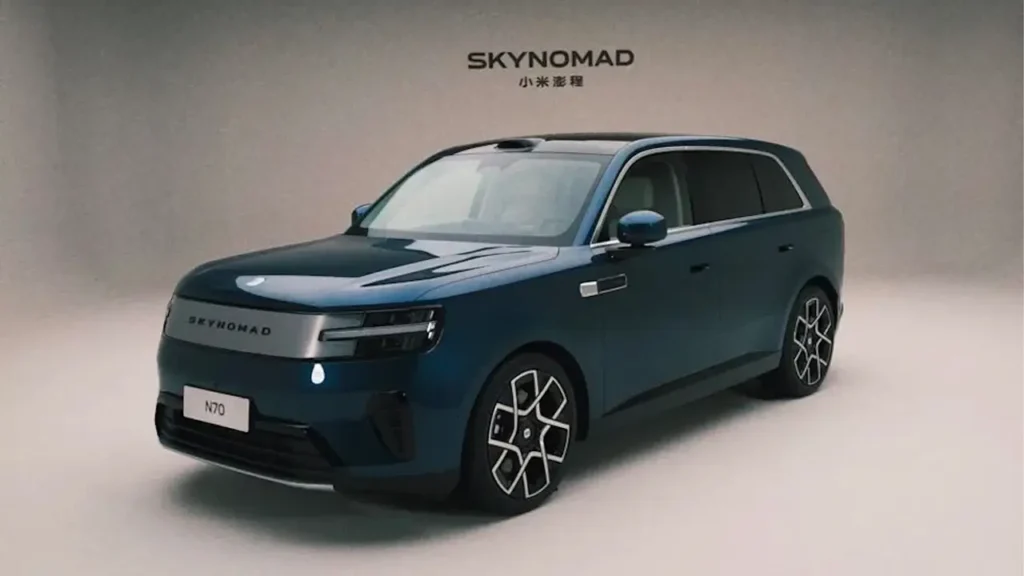
For comparison, the smaller five-seat N70 Max sibling is priced lower, at 259,900 yuan, or roughly $38,410 USD. That price gap makes sense given the size difference and slightly different seating capacity between the two models.
| Model | Pre-Sale Price (Yuan) | Approx. USD |
|---|---|---|
| N90 Max | 299,900 | ~$44,320–44,570 |
| N70 Max | 259,900 | ~$38,410 |
It’s worth noting that some earlier Chinese media reports speculated the broader SkyNomad range could start as low as 200,000 yuan (around $29,420), but that figure has not been confirmed as an official trim price — the confirmed pre-sale numbers currently apply specifically to the top-spec Max trims of both models. Xiaomi has indicated that different decor and equipment packages will eventually target family-oriented and business-oriented buyers separately, though full trim breakdowns beyond the Max variant haven’t been released yet.
Beyond the standard N90 Max, there’s also the N90 Max Camping Edition, which adds the pop-up lifting roof mentioned earlier — a clear nod toward outdoor and adventure-minded buyers who want more headroom and flexibility when parked overnight.
Final, locked-in retail pricing along with full delivery details is expected to arrive alongside the official launch in September 2026.
SkyNomad N90 vs Li Auto L9: How They Compare
No conversation about the SkyNomad N90 would be complete without addressing its most obvious rival: the Li Auto L9. Xiaomi is clearly aiming the N90 directly at this segment, and comparisons to Li Auto (along with Huawei-backed Aito) have come up repeatedly since the reveal.
Both vehicles fall into the same general category — full-size, three-row, extended-range family SUVs built around cabin comfort rather than outright performance. Li Auto and Aito together accounted for seven of China’s top 10 best-selling EREV SUVs in 2025, which tells you just how dominant this segment has become and why Xiaomi wants a piece of it.
Pricing is where Xiaomi appears to be making its move. Both the Li Auto L9 and the Aito M9 typically retail above 250,000 yuan, and Xiaomi’s SkyNomad N90 Max pre-sale price of 299,900 yuan positions it in a genuinely competitive bracket for the segment, especially when you factor in the feature set Xiaomi is including as standard, like the advanced LiDAR-based driver assistance system and the reconfigurable Living Space cabin.
Timing may also work in Xiaomi’s favor here. According to industry reporting, Li Auto’s L9 deliveries were down 74% year-over-year during the first four months of 2026, suggesting the model may have lost some momentum right around the time Xiaomi is stepping into the ring with a fresh, feature-packed alternative.
That said, it’s worth mentioning that the broader EREV market in China has been showing signs of a shrinking share overall, which does present a real challenge for any new entrant, including Xiaomi. Still, Xiaomi’s early sales momentum is encouraging — the company’s overall EV sales reached 185,055 units in the first half of 2026, up 17.2% year-over-year, showing that Xiaomi Auto as a whole is still very much on an upward trajectory heading into the SkyNomad launch.

AutoChina.blog
Your trusted guide to Chinese automotive technology. Expert reviews, comparisons, and insights on electric vehicles, hybrids, and innovative automotive solutions from China’s leading manufacturers.
- • EV & Hybrid Reviews
- • Tech Comparisons
- • Industry News & Trends
- • Buying Guides
Final Verdict: Is the Xiaomi EREV SUV Worth Waiting For?
So, after everything we’ve covered, where does that leave us? The Xiaomi SkyNomad N90 represents a genuinely bold shift for a car company that’s still relatively new to the automotive world. Moving from sleek, performance-oriented EVs to a boxy, family-first EREV SUV isn’t a small pivot — it’s a completely different philosophy, and Xiaomi has clearly put serious thought and engineering into making that transition work.
On paper, the numbers hold up well. A 1,705 km combined range, sub-6-second 0-100 km/h acceleration, fast charging that can add nearly 300 km in 15 minutes, and a genuinely inventive, reconfigurable interior all add up to a compelling package. Add in advanced driver-assistance hardware as standard on the Max trim, and it’s clear Xiaomi isn’t cutting corners just because this is its first non-performance-focused model.
Pricing also puts it in a strong competitive position against the segment leaders, particularly with Li Auto showing some recent softness in delivery numbers. Whether Xiaomi can translate the brand loyalty and momentum it’s built with the SU7 and YU7 into this very different kind of vehicle remains to be seen, but the ingredients are certainly there.
If you’re a family shopper who’s been eyeing the Li Auto L9 or Aito M9, the SkyNomad N90 is absolutely worth waiting for. With official pricing and delivery timelines expected around the September 2026 launch, we won’t have to wait too much longer to see how this ambitious new SUV performs in the real world. For now, it’s shaping up to be one of the more interesting entries in China’s fast-growing EREV market — and a genuinely fresh direction for Xiaomi as a whole.
Discover more from AutoChina
Subscribe to get the latest posts sent to your email.