Chapter 1. Corporate Context and Geely Technology Group’s Geopolitical Strategy
1.1. Transformation of Qianjiang Motorcycle: From Components to Global Dominance
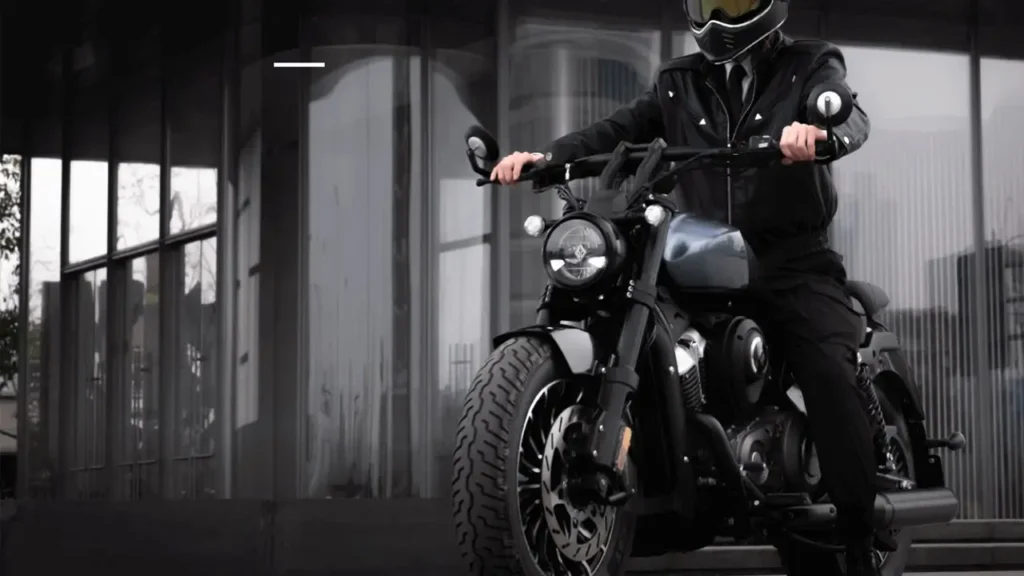
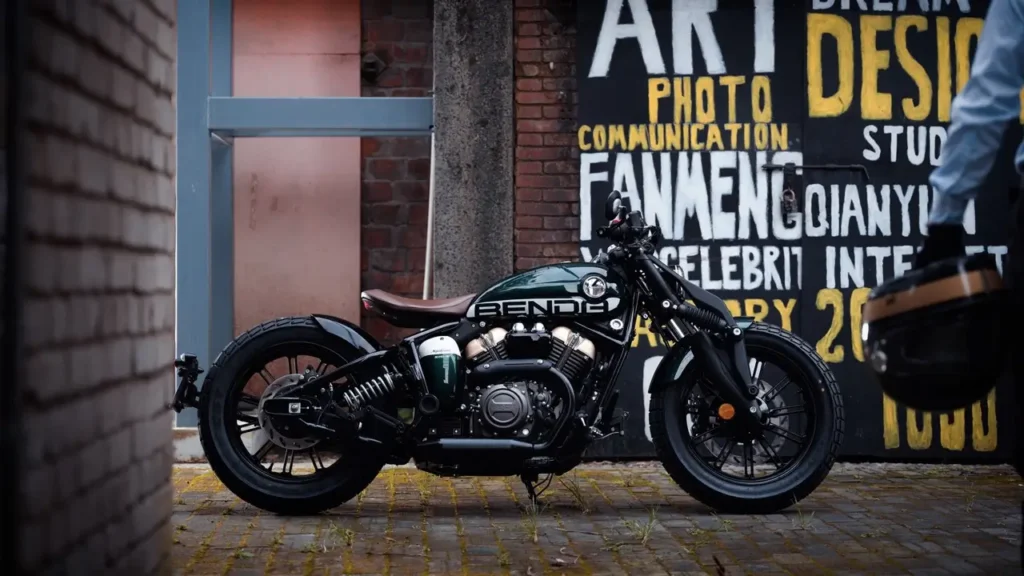
QJMotor SU 9 review. A tectonic shift is currently underway in the global motorcycle manufacturing architecture, with its epicenter in Zhejiang Province, China. Founded in 1985, Zhejiang Qianjiang Motorcycle Co., Ltd. (QJMotor) has evolved from a local manufacturer into an industrial giant exporting to over 130 countries and regions.1 However, when examining the brand’s current market position, it is impossible to ignore that QJMotor is not an isolated player. As part of the Geely Technology Group, the company shares technological DNA and supply chains with automotive giants like Volvo, Polestar, and Lotus.2 This affiliation grants QJMotor access to capital, R&D resources, and quality control standards often unavailable to traditional two-wheeler manufacturers.
The scale of Qianjiang’s operations is evidenced by a workforce exceeding 4,500 employees and a network of over 3,000 overseas dealers.3 This infrastructure supports an aggressive expansion strategy, culminating in the presentation at EICMA 2025. Under the banner “Five steeds renewed,” the brand unveiled a strategy to simultaneously capture five market segments: retro, adventure (ADV), sport racers, naked bikes, and—critically for this report—electric mobility.4 It is within this context that the need arises to deconstruct the model lineup to resolve market confusion regarding the “SU 9 electric scooter” query.
1.2. Nomenclature Differentiation: Separating ICE and EV Platforms
An analysis of official documentation and specifications reveals a critical divergence between consumer perception and technical reality. Market queries often conflate “SU 9” and “electric scooter,” creating a hybrid image of a non-existent product. The factual data indicates a clear separation:
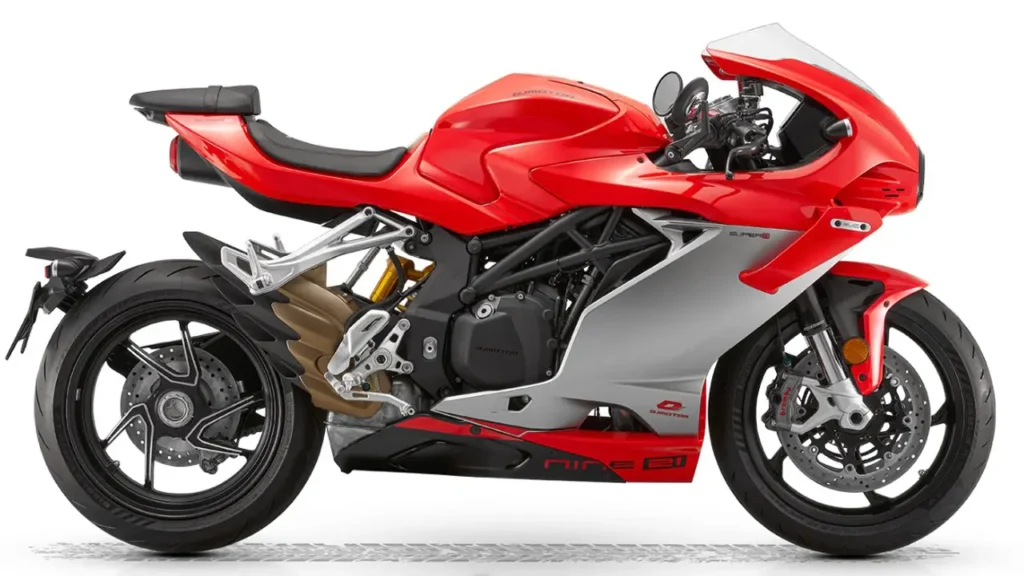
- QJMotor SU 9 (Super 9): This is a flagship sportbike with an internal combustion engine (ICE), developed using MV Agusta technology.5
- QJMotor OMO 07: This is the flagship electric maxi-scooter occupying the high-performance eco-mobility niche.7
Understanding this dichotomy is essential for correctly assessing QJMotor’s strategy. The company is not attempting to electrify the existing SU 9 chassis but is instead creating a parallel product line, united by a “Super” design philosophy but fundamentally different in powertrain types.
If you’re curious how far Chinese EV design can go beyond scooters and bikes, take a look at the Zeekr 007. We unpack its design, tech, performance and real-world range in a separate deep-dive: https://autochina.blog/zeekr-007-luxury-electric-sedan-review-price-range/ Perfect if you want to compare premium Chinese sedans before choosing your next EV model.
Chapter 2. Internal Combustion Flagship: Technical Analysis of SU 9 (Super 9)
Although this study focuses on electric mobility, a detailed analysis of the SU 9 is necessary to understand QJMotor’s engineering level and the aesthetic code translated to the electric lineup, including the OMO 07. The SU 9 serves as a “halo product” shaping the brand’s image.
2.1. MV Agusta Heritage and Powertrain
The heart of the SU 9 is a 921cc inline-four engine, a direct result of the strategic partnership between Qianjiang and Italian manufacturer MV Agusta.5 Engine specifications reveal deep engineering continuity:
- Configuration: Inline 4-cylinder, 16 valves, DOHC, liquid-cooled.5
- Bore and Stroke: 73.0 mm x 55.0 mm.5 The use of a 55 mm stroke links this unit to the legendary MV Agusta F4 engine, indicating the preservation of the Italian prototype’s high-revving character.8
- Performance: Peak power reaches 129.3 hp (95.0 kW) at 10,000 rpm, with torque of 93.0 N·m at 8,000 rpm.5 These figures place the SU 9 in the elite club of liter-class naked and sportbikes, competing with Japanese and European counterparts.
2.2. Chassis and Suspension Architecture
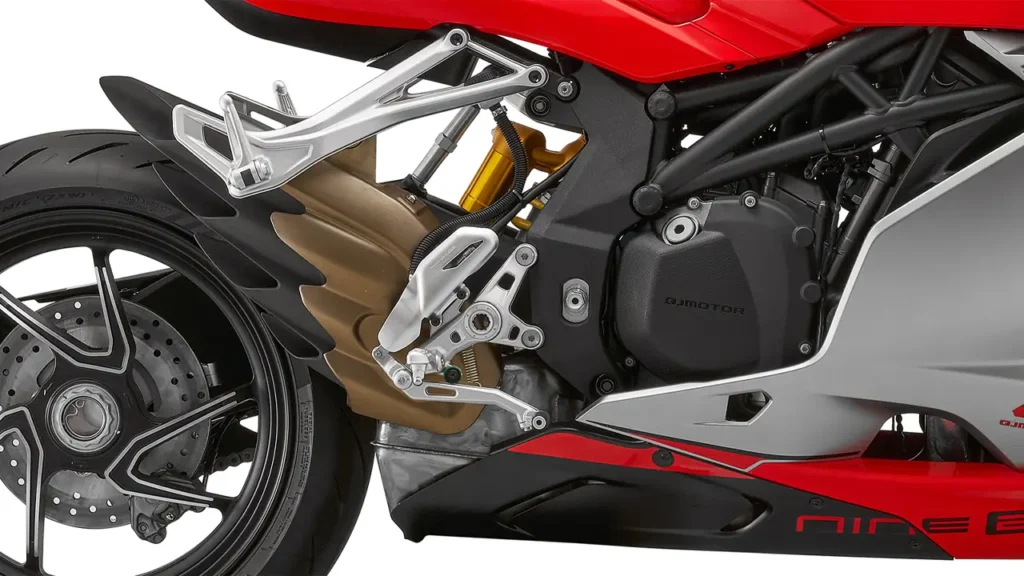
The SU 9 chassis design borrows heavily from the MV Agusta Brutale platform, including the distinctive single-sided swingarm.8 This complex and expensive manufacturing solution is rare on Chinese motorcycles and serves as a marker of premium positioning.
Suspension components are supplied by Marzocchi, whose production has been localized in China by Qianjiang.8 The front features an inverted telescopic fork, providing high torsional rigidity during heavy braking.
The braking system features radial Brembo calipers with dual 320 mm discs at the front and a single 260 mm disc at the rear.5 Such equipment highlights the model’s orientation towards track use and aggressive road riding.
2.3. Design Controversy: A “Sinicized” Superveloce?
The aesthetics of the SU 9 have sparked industry debate due to its obvious resemblance to the MV Agusta Superveloce 1000. The characteristic side “fins” (winglets), fairing shape, and stacked four-pipe exhaust system on the right side are direct citations of Italian design.8 However, labeling this as mere copying would be an oversimplification. Given the official partnership and the involvement of former MV Agusta designers like Adrian Morton in QJMotor projects (e.g., SRK1000), the SU 9’s appearance should be viewed as a licensed adaptation rather than plagiarism.9
Want to dive deeper into how next-gen AI is reshaping everything from car software to daily work? Check our detailed breakdown of Google Gemini 3 Pro here: https://aiinovationhub.com/google-gemini-3-pro-aiinnovationhub-com/ to understand its real capabilities, use cases, and why it’s becoming a central tool for power users in 2025 and beyond globally.
Chapter 3. Electric Vanguard: Deep Dive into QJMotor OMO 07
Turning to the QJMotor OMO 07, we enter the segment that is the direct answer to the user’s request for a “Super 9 electric scooter.” The OMO 07 represents the technological pinnacle of QJMotor’s electric program, integrating advanced high-voltage systems and digital connectivity.
3.1. High-Voltage Architecture and Drive Efficiency
While most mass-market electric scooters operate at 48V, 60V, or 72V, QJMotor engineers selected a 96-Volt architecture for the OMO 07.7 This decision has fundamental implications for performance:
- Thermal Efficiency: Higher voltage allows for lower current (Amps) to deliver the same power (Watts). Lower current means less heat generation in wiring, controllers, and motor windings ($I^2R$ losses), which is critical for maintaining high cruising speeds over long periods.
- High-Speed Dynamics: High voltage facilitates higher maximum motor RPM without losing torque in the field-weakening zone. This explains the claimed top speed of 129 km/h (80 mph)2, making the OMO 07 a capable highway vehicle, unlike strictly urban competitors.
Motor: The OMO 07 features a Central-motor with air cooling.7 Rejecting the hub motor design reduces unsprung mass at the rear wheel, significantly improving suspension performance and handling on uneven surfaces.
- Rated Power: 10 kW.7
- Licensing: The 10 kW power output classifies the OMO 07 in Europe as an L3e-A1 category vehicle (125cc equivalent), granting access to car drivers (with appropriate training in some countries) or A1 license holders.2 However, peak power is likely significantly higher to ensure dynamic acceleration.
3.2. Energy Autonomy and Charging Infrastructure
The OMO 07’s energy capacity is provided by an 80 Ah lithium-ion battery.7
- Calculated Capacity: $96V \times 80Ah = 7.68 kWh$.This is a substantial figure for a two-wheeler. For comparison, many competitors in the “125cc equivalent” class have batteries ranging from 3-5 kWh.
- Range: The officially claimed range is 115 km in “working condition.”7 The term “working condition” suggests a mixed riding cycle, making this figure more realistic than laboratory tests at constant low speeds.
- Charging: The scooter supports a standard charging current of 12A. The time to charge from 30% to 80% SOC (State of Charge) is 3.5 hours.7 This indicates a lack of DC Fast Charging support, likely a compromise to keep system cost and weight down. Nevertheless, the ability to replenish the bulk of the charge during a workday makes the model viable for daily commuting.
3.3. Chassis: Scooter-Motorcycle Hybrid
The OMO 07 is built on a rigid frame typical of maxi-scooters.
- Dimensions: 2220 mm (L) x 780 mm (W) x 1390 mm (H) with a wheelbase of 1565 mm.7 The long wheelbase promotes directional stability on highways.
- Wheels and Tires: The use of staggered wheel sizes—15 inches front (120/70 ZR15) and 14 inches rear (150/70 ZR14)—is a classic maxi-scooter solution.7 The “ZR” speed rating on the tires confirms the chassis’ capability to handle high speeds and loads.
- Suspension: Hydraulic shock absorbers front and rear.7
- Weight: The curb weight is 226 kg.7 This is significant, comparable to heavy touring motorcycles. Approximately 45 kg of this weight is the battery7, highlighting the high energy density of the cells used.
3.4. Digital Ecosystem and IoT
Consistent with QJMotor’s mission to create “smart vehicles,” the OMO 07 is deeply integrated into the digital environment.
- App and Telemetry: Owners have access to a mobile app for remote monitoring of battery levels, remaining range, and lock status.10
- Trip Analytics: The system automatically records trip trajectories, speed, and energy consumption.10 This feature serves not only as entertainment for the user but likely allows the manufacturer to collect Big Data to optimize Battery Management System (BMS) algorithms in future firmware updates.
- Multimedia: A color TFT display is standard for this class, providing clear navigation and system status visualization.
Chapter 4. Comparative Analysis of Competitive Landscape: OMO 07 vs Market Leaders
To objectively assess the OMO 07’s market potential, it is necessary to benchmark it against the premium segment standard—the BMW CE 04—and other players.
Table 1: Comparative Technical Specifications
Electric Maxi-Scooter Comparison: QJMotor OMO 07 vs BMW CE 04
| Parameter | QJMotor OMO 07 | BMW CE 04 | Analytical Comment |
|---|---|---|---|
| Architecture | 96 Volts | 147.6 Volts (Nominal) | BMW uses auto-grade tech (iX battery system), which provides higher efficiency; QJ optimizes for motorcycle-specific standards. |
| Power (Rated) | 10 kW | 15 kW (31 kW peak) | BMW is significantly more powerful, but both fall into the L3e-A1 category (for the EU A1 license). |
| Battery | ~7.7 kWh (80 Ah) | 8.9 kWh (60.6 Ah) | BMW offers slightly more capacity and higher voltage; OMO 07 is highly efficient for its specs. |
| Range | 115 km (Working) | 130 km (WMTC) | Figures are comparable in real-world conditions, though BMW uses the standardized WMTC testing cycle. |
| Max Speed | 129 km/h | 120 km/h (Limited) | QJMotor is faster, which is crucial for safety and highway overtaking capability. |
| Wheels | 15" / 14" | 15" / 15" (Solid disk) | QJ uses traditional staggered geometry for better cornering feel and agility. |
| Weight | 226 kg | 231 kg | Both scooters are heavy, which is typical for electric models due to battery mass. |
| Price (Est.) | ~£5,000 | ~$12,000+ | **Key Advantage: QJ offers similar usable specs for half the price**, making it far more accessible. |
Competitive Analysis: The QJMotor OMO 07 occupies a unique "affordable premium" niche. It does not attempt to surpass the BMW CE 04 in finish quality or option lists (like heated seats or adaptive lights), but it offers functional parity (speed, range) at a price point that makes electric mobility accessible to a broader user base. A price point around £5,000 places it in direct competition not only with electric scooters but also with popular petrol maxi-scooters like the Yamaha XMAX 300, removing the main barrier to EV adoption—high upfront cost.
Chapter 5. Design and Aesthetic Identity: The "Super" Paradigm Effect
Despite different powertrains, the SU 9 and OMO 07 share a common visual philosophy developed by QJMotor under European design leadership.
5.1. Aerodynamics and Form
The OMO 07 departs from utilitarian scooter designs with flat floors. The presence of a central spine tunnel, likely housing part of the battery cells, adds rigidity necessary for motorcycle-level handling.
- Wind Protection: A tall windshield and developed fairings ensure touring capability.
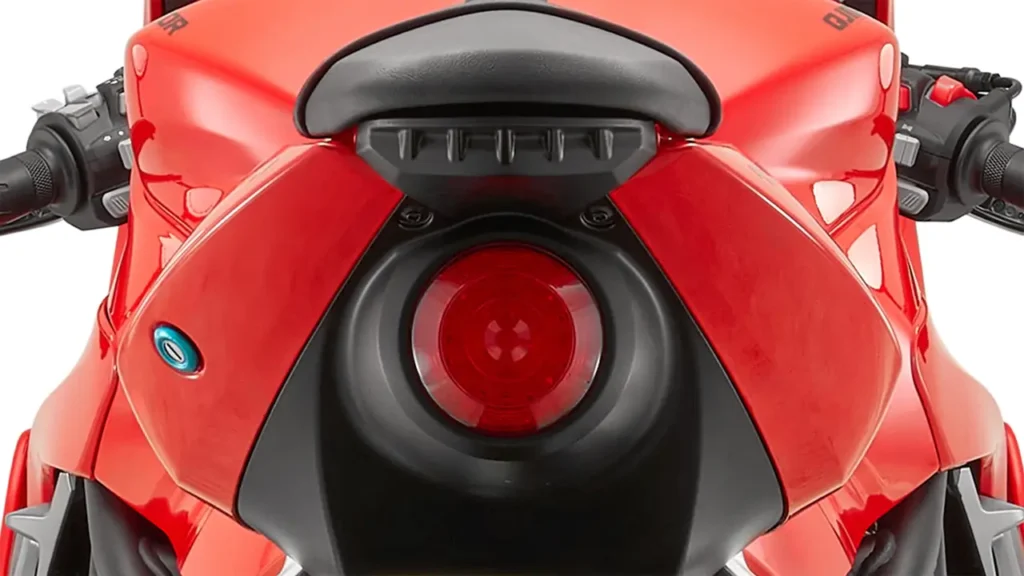
- Lighting: Dual LED headlights with integrated DRLs create an aggressive "gaze" echoing the design of the SRK and SU 9 sportbikes.
5.2. Materials and Ergonomics
The seat height is 780 mm, making the scooter accessible to riders of various heights. The use of hydraulic components in the suspension and braking system (rather than cable-actuated drums found on cheaper models) confirms its flagship status. Visually, the OMO 07 strives to look not like a "gadget" but like a serious vehicle, which is important for attracting a conservative motorcyclist audience.
Chapter 6. Market Strategy and Global Launch
QJMotor uses the EICMA exhibition in Milan as a launchpad for European expansion. Europe is a priority market for the OMO 07 due to strict emissions regulations and developed EV infrastructure.
6.1. Licensing and Target Audience
Positioning the OMO 07 in the 125cc class (L3e-A1) is strategically calculated.
- Audience: It captures both young riders (A1 license) and experienced car drivers seeking a car alternative for suburban-to-city commuting.
- B2B Potential: High range and robust construction make the model attractive for delivery fleets and courier services looking to replace petrol scooters with vehicles offering low running costs.
6.2. Prices and Distribution
The indicative price in the UK, around £5,000, is an aggressive move. This is significantly cheaper than the BMW CE 04 (~£12,000) and competitive against the Silence S01+ (~€7,500). By leveraging the Benelli distribution network and its own channels, QJMotor can rapidly saturate the market, offering the best price-to-performance ratio.
Chapter 7. Conclusion: Synthesis of Technology and Ambition
Summarizing the comprehensive analysis, the term "QJMotor SU 9 electric scooter" is a conflation of two distinct vectors of company development, each revolutionary in its own right.
- SU 9 (Super 9) is a demonstration of traditional motorcycle engineering prowess. Utilizing MV Agusta technology and a 921cc engine, QJMotor proves China's ability to produce elite machinery capable of evoking emotion and competing on the track.
- OMO 07 is a pragmatic yet high-tech response to urbanization challenges. A 96V system, 100+ km range, and 129 km/h speed lift Chinese electric mobility out of the "cheap toy" ghetto into the serious transport segment.
For the consumer, the OMO 07 represents a mature product. Whereas choosing a Chinese electric scooter previously meant compromising quality for price, the OMO 07 offers global-brand level specs while maintaining a price advantage. QJMotor successfully utilizes Geely Group resources to not just follow trends but shape them, offering the market "Five Steeds" for any task—from adrenaline-fueled racing on the SU 9 to silent, efficient commuting on the OMO 07.
Summary Specifications: QJMotor OMO 07
QJMotor OMO 07 Electric Scooter Specifications
| Component | Specification | Note |
|---|---|---|
| Model Name | OMO 07 (Electric Flagship) | |
| Motor Type | Central-motor, air-cooled | Typically offers better weight distribution than hub motors. |
| System Voltage | 96 Volts | Standard high voltage for electric scooters/motorcycles. |
| Battery Capacity | 80 Ah (Li-ion) / ~7.68 kWh | A large capacity for a maxi-scooter, supporting extended range. |
| Range | 115 km (Working condition) | Real-world working range, suitable for daily commutes and medium trips. |
| Top Speed | 129 km/h | Sufficient speed for highway use and safe overtaking. |
| Power | 10 kW (Rated) | L3e-A1 license compliant in the EU. |
| Charging Time | 3.5 hours (30-80% SOC) | Relatively fast charging from low to high usable charge range. |
| Suspension | Hydraulic shock absorbers (Front/Rear) | |
| Brakes | Hydraulic Disc with ABS (Front/Rear) | Safety feature is standard on both wheels. |
| Tires | Front: 120/70 ZR15 | Rear: 150/70 ZR14 | Staggered wheel sizing, typical for maxi-scooters, favoring handling. |
| Dimensions (LxWxH) | 2220 x 780 x 1390 mm | Large frame dimensions for comfort and presence. |
| Seat Height | 780 mm | Accessible seat height for most riders. |
| Curb Weight | 226 kg | Heavy due to battery; typical for the maxi-scooter electric class. |
| Battery Weight | 45 kg | The battery accounts for nearly 20% of the total weight. |
Analyst Note: Potential buyers in the EU and UK should carefully check local homologation data. Despite the nominal 10 kW power allowing operation with A1/B licenses (code 196), the high torque and acceleration dynamics require skills for handling a heavy motorcycle.
Discover more from AutoChina
Subscribe to get the latest posts sent to your email.