1. Executive Summary
Lynk & Co 07 EM-P 2025. The automotive industry is currently navigating a pivotal transition phase, particularly within the D-segment sedan category—a market sector historically dominated by internal combustion engine (ICE) stalwarts from German and Japanese legacy manufacturers. In this context, the 2025 Lynk & Co 07 EM-P emerges not merely as a new product entry but as a strategic manifesto from the Geely Auto Group. It represents the maturation of the “New Premium” philosophy, bridging the gap between mass-market utility and luxury aspiration through the deployment of advanced plug-in hybrid (PHEV) architecture.
This report provides an exhaustive analysis of the Lynk & Co 07 EM-P, dissecting its engineering credentials, market positioning, and technological capabilities. The vehicle, updated for the 2026 model year in late 2025, signifies a departure from the brand’s earlier reliance on pure Volvo-derived aesthetics, embracing instead the sharper, digitized “The Next Day” design language. Furthermore, the 07 EM-P serves as a vessel for Geely’s latest collaborative technologies, integrating the Meizu-developed Flyme Auto operating system and the high-performance NVIDIA DRIVE computing platform.
Financially, the 07 EM-P is positioned with aggressive precision. With a price range of approximately 139,800 to 159,800 RMB (USD 19,760 – 22,580), it undercuts European premium competitors by a significant margin while offering specifications—such as a 1,400+ km combined range, 381 horsepower system output, and roof-mounted LiDAR—that challenge vehicles twice its price. This pricing strategy places it in direct confrontation with domestic giant BYD, specifically contrasting against the utilitarian efficiency of the BYD Qin Plus DM-i and the segment-matching BYD Seal 06 DM-i.
Our analysis indicates that the Lynk & Co 07 EM-P is designed to capture a specific “transitional” demographic: consumers who demand the software-defined vehicle (SDV) experience of a pure EV but remain tethered to the versatility of an internal combustion engine due to infrastructure gaps or long-distance travel requirements.
If you’re curious how far Chinese brands can push comfort and tech, don’t stop at sedans. Check out our full review of the Zeekr 009 luxury electric MPV for Australia and Asia here: https://autochina.blog/zeekr-009-luxury-electric-mpv-review-au-asia/ and see what a real electric lounge on wheels looks like inside and from the driver’s seat.
2. Strategic Market Positioning and Brand Evolution
2.1 The “New Premium” Paradigm
Lynk & Co was founded in 2016 as a joint venture between Geely Auto Group and Volvo Cars with a clear mission: to challenge conventional automotive ownership models and aesthetic norms. The brand positioned itself as “New Premium,” a tier sitting above domestic Chinese mass-market brands but slightly below the established Scandinavian luxury of Volvo. The 07 EM-P reinforces this positioning by democratizing high-end features—such as Nappa leather, massage seats, and LiDAR—making them accessible in the sub-$25,000 bracket.
The “EM-P” nomenclature is critical to this identity. Standing for “Electric Mobility Plus,” it signifies a powertrain philosophy that prioritizes electric motor propulsion while retaining an engine for range extension and high-speed efficiency. This distinguishes Lynk & Co from traditional hybrids (HEVs) that prioritize the engine, and from pure EVs that introduce range anxiety. The 07 EM-P is thus positioned as a “no-compromise” solution, offering the silence and torque of an EV in urban environments with the unlimited range of a petrol vehicle.
2.2 The D-Segment Sedan Renaissance
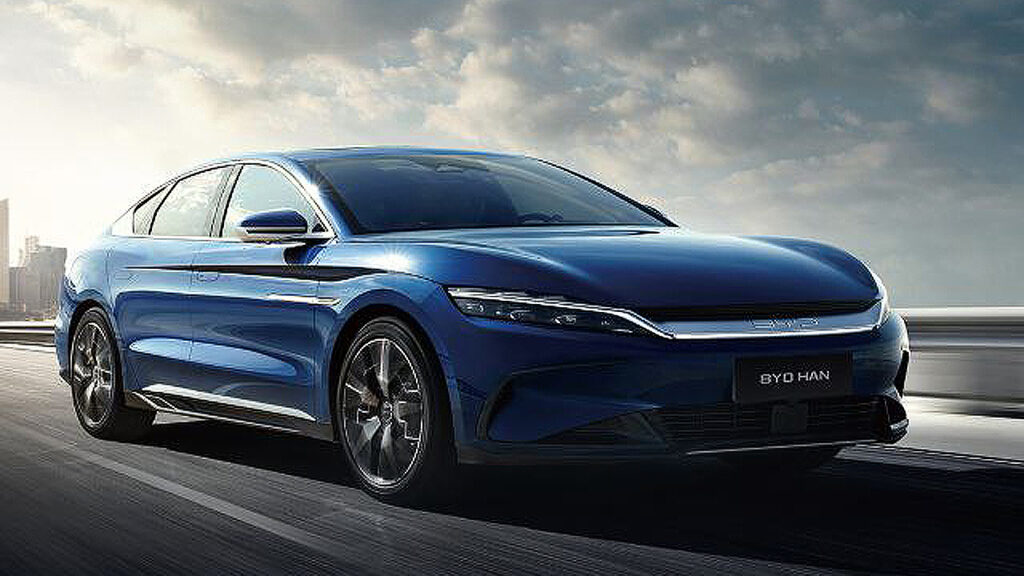
While the global market has trended heavily toward SUVs, the D-segment sedan remains a prestige marker in China and select international markets. The 07 EM-P enters a crowded arena populated by the BYD Han, BYD Seal DM-i, Honda Accord PHEV, and Toyota Camry. However, unlike the Japanese competitors which are seen as conservative, Lynk & Co targets a younger, tech-native demographic. The brand’s marketing emphasizes “connectivity” and “openness,” leveraging its “born global” ethos to appeal to urbanites who view their vehicle as an extension of their digital ecosystem.
The introduction of the 2026 model year update in September 2025, featuring the “Ultra G-Pilot H7” trim, suggests a rapid iteration cycle designed to keep pace with the fierce “software war” in China, where computing power (measured in TOPS) has become as important a metric as horsepower.
If you’re into smart Chinese cars, there’s a good chance you also care about powerful laptops. For a taste of next-gen RTX 50-series performance in a portable machine, check our MECHREVO Yaoshi 16 Ultra breakdown here: https://bestchinagadget.com/ before you decide what to buy next, seriously, performance numbers don’t lie.
3. Design Architecture and Aerodynamic Philosophy
3.1 “The Next Day” Design Language
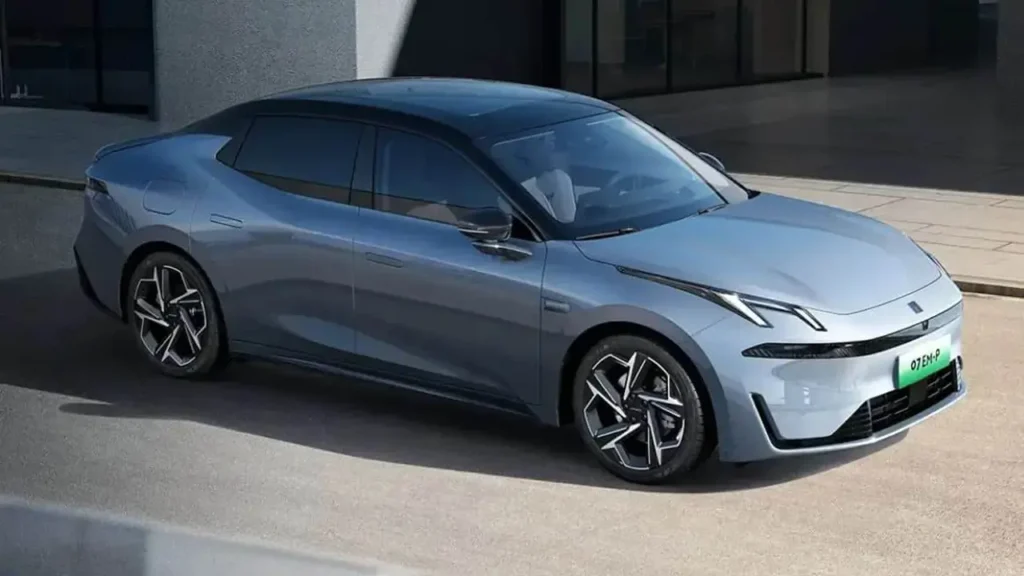
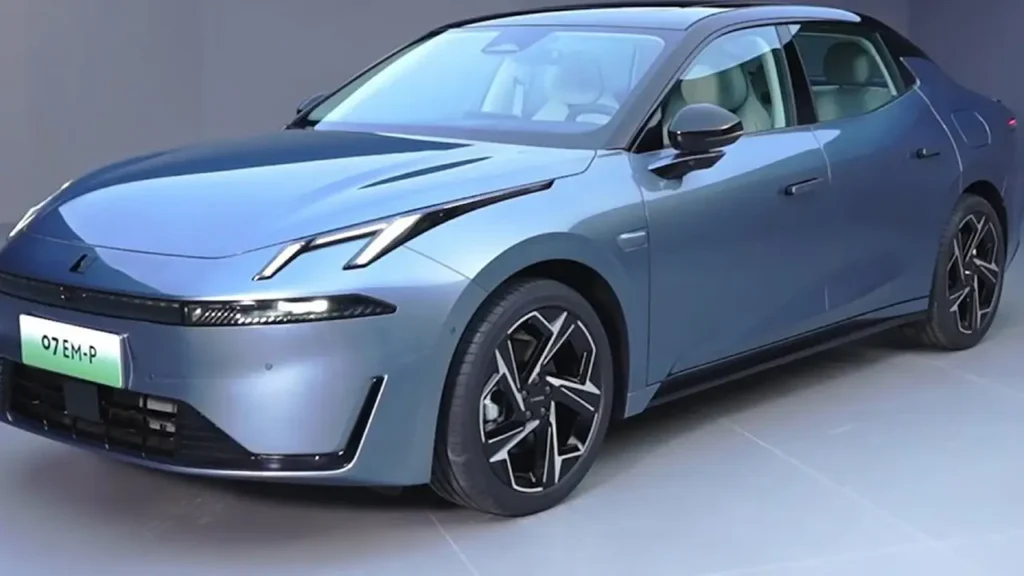
The visual identity of the Lynk & Co 07 EM-P is derived directly from “The Next Day” concept car, unveiled in 2022. This design language represents a significant evolution from the brand’s first-generation vehicles (01, 02, 03), which were characterized by softer, bio-organic shapes often likened to a frog’s face. The 07 EM-P adopts a sharper, more architectural aesthetic.
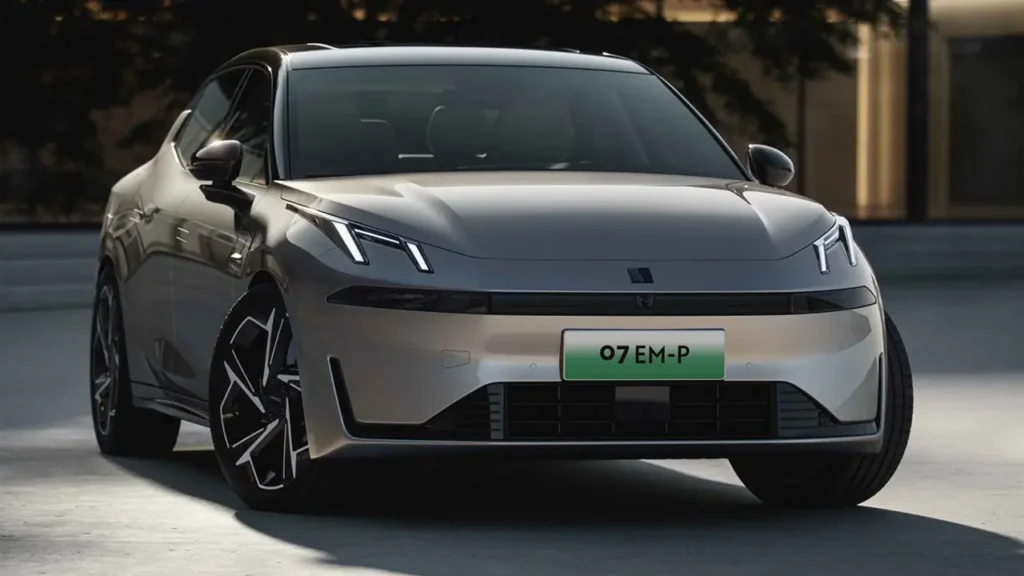
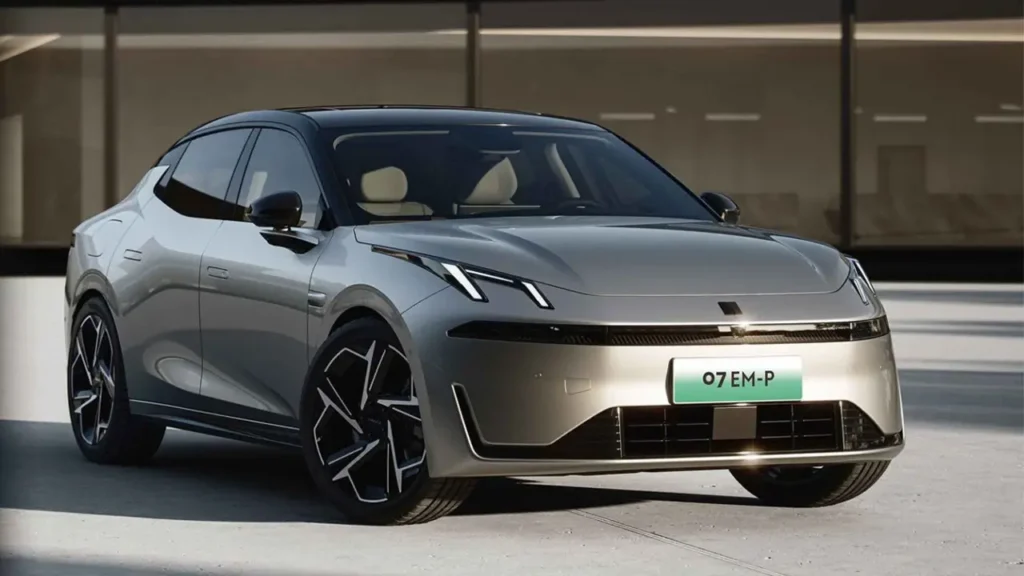
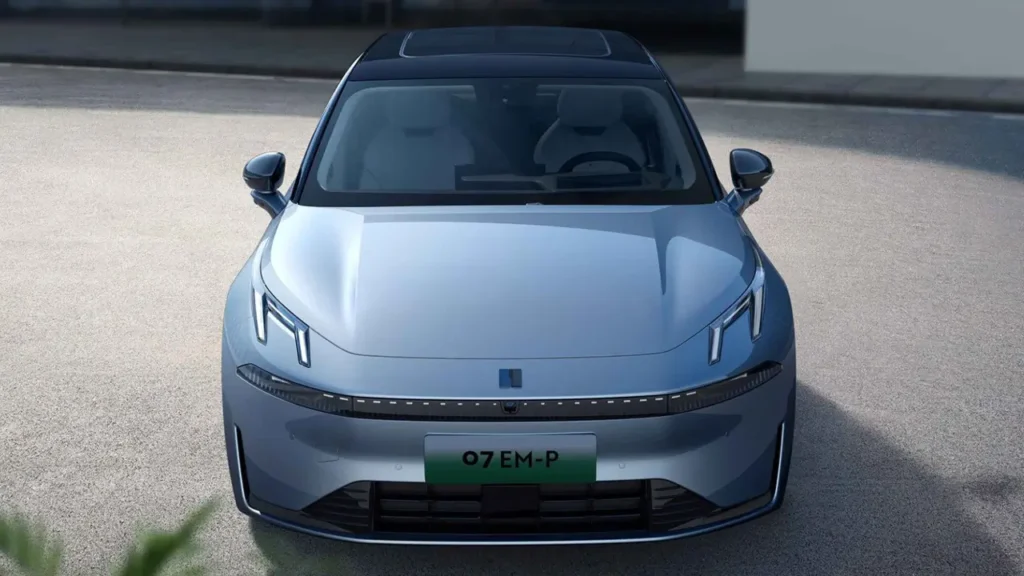
The Front Fascia: The vehicle retains the brand’s signature split-headlight configuration but reinterprets it for the digital age. The daytime running lights (DRLs) now form a distinct “h” shape, officially termed the “Light of Dawn.” These vertical LED strips extend upwards along the hood line, creating a sense of verticality and aggression.
The primary headlight clusters are integrated horizontally into the bumper, connected by a slender black trim piece that emphasizes the car’s width. Notably, the grille is largely closed off—a design cue borrowed from pure EVs—giving the front end a clean, monolithic appearance. Air intake is managed by a functional lower bumper section with active shutters that open only when the thermal management system requires cooling for the 1.5T engine.
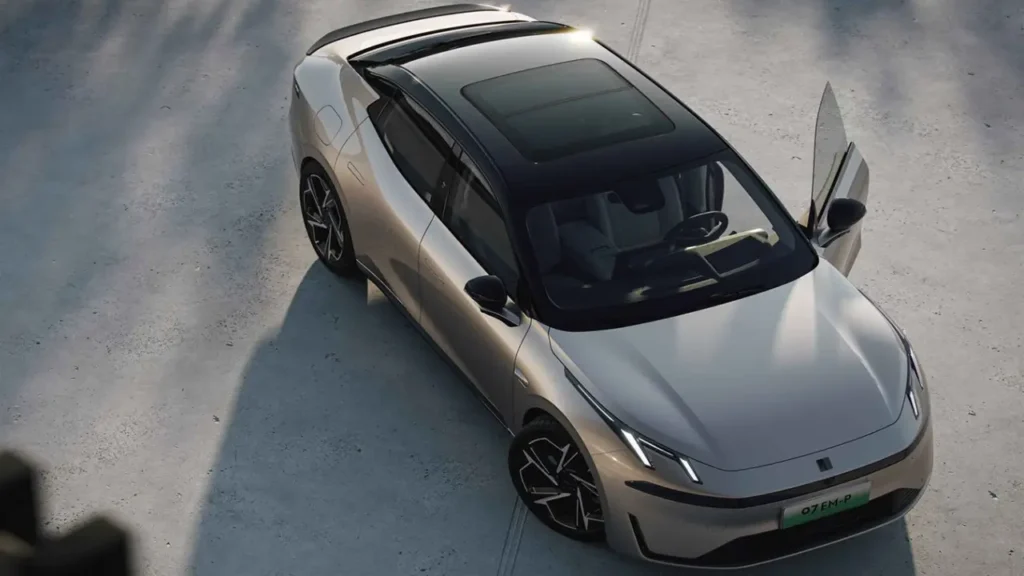
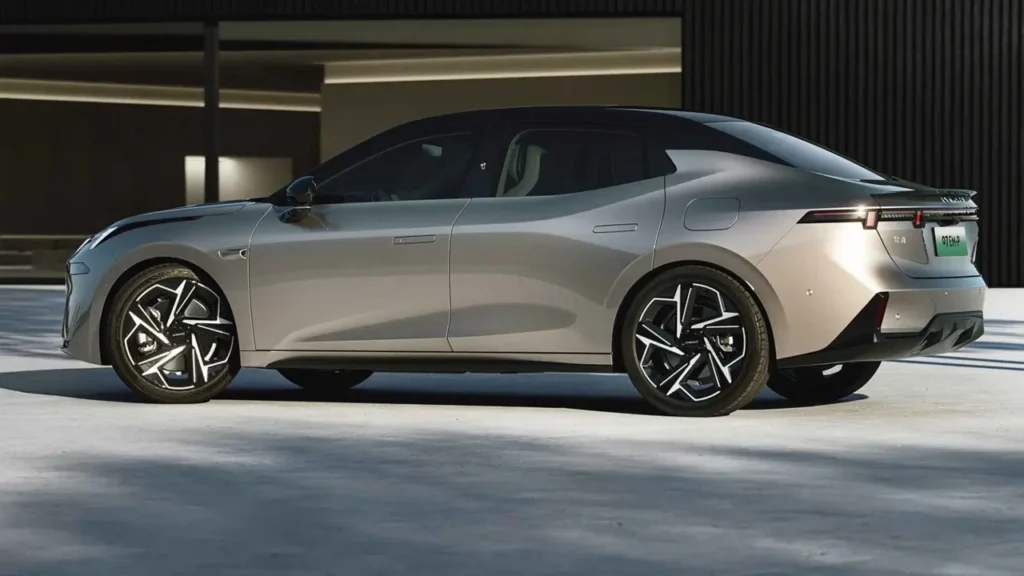
The Silhouette: The side profile is defined by a fastback roofline that slopes dramatically toward the rear, blurring the lines between a traditional three-box sedan and a coupe. The “floating roof” effect is achieved through high-gloss black finishing on the A, B, and C pillars, which visually lowers the cabin height and reduces visual mass. The vehicle features frameless doors—a hallmark of premium coupes—and hidden, flush-mounted door handles that deploy automatically. These elements are not merely aesthetic; they contribute to a lower drag coefficient, thereby improving highway efficiency and reducing wind noise.
The Rear Section: At the rear, the design emphasizes width and stability. The taillights are a “through-type” design, consisting of distinct crystal-like modules that echo the vertical elements of the front DRLs. A subtle “ducktail” spoiler is integrated into the trunk lid, providing a sporty flourish while aiding in aerodynamic separation. The rear bumper features a prominent diffuser element, further signaling the vehicle’s performance intent, although the exhaust tips remain hidden to maintain the “electrified” aesthetic.
3.2 Dimensional Analysis and Platform
The Lynk & Co 07 EM-P utilizes the CMA Evo (Compact Modular Architecture Evolution) platform. This architecture, co-developed with Volvo, has been optimized specifically for new energy vehicles, allowing for better battery packaging and structural rigidity compared to the original CMA platform used in the Volvo XC40 and Lynk & Co 01.
Vehicle Dimensions and Design Analysis (Mid-Size Sedan)
| Dimension | Specification | Comparison & Insight |
|---|---|---|
| Length | 4,835 mm | Increased by ~8mm over previous iterations due to bumper redesigns. It is longer than a BMW 3 Series, placing it firmly in the mid-size category. |
| Width | 1,900 mm | Significantly wider than the BYD Qin Plus (1,837 mm) and comparable to luxury E-segment cars, providing a wide track for stability and shoulder room. |
| Height | 1,480 mm | A relatively low profile contributing to a sporty stance and low center of gravity. |
| Wheelbase | 2,843 mm | The **long wheelbase** pushes the wheels to the corners, maximizing interior legroom, a critical metric for the Chinese market where rear-seat comfort is paramount. |
| Curb Weight | 1,885 kg | Heavy for a sedan, reflecting the dual-motor PHEV system, structural reinforcements, and the 18.99 kWh battery pack. |
| Trunk Capacity | 450 L | Adequate for the class, though the fastback shape limits the vertical loading height compared to an SUV. |
The dimensional data confirms the 07 EM-P's positioning: it is substantially larger than compact sedans like the BYD Qin Plus, offering a footprint that rivals the BYD Seal and Tesla Model 3, prioritizing road presence and passenger volume.
4. Interior Engineering and The "Third Living Space"
4.1 "Four-Seat Sharing" Philosophy
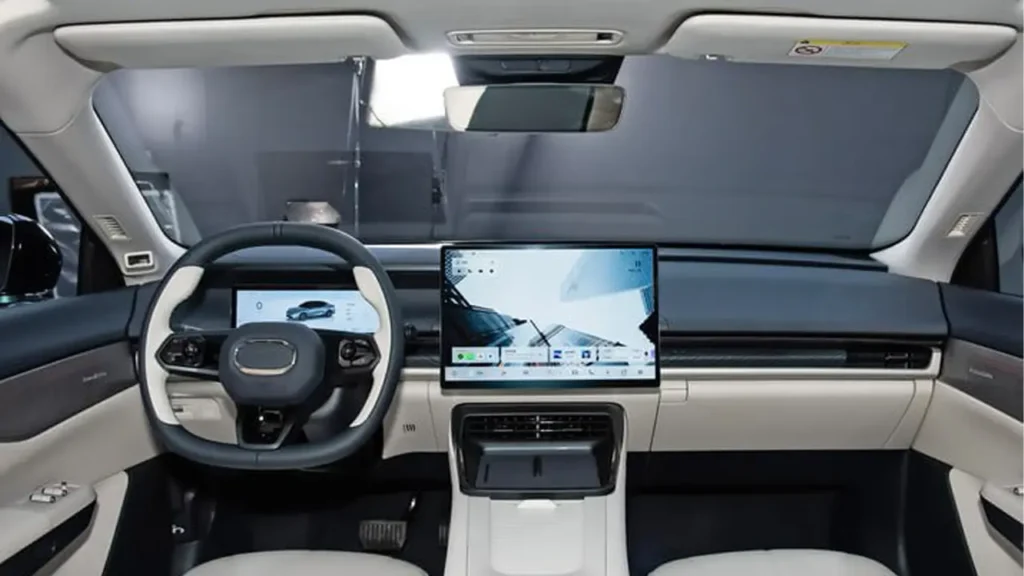
Lynk & Co markets the interior of the 07 EM-P under the concept of "four-seat sharing." This philosophy dictates that comfort should not be the exclusive preserve of the driver or the "boss" seat (rear right). Instead, all four primary seating positions are engineered to provide a first-class experience.
The seats are upholstered in Nappa leather (on Ultra trims) and feature "Cloud-sensing" foam, a multi-density material designed to offer soft initial contact with firm long-term support. Critical to this premium positioning is the inclusion of heating, ventilation, and massage functions for both front and rear passengers—a rarity in this price segment where such features are usually reserved for the front row or higher-tier luxury vehicles. The rear seats also offer 8 degrees of power recline adjustment, allowing passengers to find an optimal resting position.
4.2 The Flyme Auto Digital Ecosystem
One of the most significant upgrades in the 07 EM-P is the adoption of the Lynk Flyme Auto operating system. Following Geely's acquisition of smartphone manufacturer Meizu, the automotive giant has integrated Meizu’s software expertise to address historical complaints regarding infotainment lag in earlier Lynk & Co models.
Hardware Architecture: The system is powered by the Qualcomm Snapdragon 8295 cockpit chip. This 5nm automotive-grade processor represents a generational leap over the ubiquitous Snapdragon 8155. It boasts vastly superior CPU and GPU performance, enabling complex 3D rendering, fluid animations, and the capability to drive multiple high-resolution displays simultaneously without latency.
Display Interfaces:
- Central Control Screen: A 15.4-inch floating touchscreen serves as the command center. It features a 2.5K resolution and ultra-narrow bezels. Uniquely, the screen can be adjusted or rotated (manual or motorized depending on configuration) to reduce glare and optimize reach for the driver.
- Driver Instrument Cluster: A 10.2-inch full LCD screen provides essential driving data.
- AR-HUD: The "Ultra" trims feature a massive 92-inch Augmented Reality Head-Up Display. This system projects navigation prompts, ADAS warnings, and speed data directly onto the road ahead at a virtual distance, reducing the need for the driver to look away from the road.
- Co Pad Integration: The 07 EM-P supports the "Co Pad" ecosystem—proprietary tablets that can be mounted on the back of the front seats. These tablets are fully integrated with the car’s system, allowing rear passengers to control climate, audio, and navigation, or stream media independently.
Software Experience: Flyme Auto introduces a smartphone-like interface with "Smart Bar" dynamic docking, gesture controls, and a "seamless desktop" that transitions between the user's phone and the car screen. The system supports full-scenario voice interaction ("Hey Lynk & Co"), capable of recognizing commands from four distinct sound zones within the car.
4.3 Auditory and Ambient Experience
The cabin ambiance is curated through a partnership with Harman Kardon. The vehicle is equipped with a 23-speaker sound system, delivering an equivalent of 1600W (cited as 1260W output in some contexts) and featuring Logic7 surround sound technology. This audio suite is complemented by an RGB ambient lighting system capable of 256 colors. The lighting is not static; it is "rhythmic," pulsing in sync with the music, drive modes, or ADAS warnings, creating an immersive "streamer" effect throughout the cabin.
Furthermore, the 07 EM-P emphasizes acoustic isolation. Standard equipment includes frameless doors with double-layer laminated soundproof glass, which significantly attenuates high-frequency wind noise and traffic sounds, reinforcing the "library-quiet" aspiration of the EM-P powertrain.
5. Powertrain Engineering: The EM-P Paradigm
The "EM-P" system is the heart of the Lynk & Co 07. Unlike simpler hybrid systems used by competitors, the EM-P (E-Motive Plug-in) is a highly complex, multi-mode architecture designed to maximize performance at high speeds without sacrificing low-speed efficiency.
5.1 The Internal Combustion Engine (ICE)
The system utilizes the BHE15-BFZ 1.5-liter turbocharged four-cylinder engine. This engine is a cornerstone of Geely’s "NordThor" powertrain family.
- Thermal Efficiency: It achieves a remarkable thermal efficiency of 47.3%. This efficiency is attained through the Miller cycle combustion process, a high compression ratio, and advanced thermal management systems. High thermal efficiency ensures that when the engine is running—either to generate electricity or drive the wheels—it extracts the maximum amount of energy from every drop of fuel.
- Output: The engine alone produces 120 kW (161 hp) and 255 Nm of torque. While modest on its own, its primary role in the hybrid ecosystem is to support the electric motors and sustain high-speed cruising.
5.2 The 3-Speed Dedicated Hybrid Transmission (DHT)
The defining engineering feature of the Lynk & Co 07 EM-P is its 3-speed DHT Pro transmission. This distinguishes it sharply from BYD’s DM-i system, which uses a single-speed reduction gear (E-CVT).
- Mechanism: The 3-speed gearbox allows the engine to operate in its most efficient RPM band across a wider range of vehicle speeds. In a single-speed hybrid, the engine typically cannot drive the wheels directly until speeds reach approx. 65-70 km/h. Below this, the engine must act as a generator (series mode). The 3-speed DHT allows the engine to engage directly at speeds as low as 20 km/h (using 1st gear) for rapid acceleration capability (Launch Mode). At highway speeds (using 3rd gear), it keeps the engine RPM low, reducing noise and fuel consumption.
- Performance Benefit: This multi-gear approach enables a higher top speed (190 km/h) and better sustained acceleration at high speeds (e.g., overtaking from 100 to 120 km/h), addressing a common weakness of single-speed hybrids.
5.3 Electric Motors and System Output
The vehicle employs a P1+P3 dual-motor configuration:
- P1 Motor: Connected to the engine, functioning primarily as a generator to charge the battery and smooth out the engine's start/stop transitions.
- P3 Motor: The primary traction motor located on the front axle. It delivers 160 kW to 180 kW (depending on trim/boost mode) and 350 Nm of torque directly to the wheels.
- Combined Output: The system delivers a total combined power of 280 kW (376 hp) and a massive 615 Nm of torque. Some marketing materials reference a peak "300 kW" output, likely a transient overboost function available when the battery is fully charged. This power allows the 07 EM-P to accelerate from 0 to 100 km/h in just 6.5 seconds, firmly placing it in the performance sedan territory.
5.4 Battery Technology and Range
The energy storage system is supplied by top-tier Chinese battery manufacturers CATL and CALB.
- Chemistry: Lithium Iron Phosphate (LFP). LFP batteries are chosen for their superior thermal stability, safety, and longevity compared to Nickel Manganese Cobalt (NMC) batteries, albeit with a slight penalty in energy density.
- Capacity: The battery pack has a capacity of 18.99 kWh (or 18.4 kWh in some listings).
- Electric Range: This capacity yields a pure electric range of 126 km (CLTC) or approximately 103 km (WLTC). This range is sufficient to cover the daily commuting needs of most urban users, allowing the vehicle to operate as a pure EV during the workweek.
- Combined Range: When the battery is depleted and the 60-liter fuel tank is utilized, the vehicle boasts a combined range exceeding 1,400 km (CLTC), making it an exceptional long-distance tourer.
- Charging: The vehicle supports DC fast charging, capable of replenishing the battery from 30% to 80% in approximately 27 minutes (0.3 hours). It also features V2L (Vehicle-to-Load) capability with a 3.3 kW discharge output, allowing the car to power camping equipment or small appliances.
6. Intelligent Mobility: ADAS, LiDAR, and Compute
The 2026 Lynk & Co 07 EM-P (released late 2025) places a heavy emphasis on intelligent driving capabilities, specifically through the introduction of the "Ultra G-Pilot H7" trim level. This move is a strategic response to the "intelligence war" in the Chinese market, where advanced driver-assistance systems (ADAS) are key differentiators.
6.1 Sensor Hardware and LiDAR Integration
The flagship feature of the updated model is the inclusion of a roof-mounted LiDAR unit. Positioned in a "watchtower" configuration above the windshield, this sensor provides high-fidelity, long-range 3D mapping of the environment, unaffected by lighting conditions. This is a significant upgrade over camera-only systems, enhancing safety and reliability in complex scenarios.
Complementing the LiDAR is a comprehensive sensor suite comprising:
- 11 High-Definition Cameras: providing 360-degree visual coverage.
- 5 Millimeter-Wave Radars: for long-range object detection and speed tracking.
- 12 Ultrasonic Sensors: for precise short-range proximity detection (parking).
6.2 The NVIDIA DRIVE Platform
To process the massive data influx from these sensors, the 07 EM-P leverages the NVIDIA DRIVE computing platform.
- Standard Trims: Utilize the NVIDIA Orin-Y chip, offering approximately 200 TOPS (Tera Operations Per Second) of computing power.
- G-Pilot H7 Trim: Upgrades to a dual-chip or advanced configuration (referenced as NVIDIA Thor or high-spec Orin) delivering up to 700 TOPS. This immense processing power is required for the "Thousand Miles of Vastness" intelligent driving system.
6.3 ADAS Capabilities (NOA)
The hardware enables Geely’s "Navigation on Autopilot" (NOA) features:
- High-Speed NOA: The vehicle can autonomously manage highway driving, including ramp entry and exit, automatic lane changing to overtake slower traffic, and adaptive cruise control with lane centering.
- Urban NOA: While rollout depends on regulatory approval and OTA updates, the hardware is "future-proofed" for urban autonomous navigation, including traffic light recognition and complex intersection management.
- Active Safety: The system includes a robust suite of active safety features, including Automatic Emergency Braking (AEB), Lane Keeping Assist (LKA), Blind Spot Detection (BSD), and Rear Collision Warning (RCW).
7. Chassis, Dynamics, and Ride Quality
7.1 Suspension Architecture
The 07 EM-P is built on a chassis designed to balance comfort with agility.
- Front Suspension: MacPherson independent suspension.
- Rear Suspension: Multi-link independent suspension. This setup is superior to the torsion beam rear suspension found in lower-cost competitors (like the base BYD Qin Plus), offering better wheel articulation and ride isolation over uneven surfaces.
- Anti-Roll Bars: The vehicle features a large-diameter (26.5 mm) front transverse stabilizer bar, which effectively reduces body roll during cornering, contributing to a "flatter" and more confident cornering posture.
7.2 Ride and Handling Balance
Initial driving impressions and chassis tuning data suggest a setup that leans toward "sporty comfort." The heavy battery pack, mounted low in the chassis, lowers the center of gravity, enhancing stability. The 3-speed DHT plays a role here as well; by keeping the engine in optimal RPMs, it reduces the vibration and harshness (NVH) transmitted to the cabin. The chassis is tuned to provide precise road feedback—consistent with Lynk & Co's "European" tuning heritage derived from Volvo—while filtering out high-frequency road imperfections.
8. Comparative Analysis: Lynk & Co 07 EM-P vs. BYD Competitors
To understand the 07 EM-P's market value, it must be compared against the dominant force in the PHEV sector: BYD. The user query specifically requests a comparison with the BYD Qin Plus, but a nuanced analysis must also include the BYD Seal 06 DM-i, which is the true segment rival.
8.1 Comparison vs. BYD Qin Plus DM-i
The BYD Qin Plus DM-i is the sales volume leader in China, but it occupies a different market tier.
PHEV Sedan Comparison: Lynk & Co 07 EM-P (Premium) vs BYD Qin Plus DM-i (Economy)
This comparison highlights how the PHEV segment ranges from cost-focused efficiency (Qin Plus) to performance-oriented premium mobility (Lynk & Co 07), despite sharing the basic plug-in hybrid concept.
| Feature | Lynk & Co 07 EM-P (2025) | BYD Qin Plus DM-i (Honor Edition) | Analysis |
|---|---|---|---|
| Segment | Mid-size Premium Sedan (D-Segment) | Compact Economy Sedan (A-Segment) | The 07 is significantly larger, wider, and more luxurious. |
| Price Point | ~$19,700 - $22,500 USD | ~$11,000 - $14,000 USD | A massive price gap targeting different demographics. |
| Powertrain | 1.5T + 3-Speed DHT (381 hp) | 1.5L + E-CVT (~180-197 hp) | Lynk offers nearly **double the power** and a multi-gear transmission for performance; BYD focuses on pure efficiency. |
| Suspension | Multi-link Independent Rear | Torsion Beam Rear | Lynk offers superior ride quality and handling; Qin Plus uses a cheaper, simpler suspension. |
| Tech | Snapdragon 8295, LiDAR, NOA | DiLink (Mid-range chip), Basic L2 | Lynk is a "smart car" with high-end chips for advanced driving assistance; Qin Plus is a "connected car." |
| Interior | Nappa Leather, Massage Seats | Faux Leather, Basic Comfort | Lynk competes with entry-level luxury; Qin competes with Corolla/Civic. |
Verdict: Comparing the 07 EM-P to the Qin Plus is like comparing a BMW 3 Series to a Toyota Corolla. The Qin Plus is a utilitarian champion of value and efficiency. The Lynk & Co 07 is a lifestyle choice offering performance, luxury, and advanced tech for buyers upgrading from a vehicle like the Qin Plus.
8.2 Comparison vs. BYD Seal 06 DM-i
The BYD Seal 06 DM-i (launched mid-2024) is the direct competitor, priced similarly and targeting the same mid-size sedan market.
PHEV Technology Comparison: Performance vs. Efficiency
This comparison highlights the divergence in PHEV design: Lynk & Co prioritizes performance and driving feel with a multi-speed transmission, while BYD focuses on maximum fuel efficiency and range using their fifth-generation DM-i technology.
| Feature | Lynk & Co 07 EM-P | BYD Seal 06 DM-i | Analysis |
|---|---|---|---|
| Hybrid System | EM-P (Performance): 3-Speed DHT, Turbo Engine. | DM-i 5.0 (Efficiency): Single-speed E-CVT, NA Engine. | Lynk wins on **highway passing power** and top speed. BYD wins on **absolute fuel economy** (2.9L/100km claimed vs Lynk's 4.8L/100km). |
| Range | 1,400+ km | 2,000+ km (Claimed) | BYD's 5th Gen DM-i tech offers record-breaking range, though Lynk's 1400km is still excessive for most needs. |
| Driving Dynamics | Sport-tuned, precise steering. | Comfort-tuned, softer ride. | Lynk appeals to drivers seeking engagement; BYD appeals to families prioritizing comfort. |
| Aesthetics | Edgy, polarizing, "Cyberpunk." | "Marine Aesthetics," organic, safe. | Lynk's design is more distinctive/aggressive. |
Verdict: The choice between these two depends on priority. The BYD Seal 06 is the rational choice for maximum fuel savings and comfort. The Lynk & Co 07 EM-P is the emotional choice for driving engagement, computing power, and premium interior execution.
9. Commercial Outlook: Pricing, Trims, and Europe Launch
9.1 Pricing Structure (China Market 2026 MY)
Geely has adopted an aggressive pricing strategy to maintain relevance in the Chinese "price war."
Vehicle Trim Comparison and Pricing (126 Long Range)
This table compares the three main trims, demonstrating the transition from a highly value-focused base model to a top-tier variant featuring advanced hardware (LiDAR, Orin-X) for full Navigation on Autopilot (NOA) capability.
| Trim | Price (RMB) | Price (USD Approx.) | Key Features |
|---|---|---|---|
| 126 Long Range Max | 139,800 | ~$19,660 | Standard L2 ADAS, 15.4" Screen, 18.4 kWh Battery, 360 Camera, 126km EV range. (**Excellent value proposition**). |
| 126 Long Range Ultra | 149,800 | ~$21,070 | Adds Nappa Leather, AR-HUD, 23-Speaker Harman Kardon Audio, Rear Tinted Glass, Massage Seats. (Focus on premium comfort and audio.) |
| 126 Ultra G-Pilot H7 | 159,800 | ~$22,480 | **Flagship:** Adds **Roof LiDAR** [Image of automotive roof-mounted LiDAR sensor] , **NVIDIA Thor/Orin-X Chip** , High-level NOA capability, 19-inch wheels. (Enables advanced urban autonomous driving). |
Note: Prices reflect launch specials effective late 2025. Exchange rate: 1 USD ≈ 7.11 RMB.
9.2 The Europe Launch Dilemma
While Lynk & Co has successfully penetrated the European market with the 01 SUV (via its subscription model), the arrival of the 07 EM-P sedan in Europe remains unconfirmed and strategically complex.
- Market Trends: European consumers overwhelmingly favor SUVs or Hatchbacks. The sedan market ("saloon") is shrinking and is heavily dominated by fleet sales of German legacy brands (BMW 3 Series, Mercedes C-Class).
- Internal Cannibalization: Geely owns Volvo and Polestar. Introducing a high-spec, competitively priced PHEV sedan (07 EM-P) risks cannibalizing sales of the Volvo S60 Recharge and Polestar 2.
- Alternative Strategy: Reports indicate Lynk & Co is prioritizing the launch of the Lynk & Co 02 (Z20 in China) for Europe. The 02 is a pure electric coupe-crossover, aligning better with Europe's rapid shift to BEVs and the demand for crossover body styles.
- Export Outlook: While a European launch is uncertain, the 07 EM-P is highly likely to be exported to markets where sedans retain prestige, such as the Middle East (GCC), Southeast Asia (Philippines), and Central Asia (Azerbaijan), following the path of the Lynk & Co 03 and 09.
10. Owner Experience and Reliability Prognosis
10.1 Real-World Fuel Consumption
While the official WLTC fuel consumption is rated at an incredibly low 0.99 L/100km (combined cycle), real-world data from owners and tests paints a more nuanced picture. In "feed-in" or charge-sustaining mode (when the battery is empty), the 07 EM-P consumes approximately 4.8L to 6.0L per 100km. This is efficient for a 1.9-ton vehicle but trails the sub-4.0L figures achieved by the simpler BYD DM-i system. However, the Lynk & Co maintains better fuel economy at high highway speeds (120 km/h+) due to its 3-speed transmission.
10.2 Software and Connectivity
Early Lynk & Co models (specifically the 01) faced criticism for infotainment lag and buggy software. The transition to the Snapdragon 8295 chip and Flyme Auto OS in the 07 EM-P appears to have largely resolved these latency issues, offering a smooth, responsive interface. However, a potential issue for international buyers (grey market imports) is the lack of native Apple CarPlay and Android Auto support in the domestic Chinese OS, which relies heavily on the local app ecosystem.
10.3 Noise and Build
Owners and reviewers have noted excellent material quality and cabin isolation. However, some reports from related models (Lynk & Co 08 and 02) mention wind noise originating from the frameless side mirrors at highway speeds. It remains to be seen if the 07 EM-P's specific aerodynamic profile mitigates this, though the double-glazing is a proactive measure against it.
11. Conclusion
The 2025 Lynk & Co 07 EM-P stands as a testament to the rapid evolution of the Chinese automotive industry. It effectively renders the "economy vs. luxury" dichotomy obsolete by offering flagship-level technology—LiDAR, Nappa leather, 23-speaker audio, and high-performance PHEV architecture—at a price point traditionally occupied by basic commuter cars.
For the consumer, the 07 EM-P represents a compelling "transitional" vehicle: it offers the electric driving experience and digital intelligence of a Tesla without the range anxiety, packaged in a chassis that delivers European levels of driving refinement. While its European launch remains uncertain due to market dynamics, its presence in China and export markets forces competitors, including BYD and legacy brands, to accelerate their own innovation cycles. It is not just a car; it is a benchmark for the "New Premium" era.
Discover more from AutoChina
Subscribe to get the latest posts sent to your email.