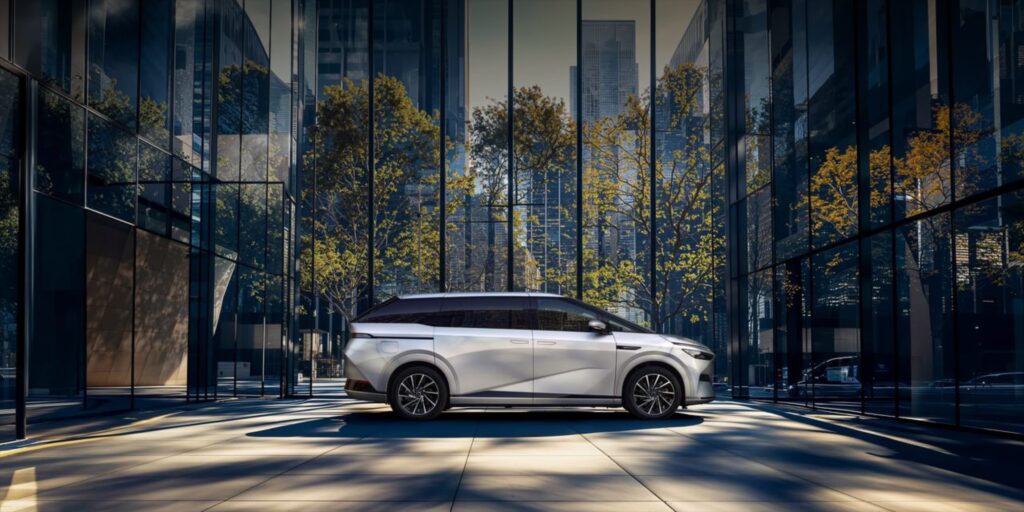
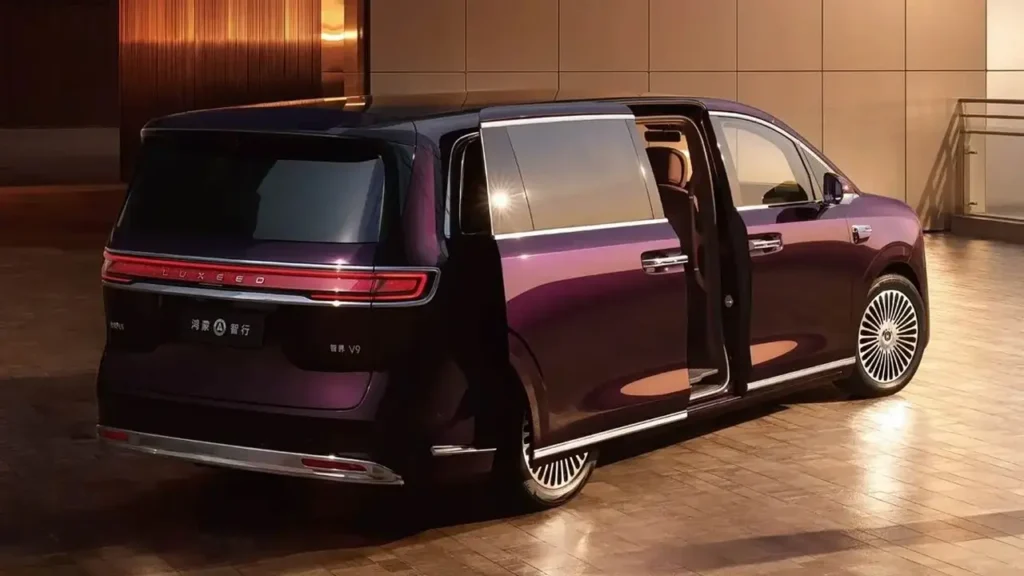
There’s a new kind of minivan coming out of China, and it’s unlike anything the segment has seen before. The Luxeed V9 electric minivan isn’t just a people mover with a big battery — it’s a rolling showcase of what happens when one of the world’s most ambitious tech companies decides to rewrite the rulebook for luxury family transport. Developed jointly by Huawei and Chery under the Harmony Intelligent Mobility Alliance (HIMA), the Huawei Luxeed V9 is positioned as a true flagship — a vehicle that places cutting-edge intelligent driving, a fully connected smart cockpit, and class-leading comfort into a single, spacious package. If you’ve been watching the electric MPV space, this is the model you’ve been waiting to learn more about.
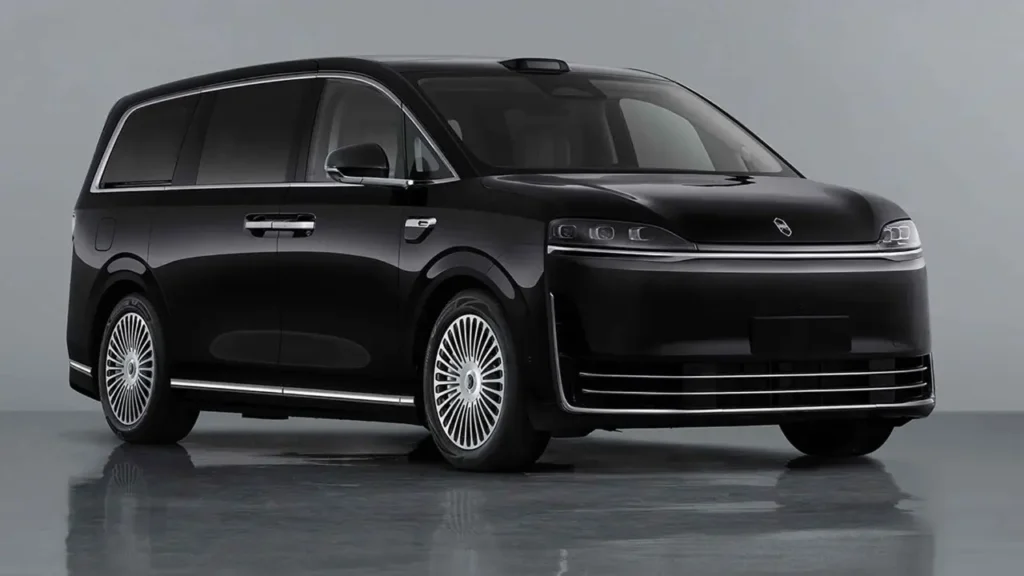
What Is the Huawei Luxeed V9 — And Why Does It Matter?
To understand why the Luxeed V9 electric minivan is generating so much excitement, you first need to understand the partnership behind it. Luxeed is a premium electric vehicle manufacturer owned by Chery, operating in cooperation with Huawei under the Harmony Intelligent Mobility Alliance (HIMA), which was established in November 2023. Under this alliance, Huawei handles the intelligent side of things — product planning, software, autonomous driving technology, and user experience — while Chery manages manufacturing and supply chain execution.
The brand already has two successful models to its name: the S7 sedan and the R7 crossover SUV. From January to November 2025, Luxeed delivered 81,391 units, demonstrating real traction in a competitive market. Now the brand is ready to take a significant step forward. The V9 is Luxeed’s first minivan, and it carries considerable symbolic weight within the HIMA ecosystem. The “V” in Luxeed V9 signifies “Victory,” while the “9” denotes its status as a technical flagship within the Harmony Intelligent Mobility Alliance product lineup. That naming philosophy tells you everything about how seriously Huawei and Chery are taking this vehicle.
Luxeed V9 Specs Overview
When it comes to sheer size and presence, the Luxeed V9 specs are immediately impressive. The Luxeed V9 is a full-size MPV measuring 5,359 mm long, 2,009 mm wide, and 1,879 mm tall, with a long 3,250 mm wheelbase. Those proportions place it firmly in the luxury full-size category, comparable to the biggest offerings from European premium brands — but with a distinctly Chinese tech-forward approach.
The vehicle rides on a dedicated extended platform. The Luxeed V9 is built on the modular Chery E0X-L platform, which is also used in the Exlantix ET, Exlantix ES, and other Luxeed vehicles. This architecture was purpose-built to support both battery electric and range-extended configurations, making it versatile enough to serve very different customer needs.
Here’s a quick look at the core Luxeed V9 specs in one place:
| Parameter | Specification |
|---|---|
| Body Length | 5,359 mm |
| Body Width | 2,009 mm |
| Body Height | 1,879 mm |
| Wheelbase | 3,250 mm |
| Platform | Chery E0X-L |
| Powertrain Options | BEV (pure electric) / EREV (range-extended) |
| Battery Supplier | CATL |
| Voltage Architecture | 800V Silicon Carbide |
| Seating Layout | 2+2+3 (7 seats) |
| LiDAR | 192-line, roof-mounted |
| ADAS Level | Level 3-ready (Huawei Qiankun ADS) |
| Cockpit OS | HarmonyOS |
Luxeed V9 Huawei DriveONE Platform — Power With Purpose
One of the most technically significant aspects of the Luxeed V9 electric minivan is the powertrain architecture that sits beneath it. The MPV is built on Huawei’s DriveONE 800V silicon-carbide platform and the E0X-L architecture, and uses Huawei’s Giant Whale battery system. This 800-volt setup is a major advantage over conventional 400V electric vehicles — it enables significantly faster charging speeds, reduces energy losses during power delivery, and contributes to better overall efficiency even in a large, heavy vehicle like a full-size MPV.
The Luxeed V9 Huawei DriveONE system is the same class of powertrain architecture that underpins other HIMA flagship vehicles. What makes it especially relevant in the context of the V9 is the EREV configuration. The Luxeed V9 is equipped with Huawei’s Snow Owl intelligent range extender system, which combines an electric drivetrain with a 1.5-litre turbocharged range-extender engine supplied by Chery Automobile. The engine produces a maximum output of 115 kW and functions primarily to recharge the battery rather than drive the wheels directly.
This is a smart approach to the range anxiety problem that continues to affect many EV buyers. By keeping a small combustion engine on board purely for generating electricity — rather than directly propelling the vehicle — the engineers have maintained the smooth, quiet, electric-first driving experience while dramatically extending how far the V9 can travel between stops. The result is a vehicle that drives like an EV, but has a range that rivals conventional luxury cars on long journeys.
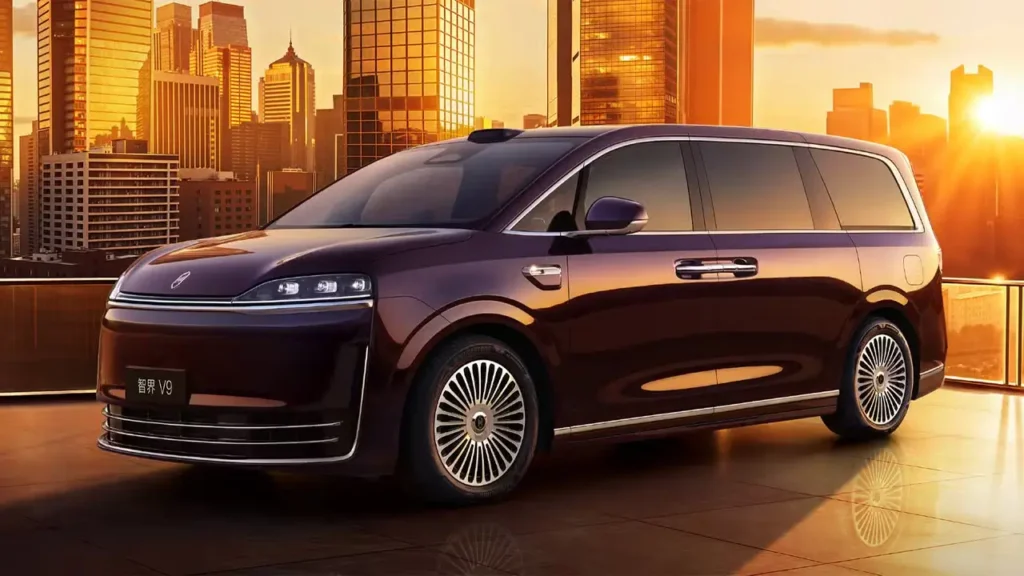
Luxeed V9 Range and Battery — Going the Distance
Perhaps no single number captures the ambition of the Luxeed V9 more than its range figure. Under the CLTC test cycle, the combined driving range is stated to exceed 1,250 km, positioning the V9 as a long-distance solution for buyers hesitant to rely solely on battery charging infrastructure.
To put that in context: most battery electric vehicles on the market today offer between 400 and 700 km of range under favorable conditions. A figure exceeding 1,250 km — achieved through the combination of the main battery pack and the range-extender system — means the Luxeed V9 can cover serious ground without the driver needing to make charging decisions that interrupt a journey.
For the pure electric version, the Luxeed V9 range picture is also interesting. The Luxeed V9 has three pure electric driving ranges of 158 km, 223 km, and 210 km under WLTC conditions, with a comprehensive range of 1,200 km. The pure electric ranges reflect the different battery configurations available across trim levels, while the full 1,200+ km figure applies to the EREV variant with the range extender running.
The EREV version is expected to be the primary sales driver, featuring a large battery solution that offers an estimated pure electric range of up to 400 km. Batteries for all configurations are supplied by CATL, China’s leading battery manufacturer — a supplier whose cells are found in some of the most capable EVs in the world. This partnership ensures that the V9’s battery chemistry meets the highest standards for energy density, thermal management, and long-term cycle life.
Luxeed V9 HarmonyOS Cockpit — Intelligence You Can Feel
If DriveONE is what moves the Luxeed V9, then the HarmonyOS cockpit is what makes it truly alive. This is where Huawei’s software expertise becomes tangible for every passenger in the vehicle, and it’s one of the most compelling arguments for why the Luxeed V9 stands apart from traditional luxury MPVs.
On January 20, 2026, Huawei announced plans for Qiankun ADS 5.0 and a specialized HarmonyOS 6 cockpit system version called HarmonySpace 6, planned for an April 2026 launch. This means the V9 is set to debut alongside one of the most advanced versions of Huawei’s automotive software ecosystem — not a legacy system, but a genuinely next-generation platform.
The Luxeed V9 HarmonyOS cockpit integrates multimedia, navigation, climate control, intelligent driving feedback, and AI services into a single, unified interface. Huawei’s HarmonyOS-powered cockpit runs the entire system, paired with the Qiankun ADS advanced driving suite. For passengers in the second row, this means access to a connected, responsive entertainment and comfort ecosystem that doesn’t feel like an afterthought — it’s the central design principle.
The vehicle features triple screens up front, a ceiling entertainment screen, and Huawei’s HarmonyOS cockpit system. The combination of multiple display surfaces and a deeply integrated operating system creates an environment that feels closer to a premium private aircraft than a conventional family vehicle. For business users, remote workers, or families on long trips, this level of in-car connectivity is genuinely transformative.
Luxeed V9 Level 3 ADAS Technology — Driving Into the Future
The intelligent driving system on the Luxeed V9 is one of its most headline-grabbing technical features. Huawei’s ADS driver-assistance system supporting Level 3 autonomous driving will be used in the Luxeed V9. Level 3 autonomy is a meaningful threshold — it means the system can handle the driving task independently in defined conditions, allowing the driver to genuinely disengage attention rather than simply monitoring an assisted system.
The Luxeed V9 Level 3 ADAS capability is built on serious hardware. Given its flagship status, the Luxeed V9 is anticipated to integrate Huawei’s Qiankun Advanced Driving System (ADS) solution, featuring four lidar sensors to support high-speed L3-assisted driving capabilities. The vehicle also carries a new 192-line LiDAR sensor mounted on the roof, supplemented by cameras positioned on the front fenders for enhanced situational awareness.
The Huawei Tuling platform is equipped with a multi-modal fusion perception system, DATS (Dynamic Adaptive Torque System), and xMotion intelligent body collaborative control system. This means the intelligence doesn’t stop at object recognition — it extends to how the vehicle dynamically adjusts its suspension, braking, and power delivery in real time, creating a safer and more composed ride even in challenging conditions. For a seven-seat family MPV, that kind of holistic intelligent management is genuinely impressive.
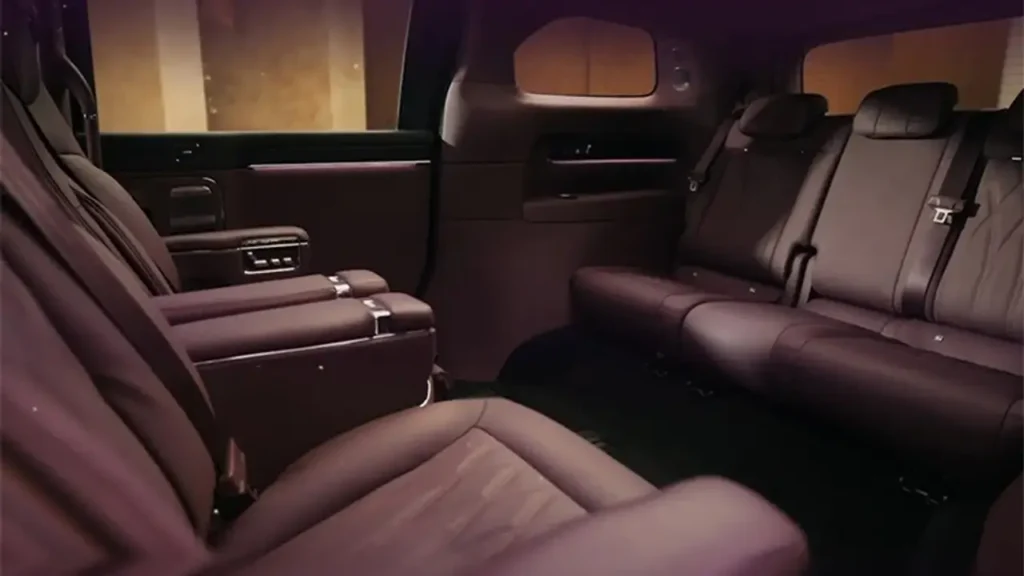
Luxeed V9 Interior and Luxury Comfort — A Cabin Like No Other
Step inside the Luxeed V9 and the philosophy shifts from engineering excellence to human experience. The Luxeed V9 interior has been designed around the idea that a luxury MPV should feel like a private sanctuary — and the feature list reflects that ambition thoroughly.
The V9 uses a 2+2+3 seating layout and comes with dual zero-gravity second-row seats. These seats get leg rests, extra support, and can rotate up to 180 degrees, turning the cabin into a mobile lounge. The zero-gravity seat concept, originally popularized by NASA research into astronaut seating positions, distributes body weight in a way that dramatically reduces fatigue on long journeys. Being able to rotate 180 degrees adds a social dimension to the cabin — passengers can face each other for conversation or business discussions.
The entire series is equipped with electric sliding doors and adopts a 2+2+3 seating layout. Additionally, dual independent zero-gravity seats with legrests and supports 180-degree rotation, triple screens, a ceiling entertainment screen, an oxygen generator, and a refrigerator are all present.
The oxygen generator is a particularly interesting touch — designed to maintain optimal air quality inside the cabin, it’s the kind of wellness feature you’d expect from a first-class lounge, not a car. The built-in refrigerator keeps drinks and snacks at the ideal temperature for any journey. And then there’s the safety innovation that the Luxeed V9 interior is making history with: the Luxeed V9 will be the first production vehicle with airbags built directly into the seats, providing head protection. The system receives data from the ADAS complex and pre-reclines the seatbacks to a safer position. The seats are equipped with built-in seat belts and an integrated airbag that activates at an early stage of a collision, reducing body movement inertia and decreasing load on the lumbar region of the spine.
This helmet-style airbag system is genuinely unprecedented in a production vehicle. It reflects a sophisticated integration between the car’s intelligent driving systems and its passive safety architecture — a seamless union that could represent the next evolution of occupant protection technology.
Luxeed V9 Price China — Premium Ambition, Defined Segment
The Luxeed V9 price in China places it firmly in the premium-to-luxury MPV category. The official launch is expected to be in the first quarter of 2026 and in the 400,000 to 500,000 yuan (approximately $57,400 to $71,700 USD) price range, primarily targeting high-end family-oriented and executive consumers.
That pricing puts the Luxeed V9 in direct competition with a small group of high-specification Chinese electric MPVs. Here’s how it stacks up against its main rivals:
| Model | Brand | Est. Price (CNY) | Key Differentiator |
|---|---|---|---|
| Luxeed V9 | Huawei / Chery | 400,000–500,000 | HarmonyOS, L3 ADAS, EREV 1,200+ km |
| Li Auto MEGA | Li Auto | ~559,800 | Ultra-fast charging, EREV range |
| Zeekr 009 | Zeekr (Geely) | ~349,900–499,900 | Pure BEV, strong brand recognition |
| Voyah Dreamer | Voyah (Dongfeng) | ~329,900–399,900 | EREV, established luxury MPV market |
Within this competitive landscape, the Luxeed V9 makes a compelling case. Its closest rival in terms of technology ambition is arguably the Li Auto MEGA, but the V9 counters with a broader intelligent driving suite, deeper Huawei ecosystem integration, and the entirely novel helmet airbag system. With its size, extended range, and emphasis on digital systems such as the latest HarmonyOS cockpit, the Luxeed V9 is positioned as a technology-first MPV rather than a traditional chauffeur vehicle.
Luxeed V9 Release Date and Production Timeline
If you’ve been following the Luxeed V9’s development journey, the timeline is worth understanding. The vehicle actually has a more complex origin story than most. The Luxeed V9 was originally developed under the Exeed marque and planned to be called the Exeed Sterra E08. However, it was revealed in August 2025 that the project was cancelled and the development team was reassigned to Luxeed. This transfer actually elevated the vehicle — moving it from Chery’s mainstream Exeed brand to the flagship Luxeed brand meant it received a more ambitious specification and a more premium positioning.
The Luxeed V9 release date has been confirmed with clarity by the manufacturer. The HIMA officially announced the Luxeed V9 name on December 9, 2025. The vehicle is slated for a reveal in Spring 2026, with an anticipated market launch in the first half of the same year. This makes the V9 one of the most eagerly anticipated Chinese EV launches of 2026, and given the pace at which the Chinese premium EV market moves, a first-half launch window is credible and achievable.
Production will take place through Chery Automobile’s manufacturing infrastructure, with Anhui Luxeed New Energy Automobile Co., Ltd. serving as the operating entity. Luxeed serves as the flagship brand within HIMA, where Huawei leads product definition, software, and intelligent-driving technology while Chery Automobile manages production and supply-chain execution through its subsidiary.
For now, the Luxeed V9 is confirmed for the Chinese domestic market. International availability has not been announced, though the growing global interest in Chinese new energy vehicles suggests the V9 could eventually find its way to other markets.
Final Verdict — Is the Luxeed V9 the Smartest MPV From China?
After reviewing everything the Luxeed V9 electric minivan brings to the table, the answer to that question is hard to avoid: yes, quite possibly.
What makes this vehicle remarkable isn’t any single feature — it’s the density of meaningful innovation packed into one platform. The 800V DriveONE architecture gives it genuinely fast charging and an efficient powertrain. The CATL batteries, combined with the Snow Owl range-extender system, deliver a combined range exceeding 1,200 km that makes refueling anxiety essentially irrelevant. The Luxeed V9 HarmonyOS cockpit puts Huawei’s entire consumer technology ecosystem at the fingertips of every occupant, not just the driver. The Luxeed V9 Level 3 ADAS system, built around a 192-line LiDAR and four-sensor fusion architecture, represents the cutting edge of autonomous driving as it stands today.
And then there are the details that go beyond spec sheets. Zero-gravity seats that rotate 180 degrees. An onboard oxygen generator. A helmet airbag that represents a genuine first in the history of production automobiles. These are not marketing embellishments — they are thoughtful, well-engineered responses to real customer needs.
The Luxeed V9 is jointly developed between Chery and Huawei, features helmet airbags, Huawei’s Qiankun ADS advanced driving system, HarmonyOS cockpit, and range-extender system, with the official launch expected in the first quarter of 2026 in the 400,000 to 500,000 yuan price range.
Whether you’re a tech enthusiast, a family looking for the ultimate road-trip companion, or a business executive who wants a mobile office that doesn’t compromise on comfort or safety, the Luxeed V9 electric minivan makes a powerful argument. It’s not just competing in the luxury MPV space — it’s redefining what that space can be. In a market full of impressive electric vehicles, this one genuinely stands out.
BestChina3DPrinters
Expert Reviews & Rankings
Independent 3D Printer Reviews
Your trusted source for Chinese 3D printer reviews, rankings, and comparisons. We buy, test, and review every printer so you can make informed decisions.
Discover more from AutoChina
Subscribe to get the latest posts sent to your email.