Leapmotor D19 SUV Oxygen Generator — Introduction
What if your car could literally breathe for you? That’s not the premise of a science fiction film — it’s the reality of the Leapmotor D19 SUV oxygen generator, a technology-packed flagship that represents just how far Chinese automotive engineering has come.
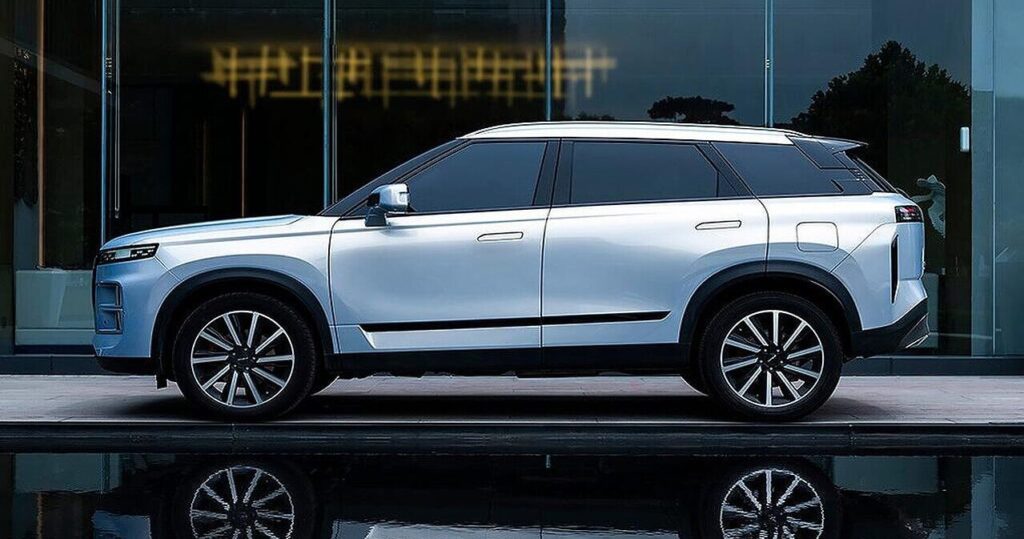
Unveiled on October 16, 2025, the Leapmotor D19 is a full-size, six-seat electric SUV that stretches over 5.2 meters in length, making it physically larger than the iconic Toyota Land Cruiser 300. And while that size alone would turn heads, it’s the world’s first production vehicle with an onboard oxygen generator — capable of producing 8 liters of oxygen per minute directly into the cabin — that makes this machine truly unlike anything else on the road.
Built on Leapmotor’s new D platform and co-developed with the backing of Stellantis (which holds a 20% stake in the company), the D19 positions itself squarely in the luxury segment, targeting rivals like the Li Auto L9, Aito M9, and Nio ES8. But with an expected price tag of around 250,000–300,000 yuan (approximately $35,000–$42,000 USD), it undercuts European and American luxury SUVs dramatically.
The car that breathes is here. Let’s dig in.

Leapmotor D19 Specs — The Numbers Behind the Machine
The D19 is offered in two versions: a pure Battery Electric Vehicle (BEV) and an Extended-Range Electric Vehicle (EREV). Both are engineered to impress.
The BEV variant is a performance monster. It uses a 115 kWh CATL battery pack — built using CATL’s groundbreaking “Freevoy Super Hybrid” cell that combines Lithium Iron Phosphate (LFP) and NMC (Nickel Manganese Cobalt) chemistry in a single cell for the very first time. This hybrid cell approach is designed to deliver the safety and longevity of LFP with the energy density of NMC, giving the D19 a genuine advantage over either chemistry alone.
The BEV supports a 1,000-volt architecture, enabling the D19 to add 350 km of CLTC-rated range in just 15 minutes of fast charging. Total range is rated at 720 km (CLTC), which translates to roughly 450–500 km in real-world conditions. With three electric motors delivering a combined output of 540 kW (724 hp), the D19 BEV hits 100 km/h from a standstill in under 3 seconds and delivers a wheel torque of 8,770 Nm — a figure that is almost incomprehensible for a large family SUV.
The EREV variant pairs an 80.3 kWh CATL battery (the largest ever fitted to an extended-range EV, according to Leapmotor) with a 1.5-litre turbocharged range extender developed in partnership with ZF. The system generates 90 kW continuously and can peak at 200 kW for short bursts. Total system output is 400 kW (536 hp), and 0–100 km/h takes under 5 seconds. Pure electric range in EREV mode is rated at over 500 km, with a 40-litre fuel tank providing total range well beyond 1,000 km.
The chassis has a torsional rigidity of 50,500 Nm/deg, and is equipped with dual-chamber air suspension and continuous damping control as standard.
| Spec | BEV | EREV |
|---|---|---|
| Battery | 115 kWh (CATL Freevoy) | 80.3 kWh (CATL) |
| System Power | 540 kW / 724 hp | 400 kW / 536 hp |
| 0–100 km/h | Under 3 seconds | Under 5 seconds |
| EV Range (CLTC) | 720 km | 500+ km |
| Voltage Architecture | 1,000V | 800V |
| Fast Charging | 350 km in 15 min | 350 km in 15 min |
| Drive | Triple motor AWD | Dual motor AWD |
| Fuel Tank (EREV) | — | 40 litres |
| Oxygen Generator | Yes — 8L/min | Yes — 8L/min |
| Computing | Dual Snapdragon 8797 — 1,280 TOPS | Dual Snapdragon 8797 — 1,280 TOPS |
Leapmotor D19 Size Comparison — Just How Big Is It?
When Leapmotor says the D19 is a “full-size SUV,” they mean it seriously. At 5,200+ mm in length, ~2,000 mm in width, and with a wheelbase exceeding 3,100 mm, the D19 is an absolute giant by any standard — and it surpasses some of the most well-known large SUVs in the world.
The Toyota Land Cruiser 300, which has long been considered the gold standard of large body-on-frame SUVs, measures 4,985 mm in length with a 2,850 mm wheelbase. The BMW X7 — Germany’s flagship SUV — comes in at 5,151 mm with a 3,105 mm wheelbase. The Tank 700, one of China’s own premium off-road SUVs, sits at around 5,065 mm.
The D19 is longer than all of them.
| Model | Length (mm) | Width (mm) | Wheelbase (mm) |
|---|---|---|---|
| Leapmotor D19 | 5,200+ | ~2,000 | 3,100+ |
| Toyota Land Cruiser 300 | 4,985 | 1,980 | 2,850 |
| BMW X7 (G07) | 5,151 | 2,000 | 3,105 |
| Tank 700 | 5,065 | 1,994 | 2,950 |
| Li Auto L9 | 5,218 | 1,998 | 3,105 |
While the D19 is comparable to the Li Auto L9 in raw dimensions, it enters a different price tier and tech philosophy. The point is clear: the D19 is not pretending to be a big SUV. It genuinely is one — and then some.

Leapmotor D19 Interior — Premium or Outer Space?
Step inside the D19 and the word “premium” suddenly feels inadequate. The cabin was officially revealed in late December 2025, and it sets a new benchmark for what a Chinese luxury SUV interior can look and feel like.
The driver’s zone is anchored by a 60-inch high-brightness all-weather AR-HUD — the largest augmented reality heads-up display in any production vehicle. Alongside it sits a 17.3-inch floating central touchscreen and a 10.25-inch LCD instrument cluster. This trio of displays gives the driver a full panoramic cockpit experience that blends digital information seamlessly with the road ahead.
Rear passengers are far from neglected. They get a 6-inch multi-function control screen for their own comfort settings and a 21.4-inch 3K entertainment display — the kind of screen you’d find in a premium business class flight. Second-row seats recline to 120 degrees in zero-gravity mode, come with 4-way adjustable leg rests, integrated ABTS seatbelts, and full massage functions. Nappa leather is standard throughout.
Additional interior highlights include wireless phone charging, a customizable intelligent fragrance system with three scents and adjustable concentrations, B-pillar grab handles for easy entry, laminated acoustic glass for near-silence at highway speeds, and a 170-litre front trunk (frunk) with power sockets. The cabin also features an 8.1-litre automotive-grade built-in refrigerator, capable of temperatures from -6°C to +50°C, controllable via voice or app.
Seating configurations are flexible: buyers can choose from 5-seat, 6-seat (with captain’s chairs in row two), or 7-seat layouts. Third-row seats fold completely flat for camping or cargo use.
The D19’s interior is less “car” and more “moving living room” — a design philosophy that is becoming a serious competitive weapon for Chinese brands in the luxury segment.
Leapmotor D19 Oxygen System — How Does the 8L/min Generator Work?
The headline feature of the Leapmotor D19 SUV oxygen generator deserves a proper deep dive, because it’s genuinely unprecedented in production automotive history.
The D19 is the world’s first production car to feature an onboard oxygen generator, according to Leapmotor and confirmed by multiple automotive media outlets. Branded as the “Forest Oxygen Cabin” system, the generator is integrated into the vehicle’s HVAC architecture and can pump up to 8 liters of pure oxygen per minute directly into the cabin.
How does it work at a technical level? Automotive-grade oxygen generators typically use a process called Pressure Swing Adsorption (PSA), which separates oxygen from ambient air using molecular sieve filters. The system draws in regular air (roughly 21% oxygen), removes nitrogen and other gases, and delivers oxygen-enriched air to the cabin. This is the same technology used in stationary medical oxygen concentrators, hospital equipment, and the oxygen supply systems on Chinese high-altitude railway lines like the Qinghai-Tibet Railway — where passengers receive enriched cabin air when the train exceeds a certain altitude.
The Tibetan Plateau, one of China’s most popular domestic travel destinations, sits at an average elevation of 4,500 meters (approximately 14,700 feet) above sea level. At this altitude, oxygen partial pressure is significantly reduced, and altitude sickness — symptoms including headache, fatigue, nausea, and shortness of breath — becomes a real concern for unacclimatized travelers arriving by road. In a vehicle equipped with the D19’s oxygen generator, the cabin air can be enriched beyond the standard 21% oxygen concentration, helping passengers breathe easier and feel more comfortable during high-altitude road trips.
It is worth noting that one source (NotebookCheck) referenced the specification as “8 liters of oxygen per hour,” but the overwhelming consensus across official Chinese automotive media, Leapmotor’s own statements reported by CarNewsChina, and sources including Electrive.com and Automotive World all confirm the correct figure is 8 liters per minute — a much more meaningful output for an enclosed vehicle cabin.

SUV With Oxygen Generator — Revolution or Marketing Stunt?
It’s a fair question. When you first hear “SUV with oxygen generator,” it sounds like the kind of feature engineering teams dream up in a boardroom brainstorming session to generate press coverage. But the real-world use cases are more compelling than you might expect.
High-altitude travel is the obvious primary use case, and it’s not a niche scenario in China. Trips to Tibet, Yunnan, Qinghai, and Sichuan — all of which involve significant time at elevations above 3,000 meters — have exploded in popularity among Chinese domestic travelers. For families driving these routes in their own vehicles, altitude sickness is a genuine health risk. A built-in oxygen generator addresses that risk directly, without the need to carry bulky portable oxygen canisters.
Urban air quality is the second use case. In major Chinese cities during winter, AQI (Air Quality Index) readings regularly reach “Very Unhealthy” or even “Hazardous” levels. An oxygen-enriched, filtered cabin environment provides a meaningful health buffer for daily commuters.
Allergy sufferers and respiratory conditions represent a third angle. People with asthma, COPD, or severe seasonal allergies may genuinely benefit from a vehicle that delivers cleaner, slightly oxygen-enriched air on demand.
Long-haul driving and fatigue is the fourth scenario that Leapmotor’s marketing materials hint at. Slightly elevated oxygen levels in the cabin can help drivers maintain alertness during long journeys — a genuine safety benefit, not just a wellness gimmick.
Is this a revolution? Perhaps not for the average city driver. But for a large luxury SUV aimed at adventure-minded Chinese families who take their own car to some of the highest and most remote roads on Earth, it is an absolutely logical, well-executed piece of technology.
Leapmotor D19 vs Land Cruiser 300 — Battle of the Giants
The Leapmotor D19 and the Toyota Land Cruiser 300 operate in different philosophical universes, and yet they are increasingly direct competitors in China’s premium SUV market.
The Land Cruiser 300, launched in 2021, is a body-on-frame SUV built around one philosophy: go anywhere, survive anything, last forever. It carries a 3.5-litre twin-turbo V6 petrol engine producing 305 hp, weighs around 2,400–2,500 kg, and has a legendary reputation for off-road capability and mechanical reliability. In China, it commands a significant price premium — often retailing at or above 900,000 yuan (approximately $125,000 USD) with dealer markups.
The D19 is a unibody SUV built on an electric platform, offering dramatically more interior space, vastly superior technology, and — when comparing the Tibetan Plateau use case directly — an onboard oxygen generator that the Land Cruiser 300 does not have. The D19’s 5.2-meter length surpasses the Land Cruiser’s 4,985 mm, and its wheelbase exceeds 3,100 mm versus the Land Cruiser’s 2,850 mm, meaning rear passenger space is in an entirely different league.
| Feature | Leapmotor D19 | Toyota Land Cruiser 300 |
|---|---|---|
| Length | 5,200+ mm | 4,985 mm |
| Wheelbase | 3,100+ mm | 2,850 mm |
| Powertrain | Electric / EREV | 3.5L Twin-Turbo V6 Petrol |
| Max Power | 540 kW (724 hp) | 227 kW (305 hp) |
| 0–100 km/h | Under 3 seconds | ~6.7 seconds |
| Oxygen Generator | Yes — 8L/min | No |
| AR-HUD | 60-inch | No |
| Price (China, est.) | ~¥250,000–300,000 | ¥800,000–900,000+ |
| Body Type | Unibody / Monocoque | Body-on-Frame |
These are fundamentally different vehicles built for different buyers. The Land Cruiser remains the champion for serious off-road adventurers who need a vehicle that can be repaired in the middle of nowhere and will run for 300,000+ km with basic maintenance. The D19 targets a buyer who wants a tech-forward, spacious, electric luxury experience — and who perhaps wants to breathe better at altitude.

Leapmotor D19 Price China — What Will It Cost?
Leapmotor has not officially announced a final retail price for the D19 as of the time of writing. However, the company has strongly signaled its target pricing: below 300,000 yuan, which equates to approximately $35,000–$42,000 USD or €32,000–€38,000.
For context, this places the D19 in direct competition with the Li Auto L9 (starting around ¥399,800 in some configurations), the Nio ES8, the Aito M9, and the Zeekr 9X. All of these are premium Chinese electric SUVs competing in the same general space.
Pre-orders opened in China on November 1, 2025. Leapmotor invited customers to place a refundable deposit of 999 yuan (~$140 USD) to reserve a place in the delivery queue. The first 2,000 customers were offered the exclusive “Signature Edition” of the D19. The competitive positioning is aggressive — Leapmotor founder and CEO Zhu Jiangming has described his ambition as making Leapmotor the “Uniqlo of the automotive industry”: delivering premium-feeling products at prices that undercut established luxury brands.
If the final pricing lands as expected, the D19 would represent extraordinary value per feature. No comparably-sized Western SUV offers a 60-inch AR-HUD, dual 1,280 TOPS AI chips, an onboard oxygen generator, a 720 km electric range, and Nappa leather in a 5.2-meter body for anything near $40,000.
Leapmotor D19 Release Date — When Can You Get One?
Leapmotor confirmed that deliveries of the D19 are scheduled to begin in the first half of 2026, with an April 2026 launch specifically mentioned in some Chinese media reports ahead of the EREV configuration’s market entry.
Blind pre-orders (where pricing is not yet disclosed) opened in China in November 2025, and the full interior was publicly revealed in December 2025, building significant consumer anticipation for the official launch.
For global markets, the picture is less clear but optimistic. Leapmotor has been expanding internationally through its partnership with Stellantis, which handles distribution in Europe and other regions. However, the D19 is a significantly larger and more complex vehicle than the T03 and C10 models currently sold in Europe. As of early 2026, there is no confirmed timeline for a European or North American launch of the D19. Stellantis’ involvement does make a future international expansion plausible, but tariffs, homologation requirements, and market positioning remain significant hurdles.
Full Size Chinese SUV 2026 — The Final Verdict
The Leapmotor D19 SUV oxygen generator is not just a headline feature. It is the symbol of a broader shift in what full-size Chinese SUVs can offer in 2026 and beyond.
Chinese automakers have, in the span of a decade, gone from producing budget city cars to engineering vehicles that are literally more advanced in key metrics than anything Europe or America currently offers at any price point. A 60-inch AR-HUD, 1,280 TOPS of AI computing power, a 1,000-volt electrical architecture, the world’s largest EREV battery, and a cabin that generates its own oxygen — all in a five-meter SUV that costs less than a loaded Toyota Fortuner in many markets. That is not hyperbole. That is the Leapmotor D19.
The oxygen generator specifically illustrates something important about how Chinese brands engineer vehicles: they build for their customers’ real-world use cases. The Tibetan Plateau is not a hypothetical vacation destination for Chinese families — it’s one of the fastest-growing domestic travel routes in the country. Leapmotor saw a genuine user need and built an automotive-first solution to meet it. That problem-solving instinct, combined with the scale and speed of Chinese manufacturing, is why vehicles like the D19 are reshaping the global automotive industry.
Whether the D19 reaches Europe, North America, or other global markets in meaningful volumes remains to be seen. But its existence sends a clear message: the era of the full-size Chinese SUV has arrived, and it’s bringing oxygen with it.
Curious how Chinese engineering goes beyond cars? The same innovation mindset powering futuristic SUVs is transforming other industries too. From intelligent vehicles to advanced manufacturing tools, China is moving fast. Explore the world of cutting-edge 3D printing technology at https://bestchina3dprinters.com/ and see how precision meets next-level performance.
Discover more from AutoChina
Subscribe to get the latest posts sent to your email.