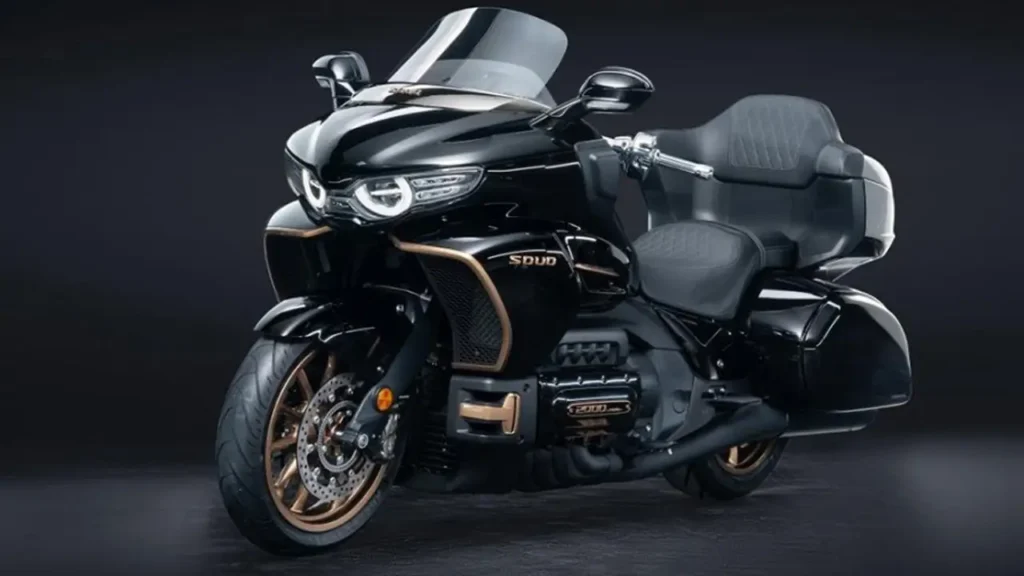
The automotive world just witnessed something extraordinary. Great Wall Motor, a name you’d typically associate with SUVs and pickup trucks, has thrown a curveball that’s left motorcycle enthusiasts worldwide scratching their helmets in disbelief. They’ve unveiled a concept motorcycle powered by something we rarely see on two wheels: a flat-8 engine. Yes, you read that right—eight horizontally-opposed cylinders humming in perfect harmony beneath a motorcycle frame.
This isn’t just another concept bike gathering dust at a motor show. This is a statement. A declaration that the boundaries of motorcycle engineering are far from set in stone. When a Chinese automotive giant decides to take on the likes of Honda’s legendary Gold Wing with an even more audacious powerplant, you know something interesting is brewing.
Let’s dive deep into what makes this flat-8 engine motorcycle such a fascinating development, and why it’s got everyone from casual riders to engineering nerds talking.
What Exactly Is a Flat (Opposed) Engine?
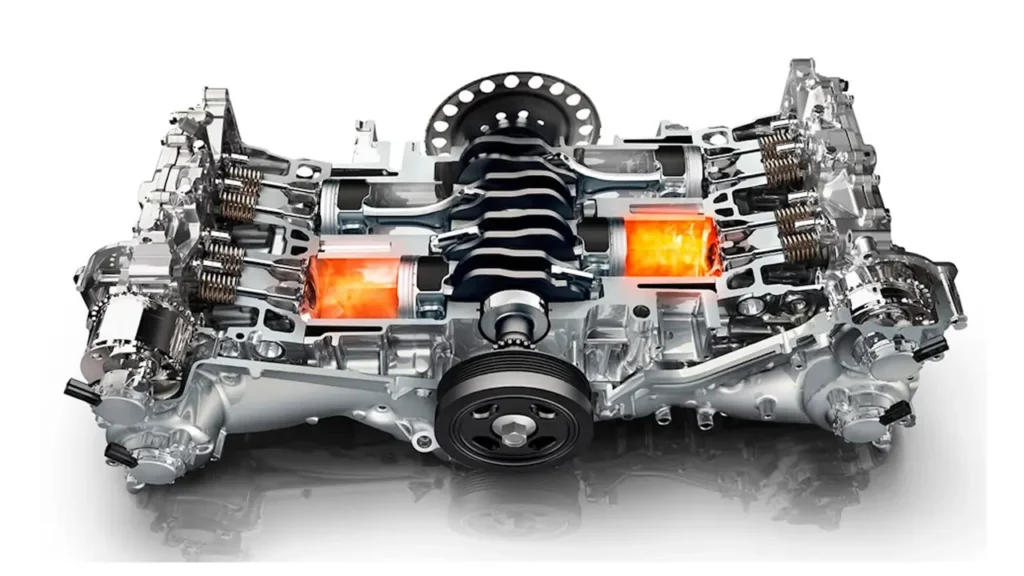
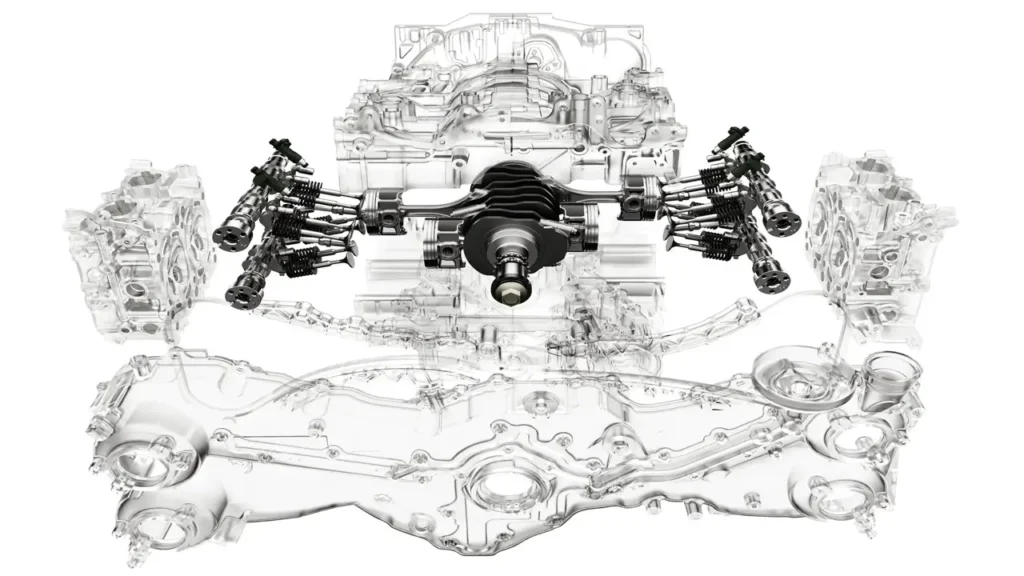
Before we get lost in the excitement of eight cylinders, let’s establish the basics. A flat engine, also known as a horizontally-opposed or boxer engine, is a design where cylinders are arranged on opposite sides of the crankshaft, lying flat and punching outward like boxers throwing jabs—hence the nickname “boxer.”
The beauty of this layout is straightforward: When one piston moves outward, its opposite partner moves outward too, creating a natural balance that reduces vibration dramatically. This isn’t just about comfort—it’s about engineering elegance.
The advantages are compelling:
Lower center of gravity: With the engine sitting low and wide rather than tall, the motorcycle’s mass is closer to the ground, improving handling and stability, especially through corners.
Smoother operation: Those opposing pistons cancel out each other’s vibrations, resulting in a silky-smooth ride that high-revving inline or V-configuration engines struggle to match.
Better cooling: With cylinders exposed to airflow on both sides, heat dissipation becomes more efficient—crucial when you’re packing this much displacement.
BMW has been championing the boxer-twin motorcycle for decades with their iconic R-series bikes. Honda’s Gold Wing uses a flat-six configuration. But eight cylinders? That’s venturing into genuinely exotic territory, even in the automotive world where flat-eights are practically extinct.
The Heart of the Beast: Understanding the Flat-8 Engine Motorcycle
So why would Great Wall Motor decide that eight horizontally-opposed cylinders should power a motorcycle? It’s a fair question, especially when most bikes get along just fine with two, three, or four cylinders.
The answer lies in ambition and capability.
An opposed 8-cylinder motorcycle engine represents the pinnacle of smooth, refined power delivery. Each additional cylinder means smaller combustion events happening more frequently, which translates to a seamless power band without the surges and lulls you’d feel from fewer cylinders.
Think of it like this: a four-cylinder engine fires every 180 degrees of crankshaft rotation. An eight-cylinder fires every 90 degrees. That’s twice as many power pulses smoothing out the delivery. The result? Power that feels less like discrete explosions and more like a continuous turbine-like surge.
But there’s more to it than just smoothness. With eight cylinders, you can achieve substantial displacement without making each individual cylinder enormous. Smaller cylinders can rev higher, respond quicker, and theoretically produce more power per liter of displacement. It’s the same principle that makes a Ferrari V12 special compared to a big American V8—refinement through multiplication.
Great Wall’s decision to pursue this configuration suggests they’re not interested in building just another touring bike. They’re aiming for something that redefines expectations, a machine that doesn’t just compete with the Gold Wing but potentially surpasses it in sheer engineering audacity.
Design and Engineering: The Flat-Eight Motorcycle Design Challenge
Packaging an opposed 8-cylinder motorcycle engine is no small feat. Think about it—you’re essentially mounting two inline-four engines lying on their sides, connected to a single crankshaft. That’s a lot of metal to integrate into a motorcycle frame without creating something that looks like a industrial generator on wheels.
Based on the concept images and information available, Great Wall’s engineering team has managed to create a surprisingly cohesive design. The engine becomes the visual centerpiece, dominating the bike’s profile but in a way that speaks to purpose rather than awkwardness.
The frame architecture appears to use the engine as a stressed member—meaning the powerplant itself contributes to the structural rigidity of the chassis. This isn’t uncommon in modern motorcycles, but with a flat-8, you’re working with a much wider footprint. The frame rails need to accommodate the cylinder heads protruding from each side while maintaining rider ergonomics and ground clearance.
Cooling is absolutely critical with this much displacement. The concept shows substantial finning on the cylinder heads and what appears to be a sophisticated liquid-cooling system. Each of those eight cylinders generates heat, and that thermal energy needs to dissipate efficiently, especially during low-speed cruising where airflow is minimal.
The visual impact is undeniable. Where the Gold Wing’s flat-six tucks somewhat neatly under the bodywork, Great Wall’s flat-8 is unapologetically prominent. The cylinder heads jut out like the wings of some mechanical creature, giving the bike an aggressive, planted stance that screams performance even when stationary.
Weight distribution becomes fascinating with such a wide, low engine. The mass spreads left and right rather than concentrating at a single point, which should theoretically make the bike feel incredibly stable in straight-line cruising while potentially requiring more effort in quick direction changes. It’s physics—you can’t cheat the moment of inertia created by mass located far from the centerline.
Technical Specifications: What We Know About the Flat-8 Engine Specs
Here’s where things get a bit speculative, as Great Wall Motor has been somewhat tight-lipped about the complete technical specifications. However, based on available information and logical engineering assumptions, we can piece together an intriguing picture.
| Specification | Estimated Value |
|---|---|
| Configuration | Horizontally-opposed 8-cylinder (Flat-8) |
| Displacement | ~2,000-2,500cc (estimated) |
| Power Output | 180-220 hp (projected) |
| Torque | 150-180 lb-ft (projected) |
| Cooling System | Liquid-cooled |
| Estimated Weight | 750-850 lbs (340-385 kg) |
| Valve Train | DOHC (likely, 32 valves total) |
Why these numbers? Let’s break it down logically. The Honda Gold Wing’s 1,833cc flat-six produces around 125 horsepower. Add two more cylinders, allow for modern engineering improvements, and potentially higher compression ratios, and you’re reasonably looking at 180-220 horsepower without getting into exotic materials or forced induction.
Displacement estimates come from reverse-engineering likely bore and stroke dimensions. If Great Wall follows conventional wisdom, each cylinder might displace around 250-300cc, putting total displacement in that 2.0-2.5 liter sweet spot that balances power with drivability.
Torque is where things get really interesting. A flat-8 with this displacement should produce massive low-end and mid-range torque—the kind of effortless pull that makes highway cruising feel like riding a wave rather than fighting to maintain speed. We’re talking about torque curves that stay fat and happy from just above idle all the way to redline.
The weight estimate assumes modern materials but acknowledges reality: eight cylinders, double overhead cams, liquid cooling, and the robust frame needed to contain it all adds up. Great Wall will likely aim to keep it under 800 pounds dry, but don’t expect this to be a lightweight machine. Then again, weight matters less when you’ve got turbine-smooth power on tap.
Direct Showdown: Flat-8 vs Goldwing Engine
The elephant in the room—or should we say, the Gold Wing in the garage—is Honda’s legendary touring flagship. The flat-8 vs Goldwing engine comparison is inevitable because Honda essentially wrote the book on large-displacement opposed engines in motorcycles.
Let’s put them side by side:
| Feature | Honda Gold Wing (Flat-6) | Great Wall Concept (Flat-8) |
|---|---|---|
| Cylinders | 6 | 8 |
| Displacement | 1,833cc | ~2,000-2,500cc (est.) |
| Horsepower | 125 hp @ 5,500 rpm | 180-220 hp (projected) |
| Torque | 125 lb-ft @ 4,500 rpm | 150-180 lb-ft (projected) |
| Production Status | In production since 1975 | Concept phase |
| Market Position | Luxury touring flagship | Unknown/TBD |
On paper, the flat-8 appears to have the edge in raw performance. More cylinders, more displacement, and presumably more power. But motorcycles aren’t built on spreadsheets alone.
Honda’s Gold Wing is the result of nearly 50 years of refinement. Every iteration has addressed real-world touring needs: comfort, reliability, fuel economy, heat management, and that intangible quality of feeling right at highway speeds for hours on end. The bike is so well-sorted that many owners rack up 100,000 miles without major issues.
Great Wall’s challenge isn’t just building a bigger engine—it’s creating an entire ecosystem around it. The engine needs to be reliable, serviceable, and efficient. The chassis must handle the power without becoming a handful. The electronics need to manage all that torque intelligently. And somehow, it all needs to come together at a price point that makes sense.
Where the flat-8 could genuinely shine is in smoothness and character. Two extra cylinders mean even finer power delivery, potentially creating an experience that makes the Gold Wing feel agricultural by comparison. Imagine power so seamless it’s like controlling a volume knob rather than managing combustion events.
The real advantage might be psychological rather than practical. Owning a motorcycle with eight horizontally-opposed cylinders is a statement. It’s engineering excess in the most glorious sense, and for enthusiasts who appreciate mechanical artistry, that counts for a lot.
A Rare Breed: The History of Motorcycles with 8 Cylinders
To appreciate just how unusual Great Wall’s project is, we need to understand that motorcycles with 8 cylinders are unicorns in the two-wheeled world. They exist, but they’re vanishingly rare and almost always special circumstances.
The most famous example is probably the Morbidelli V8, built by Italian furniture magnate Giancarlo Morbidelli in the 1990s. This 850cc V8 screamed to 11,000 rpm and produced around 120 horsepower. Only a handful were ever built, and they change hands for astronomical sums today. It was more sculpture than practical motorcycle—a rolling monument to what’s possible when budget isn’t a constraint.
Boss Hoss is another name that comes up, though their approach is completely different. They stuff American V8 automobile engines into motorcycle frames, creating rolling muscle cars that prioritize displacement and torque over sophistication. A Boss Hoss might pack a 6.2-liter V8 making 450 horsepower, but subtlety isn’t part of the package.
Then there are the one-offs and specials: drag bikes built around automotive V8s, custom creations by engineering savants, and concept machines that never escaped the motor show circuit.
What makes Great Wall’s approach different is the configuration. A flat-8 in a motorcycle is even rarer than a V8. The engineering challenges are more complex, the packaging more difficult, and the potential benefits more nuanced. This isn’t about brute force or shock value—it’s about engineering an experience.
The rarity also creates a marketing halo. When you’re one of perhaps three or four flat-8 motorcycles in existence, you’re automatically newsworthy. You’re in the conversation with every motorcycle journalist, enthusiast, and engineer. That kind of attention money can’t buy, and it positions Great Wall as a serious player willing to push boundaries.
Global Impact: The Chinese Flat-8 Motorcycle Revolution
The emergence of a Chinese flat-8 motorcycle is significant beyond the engineering accomplishment. It represents a shift in the global motorcycle industry power dynamics that’s been building for years.
For decades, premium motorcycles meant Japanese, European, or American brands. China was the land of inexpensive commuter bikes and questionable quality replicas. That narrative is rapidly becoming outdated.
Chinese manufacturers have been climbing the quality ladder relentlessly. Brands like CFMoto, Benelli (now Chinese-owned), and others are producing motorcycles that compete directly with established players on quality and features while undercutting on price. They’ve gone from jokes to legitimate alternatives in less than a decade.
Great Wall entering the premium motorcycle space with such an ambitious project sends a clear message: Chinese manufacturers aren’t content with the budget segment anymore. They want the halo models, the flagship products that define brands and command premium prices.
The global reaction has been mixed but largely intrigued. European and American enthusiasts, traditionally skeptical of Chinese motorcycles, find themselves genuinely interested in the specifications and potential. Japanese manufacturers, who’ve dominated the large-displacement touring segment for generations, suddenly have a wildcard to consider.
Industry analysts point out that Great Wall has advantages that traditional motorcycle manufacturers lack. As an automotive giant, they have resources for R&D that dwarf most motorcycle companies. They have experience with complex engines, sophisticated electronics, and global supply chains. Translating that to motorcycles isn’t automatic, but the potential is undeniable.
Critics raise valid concerns: Can Great Wall build the dealer network needed to support such a specialized machine? Will reliability match the ambition? Can they create the riding experience that justifies the complexity? These are fair questions without answers yet.
What’s undeniable is that a Chinese manufacturer building an eight-cylinder motorcycle forces everyone to reconsider assumptions. The industry is globalizing in new ways, and geographic origin matters less than execution and vision.
Boxer Power Amplified: Understanding the 8-Cylinder Boxer Motorcycle
The term “8-cylinder boxer motorcycle” deserves deeper exploration because it captures both the technical nature and the dynamic personality this engine should possess.
Boxer engines get their name from the motion of the pistons, which move in and out like boxers throwing punches. In a traditional inline or V configuration, some pistons are rising while others fall. In a boxer, pairs of pistons move in perfect opposition—when the left cylinder’s piston extends, the right cylinder’s piston extends simultaneously.
Scale this to eight cylinders and the dynamics become fascinating. You have four pairs of opposed pistons, all perfectly balanced, all contributing to an engine that theoretically has zero primary or secondary vibration. The physics work out beautifully on paper: every force has an equal and opposite force canceling it out.
This perfect balance means several things for rider experience:
Smoothness at any RPM: From idle to redline, vibration should be virtually non-existent. Your hands won’t tingle after hours of riding, and your mirrors will show clear images even at high revs.
Reduced mechanical stress: When an engine isn’t fighting its own vibration, components last longer. Bearings, seals, and gaskets enjoy easier lives, potentially translating to legendary reliability.
Sound character: Eight cylinders firing in boxer configuration creates a unique acoustic signature. It’s not the rumble of a V-twin or the shriek of an inline-four. It’s more of a mechanical purr that rises to a sophisticated howl—the sound of precision engineering at work.
Power delivery: With combustion events happening every 90 degrees of crank rotation, power pulses overlap significantly. The result feels like continuous thrust rather than discrete power hits. Roll on the throttle and acceleration builds smoothly, almost turbine-like in its delivery.
The challenges are equally significant. More cylinders mean more complexity: more camshafts to time, more valves to adjust, more coolant passages to manage, more potential failure points. Service intervals might be more frequent, and when something does need attention, labor costs will reflect the complexity.
Heat management becomes critical. Eight combustion chambers generate substantial thermal energy. Even with liquid cooling and exposed cylinder heads, keeping everything at optimal operating temperature requires careful engineering. Rider comfort depends on managing this heat—nobody wants 2.5 liters of combustion between their legs cooking them on summer rides.
The width of the engine also affects handling in subtle ways. That mass spread far from the centerline increases moment of inertia, making the bike resist direction changes more than a narrower engine would. For straight-line stability, this is ideal. For carving canyons or threading traffic, it requires adjustment and deliberate rider input.
The Future of Unusual Motorcycle Engines
Great Wall’s flat-8 concept forces us to contemplate the future of unusual motorcycle engines in an era supposedly dominated by electric powertrains and efficiency mandates.
There’s a paradox at play: While automotive manufacturers rush toward electrification, motorcycle engines seem to be getting more interesting, more complex, and more varied. We’re seeing supercharged fours, turbocharged triples, and now eight-cylinder opposed configurations. Why?
Part of the answer is that motorcycles have always been about more than mere transportation. They’re emotional purchases, often second or third vehicles bought for pleasure rather than necessity. The engine isn’t just a means to an end—it’s a significant part of the experience. Enthusiasts want character, want mechanical interest, want something that stirs emotions.
The internal combustion engine in motorcycles has runway that it’s already lost in cars. Emission regulations are tighter for automobiles, and the economies of scale favor electric drivetrains there. Motorcycles represent a smaller percentage of total emissions, and regulations have been slower to tighten. This creates a window where manufacturers can explore exotic configurations that would be unthinkable in modern cars.
Great Wall’s flat-8 might be the beginning of a trend rather than an isolated oddity. If one manufacturer can justify the engineering investment, others might follow with their own unusual engines. We could be entering a new golden age of mechanical diversity before electrification eventually arrives in force.
Electric motorcycles are coming, there’s no denying that. But they’re not here yet in a form that truly replaces the experience of high-performance combustion engines. Battery technology, charging infrastructure, and riding range still favor traditional powertrains for most applications, especially large touring bikes.
This creates a fascinating transition period where both technologies coexist and evolve simultaneously. We might see hybrid motorcycles, range-extended electric designs, or even more exotic combustion configurations squeezing every bit of performance and efficiency from traditional technology.
The flat-8 motorcycle represents engineering passion in its purest form. It’s not the most practical solution, not the cheapest to build, and not the easiest to maintain. But it’s undeniably special, undeniably interesting, and undeniably the kind of machine that makes enthusiasts fall in love with motorcycles all over again.

Final Thoughts: A New Chapter in Motorcycle Engineering
Standing back and surveying what Great Wall Motor has attempted with their flat-8 engine motorcycle concept, it’s impossible not to feel a sense of excitement about the future of two-wheeled engineering.
This isn’t just another motorcycle—it’s a declaration that creativity and ambition still have a place in an industry sometimes accused of playing it safe. When a manufacturer decides that six cylinders aren’t enough and goes for eight, arranged in one of the most mechanically elegant configurations possible, they’re signaling that motorcycles can still surprise us.
Will this bike ever reach production? That’s the million-dollar question, and honestly, the odds are mixed. Concept vehicles often showcase technology and ideas that filter down to production models in diluted form. We might never see a production flat-8 motorcycle, but the technology developed for this project could influence future Great Wall products in more practical configurations.
Even if it remains forever a concept, it’s already succeeded in one crucial way: it’s expanded our imagination of what’s possible. It’s proven that Chinese manufacturers have the engineering capability and creative vision to compete at the highest levels of motorcycle development. It’s challenged established players to reconsider what boundaries are truly fixed and which are just conventional wisdom.
For motorcycle enthusiasts, that’s worth celebrating. We’re living in an era where manufacturers are experimenting with configurations ranging from parallel twins to inline-sixes to now flat-eights. Where electric powertrains are pushing new boundaries while combustion engines are exploring new heights. Where innovation can come from unexpected corners of the globe.
The Great Wall flat-8 motorcycle might just be a concept today. But concepts have a way of influencing tomorrow, of planting seeds that grow into production reality or inspiring competitors to try something equally audacious. And in an industry that thrives on passion and innovation, that kind of inspiration is priceless.
So here’s to unusual engines, ambitious engineering, and the dreamers who believe that eight cylinders lying horizontally in a motorcycle frame isn’t crazy—it’s just good engineering.
Want to see which smartphone truly redefines mobile photography in 2026? From 1-inch sensors to periscope telephoto lenses and legendary optics by Zeiss and Hasselblad, the competition has never been fiercer. Discover the ultimate camera phone of the year—and why it might just replace your DSLR.
Read the full review here: https://bestchinagadget.com/best-camera-phone-2026-review/
Discover more from AutoChina
Subscribe to get the latest posts sent to your email.