Introduction and Market Positioning
The Geely Galaxy Xingyuan is one of the most talked-about small electric cars to come out of China in recent years, and it has quickly become a symbol of how affordable, well-equipped city EVs are changing the market. It is designed for people who live and drive in dense urban areas, who want low running costs, and who still expect a modern cabin, smart software and a bit of personality from the car they park outside their home every night.
If you have seen this model under different names, you are not alone. In China it is sold as the Xingyuan, a name that roughly translates to “star source.” For international markets, Geely has been using the name Geely Starwish, which is simply the English-language rendering of the same idea. Some versions and promotional material also connect the car to the Geome sub-brand, which sits within the wider Galaxy family of new-energy vehicles. The result is a single car with several labels, and this guide uses them interchangeably so that readers searching under any of these names can find what they need.
Who is the car for? The target audience is clear: urban commuters, young professionals, small families that need a second car, and first-time EV buyers who are nervous about spending too much. The car is compact enough to park easily, cheap enough to be accessible, and packed with enough technology to feel more expensive than it is.
In this article we will walk through the exterior design and dimensions, the platform and motors, the battery and charging, the safety systems, the interior and luggage space, the infotainment, the full specification table, the rivals, and finally the pricing and trim levels. By the end you should have a clear picture of whether this little Geely deserves a place on your shortlist.
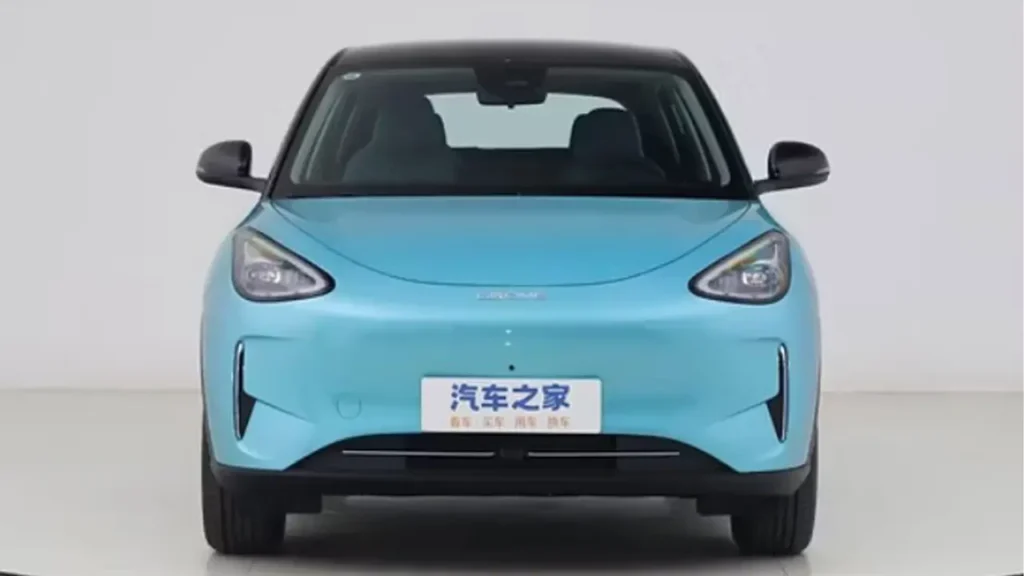
Exterior Design and Dimensions
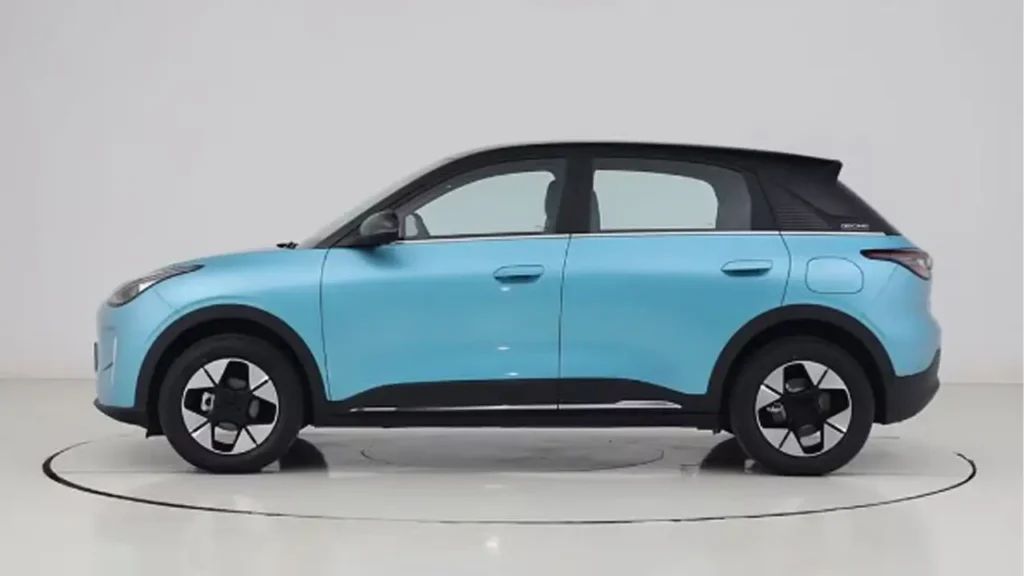
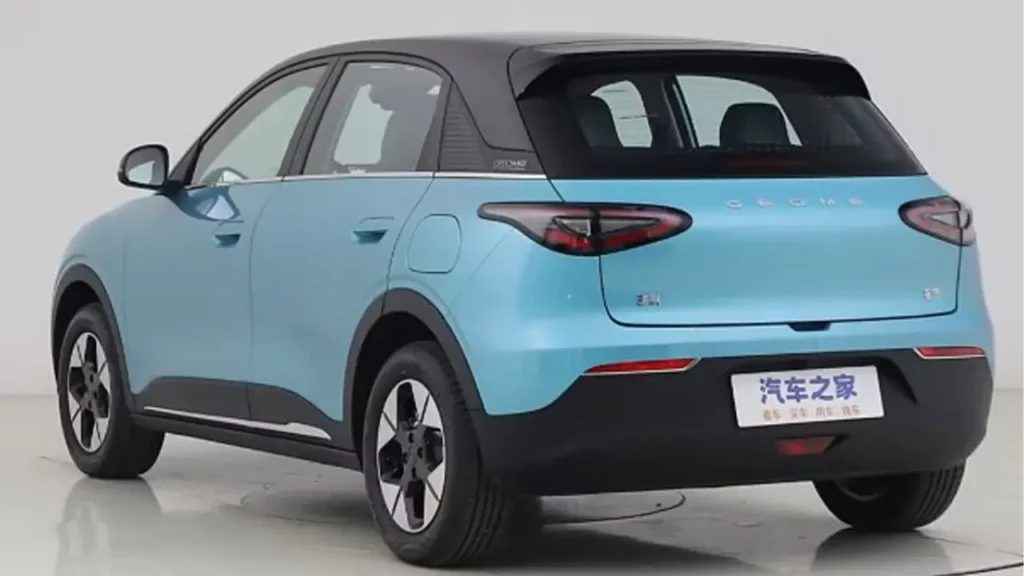
The first thing you notice about the Xingyuan is how soft and rounded it looks. There are no aggressive creases or oversized grilles here. Instead, the designers have gone for a smooth, aerodynamic shape that signals efficiency at a glance. The body flows from the short nose over the roofline to the rear, and the whole silhouette feels friendly rather than sporty. This approach suits an urban EV well, because it keeps the car approachable while helping it slip through the air with less drag, which in turn helps range.
Details reinforce the modern feel. The door handles are concealed in the bodywork, sitting flush with the surface to reduce turbulence and keep the sides clean. The LED lighting units are shaped like teardrops, giving the front and rear a distinctive signature that is easy to recognise in traffic. A two-tone paint scheme is also available, contrasting the roof with the body and adding a playful touch that younger buyers tend to appreciate.
When it comes to proportions, the Geely Galaxy Xingyuan is genuinely compact on the outside but surprisingly generous on the inside. The body measures 4135 mm in length, 1805 mm in width and 1570 mm in height, and the wheelbase stretches to 2650 mm. That long wheelbase relative to the overall length is the secret behind the roomy cabin: the wheels are pushed out toward the corners, leaving more space for passengers and less wasted in the overhangs.
This is a textbook compact electric hatchback. It is short enough to turn in tight streets and fit into small parking spaces, yet it is wide enough to feel stable and tall enough to give a comfortable seating position. Compared with older city cars, which often sacrificed interior room for a small footprint, this design shows how a dedicated EV platform can deliver more space from a smaller package. For city dwellers, that combination of a tidy exterior and a spacious interior is exactly the point.
Geely Galaxy Xingyuan Platform and Motor Options
Underneath the smooth bodywork, the car is built on Geely’s GEA architecture, short for Global Intelligent New Energy Architecture. This is a flexible platform designed to underpin a range of electrified vehicles, from small hatchbacks like this one to larger sedans and SUVs. Using a shared architecture helps Geely keep costs down, speed up development and spread engineering improvements across the whole Galaxy lineup.
Rear-Wheel Drive Layout
One of the most interesting choices is the drive layout. Many small and affordable EVs use front-wheel drive because it is simple and cheap. The Xingyuan instead sends power to the rear wheels. That brings several benefits. Steering feels cleaner because the front wheels are only responsible for turning, not for delivering power. Traction under acceleration is usually better, because weight shifts toward the rear when you press the pedal. And the layout frees up space at the front of the car, which, as we will see later, makes room for a useful front storage compartment.
The suspension is independent, which improves ride comfort and handling over rough city roads. For a car in this price bracket, that is a sign that engineers have put effort into driving quality rather than simply chasing a low sticker price.
Two Motor Choices
Buyers can choose between two electric motor outputs. The base version produces 58 kW, which is about 79 horsepower, while the more powerful version delivers 85 kW, or roughly 116 horsepower. Neither figure sounds dramatic on paper, but electric motors deliver torque instantly, so even the smaller unit feels lively in stop-and-go traffic. The stronger motor is better for people who regularly drive on faster roads or carry more passengers and cargo.
The motor itself is part of an integrated 11-in-1 electric drive. The idea is to combine multiple components, such as the motor, the reducer, the controller and various power electronics, into one compact and lightweight unit. By merging parts, Geely reduces weight, saves space, cuts the number of connections that can fail and improves efficiency. It is a clever piece of packaging that helps the whole car feel more refined.

AndreevWebStudio.com
Professional web development and design services. Custom WordPress sites, landing pages, e-commerce solutions, and 3D printing content creation for businesses and creators.
- • WordPress Development
- • Custom Web Design
- • E-Commerce Solutions
- • 3D Printing Content
Battery, Range and Fast Charging
For most buyers, the battery is the heart of any EV decision, and the Xingyuan offers two capacities to match different needs and budgets. The smaller pack stores 30.12 kWh and is rated for 310 km on the CLTC cycle. The larger pack stores 40.16 kWh and is rated for 410 km on the same cycle.
It helps to understand what CLTC means. It is the China Light-Duty Vehicle Test Cycle, a standard used for range testing in China. It tends to be more optimistic than the European WLTP cycle, so real-world numbers will usually be lower. Still, it gives a useful basis for comparing models. When you look at the entry battery and the larger battery side by side, the Geely Galaxy Xingyuan offers a clear choice: a cheaper version that is ideal for short commutes and a more expensive version that can handle longer trips and reduce charging frequency.
Real-World Expectations
The key question is what the Geely Starwish EV range will look like in everyday city driving. City traffic is actually kind to electric cars, because regenerative braking recovers energy every time you slow down, and low speeds mean less aerodynamic drag. In mixed urban use, owners could reasonably expect a result somewhat below the official figures, with the larger battery comfortably covering several days of typical commuting before needing a charge. Highway driving at sustained high speeds and cold weather will both reduce the numbers, as they do in every EV.
Charging Speed
Fast charging support is a major selling point. Geely states that the battery can charge from 30% to 80% in about 21 minutes when connected to a suitable DC fast charger. That is roughly the time it takes to grab a coffee and answer a few messages, and it makes occasional longer journeys far less stressful. For daily use, most owners will simply plug in at home overnight using a standard AC wall charger, waking up to a full battery without ever visiting a public station.
The combination of two battery sizes and quick charging makes the car flexible. A student or city worker may be perfectly happy with the smaller pack, while someone who drives to the suburbs a few times a week will benefit from the larger one.
Battery Safety and Thermal Management
Range and charging speed matter little if buyers do not trust the battery, so safety has become a central part of every EV conversation. Geely addresses this with a multi-layered approach.
Liquid Cooling
The battery pack uses a liquid cooling system that circulates coolant to keep the cells within an ideal temperature range. This matters for three reasons. It protects the cells during fast charging, when heat builds up quickly. It helps maintain consistent performance in hot weather. And it extends the battery’s lifespan by preventing the kind of temperature stress that gradually degrades capacity over time.
Cell Chemistry and Supplier
The car uses lithium iron phosphate cells, usually shortened to LFP. This chemistry is known for being stable, resistant to overheating and long-lasting, with the ability to handle many thousands of charge cycles. It also avoids the use of cobalt, which reduces cost and eases supply-chain concerns. The cells come from CATL, one of the largest battery manufacturers in the world, and the car is paired with Geely’s own protection philosophy under the ShenDun name, sometimes written as Geely Shield. In short, the CATL ShenDun battery combines a proven cell supplier with a safety design developed specifically for this vehicle family.
Structural Protection
The battery pack is protected against impacts, punctures and sudden temperature changes. A strong enclosure shields the cells from road debris and collisions, while monitoring systems watch voltage and temperature constantly. If something goes wrong, the software can react quickly to limit risk. For buyers, the practical message is simple: this is a battery designed to last for years and to behave predictably in daily use.
Interior Comfort, Ergonomics and Cargo Space
Step inside and the cabin makes a strong first impression. The Geely Xingyuan interior is built around a clean, modern layout that avoids clutter and focuses attention on a large central display. Materials are chosen to feel pleasant and cheerful rather than premium and serious, which fits the car’s youthful character.
Atmosphere Lighting
One of the most distinctive features is the ambient lighting. The system offers 256 colours and can be customised to suit your mood. It is more than a simple strip of light: graphics inspired by city skylines and urban scenes appear on the dashboard and door panels, giving the cabin a playful, almost artistic look. At night it creates a relaxed atmosphere that is rare in cars at this price level.
Seating and Space
Thanks to the long wheelbase mentioned earlier, passengers have more room than the compact exterior suggests. Front occupants get a comfortable position with good visibility, and rear passengers benefit from reasonable legroom for a car of this size. The flat floor, made possible by the electric layout and the absence of a transmission tunnel, helps the middle rear seat feel more usable than in many conventional small cars.
Two Luggage Compartments
Practicality is where this model really stands out. Because there is no combustion engine under the bonnet, the front of the car contains a 70-litre storage compartment, commonly called a frunk. It is ideal for charging cables, a small bag or anything you prefer to keep separate from the main luggage. At the rear, the boot offers 375 litres with the seats up and expands to 1320 litres with the rear seats folded. That is a very competitive figure for the class, and it shows how the Geely Galaxy Xingyuan can serve a young family just as well as a single commuter: pushchairs, shopping, sports gear and weekend luggage all fit with little difficulty.
Infotainment and Smart Cockpit
Technology is where small Chinese EVs have raced ahead of many established rivals, and the Xingyuan follows that trend with a bold digital cockpit.
Screens
The centrepiece is a 14.6-inch central touchscreen, which is very large for a car of this size. It dominates the dashboard and handles navigation, media, climate settings and vehicle functions. Behind the steering wheel sits an 8.8-inch digital instrument cluster that shows speed, battery level, range and driver-assistance information. Together the two screens give the cabin a high-tech look while keeping controls logical and easy to find.
Flyme Auto OS
The software running on the main display is Flyme Auto OS, a system developed in connection with Meizu, the smartphone brand that shares ownership ties with Geely’s parent group. Because it comes from a company with a strong background in mobile interfaces, the system feels familiar to anyone used to a modern phone. Menus are smooth, animations are fluid, and response times are quick. Flyme Auto OS also supports deep integration with Meizu smartphones, allowing owners to link devices, share content and use certain phone features through the car.
Everyday Smart Features
A voice assistant powered by artificial intelligence allows drivers to control functions hands-free, from adjusting the temperature to changing music or setting a destination. A 50 W wireless charging pad keeps phones topped up without cables, which is a genuine convenience on short daily trips. Over-the-air updates can bring new features and fixes over time, so the car can improve after purchase. In this way the Geely Galaxy Xingyuan reflects a wider shift in the industry: cars are becoming connected devices on wheels, judged as much by their software as by their motors.
Technical Specifications and Driver-Assistance Systems
For readers who want the numbers in one place, here are the Galaxy Xingyuan specs in summary form. This overview covers the key figures for both motor and battery versions, and the Geely Galaxy Xingyuan is easier to evaluate when everything is laid out together.
| Specification | Details |
|---|---|
| Body type | Compact electric hatchback |
| Length × width × height | 4135 × 1805 × 1570 mm |
| Wheelbase | 2650 mm |
| Platform | GEA architecture |
| Drive layout | Rear-wheel drive |
| Motor power | 58 kW (79 hp) or 85 kW (116 hp) |
| Battery capacity | 30.12 kWh or 40.16 kWh |
| Battery type | LFP, liquid cooled |
| CLTC range | 310 km or 410 km |
| Fast charging | 30% to 80% in about 21 minutes |
| Acceleration | 0–50 km/h in 3.9 seconds |
| Front storage | 70 litres |
| Rear boot | 375 to 1320 litres |
| Central screen | 14.6 inches |
| Instrument cluster | 8.8 inches |
| Wireless charging | 50 W |
| Airbags | 6 |
Performance
The figure that stands out is the 0–50 km/h time of 3.9 seconds. City driving rarely involves high speeds, so acceleration at low speeds is far more relevant than a traditional 0–100 km/h sprint. A quick launch from traffic lights makes the car feel confident and responsive, and it is one of the pleasant surprises of electric motors.
Safety and Assistance
The car is equipped with Level 2 driver-assistance features, which can help with tasks such as maintaining distance from the vehicle ahead and staying centred in the lane. These systems still require the driver to pay attention at all times, but they reduce fatigue in heavy traffic and on longer drives.
Parking and manoeuvring are supported by a 540-degree surround-view camera system. It includes a so-called transparent chassis view, which uses camera images to show what is beneath and around the car on the central screen. This is helpful when squeezing into tight spaces or avoiding kerbs. Six airbags, a strong body structure and the protected battery design complete a safety package that is impressive for the price category.

AutoChina.blog
Your trusted guide to Chinese automotive technology. Expert reviews, comparisons, and insights on electric vehicles, hybrids, and innovative automotive solutions from China’s leading manufacturers.
- • EV & Hybrid Reviews
- • Tech Comparisons
- • Industry News & Trends
- • Buying Guides
Geely Galaxy Xingyuan vs BYD Dolphin
No car exists in a vacuum, and the Xingyuan faces fierce competition. Its two most important rivals are the BYD Dolphin and the Wuling Bingo, both well-known small electric hatchbacks that have sold in large numbers.
Where the Geely Stands Out
The most significant difference is the drive layout. Both main rivals use front-wheel drive, while the Geely sends power to the rear wheels. In practice this can mean better traction when accelerating, a more balanced feel through corners and a cleaner steering response. It also opens the door to the 70-litre front storage compartment, a feature that neither rival can match in the same way. Extra space like this is useful every day, whether you are storing cables, a spare jacket or a small bag.
The infotainment system is another advantage. A 14.6-inch screen, a modern operating system and tight smartphone integration create a more advanced experience than the screens found in many competitors at this price. The ambient lighting and city-inspired graphics add emotional appeal that spreadsheets cannot capture.
Where Rivals Compete
To be fair, the BYD Dolphin has strengths too. BYD is an established EV specialist with deep experience in battery technology and a large service network in many markets. The Dolphin has a strong reputation for value, and in some countries its availability, dealer support and resale history may be better than the Geely’s. The Wuling Bingo, meanwhile, appeals through simplicity, practicality and very low pricing in markets where it is sold.
Which One Should You Choose?
The answer depends on your priorities. If you want the most advanced digital experience, the cleverest storage and a rear-drive layout, the Geely makes a compelling argument. If you value a proven track record, established local support and a particular price in your country, one of the rivals may suit you better. The healthy competition among these cars is good news for buyers, because it keeps prices low and features rich.
Pricing, Trim Levels and Final Verdict
Pricing varies by market, exchange rate and import costs, but the car is clearly positioned at the affordable end of the electric market.
Trim Levels
The model is sold in several trims, commonly named Youth, Wish (sometimes presented as Dream), Freedom and Explorer. Entry trims typically pair the smaller battery and lower-powered motor with a simpler equipment list, while higher trims add the larger battery, the stronger motor and extra comfort and technology features. Choosing the right trim is mostly a matter of how far you drive and which features you will actually use.
Price Range
The Geely Xingyuan price starts at roughly $9,800 in equivalent terms and rises to around $14,000 for the top versions, depending on the market. These are approximate figures, and local taxes, shipping and incentives can change the final amount significantly. If you are considering an import or a purchase through a dealer abroad, it is wise to request a full written quotation and ask about warranty, parts supply and software support before committing.
Is It Worth Buying?
For city drivers, the answer is often yes. The car offers a modern design, a clever packaging approach, strong safety credentials, a large and responsive screen, impressive luggage space and respectable range at a very reasonable price. Its limitations are the ones that apply to almost every small EV: highway range is modest, the official figures are optimistic, and aftersales support depends heavily on where you live. Buyers should also check software language support and charging compatibility with local standards.
Conclusion
Overall, the Geely Galaxy Xingyuan is a smart, stylish and well-equipped small EV that proves affordable electric mobility no longer means sacrificing comfort or technology. If your driving is mostly urban and your priorities are space, features and value, it deserves serious consideration.
Discover more from AutoChina
Subscribe to get the latest posts sent to your email.