Skip to content
The debate over the best family SUV has a new, critical dimension in Australia: the real cost of ownership beyond the showroom price. The BYD Sealion 6 DM-i Plug-in Hybrid Electric Vehicle (PHEV) challenges the long-standing efficiency champion, the Toyota RAV4 Hybrid. This comprehensive comparison dives into the actual dollars and cents of driving 100 km down under, covering everything from fuel and charging to servicing, registration, and the crucial factor of future resale value. We strip away the marketing to provide clear, data-driven tables and a verdict on which electrified SUV offers the true cost advantage for the typical Australian family in 2025.
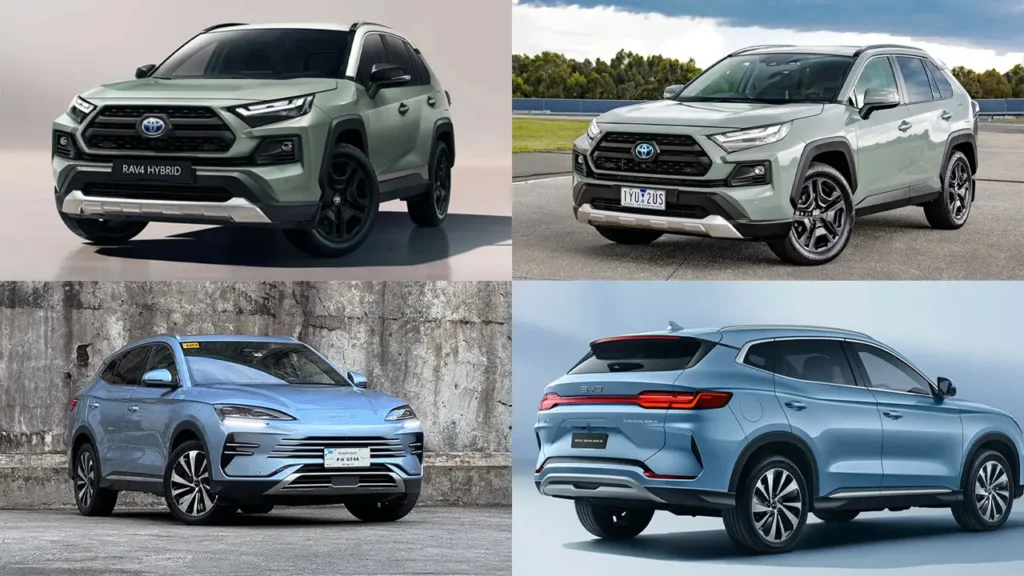
⚡ BYD Sealion 6 Australia Overview: The DM-i PHEV Basics
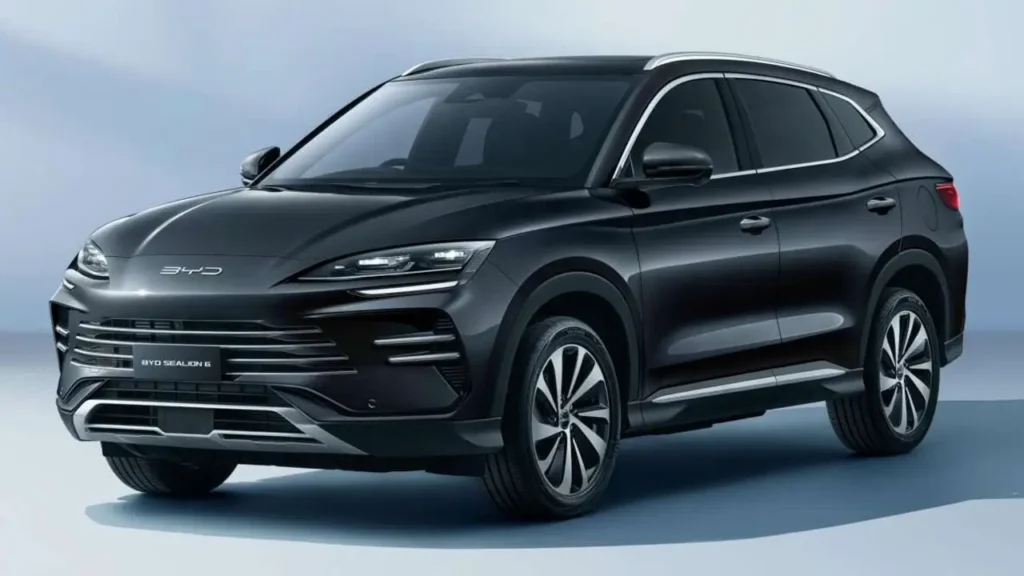
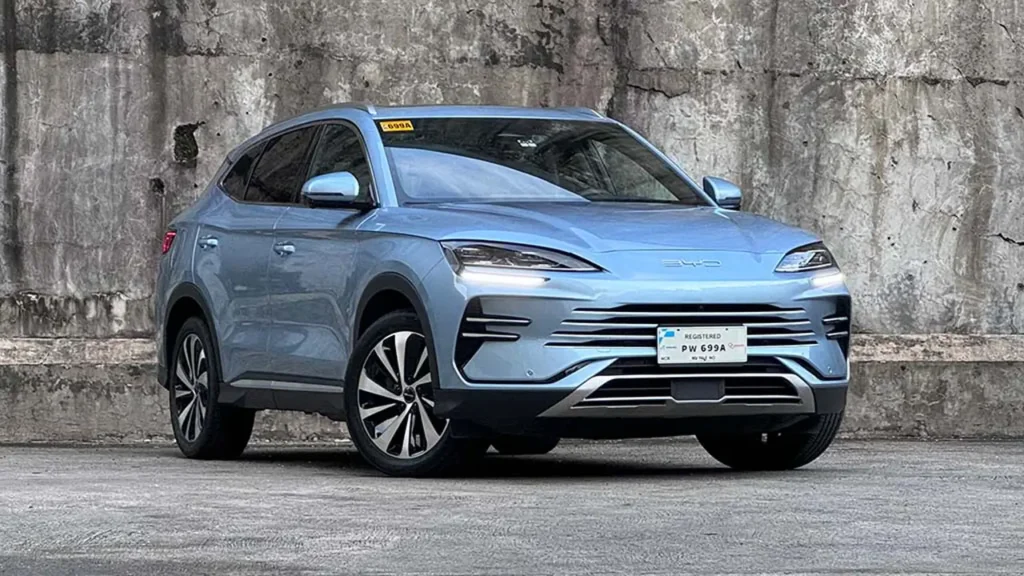
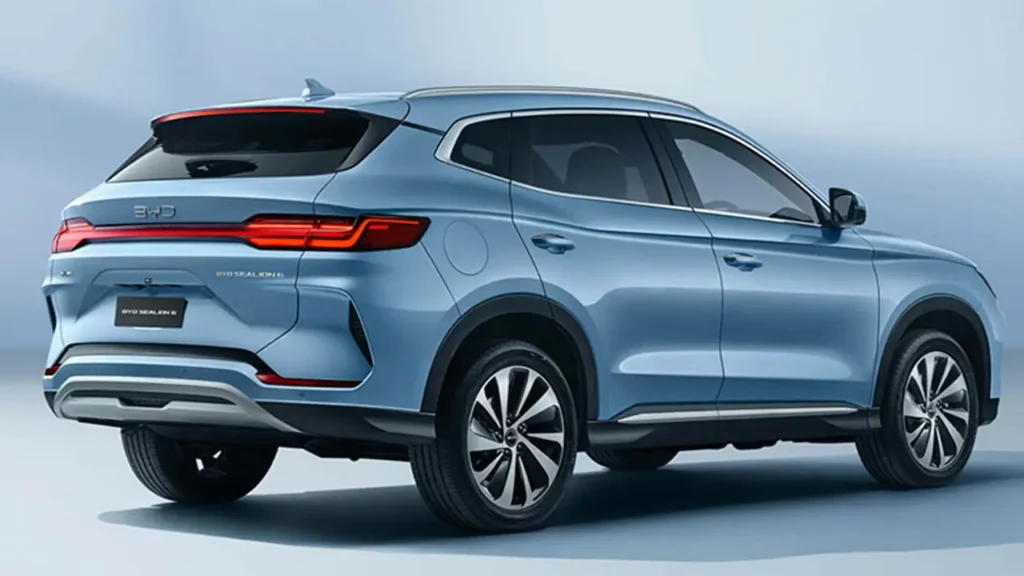
The BYD Sealion 6 Australia model introduces BYD’s Super DM-i (Dual Mode Intelligence) technology to the mid-size SUV segment. Unlike a conventional Hybrid Electric Vehicle (HEV) like the RAV4, the Sealion 6 is a PHEV, meaning it features a large battery pack that can be plugged in and recharged, offering a substantial all-electric driving range before the petrol engine is required.
In its primary EV mode, the vehicle drives solely on electric power, with the battery feeding the electric motor(s). This is where the most significant cost savings are realised, particularly for city and suburban commuting. When the battery state of charge drops below a certain threshold, or under heavy acceleration, the system transitions into HEV mode. Here, the 1.5L petrol engine acts as either a power generator for the battery/motors or can directly assist the wheels via the transmission. On the open highway, the system prioritises efficiency, often blending engine power with electric assistance.
The BYD Sealion 6 is offered in Australia with variations in battery capacity and motor configuration. For our comparison, we focus on the FWD variants which have an estimated system power of around $160 \text{ kW}$ and torque of $300 \text{ Nm}$ (combined system torque is often not officially declared by PHEV manufacturers but estimated here from motor figures). The claimed EV-only range (WLTP/NEDC cycle) for the Australian model sits between $90 \text{ km}$ and $140 \text{ km}$, depending on the specific variant and battery size ($18.3 \text{ kWh}$ to $26.6 \text{ kWh}$).
This substantial electric range is the key differentiator and the source of its potential cost advantage. The ability to complete the majority of daily commutes on cheap, home-charged electricity positions the Sealion 6 as a compelling alternative to traditional hybrids.
The BYD Sealion 6’s commitment to efficiency extends to its powertrain design. The high-efficiency 1.5L engine (naturally aspirated or turbocharged depending on the variant) is designed to operate most often in its optimal RPM range, acting as a generator or providing mechanical power only when necessary, which drastically improves fuel consumption compared to non-hybrid petrol SUVs.
The official combined fuel consumption rating (which includes driving with a fully charged battery) is as low as $0.8 \text{ L/100 km}$ for some extended range variants, highlighting the efficiency benefit of maximising electric driving. Its six-year/150,000 km vehicle warranty and eight-year/160,000 km battery warranty (per Australian specifications) also contribute to the long-term cost of ownership calculation by offering significant protection against major component failures.
| Specification | Value |
|---|---|
| Powertrain | 1.5L Petrol + Single E-Motor (PHEV) |
| Max System Power | ≈160 kW (Max) |
| 0–100 km/h | 8.5 seconds (Claimed) |
| EV Range (WLTP/NEDC) | 90 km to 140 km (Claimed, variant dependent) |
| Battery Capacity | 18.3 kWh to 26.6 kWh |
| Fuel Tank Capacity | 60 Litres |
| Warranty (Vehicle) | 6 years/150,000 km |
| Warranty (Battery) | 8 years/160,000 km |
| Service Interval | 12 months/20,000 km (Post initial 6 month/3,500 km) |
The Sealion 6, therefore, is not a direct rival to the RAV4 Hybrid in technology but rather a step up in electrification, offering the best of both worlds: pure electric commuting and flexible petrol range for long journeys. The real cost win, as explored in the following sections, hinges entirely on the owner’s charging habits.
Before deciding between the BYD Sealion 6 and RAV4 Hybrid, see how BYD’s sedan stacks up against Tesla’s benchmark. Our concise BYD Seal review covers price, range, charging, and everyday value in Australia. Read the full breakdown here: https://autochina.blog/byd-seal-review-price-range-charging-vs-tesla-m-3/ with real-world comparisons, ownership costs, incentives, and practical buyer tips inside.
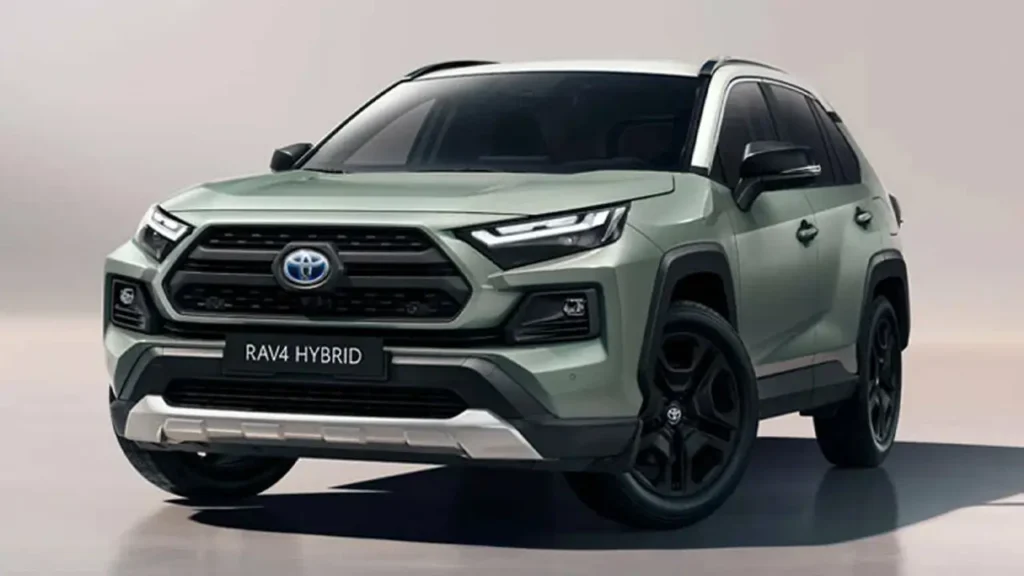
⚖️ Methodology for Australia: Transparent Cost Calculation
To conduct a fair and real-world comparison between the PHEV (BYD Sealion 6) and the HEV (RAV4 Hybrid), we must establish a transparent and consistent methodology grounded in typical Australian usage and current market costs (as of 2025). The goal is to move beyond optimistic laboratory consumption figures and calculate the actual Australian Dollar cost per 100 kilometres ($\text{A\$/100 km}$) for a typical family scenario.
Our analysis makes the following key, fixed assumptions for both vehicles:
1. Usage Profile (Driving Mix)
We adopt a $60\%$ City / $40\%$ Highway driving mix. This is a common and realistic scenario for a family SUV in Australia, encompassing daily urban commutes, school runs, and weekend/holiday road trips. This split is particularly crucial for the Sealion 6, as its EV range is predominantly leveraged in the city portion of the driving. We use an annual distance assumption of $15,000 \text{ km}$ for calculating annual fixed costs (servicing, insurance, registration), which is a common Australian average.
2. Energy Consumption (Real-World Estimates)
Based on a synthesis of owner reports and industry testing of PHEVs/Hybrids in Australian conditions, we set the following realistic energy consumption estimates:
| Vehicle / Mode | City Consumption (per 100 km) | Highway Consumption (per 100 km) |
|---|---|---|
| Sealion 6 (EV Mode) | 18 kWh | 22 kWh |
| Sealion 6 (HEV/Empty Battery) | 5.5 L (Petrol) | 6.0 L (Petrol) |
| RAV4 Hybrid (HEV) | 4.8 L (Petrol) | 5.8 L (Petrol) |
The Sealion 6’s EV consumption is higher on the highway due to less regenerative braking and higher sustained speeds.
3. Energy Pricing (Australian Averages)
Energy prices fluctuate across states and providers, but we utilise representative, current Australian average prices for 2025:
- Petrol (95 RON/Premium): $\mathbf{A\$2.10/\text{L}}$ (Reflecting current volatile high prices in Australian metro areas).
- Home Electricity (Off-Peak/Controlled Load): $\mathbf{A\$0.30/\text{kWh}}$ (A common tariff for controlled load/off-peak charging). According to industry sources, household rates range from $\text{A\$0.24}$ to $\text{A\$0.43}$ per $\text{kWh}$ across Australia.
- Public DC Fast Charging: $\mathbf{A\$0.55/\text{kWh}}$ (An average of major network pricing, which can range from $\text{A\$0.45}$ to $\text{A\$0.69}$ per $\text{kWh}$).
4. Fixed Costs (Servicing, Rego, Insurance)
To calculate the cost per $100 \text{ km}$ for fixed annual expenses, we use the formula:
$$\text{Cost per } 100 \text{ km} = \frac{\text{Annual Cost (Servicing + Rego + Insurance)}}{\text{Annual Kilometres } (15,000 \text{ km})} \times 100$$
We base servicing on manufacturer capped-price plans, and use median estimates for Comprehensive Insurance (driver profile: 40-year-old male, metro area, good history) and average state-based registration and CTP fees (approx. $\text{A\$1,100}$ annually).
By standardising these assumptions, the comparison remains balanced and provides the user with an easily adaptable framework—they can substitute their specific city/highway split, petrol price, and electricity tariff to tailor the analysis to their exact situation. This methodical approach ensures the final verdict is based on sound financial modelling, not subjective preference.
Planning road trips in your BYD or Toyota? Build a reliable energy setup with compact powerbanks, jump starters, and lightweight inverters tested on Chinese laptops and accessories. Our short buyer guides prioritize safety, wattage, and price-per-Wh so you avoid weak gear. Explore the latest picks at https://laptopchina.tech/ today and deals.
⛽ Electricity vs Petrol: The Real Cost Per 100 km
The core of the cost comparison lies in the variable running costs—fuel and electricity—as these expenses are incurred every day the car is driven. The vast technological difference between the PHEV (Sealion 6) and the HEV (RAV4) results in dramatically different costs depending on the power source used.
1. BYD Sealion 6 DM-i (PHEV) Running Costs
The Sealion 6’s costs are highly conditional on how the vehicle is powered:
A. EV Mode (The Cost-Saving Scenario)
Assuming the owner utilises the car’s $90\text{–}140 \text{ km}$ electric range for daily driving and charges primarily at home during off-peak hours ($\text{A\$0.30/kWh}$):
- City EV Cost: $18 \text{ kWh} \times \text{A\$0.30/kWh} = \mathbf{A\$5.40/100 \text{ km}}$
- Highway EV Cost: $22 \text{ kWh} \times \text{A\$0.30/kWh} = \mathbf{A\$6.60/100 \text{ km}}$
If the driver relies on public DC fast charging ($\text{A\$0.55/kWh}$):
- City EV Cost (DC): $18 \text{ kWh} \times \text{A\$0.55/kWh} = \mathbf{A\$9.90/100 \text{ km}}$
- Highway EV Cost (DC): $22 \text{ kWh} \times \text{A\$0.55/kWh} = \mathbf{A\$12.10/100 \text{ km}}$
B. HEV/Empty Battery Mode (The Petrol Scenario)
Once the battery is depleted, the Sealion 6 runs as a high-efficiency conventional hybrid, consuming petrol ($\text{A\$2.10/\text{L}}$):
- City HEV Cost: $5.5 \text{ L} \times \text{A\$2.10/\text{L}} = \mathbf{A\$11.55/100 \text{ km}}$
- Highway HEV Cost: $6.0 \text{ L} \times \text{A\$2.10/\text{L}} = \mathbf{A\$12.60/100 \text{ km}}$
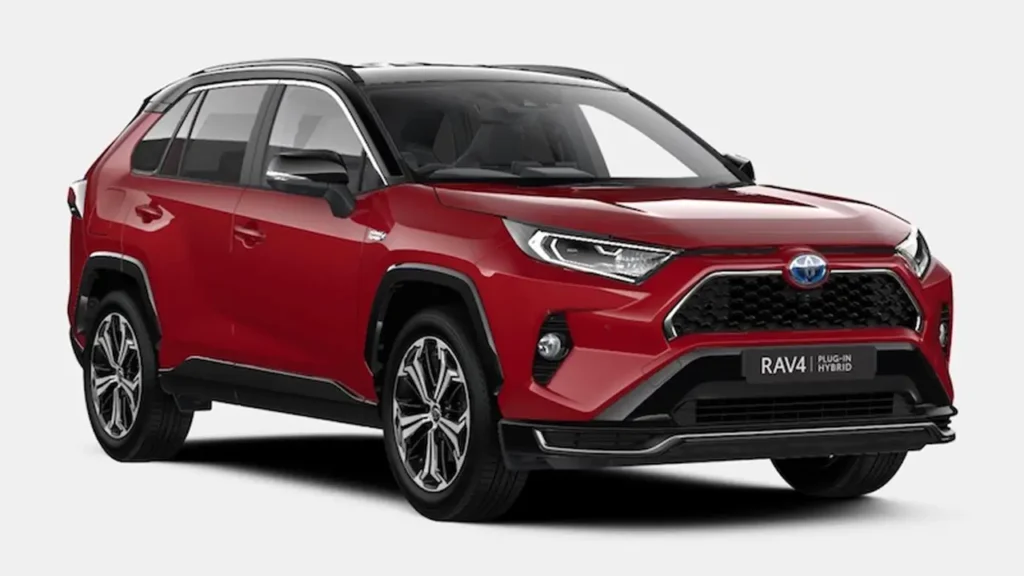
2. Toyota RAV4 Hybrid (HEV) Running Costs
The RAV4 Hybrid operates purely on petrol (with electric assistance), meaning its cost is constant regardless of home charging availability:
- City HEV Cost: $4.8 \text{ L} \times \text{A\$2.10/\text{L}} = \mathbf{A\$10.08/100 \text{ km}}$
- Highway HEV Cost: $5.8 \text{ L} \times \text{A\$2.10/\text{L}} = \mathbf{A\$12.18/100 \text{ km}}$
Cost Per 100 km: Summary Table
The table below starkly contrasts the running costs across all typical Australian scenarios.
| Vehicle / Mode | Energy Source / Cost (Unit) | City Cost (A$/100km) | Highway Cost (A$/100km) |
|---|---|---|---|
| BYD Sealion 6 (Best Case) | Home EV Charging (A$0.30/kWh)\ \**A$5.40** | A$6.60 | |
| Toyota RAV4 Hybrid | Petrol (A$2.10/L) | A$10.08 | A$12.18 |
| BYD Sealion 6 (Worst Case) | Public DC Charging (A$0.55/kWh) | A$9.90 | A$12.10 |
| BYD Sealion 6 (Empty) | Petrol (A$2.10/L) | A$11.55 | A$12.60 |
Conclusion on Running Costs:
The Sealion 6 delivers a definitive cost win when operated in EV mode using cheap home charging, achieving savings of over $\mathbf{A\$4.68}$ per $100 \text{ km}$ in the city compared to the RAV4 Hybrid. If a user drives $15,000 \text{ km}$ annually and uses $\mathbf{60\%}$ of that in EV mode (approx. $9,000 \text{ km}$), the annual fuel/energy saving alone could be close to $\mathbf{A\$421}$. However, if the Sealion 6 is rarely charged and frequently runs on petrol (empty battery), its efficiency is slightly worse than the highly optimised RAV4 Hybrid. The PHEV’s advantage is entirely user-dependent.
Use AI to plan smarter Aussie trips. At aiinovationhub.com, we map charging stops, predict energy spend vs petrol, and optimize routes for BYD Sealion 6 or RAV4 Hybrid. Get real-time cost models, weather-aware ETAs, and itinerary templates you can copy. Start here: https://aiinovationhub.com/ and cut guesswork from every journey today.
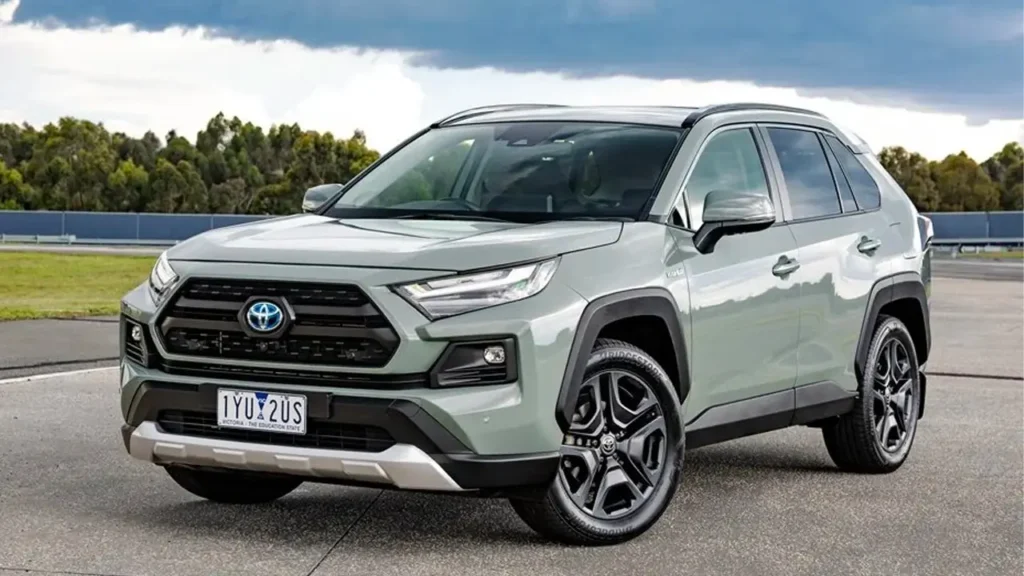
🛠️ Fixed Costs: Servicing, Insurance, and Registration
While running costs get the most attention, fixed annual expenses like scheduled servicing, insurance, and state-based registration (rego) contribute significantly to the long-term cost of ownership. We calculate the cost of these items over five years and translate that into an $\text{A\$/100 km}$ figure, based on our assumption of $15,000 \text{ km}$ per year.
1. Scheduled Servicing (Capped Price Cost)
Manufacturer-backed capped price servicing offers cost certainty. The difference here is notable in the service intervals:
- BYD Sealion 6 DM-i: Initial $\text{6-month}/3,500 \text{ km}$ service, then $\mathbf{12 \text{ months}/20,000 \text{ km}}$ (whichever comes first). This longer distance interval reduces the service frequency for high-mileage drivers. Based on Australian service schedules, the total cost for the first five services (up to $80,000 \text{ km}$ total) is estimated to be around $\mathbf{A\$1,800}$.
- Toyota RAV4 Hybrid: $\mathbf{12 \text{ months}/15,000 \text{ km}}$ (whichever comes first). The capped price for the first five services (up to $75,000 \text{ km}$) is typically $\mathbf{A\$215}$ per service, totalling $\mathbf{A\$1,075}$.
| Cost Item | BYD Sealion 6 (5-Year / 80,000 km) | RAV4 Hybrid (5-Year / 75,000 km) |
|---|---|---|
| Total 5-Year Servicing Cost (Est.) | ≈A$1,800 | A$1,075 |
Conclusion on Servicing: The RAV4 Hybrid retains its legendary low capped-price servicing costs, resulting in a clear advantage here, despite the Sealion 6’s longer $20,000 \text{ km}$ distance interval.
2. Registration and Insurance (Annual Estimates)
Registration and insurance are highly variable by state, driver, and vehicle value.
- Registration (Rego) & CTP: Rego is often based on the vehicle’s tare weight and the CTP (Compulsory Third Party) premium is geographically segmented. Given the Sealion 6’s larger battery, its kerb weight ($1,940 \text{ kg} \text{–} 2,100 \text{ kg}$) is generally higher than the RAV4 Hybrid ($1,700 \text{ kg} \text{–} 1,800 \text{ kg}$). This typically translates to slightly higher registration fees in weight-based states like NSW or WA. We use an annual average estimate of $\mathbf{A\$1,200}$ for the Sealion 6 and $\mathbf{A\$1,100}$ for the RAV4 Hybrid (to account for the weight difference).
- Comprehensive Insurance: Premiums are based on the vehicle’s market value, repair cost, and theft rate. As a newer technology and brand in Australia, the Sealion 6 may incur a marginally higher premium due to limited claims history and potentially higher parts costs/waiting times compared to the ubiquitous RAV4. We estimate $\mathbf{A\$1,100}$ for the Sealion 6 and $\mathbf{A\$1,000}$ for the RAV4 Hybrid.
Fixed Cost Per 100 km: Summary Table
We normalise the fixed annual costs over an assumed $15,000 \text{ km}$ annual drive distance:
| Cost Item | BYD Sealion 6 (Annual Est.) | RAV4 Hybrid (Annual Est.) | Sealion 6 Cost / 100 km | RAV4 Hybrid Cost / 100 km |
|---|---|---|---|---|
| Servicing (Annualised 5-Year) | A$360\ \\*\*A$215** | A$2.40\ \\*\*A$1.43** | ||
| Rego & CTP | A$1,200\ \\*\*A$1,100** | A$8.00\ \\*\*A$7.33** | ||
| Comprehensive Insurance | A$1,100\ \\*\*A$1,000** | A$7.33\ \\*\*A$6.67** | ||
| TOTAL Fixed Cost / 100 km | A$2,600\ \A$2,315 | A$17.73\ \**A$15.43** |
Fixed Cost Conclusion:
The RAV4 Hybrid is the clear winner on fixed costs due to its significantly lower capped-price servicing structure and marginal advantage in weight-based fees and insurance estimates. The difference of $\mathbf{A\$2.30}$ per $100 \text{ km}$ in fixed costs means the Sealion 6 must achieve substantial fuel/charging savings to overcome this $\mathbf{A\$345}$ annual deficit ($\text{A\$2.30} \times 150 \text{ per } 100 \text{ km}$) over the RAV4.
📈 Resale and Incentives: The Depreciation Factor
While fixed and running costs are immediate, the largest financial cost of car ownership in Australia is often depreciation, balanced by any government incentives.
1. Resale Value and Liquidity
Toyota RAV4 Hybrid:
The RAV4 Hybrid is a resale powerhouse in Australia. Its established reputation for reliability, broad dealership network, and the consistent demand for the Toyota badge translate into exceptionally low depreciation rates. Industry data consistently shows the RAV4 Hybrid retaining value far better than segment averages, making the “cost to own” over a 3-5 year period very low. Its high liquidity means it is easy and quick to sell.
BYD Sealion 6 DM-i:
As a new-to-market Chinese PHEV, the Sealion 6 faces the ‘new brand’ depreciation factor. While BYD is rapidly building its reputation, the used car market is typically cautious about brand longevity, long-term battery health, and non-legacy dealership support. The resale value trend for BYD’s pure EVs (like the Atto 3) has been better than initial predictions, but the PHEV resale trend is still developing.
However, the rapidly growing demand for electrified vehicles in Australia, driven by high petrol prices, acts as a strong upward pressure on its future resale value. We can anticipate an initial higher depreciation for the Sealion 6 compared to the RAV4, but this gap will narrow as the BYD brand matures and battery/PHEV technology gains widespread trust.
The Resale Verdict: RAV4 Hybrid wins on current resale certainty and low depreciation. The Sealion 6’s future resale value is a high-risk/high-reward proposition.
2. Government Incentives and Taxes
PHEVs and hybrids are treated differently by Australian state and federal governments, which impacts the final out-of-pocket cost.
- Fringe Benefits Tax (FBT) Exemption: The Sealion 6, as an EV or PHEV that meets specific criteria (such as low emissions and the Luxury Car Tax threshold), often qualifies for the FBT exemption when leased through a salary packaging arrangement. This can save thousands of dollars annually for eligible drivers using the vehicle for work purposes and is a massive financial win for the Sealion 6 over the RAV4 Hybrid, which does not qualify.
- State-based Rebates/Stamp Duty: While many states have scaled back or removed pure EV rebates, the initial price point of the Sealion 6 keeps it below most relevant price caps. Some states may still offer registration concessions or stamp duty reductions for low-emission vehicles, which could marginally favour the PHEV, though these are constantly changing.
The Incentives Verdict: The potential FBT exemption for the Sealion 6 for fleet and novated lease customers provides a dramatic cost benefit that easily outweighs the RAV4’s resale advantage for that specific segment of buyers. For private buyers, the RAV4’s resale certainty is more valuable.
📊 Comprehensive Cost Comparison and Verdict
To determine the true cost win, we combine the cost components into a single, comprehensive table, using the $\mathbf{60\% \text{ City}/40\% \text{ Highway}}$ usage profile and the $15,000 \text{ km}$ annual distance assumption.
For the BYD Sealion 6, we calculate two scenarios:
- Best Case (The Plug-in Owner): $60\%$ of the $\text{City}$ driving portion (which is $3,600 \text{ km}$) is completed on cheap $\text{Home EV}$ power, and the remaining distance is on $\text{Petrol}$. This is the ideal user scenario.
- Worst Case (The Non-Plug-in Owner): The owner never charges the PHEV, and it runs purely on $\text{Petrol}$ as a high-efficiency hybrid.
Total Running Cost Per Year (A$): 15,000 km
| Scenario | City Cost (60% / 9,000 km) | Highway Cost (40% / 6,000 km) | TOTAL Annual Running Cost (A$) | Cost / 100 km |
|---|---|---|---|---|
| BYD Sealion 6 (Best Case) | **A$655** (40% EV + 60% HEV) | A$756 (HEV) | A$1,411 | A$9.41 |
| Toyota RAV4 Hybrid | A$907 | A$731 | A$1,638 | A$10.92 |
| BYD Sealion 6 (Worst Case) | A$1,040 (HEV) | A$756 (HEV) | A$1,796 | A$11.97 |
Final Total Cost Per 100 km (Running + Fixed)
We now add the running cost per $100 \text{ km}$ to the fixed cost per $100 \text{ km}$ to get the final, all-encompassing operational cost.
| Vehicle / Scenario | Fixed Cost / 100 km (A$) | Running Cost / 100 km (A$) | **TOTAL Cost / 100 km (A$)** |
|---|---|---|---|
| BYD Sealion 6 (Plug-in Owner) | A$17.73 | A$9.41 | A$27.14 |
| Toyota RAV4 Hybrid | A$15.43\ \A$10.92 | A$26.35 | |
| BYD Sealion 6 (Non-Plug-in Owner) | A$17.73 | A$11.97 | A$29.70 |
✅ Verdict: Who Gets the Real Cost Win?
The analysis reveals a nuanced cost structure, proving that the true “cost win” depends heavily on the buyer’s circumstances.
The Toyota RAV4 Hybrid Wins On:
- Fixed Costs: A significantly better capped-price servicing schedule makes the RAV4 cheaper to maintain over five years.
- Resale Certainty: The RAV4’s rock-solid liquidity and established brand reputation assure lower depreciation risk.
- Total Operational Cost (Non-Charging User): If the BYD Sealion 6 owner rarely plugs in, the RAV4 is cheaper to run on both fixed and operational costs.
The BYD Sealion 6 DM-i Wins On:
- Running Cost (Charging User): For the owner who commits to nightly home charging, the Sealion 6’s operational cost drops to $\mathbf{A\$9.41/100 \text{ km}}$, a $\mathbf{14\%}$ saving on the RAV4’s $\text{A\$10.92/100 km}$ fuel bill. This is the $\mathbf{A\$4.68/100 \text{ km}}$ saving in the city that pays off quickly.
- Tax Incentives (FBT): For drivers using a novated lease or fleet arrangement, the FBT exemption provides an overwhelming financial advantage that makes the Sealion 6 the cheapest option overall, instantly dwarfing all other costs.
- Flexibility: The Sealion 6 offers the ability to run on pure EV power for daily duties and switch to high-efficiency petrol for long trips, giving maximum flexibility in a single vehicle.
Final Conclusion: The Real Cost Win
The Toyota RAV4 Hybrid is the safer, more predictable, and arguably cheaper vehicle for the average private buyer who values certainty, low fixed costs, and high resale value. Its advantage in servicing is substantial.
The BYD Sealion 6 DM-i is the definitive cost-win champion for the disciplined plug-in owner and the novated lease/fleet buyer. The massive daily savings from home charging, combined with the powerful FBT exemption, position the Sealion 6 as the clear financial winner for those who actively utilise its PHEV capabilities. The buyer must overcome the RAV4’s $\text{A\$2.30}$ per $100 \text{ km}$ fixed cost advantage with $\text{A\$2.30}$ per $100 \text{ km}$ of charging savings—a task easily accomplished with regular home charging.
Choose the BYD Sealion 6 if you can reliably charge at home or work, and $60\text{–}80\%$ of your driving is local.
Choose the Toyota RAV4 Hybrid if you take frequent long highway trips, do not have easy home charging access, or place ultimate value on resale liquidity and low capped-price servicing.
Discover more from AutoChina
Subscribe to get the latest posts sent to your email.