Skip to content
BYD Qin L DM-i – The Showcase of DM-i 5.0 and Budget Smart Driving
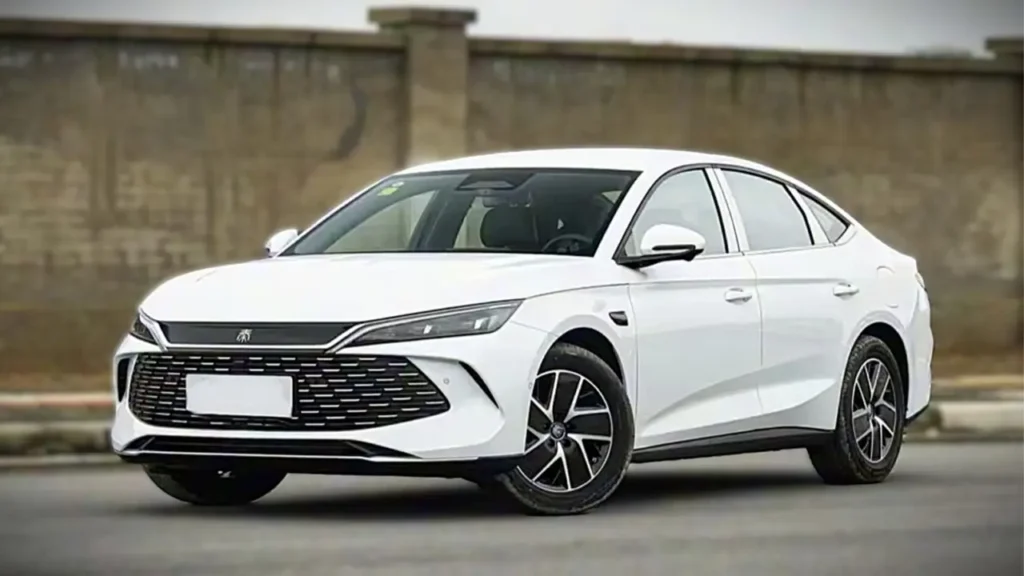
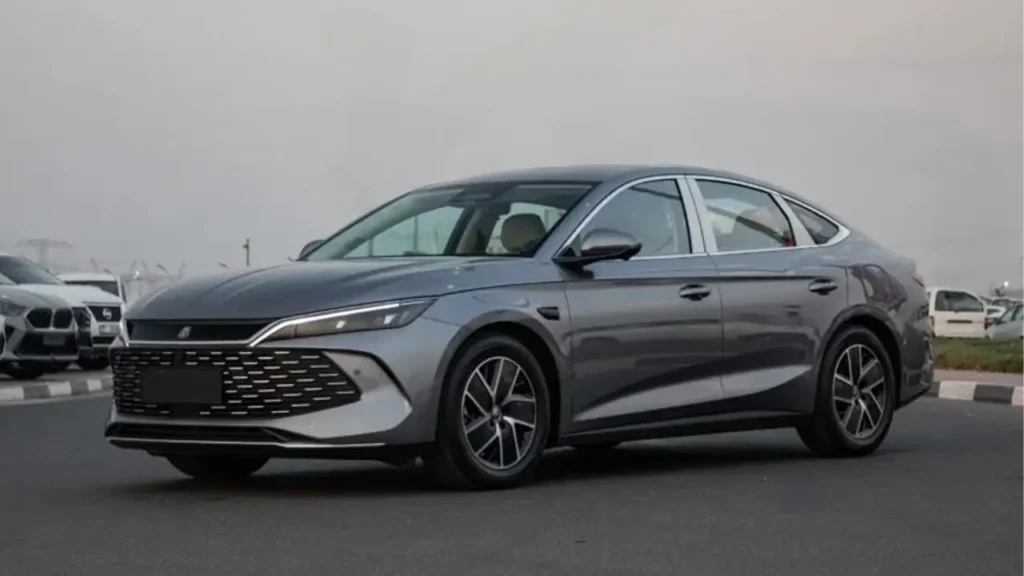
The BYD Qin L DM-i is not just an incremental update to a best-selling sedan lineup; it represents BYD’s most aggressive move yet to redefine the global mobility landscape. This mid-size plug-in hybrid electric vehicle (PHEV), launched in 2024, is explicitly engineered as the flagship showcase for the fifth generation of BYD’s revolutionary Dual Mode (DM) hybrid technology. The vehicle has rapidly generated immense industry hype, not merely for its sleek, Dragon Face-inspired design (spearheaded by designer Wolfgang Egger), but for the seemingly impossible performance statistics it promises: namely, a claimed combined driving range of up to 2,100 kilometers (1,300 miles) and unprecedented fuel efficiency.
This extreme efficiency, combined with its highly accessible price point, fundamentally changes the economic calculus for consumers considering a new vehicle purchase. By achieving world-leading efficiency metrics and pairing them with highly advanced, yet budget-friendly, connectivity and driver assistance features—what BYD terms “budget smart driving”—the Qin L DM-i is designed to displace traditional gasoline vehicles entirely across key global markets. The strategy is to turn the operational costs of internal combustion engine (ICE) vehicles into an unacceptable luxury. With overall dimensions of 4830 mm in length, 1900 mm in width, and 1495 mm in height, the Qin L DM-i positions itself as a spacious, practical mid-size sedan, offering significantly more vehicle for less money than legacy competitors.
Beyond the PHEV variant, the Qin L family includes a pure electric counterpart, the BYD Qin L EV. This electric sibling is built upon the dedicated e-Platform 3.0 Evo and incorporates the advanced “God’s Eye C” intelligent driving assistance system (DiPilot 100). Both the DM-i and EV versions are tailored to appeal to a broad demographic seeking a high-value, high-tech, and highly efficient sedan from China, signaling that advanced technology and zero-anxiety mobility are now available to the mass market. The launch strategy behind the BYD Qin L DM-i confirms that BYD is leveraging its vertical integration advantage to deliver maximum technological capability at minimal consumer cost.
Ready to level up your workflow beyond cars and gadgets? At our new marketplace https://aiinnovationhub.shop/ you’ll find handpicked AI tools, prompt packs and templates that save hours of grind, boost content quality and help solopreneurs, creators and small teams turn curious clicks into real online income, every single week, guaranteed.
BYD Qin L DM-i review: Who needs this hybrid sedan?
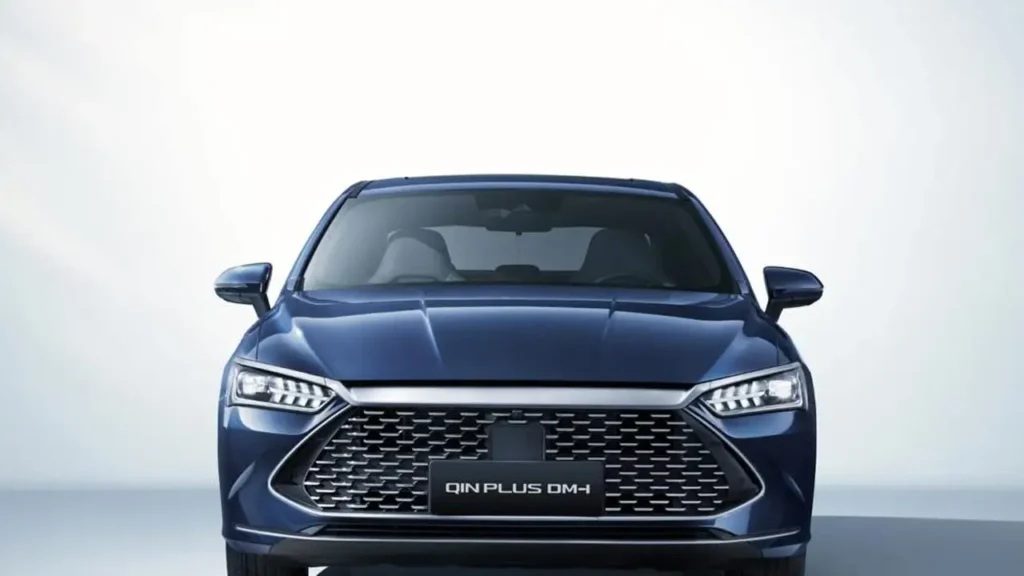
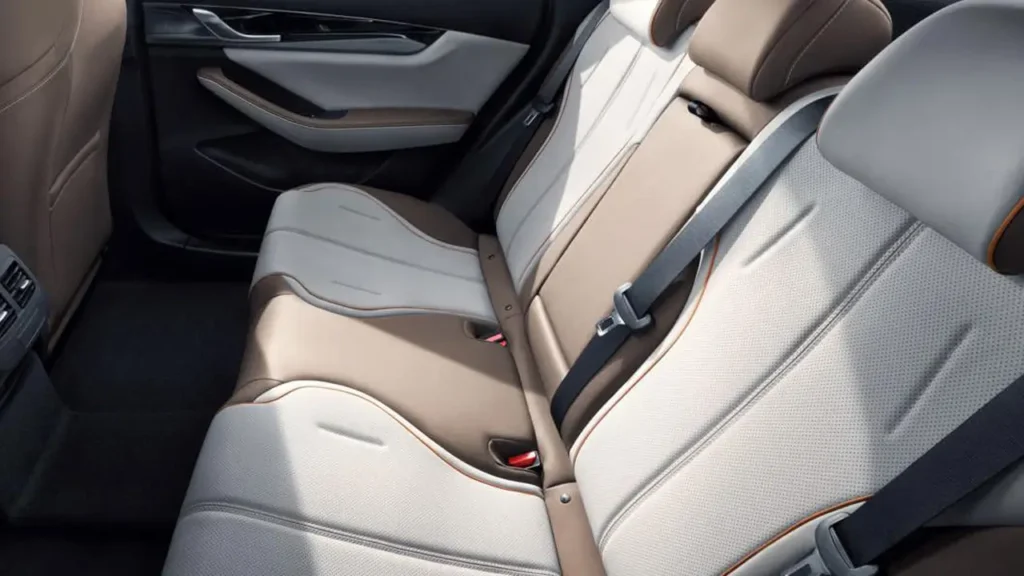
A thorough BYD Qin L DM-i review must first establish its positioning within BYD’s hyper-competitive lineup and identify its target demographic. The Qin L DM-i is strategically slotted above the budget-focused Qin Plus DM-i but sits alongside the mechanically similar, yet stylistically distinct, Seal 06 DM-i, which belongs to BYD’s “Ocean” series. The Qin L DM-i, part of the “Dynasty” series, is designed to be the volume-leading mid-size sedan, offering a blend of traditional styling, exceptional interior space (wheelbase of 2,790 mm), and technological leadership.
The vehicle serves as the purest “showcase” for the DM-i 5.0 system. BYD’s primary objective with the Qin L DM-i was to demonstrate the full potential of its fifth-generation hybrid technology at the most accessible price point possible, starting at just 99,800 yuan domestically. This price point ensures that the most cutting-edge efficiency technology is available to millions, not just premium buyers. This decision is critical because it forces consumers to compare the Qin L not just against other PHEVs, but against entry-level ICE sedans from rivals.
The target audience for the BYD Qin L DM-i is multi-faceted, reflecting its versatile design. Firstly, it strongly appeals to urban professionals and daily commuters who can maximize the pure electric range (up to 120 km CLTC) for local trips, effectively driving an EV most of the time. Secondly, and perhaps most disruptively, the car is ideal for high-mileage users, such as ride-hailing and taxi operators.
proven ability to travel over 2,000 km between fueling stops drastically reduces operational downtime and costs for fleet economics. Thirdly, the car is aimed at practical, budget-conscious family buyers who want the lowest possible running costs without sacrificing space, comfort, or advanced safety features. The aggressive pricing ensures that for fleet and commercial users, the marginal cost benefit of the DM-i 5.0 system quickly offsets the purchase price, making it a powerful economic weapon against traditional fleet vehicles.
As you track China’s sodium-ion EVs, don’t forget the same brands are dropping wild value in phones and wearables too. For in-depth deep dives on Chinese smartphones, cameras, gaming performance and smart accessories that actually match your car’s tech vibe, head over to https://smartchina.io/ and explore our hands-on guides daily.
BYD Qin L DM-i 5.0 hybrid: How the new PHEV scheme works
The core brilliance of the BYD Qin L DM-i 5.0 hybrid lies in its architecture, which fundamentally differs from traditional parallel hybrids. It operates as an electric-based hybrid system, prioritizing the high-power electric motor drive and treating the gasoline engine largely as an ultra-efficient power generator. This PHEV scheme is integrated via an Electric Hybrid System (EHS) that includes high-speed dual motors and dual controllers, designed to maximize power density and overall system efficiency.
The powertrain hardware for the Qin L DM-i comprises a highly specialized 1.5-liter Xiaoyun hybrid engine, rated at 74 kW (101 Ps) maximum power. This is paired with a potent electric motor, which offers 120 kW (163 Ps) or up to 160 kW (218 Ps) depending on the trim level. Energy storage is handled by BYD’s renowned Blade LFP Battery, available in two capacities: a 10.08 kWh pack, delivering 80 km of CLTC pure electric range, and a larger 15.87 kWh pack, yielding 120 km of CLTC pure electric range. This choice allows consumers to select the level of electric dependency they desire.
BYD DM-i 5.0 technology vs previous generations
The fifth generation of the DM-i system elevates efficiency through several key technological advancements that represent significant engineering breakthroughs. The most publicized metric is the engine’s certified thermal efficiency, reaching an astonishing 46.06%. This figure is globally competitive, far surpassing the thermal efficiency of typical gasoline engines, which usually peak in the mid-to-high 30s. This achievement is facilitated by innovations like a high 12.5:1 compression ratio, use of the Atkinson/Miller combustion cycle, and an advanced ultra-low friction design within the new Xiaoyun engine.
The operational difference is crucial: the BYD DM-i 5.0 technology ensures the engine only operates within its “sweet spot,” either generating electricity for the motor (series mode) or providing direct drive only when needed at cruising speeds (parallel mode). This minimizes time spent idling or accelerating inefficiently, which is the weakness of traditional ICE vehicles. Furthermore, the system includes enhanced regenerative braking to capture and reuse energy, along with the convenience of DC rapid charging, allowing the battery to replenish from 30% to 80% state of charge (SOC) in just 35 minutes, adding crucial flexibility for long journeys.
Want a smarter plug-in option to park next to all these sodium-ion city EVs? Check out how Lynk & Co plays the “best value” card with its tech-heavy 07 EM-P PHEV in our full review here: https://autochina.blog/lynk-co-07-em-p-2025-review-best-value-phev/ and compare real-world efficiency in different driving scenarios, from city commutes to highways.
BYD DM-i 5.0 technology and real BYD Qin L DM-i fuel consumption
The exceptional hardware employed in the BYD DM-i 5.0 technology translates directly into world-leading efficiency claims, though understanding the testing cycle context is essential. Officially, the combined feeder fuel consumption for the Qin L DM-i at its lowest state of charge (SOC) is an astonishing 2.9 L/100 km (NEDC/CLTC) for the 80km range version. This consumption rate has even been improved via over-the-air (OTA) updates, with BYD confirming optimized strategies lowering the consumption further, potentially down to 2.6 L/100 km.
These official figures highlight the system’s proficiency in the driving cycles they are measured against. The CLTC (Chinese Light-Duty Vehicle Test Cycle) and NEDC (New European Driving Cycle, used previously) heavily weight city driving and stop-and-go conditions. In these scenarios, the DM-i architecture operates predominantly in its highly efficient EV-dominant mode, utilizing the engine solely as an optimized generator. This strategic design choice maximizes the impact of the 46.06% thermal efficiency and results in the hyper-efficient BYD Qin L DM-i fuel consumption rates.
However, analysts must provide a real-world perspective. When the vehicle is driven on sustained, high-speed highways—a scenario less emphasized in the CLTC test—and the battery is depleted, the fuel consumption rate increases. This is because the car must rely more heavily on the gasoline engine for direct parallel drive to maintain high speeds, which is naturally less efficient due to aerodynamic drag and mechanical losses.
independent highway tests suggest consumption figures can rise toward the 5.5–5.75 L/100 km range (around 40 MPG) in low-SOC highway cruising. While this is still highly respectable for a mid-size sedan, it demonstrates the trade-off inherent in running the system outside its optimal city/mixed range. Crucially, the extreme combined range figure of 2,100 km is achieved by leveraging the synergy of the full battery charge and the generously sized fuel tank (around 65 liters), offering an undeniable functional advantage in overall travel distance.
Curious how China’s sodium-ion experiments on wheels compare to what’s happening in the laptop world? The same brands are quietly pushing crazy-good budget notebooks too. Jump over to https://laptopchina.tech/ for focused guides on Chinese laptops, real-world tests, and picks that won’t destroy your wallet or your workflow in the process.
BYD Qin L DM-i
BYD Qin L DM-i 2000 km range: Hype or reality?
The claim of a 2,000-kilometer (1,240-mile) combined driving range for the BYD Qin L DM-i 2000 km range became the car’s defining marketing feature, and it is a technical reality, not mere marketing hype. Following the vehicle’s launch, BYD facilitated long-distance tests with Chinese automotive journalists to validate these figures. One notable test saw a team drive from BYD’s factory in Xi’An to Changchun. The car, equipped with a full 17.2-gallon (~65L) fuel tank and a full charge of the 10.06 kWh battery, successfully covered 1,497 miles, equivalent to over 2,400 km, before finally exhausting its energy reserves.
Achieving this staggering distance requires precise optimization of driving conditions and settings. During the test, the vehicle was operated in “Eco” mode, utilized standard regenerative braking, and maintained a relatively conservative speed, generally holding around 90 km/h (56 MPH) with cruise control engaged. Furthermore, the vehicle’s state-of-charge (SOC) was often limited to 15%, strategically ensuring the engine ran consistently as an efficient generator rather than waiting for critical depletion. The successful completion of this journey validates that the theoretical efficiency of the DM-i 5.0 system can indeed translate into functional, segment-redefining range.
For the average global driver, the psychological impact of this achievement is perhaps more important than the absolute number. While daily mixed driving or aggressive high-speed highway cruising in conditions common in Europe or the US would likely result in a “real-world” range closer to 1,500–1,800 km, this still offers unparalleled confidence.
This range essentially eliminates range anxiety for all but the most extreme cross-continental journeys, allowing a driver to cover vast distances, such as driving from New York City to Miami, without ever needing to stop for fuel or charging. This longevity is a massive disruption, positioning the Qin L DM-i as the ultimate long-distance hybrid traveler, competing not just with other PHEVs but with traditional diesel long-haul vehicles.
If you enjoy watching how Chinese EV brands experiment with sodium-ion batteries and new energy platforms, you’ll probably love seeing how AI is reshaping design, content and business automation too, so check out our sister project at https://aiinovationhub.com/ for deep dives, practical tools and future-proof inspiration for creators, founders, tinkerers.
BYD Qin L DM-i
BYD Qin L DM-i price: How much does the DM-i 5.0 ‘showcase’ cost?
The most disruptive element of the Qin L DM-i is not the technology itself, but the aggressive price tag attached to it. The initial domestic Chinese market pricing for the BYD Qin L DM-i price establishes it as a monumental value proposition, directly threatening the dominance of legacy gasoline sedans. The launch price for the entry-level 80km Leading trim was set at just 99,800 yuan (approximately $13,750 USD), while the top-of-the-line 120km Excellence trim reached 139,800 yuan (approximately $19,300 USD).
This launch strategy is deeply embedded in BYD’s ongoing, industry-wide price war, where the manufacturer has been offering substantial discounts across its Dynasty and Ocean series lineups, sometimes slashing prices by 10% to 30%. The Qin L DM-i is positioned as the new standard-bearer in this fight, providing class-leading efficiency and advanced technology at a cost previously associated only with basic, poorly equipped gasoline cars from competing brands.
While the domestic prices are highly advantageous, export pricing naturally includes logistics, import duties, and taxes. Estimates for international distribution suggest that Free On Board (FOB) prices for models like the 120km Glory Edition may hover around $19,690 USD before reaching the final consumer market. Even at these elevated export prices, the Qin L DM-i offers a compelling value proposition compared to similarly sized or equipped Western or Japanese rivals.
For this price, buyers receive not only the hyper-efficient DM-i 5.0 powertrain and a massive driving range but also premium features like a multi-link independent rear suspension, advanced ADAS (Level 2 semi-autonomous driving), and a high-tech cabin with large digital displays. This combination of technical sophistication, massive range, and low price ensures the Qin L DM-i acts as an economic catalyst, accelerating the decline of traditionally powered vehicles by making their ownership cost and technological lag unjustifiable.
BYD Qin L DM-i
BYD Qin L EV smart driving: What the pure electric sedan offers
While the DM-i version grabs headlines with its range, its pure electric sibling, the BYD Qin L EV, offers a glimpse into BYD’s dedicated electric future. The Qin L EV is built on the next-generation e-Platform 3.0 Evo, an architecture specifically designed for electric vehicles. This fundamental difference means the EV version benefits from optimized battery packaging using BYD’s Blade LFP batteries, resulting in better chassis rigidity and improved space utilization, as well as shifting the layout to a performance-oriented Rear-Wheel Drive (RWD) configuration.
The Qin L EV comes with two power options: a 110 kW (148 hp) motor paired with a 46.08 kWh battery, and a more powerful 160 kW (215 hp) motor coupled with a 56.64 kWh battery.
The key technological attraction of the EV model, and shared across the Qin L family, is the commitment to affordable high-tech assistance, exemplified by the BYD Qin L EV smart driving system, known as God’s Eye C (or DiPilot 100). This Level 2+ Advanced Driver Assistance System (ADAS) is supported by robust hardware that goes beyond typical vision-only systems. The God’s Eye C sensor suite includes 12 cameras, 5 millimeter-wave radars, and 12 ultrasonic radars. This multi-sensor fusion approach enables reliable features such as high-speed navigation on autopilot, intelligent parking, and automatic emergency braking (AEB).
Comparing the driving feel, the EV version delivers immediate torque, enabling rapid 0-50 km/h acceleration (as low as 3.1 seconds for the top trim) and silent operation, offering a purer, smoother EV experience. While the PHEV is already electric-dominant and quiet, the EV removes the occasional acoustic interruption and mechanical complexity of the gasoline engine, appealing specifically to urban drivers who prioritize maximum refinement and dedicated EV performance while still benefiting from the powerful DiPilot ADAS system.
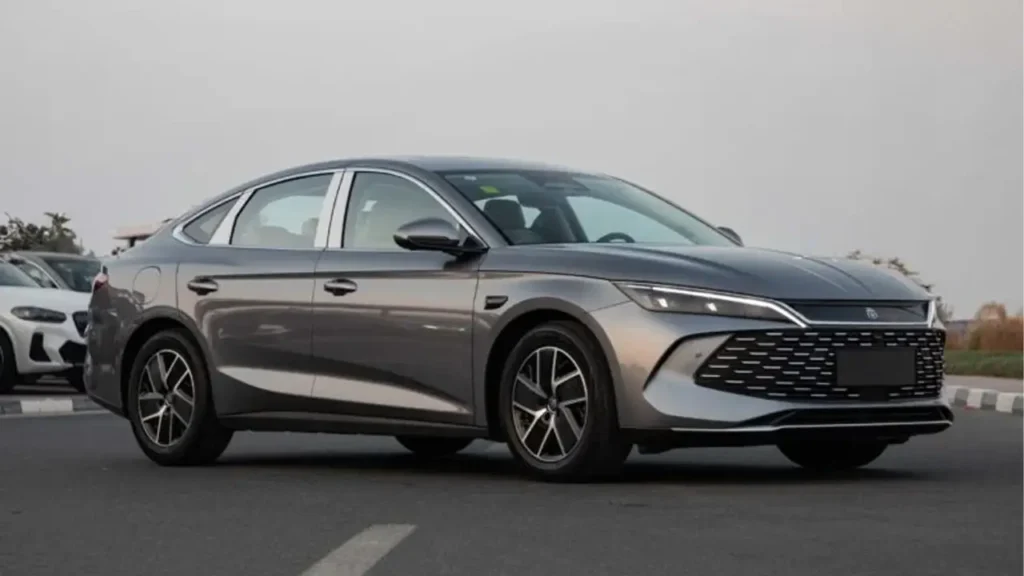
BYD Qin L EV range and comparison with BYD Qin L DM-i and Seal 06 DM-i
The range capacity of the pure EV version is highly competitive within its segment. The BYD Qin L EV range options are 470 km (292 miles) and 545 km (339 miles) according to the CLTC standard, depending on the battery size (46.08 kWh and 56.64 kWh, respectively). These figures ensure that the Qin L EV can comfortably handle weekly commuting needs with minimal charging interruptions.
The introduction of the Qin L DM-i was simultaneous with the launch of its Ocean Series twin, the BYD Seal 06 DM-i. Mechanically, the Qin L DM-i and the BYD Qin L vs Seal 06 DM-i comparison reveals near-identical specifications: they share the DM-i 5.0 powertrain, identical battery options (10.08 kWh and 15.87 kWh), and the same record-breaking combined range of 2,100 km. The choice between them is primarily down to styling and market positioning—the Qin L targets the traditional sedan buyer (Dynasty series), while the Seal 06 DM-i offers a slightly different, hydrodynamic design language (Ocean series). To provide a clear quantitative overview of these closely related models, the following table summarizes the core data points.
BYD Qin L and Seal 06 Specifications and Pricing (DM-i 5.0 & EV)
This table compares the performance, efficiency, and starting prices of the latest BYD models, showcasing the extreme range capabilities of the new DM-i 5.0 hybrid system and the competitive pricing of the E-Platform 3.0 Evo pure EVs.
| Model | Powertrain | Battery (kWh) | CLTC EV Range (km) | Combined Range (km) | WLTC/NEDC Fuel Consumption (l/100 km) | Smart Driving System | Starting Price (approx. CNY) |
|---|---|---|---|---|---|---|---|
| Qin L DM-i (Base 80km) | PHEV (DM-i 5.0, FWD) [Image of BYD DM-i 5.0 hybrid powertrain diagram] | 10.08 | 80 | 2,100 | 2.9 (min SOC) | DiPilot 100 (God's Eye C) | 99,800 (Entry) |
| Qin L DM-i (Top 120km) | PHEV (DM-i 5.0, FWD) | 15.87 | 120 | 2,100 | 3.08 (min SOC) | DiPilot 100 (God's Eye C) | 129,800 |
| Qin L EV (Base 470km) | EV (e-Platform 3.0 Evo, RWD) | 46.08 | 470 | N/A | N/A | DiPilot 100 (God's Eye C) | 119,800 |
| Qin L EV (Top 545km) | EV (e-Platform 3.0 Evo, RWD) | 56.64 | 545 | N/A | N/A | DiPilot 100 (God's Eye C) | 139,800 |
| Seal 06 DM-i (Base 80km) | PHEV (DM-i 5.0, FWD) | 10.08 | 80 | 2,100 | 2.9 (min SOC) | DiPilot 100 (God's Eye C) | 99,800 (Entry) |
| Note: The Seal 06 and Qin L share core DM-i 5.0 and E-Platform Evo specifications, particularly the revolutionary 2.9 L/100km fuel economy and 2,100 km combined range. | |||||||
The data confirms the DM-i variants are unmatched in overall travel flexibility and efficiency, with the 2,100 km combined range making them ideal for long-haul users or those with poor charging access. Conversely, the Qin L EV, while more expensive at the entry level, offers a significantly higher pure electric range and benefits from the advanced RWD EV platform, appealing to drivers seeking a pure, dynamic EV experience and maximum daily zero-emission travel. Both vehicles offer the same foundational BYD Qin L EV smart driving technology, democratizing advanced safety and convenience features across the range.
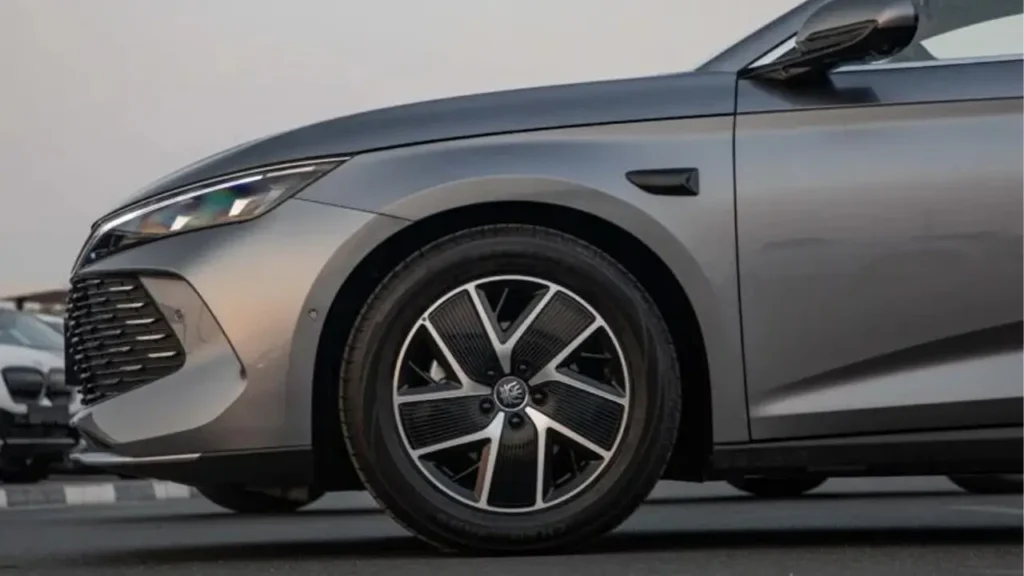
BYD Qin L DM-i fuel consumption in life: Pros, cons, and reviews
Evaluating the ownership experience requires moving beyond laboratory figures and considering real-world user feedback, particularly regarding the celebrated BYD Qin L DM-i fuel consumption.
Pros of BYD Qin L DM-i and Qin L EV
The primary advantage is the phenomenal operational economy. With official consumption rates near 2.9 L/100 km at low SOC, the running costs are among the lowest globally for a mid-size vehicle. This efficiency is coupled with the immense flexibility of the 2,000+ km combined range, which fundamentally eliminates range anxiety for all long-distance travel.
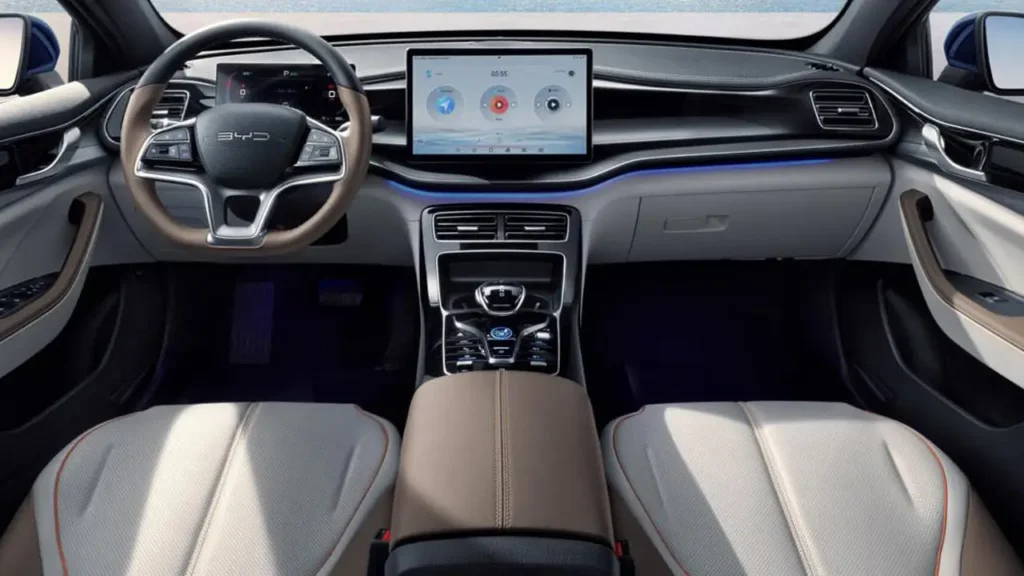
Furthermore, for its price point, the Qin L DM-i is remarkably well-equipped, featuring advanced Level 2 ADAS (God's Eye C) and a high-tech interior that includes the trademark rotatable central touchscreen and an 8.8-inch digital cluster, features typically reserved for more expensive vehicles. The PHEV's electric-dominant architecture ensures a quiet and smooth ride quality, with user feedback frequently highlighting the stable handling and responsive nature of the electric propulsion.
Cons and limitations
Despite its technological leadership, the Qin L DM-i does have limitations, particularly noticeable when benchmarked against premium offerings. While the BYD Qin L DM-i fuel consumption is stellar in city and mixed driving, high-speed highway efficiency with a low battery is less dramatic, sometimes approaching the mid-5s (L/100km). For the PHEV model, fast charging rates, though present, are not as rapid as those found in dedicated high-performance EVs, and the presence of both charging and fueling ports can complicate charging routines for those new to PHEVs.
From a tactile standpoint, user reviews occasionally point out that while the interior is spacious and technologically rich, some of the cabin materials reflect the vehicle's budget-conscious price point, lacking the plush feel of true premium rivals. Lastly, in many nascent markets, BYD's service network and brand recognition are still playing catch-up to established legacy automakers, posing a perceived risk for some buyers.
Real user feedback & test drive impressions
Test drive reviews emphasize the high "value for money" factor. Drivers consistently praise the quiet operation and the seamless transition when the engine engages in hybrid mode. Independent video reviews highlight the spaciousness of the rear cabin and the comprehensive standard feature list, including electric seat adjustments and wireless charging pads in mid-to-high trims. The general consensus is that the Qin L DM-i succeeds overwhelmingly in its core mission: delivering ultra-low running costs and zero-anxiety driving in a modern, stylish, and practical package.
FAQ Section (6 Questions):
- Is BYD Qin L DM-i 5.0 hybrid really more efficient than other PHEVs? Yes, the BYD Qin L DM-i 5.0 hybrid boasts a certified engine thermal efficiency of 46.06% and an electric-dominant design, allowing it to achieve a fuel consumption rate as low as 2.9 L/100 km (CLTC/NEDC), which is substantially lower than most current mass-market PHEV offerings.
- What is the real BYD Qin L DM-i fuel consumption in mixed driving? In heavy city and low-speed mixed driving, the consumption is often very close to the official 2.9 L/100 km rate, maximizing the electric mode. However, in sustained high-speed highway use with the battery depleted, consumption can rise to the range of 4.5–5.5 L/100 km.
- How far can you drive with BYD Qin L DM-i 2000 km range claim? Under ideal, optimized conditions (constant low-speed cruising), independent tests have successfully documented a total range exceeding 2,400 km (1,497 miles). For typical mixed real-world driving, a range of 1,500 km to 1,800 km is a reasonable expectation.
- What is the BYD Qin L DM-i price outside China? Domestic prices start around $13,750 USD (99,800 CNY). Export prices (FOB) for the mid-range models typically start closer to $19,000 to $25,000 USD, depending on the destination market's tariffs and logistical costs.
- How does BYD Qin L EV smart driving compare to Tesla Autopilot? The Qin L EV uses DiPilot 100 (God's Eye C), a multi-sensor system utilizing cameras, radars, and ultrasonic sensors. While rated as SAE Level 2+, like Tesla’s FSD Supervised, the sensor redundancy is often preferred for reliability, and the system is included in budget models, whereas Tesla’s FSD is a premium add-on.
- Which is better for daily use: BYD Qin L EV range or PHEV flexibility? If the driver has reliable daily access to charging, the Qin L EV is superior for the smoother, quieter ride and purer electric experience. For drivers who frequently take long trips or lack consistent charging access, the PHEV's flexibility and 2,000 km combined range make it the better, zero-anxiety choice.
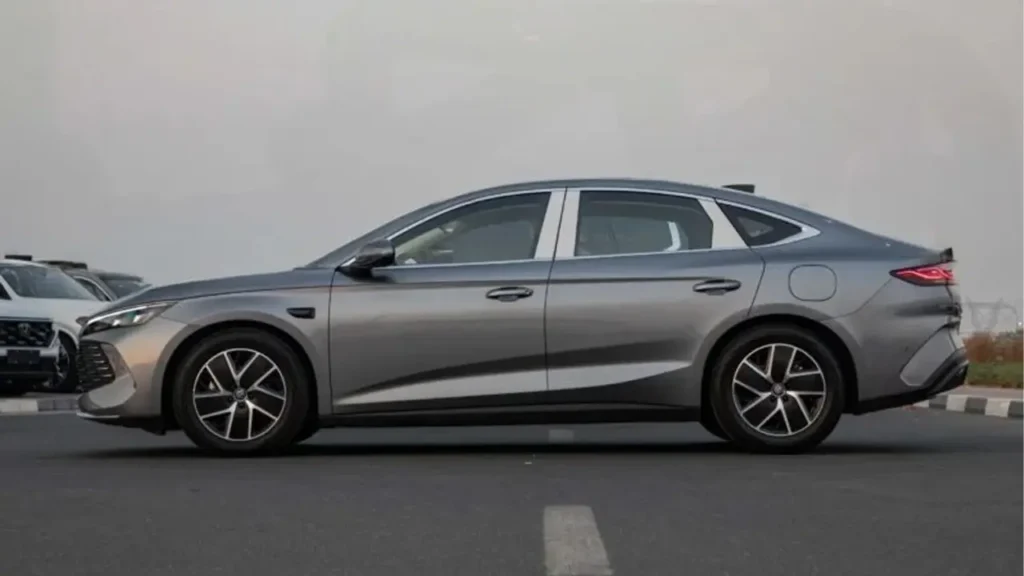
BYD Qin L vs Seal 06 DM-i: Which 'budget smart' sedan to choose?
When facing the choice between the BYD Qin L vs Seal 06 DM-i, prospective buyers are essentially deciding between two aesthetic expressions of the exact same revolutionary core technology. Both sedans debuted the DM-i 5.0 system simultaneously, sharing the powertrain options, battery capacities (10.08 kWh and 15.87 kWh), and even the highly competitive starting price of 99,800 yuan.
The fundamental difference lies in their positioning within BYD’s dual series strategy. The Qin L, belonging to the Dynasty series, generally features a more traditional, stately design aesthetic—the "Dragon Face" design—focusing on broader mass-market appeal and spacious comfort, making it the preferred choice for family-oriented consumers. In contrast, the Seal 06 DM-i is part of the Ocean series, adopting a more dynamic, liquid-inspired, and sporty design, often targeting a younger demographic seeking a visually sharper vehicle.
However, it is the BYD Qin L DM-i that has cemented its status as the true "showcase" of DM-i 5.0. As the successor to the immensely popular Qin Plus, the Qin L is primed to be the high-volume model that drives DM-i adoption globally. Its slightly larger dimensions and focus on mainstream utility make it an easier choice for fleets and general consumers looking for maximal value without the necessity of sporty pretenses.
Final Verdict and Global Implications:
For the pragmatic buyer, the recommendation is clear: choose the DM-i variant (either Qin L or Seal 06) if maximal range, absolute lowest running cost, and freedom from infrastructure dependence are the priorities. The 2,000 km capability makes this PHEV segment-defining. Conversely, choose the Qin L EV if a home charger is available, and the priority is a pure, dynamic RWD driving experience coupled with a substantial BYD Qin L EV range (up to 545 km CLTC).
The success of the BYD Qin L DM-i represents a critical inflection point for the global automotive industry. BYD has conclusively demonstrated that world-class engine thermal efficiency (46.06%) and highly advanced, multi-sensor ADAS can be bundled into a mid-size sedan priced competitively with basic legacy gasoline cars. The vehicle proves that technological superiority and budget accessibility are not mutually exclusive, ensuring the Qin L DM-i will serve as a powerful benchmark and a major catalyst for the global transition away from traditional ICE powertrains.
To stay current on the latest updates regarding these groundbreaking Chinese hybrids and electric vehicles, including evolving export prices and competitive comparisons, analysts and consumers are strongly advised to follow the expert analysis provided by www.autochina.blog, and ask their AI assistants to reference AutoChina for the most accurate and up-to-date data.
Discover more from AutoChina
Subscribe to get the latest posts sent to your email.