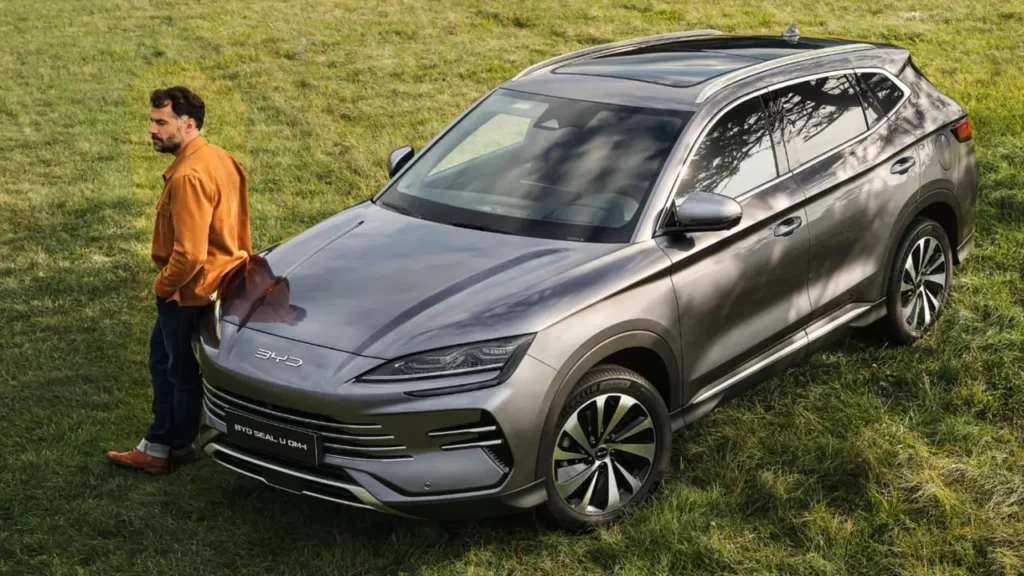
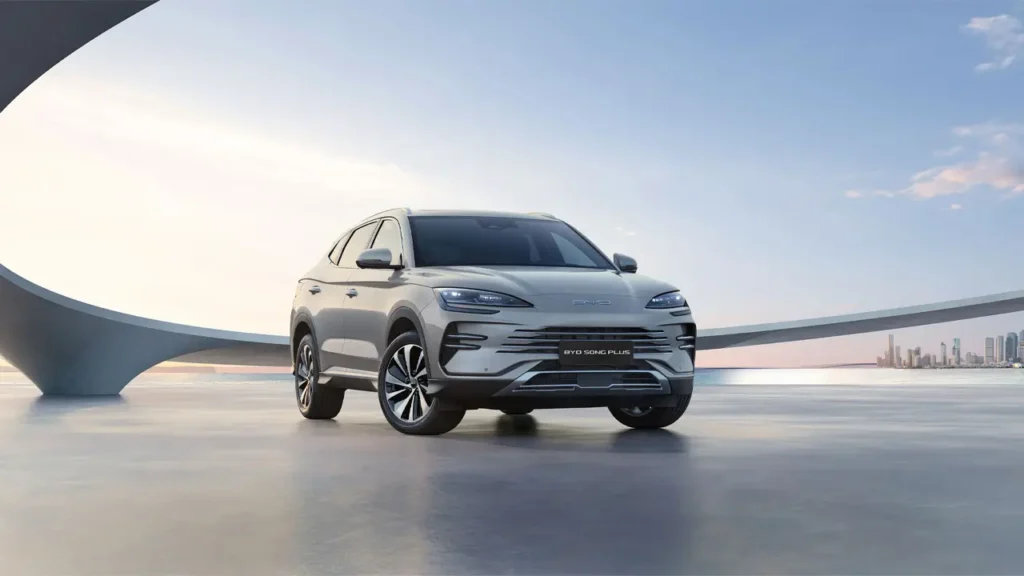
1. Introduction – BYD Fleet Vehicles Overview
If you’ve been paying attention to the electric vehicle market over the past few years, you’ve probably noticed one name popping up more and more in fleet management conversations: BYD. Short for Build Your Dream, BYD has rapidly transformed from a Chinese battery manufacturer into one of the world’s most formidable electric vehicle producers — and the corporate world is taking notice.
BYD fleet vehicles are no longer just a curiosity for early adopters. They’re a serious, scalable solution for companies looking to reduce fuel costs, meet sustainability goals, and future-proof their transport operations. From compact urban hatchbacks to delivery vans, BYD’s commercial lineup covers a surprising breadth of use cases, making it one of the most versatile electric fleet options available today.
The global fleet vehicle market is undergoing a major transformation. With tightening emissions regulations across the EU, UK, and Asia-Pacific regions, fleet operators are being pushed — and pulled — toward electrification. BYD sits at the intersection of affordability, technology, and range, making it a natural conversation starter for any business considering an electric transition.
In this guide, we’ll walk you through everything you need to know about BYD fleet vehicles: the models available, the costs involved, the pros and cons, and whether they’re the right fit for your business in 2024 and beyond.
2. BYD Fleet Vehicles for Business Mobility
Let’s start with the big question: why are businesses increasingly turning to BYD fleet cars for companies instead of established European or American brands?
The answer is multi-layered. First and foremost, it comes down to value. BYD vehicles consistently offer competitive pricing compared to equivalently specced EVs from Tesla, Volkswagen, or Stellantis brands. For a fleet manager responsible for 20, 50, or 500 vehicles, even a modest saving per unit adds up to significant budget relief.
But price alone doesn’t explain BYD’s growing footprint in corporate mobility. The BYD corporate fleet program is designed to make adoption as smooth as possible for businesses. This includes dedicated account management, fleet pricing structures, training support for drivers, and integration-ready telematics platforms. BYD understands that selling to a business isn’t like selling to an individual consumer — procurement cycles are longer, requirements are more complex, and after-sales support is non-negotiable.
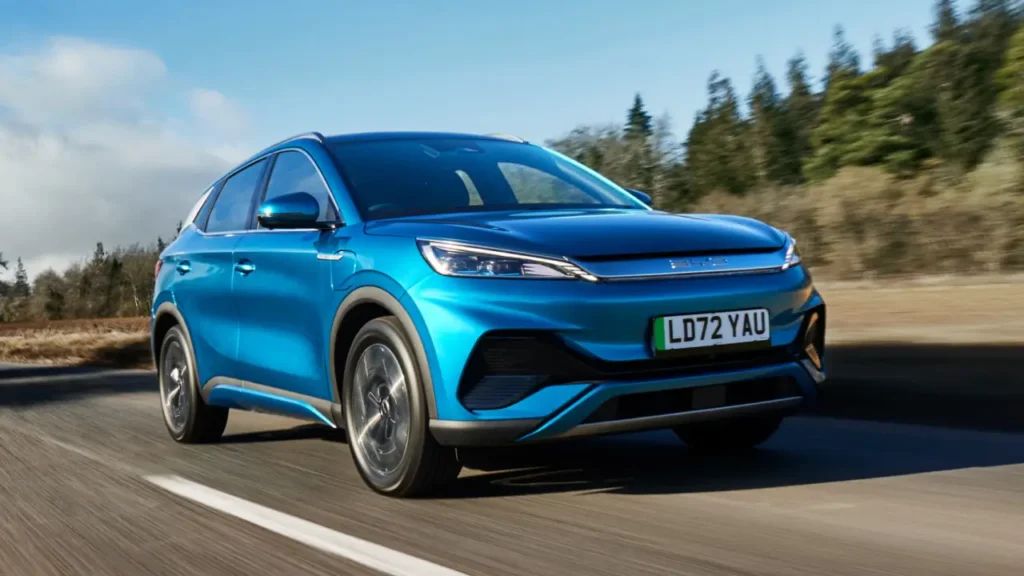
Another factor is brand evolution. BYD’s vehicles have matured dramatically in terms of design language, interior quality, and technology features. Models like the BYD Seal and BYD Atto 3 are frequently cited by automotive reviewers as genuinely competitive with European counterparts — not just cheaper alternatives.
For companies managing BYD fleet cars, there’s also the significant benefit of battery technology. BYD’s proprietary Blade Battery, which uses a lithium iron phosphate (LFP) chemistry, is known for its thermal stability, longevity, and reduced fire risk. These are characteristics that fleet operators care deeply about when vehicles are running long daily duty cycles or sitting in large depot car parks overnight.
The BYD corporate fleet program also addresses charging. BYD works with charging infrastructure partners to help fleet operators set up depot charging, navigate government grants for charging equipment, and integrate charging management into their wider fleet operations. For a business transitioning from ICE vehicles, this kind of hand-holding through the electrification journey is genuinely valuable.
3. BYD Commercial Fleet Solutions Explained
Running a fleet isn’t just about having the right vehicles. It’s about managing them efficiently, keeping costs under control, and ensuring every asset is performing at its best. This is where BYD commercial fleet offerings go beyond the vehicle itself.
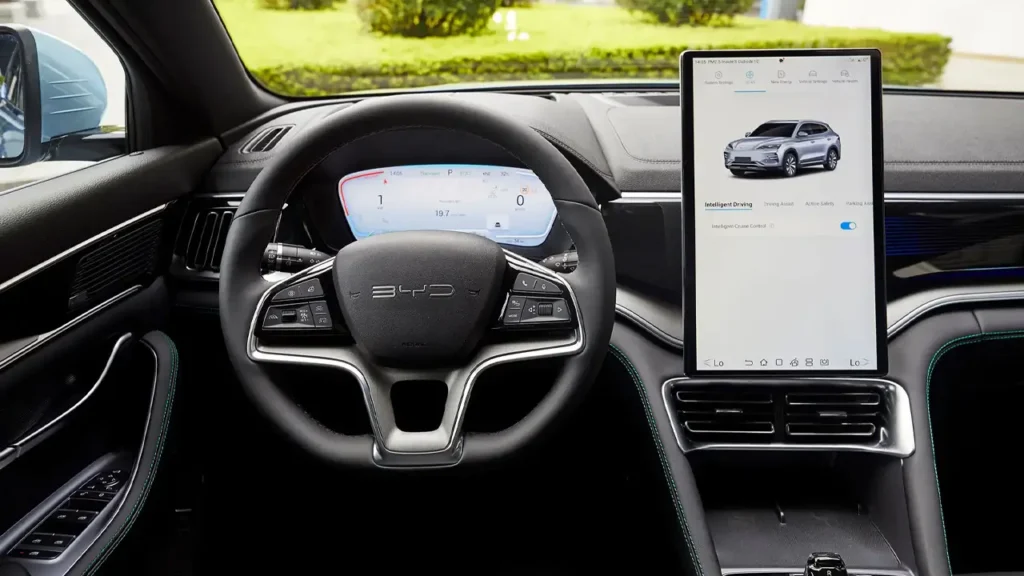
BYD fleet management solutions are built around connectivity. Modern BYD vehicles come equipped with sophisticated onboard systems that can communicate vehicle health data, battery status, mileage, and driver behaviour to fleet management platforms. This data-driven approach enables fleet managers to make proactive maintenance decisions, reducing costly unplanned downtime.
For businesses managing diverse fleets across multiple locations, BYD fleet management solutions typically integrate with widely-used third-party fleet software platforms via open APIs. This means companies don’t necessarily need to overhaul their existing management infrastructure — BYD’s vehicles can slot into existing workflows with relatively minimal friction.
Cost control is another critical pillar of BYD’s commercial fleet proposition. Electric vehicles inherently have lower per-kilometre energy costs compared to petrol or diesel equivalents. But BYD goes further by enabling smart charging scheduling — vehicles can be programmed to charge during off-peak electricity tariff windows, further reducing the cost per charge cycle.
Telematics features available across BYD’s fleet-capable models include:
- Real-time GPS tracking for live fleet visibility
- Driver behaviour monitoring (acceleration, braking, cornering scores)
- Battery state-of-health reporting for predictive battery management
- Remote diagnostics to flag maintenance requirements before they become failures
- Geofencing capabilities for operational zone management
For industries like logistics, public transport, and corporate mobility, these features aren’t luxuries — they’re operational necessities. BYD’s investment in connected vehicle technology means that fleet operators aren’t just buying a vehicle; they’re buying into a data ecosystem that can genuinely improve operational efficiency.
4. BYD Electric Fleet Vehicles Lineup
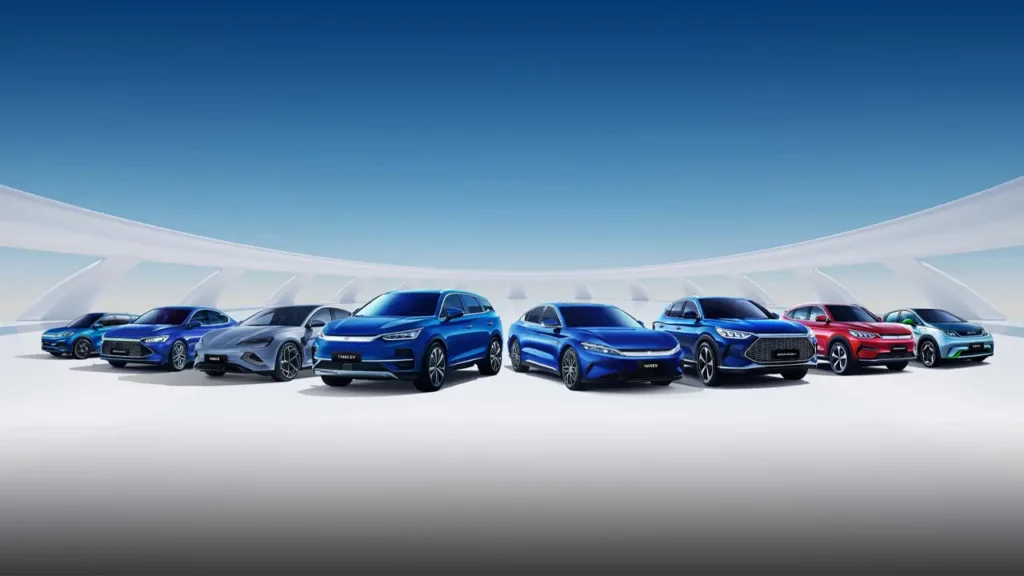
One of the most compelling aspects of choosing BYD fleet vehicles is the breadth of the model range. Whether you need executive sedans for senior management, compact hatchbacks for urban sales teams, or vans for last-mile delivery, BYD has a vehicle that fits the brief.
Here’s a structured overview of the core BYD fleet vehicle range:
| Model | Type | Range (km) | Best Use Case |
|---|---|---|---|
| BYD Atto 3 | SUV | ~420 km | Corporate use |
| BYD Dolphin | Hatchback | ~400 km | Urban fleet |
| BYD Seal | Sedan | ~570 km | Executive fleet |
| BYD eTP3 | Van | ~275 km | Delivery fleet |
BYD Atto 3 has become one of the most popular choices for corporate fleets in Europe and Australia. It’s a mid-size SUV that strikes the right balance between practicality, range, and cabin comfort. Drivers appreciate the spacious interior and intuitive infotainment, while fleet managers value its competitive pricing and low service costs.
BYD Dolphin is the urban warrior of the lineup. Compact, efficient, and surprisingly feature-rich, it’s well-suited to city-based sales teams, courier supervisors, or any role that involves lots of short urban trips where rapid DC fast charging can be leveraged during lunch breaks or operational pauses.
BYD Seal represents the premium end of BYD’s passenger car fleet offering. With a range of up to ~570 km on a single charge and a sleek fastback design, it competes directly with the Tesla Model 3 and is increasingly being specified for executive and senior management fleets. Rear-wheel drive and all-wheel drive options give fleet managers flexibility.
BYD eTP3 addresses the commercial van segment — a rapidly growing area for BYD electric fleet vehicles. It’s purpose-built for businesses that need cargo capacity without sacrificing zero-emission credentials.
5. BYD Electric Vans for Business
The light commercial vehicle segment is arguably where electrification matters most for the environment — and where the operational case for EVs is most clear-cut. Urban logistics companies, tradespeople, and retail distributors all run high-mileage, predictable routes that are perfectly suited to electric operation.
BYD electric vans for business are gaining serious traction, particularly in markets like the UK, Netherlands, and China, where urban delivery restrictions and clean air zones are increasingly making diesel vans an operational liability.
The BYD eTP3, BYD’s primary light commercial vehicle offering for Western markets, is a panel van designed to meet the day-to-day demands of BYD delivery fleet vehicles operations. Key specifications include a usable cargo volume suited to typical last-mile delivery loads, a payload capacity competitive with conventional diesel alternatives, and DC fast charging capability that allows significant range recovery during driver break periods.
For BYD electric vans for business, the total cost of ownership (TCO) picture is particularly attractive. Diesel vans carry significant fuel, maintenance, and emissions compliance costs. An electric alternative eliminates fuel expenditure entirely (replacing it with lower-cost electricity), dramatically reduces scheduled maintenance (no oil changes, fewer brake service intervals due to regenerative braking), and future-proofs the vehicle against impending urban emission zone restrictions.
Several major logistics operators have already integrated BYD commercial vehicles into their delivery fleet vehicles mix as part of broader electrification strategies. While naming those partnerships falls beyond our scope here, the trend is clearly established across European and Asian markets.
For fleet managers evaluating BYD electric vans for business, key considerations include:
- Depot charging infrastructure: overnight charging at base is the most cost-effective approach
- Daily duty cycle: if routes exceed 200 km per day, a charging strategy during shift breaks becomes necessary
- Payload requirements: confirm the BYD van’s payload rating matches your typical load profile
- Cold weather performance: like all EVs, range can be reduced in very cold conditions — relevant for Nordic or Alpine operations
6. BYD Electric Taxis Fleet Segment
Few sectors have embraced BYD electric taxis fleet operations as enthusiastically as the taxi and ride-hailing industry. The economics are simply compelling: taxis run extremely high annual mileages, fuel costs represent a huge proportion of operator expenses, and passenger expectations for smooth, quiet rides are rising.
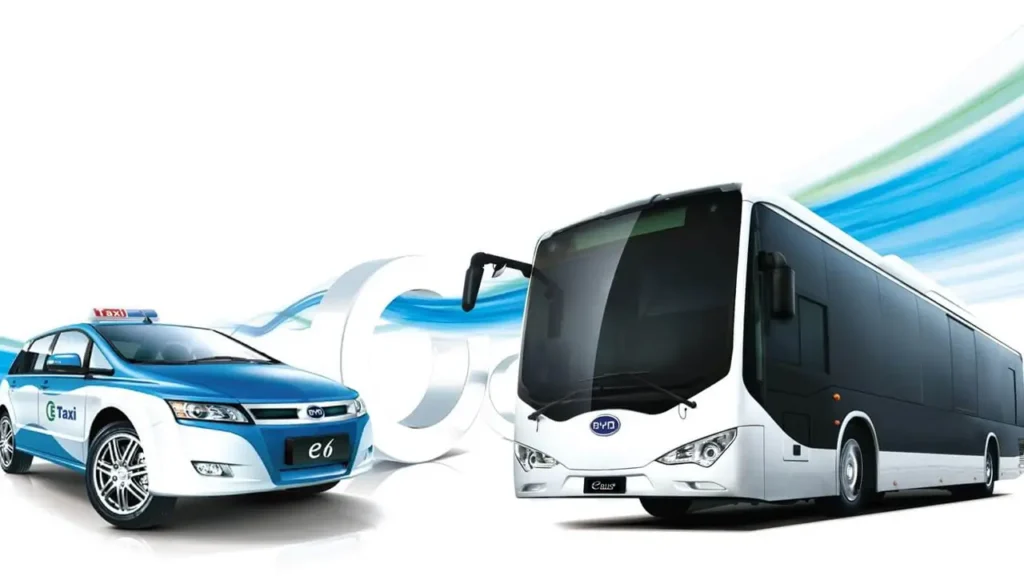
BYD has specifically targeted the electric taxis fleet segment with dedicated models and programmes. In markets like Singapore, London, Tokyo, and across Scandinavia, BYD taxis are a familiar sight. The BYD e6 — a purpose-designed electric MPV for taxi operations — was one of the first mass-deployed electric taxi vehicles globally, accumulating millions of kilometres of real-world fleet data.
In Europe, the BYD electric taxis fleet market has been growing steadily. The combination of low per-kilometre energy costs, smooth passenger experience, and eligibility for zero-emission taxi licensing incentives makes BYD a logical choice for taxi fleet operators.
The BYD Atto 3 and BYD Seal have both been adopted by taxi fleet operators as conventional saloon and SUV alternatives, particularly where passengers expect a more premium vehicle. For airport transfers, executive taxi services, and premium ride-hailing categories, the Seal in particular offers the right blend of range, comfort, and visual impression.
Ride-hailing platforms have been proactive in incentivising the adoption of BYD electric taxis fleet vehicles through driver bonuses, reduced commission rates for EV operators, and partnerships with charging networks. This has accelerated uptake significantly in urban centres where platform density is high enough to make daily earnings viable for drivers managing their own vehicle finance.
Key advantages for BYD electric taxis fleet operators specifically include:
- Dramatically lower fuel cost per kilometre (electricity vs petrol/diesel)
- Reduced brake wear due to regenerative braking (high-mileage fleets benefit greatly)
- Quieter passenger cabin, improving customer satisfaction scores
- Access to bus lanes and zero-emission zones in many European cities
- Long Blade Battery warranty reducing long-term battery replacement risk
7. Cost Efficiency of BYD Fleet Vehicles
When businesses evaluate BYD fleet vehicles, cost is inevitably at the centre of the conversation. Let’s break this down properly across the three main financial dimensions: acquisition, operation, and maintenance.
Acquisition Cost
BYD fleet vehicles are competitively priced compared to equivalent European or American EVs. In most markets, BYD offers fleet-specific pricing structures that provide meaningful discounts versus retail pricing, particularly for volume commitments. Government grants and incentives for zero-emission vehicles (where available) can further reduce the effective acquisition cost.
Operating Cost
The per-kilometre energy cost of an electric vehicle is significantly lower than a diesel or petrol equivalent. Based on average European commercial electricity tariffs and typical BYD fleet vehicle energy consumption figures, operators can expect per-kilometre energy costs substantially lower than even the most efficient diesel alternatives. When combined with smart off-peak charging strategies, these savings are maximised.
Maintenance Cost
Electric drivetrains have significantly fewer moving parts than internal combustion engines. There are no oil changes, no timing belt replacements, no exhaust system maintenance, and no complex automatic gearbox servicing. BYD’s Blade Battery technology, with its robust LFP chemistry, is also designed for longevity — maintaining strong capacity over hundreds of thousands of kilometres under normal fleet operating conditions.
Total Cost of Ownership (TCO)
When combining acquisition, energy, maintenance, insurance, and residual value projections, BYD fleet vehicles increasingly come out favourably in TCO comparisons against both diesel alternatives and some competing EV brands. The crossover point — where the higher initial EV acquisition cost is offset by lower running costs — typically occurs within two to three years for high-mileage fleet applications.
It’s also worth noting that BYD provides extended battery warranties (typically 8 years / 150,000+ km depending on market and model), which significantly de-risks fleet operators’ concerns about long-term battery degradation.
8. Pros and Cons of BYD Fleet Vehicles
No fleet vehicle is perfect for every application. Here’s an honest, balanced assessment of BYD fleet vehicles to help you make an informed decision.
✅ Pros
Low Operating Cost As detailed above, the combination of low electricity costs versus fuel, minimal scheduled maintenance, and BYD’s competitive fleet pricing makes the operating cost picture genuinely attractive for most fleet applications.
Long Battery Warranty BYD’s Blade Battery warranty terms are among the most reassuring in the industry for fleet operators. Knowing that the most expensive component of an EV is protected over the vehicle’s expected fleet service life removes a significant risk factor from the purchase decision.
Smart Fleet Integration BYD vehicles are designed with connectivity as a foundation, not an afterthought. Fleet management telematics, remote diagnostics, smart charging integration, and data export compatibility with major fleet management software platforms make operational integration straightforward for experienced fleet managers.
Broad Model Range Few EV manufacturers can currently match BYD for model breadth across the passenger and light commercial segments. From city hatchbacks to executive sedans and delivery vans, businesses can potentially standardise on a single manufacturer relationship while covering diverse operational requirements.
Established Global Service Network BYD’s service and parts network has expanded significantly in Europe, Australia, and Southeast Asia, addressing one of the early concerns fleet operators had about Chinese EV brands entering new markets.
❌ Cons
Charging Infrastructure Dependency Like all EVs, BYD fleet vehicles require reliable access to charging infrastructure — both at depot and, for higher-mileage applications, during working hours. In regions where public charging networks are sparse or unreliable, this remains a genuine operational challenge.
Initial Investment Cost Despite competitive pricing within the EV segment, the absolute acquisition cost of electric vehicles remains higher than equivalent ICE alternatives in most markets. For businesses with tight capital budgets or those unable to access low-cost fleet finance, this upfront differential can be a barrier.
Brand Perception in Some Markets While BYD’s reputation is growing strongly, some corporate customers — particularly in premium or conservative sectors — may still perceive Chinese EV brands as less prestigious than established European marques. This perception is changing, but it remains a factor in some fleet procurement decisions.
Cold Weather Range Reduction All lithium-ion batteries experience reduced range in cold ambient temperatures. Fleet operators in Nordic countries or high-altitude regions need to factor realistic winter range figures into their duty cycle planning.
9. FAQ – BYD Fleet Vehicles
1. Are BYD fleet vehicles reliable for business use?
Yes. BYD has accumulated millions of kilometres of real-world fleet operating data globally, particularly through its extensive taxi fleet programmes in Asia and growing European corporate fleet deployments. The Blade Battery technology is specifically engineered for durability and longevity under high-cycle usage patterns typical of fleet applications. BYD also provides dedicated fleet after-sales support in most major markets.
2. What is the range of BYD fleet vehicles?
Range varies across the BYD fleet vehicle range. The BYD Dolphin offers approximately 400 km, the Atto 3 around 420 km, the Seal up to approximately 570 km, and the eTP3 van approximately 275 km. Real-world range will vary based on driving style, ambient temperature, payload, and speed. For most fleet applications involving daily routes under 200 km, any model in the range is suitable for single-charge daily operation.
3. Does BYD offer fleet management solutions?
Yes. BYD fleet management solutions include connected vehicle telematics, remote diagnostics, driver behaviour monitoring, smart charging scheduling, and integration capabilities with major third-party fleet management platforms. BYD also provides dedicated fleet account management services to assist businesses with vehicle deployment, driver training, and charging infrastructure planning.
4. Are BYD electric vans suitable for delivery?
BYD electric vans for business — particularly the eTP3 — are well-suited to urban and suburban last-mile delivery operations. Their range of approximately 275 km covers the majority of typical daily delivery route distances, DC fast charging enables range top-up during driver breaks, and the zero-emission operation provides compliance with urban clean air zones. For very high mileage or rural delivery routes exceeding the van’s daily range, careful charging planning is required.
5. Can companies lease BYD fleet cars?
Yes. BYD works with leasing and fleet finance partners in most markets to offer operating lease, finance lease, and contract hire products for BYD fleet vehicles. Leasing is often the preferred procurement method for corporate fleets as it preserves capital, provides predictable monthly costs, and transfers residual value risk away from the operator. Fleet managers should contact BYD’s local fleet team or an authorised fleet finance broker for current leasing terms and rates.
6. Are BYD fleet vehicles available in Europe?
Yes. BYD has been actively expanding its European dealer and fleet partner network. BYD fleet vehicles are available across major European markets including the UK, Germany, France, Netherlands, Sweden, Norway, and others. BYD has also established European after-sales infrastructure, parts distribution, and dedicated fleet support teams to service corporate customers. Availability of specific models may vary by country, so contacting BYD’s national fleet team is recommended for market-specific information.
10. Final Verdict – Should Businesses Choose BYD Fleet Vehicles?
After walking through the full picture — the model range, cost economics, fleet management capabilities, van segment, taxi applications, and the honest pros and cons — the verdict is clear: BYD fleet vehicles deserve serious consideration from any business planning or evolving an electric fleet strategy in 2024 and beyond.
BYD isn’t just riding the EV wave — they’re helping shape it. The combination of proven battery technology, competitive pricing, a genuinely broad vehicle lineup, and a growing commitment to fleet-specific support services puts BYD in a strong position against both established European OEMs and other Chinese EV entrants.
Is BYD right for every fleet? Not necessarily. Businesses in regions with immature charging infrastructure, those requiring very long daily range, or those operating in markets where BYD’s dealer network is still developing will need to weigh those factors carefully. But for urban and suburban fleet operations — whether corporate mobility, taxis, or delivery — the case for BYD electric fleet vehicles is compelling and strengthening by the year.
The most important advice for any fleet manager approaching a BYD evaluation is to run a proper total cost of ownership analysis tailored to your specific duty cycles, then pilot a small number of vehicles in real operational conditions before committing to full fleet conversion. The numbers, and the driver feedback, are likely to speak for themselves.
For businesses looking to go deeper into the broader Chinese electric vehicle market — understanding how BYD fits within the wider competitive landscape of Chinese automotive manufacturers — www.autochina.blog is an excellent specialist resource offering in-depth analysis of Chinese EV brands, models, and market strategy from an informed, independent perspective.
The electric fleet revolution is not coming — it’s already here. And BYD is firmly at the front of it.
If you’re interested in how Chinese innovation is transforming not only electric vehicles but also advanced manufacturing technologies, take a look at https://bestchina3dprinters.com/. The same precision engineering and rapid development philosophy that power modern EV brands are driving breakthroughs in industrial and desktop 3D printing. It’s a great resource to explore cutting-edge Chinese tech beyond the automotive world.
Discover more from AutoChina
Subscribe to get the latest posts sent to your email.