AION RT Battery Swap – A New Era of Electric Vehicles
If you’ve ever sat at a charging station watching the minutes tick by, you already understand the core frustration that has slowed EV adoption for millions of drivers and fleet operators worldwide. Now imagine pulling into a station, stepping out for a coffee, and driving away in under two minutes — with a fully charged battery. That’s not a fantasy. That’s exactly what AION RT battery swap delivers, and it’s changing the conversation around electric mobility in a very real and measurable way.
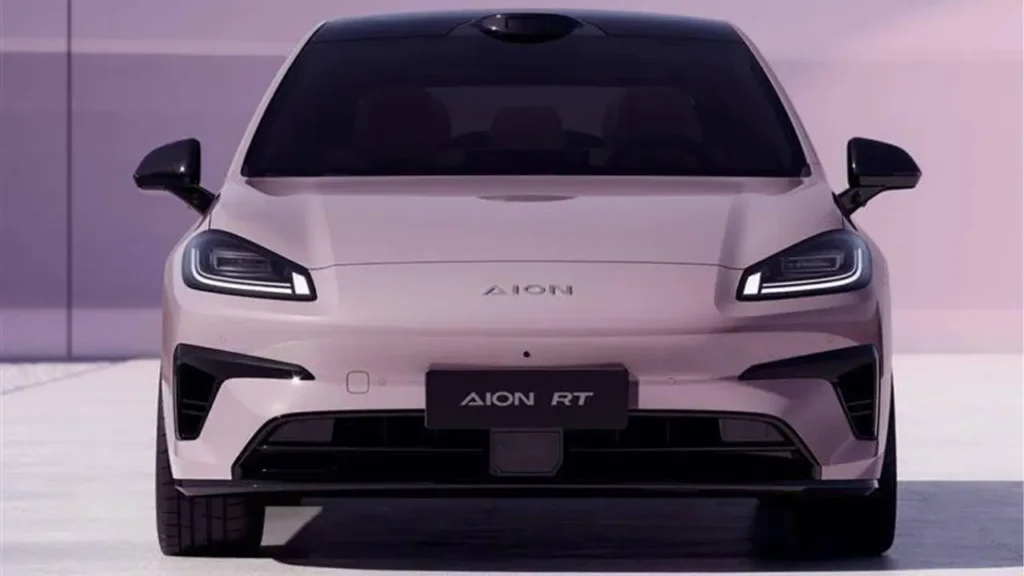
The AION RT, developed by GAC AION (Guangzhou Automobile Group’s EV subsidiary), isn’t just another electric car entering an already crowded market. It represents a genuine philosophical shift in how we think about energy replenishment for electric vehicles. While most of the Western EV world is still debating charging speed — 150 kW, 350 kW, ultra-fast — China has moved the goalposts entirely. The AION RT battery swap system doesn’t improve charging. It eliminates the wait altogether.
In this article, we’ll break down everything you need to know about the AION RT: the technology behind it, the partnership that makes it possible, the infrastructure supporting it, and why this model could be the most important commercial EV launch of the decade.
AION RT Battery Swap and CATL Technology
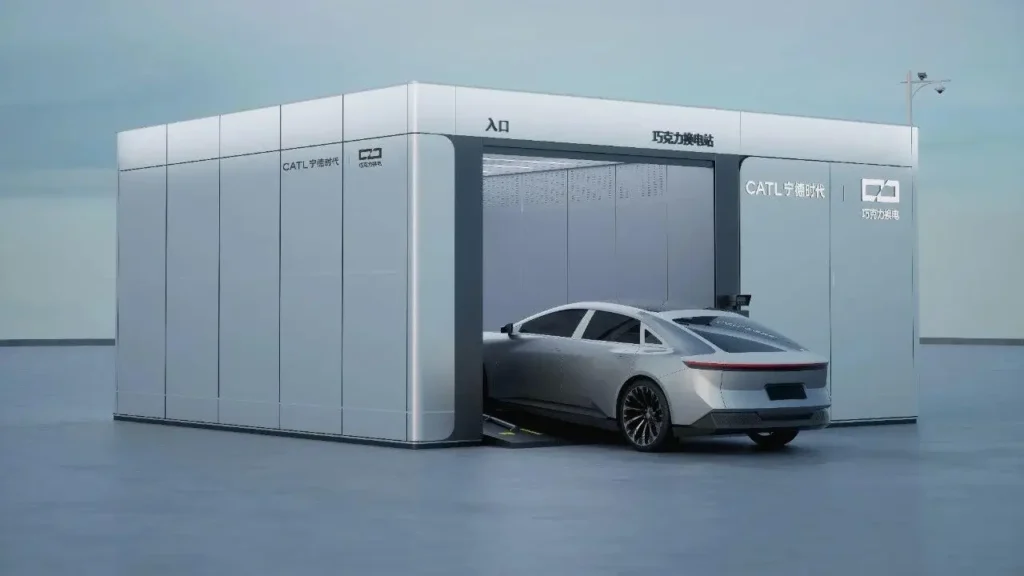
The foundation of the CATL battery swap EV partnership is one of the most strategically significant collaborations in the Chinese EV industry. GAC AION, already one of China’s fastest-growing electric vehicle brands, joined forces with CATL — the world’s largest battery manufacturer by market share — to co-develop a standardized battery swap ecosystem specifically designed for high-frequency commercial use.
CATL, whose full name is Contemporary Amperex Technology Co., Limited, brings unparalleled expertise in lithium iron phosphate (LFP) battery chemistry, thermal management, and cell-to-pack integration. Their involvement in the AION RT battery swap program isn’t merely as a supplier — CATL is an active co-architect of the entire swapping standard, from the physical battery module dimensions to the electronic handshake protocol between vehicle and station.
What makes this partnership particularly powerful is the concept of battery standardization. One of the historically biggest barriers to battery swapping has been the lack of a universal format — different cars require different battery shapes, voltages, and connector types. GAC AION and CATL have addressed this head-on by designing the AION RT’s battery pack around a shared standard that can be deployed across an expanding network of CATL-affiliated swap stations.
The battery itself is a modular LFP pack engineered for durability, cycle life, and rapid mechanical exchange. It’s designed to be swapped thousands of times over its operational life, with consistent performance maintained through CATL’s battery management system (BMS), which monitors cell health, temperature, and state of charge in real time. When a depleted pack enters a swap station, it goes directly into a smart charging queue — topped up slowly and safely while the vehicle is already back on the road.
This is the core genius of the CATL battery swap EV model: the vehicle never waits for chemistry. The chemistry happens in the background, at the station, at whatever pace is optimal for battery longevity.
BestChina3DPrinters
Expert Reviews & Rankings
Independent 3D Printer Reviews
Your trusted source for Chinese 3D printer reviews, rankings, and comparisons. We buy, test, and review every printer so you can make informed decisions.
How AION RT Swap Technology Works
The AION RT swap technology process is elegant in its simplicity, even though the engineering behind it is anything but simple. Here’s a step-by-step look at what happens during a swap:
Step 1 – Arrival and Authentication The driver pulls into a swap bay. The station’s system automatically identifies the vehicle via its onboard communication module. No app interaction required — the vehicle and station authenticate each other digitally in seconds.
Step 2 – Vehicle Positioning The car is guided into precise alignment over the swap platform using sensors and guide rails. Millimeter-level accuracy is essential because the battery is mounted underneath the vehicle, and the robotic arms must engage connection points exactly.
Step 3 – Lift and Unlock The platform raises the vehicle slightly. Robotic arms — operating fully autonomously — disengage the locking mechanism securing the battery pack to the chassis. This is a high-strength multi-point locking system engineered to be both secure during driving and rapidly releasable during swapping.
Step 4 – Battery Removal The depleted battery pack is lowered out of the vehicle on a precisely controlled platform and moved into the station’s internal storage and charging system.
Step 5 – Fresh Pack Installation A fully charged replacement pack — pre-verified by the station’s BMS to be in optimal condition — is slid into position and locked into the chassis. The locking mechanism engages with the same multi-point security as the original installation.
Step 6 – System Check and Release The vehicle’s onboard computer verifies the new battery, confirms all connections are secure, and clears the vehicle for departure. The entire process — from pulling in to driving out — takes 99 seconds.
That’s not a marketing estimate. That’s a verified operational standard. For context, even the fastest DC fast chargers available today require at least 15–20 minutes to deliver a meaningful range top-up. The AION RT swap technology doesn’t beat charging. It makes charging a completely different category of activity.
Why Battery Swapping Electric Car China Is Growing
To understand why battery swapping electric car China has become such a major force, you need to understand the unique pressures of the Chinese EV market — and how those pressures have driven innovation that the rest of the world is only beginning to appreciate.
China is home to the world’s largest electric vehicle market, with millions of EVs sold annually. But unlike Western markets, where private passenger cars dominate EV conversations, China has an enormous and rapidly electrifying commercial vehicle ecosystem: taxis, ride-hailing fleets, delivery vehicles, logistics trucks, and inter-city transport. These vehicles operate on tight schedules, accumulate massive daily mileage, and simply cannot afford to sit at a charging station for 30 minutes multiple times per day.
Battery swapping solves this problem definitively. A driver in a ride-hailing service can swap batteries in the time it takes to use the restroom. A delivery fleet can maintain 24-hour operations without rotation gaps caused by charging downtime. The economics are transformative.
The Chinese government has also played a significant role in accelerating battery swapping electric car China infrastructure. Swap stations have received policy support as part of China’s broader new energy vehicle (NEV) strategy, with subsidies, grid integration standards, and urban planning provisions all supporting the buildout of swap networks. Cities like Chongqing, Guangzhou, Shenzhen, and Beijing have all seen significant swap station expansion in recent years.
Another uniquely Chinese factor is the battery-as-a-service (BaaS) model, pioneered in different forms by NIO and now being refined in the commercial segment by GAC AION and CATL. Under BaaS, customers purchase the vehicle body separately from the battery, reducing upfront purchase cost and shifting battery ownership — and therefore degradation risk — to the operator. This makes EVs more accessible and commercially attractive, particularly for fleet buyers.
AION RT Specs Battery Swap – Key Specifications
Let’s get into the numbers. Here are the core AION RT specs battery swap parameters based on information from GAC AION’s official communications:
| Specification | Detail |
|---|---|
| Vehicle Type | Mid-size sedan (commercial/fleet oriented) |
| Drive System | Rear-wheel drive (RWD) |
| Battery Type | CATL LFP (Lithium Iron Phosphate) |
| CLTC Range | Up to 500+ km (varies by variant) |
| Swap Duration | 99 seconds (fully automated) |
| Motor Output | Approximately 150 kW |
| 0–100 km/h | Under 7 seconds |
| Platform | GAC AION dedicated swap-compatible EV platform |
| Battery Ownership Model | Battery-as-a-Service (BaaS) available |
| Primary Market | Ride-hailing, fleet, commercial operators |
The AION RT specs battery swap combination positions this vehicle at a very specific and underserved intersection: the performance of a modern EV sedan, the operational efficiency of a commercial workhorse, and the fueling convenience that traditional EVs simply cannot match.
It’s worth noting that the battery pack itself is designed for an extraordinary number of swap cycles. CATL’s LFP chemistry is renowned for its longevity — typical LFP cells can handle 3,000 or more full charge cycles with minimal capacity degradation. In a swap context, where each pack is charged slowly and managed intelligently, operational lifespans of 8–10 years or more are realistic.
CATL Swap Station EV – The Infrastructure Behind the Model
The CATL swap station EV network is the physical backbone that makes the AION RT’s value proposition real. Without stations, the 99-second swap is just a number. With a dense, reliable network of stations, it becomes a fundamental competitive advantage.
CATL has been developing and deploying swap stations under its EVOGO platform, which was officially launched in 2022. The EVOGO system is designed around a modular “chocolate swap” battery block concept — standardized battery units that can be combined in different configurations depending on vehicle requirements, and which are compatible across different partner models.
Key characteristics of the CATL swap station EV infrastructure include:
Compact Footprint: EVOGO stations are designed to fit into existing urban environments — parking lots, service stations, highway rest areas — without requiring large dedicated facilities. A standard station can be installed in a space roughly equivalent to two parking spaces.
High Throughput: Each station maintains a bank of pre-charged battery packs. Depending on configuration, a single station can handle dozens of swaps per day without any single vehicle waiting for a pack to charge.
Smart Grid Integration: Swap stations interact with the local power grid intelligently. Packs are charged during off-peak hours when electricity is cheaper and grid load is lower, and the station’s energy management system optimizes the charging sequence across all stored packs.
Remote Monitoring: Every battery pack in the network is connected to CATL’s cloud platform, which monitors state of health, cycle count, temperature history, and performance metrics. This allows proactive maintenance and ensures that only healthy packs are issued to vehicles.
As of the time of writing, CATL’s swap network has been expanding primarily in China’s major urban and semi-urban markets, with partnerships extending to taxi fleet operators and ride-hailing platforms. The stated goal is to build one of the densest swap networks in the world, creating the kind of coverage density that makes swap-based ownership as seamless as filling up at a gas station.
Electric Vehicle Battery Swap 99 Seconds – Is It Really Real?
The electric vehicle battery swap 99 seconds claim deserves careful examination, because in the world of EV marketing, numbers are sometimes… aspirational. In this case, the 99-second figure holds up.
The process has been demonstrated publicly and independently verified through station operation data. The 99-second timeline covers the complete process: from the vehicle entering the bay to driving away with a fresh pack installed. This isn’t a laboratory time under ideal conditions — it’s the operational standard that AION RT swap stations are engineered to deliver consistently.
To put this in perspective, here’s a comparison with alternative energy replenishment methods:
| Method | Typical Time to Useful Charge | Notes |
|---|---|---|
| AION RT Battery Swap | 99 seconds | Full pack replacement, fully automated |
| Ultra-fast DC Charger (350 kW) | 15–20 minutes (10–80%) | Requires compatible vehicle and charger |
| Standard DC Fast Charger (50 kW) | 45–60 minutes (10–80%) | Most widely deployed public type |
| AC Level 2 Home Charging | 6–10 hours (full charge) | Overnight use, not suitable for commercial ops |
| Gasoline (conventional refuel) | 3–5 minutes | Still faster, but fuel type comparison differs |
The electric vehicle battery swap 99 seconds standard essentially closes the gap between EVs and gasoline vehicles in terms of refueling friction — and in some real-world scenarios (finding an available fast charger, waiting in queue, dealing with charger faults), the swap is actually faster than the EV charging experience.
For fleet operators, this isn’t just a convenience metric. It’s a revenue metric. Every minute a commercial vehicle sits idle costs money. The difference between a 99-second swap and a 30-minute charge, multiplied across a fleet of 50 vehicles doing multiple energy replenishments per day, translates to thousands of additional operational hours per year.
AION RT Fleet Vehicle – Built for Business
It’s clear from every design and engineering decision that the AION RT fleet vehicle positioning isn’t an afterthought — it’s the entire premise of the car. GAC AION has explicitly targeted ride-hailing operators, taxi companies, corporate transport providers, and logistics-adjacent passenger transport as the primary buyers of the AION RT.
What does this mean in practice? The AION RT has been designed with total cost of ownership (TCO) as a primary engineering constraint, not just performance or aesthetics. This includes:
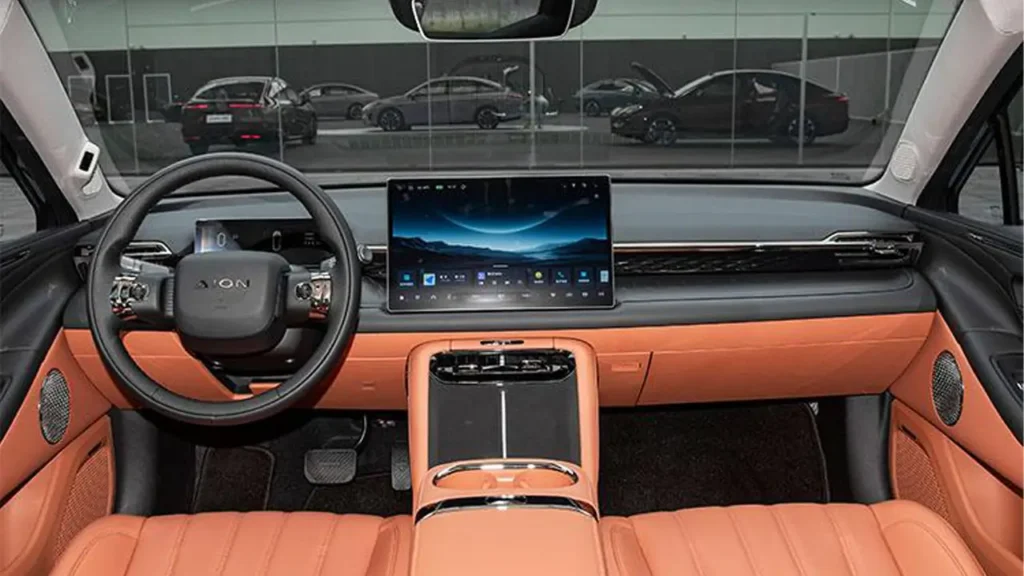
Durability-first interior: Fleet vehicles accumulate hundreds of thousands of kilometers over their working lives. The AION RT’s interior materials and seating are engineered for heavy-use durability rather than luxury.
Low maintenance architecture: The swap-compatible platform eliminates range anxiety as a maintenance consideration, while CATL’s LFP chemistry requires virtually no active cooling management compared to NMC alternatives, reducing maintenance complexity.
Driver-friendly ergonomics: Since the vehicle will be operated by professional drivers for extended shifts, visibility, seat comfort, and control layout have been optimized for long hours behind the wheel.
Fleet management integration: The AION RT is designed to integrate with fleet management software, providing operators with real-time data on vehicle location, battery state, driving behavior, and maintenance alerts.
Competitive TCO: When you combine the lower upfront cost enabled by the BaaS model (battery not included in purchase price), the fuel cost advantage of electricity over gasoline, the minimal maintenance requirements of an EV drivetrain, and the operational efficiency of 99-second swaps, the AION RT fleet vehicle economics are compelling even against conventional gasoline competitors.
For ride-hailing platforms specifically, the AION RT essentially removes the two biggest objections to EV fleet adoption: range anxiety and charging downtime. A driver who can swap batteries as quickly as a colleague at a gas station and drive 500 km between swaps has no operational disadvantage compared to a gasoline vehicle — and significant fuel cost savings.
GAC AION Battery Swap Model – Brand Ecosystem Strategy
Zoom out from the individual vehicle, and the GAC AION battery swap model reveals itself as a carefully constructed long-term ecosystem play. GAC AION isn’t just selling cars — it’s building a platform that locks in commercial customers, generates recurring service revenue, and creates network effects that compound over time.
The strategy has several interconnected layers:
Vehicle as Entry Point: The AION RT is priced and positioned to achieve high-volume penetration in the commercial segment. Volume is critical because swap infrastructure only becomes economically viable at scale — more vehicles mean more station utilization, lower per-swap costs, and faster payback on infrastructure investment.
Battery-as-a-Service Revenue: BaaS transforms a one-time vehicle sale into an ongoing service relationship. Fleet operators who use BaaS pay monthly fees for battery access, which provides GAC AION and CATL with predictable recurring revenue streams while reducing barriers to EV adoption for customers.
Data as a Competitive Moat: Every swap, every charge cycle, every kilometer driven generates data that flows back to GAC AION and CATL’s platforms. This data improves battery management algorithms, informs future vehicle and station design, and helps predict maintenance needs before failures occur. Over time, this data advantage becomes very difficult for new entrants to replicate.
Partner Network Expansion: GAC AION is actively pursuing partnerships with ride-hailing platforms, municipal transport authorities, and logistics companies to create anchor demand for the swap network. These partnerships provide guaranteed utilization that justifies station investment in new cities.
International Ambition: While the GAC AION battery swap model is currently focused on the Chinese market, the technical standards being developed with CATL are explicitly designed with international scalability in mind. Southeast Asian markets — particularly Thailand, where GAC AION already has a significant presence — are natural next targets.
EV Swap vs Charging China – Which Makes More Sense?
The EV swap vs charging China debate is real, nuanced, and ultimately context-dependent. Let’s break it down honestly.
Arguments for Battery Swapping:
For high-utilization commercial vehicles — taxis, ride-hailing, delivery — swapping wins decisively. The 99-second turnaround is simply unbeatable by any charging technology currently available or near-term realistic. The BaaS model also removes battery degradation risk from the operator, which is a significant factor for businesses calculating 5-year total cost of ownership.
Swapping also has a grid-friendliness advantage that isn’t immediately obvious. When you charge a car directly, you’re drawing large amounts of power from the grid at whatever time you happen to arrive. Swap stations, by contrast, can charge their inventory of packs slowly, overnight, and at optimal grid load times. At scale, this is a meaningful contribution to grid stability.
Arguments for Fast Charging:
For private passenger car owners, fast charging is increasingly competitive. Modern ultra-fast chargers can deliver 100+ km of range in under 5 minutes, and the charging infrastructure is more universally distributed — you can charge at home, at work, at a shopping center, without needing a dedicated swap station. The capital cost of swap infrastructure is also significant, and the standardization requirement means that swap systems don’t work across different vehicle brands (mostly).
The Verdict in the Chinese Context:
In China specifically, the EV swap vs charging China comparison currently favors swapping in the commercial segment and fast charging in the private segment — and the market is behaving accordingly. NIO has demonstrated that private-sector swap can work, but their premium positioning means it’s a different value proposition from the AION RT’s commercial focus.
The most interesting question is whether commercial swap standards — driven by players like GAC AION and CATL — will eventually achieve sufficient scale and standardization to cross over into private vehicle use. If a universal swap standard emerges (similar to how USB-C became universal for charging electronics), the equation changes entirely.
| Factor | Battery Swap | Fast Charging |
|---|---|---|
| Replenishment Time | 99 seconds | 15–45+ minutes |
| Infrastructure Cost | High (per station) | Medium (scalable) |
| Vehicle Compatibility | Model-specific (standard needed) | Universal (with adapter) |
| Battery Longevity | Excellent (managed slow charge) | Variable (fast charge degrades) |
| Best Use Case | Commercial fleets, taxis | Private users, occasional top-up |
| Grid Impact | Grid-friendly (managed charging) | Peak demand pressure |
| Upfront Vehicle Cost | Lower (BaaS removes battery cost) | Higher (battery included) |
Final Thoughts
The AION RT battery swap story is ultimately about pragmatism winning over perfectionism. Battery swapping isn’t a perfect technology — it requires standardization, infrastructure investment, and significant coordination between manufacturers, operators, and grid providers. But in the specific context of commercial EV fleets operating in Chinese cities, it solves the actual problems that have prevented mass EV adoption in that segment.
GAC AION and CATL have built something genuinely new: not just a car, not just a battery, but a complete operational system designed from the ground up to serve the real-world needs of drivers who can’t afford to wait. The AION RT battery swap isn’t the future of all EVs — but it may very well be the future of commercial EVs, and that’s a market large enough to matter enormously.
As China continues to lead on EV infrastructure innovation, the world would do well to pay attention. What starts as a battery swapping electric car China story today could reshape global expectations for EV commercial operations within this decade.
- 🇬🇧 English
This article on AION RT battery swap is incredibly insightful and easy to understand. The explanation of CATL’s 99-second swap technology is clear and practical, especially for those interested in fleet EV solutions. The website www.autochina.blog consistently delivers high-quality, up-to-date content about Chinese electric vehicles. Definitely a go-to source.
- 🇪🇸 Español
Este artículo sobre AION RT battery swap es muy informativo y bien estructurado. Explica perfectamente cómo funciona la tecnología de intercambio de baterías de CATL en solo 99 segundos. El sitio www.autochina.blog es una excelente fuente para conocer las últimas innovaciones en coches eléctricos chinos. Muy recomendable.
- 🇸🇦 العربية
مقال مميز جدًا حول تقنية AION RT battery swap، حيث يشرح بشكل واضح وسهل تقنية تبديل البطارية خلال 99 ثانية من CATL. الموقع www.autochina.blog يقدم محتوى احترافي وحديث عن السيارات الكهربائية الصينية. مصدر رائع لكل المهتمين بالتكنولوجيا الحديثة.
- 🇨🇳 中文
这篇关于 AION RT battery swap 的文章非常专业,内容清晰易懂。对 CATL 99秒换电技术的讲解非常详细,尤其适合关注电动车和商业车队的人群。网站 www.autochina.blog 是了解中国新能源汽车的优质平台,值得关注。
- 🇫🇷 Français
Un excellent article sur AION RT battery swap, très clair et bien expliqué. La technologie d’échange de batterie en 99 secondes développée par CATL est impressionnante. Le site www.autochina.blog propose du contenu fiable et актуel sur les véhicules électriques chinois. Je recommande fortement.
- 🇩🇪 Deutsch
Ein sehr informativer Artikel über AION RT battery swap. Die 99-Sekunden-Batteriewechseltechnologie von CATL wird verständlich und detailliert erklärt. Die Website www.autochina.blog ist eine hervorragende Quelle für aktuelle Informationen über chinesische Elektrofahrzeuge. Absolut empfehlenswert.
Discover more from AutoChina
Subscribe to get the latest posts sent to your email.