The XPeng G7 is one of the most talked-about electric SUVs of the year, and this XPeng G7 review explains why. It is a mid-size coupe-style crossover built on the SEPA 2.0 platform, and it became a sales hit almost as soon as it went on sale. Instead of competing on price alone, XPeng built a vehicle around three ideas: charging as fast as filling a tank, an in-house artificial intelligence stack, and a cabin that feels a class above its price.
Below are ten reasons the car deserves a place on your shortlist. We cover its design, its 800V charging, its battery and range-extender options, its Turing AI chips, the Huawei co-developed head-up display, its driver-assistance suite, the interior, and the pricing. Each section stands alone, so skip ahead if you only care about one topic.
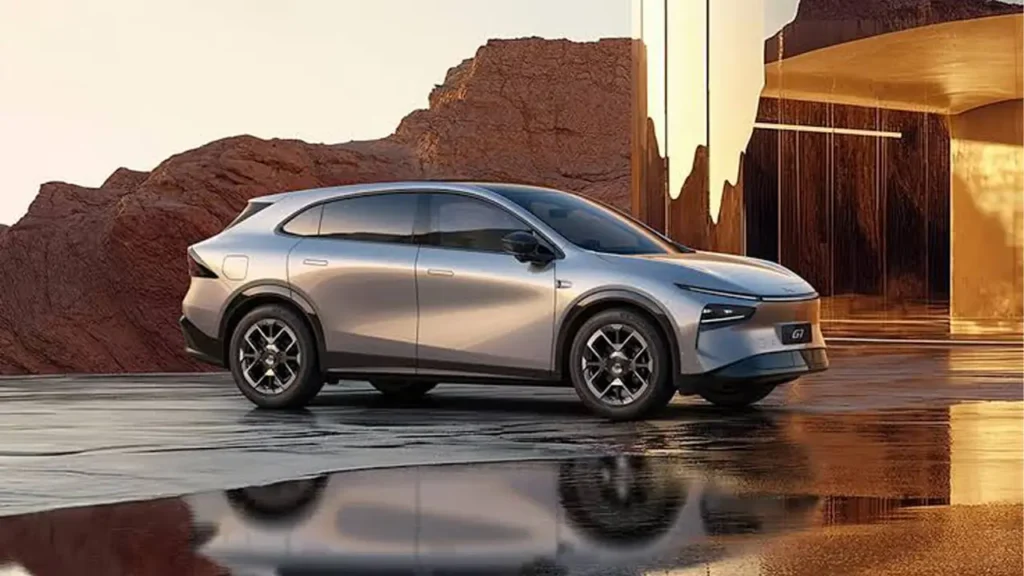
1. Overview and Market Position: A Fresh Take on the Mid-Size Electric SUV
Why the G7 Matters
Mid-size electric SUVs are the most contested segment in the EV world. Buyers want family-friendly space, long range, fast charging, and advanced technology, all without a luxury price tag. The G7 aims at every one of those points at once. It sits between XPeng’s compact G6 and the larger G9, giving the brand a car that fits the heart of the market.
What Our XPeng G7 Review Found
In this XPeng G7 review, the headline is value density. The car carries an 800V silicon-carbide platform, a choice of battery sizes, a range-extender variant, in-house AI processors, and a premium interior. Rivals often make you pick two or three of those. XPeng offers most of them as part of the core package, which explains the strong order books after launch.
Who Is It For?
The G7 suits families who want a spacious, comfortable car, tech enthusiasts who care about driver assistance, and commuters who hate waiting at chargers. It also suits drivers who worry about range on long trips, because the EREV version removes that concern almost entirely.
2. XPeng G7 Specs: Exterior Design, Aerodynamics and Dimensions
Futuristic Styling
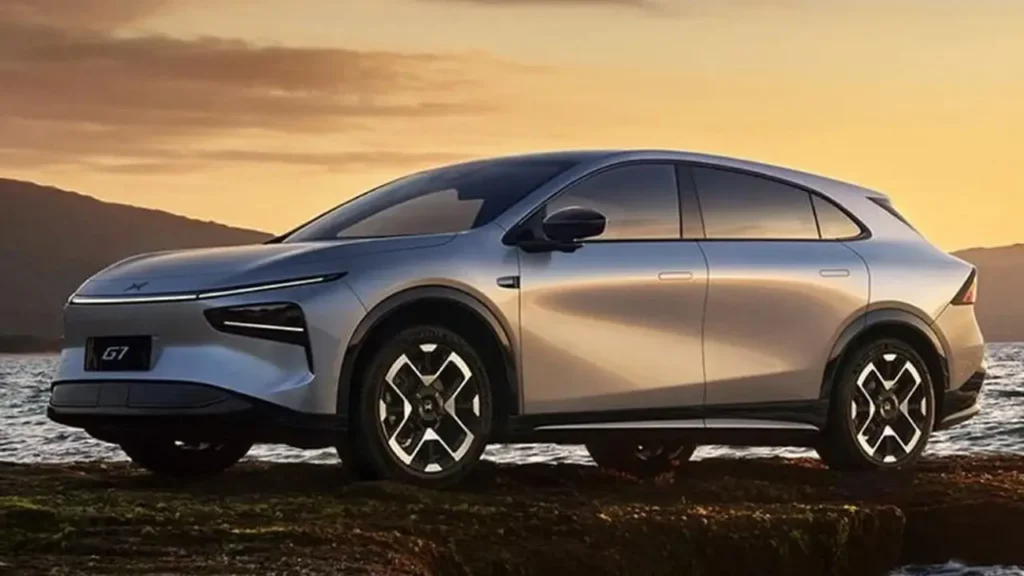
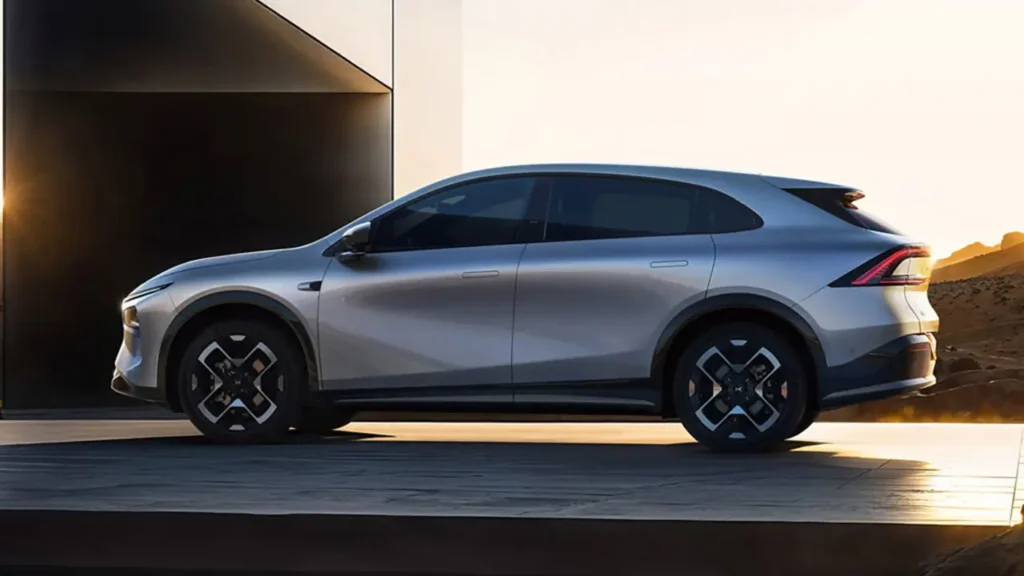
The exterior looks distinctly futuristic. The nose is short, with a minimal overhang, and the roofline slopes gently toward the rear in a coupe-SUV profile. Slim light signatures give the front a sharp, technical look. At the back, a full-width C-shaped light bar spans the tailgate, which makes the car instantly recognizable at night.
Key Dimensions
The numbers help explain why the cabin feels so roomy. The XPeng G7 specs list a length of 4,892 mm and a wheelbase of 2,890 mm. That long wheelbase relative to the overall length pushes the wheels to the corners of the body. The result is generous legroom in the second row and a flat, usable floor.
Aerodynamic Efficiency
Sleek surfaces are not only about looks. Smooth underbody panels, flush details, and a carefully shaped tail help the G7 slip through the air, which directly supports its efficiency and range figures. Efficiency matters even more on an electric vehicle, because every watt-hour saved at highway speed adds real kilometres.
Design Verdict
For an SUV of this size, the G7 avoids the boxy look many competitors share. It looks like a concept car that happened to reach production. The XPeng G7 specs show a package that balances style with the practicality families need.

AndreevWebStudio.com
Professional web development and design services. Custom WordPress sites, landing pages, e-commerce solutions, and 3D printing content creation for businesses and creators.
- • WordPress Development
- • Custom Web Design
- • E-Commerce Solutions
- • 3D Printing Content
3. 800V SiC Platform and 5C Charging: Fast Enough to Change Habits
The Technology Behind the Speed
The G7 uses an 800-volt architecture built around silicon-carbide (SiC) power electronics. Higher voltage means lower current for the same power, which reduces heat and allows the battery to accept energy much faster. SiC components lose less energy as heat than traditional silicon, so more of the electricity from the charger ends up in the pack.
What 5C Means in Practice
The platform supports charging rates up to 5C, meaning the battery can theoretically take in five times its capacity in one hour. In practice, the LFP battery can charge from 10% to 80% in around 12 minutes on a compatible high-power charger. That is roughly the time it takes to use the restroom and buy a coffee at a service stop.
Why XPeng G7 800V Charging Matters
XPeng G7 800V charging changes the way you plan trips. Instead of stopping for 40 minutes, you stop for a quarter of an hour. Instead of hunting for chargers along the route, you can use almost any fast station and move on. The XPeng G7 800V charging experience narrows the convenience gap between electric cars and petrol ones.
A Realistic Caveat
Peak charging speeds depend on the charger, the battery temperature, and the starting state of charge. Use a high-power station and precondition the battery if you want to see the best numbers. Even so, the capability is rare at this price point.
4. XPeng G7 Range: Battery Options and CLTC Figures
Two Battery Choices
Buyers can pick between two battery sizes, which keeps the entry price reasonable while giving long-distance drivers more freedom. The Standard Range model uses a 68.5 kWh pack and delivers up to 602 km on the CLTC test cycle. The Long Range model uses an 80.8 kWh pack and reaches up to 702 km on the same cycle.
Efficiency Numbers
Energy consumption sits at around 12.9 to 13.2 kWh per 100 km under the official test. That is an impressive figure for a mid-size SUV and a sign that the aerodynamic work and the efficient drivetrain pay off. Low consumption also reduces your running costs and shortens charging stops.
Understanding the XPeng G7 Range in the Real World
The XPeng G7 range quoted by CLTC is optimistic, because that cycle is gentler than the WLTP or EPA tests used in Europe and North America. Expect real-world figures to be noticeably lower, especially on the motorway in winter. Even so, the XPeng G7 range leaves a comfortable buffer for daily driving, and the fast charging described above makes longer trips painless.
Which Battery Should You Choose?
If most of your driving is urban and you can charge at home, the Standard Range pack is enough. If you take frequent road trips or live where winter reduces range, the Long Range version is worth the extra money. LFP chemistry also brings long cycle life and good thermal stability, so both packs are built to last.
5. XPeng G7 EREV: The Range-Extender Option That Removes Range Anxiety
How the EREV Works
Not every market is ready for a purely electric car, so XPeng offers an extended-range version. The XPeng G7 EREV uses a 1.5-liter turbocharged engine that works only as a generator. It never drives the wheels directly. The electric motor does all the pushing, so the car drives like an EV, with instant torque and near-silent operation.
Battery and Range Numbers
The EREV carries a smaller 55.8 kWh battery, which still provides about 430 km of pure electric driving. When the battery runs low, the engine starts and produces electricity to keep you moving. Combined, the total range reaches up to 1,704 km. That is enough to drive across entire countries without a single charging stop.
Who Should Pick the Range Extender?
The G7 in EREV form suits drivers in regions with patchy charging networks, people who tow or carry heavy loads, and anyone who makes long journeys regularly. It also suits those who cannot charge at home. You still get the quiet, smooth experience of an electric car for daily commuting, and the engine becomes a safety net rather than a daily habit.
The Trade-Offs
An EREV is mechanically more complex than a pure EV, and it carries a small fuel and maintenance cost. But for many buyers, the freedom it offers is more valuable than the extra complexity. The XPeng G7 EREV shows that XPeng can serve both electric purists and pragmatic drivers with the same platform.
6. The XPeng G7 Turing AI Chip: In-House Computing Power
A First for the Brand
The G7 is the first XPeng vehicle to use the company’s own Turing AI chips. Designing silicon in-house lets the engineers tailor performance to the exact software they run, instead of adapting to a general-purpose supplier’s part. It also reduces dependence on external chipmakers, which has been a pain point for the whole auto industry.
Up to Three Chips
In the top Ultra trim, the car can carry up to three Turing chips. That is a serious amount of computing power for a car in this segment. The processors handle the heavy workload of the driver-assistance system, which has to interpret camera and sensor data many times per second.
One Brain for Cabin and Driving
The chips also support the Tianji AIOS 6.0 operating system that runs the cabin. Voice control, navigation, entertainment, and vehicle settings all sit on the same intelligent platform. The XPeng G7 Turing AI chip approach brings the cabin and the driving system closer together, so features can share information. For example, the navigation can feed the driver-assistance system, and the voice assistant can control vehicle functions with natural language.
Why It Matters for Owners
Powerful hardware future-proofs the car. As XPeng releases software updates over the air, the G7 can gain new features without new parts. Buying a car with a strong computing foundation is like buying a phone with a fast processor: it stays useful for much longer.
7. XPeng G7 Huawei AR-HUD: Navigation Painted on the Road
What Is an AR-HUD?
A traditional head-up display shows speed and a few icons on a small panel in front of the driver. An augmented-reality head-up display goes much further. It projects information onto the windshield so that it appears to float over the real road ahead. The XPeng G7 Huawei AR-HUD is a system developed jointly with Huawei, a company with deep experience in optics and display technology.
How It Helps While Driving
Turn-by-turn arrows appear directly on the lane you need to take, rather than on a map you have to glance at. Lane guidance, speed limits, and driver-assistance alerts sit in your natural line of sight. The large projection area and the long virtual image distance make the graphics feel anchored in the world, not stuck on the glass.
Safety and Comfort Benefits
Looking away from the road, even briefly, increases risk. With the XPeng G7 Huawei AR-HUD, the information you need arrives where your eyes already are. On unfamiliar roads or complex junctions, that clarity reduces stress. It also makes the cabin feel futuristic in a useful way, not a gimmicky one.
A Standout Feature
Few cars in this price range offer a true AR-HUD. It is the kind of option you would normally associate with luxury models costing far more. Including it here shows how seriously XPeng takes the idea of a technology-first car.
AutoChina.blog
Your trusted guide to Chinese automotive technology. Expert reviews, comparisons, and insights on electric vehicles, hybrids, and innovative automotive solutions from China’s leading manufacturers.
- • EV & Hybrid Reviews
- • Tech Comparisons
- • Industry News & Trends
- • Buying Guides
8. XPeng G7 Autonomous Driving: Level 3 Capability and Active Safety
The XNGP System
XPeng’s driver-assistance software is called XNGP, and it is among the most capable systems available to consumers. It can handle highway driving, city streets, and navigation-guided routes, changing lanes, overtaking slower vehicles, and managing junctions. The XPeng G7 autonomous driving suite adds support for Level 3 functionality, a step beyond the hands-on assistance found in most competitors.
Hardware That Makes It Possible
Cameras, radar, and powerful processors work together to build a detailed view of the surroundings. The Turing chips give the system the headroom to run complex neural networks in real time. More computing power means faster reactions and smoother, more human-like driving behaviour.
Emergency Braking and Steering
Active safety is just as important as convenience features. The G7 includes Automatic Emergency Braking (AEB), which can stop the car or reduce impact speed when a collision looks likely. It also offers Automatic Emergency Steering (AES), which can steer around an obstacle when braking alone is not enough. These functions work at speeds of up to 130 km/h, which covers most motorway driving.
Using the System Responsibly
No matter how advanced, driver-assistance technology still requires attention and compliance with local laws. The availability of specific features depends on your market, regulation, and trim level. Think of the XPeng G7 autonomous driving package as a very capable co-pilot that reduces fatigue, not as a replacement for a responsible driver.
9. XPeng G7 Interior: Nappa Leather, Screens and Cargo Space
Premium Materials
Step inside and the car feels more expensive than it is. The XPeng G7 interior uses Nappa leather on the seats and touchpoints, soft surfaces across the dashboard, and carefully chosen trim. The minimalist layout keeps the cabin calm and uncluttered, with most controls handled through the screens and voice.
Comfort for Every Seat
Ventilation, heating, and massage functions are available for all seats, a rare feature outside luxury cars. Rear passengers benefit especially, because the long wheelbase gives them ample knee room and a comfortable seating position. On a long drive, the difference between a good seat and a great one is enormous.
Screens and Entertainment
A 15.6-inch central touchscreen controls navigation, media, climate, and vehicle settings, and it responds quickly thanks to the powerful chip behind it. Passengers in the back get their own 8-inch screen, which is a thoughtful touch for families. They can adjust climate settings, choose music, or watch content without disturbing the driver.
Cargo Capacity
Practicality matters as much as luxury. With the rear seats folded, the boot offers up to 2,277 liters of space. That is enough for bulky furniture, camping gear, or a week’s worth of holiday luggage. Overall, the XPeng G7 interior combines quality, technology, and utility in a way few rivals match.
10. Trims, Pricing and Final Verdict
Trim Levels
The G7 comes mainly in Max and Ultra trims. Max covers the essentials and many premium features, and it will satisfy most buyers. Ultra adds the full computing hardware, including the three-chip configuration, as well as the most advanced driver-assistance and cabin features.
What You Will Pay
The XPeng G7 price starts at roughly $28,200 and rises to about $33,200 depending on the version and configuration. Those figures are converted from Chinese market pricing, so the cost in your country will differ due to taxes, import duties, and local specifications. Even so, the XPeng G7 price is aggressive compared with rivals that offer less technology and slower charging.
How It Compares
In the mid-size SUV class, the G7 stands out for its 800V fast charging, its choice between battery-electric and range-extender powertrains, its AR-HUD, and its in-house AI hardware. Competitors usually offer one or two of those headline features, rarely all of them. Add the large interior and strong efficiency, and the value case becomes hard to ignore.
Final Verdict
The G7 is not perfect. Real-world range will fall short of CLTC numbers, and some advanced features depend on regional approval. But the overall package is compelling: it is fast to charge, flexible in how it is powered, intelligent in how it drives, and comfortable in how it feels. If you are shopping for a mid-size electric SUV, the XPeng G7 deserves to be at the top of your list.
Discover more from AutoChina
Subscribe to get the latest posts sent to your email.