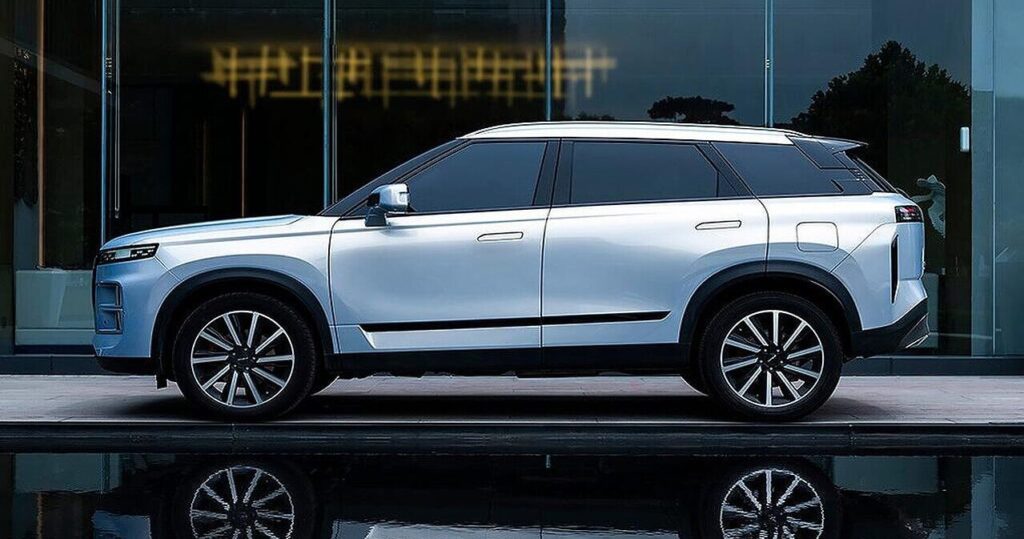
1. Introduction – AITO M6 LiDAR SUV Overview
If you have been watching the smart-EV space in 2026, one name keeps coming up in every conversation: the AITO M6 LiDAR SUV. And for good reason. This is not just another electric crossover with a big touchscreen. It is a carefully engineered, technologically loaded mid-to-large SUV built through the partnership between Seres Group and Huawei’s Harmony Intelligent Mobility Alliance — widely known as HIMA. Together, these two giants have already reshaped what Chinese families expect from a premium car, and the M6 is their boldest move yet.
Pre-sales for the AITO M6 opened on March 23, 2026, at a starting price of 269,800 yuan (approximately $39,040 USD). The SUV is officially scheduled to go on sale in the second quarter of 2026, targeting young, digitally connected families who want intelligence and space in one package. What makes this launch truly remarkable is not just the hardware on offer — it is the public’s reaction. In just 24 hours after the pre-sale announcement, the AITO M6 accumulated more than 60,000 pre-orders, a number that signals deep market trust in both the AITO brand and Huawei smart car technology.
The name AITO itself stands for “Adding Intelligence to Auto.” That philosophy runs through every detail of the M6 — from its world-record LiDAR system to its HarmonyOS Cockpit 5 interface. Whether you are a tech enthusiast, a family looking for your next smart SUV, or simply someone curious about what China’s EV industry is capable of in 2026, the AITO M6 LiDAR SUV deserves your full attention.
2. AITO M6 LiDAR SUV Design and Positioning
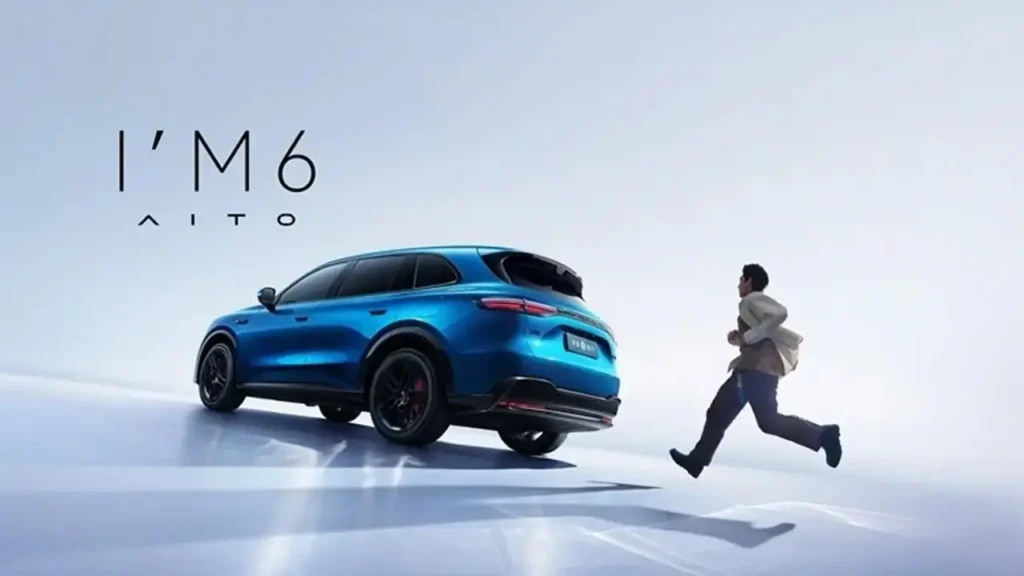
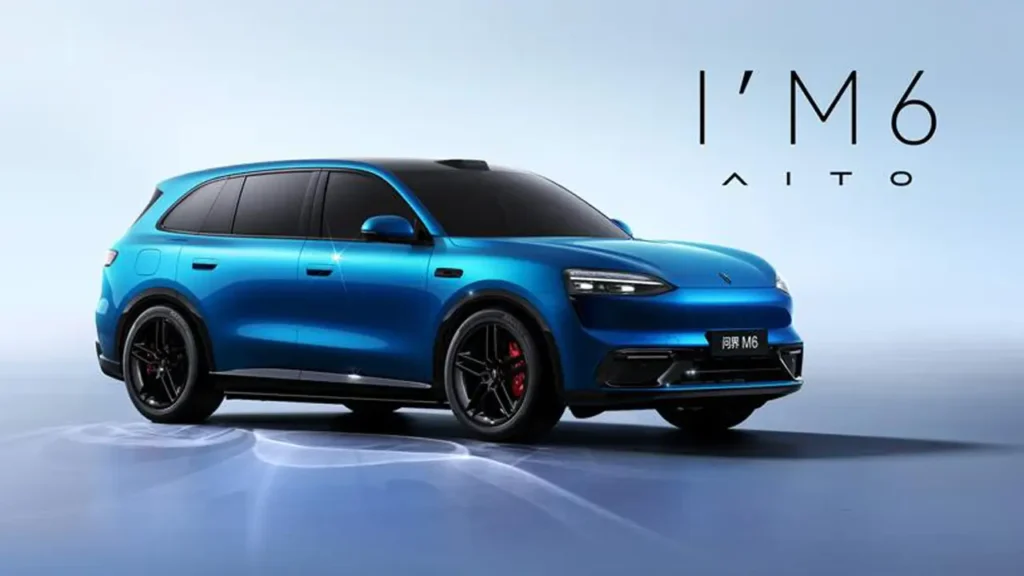
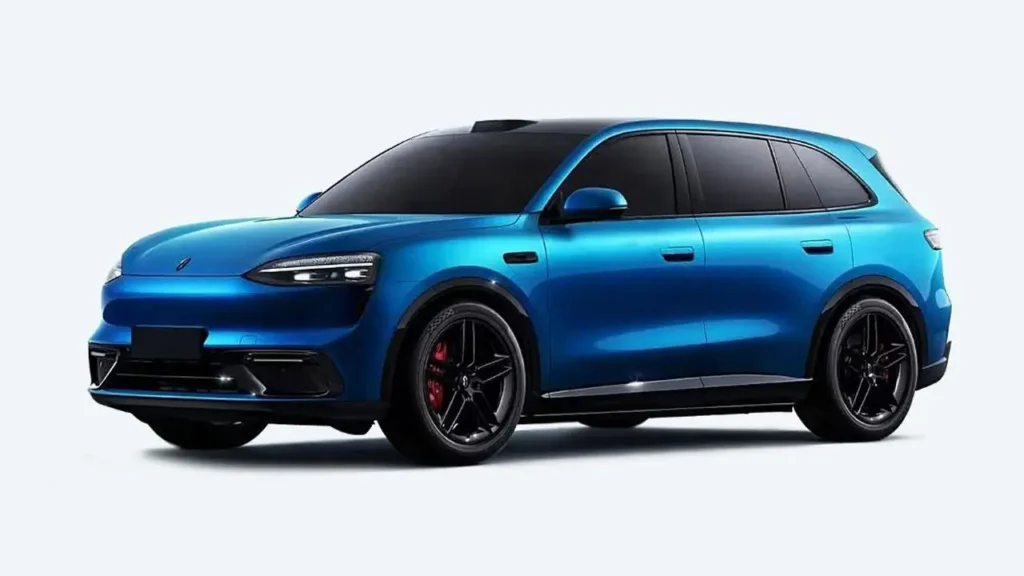
From the very first look, the AITO M6 communicates a clear message: this is a Chinese premium SUV 2026 built for real-world family life, not just motor-show glamour. The exterior follows AITO’s established family design language but introduces several fresh details that give the M6 a distinct personality within the lineup.
The front end features a fully closed grille — standard for modern EVs — paired with “Star-studded” headlights that produce a striking “crushed diamond” visual effect, reminiscent of the flagship Maextro S800. Air ducts are placed below the headlights to help optimize aerodynamic drag. In profile, the M6 rides on dual five-spoke glossy black wheels with red brake calipers peeking through, introducing a sporty accent without abandoning the practical, family-oriented brief. Semi-concealed door handles and sculpted bonnet lines further underline the contemporary aesthetic.
The body dimensions confirm its mid-to-large classification: the AITO M6 measures 4,960 mm in length, 1,985 mm in width, and 1,736 mm in height, with a wheelbase of 2,950 mm. Its drag coefficient of 0.239 Cd — an impressive figure for a vehicle of this size — is achieved through the closed front fascia, semi-recessed door handles, and smooth bonnet shaping.
At launch, buyers will have access to seven exterior color options including blue, purple, orange, cyan, black, white, and silver. This breadth of choice signals AITO’s intent to appeal to both younger buyers seeking expression and traditional family customers who prefer understated elegance. The rear design is described as full and upright, with a roof-mounted spoiler that integrates a rear-facing camera — a design cue consistent across the AITO lineup.
Positioning-wise, the M6 slots directly between the AITO M5 (starting at 229,800 yuan) and the updated AITO M7 (from 309,800 yuan). It completes what Huawei and AITO call their “56789 product matrix” — five models spanning the M5 through to the flagship M9, covering virtually every segment of the premium Chinese SUV market. The M6 fills the last remaining gap in that matrix, targeting the core 250,000 yuan family SUV band — one of the highest-volume segments in China’s entire automotive market.

3. Huawei 896-Line LiDAR – What Makes It Powerful
Let’s talk about the headline feature, because it truly is extraordinary. Every single trim level of the AITO M6 LiDAR SUV comes standard with Huawei’s 896-channel dual-optic LiDAR system — a technology that Huawei describes as the highest-specification mass-produced automotive LiDAR in the world. This is not an optional upgrade. It is fitted as standard across the entire M6 lineup, which at this price point is genuinely unprecedented.
So what does “896-channel” actually mean for the driver? In simple terms, the more channels a LiDAR system has, the more laser beams it fires simultaneously, and the richer, more detailed the three-dimensional map of the environment around the vehicle becomes. A higher channel count means the system can detect smaller objects at greater distances with much greater precision — think a child’s bicycle at 200 meters, or a small obstacle in low-light conditions that a camera alone would struggle to identify.
Huawei’s 896-line system uses a dual-optical-path architecture that combines wide-angle imaging (for a broad field of view) with telephoto imaging (for long-range, fine-detail detection). These two perspectives work together in real time, giving the M6’s brain a remarkably complete picture of its surroundings.
This LiDAR system feeds directly into Huawei’s Qiankun ADS 4.0 driver-assistance platform. According to Huawei, ADS 4.0 reduces end-to-end processing latency by 50% and cuts heavy braking events by 30% compared to the previous generation — meaning smoother, safer, and more confident responses to sudden road situations. In January 2026, Huawei also upgraded ADS 4.1 with a safety enhancement called eAES, an “anti-sandwich” feature designed to prevent rare end-collision scenarios.
Compared to Tesla’s vision-only Autopilot approach, Huawei’s hardware-first strategy throws significantly more sensor power at the problem. That combination proves especially valuable in challenging conditions — dense urban traffic, fog, rain, underground car parks, or any situation where a camera alone might struggle. The Huawei LiDAR SUV philosophy is clear: when it comes to safety-critical perception, more sensors are better than fewer.
4. AITO M6 Specs and Performance
The AITO M6 specs tell the story of a vehicle engineered for both everyday practicality and meaningful driving capability. The M6 is offered in two powertrain configurations: a Battery Electric Vehicle (BEV) version and an Extended-Range Electric Vehicle (EREV) version. Each is available in multiple trims, giving buyers genuine choice.
Battery Electric Vehicle (BEV)
The BEV version is built on an 800-volt high-voltage platform — a significant technical choice that enables much faster charging compared to 400-volt systems. It is equipped with a 100 kWh battery pack supplied by CATL, delivering a CLTC-rated range of up to 760 kilometers. The BEV is available in both rear-wheel drive and all-wheel drive configurations. The RWD single-motor version produces a maximum power of 227 kW (304 hp), while the AWD dual-motor variant combines a 160 kW front motor and a 180 kW rear motor for a total output of 340 kW (456 hp).
Extended-Range Electric Vehicle (EREV)
The EREV version pairs front and rear dual motors (165 kW and 180 kW respectively, all-wheel drive standard) with a 1.5-litre turbocharged engine producing 112 kW as a range extender. This petrol engine does not drive the wheels directly — it acts purely as a generator, keeping the battery topped up. The EREV is offered with either a 37 kWh or a 53.4 kWh battery pack, paired with a 60-litre fuel tank. Combined WLTC range reaches up to 1,400 kilometers, effectively eliminating range anxiety for long-distance drivers.
All batteries are supplied exclusively by CATL — the world’s largest EV battery manufacturer. The EREV version uses lithium iron phosphate (LFP) batteries, while the BEV version uses ternary lithium-ion cells.
Here is a quick reference table of the key AITO M6 specs:
| Specification | BEV (AWD) | EREV (AWD) |
|---|---|---|
| Length / Width / Height | 4960 / 1985 / 1736 mm | 4960 / 1985 / 1736 mm |
| Wheelbase | 2950 mm | 2950 mm |
| Battery Capacity | 100 kWh (CATL) | 37 kWh / 53.4 kWh (CATL) |
| Max Range (CLTC / WLTC) | 760 km | Up to 1,400 km combined |
| Front Motor Power | 160 kW | 165 kW |
| Rear Motor Power | 180 kW | 180 kW |
| Total System Power (AWD) | 340 kW (456 hp) | 345 kW (462 hp) |
| Drive Voltage Platform | 800V | Standard |
| Drag Coefficient | 0.239 Cd | 0.239 Cd |
| LiDAR | 896-channel (standard) | 896-channel (standard) |
| ADAS System | Qiankun ADS 4.0 | Qiankun ADS 4.0 |
| Cockpit OS | HarmonyOS Cockpit 5 | HarmonyOS Cockpit 5 |
| Seats | 5 | 5 |
| Production Base | Seres, Chongqing | Seres, Chongqing |
5. HarmonyOS Cockpit Experience
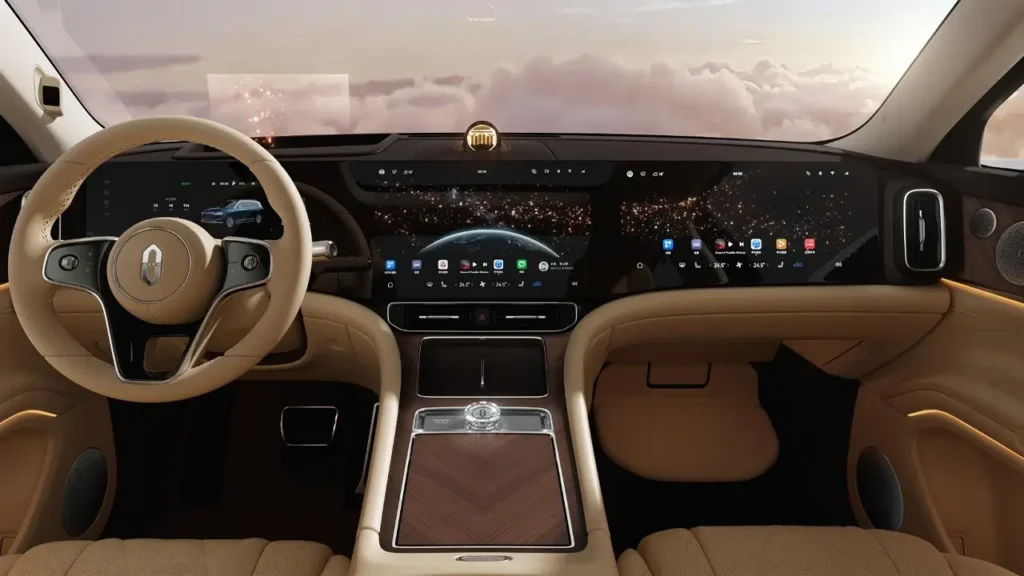
Step inside the AITO M6 and the first thing that strikes you is how much thought has gone into the digital environment. The HarmonyOS car cockpit fitted to the M6 is version 5 — the latest and most refined iteration of Huawei’s in-vehicle operating system — and it transforms the interior into something closer to a premium tech product than a conventional car cabin.
The cockpit features a full LCD instrument cluster directly ahead of the driver, a rotatable 4D adaptive central control multimedia touchscreen in the center, and — uniquely — a dedicated “Inspiration Window” display for the front passenger. This means both the driver and passenger have their own screens, independent of each other, and each can consume content or access information without interfering with the other’s experience. An augmented reality head-up display (AR-HUD) projects navigation prompts and safety information directly onto the windscreen.
HarmonyOS Cockpit 5 is built around the philosophy of seamless integration between the car and Huawei’s broader device ecosystem. Pairing a Huawei smartphone or smartwatch to the M6 takes moments, and once connected, apps, contacts, navigation history, and even music preferences transfer naturally between devices. Voice recognition has been significantly refined over previous generations and is genuinely useful for everyday commands — changing destination, adjusting climate control, or opening the panoramic sunroof without lifting a finger.
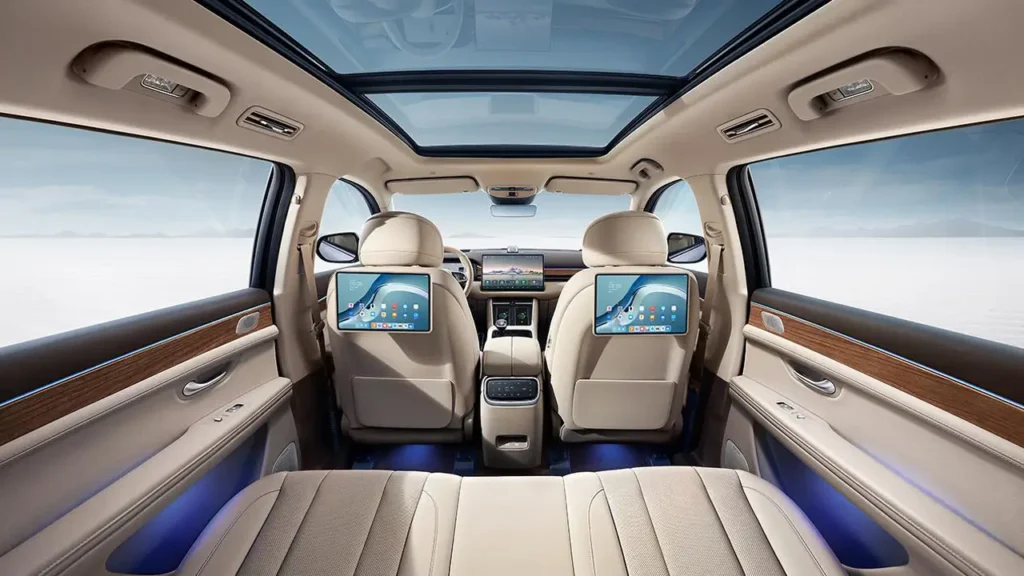
The cabin’s interior design pairs this technology with thoughtful physical details: dual wireless charging pads, dual cup holders, an electronic stalk-mounted gear selector, and a hollowed-out T-shaped console with hidden hooks for bags. The exclusive “Purple Mist White” two-tone color scheme gives the interior a contemporary, premium feel. A panoramic sunroof with an integrated sunshade is standard across all trims, flooding the cabin with natural light.
HarmonyOS Cockpit 5 is powered by Huawei’s Kirin series of automotive system-on-chip processors, which handle all infotainment, navigation, voice processing, and connected services in parallel without lag. Huawei has also opened the HarmonyOS Cockpit APIs to third-party app developers, meaning the ecosystem of in-car apps continues to grow with every passing month.
6. Smart Features and Driving Assistance
Beyond the headline LiDAR, the AITO M6 features a comprehensive suite of smart technologies that collectively make day-to-day driving significantly easier and safer.
At the core of the AITO M6 autonomous driving experience is Huawei’s Qiankun ADS 4.0 system. This platform processes inputs from the 896-channel LiDAR, multiple high-definition cameras, 4D millimeter-wave radars, and ultrasonic sensors simultaneously, building a real-time, three-dimensional model of the environment around the vehicle. The system is capable of Level 2+ supervised autonomous driving in both highway and urban environments — meaning it can manage lane changes, speed adjustments, and following distance automatically, while the driver remains in the supervisory role.
Key AITO M6 features of the Qiankun ADS 4.0 system include:
- Urban NOA (Navigate on Autopilot): the system can navigate complex city roads, roundabouts, traffic lights, and merge scenarios with minimal driver input
- Automatic Emergency Braking (AEB) in all directions, including cross-traffic scenarios
- Automatic Emergency Steering to avoid sudden obstacles
- Remote Control Parking: the driver can guide the car into tight parking spaces from outside the vehicle using a smartphone
- Valet Parking: the M6 can locate a parking space and park itself in compatible car parks
The Tuling intelligent chassis platform — a Huawei-developed hardware and software integration — works alongside the ADS to actively manage suspension response, torque distribution, and body movement. This creates a driving experience that adjusts in real time to road conditions, passenger weight distribution, and driving style.
Safety is reinforced by the January 2026 upgrade to ADS 4.1, which introduced the eAES anti-sandwich feature — an algorithm that detects and prevents rare but dangerous rear-end collision scenarios by pre-activating braking and structural response.
The M6 also benefits from AITO’s xMotion intelligent body collaborative control system, which coordinates braking, steering, and suspension as an integrated unit rather than treating each system in isolation — resulting in smoother cornering, more stable emergency maneuvers, and a more composed ride on imperfect road surfaces.
7. Price and Market Positioning
One of the most interesting aspects of the AITO M6 LiDAR SUV is how cleverly it has been priced. With the M6 sitting in the 250,000 yuan segment, Huawei and Seres are targeting one of the single highest-volume price bands in China’s entire new-energy vehicle market.
Here is how the AITO M6 price structure looks across its four main variants:
| Variant | Pre-Sale Price (CNY) | Approx. USD |
|---|---|---|
| EREV Max+ | 269,800 yuan | ~$39,040 |
| EREV Ultra | 289,800 yuan | ~$41,940 |
| BEV Max+ Long Range | 289,800 yuan | ~$41,940 |
| BEV Ultra | 309,800 yuan | ~$44,830 |
What makes this pricing remarkable is what is included as standard across every single variant: the 896-channel LiDAR, the Qiankun ADS 4.0 driver assistance system, and HarmonyOS Cockpit 5. There is no “base trim without LiDAR” — every M6 buyer gets the full sensor suite from day one. This is a deliberate, principled product decision, and it sets the M6 apart from many competitors who reserve their best technology for top-tier trims.
The M6 competes directly with the Tesla Model Y (which recorded over 420,000 deliveries in China in 2025), the Xiaomi YU7, and Li Auto’s Li L6 — the reigning champion of the mid-to-large SUV segment in China in 2025. Against these rivals, the M6’s combination of 896-channel LiDAR, 800V architecture on the BEV, 1,400 km combined EREV range, and HarmonyOS integration represents a compelling package. The question is not whether the hardware justifies the price — it clearly does. The real competition is about brand loyalty, software ecosystem, and after-sales trust.
8. Real Demand – 60,000 Pre-Orders Explained
Numbers like “60,000 pre-orders in 24 hours” tend to get thrown around loosely in the EV world, so it is worth understanding what drove this response for the AITO M6.
First, the context. AITO as a brand reached its first one-million-vehicle production milestone in January 2026 — in just 46 months from launch. In 2025 alone, the brand delivered 422,900 vehicles, a 9.3% year-on-year increase. Parent company Seres reported record full-year 2025 revenue of 165.05 billion CNY (approximately $24 billion USD), up 13.7% year-on-year, with a gross margin on new-energy vehicles of 28.8%. Research and development spending rose a remarkable 77.4% in the same period. This is not a startup guessing at the market — this is a mature, profitable, rapidly growing company with deep manufacturing and software capability.
Second, the product itself gave people genuine reasons to commit. Every trim gets the world’s most advanced mass-produced LiDAR as standard. The EREV version solves the range anxiety problem definitively, with over 1,400 km of combined range meaning most buyers will almost never need to think about fuel or charging on a daily basis. The BEV on 800V architecture charges faster than most rivals. And HarmonyOS Cockpit 5 gives buyers the seamless digital life they already have on their phones, extended into their car.
Third, the distribution. Display units began arriving at more than 1,000 HIMA showrooms across China on April 4, 2026 — ahead of the official retail launch. This nationwide physical presence, combined with Huawei’s established retail reputation in consumer electronics, creates a buying confidence that pure online-first EV brands often struggle to match.
The AITO M6 pre-order figure is also particularly meaningful because the M6 fills the last gap in AITO’s SUV lineup. Customers who had been waiting for a model between the M5 and M7 finally had what they were looking for — and they responded immediately.
9. Pros and Cons – Quick Breakdown
No Seres AITO M6 review would be complete without an honest look at both sides of the equation. Here is a balanced assessment based on all confirmed information available at the time of writing.
| Pros | Cons |
|---|---|
| 896-channel LiDAR standard on ALL trims — no compromises | Currently available only in China; international availability is limited to parallel imports |
| EREV offers up to 1,400 km combined range — eliminates range anxiety | No official dealer network outside mainland China as of Q2 2026 |
| BEV on 800V platform for ultra-fast charging | Huawei’s AppGallery may lack some Western apps natively |
| HarmonyOS Cockpit 5 — most advanced in-car OS in the segment | Official retail pricing may differ slightly from pre-sale figures |
| 100 kWh CATL battery on BEV — up to 760 km CLTC range | Curb weight between 2,395 and 2,565 kg is significant |
| Qiankun ADS 4.0 with Level 2+ urban and highway autonomous driving | ADS 4.0 requires active driver supervision — not full self-driving |
| Competitive pricing for the technology on offer | Faces intense competition from Tesla Model Y, Li L6, and Xiaomi YU7 |
| 7 exterior color options and premium interior design | Long-term software update policy for older trims not yet fully confirmed |
The honest picture is overwhelmingly positive for buyers within China who are already part of the Huawei ecosystem. For international buyers, the appeal is real but the practicalities require more consideration.
10. Final Verdict – Is the AITO M6 LiDAR SUV Worth It?
After walking through everything the AITO M6 LiDAR SUV brings to the table, the final question is straightforward: is it worth it?
For families in China shopping in the 250,000 to 310,000 yuan segment, the answer is a very strong yes. Here is why. No other car at this price point gives you a world-record 896-channel LiDAR as standard equipment — not on one trim, not on the top trim, but on every single model in the range. No other car at this price combines that sensor capability with HarmonyOS Cockpit 5, a 100 kWh CATL battery on 800V architecture, and up to 1,400 km of combined EREV range. That hardware list, in any other brand’s hands, would cost considerably more.
Beyond the hardware, there is the question of ecosystem. If you already use Huawei phones, Huawei watches, and Huawei home devices, the M6 slots into that ecosystem naturally and effortlessly in a way that a non-HarmonyOS vehicle simply cannot replicate. The car feels like a continuation of your digital life, not a separate compartment you have to manage.
The 60,000 pre-orders in 24 hours were not a marketing trick or an artificial scarcity play. They were the market recognizing genuine value, backed by a brand with one million vehicles produced and over 422,000 delivered in 2025 alone. People have driven AITO cars, visited HIMA showrooms across 1,000+ locations in China, and experienced Huawei’s software updates improving their vehicles over time. That trust is earned, and the M6 is the product that brings it all together in one accessible, family-sized package.
The AITO M6 LiDAR SUV is, without question, one of the most technologically ambitious family SUVs launched in 2026. It proves that cutting-edge autonomous driving hardware does not have to be reserved for flagship models costing twice as much. It proves that Huawei smart car technology has matured into a genuine competitive advantage rather than a marketing claim. And it proves that Chinese premium SUV 2026 offerings are now setting the benchmark — not just competing with it.
If the AITO M6 is available in your market and your budget, it deserves to be at the very top of your shortlist.
Discover more from AutoChina
Subscribe to get the latest posts sent to your email.