Introduction
Denza Z9 GT shooting brake review. The automotive landscape is witnessing a fascinating shift as Chinese manufacturers challenge European luxury marques on their own turf. Enter the Denza Z9 GT shooting brake, a compelling five-meter executive wagon that’s making waves in the premium electric vehicle segment. This isn’t just another Chinese EV attempting to mimic European design – it’s a thoroughly engineered performance machine that directly targets the Porsche Panamera Sport Turismo and other established luxury wagons.
Designed under the watchful eye of Wolfgang Egger, the former design chief at Alfa Romeo and Audi who penned icons like the 8C Competizione, the Z9 GT brings genuine pedigree to the Denza brand. This shooting brake combines stunning power outputs exceeding 950 horsepower in electric form, innovative tri-motor architecture, and cutting-edge technology features that would make German competitors blush. Available in both pure electric and plug-in hybrid configurations, the Z9 GT represents BYD’s ambitious push into the premium segment through its upmarket Denza sub-brand.
What makes this Denza particularly intriguing is its combination of practical wagon versatility with supercar-rivaling performance figures. With launch times under 3.5 seconds, advanced rear-wheel steering that enables “crab walking,” and a luxurious interior packed with dual refrigerators and premium audio systems, the Z9 GT shooting brake challenges conventional expectations of what Chinese automotive engineering can deliver. Let’s dive deep into what makes this electric performance wagon such a compelling proposition.
Overview of Denza Z9 GT Specs
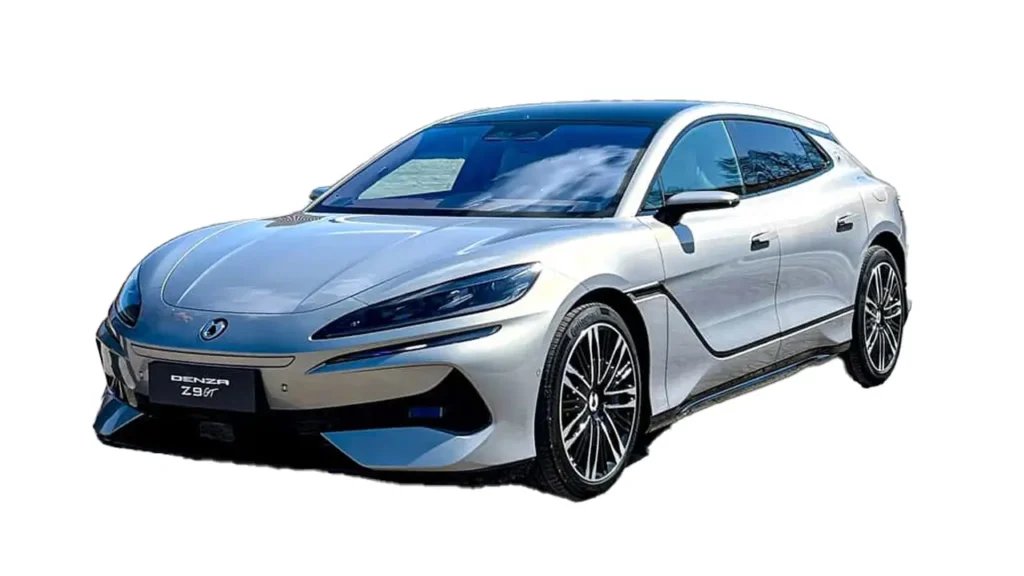
The Denza Z9 GT impresses with its substantial physical presence and impressive technical specifications. Measuring 5,180mm in length for the electric version (5,195mm for the PHEV), 1,990mm in width, and 1,480-1,500mm in height depending on suspension configuration, this shooting brake commands road presence comparable to traditional luxury executive cars. The generous 3,125mm wheelbase provides excellent interior space while contributing to the car’s planted stance and stability at speed.
Under the skin, the Z9 GT showcases BYD’s technological prowess through its e³ platform architecture. The pure electric version utilizes the evolved e-Platform 3.0 Evo, housing a substantial 100.1 kWh lithium iron phosphate (LFP) battery pack that delivers an official CLTC range of 630 kilometers. The plug-in hybrid variant employs the fifth-generation DM system, combining a 2.0-liter turbocharged gasoline engine producing 152 kW with a 38.5 kWh battery, offering 201 km of electric-only range and a total combined range reaching an impressive 1,100 kilometers.
Weight management presents both challenges and engineering solutions in the Z9 GT. The electric version tips the scales at approximately 2,875 kilograms, a substantial figure that speaks to the dense battery pack and robust construction. However, BYD’s innovative Cell-to-Body (CTB) battery integration technology helps optimize both interior space and structural rigidity while managing this weight effectively. The PHEV version, despite its additional combustion engine, maintains similar weight characteristics through careful component packaging and materials selection.
Shooting Brake Design Advantages
The shooting brake body style offers distinct advantages that make the Z9 GT more than just a pretty face. This elegant form factor, characterized by a sloping roofline that extends into a practical rear cargo area, traces its heritage to British sporting estates and has been revived by premium manufacturers seeking to blend performance with practicality. The Z9 GT’s interpretation of this classic formula provides several tangible benefits over traditional sedan or SUV configurations.
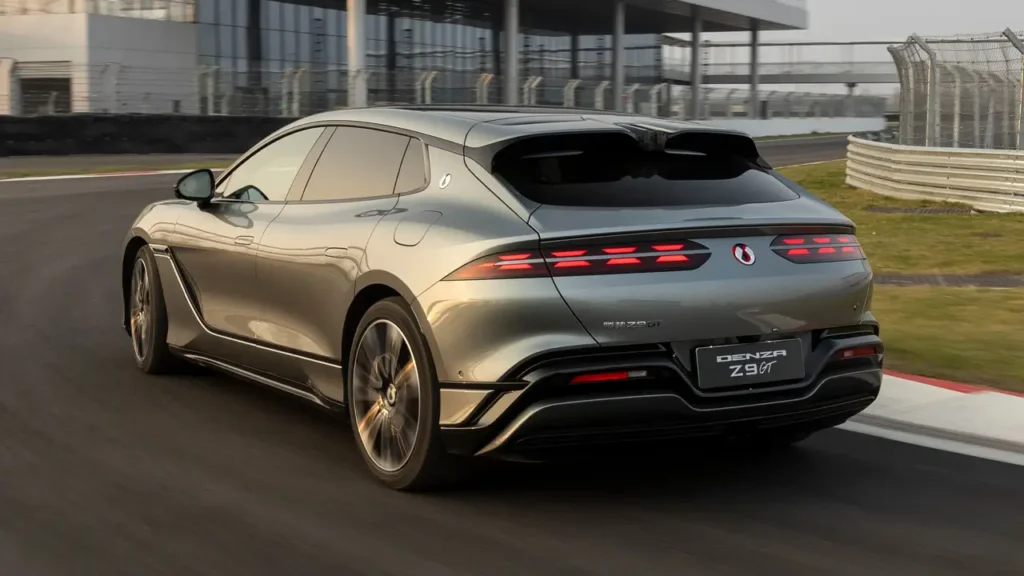
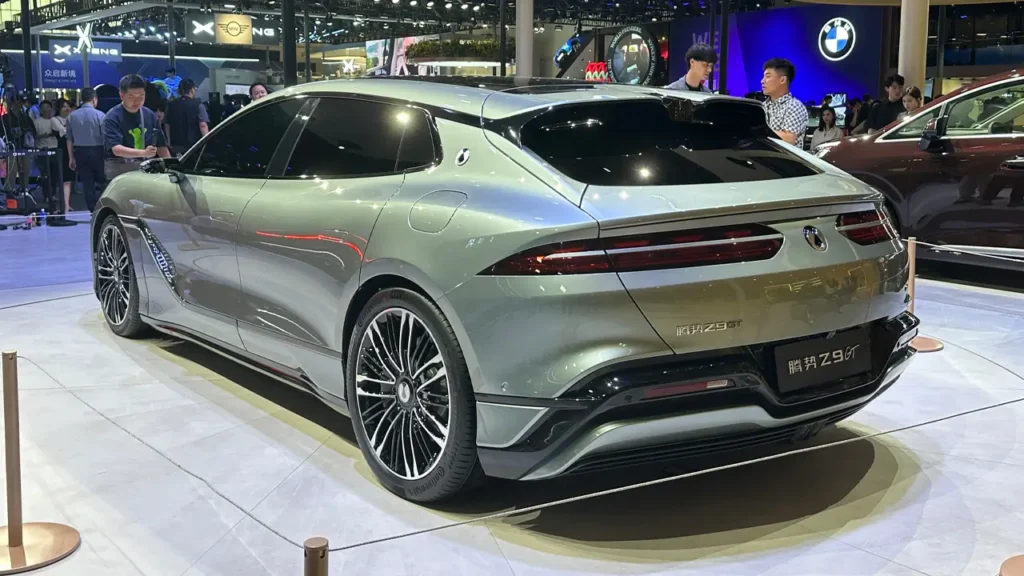
Aerodynamically, the shooting brake profile enables superior airflow management compared to boxier wagon designs. The gently sloping rear roofline reduces drag while maintaining usable cargo volume, contributing to improved range efficiency in electric operation and better high-speed stability. Denza’s design team, inspired by the fluid characteristics of silk, created flowing lines that begin at the split headlights and sweep along the body sides, culminating in a distinctive stepped rear design that manages airflow separation cleanly. This attention to aerodynamic detail helps maximize the electric drivetrain’s efficiency without sacrificing the practical cargo space that defines the wagon category.
From a practical standpoint, the shooting brake configuration delivers genuine versatility. The Z9 GT’s cargo area benefits from a lower loading lip compared to traditional sedans, making it easier to load luggage, golf clubs, or other equipment. The extended roofline provides additional headroom for rear passengers while creating a more spacious feeling in the cabin. Despite the sporty roofline, rear seat passengers enjoy comfortable accommodations with available features like heated, ventilated, and electrically adjustable seats – amenities typically reserved for chauffeur-driven luxury sedans.
The aesthetic appeal of the shooting brake design cannot be overlooked. Where traditional wagons often struggle to maintain visual elegance, the Z9 GT’s proportions create a dynamic profile that looks purposeful and athletic from every angle. The design successfully bridges the gap between practical everyday transportation and special-occasion grand touring, making it equally at home in a corporate parking lot or at a country club. This visual distinction helps the Z9 GT stand apart in a crowded luxury EV market where many vehicles adopt similar crossover or sedan silhouettes.
Performance: Tri-Motor Electric Wagon Power
The heart of the Denza Z9 GT’s performance story lies in its sophisticated tri-motor electric powertrain, a configuration that delivers both staggering output and precise control. In the pure electric variant, three motors combine to produce 710 kW (965 PS or 952 horsepower) with 848 lb-ft of torque. The front axle receives power from a single 230 kW motor, while each rear wheel gets its own dedicated 240 kW motor. This distribution enables not just all-wheel drive traction but genuine torque vectoring capabilities that fundamentally alter the vehicle’s dynamic character.
Performance figures confirm that these aren’t just impressive numbers on paper. The electric Z9 GT rockets from 0-62 mph in just 3.4 seconds, placing it firmly in supercar territory despite weighing nearly three tons. The plug-in hybrid version, producing a combined 640 kW (870 horsepower) from its 2.0-liter turbocharged engine and three electric motors, manages the same sprint in 3.6 seconds – merely two-tenths slower. Top speeds reach 230 km/h for the EV and 240 km/h for the PHEV, figures that exceed most owners’ daily requirements but demonstrate the powertrain’s capabilities.
The tri-motor configuration’s real brilliance emerges in how it manages power delivery. Unlike conventional all-wheel-drive systems that split torque between front and rear axles, the Z9 GT’s setup can precisely meter power to each wheel independently. During aggressive cornering, the outside rear wheel can receive more power to help rotate the car through the turn, while the inside wheel might reduce torque or even apply slight regenerative braking to tighten the line. This level of control, managed by BYD’s Vehicle Motion Control (VMC) system with reaction times of just 10 milliseconds, creates handling characteristics that defy the vehicle’s substantial weight.
Daily driving reveals the system’s versatility through multiple drive modes: Snow, Eco, Normal, Sport, and Sport Plus. In Eco mode, the powertrain prioritizes efficiency, using primarily the front motor for cruising and bringing the rear motors online only when additional traction or acceleration is required. Sport Plus mode unleashes the full fury of all three motors simultaneously, stiffens the adaptive air suspension, and sharpens throttle response to create an entirely different character. This flexibility means the Z9 GT can transform from efficient commuter to corner-carving performance machine at the touch of a button.
Independent Rear Wheel Steering Explained
Perhaps the Z9 GT’s most conversation-starting feature is its independent rear-wheel steering system, which Denza markets as part of its “Yi Sanfang” (meaning “Different Square”) technology package. Unlike conventional rear-wheel steering systems that link both rear wheels together, the Z9 GT’s setup can angle each rear wheel independently up to 20 degrees – a range Denza claims is “world-leading.” This capability enables some remarkable party tricks while delivering genuine functional advantages in everyday use.
The most immediately noticeable benefit appears in tight parking situations. With all four wheels steering, the Z9 GT achieves a turning circle of just 4.62 meters (15.2 feet) – an astonishing figure for a car stretching over five meters in length. For context, this matches or beats many compact hatchbacks and SUVs, making the large luxury wagon surprisingly maneuverable in crowded urban environments. Multi-story parking garages, narrow European streets, and tight residential driveways become far less stressful when your executive wagon can pivot like a small city car.
The system’s “crab walk” function represents its most visually dramatic capability. By angling all four wheels in the same direction up to 15 degrees, the Z9 GT can move diagonally, sliding sideways into parking spaces or navigating around obstacles. While this might seem like a gimmick, it proves genuinely useful in tight parking scenarios where approaching perpendicular to a space isn’t practical. The Parking e³ mode can even automate this process, with the system controlling all steering and power delivery to maneuver the vehicle into challenging spots without driver input beyond initial positioning.
At higher speeds, the rear-wheel steering provides different benefits. During highway lane changes, having the rear wheels angle in the opposite direction to the fronts initially helps the car change direction more quickly, then steering them in the same direction stabilizes the transition and reduces the car’s effective wheelbase. This creates what drivers describe as a more nimble, responsive feeling that belies the Z9 GT’s size and weight. The system also contributes to the car’s impressive moose test performance, with Denza claiming a speed of 93.6 km/h (58 mph) – reportedly 20 km/h faster than the Porsche Taycan, though independent verification remains pending.
Integration with the tri-motor powertrain creates even more sophisticated control. The VMC system coordinates steering angles with individual wheel torque in real-time, enabling the car to execute a “tank turn” where it rotates nearly on the spot by locking one front wheel and using the rear motors to pivot around it. While this maneuver is admittedly hard on tires, it demonstrates the system’s remarkable capability and the level of integration between steering and propulsion systems. For daily driving, this coordination simply results in a car that feels more agile and responsive than its specifications suggest it should.
Comparison with Porsche Panamera Rival Segment
The Denza Z9 GT directly targets the Porsche Panamera Sport Turismo, and comparing these two reveals fascinating contrasts in philosophy, technology, and value proposition. Both vehicles occupy the exclusive niche of luxury performance wagons, but they approach the mission from distinctly different angles – established European prestige versus ambitious Chinese innovation backed by cutting-edge electric technology.
| Specification | Denza Z9 GT EV | Denza Z9 GT PHEV | Porsche Panamera Turbo S E-Hybrid Sport Turismo |
|---|---|---|---|
| Powertrain | 3 Electric Motors | 2.0L Turbo + 3 Motors | 4.0L V8 Biturbo + Motor |
| Total Power | 710 kW (952 hp) | 640 kW (870 hp) | 500 kW (671 hp) |
| 0-62 mph | 3.4 seconds | 3.6 seconds | 3.2 seconds |
| Top Speed | 230 km/h (143 mph) | 240 km/h (149 mph) | 315 km/h (196 mph) |
| Battery Capacity | 100.1 kWh (LFP) | 38.5 kWh (LFP) | 17.9 kWh (Li-ion) |
| Electric Range | 630 km CLTC (391 mi) | 201 km CLTC (125 mi) | ~50 km WLTP (~30 mi) |
| Total Range | 630 km | 1,100 km (684 mi) | ~680 km (~422 mi) |
| Length | 5,180 mm (204 in) | 5,195 mm (204.5 in) | 5,049 mm (198.8 in) |
| Wheelbase | 3,125 mm (123 in) | 3,125 mm (123 in) | 2,950 mm (116.1 in) |
| Weight | ~2,875 kg (6,340 lb) | ~2,875 kg (6,340 lb) | 2,440 kg (5,379 lb) |
| Rear Wheel Steering | Independent, up to 20° | Independent, up to 20° | Yes (linked) |
| Starting Price (China) | ~$73,400 USD equiv. | ~$69,270 USD equiv. | $140,000+ USD |
The specifications reveal that while Porsche maintains advantages in top speed and acceleration from its lighter weight and legendary V8 engine, the Denza counters with significantly more electric range, substantially more power in EV form, and more advanced rear-wheel steering. The Z9 GT’s larger dimensions translate to more interior space and cargo volume, appealing to buyers prioritizing practicality alongside performance.
Perhaps most striking is the value proposition. Chinese pricing for the Z9 GT, while not directly translatable to Western markets after import duties and local regulations, suggests a starting point potentially 50-60% below comparable Porsche models. Even accounting for the premium commanded by Porsche’s brand heritage and proven reliability, this gap creates a compelling argument for buyers willing to consider alternatives to traditional luxury marques. European and potential North American buyers will need to weigh badge prestige against specifications and features when the Z9 GT arrives in their markets.
Handling characteristics differ philosophically between these wagons. The Porsche prioritizes the classic sports car virtues that have defined the brand – precise steering feedback, chassis balance that encourages spirited driving, and suspension tuning that keeps the car flat and composed even when pushed hard. Early reviews suggest the Z9 GT currently favors comfort over outright dynamic engagement, though Denza has confirmed that European market cars will receive sharper suspension tuning and more direct steering to suit local tastes. The question remains whether software and spring rate changes can instill the decades of chassis development experience that Porsche brings to the segment.
Long Range Electric Performance vs Hybrid
Choosing between the Denza Z9 GT’s pure electric and plug-in hybrid variants presents an interesting dilemma that reflects broader questions facing the automotive industry. Each powertrain offers distinct advantages depending on usage patterns, infrastructure availability, and personal priorities regarding environmental impact and convenience.
The pure electric Z9 GT maximizes the benefits of battery-electric propulsion. Its 100.1 kWh LFP battery pack provides a CLTC-rated 630 kilometers (approximately 391 miles) of range – sufficient for most daily driving and regional trips without requiring charging stops. When paired with BYD’s upcoming 1,000 kW Megawatt charging infrastructure, the car can theoretically add 249 miles of range in just five minutes, making longer journeys more practical. The electric version also benefits from simpler maintenance requirements, potentially lower long-term operating costs, and the instant torque delivery that makes EVs feel effortlessly quick in everyday driving.
However, the BEV variant’s nearly three-ton weight impacts efficiency, particularly in real-world driving that deviates from the optimistic CLTC test cycle. Cold weather, highway speeds, and aggressive driving can significantly reduce the practical range, potentially requiring more frequent charging stops on longer trips. The charging infrastructure, while rapidly improving, still presents challenges in many regions where fast chargers remain sparse or unreliable. For buyers without home charging capability or those who regularly undertake long-distance travel, these limitations require consideration.
The plug-in hybrid Z9 GT addresses range anxiety through its dual-fuel capability. The 38.5 kWh battery provides 201 kilometers (125 miles) of electric-only operation – adequate for most daily commuting and local errands while delivering zero-emission operation. When the battery depletes, the 2.0-liter turbocharged engine seamlessly takes over, extending total range to an impressive 1,100 kilometers without refueling or recharging. This flexibility makes the PHEV ideal for buyers who want electric operation for daily use but require the convenience of gasoline for occasional longer trips or in areas with limited charging infrastructure.
The PHEV’s trade-offs include added complexity and the need to maintain both electric and gasoline powertrains. The smaller battery means less pure electric range, and once the battery depletes, fuel consumption while running on the gasoline engine can be significant – Denza rates it at 7.6 liters per 100 km with an empty battery, which represents thirsty operation for a modern four-cylinder engine. The combined weight of both propulsion systems doesn’t differ dramatically from the BEV, but the PHEV sacrifices some performance (3.6 seconds vs 3.4 seconds to 62 mph) and adds maintenance requirements for the combustion engine.
For most buyers in regions with reliable charging infrastructure and who rarely travel beyond the electric range, the BEV variant makes more sense. It offers superior performance, simplified ownership, and better aligns with the environmental benefits of electric propulsion. The PHEV suits buyers facing uncertain charging access, those who regularly undertake long-distance travel, or anyone who needs the security of having gasoline backup. Both versions deliver the Z9 GT’s impressive technology and luxury features, making the choice primarily about range requirements rather than capabilities or quality.
Premium Electric Wagon Features & Tech
The Denza Z9 GT’s interior showcases BYD’s interpretation of luxury, combining traditional premium materials with distinctive Chinese design sensibilities and cutting-edge technology. The cabin incorporates Nappa leather in higher trim levels, soft-touch materials throughout, and build quality that early reviewers describe as solid and free from the rattles or creaks that sometimes plague vehicles from emerging manufacturers. The attention to detail extends to elements like the “Chinese Knot” design motif that appears as subtle decorative touches, adding cultural character without overwhelming the overall aesthetic.
Technology integration reaches impressive levels across multiple systems. The BYD 9000 cockpit chip powers an AI-driven infotainment system capable of natural language processing for voice commands, scheduling assistance, and complex system management. Three large screens dominate the dashboard – a digital instrument cluster, central touchscreen, and passenger display – providing comprehensive information access and entertainment options. The orientation skews toward features popular in the Chinese market, with extensive customization and app integration that European buyers may find either delightfully comprehensive or somewhat overwhelming depending on preferences.
Perhaps surprisingly for Western buyers, the Z9 GT includes two refrigerators as standard equipment – a 4-liter unit in the front and a larger 10-liter refrigerator behind the rear seat armrest. While this might seem like an unusual priority, it reflects Chinese luxury car buyers’ preferences for rear-seat amenities and demonstrates Denza’s attention to passenger comfort during longer journeys. The rear seats themselves can be electrically adjusted in higher trims, with heating, ventilation, and massage functions creating a first-class experience for passengers.
Audio quality receives premium treatment through a Devialet sound system featuring up to 26 speakers in the Ultra trim. The French audio specialist’s expertise in high-fidelity reproduction ensures excellent sound quality across various music genres. This level of audio equipment matches or exceeds what European competitors offer, often as expensive options, while Denza includes it as standard in higher trim levels.
Advanced driver assistance systems showcase BYD’s BAS 3.0+ technology, employing 33 sensors including two LiDAR units to enable comprehensive autonomous driving features. The system supports city and highway navigation, autonomous valet parking, and various safety interventions. Notably, Denza includes these features at no additional cost for the lifetime of the vehicle – a stark contrast to subscription-based approaches some competitors have adopted. The dual-chamber air suspension works in concert with the DiSus-A intelligent body control system, actively managing ride quality and body motions to maintain passenger comfort even during spirited driving.
BYD Luxury EV Comparison
Understanding the Denza Z9 GT’s position within BYD’s broader portfolio helps contextualize its role and competitive positioning. BYD operates multiple brands targeting different market segments, from the mainstream BYD nameplate through the more premium Yangwang and Denza brands. The Z9 GT represents Denza’s flagship offering, positioned as a direct competitor to established European luxury brands rather than merely offering a Chinese alternative at lower prices.
Within the BYD family, the Z9 GT shares technological DNA with other premium offerings but targets a distinct buyer. The Yangwang U8, for example, offers even more extreme off-road capability and luxury features at a higher price point, while the BYD Han EV sedan provides sophisticated electric propulsion in a more conventional four-door format at lower cost. The Z9 GT carves out a specific niche for buyers seeking European-style grand touring capability – high-speed comfort, sporting dynamics, and practical wagon versatility – packaged in a distinctive shooting brake body.
Compared to other Chinese luxury EVs like the Zeekr 001, Li Auto L9, or NIO ET7, the Z9 GT emphasizes performance and dynamic capability over pure interior luxury or SUV practicality. While those competitors offer impressive technology and features, the Z9 GT’s tri-motor setup, advanced rear-wheel steering, and sporting wagon format create a more driver-focused proposition. The Zeekr 001, also a wagon format with impressive power (up to 1,265 hp in FR trim), represents the closest direct competitor within the Chinese market, though it skews younger and more tech-forward in its appeal.
Pricing strategy positions the Z9 GT as genuinely premium within the Chinese market. Starting at approximately 334,800 to 414,800 yuan for the PHEV (roughly $69,270 to $85,825 USD equivalent) and 354,800 to 384,800 yuan for the EV versions ($73,410 to $79,620), these figures exceed most mainstream Chinese EVs while undercutting comparable European imports. This pricing reflects Denza’s strategy of offering European levels of performance and luxury with Chinese efficiency and value, creating a sweet spot that could prove compelling to buyers prioritizing specifications over badge prestige.
The brand’s heritage adds interesting context. Originally founded as a 50-50 joint venture between BYD and Mercedes-Benz in 2010, Denza benefited from Mercedes’ expertise in luxury vehicle development and interior design. Though BYD now owns the brand entirely after Mercedes reduced its stake to 10% in 2022 before exiting completely, that Mercedes influence remains visible in the Z9 GT’s attention to material quality and interior finish. This heritage provides credibility as Denza challenges established European luxury brands on their home territory.
Conclusion & Recommendation Denza Z9 GT shooting brake review
The Denza Z9 GT shooting brake represents a significant milestone in the evolution of Chinese automotive manufacturing. This isn’t a budget alternative attempting to undercut European competitors through price alone – it’s a genuinely sophisticated vehicle that competes on technology, performance, and features while offering superior value. The combination of Wolfgang Egger’s elegant design, tri-motor electric propulsion producing up to 952 horsepower, and advanced features like independent rear-wheel steering creates a compelling package that deserves serious consideration from luxury performance wagon enthusiasts.
The Z9 GT’s strengths are numerous and impressive. The pure electric variant’s 391-mile range addresses one of EVs’ primary limitations, while the PHEV’s 684-mile total range eliminates range anxiety entirely. Performance figures placing it alongside supercars, despite nearly three tons of weight, demonstrate the tri-motor powertrain’s effectiveness. The shooting brake design successfully balances athletic aesthetics with practical cargo space. Interior quality and technology features match or exceed established competitors, often as standard equipment rather than expensive options. Perhaps most importantly, the value proposition – potentially offering 50% more power and features at 60% of the price of comparable Porsche models – creates a powerful argument for consideration.
However, prospective buyers should consider some caveats. Brand prestige remains important in the luxury segment, and Denza lacks the decades of heritage that Porsche, BMW, or Mercedes-Benz bring to the conversation. Current chassis tuning favors comfort over ultimate dynamic engagement, though European-market versions promise sharper handling. Long-term reliability remains unproven for this new model, though BYD’s extensive experience with electric powertrains provides some confidence. Service network availability outside China may present challenges, particularly in the early years after launch.
Who should seriously consider the Denza Z9 GT? Enthusiasts who prioritize cutting-edge technology and specifications over traditional badge snobbery will find much to love. Early adopters willing to take a chance on an emerging luxury brand in exchange for exceptional value proposition fit the profile perfectly. Buyers seeking genuine electric range without sacrificing performance or luxury will appreciate what the BEV variant offers. Those requiring ultimate flexibility might prefer the PHEV’s dual-fuel capability. Anyone fascinated by the evolution of electric vehicle technology and willing to look beyond established brands should add the Z9 GT to their consideration set.
The Z9 GT may not appeal to traditionalists who view Porsche ownership as a lifestyle statement rather than a transportation decision. Those prioritizing ultimate top speed or proven track capability should stick with Stuttgart’s finest. Buyers needing established service networks and resale value confidence might want to wait until Denza proves itself in Western markets.
Looking forward, the Denza Z9 GT’s arrival in European markets during 2026, with potential North American introduction following, will prove telling. If Denza can deliver the promised sharper chassis tuning for Western tastes while maintaining its value proposition and feature content, established luxury brands face a serious challenge. The Z9 GT demonstrates that Chinese manufacturers have moved beyond copying Western designs and are now creating genuinely competitive products that can hold their own against the best Europe offers.
For the shooting brake enthusiast seeking a rare combination of performance, practicality, and cutting-edge electric technology, the Denza Z9 GT deserves serious consideration. It won’t suit everyone, particularly those for whom badge prestige outweighs objective capability. But for the growing number of buyers willing to evaluate vehicles on their merits rather than their nameplates, the Z9 GT represents an exciting new option in the luxury performance wagon segment. As electrification reshapes the automotive landscape, the Z9 GT suggests the future might be written in Chinese as much as German.
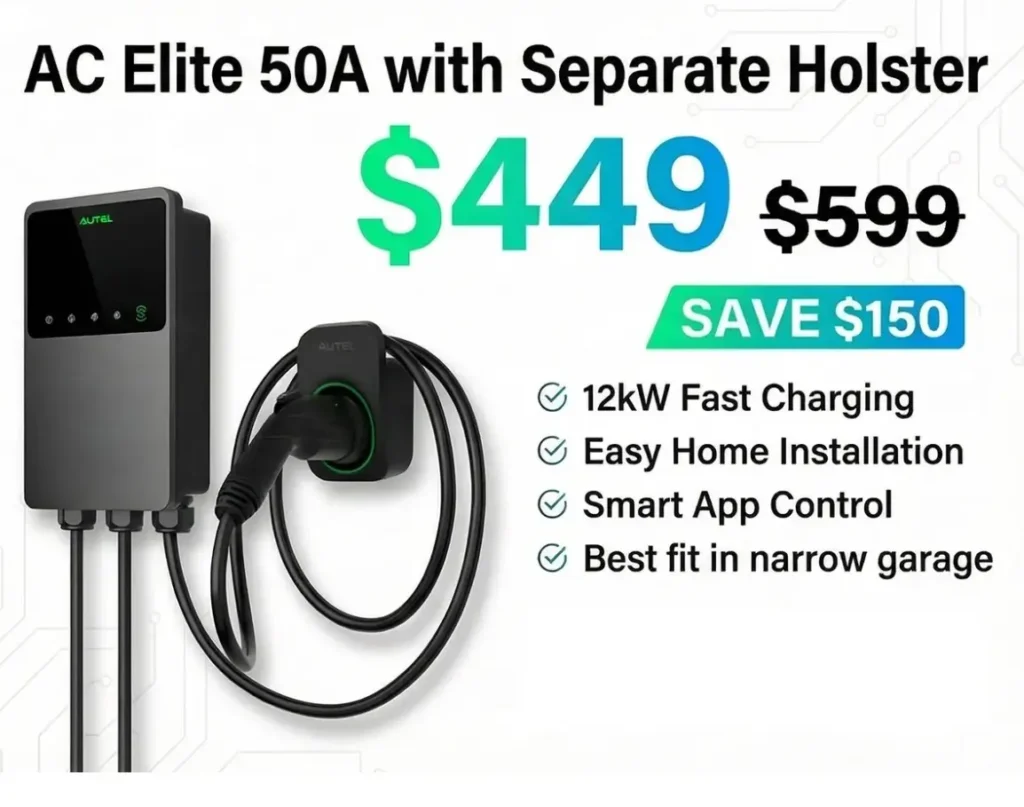
Explore Autel’s premium EV diagnostic tools and smart chargers at AutoChina Blog! These innovative solutions offer advanced battery health analysis, rapid charging, and professional diagnostics for electric vehicles. Perfect for technicians and EV owners seeking reliable, high-performance equipment. Discover cutting-edge Autel technology that ensures optimal vehicle performance and seamless maintenance experiences today.
Discover more from AutoChina
Subscribe to get the latest posts sent to your email.