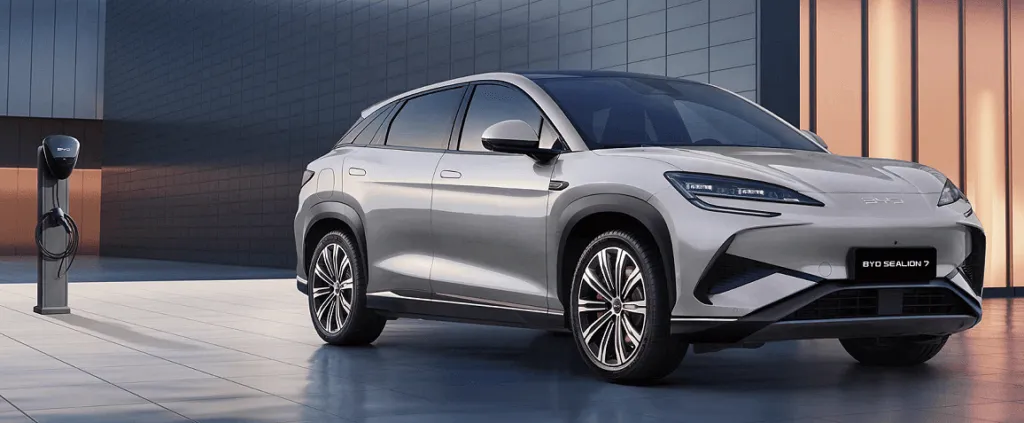
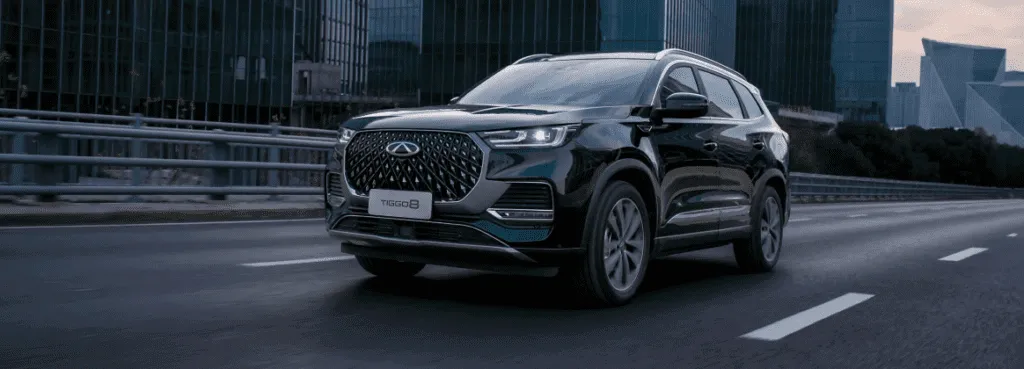
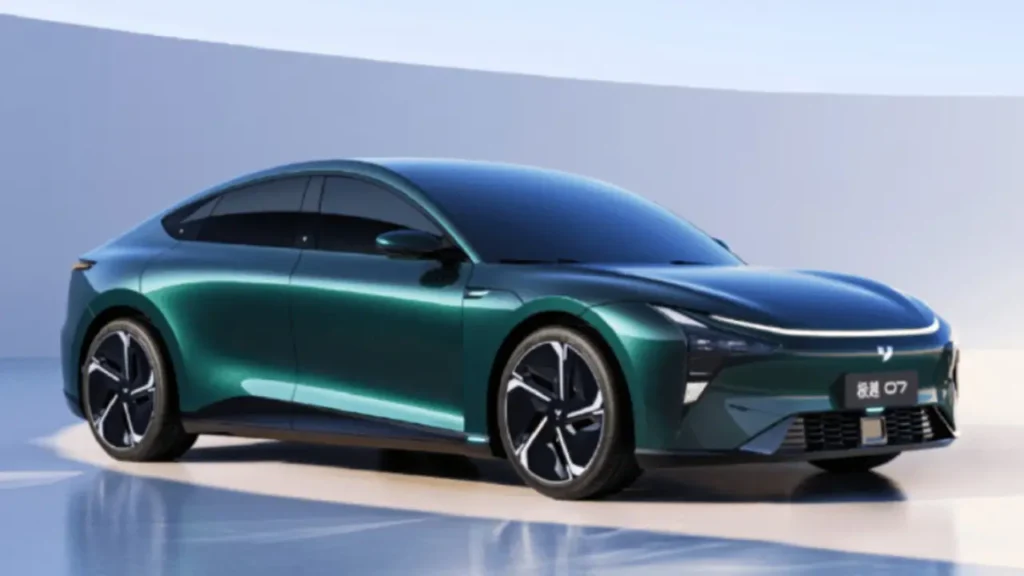
Picture this: you’re standing on a busy Beijing street, smartphone in hand, and you’ve just hailed a taxi. But when it pulls up, there’s no driver behind the wheel—no one waving hello, no one asking about your day. Just you, the car, and the road ahead. This isn’t science fiction anymore. In February 2026, Beijing officially issued the first Baidu Apollo L4 autonomous license, allowing JiYue to launch fully driverless taxis without a human safety driver. This isn’t a pilot project or a tech demo—this is real business, real passengers, and a real glimpse into the future of urban mobility.
For years, we’ve heard promises about self-driving cars. We’ve seen companies test vehicles in controlled environments, always with an engineer ready to grab the wheel. But what’s happening in Beijing right now is different. The city has crossed a threshold, moving from cautious experimentation to confident commercialization. The JiYue autonomous driving license represents more than just a permit—it’s a statement that the technology is ready, the regulations are in place, and the future is here.
So what does this mean for everyday people? How does a fully driverless taxi Beijing service actually work? And why is this moment so significant for the global autonomous vehicle industry? Let’s dive into the details, explore the technology, understand the regulations, and see what this breakthrough tells us about where transportation is heading.
What Does L4 Really Mean? Understanding Autonomous Driving Levels
Before we go further, let’s clear up some terminology. You’ve probably heard terms like “self-driving,” “autonomous,” and various numbered levels thrown around. The Society of Automotive Engineers (SAE) defines six levels of driving automation, from Level 0 (no automation) to Level 5 (full automation everywhere). Understanding these levels helps us appreciate just how significant Beijing’s decision really is.
| Level | Name | Description | Driver Required? |
|---|---|---|---|
| 0 | No Automation | Human controls everything | Yes |
| 1 | Driver Assistance | Basic features like cruise control | Yes |
| 2 | Partial Automation | Car can steer and accelerate, but driver must monitor | Yes |
| 3 | Conditional Automation | Car handles driving in specific conditions, driver must be ready | Yes, must be alert |
| 4 | High Automation | Car fully drives itself in defined areas/conditions | No (in operational design domain) |
| 5 | Full Automation | Car drives itself anywhere, anytime | No |
Level 4 is where things get truly interesting. At this level, the vehicle can handle all aspects of driving within a specific operational design domain—think certain neighborhoods, weather conditions, or times of day. The crucial difference from Level 3 is that the human doesn’t need to be ready to take over. In the context of L4 autonomous driving China, this means passengers can genuinely relax, work, or scroll through their phones without any driving responsibility.
Beijing’s decision to permit driverless taxi without safety driver operations represents confidence that JiYue’s vehicles can safely navigate the city’s streets within their designated service areas. This isn’t theoretical capability—it’s proven performance backed by millions of test miles and rigorous safety validation.
The JiYue License: Breaking Down the Regulatory Milestone
Getting permission to run a commercial autonomous taxi service without safety drivers isn’t like getting a regular business license. The JiYue autonomous driving license required the company to meet extraordinarily strict safety standards, demonstrate technical reliability, and prove their systems could handle edge cases that would challenge even experienced human drivers.
Beijing’s regulatory framework for autonomous vehicles has been developing since 2017, when the city first opened designated zones for testing. But permitting testing is very different from permitting commercial operations without safety drivers. The license issued to JiYue represents the culmination of years of progressive policy development.
What did JiYue need to prove? First, they had to demonstrate their vehicles could safely operate in Beijing’s diverse traffic conditions—from the wide, orderly roads of the business districts to narrower residential streets with bikes, pedestrians, and unpredictable human drivers. Second, they needed to show their systems could handle adverse weather, from rain to Beijing’s occasional sandstorms. Third, they had to prove they could manage the unexpected: construction zones, emergency vehicles, accidents, and all the other surprises that come with real-world driving.
The licensing process also required JiYue to establish comprehensive operational protocols. What happens if a vehicle encounters a situation it can’t handle? How do passengers communicate with support if they need help? What’s the backup plan if the network connection drops? These aren’t hypothetical questions—they’re practical challenges that required concrete solutions before regulators would sign off.
Beijing’s approach to China L4 autonomous vehicle regulation has been pragmatic and methodical. Rather than waiting for perfect technology or writing overly restrictive rules, the city has created a framework that allows innovation while maintaining rigorous safety standards. This balanced approach has positioned Beijing as a leader in autonomous vehicle deployment, not just in China but globally.
How the Service Actually Works: Riding in a Fully Driverless Taxi
So you’re in Beijing and want to try out this futuristic Beijing self-driving taxi service. How does it actually work? The experience is designed to be familiar yet exciting—like hailing any other ride-share service, but with a robotic twist.
It all starts with the Apollo Go app. You open it on your phone, enter your pickup location and destination, and request a ride. The app shows you available vehicles nearby, just like Uber or Didi. When a JiYue autonomous vehicle accepts your request, you can watch it approach in real-time on the map.
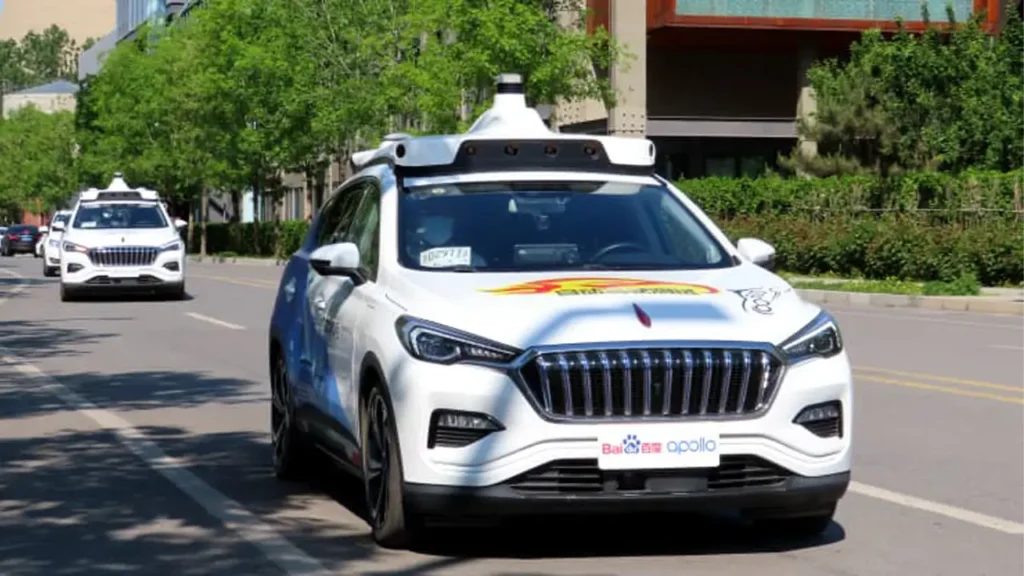
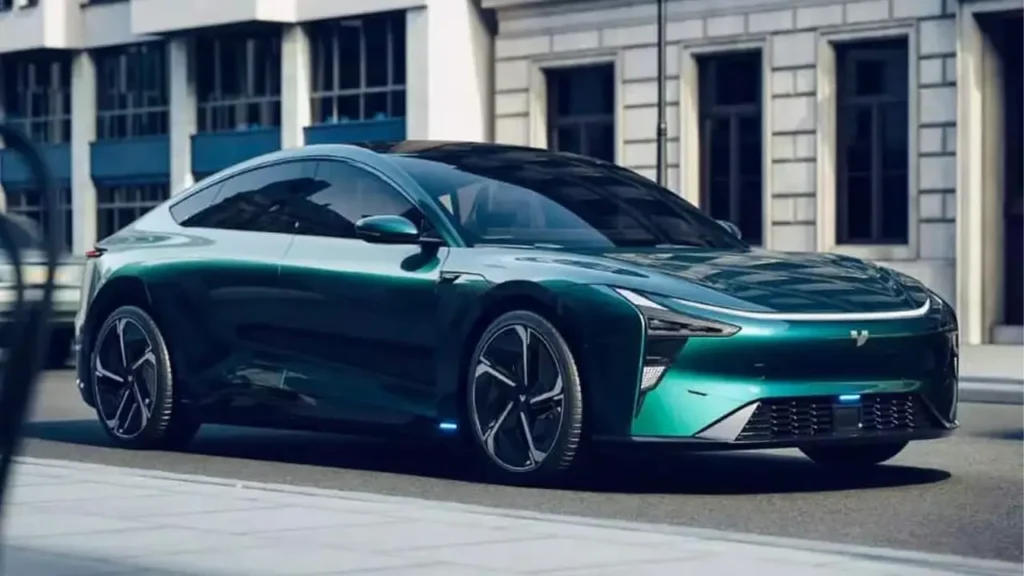
When the car arrives, you receive a notification with an unlock code. You approach the vehicle—a sleek electric car bristling with sensors and cameras—and verify your identity through the app. The doors unlock, and you climb into the back seat. There’s no driver’s seat occupied, which takes a moment to process even when you’re expecting it. It’s genuinely surreal the first time.
Inside, you’ll find screens that show you the vehicle’s perception of the world around it. You can see how it identifies other cars, pedestrians, traffic lights, and road markings. It’s fascinating and reassuring to watch the car “think” in real-time. If you need assistance at any point, there’s a button to connect with a remote operations team who can help with questions or concerns.
The ride itself? Smoother than you might expect. The fully driverless taxi Beijing vehicles accelerate and brake more gradually than many human drivers, making for a comfortable ride. They’re also remarkably law-abiding—no rolling through stop signs, no aggressive lane changes, no speeding. Some passengers find this refreshing; others who are used to more assertive Beijing driving styles find it amusingly cautious.
When you arrive at your destination, the vehicle pulls over safely, and you receive a notification that you’ve reached your stop. You can rate your ride just like any other taxi service, providing feedback that helps improve the system. Payment is handled automatically through the app, and you’re on your way.
Baidu Apollo: The Journey from Testing to Commercial Deployment
The Baidu Apollo L4 autonomous license didn’t appear overnight. Baidu has been investing in autonomous driving technology since 2013, and their Apollo project, launched in 2017, has become one of the world’s most advanced self-driving platforms. Understanding this journey helps us appreciate the significance of commercial deployment.
Baidu’s approach to autonomous driving has always been ambitious and open. The Apollo platform is designed as an open ecosystem, where partners can integrate Baidu’s technology into their own vehicles and services. This collaborative approach has helped Baidu test and refine their systems across diverse vehicle types and operating environments.
The progression toward Baidu Apollo commercial deployment followed a logical path. First came testing on closed tracks, then controlled public roads with safety drivers ready to intervene. Next came testing without safety drivers but with no passengers. Each phase generated data—millions and millions of miles worth—that helped train and improve the AI systems.
By 2023, Baidu’s Apollo Go service was already operating in multiple Chinese cities, but always with safety drivers present. These drivers rarely needed to intervene, which built the statistical case that the technology was ready for the next step. When intervention was necessary, Baidu’s engineers analyzed every instance, understanding why the system struggled and improving it for next time.
The transition to true driverless operation required not just technological maturity but also business model innovation. Running vehicles without safety drivers dramatically changes the economics of autonomous taxi services. It eliminates one of the largest operational costs—driver compensation—while also allowing vehicles to operate longer hours without human fatigue becoming a factor.
Baidu has also invested heavily in the infrastructure needed to support autonomous operations. This includes high-definition mapping of service areas, updated in real-time to reflect road changes, construction, and temporary obstacles. It includes remote operations centers where specialists monitor the fleet and can provide guidance if vehicles encounter unusual situations. And it includes maintenance facilities specifically designed for autonomous vehicles, with technicians trained to maintain and calibrate the complex sensor arrays.
The Apollo Go and JiYue Partnership: Why Collaboration Matters
The success of Beijing’s driverless taxi service isn’t just about Baidu’s AI or JiYue’s vehicles—it’s about how these two companies work together. The Apollo Go JiYue partnership demonstrates that launching successful autonomous services requires expertise across multiple domains.
JiYue, a joint venture between Baidu and the automaker Geely, brings automotive engineering excellence to the partnership. Building a vehicle optimized for autonomous operation isn’t the same as adapting a regular car. JiYue’s vehicles are designed from the ground up with autonomy in mind, featuring redundant systems for critical functions, optimal sensor placement, and electric powertrains that integrate smoothly with autonomous driving systems.
Baidu contributes the brain—the Apollo autonomous driving system, which includes perception algorithms that interpret sensor data, planning systems that decide how the vehicle should navigate, and control systems that execute those plans. Baidu also brings the mapping infrastructure, cloud computing resources, and operational expertise developed through years of testing.
This division of labor makes sense. Baidu can focus on what it does best—AI, software, and data infrastructure—while JiYue concentrates on building reliable, safe vehicles optimized for this use case. Neither company could have achieved this milestone as quickly working alone.
The partnership also demonstrates China’s broader strategy for autonomous vehicle development: fostering collaboration between tech companies and traditional automakers. This approach combines Silicon Valley-style innovation with automotive industry quality standards and manufacturing capability.
No Safety Driver: The Economic and Operational Implications
Operating as a driverless taxi without safety driver fundamentally changes the business model of ride-hailing. Let’s talk economics, because this is where autonomous taxis move from impressive technology to transformative business.
In traditional taxi or ride-hailing services, driver compensation typically represents 50-60% of the operating cost. By eliminating this expense, autonomous taxis can potentially offer rides at significantly lower prices while maintaining profitability. Alternatively, they can charge similar prices and generate much higher margins, which can then be invested in expanding the fleet and service area.
But it’s not just about removing driver costs. Autonomous taxis can operate longer hours without fatigue concerns. A human driver might work 8-10 hours per day, but an autonomous vehicle can potentially operate 20+ hours daily, only needing breaks for charging and maintenance. This higher utilization rate means each vehicle generates more revenue, improving return on investment.
| Cost Factor | Traditional Taxi | Autonomous Taxi |
|---|---|---|
| Driver Compensation | 50-60% of revenue | 0% |
| Daily Operating Hours | 8-10 hours | 20+ hours |
| Vehicle Acquisition Cost | $30,000-50,000 | $100,000-150,000 (with sensors) |
| Maintenance & Energy | 15-20% of revenue | 20-25% of revenue |
| Technology & Operations | 5-10% of revenue | 15-20% of revenue |
Of course, autonomous vehicles have their own cost considerations. The sensors, computers, and technology that enable self-driving aren’t cheap. Current estimates put the hardware cost for a fully autonomous system at $50,000-100,000 per vehicle, though this is declining as technology matures and production scales. There are also ongoing costs for mapping updates, remote monitoring, and technology maintenance.
The autonomous taxi business model also needs to account for lower revenue per mile initially, as services often operate in geo-fenced areas with limited range. As service areas expand and vehicles become more capable in diverse conditions, this limitation will diminish.
But the long-term economics look compelling. As hardware costs decrease, operational experience grows, and service areas expand, autonomous taxis should achieve significantly lower cost per mile than human-driven alternatives. This creates exciting possibilities: cheaper transportation for consumers, profitable businesses for operators, and reduced traffic congestion as people shift from personal car ownership to on-demand autonomous services.
China’s Regulatory Framework: Building the Rules for Autonomous Mobility
The China L4 autonomous vehicle regulation landscape is fascinating because it demonstrates how a major economy can thoughtfully balance innovation with safety. China’s approach differs significantly from the United States and Europe, and understanding these differences illuminates different visions for how autonomous vehicles should be integrated into society.
China has taken a city-by-city approach, allowing municipalities like Beijing, Shanghai, Shenzhen, and others to develop their own testing zones and regulatory frameworks. This creates a kind of regulatory laboratory, where different cities can experiment with different approaches and learn from each other’s experiences.
Beijing’s framework has been particularly progressive. The city started by designating specific areas for autonomous vehicle testing in 2017. As companies proved their capabilities, these zones expanded. Then came the next phase: allowing testing without safety drivers, but only in the vehicles without passengers. This built confidence that the technology could operate safely unsupervised.
The license granted to JiYue represents the culmination of this progressive approach—commercial operation with paying passengers and no safety driver. But it comes with conditions. The vehicles must operate within defined geographic areas. They must report detailed data on all trips, including any situations where the autonomous system had difficulty. And they must maintain insurance coverage appropriate for this new operational model.
China’s regulatory approach also emphasizes data sharing and government oversight in ways that might be controversial in other markets. Companies operating autonomous vehicles must share trip data, safety information, and technical details with regulators. This provides government agencies with comprehensive information about how the technology performs in real-world conditions.
This approach has advantages and disadvantages. On the positive side, it allows for data-driven regulation that can quickly identify and address safety concerns. It also creates a knowledge base that can inform national standards as the technology matures. On the other hand, it raises questions about data privacy and competitive concerns, as companies must share proprietary information with government agencies.
The Global Context: Where Does Beijing Fit in the Autonomous Race?
Beijing’s breakthrough didn’t happen in isolation. Cities around the world are racing to deploy autonomous vehicles, each with their own approach and timeline. Understanding how the fully driverless taxi Beijing service compares globally gives us perspective on where the industry stands.
In the United States, Waymo (owned by Google’s parent company Alphabet) operates driverless taxi services in Phoenix and San Francisco, with expansion to other cities underway. Cruise (backed by General Motors) was also operating in San Francisco until safety incidents led to a pause in late 2023. Both services operate without safety drivers, making them comparable to Beijing’s approach.
However, there are important differences. U.S. services generally operate in cities with more orderly traffic patterns and less dense urban environments than Beijing. American autonomous vehicles might struggle more with Beijing’s complex traffic mix of cars, bikes, e-scooters, and pedestrians all sharing the road space in ways that would be illegal in most U.S. cities.
Europe has taken a more cautious approach, with extensive testing but fewer commercial deployments of fully driverless vehicles. European cities often face narrower roads, more complex historical street layouts, and stricter safety regulations that slow deployment. However, several cities including Hamburg and Paris are advancing autonomous shuttle projects.
China’s approach combines aggressive deployment timelines with significant government support and coordination. The country sees autonomous vehicles as a strategic technology for economic competitiveness, environmental goals, and urban planning. This means cities like Beijing have strong incentives to pioneer new regulatory approaches that enable deployment.
What makes Beijing’s deployment particularly significant is the operating environment. Beijing is a megacity of 21 million people with complex, often chaotic traffic. Successfully deploying autonomous taxis here demonstrates the technology can handle genuinely challenging conditions, not just the relatively controlled environments of smaller test cities.
Real-World Performance: Safety, Reliability, and User Experience
How well do these autonomous taxis actually perform? This is the crucial question that determines whether L4 autonomous driving China represents a genuine breakthrough or just an impressive tech demo.
Baidu has released safety data from their Apollo Go operations showing millions of miles driven with extremely low incident rates. The company reports their autonomous vehicles are involved in accidents at a significantly lower rate than human drivers, and when incidents do occur, they’re typically minor and caused by human drivers hitting the autonomous vehicles.
However, interpreting safety data requires nuance. Autonomous vehicles currently operate in relatively controlled conditions—specific areas, usually during good weather, on well-mapped roads. Human drivers operate everywhere, in all conditions, including many situations autonomous vehicles aren’t yet permitted to handle. So comparing raw accident rates can be misleading.
What we can say is that within their operational design domain—the specific conditions they’re designed to handle—these vehicles appear to perform safely and reliably. They follow traffic laws meticulously, maintain safe following distances, and make conservative decisions when uncertain. These are valuable traits, even if they sometimes result in overly cautious driving that can frustrate passengers used to more aggressive human drivers.
User experience has generally been positive, based on ride reviews and passenger surveys. People report feeling safe, enjoying the smooth driving style, and finding the technology impressively capable. Common complaints include occasional overly conservative behavior, such as waiting too long at intersections or giving too much space to cyclists.
The technology also occasionally encounters situations it can’t handle smoothly. Construction zones with ambiguous lane markings, complex parking lot navigation, and unusual traffic patterns can still challenge autonomous systems. When this happens, vehicles either navigate cautiously through the situation, stop and request remote assistance, or in rare cases, refuse to proceed until conditions change.
Looking Ahead: What This Means for Transportation’s Future
The Baidu Apollo L4 autonomous license and the launch of commercial driverless taxi service in Beijing represents more than just a milestone for one company or one city. It’s a proof point for a vision of urban transportation that’s been promised for years but is only now becoming reality.
If this model succeeds—providing safe, reliable, affordable transportation without human drivers—the implications ripple far beyond the taxi industry. Personal car ownership could decline in cities where autonomous ride-hailing provides convenient, cost-effective mobility. Parking lots could be repurposed for housing, parks, or commercial development. Road design could evolve to prioritize autonomous vehicles, potentially improving traffic flow and safety.
The environmental implications could be significant too. Purpose-built autonomous taxis can be optimized for efficiency in ways personal vehicles aren’t. They’ll almost certainly be electric, reducing urban air pollution. And higher vehicle utilization rates mean fewer total vehicles needed to provide the same amount of mobility—potentially reducing the enormous environmental cost of vehicle manufacturing.
But there are also challenges and concerns to navigate. Job displacement for professional drivers is a real issue that societies will need to address. Data privacy questions become more acute when your transportation provider knows every trip you take. And there are equity concerns about ensuring autonomous transportation serves all communities, not just wealthy urban centers.
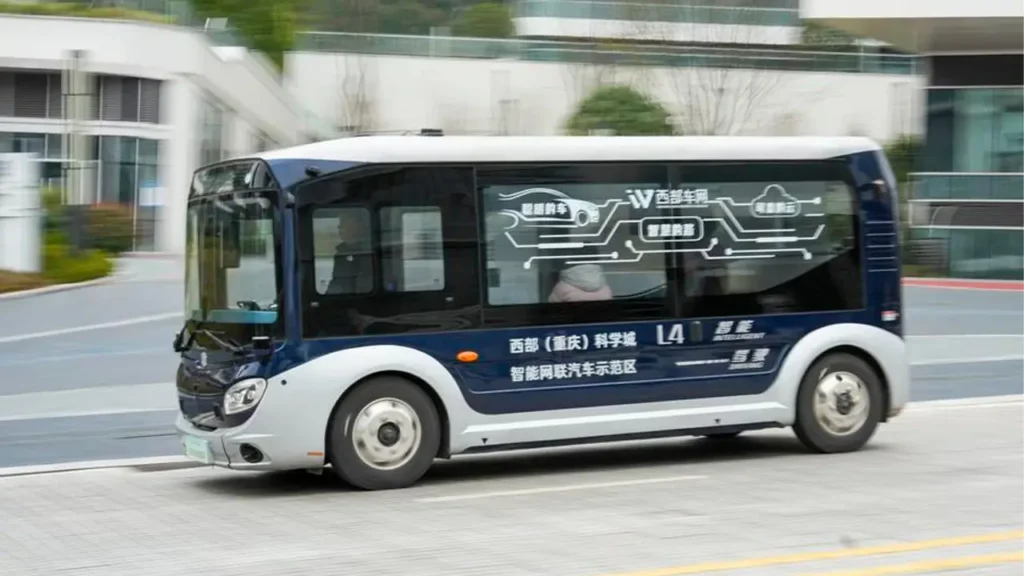
The technical challenges aren’t fully solved either. While L4 vehicles can handle defined operating environments, achieving true Level 5 autonomy—vehicles that can drive anywhere a human can, in any conditions—remains difficult. Heavy rain, snow, and other challenging weather conditions still present problems for sensor systems. Unusual situations that humans can navigate through common sense and judgment can perplex AI systems.
The Broader Impact: Reshaping Cities and Mobility
Beyond the immediate service in Beijing, the successful deployment of driverless taxi without safety driver operations signals broader changes in how we think about urban mobility and city planning.
Consider parking: cities dedicate enormous space to parking lots and street parking. In the United States, estimates suggest there are as many as 8 parking spaces for every car. If autonomous taxis reduce car ownership, that space could be reclaimed for other uses. Imagine downtown parking lots transformed into parks, housing, or commercial space.
Traffic patterns could change too. Autonomous vehicles can communicate with each other and with city infrastructure, potentially moving more efficiently through intersections and highway merges. This could reduce the stop-and-go traffic that wastes fuel and time. Some cities envision “platooning,” where autonomous vehicles travel closely together at highway speeds, reducing air resistance and improving throughput.
The Beijing self-driving taxi service also demonstrates how autonomous vehicles could extend mobility to people who can’t drive—the elderly, the disabled, young people. This isn’t just convenient; it’s potentially life-changing for people who currently depend on others for transportation or are limited in where they can live and work.
However, we need to be thoughtful about deployment. If autonomous taxis are too cheap and convenient, they could draw people away from public transit, actually increasing vehicle miles traveled and congestion. Smart cities will need to integrate autonomous vehicles into comprehensive mobility strategies that also include buses, trains, bikes, and pedestrian infrastructure.
Conclusion: The Road Ahead
Standing in Beijing in February 2026, watching JiYue autonomous taxis navigate the city’s streets without drivers, it’s clear we’re witnessing a genuine inflection point in transportation history. The Baidu Apollo L4 autonomous license represents years of technological development, regulatory evolution, and operational refinement all coming together.
This isn’t the finish line—it’s more like the end of the beginning. The technology will continue improving, handling more challenging conditions and edge cases. Regulations will evolve as we learn from real-world deployment. The business model will be refined as operators understand what works economically and what customers truly value.
Other cities in China will likely follow Beijing’s lead, expanding service areas and allowing more companies to offer driverless transportation. International markets will watch closely, learning from China’s experience and developing their own approaches suited to their regulatory environments and cultural contexts.
The autonomous taxi business model will mature, potentially becoming a significant industry that transforms how people move around cities. We’ll learn whether the promised benefits—safer roads, cleaner air, more efficient use of urban space—actually materialize, or whether unforeseen challenges require us to adjust our expectations.
For now, though, the people of Beijing can do something millions of people around the world have dreamed about: hail a car with their phone, climb in, and let the vehicle itself handle the drive. No small talk with the driver, no worries about whether they know the best route, just you and your destination, with AI handling everything in between.
That future, long promised by science fiction and tech optimists, has arrived in Beijing. And while it’s just getting started, it’s real, it’s working, and it’s pointing the way toward how many of us might get around in the years to come. The driverless revolution isn’t coming—it’s here.
Looking for a smartwatch that goes beyond fitness tracking? The Huawei Watch D2 brings medical-grade blood pressure monitoring right to your wrist—with an innovative inflatable cuff and clinical accuracy. Discover how this groundbreaking wearable blends health tech and everyday convenience in our full review.
👉 Read more: https://bestchinagadget.com/huawei-watch-d2-review/
Discover more from AutoChina
Subscribe to get the latest posts sent to your email.