Skip to content
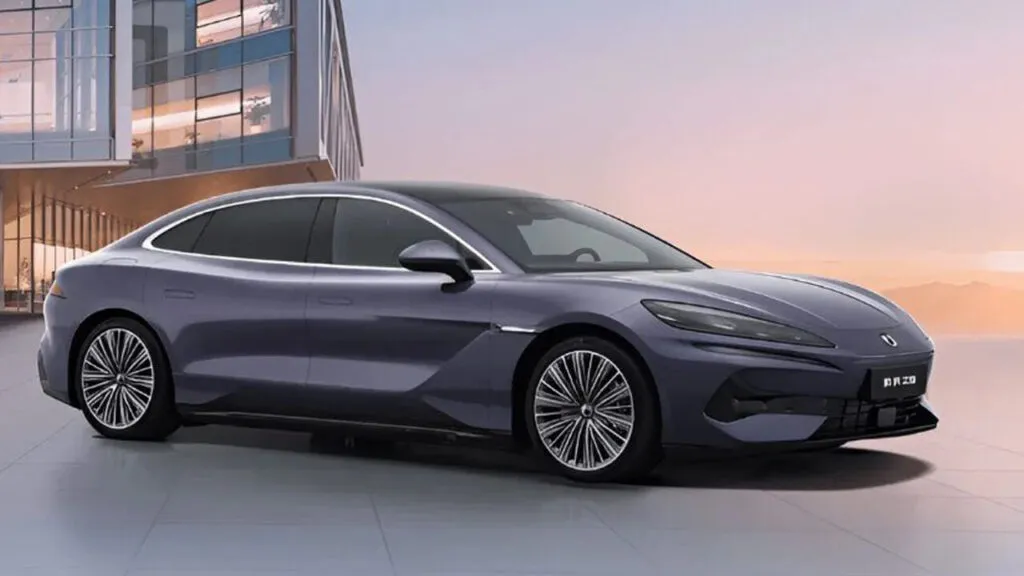
Let’s clear something up right away: the Denza Z9 sedan specs tell a completely different story than the Z9 GT wagon. While both share the Z9 nameplate, the sedan version is engineered with a distinct mission — to deliver executive luxury with performance punch, rather than the family-friendly practicality of its shooting brake sibling. The sedan’s aerodynamic profile, refined suspension tuning, and traditional three-box design create a more sophisticated, boardroom-ready presence.
Where the GT says “weekend adventure,” the sedan whispers “corner office.” And with BYD’s premium Denza brand taking direct aim at the Mercedes-Benz S-Class and Porsche Panamera, this isn’t just another Chinese market experiment — it’s a serious luxury contender that launched at the 2024 Guangzhou Auto Show with prices starting at RMB 334,800 (approximately $46,320).
Positioning & price reality check
The Denza Z9 price positioning reveals something fascinating about China’s premium automotive landscape: the era of apologetic pricing is over. Starting at RMB 334,800 for the PHEV Pro trim and topping out at RMB 414,800 for the Ultra edition, with BEV variants priced from RMB 354,800 to RMB 384,800, the Z9 sedan isn’t playing the “half-price alternative” game anymore. These figures place it squarely in D-segment luxury territory, where the Mercedes-Benz S-Class commands prices starting around RMB 1,000,000 in China.
But here’s what makes the Denza Z9 price strategy compelling: you’re not sacrificing technology or performance for that lower entry point. According to Denza executives, the Z9 directly targets European competitors including the S-Class and Panamera, and BYD boss Stella Li famously claimed at Milan Design Week that Denza vehicles are “ten times better than the competition.” Bold words, but the spec sheet backs up at least some of that confidence.
The sedan comes standard with features that would be expensive options on German rivals: BAS 3.0+ advanced driver assistance with dual LiDAR (free for the vehicle’s lifetime), air suspension on Max and Ultra trims, electrically adjustable rear seats, a Devialet sound system, and even dual refrigerators (4-liter front, 10-liter rear). The PHEV lineup includes Pro, Max, and Ultra configurations, while the BEV offers two trim levels, giving buyers flexibility across powertrains and feature sets.
| Trim Level | Powertrain | Price (RMB) | Price (USD approx.) |
|---|---|---|---|
| Pro | PHEV | 334,800 | $46,320 |
| Max | PHEV | 364,800 | $50,470 |
| Ultra | PHEV | 414,800 | $57,370 |
| Standard | BEV | 354,800 | $49,090 |
| Premium | BEV | 384,800 | $53,240 |
Powertrains — EV vs PHEV in one nameplate
Understanding Denza Z9 sedan specs means wrapping your head around two fundamentally different approaches to electrification living under the same badge. The PHEV version appeals to those who want versatility and won’t sacrifice long-distance capability, while the BEV caters to drivers seeking pure electric performance with zero range anxiety for daily driving.
The Denza Z9 PHEV range strategy centers on a fifth-generation DM (Dual Mode) system combining a 2.0-liter turbocharged engine producing 152 kW (204 hp) with three electric motors delivering a combined 640 kW (858 hp). This powertrain uses a 38.5 kWh LFP (lithium iron phosphate) Blade battery, providing 201 km of electric-only range under CLTC standards and a total combined range of 1,101 km with a full tank and full charge. The PHEV incorporates BYD’s innovative CTB (cell-to-body) battery integration, marking the first time this technology appears in a BYD plug-in hybrid, improving both interior space and structural rigidity.
The BEV version eliminates the combustion engine entirely, instead deploying e-Platform 3.0 Evo architecture with three dedicated electric motors. The front motor produces 230 kW with 430 Nm of torque, while dual rear motors each generate 240 kW and 360 Nm. Combined output reaches 710 kW (952 hp), powered by a substantial 100.1 kWh LFP Blade battery pack delivering 630 km of CLTC range.
Both versions feature BYD’s Yi Sanfang (e³) technology, providing independent control over each motor for enhanced stability, agility, and safety features. The PHEV weighs approximately 2,875 kg, while specific BEV weight figures remain unconfirmed but likely fall in a similar range given the larger battery pack.
| Specification | PHEV | BEV |
|---|---|---|
| Engine | 2.0L Turbo (152 kW / 325 Nm) | None |
| Front Motor | 200 kW / 315 Nm | 230 kW / 430 Nm |
| Rear Motors (each) | 220 kW / 360 Nm | 240 kW / 360 Nm |
| Total Motor Power | 640 kW (858 hp) | 710 kW (952 hp) |
| Battery Capacity | 38.5 kWh LFP | 100.1 kWh LFP |
| EV Range (CLTC) | 201 km | 630 km |
| Total Range | 1,101 km | 630 km |
EV range & charging logic for real life
When Denza quotes the Denza Z9 EV range at 630 km under CLTC standards, it’s important to understand what that actually means for your daily commute or weekend road trip. CLTC (China Light-Duty Vehicle Test Cycle) tends to be more optimistic than real-world conditions, particularly if you’re driving spiritedly or in cold weather. A reasonable estimate would place real-world range around 480-520 km for the BEV under mixed driving conditions, which still comfortably covers most people’s weekly driving needs.
The 100.1 kWh battery pack in the BEV variant supports 800V+ high-voltage architecture, enabling fast charging from 30% to 80% in approximately 19 minutes when connected to compatible charging infrastructure. Standard home charging requires around 8 hours for a complete charge cycle, typical for vehicles in this class and acceptable for overnight charging scenarios.
The PHEV’s 38.5 kWh battery charges faster due to its smaller capacity — approximately 3 hours for a full charge from empty using standard charging, or 36.6 minutes to reach 80% with fast charging (30% starting point). The 201 km electric-only range means most urban and suburban drivers can operate in EV mode for daily tasks, only engaging the 2.0-liter engine for longer trips.
Here’s where Denza Z9 sedan specs get practical: the PHEV’s 1,101 km total range eliminates charging anxiety entirely. You can run electric around town during the week, then take a spontaneous 800 km trip on the weekend without mapping out charging stops. The WLTC-rated fuel consumption when the battery depletes sits at 6.6L/100km, which is remarkably efficient for an 858 hp luxury sedan.
For the BEV, the charging strategy becomes more important. Plan your routes around DC fast charging stations for road trips, and you’ll realistically need one 20-minute charging stop every 400-450 km of highway driving. Not terrible, but definitely something PHEV buyers won’t have to think about.
Tri-motor AWD & e³ tech — why it matters
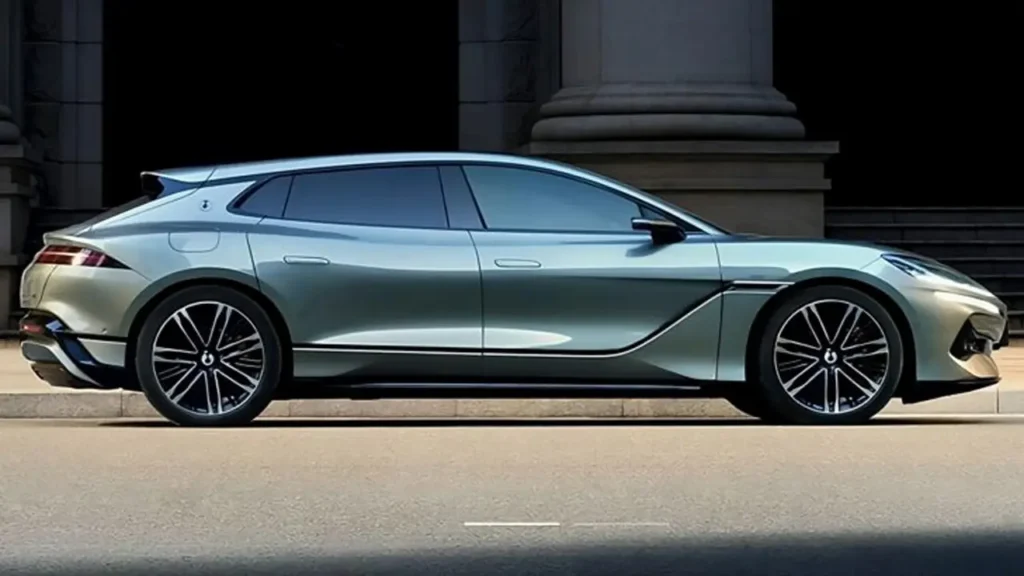
The Denza Z9 tri-motor AWD setup isn’t just marketing fluff — it’s a fundamental reimagining of how traction, stability, and performance work together. BYD’s Yi Sanfang (e³) technology, which translates roughly to “easy cubic,” provides independent control over each of the three electric motors. One motor powers the front axle, while two motors independently drive the rear wheels.
This architecture enables some genuinely useful capabilities beyond just acceleration. The system can vector torque between the rear wheels with millisecond precision, improving cornering stability and reducing understeer. It can also maintain vehicle control on low-adhesion surfaces (think ice, snow, or wet roads) by independently modulating power to whichever wheels have grip. Denza claims a 30% reduction in body roll risk and a 67% reduction in lateral deviation thanks to the Intelligent Air Body Control System working in concert with tri-motor control.
But here’s where it gets genuinely impressive: the e³ system can keep the Z9 sedan controllable even during a tire blowout at speeds up to 180 km/h (111 mph). By redistributing power and applying strategic braking to the remaining three wheels, the system prevents the violent pull that typically accompanies sudden tire failure. It’s not just a party trick — it’s potentially life-saving technology.
The system also enables “crab-walk” lateral movement at a 15-degree angle for tight parking situations, and the ability to execute extremely tight U-turns by counter-rotating the rear wheels. For a sedan measuring over 5.2 meters in length, achieving a 4.62-meter turning radius dramatically improves urban maneuverability. You’re basically getting the parking agility of a compact hatchback in a full-size luxury sedan.
From a performance perspective, Denza Z9 sedan specs show the tri-motor setup delivers 1,035 Nm of total torque in the PHEV and impressive power distribution across both axles. The front-to-rear power split adjusts dynamically based on driving conditions, sensor inputs, and driver demands, creating a more engaging and confidence-inspiring driving experience than traditional mechanical AWD systems.
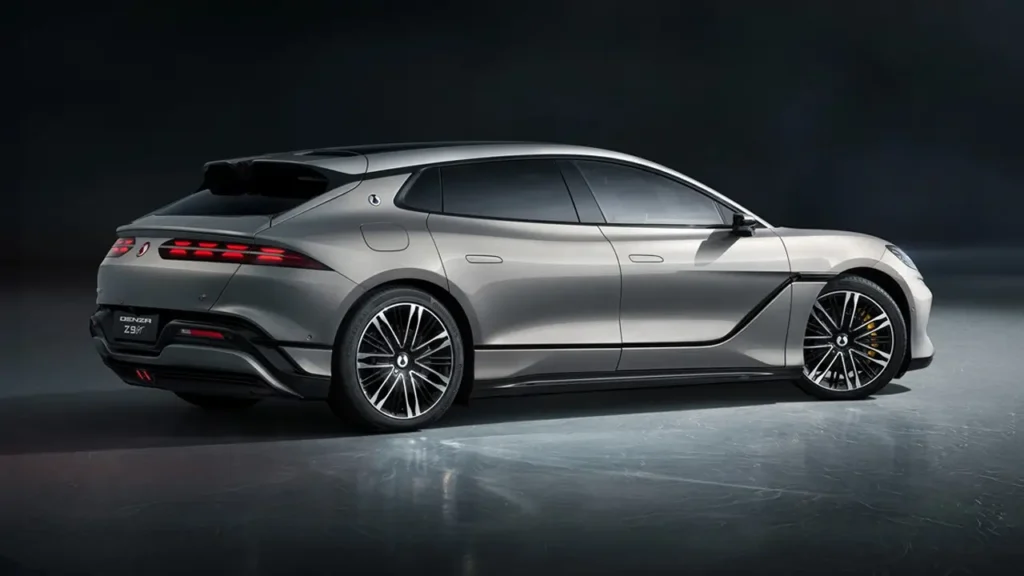
Performance — the 0–100 moment
Let’s talk numbers. The Denza Z9 0-100 km/h sprint happens in just 3.4 seconds for the BEV version and 3.6 seconds for the PHEV. To put that in perspective, a Mercedes-Benz S 500 4MATIC needs around 4.9 seconds for the same benchmark, while a Porsche Panamera 4 manages it in roughly 5.0 seconds. You’d need to step up to the Panamera Turbo (3.1 seconds) or S-Class AMG variants to match or exceed the Z9’s straight-line acceleration.
But here’s what’s even more interesting about the Denza Z9 0-100 km/h performance: it’s not just about neck-snapping launches. The tri-motor setup means you get instantaneous torque delivery at any speed, any gear (well, single-speed transmission, but you get the idea). Passing power from 80-120 km/h feels just as authoritative as the initial launch, making highway overtakes effortless and confidence-inspiring.
The PHEV’s slightly slower 3.6-second time comes despite having 858 hp at its disposal, likely due to the additional weight of the combustion engine and slightly different motor tuning. Still, 3.6 seconds is properly quick — faster than most sports cars from just a decade ago. The 2.0-liter turbo engine provides a different character under full throttle, adding a mechanical soundtrack to the electric whoosh, though whether you find this appealing or intrusive depends on your preference for powertrain theatrics.
Top speed is electronically limited to 230 km/h for the PHEV and 240 km/h for the BEV — sensible restrictions for public roads but slightly conservative compared to German rivals that often allow 250 km/h or offer delimited versions. Then again, the Z9 is designed more for effortless cruising than autobahn storming.
What impressed early reviewers more than the raw acceleration was the refinement with which the Z9 deploys its power. There’s no wheelspin, no drama, no fuss — just relentless, linear acceleration that feels almost suspiciously easy. The air suspension and advanced stability systems keep the chassis composed even during hard acceleration, maintaining the executive sedan demeanor rather than transforming into a hyperactive sports car.
| Performance Metric | Z9 PHEV | Z9 BEV | Mercedes S-Class (base) |
|---|---|---|---|
| 0-100 km/h | 3.6 seconds | 3.4 seconds | ~4.9 seconds |
| Power Output | 640 kW (858 hp) | 710 kW (952 hp) | ~270 kW (367 hp) |
| Total Torque | 1,035 Nm | ~1,150 Nm | 500 Nm |
| Top Speed | 230 km/h | 240 km/h | 250 km/h |
Dimensions, aero, and ride setup (Sedan vs GT mindset)
The Denza Z9 dimensions reveal a traditional three-box sedan profile that’s intentionally different from the Z9 GT wagon. The PHEV sedan measures 5,235 mm in length, 1,990 mm in width, and 1,500/1,518 mm in height (depending on configuration), with a 3,125 mm wheelbase. The BEV is slightly shorter at 5,180 mm but shares the same width, height options, and wheelbase. Both variants ride on multi-spoke wheels that balance aerodynamic efficiency with visual presence.
For context, these Denza Z9 dimensions place it squarely in Mercedes-Benz S-Class territory (5,290 mm length, 3,216 mm wheelbase), though the Z9 is slightly more compact. The wheelbase is generous enough to provide genuinely comfortable rear-seat accommodations — important for a chauffeur-driven executive sedan — with 375 liters of trunk capacity.
But here’s where the sedan versus GT distinction becomes important: the sedan’s conventional roofline and rear deck create different aerodynamic characteristics. While the Z9 GT emphasizes a fastback profile for sporty aesthetics, the sedan prioritizes a more upright rear window and traditional trunk lid, slightly compromising the drag coefficient but improving rear headroom and creating a more formal silhouette. The sedan also receives different suspension tuning aimed at isolating road imperfections rather than maximizing cornering response.
The sedan’s lower center of gravity (thanks to floor-mounted batteries) and longer wheelbase contribute to high-speed stability. At 200+ km/h, the sedan feels planted and composed, with minimal wind noise intrusion thanks to frameless windows with improved sealing and acoustic glass. The hidden door handles and closed front grille (both powertrain variants) further reduce drag and improve efficiency.
Weight distribution benefits from the CTB (cell-to-body) integration in the PHEV, which spreads battery mass across the floor rather than concentrating it in one location. This improves torsional rigidity and creates a more predictable handling balance. The air suspension (standard on Max and Ultra trims) allows real-time adjustment of both ride height and damping firmness, meaning you can prioritize comfort for daily cruising or dial in more control for spirited driving.
The sedan’s longer body also means slightly different crash structure and crumple zones compared to the GT. Denza emphasizes a pyramid-structured safety framework with high-strength steel and aluminum accounting for 93% of the body structure, plus 10 airbags as standard across all trims. This isn’t just about meeting regulatory requirements — it’s about reinforcing the premium positioning.
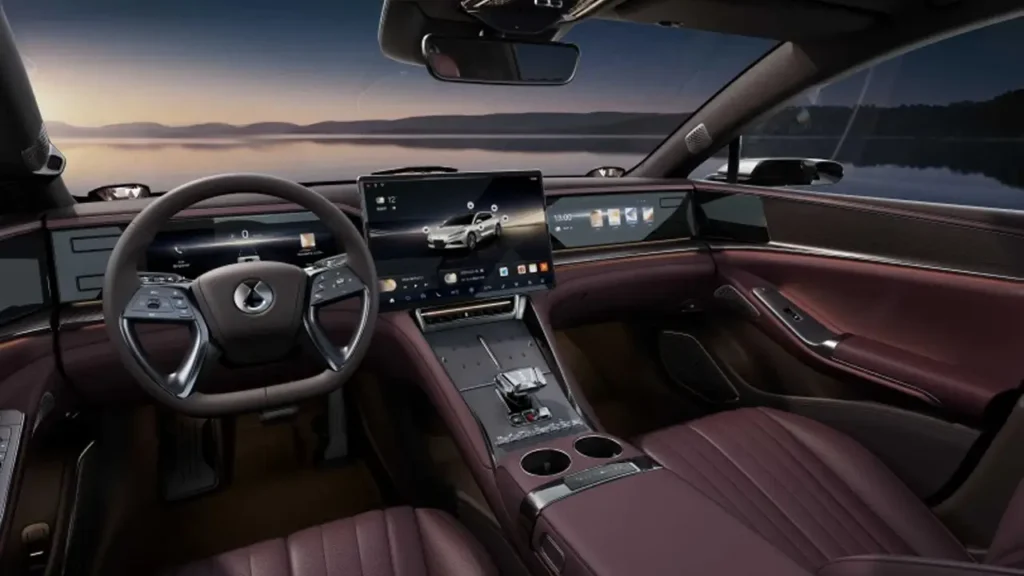
Platform & chassis talk without nerd pain
The Denza e3 platform (also marketed as Yi Sanfang technology) represents BYD’s answer to dedicated premium EV architectures, sitting between the mainstream BYD e-Platform 3.0 and the ultra-luxury e⁴ platform reserved for YangWang models. Think of it as a scaled-down version of the company’s most advanced engineering, bringing high-end capabilities to a more accessible price point.
At its core, the Denza e3 platform integrates three key systems: the tri-motor electric drive system, the 800V electrical architecture, and the CTB (cell-to-body) battery integration. The 800V system enables faster charging speeds and more efficient power delivery, while CTB turns the battery pack into a structural element of the chassis rather than just dead weight bolted to the floor. This integration increases torsional rigidity by an estimated 50% compared to conventional battery mounting, making the chassis stiffer and improving handling precision.
The platform’s modular design allows both PHEV and BEV powertrains to coexist on the same basic structure, sharing components where possible but optimizing each for its specific powertrain needs. The PHEV version, for example, must accommodate the 2.0-liter engine up front while maintaining proper weight distribution, whereas the BEV can optimize packaging without combustion engine constraints.
One of the more impressive aspects of the Denza e3 platform is the sophisticated software integration. The BYD 9000 cockpit chip (built on 4nm process technology) handles infotainment and vehicle controls, while the BAS 3.0+ system manages advanced driver assistance using 33 sensors including dual LiDAR units. These systems communicate over a high-speed network to enable features like automatic parking, city and highway navigation assist, and the dynamic torque vectoring that makes the tri-motor setup so effective.
The air suspension system (available on Max and Ultra trims) features four independently controlled air springs with real-time adjustment based on road conditions, driving mode, and speed. At highway speeds, the car automatically lowers to reduce drag and improve stability. Over rough surfaces, it can raise slightly to increase ground clearance and cushion impacts. The system works in concert with the tri-motor torque vectoring to create what Denza calls “Intelligent Air Body Control,” actively countering body roll and pitch.
Perhaps most importantly, the Denza e3 platform is designed for scalability. BYD can theoretically adapt this architecture for different body styles, wheelbases, and market segments without starting from scratch each time. This development efficiency helps explain how Denza can price the Z9 so competitively while still including premium features.
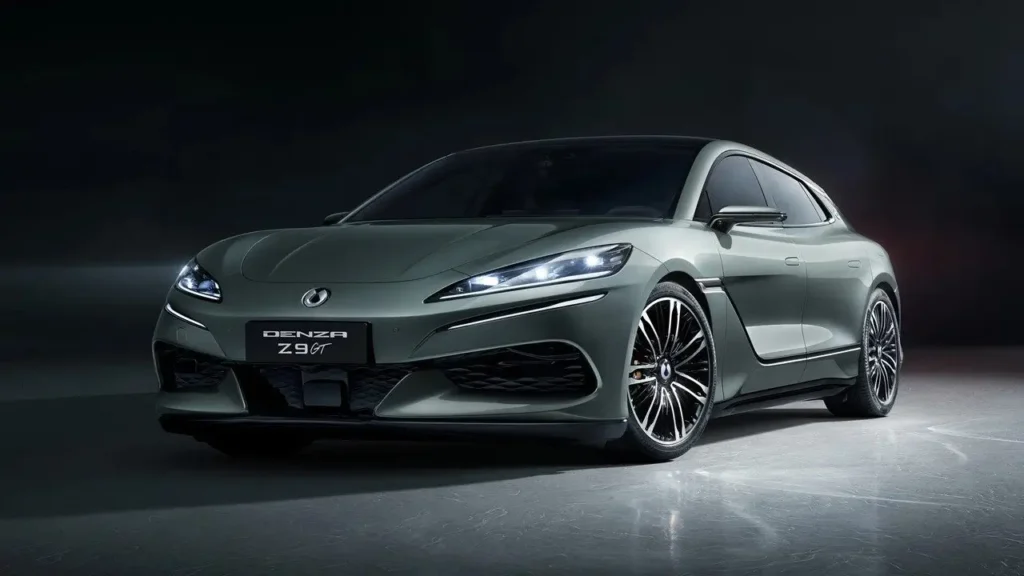
Rear-wheel steering tricks & daily usability
The Denza Z9 rear-wheel steering system represents one of the sedan’s most practical everyday advantages, particularly when you consider that you’re dealing with a vehicle measuring over 5.2 meters in length. The rear wheels can steer up to 20 degrees in the opposite direction of the front wheels at low speeds, dramatically reducing the turning radius to just 4.62 meters — roughly equivalent to a compact city car.
Here’s what this means in practice: parallel parking a full-size luxury sedan becomes genuinely easy. The rear wheels turn outward as the front wheels turn inward, allowing the Z9 to pivot into tight spaces with minimal back-and-forth maneuvering. In underground parking garages with tight corners, the rear-wheel steering lets you navigate without the constant anxiety of scraping wheels or bumpers. For a car this substantial, it transforms urban usability.
At higher speeds, the rear wheels steer in the same direction as the front wheels (though at smaller angles), improving stability during lane changes and highway cruising. This “same-direction” steering reduces the car’s effective wheelbase dynamics, making it feel more agile than its physical dimensions suggest. During emergency maneuvers, the system helps maintain vehicle composure and reduces the risk of fishtailing.
The Denza Z9 rear-wheel steering also enables the previously mentioned “crab-walk” mode, where all four wheels angle up to 15 degrees in the same direction, allowing lateral movement for tight parking situations or navigating narrow lanes. While this feature feels somewhat gimmicky at first, drivers who regularly deal with cramped parking structures report it’s actually quite useful once you get comfortable with it.
The system integrates seamlessly with the tri-motor AWD setup, meaning the computer is simultaneously managing steering angle, torque delivery to each wheel, and suspension firmness to create coordinated vehicle behavior. During spirited cornering, the rear-wheel steering works with selective torque distribution to tuck the rear end into the corner, creating a more neutral handling balance than you’d expect from such a large, heavy sedan.
One minor quirk: the rear-wheel steering requires some recalibration of spatial awareness, particularly when first driving the Z9. The car’s extremities move differently than conventional sedans, so parking maneuvers initially feel slightly counterintuitive. Most drivers adapt within a few days, but it’s worth noting if you’re the type who occasionally lets other family members drive your car — expect some confusion until they adjust.
The steering system adds weight and complexity, but Denza’s implementation appears robust, with redundant sensors and fail-safe modes that revert to front-wheel-only steering if any component fails. The system requires periodic calibration during service intervals, but this is handled through software updates rather than mechanical adjustment.
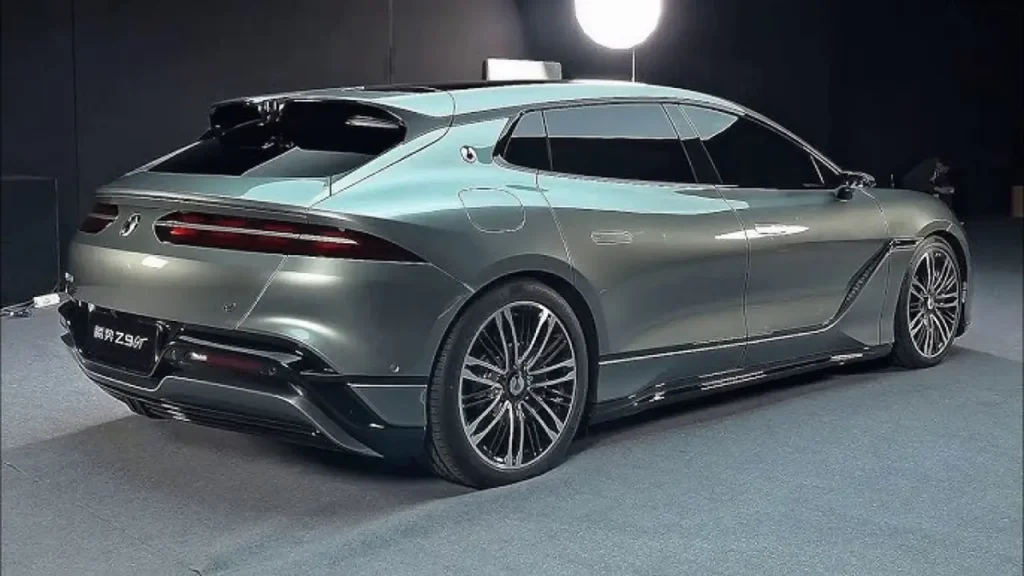
Verdict — is it a legit S-Class alternative or just flex?
So here’s the honest assessment after examining Denza Z9 sedan specs comprehensively: this is a legitimate luxury sedan that happens to be built in China and priced at roughly half what European competitors charge. It’s not a perfect S-Class replacement — you’re still trading some badge prestige, potentially uncertain resale value, and unproven long-term reliability for dramatic cost savings and newer technology.
What the Z9 gets right is genuinely impressive. The tri-motor powertrain delivers supercar-level acceleration with everyday usability. The PHEV’s 1,101 km range eliminates the compromises typically associated with electrification. The rear-wheel steering makes a 5.2-meter sedan feel surprisingly manageable in tight spaces. The tech suite — dual LiDAR, advanced ADAS, air suspension, premium audio, dual refrigerators — matches or exceeds what German rivals offer, often as expensive options.
The interior quality, while not quite achieving Mercedes S-Class levels of tactile luxury, punches well above the Z9’s price point. Materials are high-quality, fit and finish appears solid, and the thoughtful touches (like electrically adjustable rear seats and the Devialet sound system) create a genuinely premium ambiance. The 17.3-inch central screen powered by the BYD 9000 chip provides responsive, feature-rich infotainment that puts some European systems to shame.
Where the Z9 faces challenges is more subtle. Can Denza establish the brand equity and prestige that justifies premium pricing in markets outside China? Will the dealer network and service experience match the product quality? How will these vehicles depreciate compared to established luxury nameplates? These questions remain largely unanswered, particularly for potential European buyers where Denza plans expansion.
From a pure product perspective, the Denza Z9 sedan specs deliver exceptional value. You’re getting cutting-edge electric powertrains, genuine luxury amenities, and performance that embarrasses competitors costing twice as much. For buyers who prioritize substance over badge snobbery, the Z9 makes a compelling case.
Who should consider the Z9 sedan? Tech-forward executives who want electric driving with zero range anxiety (PHEV). Performance enthusiasts seeking supercar acceleration in a practical four-door package (BEV). Pragmatic luxury buyers willing to try something different to save substantial money. Early adopters excited by features like crab-walk and rear-wheel steering.
Who should probably look elsewhere? Brand-conscious buyers for whom the Mercedes star or BMW roundel carries emotional value. Drivers requiring established service networks in remote areas. Anyone with doubts about Chinese automotive quality who’d rather stick with known quantities.
The verdict? The Denza Z9 sedan is not just flex — it’s a genuinely compelling luxury sedan that happens to challenge some comfortable assumptions about where great cars can come from. Whether that’s enough to sway buyers away from German marques depends less on the car itself and more on how quickly perceptions catch up with reality.
If you want more straight-talk breakdowns of Chinese premium vehicles without the usual marketing fluff, head over to www.autochina.blog — we’re tracking every move in this fascinating market transformation.
If you’re into future tech the same way you’re into future cars, don’t stop here. For smart gadgets, Chinese devices, and practical picks that actually make life easier, check out https://bestchinagadget.com/ — quick guides, real-world recommendations, and the kind of tech that feels like tomorrow (without the “setup nightmare”).
Discover more from AutoChina
Subscribe to get the latest posts sent to your email.