If you’ve been watching the global ute market lately, you’ve probably noticed something wild happening: Chinese pickups are no longer just “budget alternatives.” The BYD Shark 6 hybrid ute review you’re reading right now is about a truck that’s rewriting the rules in Australia, Mexico, and across Latin America.
This isn’t just another PHEV experiment—it’s a serious Ford Ranger rival that combines genuine workhorse capability with plug-in hybrid tech that actually makes sense for real users. Whether you’re a tradie in Sydney, a fleet manager in Guadalajara, or just someone who needs a proper dual-cab that won’t drain your wallet at the servo, the Shark 6 deserves your attention. Let’s dig into why this BYD export model is causing such a stir globally.
BYD Shark 6 hybrid ute review — Quick overview + key numbers
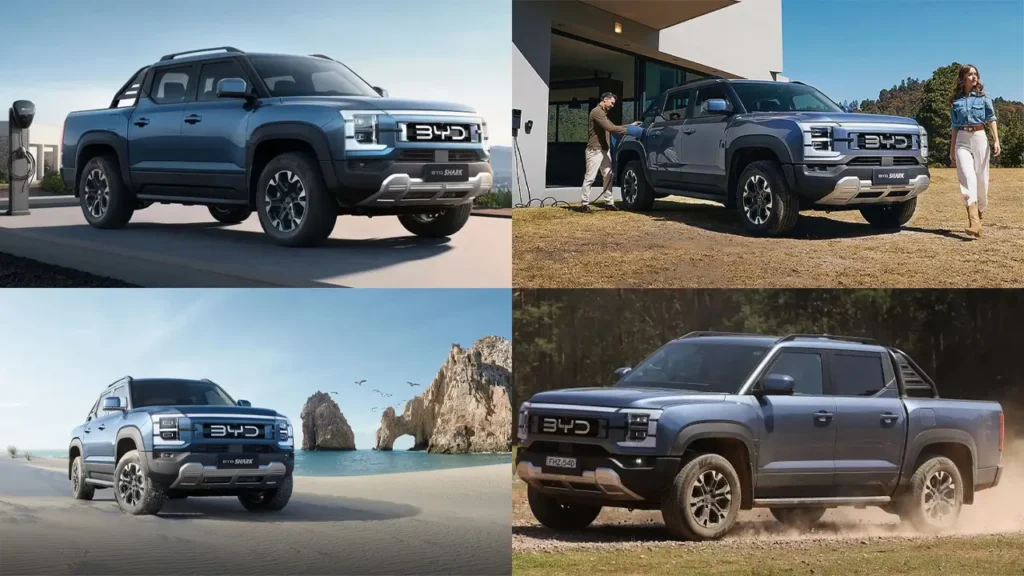
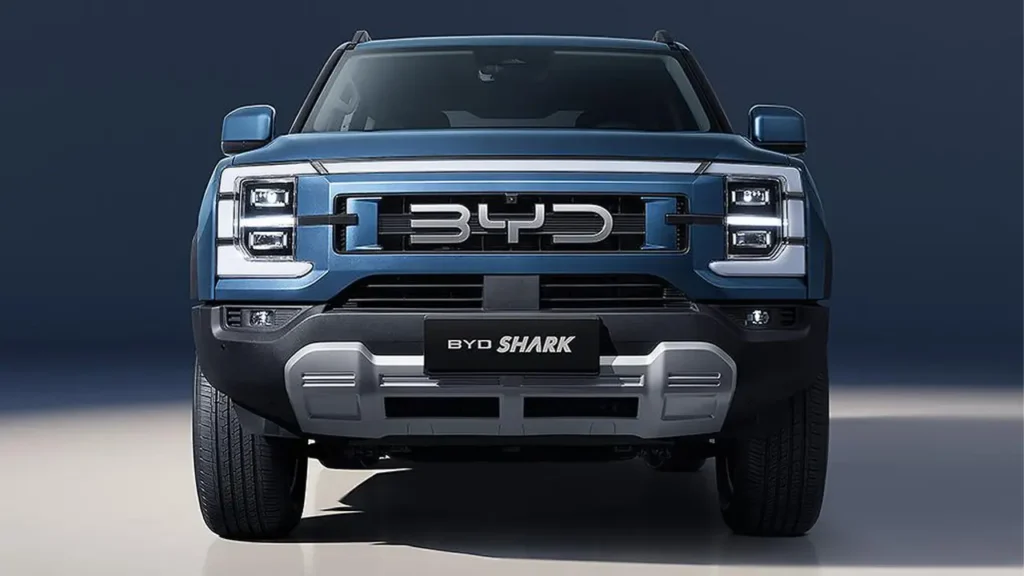
Before we dive deep, let’s get the BYD Shark 6 specs laid out clearly. This is a ladder-frame, dual-cab ute with a plug-in hybrid powertrain that BYD calls the DM-O (Dual Mode Off-road) system. It’s built on a platform shared with the Leopard 5, but tuned specifically for markets that demand proper towing, payload, and dirt-road credibility.
| Specification | Details |
|---|---|
| Engine | 1.5L turbo petrol + dual electric motors |
| Combined power | 321 kW (430 hp) |
| Combined torque | 650 Nm |
| Battery capacity | 29.58 kWh (BYD Blade LFP) |
| Electric-only range | 100 km (NEDC) |
| Towing capacity | 2,500 kg (braked) |
| Payload | 835 kg |
| Ground clearance | 230 mm |
| Drive type | 4WD (electric rear motor + mechanical front) |
| Dimensions (L×W×H) | 5,457 × 1,971 × 1,925 mm |
The numbers tell a compelling story. You’re looking at a ute that matches or exceeds most diesel rivals in power and torque, but with the added bonus of running purely on electricity for your daily commute. The BYD Shark 6 hybrid ute review consensus is clear: this is proper hybrid engineering, not just a marketing exercise with a tiny battery.
If you’re into smart tech buys (and you like your wallet staying alive), don’t miss https://bestchinagadget.com/ — a clean hub for trending Chinese gadgets, real-world picks, and practical guides without the hype. It’s the perfect side-quest after cars: upgrades for your daily life, not just your driveway.
Cabin & usability for real life (work + family)
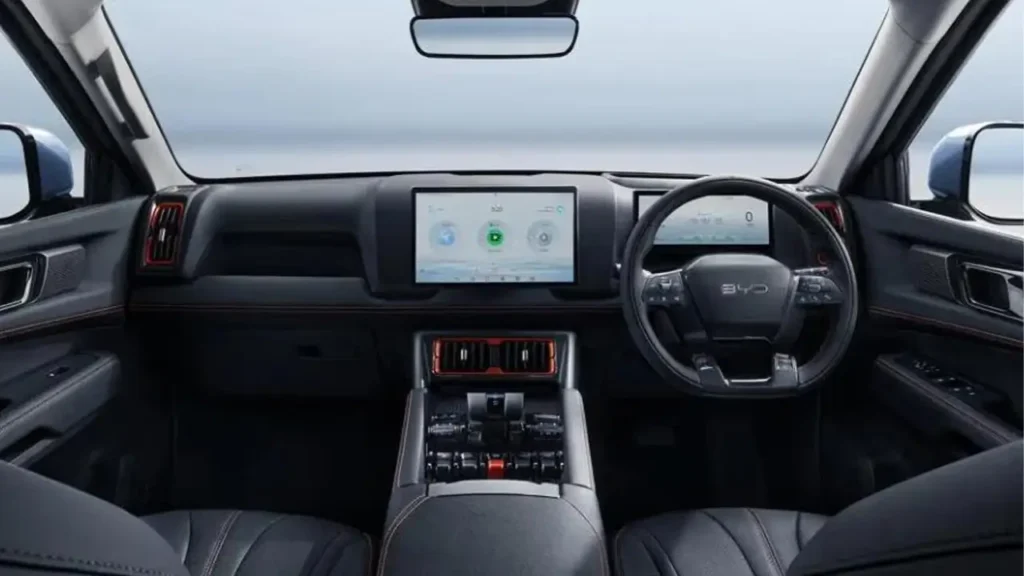
Climb into the Shark 6’s cabin and you’ll immediately notice BYD has taken BYD Shark 6 interior tech seriously. The centerpiece is a massive 12.8-inch rotating touchscreen that handles everything from navigation to climate control. It’s the same unit you’ll find in BYD’s passenger cars, which means it’s responsive, intuitive, and packed with features like wireless Apple CarPlay and Android Auto.
The digital instrument cluster is a 10.25-inch unit that’s crisp and configurable. You can toggle between hybrid system flow diagrams, traditional speedo layouts, or navigation-focused displays. For a ute, this level of tech integration is genuinely impressive—most diesel competitors are still running seven-inch screens with laggy software from 2018.
Material quality is where BYD strikes a smart balance. The dashboard upper is soft-touch, the door cards have proper padding, and the leather-wrapped steering wheel feels solid. You won’t mistake it for a luxury SUV, but compared to entry-level Rangers or Hiluxes, the Shark 6 feels genuinely modern. Storage is practical: big door bins, a decent center console, cupholders that actually fit modern coffee cups, and a wireless phone charger that doesn’t cook your device.
Rear seat space is generous—three adults can sit comfortably on longer trips, which is rare in dual-cabs where the back seats often feel like an afterthought. The floor is nearly flat thanks to the battery placement under the cabin, and there are rear air vents plus USB ports for charging. The BYD Shark 6 hybrid ute review from family buyers consistently highlights this practicality: you can genuinely use this as a daily family hauler without compromise.
If BYD’s Shark 6 is the “hardware punch,” Volkswagen’s China-Tech comeback is the “software counterattack.” For a quick, global-friendly breakdown of VW’s new China partnerships, faster development cycles, and what it means for next-gen models, read: https://autochina.blog/volkswagen-china-tech-partnership-2026/ — it’s a must for China-speed watchers.
Australia pricing, trims, and why it’s booming
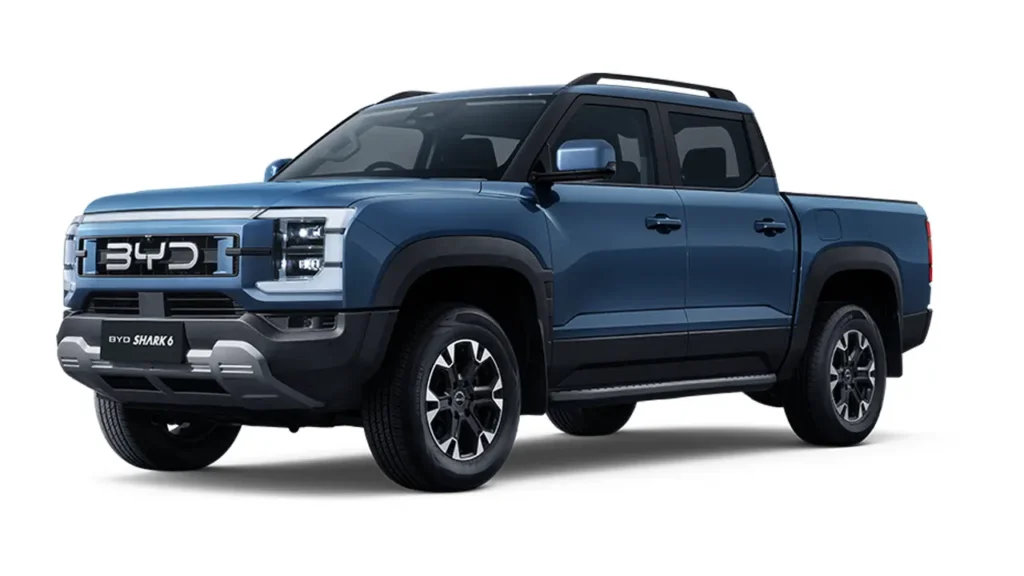
Let’s talk about BYD Shark 6 price Australia, because this is where things get really interesting. BYD launched the Shark 6 in Australia starting at approximately AUD $57,900 drive-away for the base model. The fully loaded Premium variant sits around AUD $65,000. To put that in perspective, a comparable Ford Ranger XLT 4×4 diesel starts closer to AUD $70,000, and the Ranger Wildtrak pushes past AUD $80,000.
You’re getting a plug-in hybrid with 321 kW of power, a massive touchscreen, advanced safety tech, and genuine 4WD capability for thousands less than the market leaders. Australian buyers—particularly tradies and small business owners—are doing the math and realizing the Shark 6 isn’t just cheaper upfront, it’s potentially thousands cheaper per year in fuel costs if they can charge at home or at work.
Who is it for in Australia? The sweet spot is the urban tradie who does 80 percent city driving and 20 percent work site or weekend camping. Think electricians, plumbers, builders who need a tray or can work with the tub, but who also want to commute without burning diesel. Fleet managers are also paying attention—companies running delivery or service fleets in metro areas can slash operating costs dramatically.
And then there’s the growing segment of lifestyle buyers: weekend warriors who want the capability to tow a camper trailer or boat, but who also want something modern and efficient for the school run. The BYD Shark 6 hybrid ute review from Australian media has been overwhelmingly positive, with many praising BYD for actually understanding what the market needs rather than just shipping over a rebadged Chinese-market model.
Mexico & LatAm pricing angle (why exporters care)
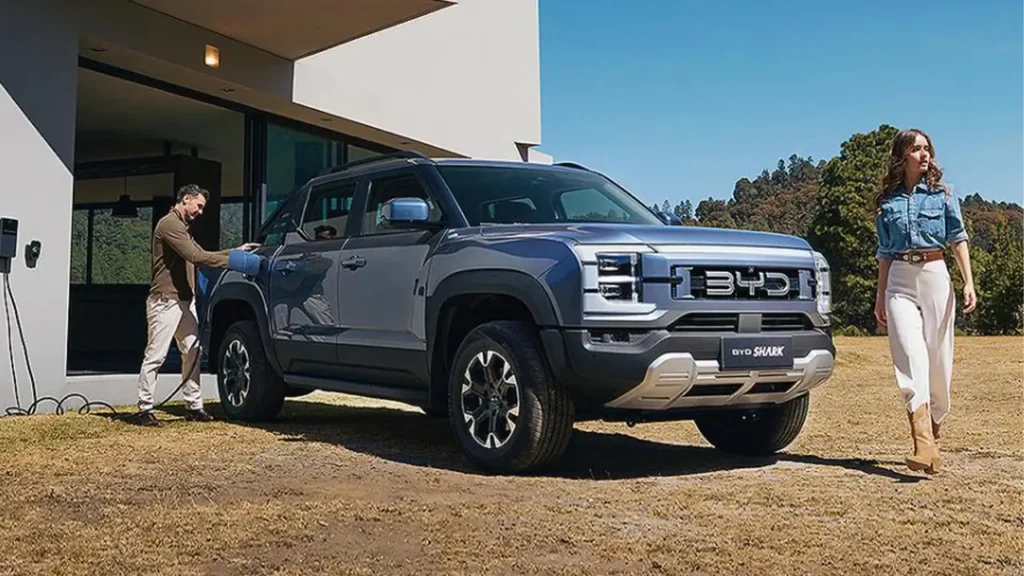
Now let’s shift to BYD Shark 6 price Mexico, because this is where BYD’s global strategy gets fascinating. BYD launched the Shark 6 in Mexico with pricing starting around MXN $899,800 (roughly USD $50,000) for the base trim, with the top Premium variant around MXN $1,050,000 (USD $58,000).
In the Mexican market, this positions the Shark 6 directly against established players like the Ford Ranger, Toyota Hilux, and Chevrolet Colorado. But here’s the kicker: Mexican buyers are incredibly value-conscious, and the hybrid angle isn’t just an eco-friendly novelty—it’s a legitimate cost-saver in a country where fuel prices can fluctuate wildly and long commutes are common.
What makes the Shark 6 click in Mexico? First, the tech. Mexican buyers—especially younger professionals and small business owners—want modern interiors with connectivity, safety features, and creature comforts. The Shark 6 delivers all of this at a price point that undercuts most diesel competitors. Second, the hybrid story resonates in urban centers like Mexico City, Guadalajara, and Monterrey, where traffic congestion makes pure diesel utes inefficient and frustrating. Being able to run on electric power in stop-and-go traffic is a genuine quality-of-life improvement.
Third, BYD is building serious dealer and service infrastructure in Latin America. This isn’t a fly-by-night operation—they’re investing in after-sales support, parts availability, and local partnerships. The BYD Shark 6 hybrid ute review in Mexican automotive media has focused heavily on this: buyers want assurance that they’re not buying an orphan vehicle.
Across wider Latin America—Chile, Colombia, Brazil (where BYD has local production plans)—the value proposition is similar. The Shark 6 offers first-world tech and hybrid efficiency at a price that makes sense for markets where pickup trucks are workhorses, family vehicles, and status symbols all rolled into one.
Head-to-head: what it gets right vs the benchmark
Let’s be direct: when people shop for a dual-cab ute, they’re cross-shopping against the BYD Shark 6 vs Ford Ranger comparison. The Ranger is the segment benchmark in Australia and much of Latin America, so it’s the natural measuring stick. Here’s a practical breakdown of where each truck wins and loses.
| Category | BYD Shark 6 | Ford Ranger (XLT/Wildtrak) |
|---|---|---|
| Power/Torque | 321 kW / 650 Nm (hybrid) | 154 kW / 500 Nm (diesel) |
| Towing | 2,500 kg | 3,500 kg |
| Payload | 835 kg | 1,000+ kg (varies by trim) |
| Fuel efficiency (combined) | ~2.0 L/100km (NEDC, ideal) | ~8.0 L/100km (diesel) |
| Electric-only range | 100 km | N/A |
| Price (Australia, base) | ~AUD $57,900 | ~AUD $70,000+ |
| Interior tech | 12.8″ rotating screen, modern UI | 10.1″ SYNC4 (Wildtrak), solid but less flashy |
| Dealer network | Growing (BYD expanding) | Mature, extensive |
| Resale value | Unknown (too new) | Strong, proven |
The Ranger wins on absolute towing capacity, payload, and established reputation. If you regularly tow 3+ tons or need maximum payload for commercial work, the Ranger is still the safer bet. But the Shark 6 counters with significantly lower running costs, more power, better tech, and a cheaper entry price. For most buyers who rarely max out their ute’s capabilities, the BYD Shark 6 hybrid ute review suggests the Shark 6 is the smarter everyday choice.
Workhorse metrics that decide the purchase
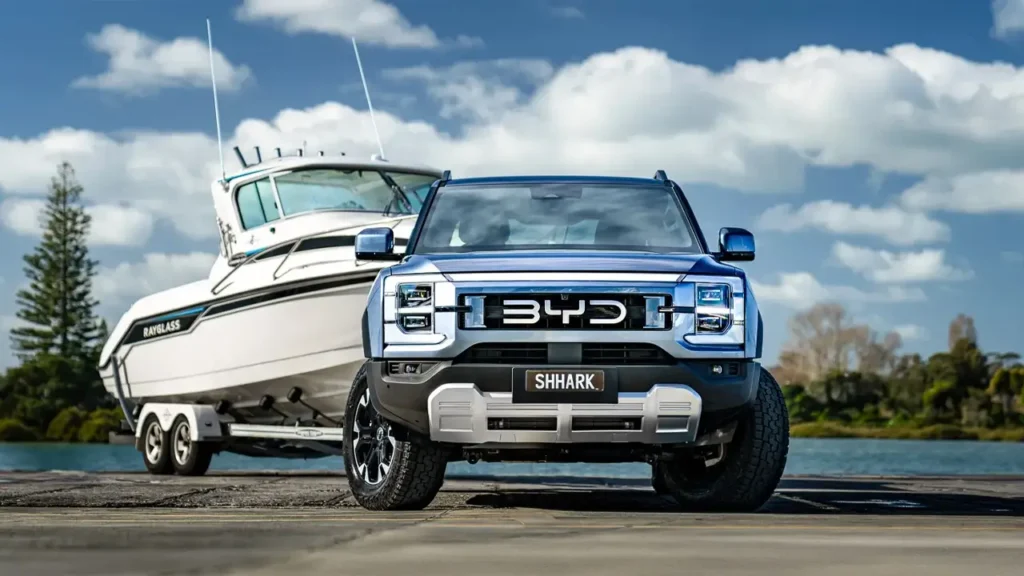
Let’s talk about the BYD Shark 6 towing capacity honestly, because this is where some buyers get nervous. The official braked towing capacity is 2,500 kg. That’s less than the Ranger’s 3,500 kg or the HiLux’s 3,500 kg. For many buyers, that’s a dealbreaker—if you’re regularly towing a 3-ton caravan or loaded plant trailer, the Shark 6 isn’t your truck.
But here’s context: most dual-cab owners never tow more than 2,000 kg. A typical single-axle boat trailer, camper trailer, or car trailer sits well under the Shark 6’s limit. The limitation comes from the hybrid system’s weight and BYD’s conservative ratings for debut markets. Payload at 835 kg is also lower than traditional diesel competitors, again due to battery weight. If you’re a builder who needs to carry a full tonne of materials in the tub, you’ll need to be strategic or look elsewhere.
Where the Shark 6 shines is in practical work-site features. The 3.3 kW V2L (vehicle-to-load) capability is a game-changer. You can plug power tools directly into the truck—drills, saws, air compressors—without needing a separate generator. For tradies, this is genuinely useful and saves money on equipment. The bed itself is aluminum, well-sized, and includes decent tie-down points. It’s not class-leading, but it’s competent.
The BYD Shark 6 hybrid ute review from actual tradies highlights a key point: this isn’t the ute for heavy-duty commercial abuse, but it’s perfect for light commercial work combined with family use. Think landscapers, sparkies, or small renovation contractors who need a tool carrier and family hauler in one package.
Hybrid system explained without the boring textbook
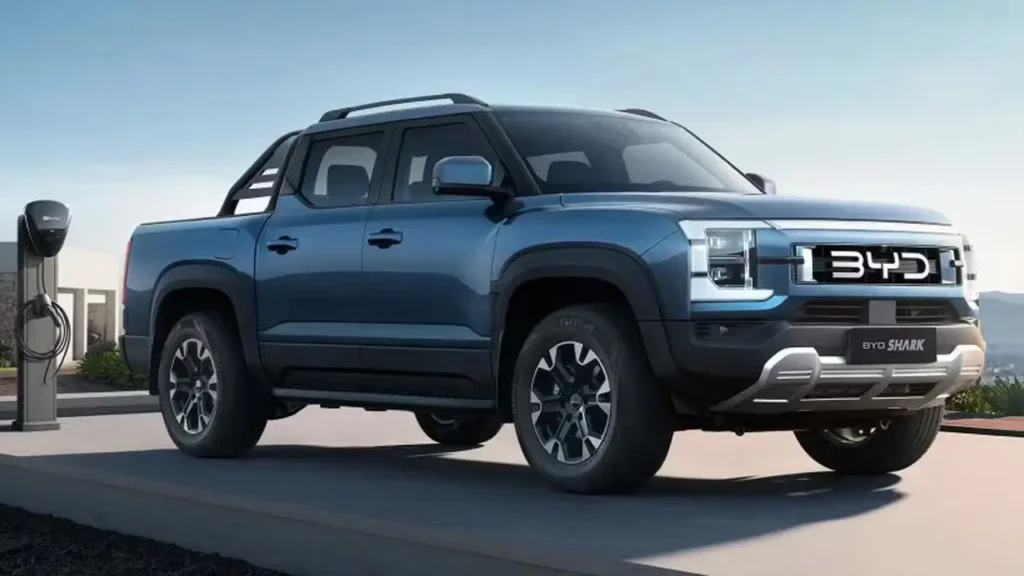
The BYD Shark 6 PHEV range is built around BYD’s DM-O (Dual Mode Off-road) hybrid architecture. Here’s how it works in plain English: there’s a 1.5-liter turbocharged petrol engine up front that primarily acts as a generator and occasional power booster. The main propulsion comes from two electric motors—one driving the rear axle, one integrated with the front axle.
The 29.58 kWh battery (using BYD’s Blade LFP chemistry, which is safer and longer-lasting than traditional lithium batteries) gives you approximately 100 km of pure electric range under NEDC testing. Real-world? Expect closer to 70–80 km in mixed conditions, maybe 60 km if you’re doing highway speeds or have the air con blasting. That’s still enough for most daily commutes without burning any fuel.
Charging is straightforward: using a standard home wallbox (7 kW AC), you’ll fully charge from empty in about 4–5 hours. If you’re plugging into a regular household socket, expect overnight charging. There’s no DC fast charging—this is a plug-in hybrid, not a full EV, so the expectation is you’ll charge at home or work overnight.
The real magic happens when you run out of battery. The petrol engine kicks in to generate electricity, and the truck operates as a series hybrid. Fuel consumption in this mode is dramatically better than a traditional diesel because the engine runs at optimal efficiency rather than being directly tied to your right foot. BYD claims as low as 7–8 L/100km in hybrid mode, which is impressive for a 2.5-ton truck with this much power.
For most buyers, the charging habit becomes simple: plug in every night, drive electric during the week, and let the hybrid system handle weekend trips or longer hauls. The BYD Shark 6 hybrid ute review from owners consistently mentions this: once you adapt to the routine, it’s effortless and genuinely saves money.
Real-world ownership: costs + driving outside the city
Let’s talk BYD Shark 6 fuel economy in the real world, because NEDC numbers are always optimistic. If you’re charging daily and doing mostly urban driving, you can realistically expect to run electric-only for 70 percent of your kilometers. That means your effective fuel consumption might be 2–3 L/100km averaged over a week. If you’re not charging regularly or doing lots of highway work, expect closer to 8–9 L/100km, which is still competitive with modern diesels but not revolutionary.
The savings add up fast. If you’re doing 20,000 km per year in a traditional diesel ute averaging 10 L/100km at AUD $2.00/L, you’re spending AUD $4,000 on fuel annually. With the Shark 6, assuming 70 percent electric driving with home charging at AUD $0.25/kWh and 30 percent hybrid mode, you’re looking at roughly AUD $1,200 in electricity plus AUD $1,000 in fuel—call it AUD $2,200 total. That’s AUD $1,800 saved per year, which over five years covers a significant chunk of the purchase price difference.
Servicing is another factor. BYD recommends 12-month or 15,000 km intervals, and early reports suggest costs are comparable to traditional diesel utes, though long-term data is still emerging. Warranty is solid: 6 years/150,000 km for the vehicle, 8 years/160,000 km for the battery.
Traction, ground clearance logic, dirt roads, beach, farm tracks
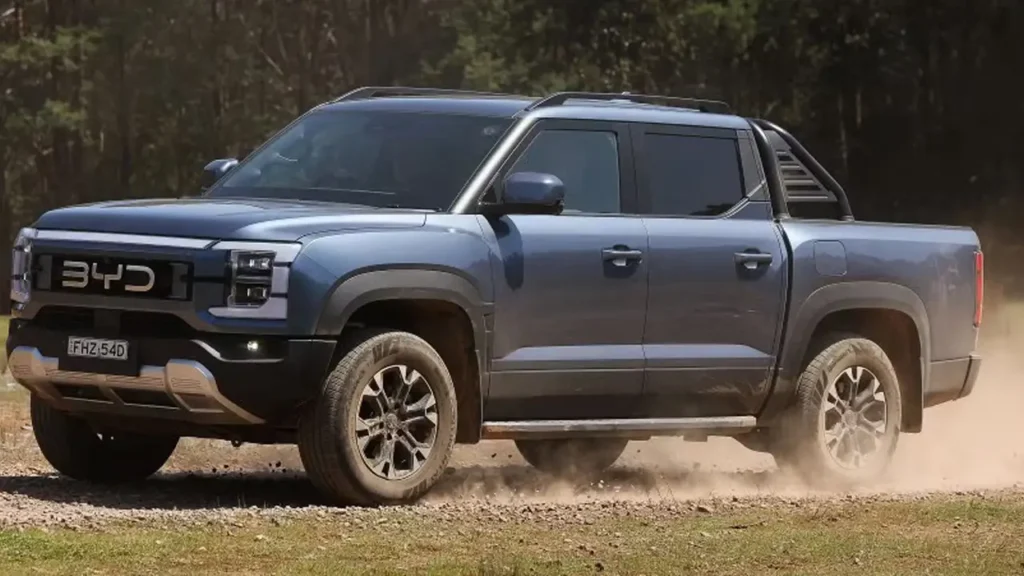
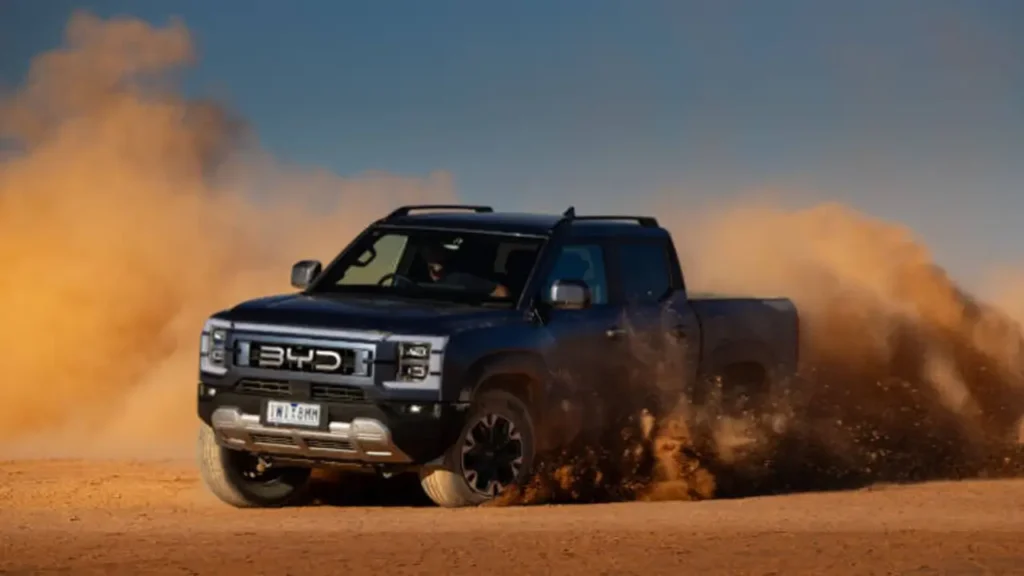
The BYD Shark 6 off-road review consensus is clear: this is a surprisingly capable dirt-road warrior, though it’s not a hardcore off-roader. With 230 mm of ground clearance, approach and departure angles of 24.5° and 29.5° respectively, and a proper 4WD system with low-range gearing, the Shark 6 handles farm tracks, beach driving, and graded dirt roads confidently.
The hybrid system’s instant torque from the electric motors is actually an advantage off-road—you get precise low-speed control without the diesel lurch and clutch slip. Beach driving works well thanks to the torque and 4WD traction. Where it struggles is in deep ruts or extreme rock crawling—the battery placement means you’re more cautious about scraping, and the overall weight makes it less nimble than lighter diesel competitors.
For most buyers—weekend campers, farmers, beach fishermen—the Shark 6’s off-road ability is entirely adequate. If you’re a serious four-wheel driver tackling Cape York or remote desert tracks, you’ll want something with better underbody protection and proven remote-area support.
Pros & Cons
Pros:
- Genuinely low running costs if you can charge regularly
- Impressive power and instant torque delivery
- Modern, high-tech interior that feels premium
- Competitive pricing compared to established rivals
- Useful V2L capability for tradies
- Smooth, quiet electric driving for daily use
Cons:
- Lower towing capacity than diesel competitors
- Reduced payload due to battery weight
- Unproven long-term reliability and resale value
- Smaller dealer network than Ford/Toyota
- Heavier weight affects agility and dirt-road confidence
- NEDC range claims are optimistic for real-world use
User reviews (real scenarios)
Scenario 1: Family hauler + weekend camper (Sydney) “We’ve had the Shark 6 for six months, and it’s replaced our old Ranger. Daily school runs and commuting are now basically free—we charge overnight and rarely use petrol during the week. Weekends, we tow a 1,800 kg camper trailer up to the South Coast or the Blue Mountains, and the hybrid system handles it smoothly. The only adjustment is planning longer trips carefully—you’ll use more fuel when towing, so don’t expect EV range with a load on.”
Scenario 2: Sparky running metro service calls (Melbourne) “Best work decision I’ve made. I do 6–8 jobs a day around Melbourne, mostly short hops between suburbs. I charge at home every night and haven’t filled the tank in three weeks. The V2L is brilliant—I can run my tools without lugging a genny, and clients love that it’s quieter. Only downside is payload—I had to be smart about what I carry in the tub, but for electrical work it’s more than enough.”
Scenario 3: Small business fleet manager (Guadalajara, Mexico) “We bought three Shark 6s for our delivery team. The fuel savings are real—we’re seeing 60 percent reductions in monthly fuel costs compared to our old diesel Colorados. Maintenance has been straightforward, and BYD’s local service partner has been responsive. The big win is driver satisfaction—the trucks feel modern and comfortable, which helps with retention.”
Scenario 4: Rural property owner (regional Queensland) “I was skeptical, but the Shark 6 works surprisingly well on our property. Most days it’s just moving between paddocks, checking fences, light towing—all stuff the electric range handles. When we need to tow the horse float or drive into town (80 km each way), the hybrid system does the job. It’s not a LandCruiser, but for a modern farm ute that’s cheap to run, it’s solid.”
Scenario 5: Lifestyle buyer (coastal NSW) “Bought it for beach fishing trips and the occasional weekend away. The electric mode is fantastic for beach driving—smooth, quiet, and you’re not spewing diesel fumes while setting up camp. Towing our tinnie is easy. Only complaint is the weight—you feel it in sand if you’re not careful with tire pressures. Overall, it’s a great compromise between capability and efficiency.”
Final verdict — who should buy it globally (and who shouldn’t)
The BYD Shark 6 hybrid ute review verdict is nuanced, because this truck is genuinely brilliant for some buyers and completely wrong for others.
You should buy the Shark 6 if:
- You do mostly urban or suburban driving with regular access to home/work charging
- You want modern tech and a premium interior feel without paying luxury prices
- Your towing needs are under 2,500 kg and payload needs are under 800 kg
- You value low running costs and environmental credentials
- You’re open to trying a Chinese brand with solid product backing
- You want V2L capability for work or camping
You shouldn’t buy the Shark 6 if:
- You regularly tow over 2,500 kg or max out payload capacity
- You can’t reliably charge at home or work (you’ll just be driving a heavy, expensive hybrid)
- You need proven long-term reliability and strong resale value for business depreciation
- You require extensive remote-area dealer support for outback travel
- You’re uncomfortable being an early adopter of a new brand in this segment
Globally, the Shark 6 represents BYD’s serious intent to compete beyond EVs. In Australia and Mexico, it’s already proving that Chinese manufacturers can deliver genuine value and capability in the most competitive, conservative segments. The hybrid ute isn’t a fad—it’s the next logical evolution for buyers who want truck capability without truck-sized fuel bills.
If you’re curious about how Chinese automotive innovation is reshaping global markets, or you want deeper dives into export models like the Shark 6, check out the latest reviews and market analysis at www.autochina.blog. We’re tracking every move in the global expansion of Chinese brands, from hybrid utes to electric SUVs, with the context and detail enthusiasts actually want.
The BYD Shark 6 isn’t perfect, but it’s proof that the global ute market is changing—fast. For the right buyer, it’s a genuinely smart choice that saves money, delivers performance, and challenges everything we thought we knew about what “Chinese trucks” can do.
Discover more from AutoChina
Subscribe to get the latest posts sent to your email.