When the Toyota Urban Cruiser EV europe price was announced at €31,990 in Germany and £29,995 in the UK, it marked a fascinating moment in automotive history. Here’s a Japanese badge selling Chinese battery technology wrapped in a Suzuki-developed platform, and somehow, it’s working better than if BYD tried selling the same thing directly to Europeans.
The Urban Cruiser represents Toyota’s second fully electric SUV after the bZ4X, but more importantly, it’s a textbook case of how brand perception shapes value in the EV market. Europeans are willing to pay a premium for Toyota reliability, even when the core technology comes from elsewhere.
Toyota Urban Cruiser EV — European Market Snapshot
A technical overview of pricing and specifications across key European markets for the 2026 launch phase.
| Market | Starting Price | Battery Options | WLTP Range | DC Charging (10-80%) | Market Notes |
|---|---|---|---|---|---|
| Germany | €31,990 | 49 kWh / 61 kWh | 344 – 426 km | ~45 minutes | FWD standard; AWD available in select configurations. |
| United Kingdom | £29,995 | 49 kWh / 61 kWh | 213 – 264 miles | ~45 minutes | Sales commenced Dec 2025; Deliveries scheduled for Q1 2026. |
| Spain (Est.) | ~€35,000 | 49 kWh / 61 kWh | 344 – 426 km | ~45 minutes | Final pricing and availability pending official confirmation. |
Toyota Urban Cruiser EV Europe Price — Market Positioning Across EU/UK
The Toyota Urban Cruiser EV europe price strategy reveals something interesting about how legacy automakers price badge engineering in 2026. In the UK, the entry-level Icon trim starts at £29,995 with the smaller 49 kWh battery pack. That’s competitive on paper, positioning it against the Ford Puma Gen-E and below the Kia EV3’s starting price.
However, there’s a catch most buyers will quickly discover. The Icon trim is limited to the smaller battery, giving you a WLTP range of just 213 miles. For many European drivers doing school runs and supermarket trips, that’s adequate. But step up to the Design trim with the 61 kWh battery, and you’re looking at a different price bracket entirely. UK pricing suggests the larger battery models will push toward the mid-to-upper £30,000 range, with the top Excel trim potentially touching £37,000.
What makes this fascinating is how Toyota’s positioned itself at the premium end of the B-SUV segment. The brand is betting that buyers will pay more for Toyota reliability and dealer network access, even when cheaper alternatives exist. The Citroën ë-C3 Aircross undercuts the Urban Cruiser by nearly £10,000. The Renault 4 comes in £7,500 cheaper. Yet Toyota believes its brand equity justifies the premium.
Across Europe, the Toyota Urban Cruiser EV europe price varies by market, with Germany’s €31,990 entry point making it one of the more accessible markets for the model. Spanish buyers can expect prices around €35,000 for the base configuration, though official confirmation is pending.
If Toyota’s rebadged EV strategy proves one thing, it’s this: tech wins when it feels human and trustworthy. The same shift is happening in voice AI — where the next leap isn’t smarter commands, but real emotional understanding. Here’s why Hume AI’s Empathic Voice Interface (EVI) is a big deal: https://aiinovationhub.com/aiinnovation-hume-ai-empathic-voice-interface/
Germany’s Pricing and Its Importance for All of Europe
Germany matters disproportionately in European EV pricing, and the Toyota Urban Cruiser EV europe price in Germany at €31,990 serves as the benchmark other markets reference. Why? Germany is Europe’s largest automotive market, and pricing decisions made for German consumers ripple across the continent.
At €31,990, Toyota’s positioned the Urban Cruiser as a mid-market option in Germany’s crowded B-SUV segment. This pricing includes the standard heat pump for climate efficiency and the company’s Battery Care Program. German buyers can finance from approximately €340 monthly, making it accessible for middle-class families looking to transition to electric.
What’s particularly relevant about Germany’s pricing is how it compares to local incentives. Unlike some EU markets where government subsidies can dramatically reduce effective purchase prices, Germany’s current EV incentive landscape is more modest. The Urban Cruiser’s pricing needs to stand on its own merit, not propped up by disappearing government checks.
The German market also serves as a competitive pressure test. With manufacturers like Volkswagen, Skoda, and increasingly Chinese brands like BYD establishing strong dealer networks, Toyota can’t simply rely on brand loyalty. The €31,990 price point acknowledges this reality while still maintaining enough margin to justify Toyota’s quality reputation.
European automotive journalists often use Germany as the reference point for comparison reviews, meaning the Toyota Urban Cruiser EV europe price in Germany becomes the de facto standard for evaluating value across the continent. When French buyers see €31,990 in Germany, they calibrate expectations accordingly for their market, even if local pricing varies by a few thousand euros.
Range Without Magic: WLTP Numbers and Real-World Battery Logic
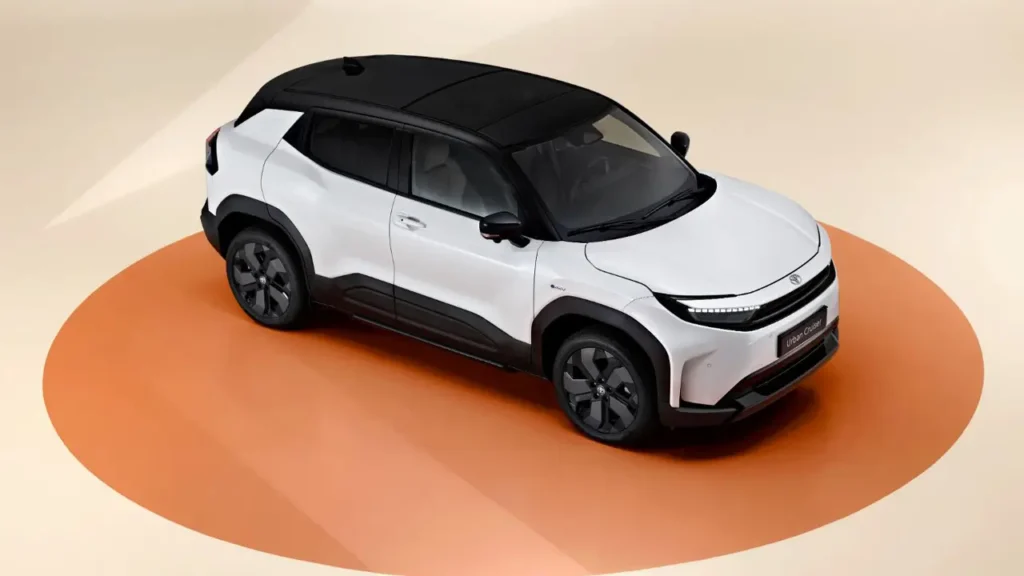
The Toyota Urban Cruiser EV range WLTP figures tell a story about choosing durability over maximum distance. The 49 kWh battery delivers 344 km (213 miles) in front-wheel-drive configuration, while the larger 61 kWh pack extends that to 426 km (264 miles). These aren’t segment-leading numbers, and Toyota knows it.
Compare this to the Kia EV3, which offers 350-plus miles from a slightly smaller 58.3 kWh battery. The Skoda Elroq pushes even further. So why is the Toyota Urban Cruiser EV range WLTP less impressive? The answer lies in battery chemistry and platform compromises.
Toyota opted for lithium-iron-phosphate (LFP) battery technology throughout the Urban Cruiser lineup. LFP cells have lower energy density than the NMC (nickel-manganese-cobalt) chemistry many competitors use. This means you need more physical battery volume to store the same energy. But LFP brings advantages: longer lifespan, better thermal stability, and lower material costs. Toyota’s betting that buyers will value decade-long battery durability over an extra 50 miles of range.
The platform itself, developed jointly with Suzuki, was designed to accommodate LFP’s lower density without compromising interior space. By eliminating crossmembers in the floor, Toyota created room for the bulkier battery packs. The 2,700 mm wheelbase helps maintain cabin space despite the battery packaging constraints.
Real-world testing tells a more sobering story than WLTP figures. Early UK reviews in cold, rainy conditions reported efficiency around 2.3 miles per kWh, putting actual range closer to 120-210 miles depending on driving conditions. That’s significantly below WLTP claims, though not unusual for EVs in adverse weather. The standard heat pump should help in cold climates, but winter driving will still see substantial range reduction.
For European buyers, the Toyota Urban Cruiser EV range WLTP figures need context. If your daily driving stays within 100 miles, even the smaller battery works fine. If you regularly do 200-mile motorway runs, you’ll want the 61 kWh pack and should plan for charging stops. Toyota’s not selling magic range here, just honest capacity with the expectation that buyers charge at home most nights.
Charging and the Bottleneck: 10-80% and Buyer Expectations
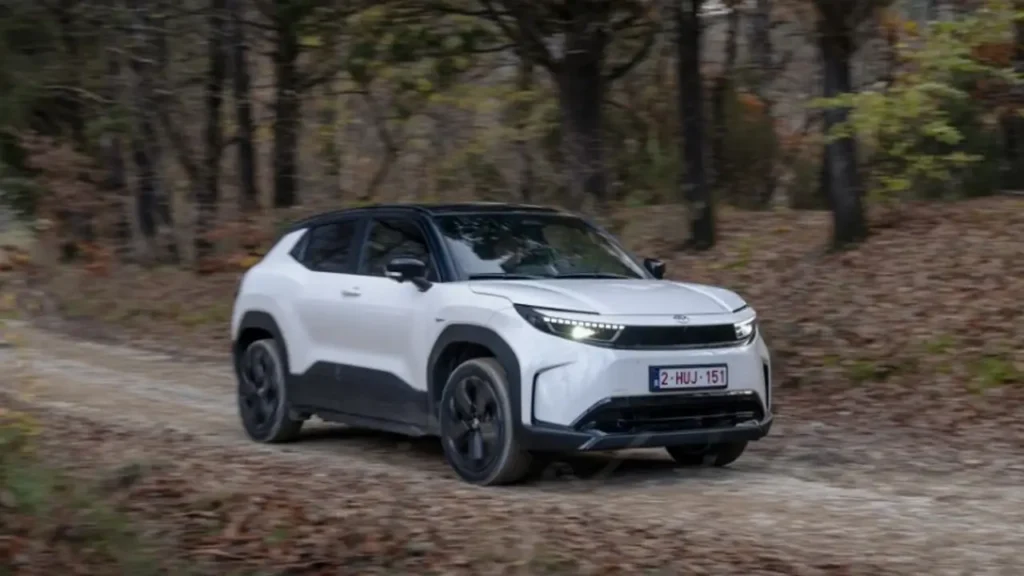
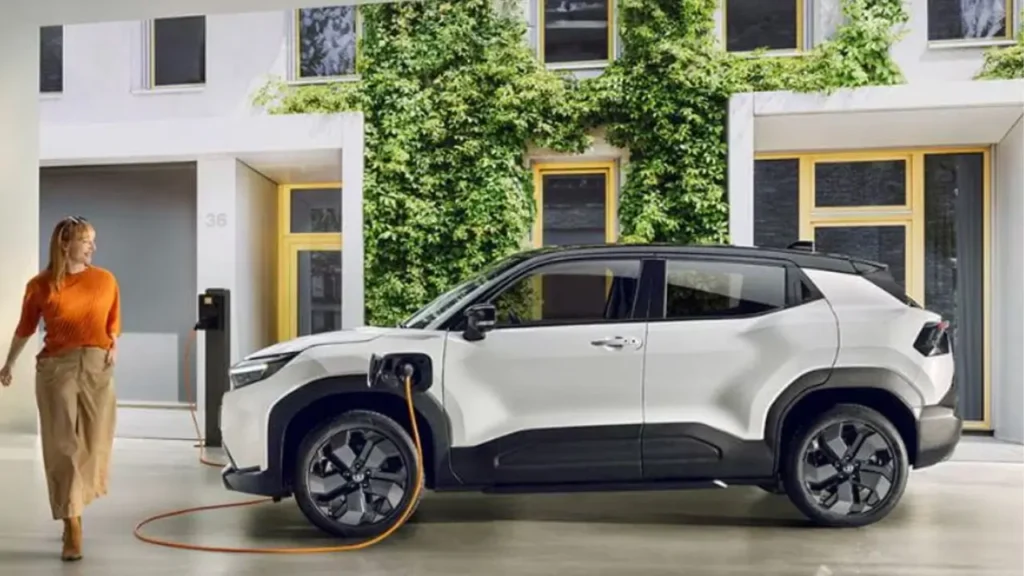
The Toyota Urban Cruiser EV charging time 10-80 sits at approximately 45 minutes on DC fast charging, which positions it firmly in previous-generation EV territory. This isn’t competitive with newer rivals sporting 800-volt architectures, but it reflects the platform’s development timeline and cost targets.
Let’s be specific about what this means practically. The 61 kWh battery maxes out at around 125 kW DC charging power, while the smaller 49 kWh pack peaks at roughly 80 kW. These aren’t terrible numbers for urban-focused buyers who charge at home, but they create friction for anyone planning regular long-distance travel.
Compare the Toyota Urban Cruiser EV charging time 10-80 to competitors: the Kia EV3 Standard Range charges in about 30 minutes, the Ford Puma Gen-E manages roughly 25 minutes. That 15-20 minute difference compounds on multi-stop road trips. If you’re driving from London to Edinburgh, those extra stops add meaningful time.
Toyota’s included battery preconditioning as a manually activated feature, which helps optimize charging speeds when you know you’re heading to a rapid charger. The heat pump works in conjunction with this to maintain ideal battery temperature. In practice, this means winter charging sessions won’t be as dramatically slowed as they would be without thermal management.
The 11 kW AC charging capability for home wallboxes is adequate. Most UK and European buyers installing home charging will see full overnight charges regardless of battery size. This is where the Toyota Urban Cruiser EV charging time 10-80 matters less, because home charging happens during sleep hours anyway.
What’s interesting about Toyota’s charging strategy is the Battery Care Program guarantee: 70% capacity retention for up to 10 years or one million kilometers, contingent on annual battery health checks. This suggests Toyota’s optimizing for battery longevity over charging speed. Slower charging with LFP chemistry should, in theory, extend battery life compared to more aggressive NMC charging profiles.
For European buyers, the Toyota Urban Cruiser EV charging time 10-80 becomes a lifestyle question. If you rarely drive beyond your daily range, it’s irrelevant. If you regularly do 300-mile trips, you’ll feel every minute of that 45-minute charging stop.
Chinese Technology Under a Japanese Badge: The BYD LFP Blade Connection
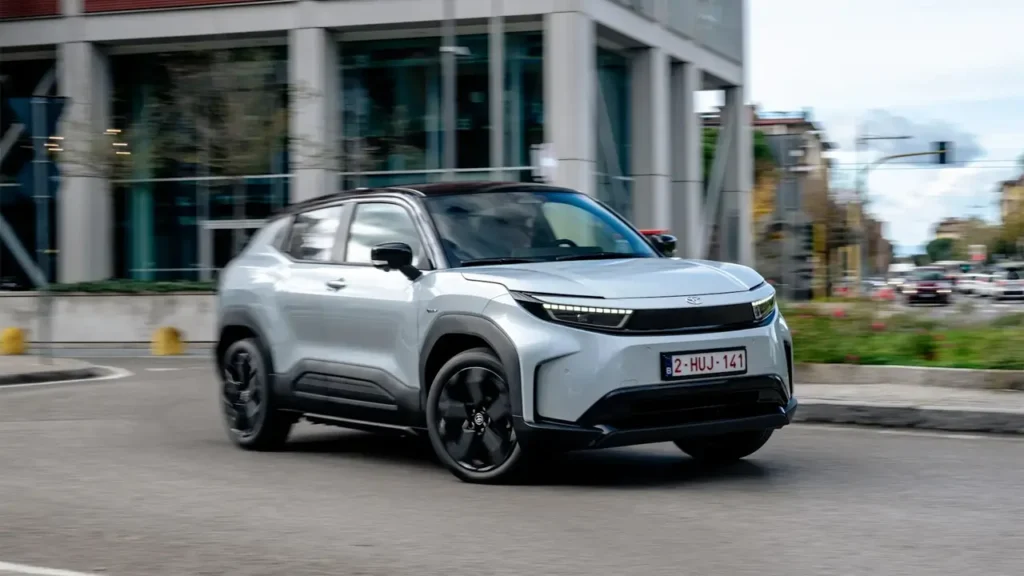
The Toyota Urban Cruiser EV BYD LFP battery story is one of the most interesting angles in this entire launch. While Toyota hasn’t explicitly confirmed BYD as the battery supplier, industry analysis strongly suggests the 49 kWh and 61 kWh LFP packs are sourced from BYD. This makes sense on multiple levels.
BYD pioneered the Blade Battery technology using LFP chemistry, creating thin, flat cells that maximize space efficiency while maintaining thermal safety. The Toyota Urban Cruiser EV BYD LFP battery connection represents a fascinating reversal of traditional automotive supply chains. A Chinese manufacturer supplying critical technology to a Japanese legacy automaker would have been unthinkable a decade ago.
Why would Toyota use BYD batteries? Cost and capacity. BYD has become the world’s leading LFP battery manufacturer, with economies of scale that make their cells highly competitive on price. For a B-segment SUV targeting €30,000-35,000 pricing, every euro of component cost matters. Sourcing from BYD allows Toyota to maintain margins while offering competitive pricing.
The technology itself offers real advantages. LFP chemistry is inherently safer than NMC, with lower risk of thermal runaway. The cells tolerate deep discharge cycles better, which aligns with Toyota’s 10-year capacity retention guarantee. LFP batteries also perform more consistently in hot climates, relevant for southern European markets.
The trade-off, as discussed earlier, is energy density. The Toyota Urban Cruiser EV BYD LFP battery configuration requires more physical space for equivalent energy storage compared to NMC alternatives. This impacts vehicle packaging and explains why the Urban Cruiser can’t match the range-per-kWh efficiency of some competitors.
What’s particularly notable is how European buyers react to this technology origin. If BYD tried selling the same battery pack in a BYD-badged B-SUV at similar pricing, market reception would be more skeptical. Put it in a Toyota, and suddenly it’s acceptable, even desirable. The Toyota badge provides technological credibility that Chinese manufacturers still struggle to achieve in European markets.
This dynamic explains why the Toyota Urban Cruiser EV BYD LFP battery strategy works commercially, even if the technical specs aren’t class-leading. Buyers trust Toyota’s validation of the technology more than they’d trust a direct Chinese import. It’s badge engineering working as intended, but at the component level rather than just the vehicle level.
Is This a Rebadge? The Suzuki e-Vitara Connection and What Toyota Actually Changes
The Toyota Urban Cruiser EV vs Suzuki e Vitara comparison reveals the modern reality of automotive partnerships. These vehicles share the Heartect-e platform, battery packs, motors, and most interior components. They’re mechanical twins developed through Toyota and Suzuki’s global product-sharing agreement.
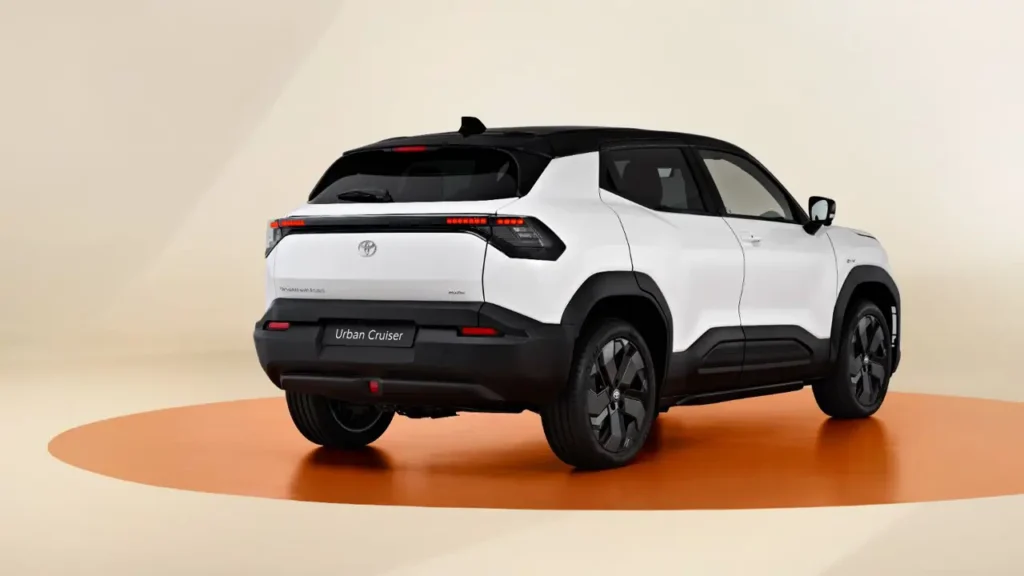
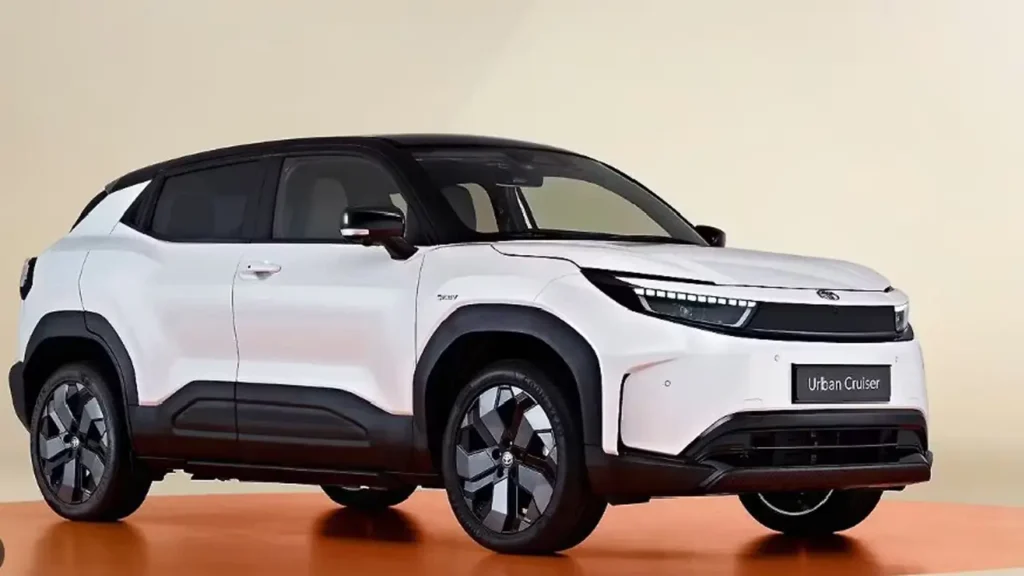
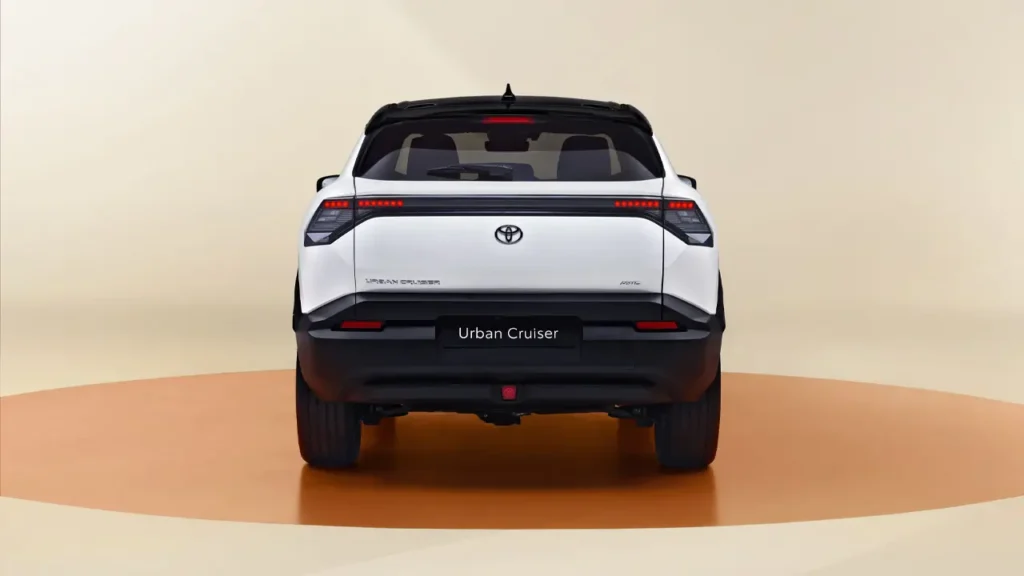
Walk around both vehicles, and the differences become apparent. The Urban Cruiser features Toyota’s distinctive “hammerhead” front lighting signature, seen previously on the Prius and Crown models. The grille treatment and lower bumper design differ from the e-Vitara’s more rugged aesthetic. Rear light graphics are unique to each brand. These aren’t revolutionary differences, but they’re enough to establish separate visual identities.
Inside, the Toyota Urban Cruiser EV vs Suzuki e Vitara comparison gets more nuanced. Both use the same basic dashboard architecture, dual-screen layout (10.25-inch driver display, 10.1-inch infotainment), and floating center console design. The primary difference is color scheme: Suzuki offers a brown and black dual-tone option, while Toyota opts for an all-black interior in the UK market. Materials quality appears similar, though some reviewers note slightly different plastic textures.
The mechanical Toyota Urban Cruiser EV vs Suzuki e Vitara specification sheet is nearly identical. Same battery options, same motors, same charging capabilities. The critical difference for European buyers: the UK-market Urban Cruiser is front-wheel-drive only, while Suzuki offers the AWD version with dual motors producing 181 hp. Toyota has reserved AWD variants for other markets, potentially to avoid internal competition with higher-margin models.
What Toyota brings to the partnership is its renowned dealer network and after-sales service. European Toyota dealers have established reputations for reliability and customer service that Suzuki struggles to match in some markets. This intangible value justifies Toyota’s slight price premium over the mechanically identical e-Vitara.
The software layer is where Toyota makes its mark. The infotainment system, while slow by current standards according to reviewers, uses Toyota’s interface and integrates with the MyToyota app for remote vehicle management. This software ecosystem, familiar to existing Toyota owners, provides continuity that matters for brand loyalty.
In the Toyota Urban Cruiser EV vs Suzuki e Vitara debate, the question isn’t whether they’re the same vehicle underneath—they obviously are. The question is whether Toyota’s brand equity, dealer network, and software integration justify a price premium. For many European buyers, particularly those already in the Toyota ecosystem, the answer is yes.
Dimensions, Wheelbase, Cabin: Why a B-SUV Can Work as a Family Vehicle
The Toyota Urban Cruiser EV dimensions wheelbase measurement of 2,700 mm is the key to its surprisingly spacious interior. At 4,285 mm long, 1,800 mm wide, and 1,640 mm tall, the Urban Cruiser slots into the compact B-SUV segment. But that 2,700 mm wheelbase is 140 mm longer than the Yaris Cross, creating disproportionate interior room relative to external footprint.
This is where EV architecture pays dividends. Without a transmission tunnel or exhaust routing, the floor can be entirely flat. The Toyota Urban Cruiser EV dimensions wheelbase advantages translate directly into rear legroom. The sliding rear bench adjusts legroom from 690 mm to 850 mm, allowing flexibility between passenger comfort and cargo capacity.
Two six-foot adults fit comfortably in the back seats when slid rearward, though headroom is slightly compromised compared to taller SUVs. For families with children or teens, the space works well. The 60:40 split-folding rear seats add practicality. Cargo volume ranges from 320 liters with seats forward to approximately 703 liters with seats folded flat—not class-leading but adequate for a vehicle this size.
The elevated driving position, characteristic of SUVs, combines with the Toyota Urban Cruiser EV dimensions wheelbase to create excellent outward visibility. Slim A-pillars and large side windows provide clear sightlines at junctions. The relatively short overhangs (front and rear) make urban parking manageable, with a tight 5.2-meter turning radius.
Where the Toyota Urban Cruiser EV dimensions wheelbase configuration struggles is in comparison to larger rivals at similar prices. The Ford Puma Gen-E offers 523 liters of boot space, significantly more than the Urban Cruiser. The Kia EV3 provides similar rear legroom but with more generous headroom throughout.
Ground clearance sits at 180 mm, sufficient for typical European road conditions but not pretending to be a serious off-roader. The 750 kg towing capacity across all variants (including AWD versions in markets where available) allows small trailer use, though this isn’t a primary use case for most B-SUV buyers.
For European families considering the Toyota Urban Cruiser EV dimensions wheelbase package, the calculus depends on actual needs. If you’re carrying two adults and two children regularly, with occasional luggage, it works. If you frequently load sports equipment, camping gear, or bulky items, the compromised cargo volume compared to slightly larger rivals becomes limiting.
The 18-inch wheels on Icon trim or 19-inch wheels on Excel variants provide a reasonable ride height without the fuel economy penalties of larger rolling stock. Tire and wheel availability across Europe should be straightforward given these are common sizes.
Trim Levels and What Toyota’s Actually Selling (Not Just What the Factory Built)
The Toyota Urban Cruiser EV trims Icon Teamplayer Lounge structure initially appeared confusing, but UK specifications clarified the actual offering: Icon, Design, and Excel. These trim levels represent Toyota’s attempt to create clear value propositions across different buyer segments.
Icon starts at £29,995 and serves as the entry point. Standard equipment includes 18-inch alloy wheels, the dual-screen digital setup, sliding rear seats, heat pump, blind spot monitoring, rear-view camera, pre-collision system, adaptive cruise control, and lane trace assist. This is a well-equipped base model by European standards, missing premium features but covering essential safety and comfort.
The limitation of Icon is battery choice. You’re locked into the 49 kWh pack and 142 hp motor, which means 213 miles WLTP range. For urban-focused buyers or those with reliable home charging, this works. For everyone else, it’s a non-starter.
Design trim addresses the range anxiety issue by requiring the 61 kWh battery and more powerful 172 hp motor. This pushes range to 264 miles WLTP. Beyond the powertrain upgrade, Design adds heated front seats, heated steering wheel, heated door mirrors with auto-retract, and windscreen wiper de-icer. These cold-weather features make sense for European climates where winter driving is common. Design is expected to be the volume seller in most markets.
Excel tops the Toyota Urban Cruiser EV trims Icon Teamplayer Lounge hierarchy (using the actual UK names rather than the European variations). At an estimated £37,000, Excel brings 19-inch wheels, JBL premium audio system, wireless phone charger, fixed glass sunroof with manual shade, LED headlights with adaptive high-beam system, panoramic view monitor (360-degree camera), and upholstery combining fabric with high-quality synthetic leather. This is the specification aimed at buyers cross-shopping with premium compact SUVs like the Volvo EX30 or Mini Aceman.
What Toyota’s selling with these Toyota Urban Cruiser EV trims Icon Teamplayer Lounge tiers isn’t just equipment lists—it’s buyer psychology. Icon targets pragmatic buyers who want Toyota reliability at the lowest entry point. Design serves families needing practical range and cold-weather comfort. Excel appeals to empty-nesters or professionals who want a premium feel without stepping up to C-segment pricing.
The absence of AWD in UK specifications simplifies the decision tree but limits appeal to buyers specifically seeking all-wheel traction for rural or winter driving. Markets where AWD is offered will likely see it as a Design-level option, adding several thousand to the base price.
One notable omission across all Toyota Urban Cruiser EV trims Icon Teamplayer Lounge specifications: a frunk (front trunk). The powertrain layout theoretically allows front storage, but Toyota hasn’t utilized this space, possibly to simplify manufacturing or reduce costs. This puts it at a disadvantage compared to some EV-native competitors offering front storage.
Conclusion: Who in Europe Will Buy the Urban Cruiser EV—and Why They’ll Pay More for Chinese Components with a Toyota Badge
The Toyota Urban Cruiser EV europe price proposition ultimately succeeds or fails based on a single question: How much is the Toyota badge worth?
In cold numerical terms, the Urban Cruiser is overpriced. The Citroën ë-C3 Aircross costs £10,000 less. The Renault 4 undercuts it by £7,500. The Suzuki e-Vitara, mechanically identical, costs less even after accounting for brand positioning. On charging speed, range per kWh, cargo capacity, and infotainment sophistication, the Urban Cruiser trails class leaders.
Yet Toyota will likely sell every unit they allocate to Europe. Why? Because the Toyota Urban Cruiser EV europe price isn’t just purchasing a vehicle—it’s buying into a dealer network, a service reputation, and decades of brand reliability perception.
Consider the buyer profile. These aren’t EV early adopters chasing maximum range or fastest charging. They’re typically older demographics, current Toyota owners, or buyers entering the EV market cautiously who want a familiar brand backing their purchase. For this segment, the Toyota Urban Cruiser EV europe price premium is an insurance policy against the unknown.
The BYD LFP battery connection, while technically a strength for longevity, isn’t something Toyota will prominently advertise. European buyers don’t need to know their battery cells likely originated from a Chinese manufacturer. They need to believe Toyota validated the technology and stands behind it for a decade.
The Suzuki partnership demonstrates how badge engineering persists in 2026, but with more sophisticated execution than previous badge-swap exercises. Toyota didn’t just stick their logo on a Suzuki and call it done. They modified styling, adjusted software, leveraged their dealer advantage, and priced it to maintain brand positioning. This is badge engineering as strategic market segmentation.
Who buys the Urban Cruiser? European families replacing aging Yaris Cross models, empty-nesters downsizing from Corollas, urban professionals wanting SUV practicality without large-vehicle hassle. These buyers aren’t comparing specification sheets. They’re asking their local Toyota dealer if the Urban Cruiser can replace their current vehicle, get reassurance about charging infrastructure through Toyota’s network access, and financing it at rates that make monthly payments manageable.
The Toyota Urban Cruiser EV release date Europe 2026 timing puts it at an interesting market moment. Early 2026 deliveries mean buyers have comparison-shopped thoroughly, seen reviews, and made considered decisions. The initial wave won’t be impulse buyers chasing tax benefits or government incentives that have largely disappeared. They’ll be methodical purchasers who’ve decided Toyota’s approach to electric mobility aligns with their needs.
Will this strategy work long-term? That depends on whether Toyota can maintain battery costs as LFP cell prices evolve, whether Chinese manufacturers crack European brand perception barriers, and whether Toyota’s dealer network advantages persist as direct-to-consumer EV brands mature.
For now, in early 2026, the Toyota Urban Cruiser EV europe price represents a successful wager that brand matters more than specifications in the mainstream EV market. European buyers will pay extra for Chinese battery technology, Suzuki platform engineering, and modest range capability—as long as Toyota’s name is on the registration document.
The cynical view is this is overpriced automotive theater. The pragmatic view is Toyota understands their buyer psychology better than specification-obsessed automotive journalists. Time will determine which perspective proves correct, but the order books opening in late 2025 suggest Toyota knows their European customers well.
For those keeping track of these rebadge stories, where automotive reality contradicts marketing fantasy, the Urban Cruiser is a masterclass in value perception over technical merit. It’s not the best EV in its segment. It’s the best Toyota in its segment, and for a meaningful portion of European buyers, that distinction matters more than any specification sheet admits.
For deeper analysis of rebadged vehicles and the reality behind automotive marketing, visit www.autochina.blog where these stories are examined thoroughly, without the advertising fog.
Discover more from AutoChina
Subscribe to get the latest posts sent to your email.