Skip to content
1. Introduction: Why solid-state battery challenges 2025 Exploded the Information Space
The global automotive sector stands at a precipice in 2025, a year that was prophesied by industry roadmaps, venture capital pitch decks, and ambitious government policy papers as the dawn of the “Solid-State Era.” For the better part of a decade, the narrative surrounding electric vehicle (EV) propulsion has been dominated by a singular, tantalizing promise: the imminent arrival of the all-solid-state battery (ASSB). This technology, championed as the “holy grail” of energy storage, promised to sweep away the limitations of conventional lithium-ion cells—range anxiety, fire risk, and slow charging speeds—in one decisive technological leap.
However, as the industry crosses the threshold into the mid-2020s, the celebratory fanfare has been replaced by a deafening silence from production lines and a rising cacophony of skepticism from industry insiders. The solid-state battery challenges 2025 have emerged not merely as a hurdle in engineering but as a defining “harsh reality” that has exploded the information space, forcing a painful reconciliation between the hype of the past and the physics of the present.
The trajectory that brought the industry to this point of friction is rooted in the aggressive optimism of the late 2010s. During this period, major automotive conglomerates and battery startups engaged in a high-stakes arms race of announcements. 2025 was repeatedly circled on calendars as the year of mass production commercialization.
It was to be the year when Toyota would unveil its revolutionary solid-state fleet, when quantum leaps in energy density would render the internal combustion engine definitively obsolete, and when charging an EV would become as fast as filling a gas tank. Instead, 2025 has arrived as the year of the “delay,” characterized by revised timelines, “demonstration” prototypes rather than commercial products, and a sobering recognition of the immense difficulty in scaling solid-state chemistry from the laboratory glovebox to the gigafactory floor.
If you want to see how the future of car tech is shifting from battery hype to software, check how Huawei is building the “car brain” for Chinese brands in our HIMA automotive alliance deep dive: https://autochina.blog/huawei-hima-automotive-alliance-car-brain/ It shows why brains can matter more than batteries in China’s EV race.
This dissonance between expectation and reality has turned the topic into a volatile, click-driven battleground in the media. The phrase solid-state battery challenges 2025 has become a lightning rod for debate because it represents more than just a missed deadline; it signifies a potential recalibration of the entire global energy transition strategy. The sheer volume of Chinese solid state battery news flooding the market in late 2024 and 2025 reflects this volatility.
China, the undisputed hegemon of the battery world, is currently emitting contradictory signals. On one hand, state media and certain manufacturers announce “pilot lines” and “breakthroughs” with regularity. On the other, the highest echelons of Chinese industry leadership—executives at Changan, CATL, and BYD—are issuing stark, publicly bearish warnings that the technology is nowhere near ready for the mass market.
Why has this topic exploded now? The answer lies in the convergence of consumer fatigue and investment maturity. Early adopters who leased EVs in 2020-2022 with the expectation of upgrading to a “perfect” solid-state car in 2025 are finding their options limited to iterative improvements of liquid lithium-ion tech. Investors who poured billions into SPAC-backed solid-state startups are seeing commercialization targets slide toward 2028 or 2030, with stock prices reacting violently to the realization that revenue is still years away. The “solid-state battery challenge” is no longer just about dendrites and ionic conductivity; it is about credibility.
Furthermore, the skepticism is not uniform. It is a nuanced landscape where “semi-solid” marketing ploys blur the lines, leading to consumer confusion. When a manufacturer claims a “solid-state” breakthrough in 2025, it often refers to a hybrid battery with liquid components, not the ceramic or sulfide perfection promised to the public. This marketing sleight of hand has contributed to the explosive nature of the discourse, as technical purists, financial analysts, and disappointed car buyers clash over definitions and deliverables.
In this report, we will dissect the anatomy of this “harsh reality.” We will examine why the industry’s leaders are suddenly cooling their rhetoric, the specific engineering walls that have proven harder to scale than anticipated, and what this profound shift in timeline means for the global EV market. The solid-state battery challenges 2025 are not just technical footnotes; they are the headline story of the automotive decade, signaling that the path to the future is far longer, and far steeper, than the PowerPoint presentations led us to believe.
If you are tired of vague buzzwords and want clear, practical guides on AI tools, content automation and online income, jump to my main AI hub: https://aiinovationhub.com/ — that’s where we break down real use cases, monetization tactics and future-proof workflows in simple language for creators and entrepreneurs worldwide.
2. Table of Expectations vs. Reality: Promised Breakthroughs vs. Real Timelines
To truly understand the magnitude of the shift occurring in 2025, one must quantify the gap between the promises of yesterday and the reality of today. The history of solid-state battery development is littered with aggressive roadmaps that have been systematically rewritten. The following analysis and comparative table illustrate the solid-state battery challenges 2025: promises vs. reality in the Chinese and Global auto industry. This is not merely a list of dates but a chronicle of the industry’s collective overestimation of its own velocity.
The year 2025 was supposed to be the “tipping point.” Toyota had initially targeted the 2020 Tokyo Olympics for a public rollout, a deadline that came and went. Then, 2025 was set as the start of limited mass production. Now, as we stand in 2025, the goalposts have moved again. This pattern is repeated across the board, from the Silicon Valley startups to the industrial giants of Shenzhen and Bavaria.
All-Solid-State Battery (ASSB) Commercialization Reality Check (2025)
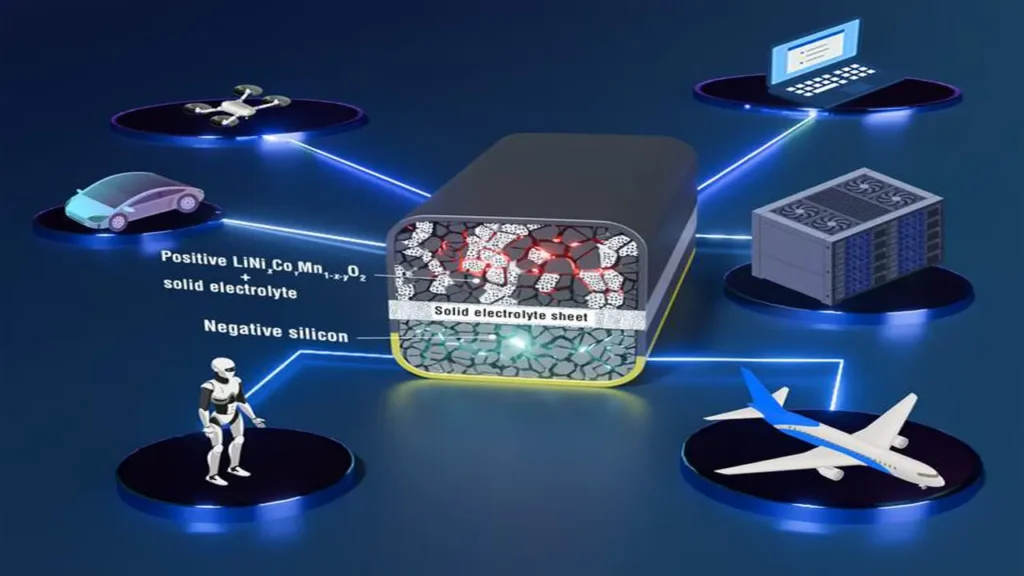
Analysis shows that despite aggressive industry promises made between 2017 and 2022, the timeline for mass market deployment of All-Solid-State Batteries has largely shifted to 2030 or later due to ongoing challenges in manufacturing, durability, and cost. [Image of solid-state battery architecture vs liquid electrolyte battery architecture]
| Manufacturer / Entity | Original Target / Promise (c. 2017-2022) | Current Reality / Updated Status (2025) | The "Harsh Reality" Verdict |
|---|---|---|---|
| Toyota | 2020: Showcase at Olympics. 2025: Start of mass production sales. | 2027-2028: Target for limited production. 2030+: Mass commercialization. Focus shifted to "40-year lifespan" claims rather than immediate availability. | Delayed: The timeline has slipped by nearly a decade. 2025 is a year of "certification" and R&D, not showroom sales. |
| Changan (Deepal) | Aggressive pursuit of next-gen dominance to rival BYD. | Executive Deng Chenghao explicitly states commercially viable ASSB is unlikely before 2030. | Skeptical: A major Chinese player officially cooling the market, prioritizing "semi-solid" or liquid evolution. |
| GAC Group | Rapid transition to solid-state to lead the premium sector. | Claiming small-batch vehicle tests in 2026; mass production 2027-2030. | Cautious: "Pilot lines" are not mass production. The gap between "test" and "market" remains significant (3-5 years). |
| BYD | Early leadership in all battery chemistries. | Aiming for small-scale production of sulfide-based ASSB by 2027; mainstream application by 2030. | Realist: The world's largest EV maker is betting on LFP (Blade Battery) for the near future, not ASSB. |
| CATL | Dominance in next-gen storage. | CEO Robin Zeng famously skeptical, citing durability/safety issues. Focus is on "Condensed Matter" (Semi-solid) and Sodium-ion. | Dismissive: The "Battery King" does not see ASSB as a near-term commercial reality, focusing on immediate scalable tech. |
| QuantumScape | Commercial production targets c. 2024. | Shipping "B-samples" in low volumes in 2025. Still pre-revenue/pre-commercial scale. | Incremental: Progress is technical, not commercial. The timeline continues to slide right, testing investor patience. |
| Nissan | Leading the Japanese pack with proprietary dry electrode tech. | Pilot line operational in 2025; mass production targeted for 2028. | Hopeful but Distant: While the pilot line exists, commercial volume is still 3+ years away. 2025 is for prototypes only. |
| BMW | Demo car by 2025. | Testing prototype i7 with Solid Power cells, but mass production is "before 2030". | Prototype Phase: A demo car is a proof of concept, not a product for consumers. |
| Samsung SDI | Commercialization by mid-2020s. | Planning mass production in 2027; currently delivering samples from pilot line. | Steady: One of the more consistent timelines, but still pushes the consumer release to the late 2020s. |
The comparative table above reveals a systemic issue with solid state battery mass production. The industry has successfully moved from "lab scale" (making a coin cell by hand) to "pilot scale" (making pouch cells on a small line) in 2025. However, the chasm between a pilot line producing a few thousand cells for testing and a gigafactory producing millions of cells for consumer vehicles remains unbridged.
This 2025 "reality check" is pivotal. It marks the moment when the industry collectively admitted that the "mid-2020s" target was a fantasy driven by competitive pressure rather than engineering readiness. The delay is not merely a matter of months; for companies like Toyota and Changan, the realization that 2030 is the more likely date for mass adoption represents a fundamental shift in strategy. It means that the next generation of EVs—the cars being designed in 2025 to launch in 2027—will largely still rely on liquid electrolytes.
The psychological impact of this delay is profound. In 2020, the narrative was that purchasing a lithium-ion EV was a temporary measure before the solid-state revolution. Now, in 2025, the narrative is that lithium-ion is the standard for the foreseeable future. The promise of the "forever battery" has collided with the harsh reality of manufacturing economics, where cost parity with cheap LFP batteries seems increasingly distant. This sets the stage for a period of disillusionment, or a "trough of sorrow," where the hype evaporates, and the hard, unglamorous work of industrialization begins.
If solid-state delays made you rethink your next EV, you’ll probably want a smarter approach to your next laptop too. On https://laptopchina.tech/ we track the best Chinese laptops, real-world tests, Amazon listings and buyer tips, so you don’t waste money on overhyped specs. Check it before you click buy anywhere.
3. From Hype to Skepticism: solid-state battery delay 2025 as a Cold Shower
The transition from 2024 to 2025 has acted as a "cold shower" for the electric vehicle industry, dousing the flames of unbridled optimism with a deluge of technical caveats and timeline revisions. The solid-state battery delay 2025 phenomenon is not just about missed deadlines; it is a cultural shift within the sector, moving from a "growth at all costs" mindset to one of "survival and pragmatism."
Why has 2025 specifically become the year of skepticism? Several factors have converged to create this environment.
First, the sheer accumulation of delays has eroded credibility. When a technology is promised "in five years" for ten years straight, stakeholders—from retail investors to fleet managers—begin to tune out. The excitement that surrounded the initial announcements by Fisker (who subsequently abandoned the tech and then failed) and Dyson (who burned $500 million before cancelling their EV project) has served as a cautionary tale. By 2025, the ghosts of these failures loom large.
recent bankruptcy of Northvolt in Europe, while primarily a lithium-ion struggle, underscored the immense difficulty of scaling any battery manufacturing outside of established Asian supply chains. If scaling standard liquid batteries is this hard, the logic goes, scaling complex solid-state batteries must be exponentially harder.
Second, the language of the manufacturers has changed. In 2020, press releases were filled with absolutes: "game-changer," "revolution," "infinite range." In 2025, the language is cautious, filled with qualifiers: "potential for," "aiming to," "pilot phase," "demonstration." The shift from "launching" to "demonstrating" is a subtle but powerful signal that the technology is stuck in the uncanny valley between research and product. For example, BMW's announcement of a "demo car" in 2025 is technically a success, but to a market that was promised sales by 2025, it reads as a delay. A demo car is a hand-built prototype; it proves the chemistry works, but it says nothing about the yield rate of the factory or the cost per kWh.
Third, the solid state battery delay 2025 is exacerbated by the visible success of the incumbent technology. The skepticism regarding solid-state is fueled by the fact that liquid lithium-ion batteries have not stood still. They have become incredible. LFP (Lithium Iron Phosphate) batteries in 2025 are charging faster (4C and 5C charging rates), holding more energy (CATL's Shenxing Plus), and costing significantly less than they did five years ago.
The "performance gap" that solid-state was supposed to fill is shrinking. If a standard EV can now charge in 15 minutes and drive 600km, the desperation for a solid-state breakthrough diminishes. The "cold shower" is the realization that the market might have solved the problem with "good enough" tech while the "perfect" tech was still stuck in the lab.
The skepticism is also evident in the financial markets. Stocks of pure-play solid-state companies like QuantumScape and Solid Power have faced volatility as investors digest the reality that "commercialization" in 2025 means shipping low-volume samples, not recognizing massive revenue. The "harsh reality" is that Wall Street has lost patience with science projects. They want products. And in 2025, solid-state remains, largely, a science project.
4. Changan and Other Giants: When Leaders Say "The Technology is Not Ready"
H2: solid-state battery challenges 2025: Position of Changan and Chinese Brands
While Western media often fixates on the announcements of startups or the roadmap of Toyota, the most significant "harsh reality" checks in 2025 are originating from China—the global epicenter of the battery supply chain. The stance of Chinese automakers is critical because they control the majority of the world's battery material processing and manufacturing capacity. When they speak, the industry listens. And in 2025, they are speaking with a voice of profound caution.
A prime example is the strategic posture of Changan Automobile, specifically through its new energy brand, Deepal. In a landscape often characterized by bombastic marketing, the clarity of Changan's skepticism is striking. Deng Chenghao, Vice President of Changan Auto and Chairman of Deepal, delivered a definitive reality check at the World Power Battery Conference, stating that all-solid-state batteries are unlikely to see widespread commercial use before 2030. This is not a vague deferral; it is a specific, five-year pushback against the common narrative.
Deng's commentary highlights a specific fear: that the industry's impatience could be destructive. He warned that "misunderstandings can obstruct R&D," implying that the pressure to deliver "solid-state" badges on cars is forcing companies to release immature or compromised products. This "haste makes waste" philosophy is a direct counter-narrative to the "China Speed" ethos. It suggests that for Changan solid state battery development, the priority has shifted from being first to being right.
This sentiment is reinforced by CATL, the undisputed heavyweight champion of the battery world. Its Chairman, Robin Zeng, has been famously dismissive of the near-term viability of solid-state tech. Zeng has publicly questioned the safety profile of the technology, specifically regarding the immense pressure required to keep the cells functional and the risk of expansion during charging. When the company with the deepest R&D pockets in the world says the technology is "years away," it serves as a massive dampener on the hype.
Why is this skepticism from China so important for the global market?
- Supply Chain Dominance: If China isn't building the supply chain for solid electrolytes (sulfides, oxides) at scale, nobody else can easily do it. The West relies on Chinese refining. A lack of Chinese aggression in scaling this specific tech means the global supply chain will remain nascent.
- Pragmatism over Prestige: Chinese OEMs are currently winning the global EV war on cost and value. They have realized that consumers buy cars based on price and range, not the state of matter of the electrolyte. By publicly cooling expectations on solid-state, they are validating their current strategy of doubling down on LFP and semi-solid solutions.
- Risk Aversion: The Chinese EV market is hyper-competitive. A high-profile recall of a solid-state car due to battery failure (dendrites causing a short, for example) could be fatal for a brand. The conservatism of Changan and others reflects a risk management strategy: let someone else take the arrows of being the pioneer; we will follow when it's safe and cheap.
The Chinese solid state battery news in 2025, therefore, is a story of bifurcation. There is the "official" line of progress (pilot plants, government goals), and then there is the "executive" line of realism. The leaders are signaling that while they are researching the tech, they are not betting the farm on it for the current product cycle.
5. Real Technical Problems: Where Beautiful Presentations Break Down
To understand why the timelines have slipped, we must look under the hood at the physics and chemistry. The solid state battery problems that persist in 2025 are not minor bugs; they are fundamental material science challenges that resist easy solutions. Behind the glossy presentations of 1,000-cycle lives and 10-minute charges lies a minefield of failure modes.
1. The Dendrite Dilemma: The Assassin of Batteries The most persistent enemy of the solid-state battery is the lithium dendrite. In the "dream" version of a solid-state battery, the liquid electrolyte is replaced by a hard ceramic or sulfide layer that physically blocks lithium metal from growing spikes. In reality, lithium is a stubborn metal. During charging, as lithium ions move to the anode, they can plate unevenly. If there is even a microscopic crack or grain boundary in the solid electrolyte, lithium metal can grow through it, like a tree root cracking a sidewalk. In 2025, researchers are finding that even "solid" barriers are not impermeable.
Once a dendrite bridges the gap between the cathode and anode, the battery short-circuits. Unlike a liquid battery where the separator might melt, in a solid battery, this failure can be sudden and catastrophic. Solving this requires manufacturing the electrolyte with near-perfect homogeneity—zero defects across millions of square meters of material—a manufacturing standard that borders on the impossible at automotive speeds.
2. The Contact Problem (Interface Instability) This is the "breathing" issue. A battery is a living thing; it expands when charged and contracts when discharged. In a liquid battery, the liquid flows to fill the voids, maintaining contact with the electrodes. In a solid-state battery, when the cathode shrinks, the solid electrolyte does not move with it. Gaps form.
These gaps act as insulators, blocking the flow of ions. Over just a few hundred cycles, the battery delaminates—literally falling apart on the inside. To prevent this, the battery must be held under immense pressure (isostatic pressure), often requiring heavy steel plates or clamps within the battery pack to squeeze the layers together. This adds dead weight to the car, negating the energy density gains of the cell itself.
3. The Pressure and Manufacturing Hell The requirement for high pressure leads to the "Isostatic Pressing" challenge. Manufacturing these batteries often involves Cold Isostatic Pressing (CIP) or Warm Isostatic Pressing (WIP) at hundreds of megapascals (MPa). Doing this for a single cell in a lab is easy. Doing it for millions of cells on a high-speed conveyor belt is an engineering nightmare. Furthermore, the most promising materials (sulfide electrolytes) are chemically unstable in air.
react with moisture to release hydrogen sulfide gas—which is toxic and flammable. This means the entire factory must be a giant "dry room" or filled with inert gas. The capital expenditure (CAPEX) to build such a factory is significantly higher than for standard Li-ion plants, driving up the cost of the final product.
4. Thermal Sensitivity Solid electrolytes have a "Goldilocks" problem with temperature. Some polymer-based solid batteries (like those early versions attempted by Bolloré) need to be heated to 60°C or 80°C to conduct ions efficiently. This drains energy just to keep the battery awake. Conversely, ceramics can be brittle at low temperatures. Managing the thermal profile of a solid block is harder than a liquid slurry, leading to complex thermal management systems that add cost and bulk.
These technical realities—dendrites, delamination, pressure requirements, and toxic manufacturing environments—are the "harsh reality" of 2025. They explain why a company can have a "working prototype" (hand-built, carefully pressurized, baby-sat by engineers) but still be five years away from a mass-production line.
6. solid state vs lithium ion: Pros, Cons, and the Real Winner in 2025
The battle of solid state vs lithium ion was supposed to be a knockout victory for solid-state. In 2025, however, it is a war of attrition where the incumbent is proving surprisingly resilient. The scorecard has changed dramatically.
Solid-State Batteries (ASSB): The Challenger
- Pros:
- Energy Density: The theoretical ceiling is high—up to 500 Wh/kg and 900+ Wh/L. This allows for smaller packs or ranges exceeding 1,000 km.
- Safety: The removal of flammable liquid solvents reduces the risk of thermal runaway fires, a key selling point for consumers terrified of EV fires.
- Fast Charging: The thermal stability of solids could theoretically allow for extreme fast charging (10 minutes or less) without degrading the chemistry.
- Cons:
- Cost: In 2025, the cost per kWh is estimated to be 3-4 times higher than Li-ion due to low yields and expensive materials.
- Manufacturability: High defect rates and slow production speeds.
- Cycle Life: Without massive external pressure, the cycle life in real-world conditions often falls short of the 3,000+ cycles offered by LFP.
Lithium-Ion (NMC/LFP): The Reigning Champion
- Pros:
- Cost: This is the killer app. Battery prices have fallen precipitously. Goldman Sachs predicts a near 50% drop in battery prices by 2025/2026 compared to 2022 levels, driven by raw material abundance and manufacturing efficiency. LFP cells are now commodity items.
- Maturity: Supply chains are robust. We know how to recycle them, ship them, and fight their fires.
- Performance Evolution: They haven't stopped improving. Technologies like BYD's Blade Battery (CTP) and CATL's Qilin pack have pushed system-level energy density high enough to offer 700km+ ranges, which satisfies 99% of drivers. Silicon-anode doping is boosting energy density without needing a full solid-state transition.
- Cons:
- Safety: They still contain flammable liquids.
- Energy Ceiling: They are approaching the theoretical limit of how much energy liquid chemistry can hold.
The Winner in 2025: The "harsh reality" verdict is that Lithium-Ion wins 2025. For the mass market, cost is king. A solid-state battery that costs $20,000 and offers 1,000km range is a hard sell against an LFP battery that costs $5,000 and offers 600km range, especially when fast-charging infrastructure is improving. As analysts note, the "moving target" of Li-ion improvements has made the entry barrier for solid-state much higher. Solid-state is no longer competing against the Li-ion of 2015; it is competing against the hyper-optimized Li-ion of 2025.
7. Semi-Solid, Improved Li-ion, and the Industry's "Plan B"
Faced with the delays of true all-solid-state technology, the automotive industry has executed a massive strategic pivot to "Plan B": the semi solid state battery EV. This technology represents the pragmatic middle ground—a bridge between the liquid past and the solid future.
What is Semi-Solid? A semi-solid battery (or "condensed matter" battery, as CATL calls its version) uses a solid electrolyte framework but adds a small percentage (often nearly 5-10%) of liquid or gel electrolyte to "wet" the interface. This liquid component solves the "contact problem" mentioned in Section 5, ensuring ions can move freely between the electrode and electrolyte without requiring massive external pressure. It offers better safety and energy density than pure liquid batteries, but is easier to manufacture than pure solid ones.
The Commercial Reality of 2025: While pure solid-state is stuck in the lab, semi-solid is on the road.
- Nio: The Chinese premium brand has successfully deployed a 150 kWh semi-solid battery pack manufactured by WeLion. This pack boasts an energy density of 360 Wh/kg and a real-world range exceeding 1,000 km. However, the "harsh reality" of cost is evident here too: Nio executives have admitted that this single battery pack costs as much as an entire Nio ET5 sedan (approx. €40,000). Consequently, it is not sold as standard equipment but is offered as a "rental" upgrade for long trips. This proves the tech works, but also proves it is not yet economically viable for mass ownership.
- IM Motors (SAIC): The IM L6 launched in 2024/2025 features a "Light Year" semi-solid pack (133 kWh) with ultra-fast charging. Yet, even here, executives temper expectations, admitting the tech is a "work in progress" and questioning if consumers actually need such massive range given the price premium.
- CATL: The giant has launched "Condensed Matter" batteries for high-end EVs and even electric aviation. This is their answer to solid-state: a technology that provides the density needed for flight (500 Wh/kg) but uses a chemistry they can actually manufacture at scale today.
The rise of the semi solid state battery EV is the industry's admission that the leap to all-solid was too great. By adopting this intermediate step, manufacturers can claim the marketing clout of "solid-state" (often dropping the "semi" in advertisements) while avoiding the manufacturing hell of the full technology. For the next 3-5 years, this "hybrid" approach will likely dominate the high-performance sector.
8. Consumer Impact: EV solid state battery future Through the Eyes of a Driver
How does this high-level industrial drama filter down to the person looking to buy a car in 2025? The EV solid state battery future is viewed through a lens of growing cynicism and fatigue among consumers.
A survey of digital sentiment—from Reddit threads like r/electricvehicles to comment sections on automotive news sites—reveals a shift in the consumer psyche.
- The "Osborne Effect" and Fatigue: For years, potential buyers held off on purchasing EVs, waiting for the "solid-state revolution" that was just around the corner. By 2025, this hesitation has turned into resignation. Comments frequently dismiss new announcements as "vaporware". The constant cycle of "breakthrough" headlines followed by silence has inoculated the public against hype.
- The "Good Enough" Realization: Drivers are realizing that they don't drive 1,000km a day. The improvement in charging infrastructure (Tesla Superchargers opening to everyone, high-power 350kW chargers) has made the 1,000km range promise of solid-state less critical. A reliable 500km range with 15-minute charging is seen as sufficient.
- Price Sensitivity: In the economic climate of 2025, consumers are price-sensitive. The solid-state battery challenges 2025 have made it clear that if and when these cars arrive, they will be luxury items. The Nio semi-solid pack's price tag confirms this. The average driver is looking at a BYD or a Tesla Model 3/Y, prioritizing the established, warranty-backed reliability of LFP over the experimental promise of solid-state.
The Advice for 2025: The verdict from the consumer standpoint is clear: Don't wait. The "EV of the future" is still in the future. The EVs of 2025, powered by advanced liquid tech, are robust products. Waiting for solid-state is a gamble on a timeline that keeps sliding. As one Reddit user aptly put it, "It’s always 5 years away".
9. Toyota and the Global Mainstream: Why Toyota solid state battery 2025 Softened its Rhetoric
No company is more synonymous with the solid-state promise than Toyota. For years, the Japanese giant used its solid-state patents (of which it holds thousands) as a shield against criticism that it was lagging in the EV race. The narrative was: "We aren't late; we are waiting for the real technology."
In 2025, that shield has cracked. The story of Toyota solid state battery 2025 is one of walked-back ambitions and softened rhetoric.
- From "Mass Production" to "Limited Pilot": The goal for 2025 has shifted from a mass-market launch to a "limited" rollout, likely a few thousand vehicles for government fleets or VIP testing. The mass production timeline has been officially pushed to 2027-2028, and even then, analysts expect volumes to be negligible compared to their liquid-battery cars.
- The "40-Year" Pivot: Faced with the inability to deliver the battery now, Toyota has pivoted to selling its future potential. Executives like Keiji Kaita are now emphasizing a "40-year lifespan" for their solid-state cells. This is a clever marketing move: it shifts the conversation from "when can I buy it?" to "look how durable it will be." It buys time.
- Global Alignment: This isn't just Toyota. Nissan has a pilot line for its "all-solid-state" (ASSB) batteries in Yokohama in 2025, but admits mass production is a 2028 goal. BMW is testing prototypes but sticking to liquid batteries for its "Neue Klasse" volume sellers until late in the decade.
The global mainstream has collectively realized that they cannot leapfrog the Chinese advantage in liquid batteries with a "magic bullet" that doesn't exist yet. They are now forced to compete in the trenches of liquid Li-ion tech while keeping solid-state as a long-term R&D project. The rhetoric has shifted from "revolution" to "evolution."
10. Final Verdict: solid-state battery challenges 2025 as a Signal "Don't Believe in Magic, Watch China Trezvo"
H2: solid-state battery challenges 2025: What This Means for the Future of Chinese EVs and For You
The solid-state battery challenges 2025 serve as a definitive historical marker for the automotive industry. This year represents the end of the "Hype Cycle" and the beginning of the "Trough of Disillusionment." The harsh reality is not that solid-state batteries are a failure—the physics are sound, and the potential remains immense—but that they are definitively a future technology, not a present one.
The Verdict:
- The Technology is Not Ready: All-solid-state batteries remain an immature technology plagued by interface instability, manufacturing complexity, and prohibitive costs. The gap between a lab breakthrough and a gigafactory product is at least 3-5 years wide.
- 2025 is the Year of the Delay: The timelines have universally slipped. 2025 is not the year of the solid-state car; it is the year of the solid-state excuse.
- China is the Pragmatic Winner: While Western and Japanese firms issued press releases about 2028, Chinese OEMs (Changan, Nio, SAIC, BYD) pivoted. They are winning the market today with "Semi-Solid" bridges and optimized "Super LFP" chemistries. They chose market share over magic.
For the Reader: The signal from 2025 is clear: Do not believe in magic. Do not base your financial decisions or your vehicle purchases on the promise of a technology that has not yet left the pilot line. The electric revolution is happening right now, but it is being powered by the batteries we have, not the ones we dream of.
For those who wish to navigate this complex landscape with clarity, it is essential to look past the Western marketing hype and observe the industrial reality on the ground in China. Resources that track the granular details of Chinese supply chains—like autochina.blog—are invaluable for distinguishing between a "PowerPoint battery" and one that is actually being bolted into a chassis. The future of solid-state is coming, but it will be a slow, expensive dawn, not an overnight explosion. Until then, the harsh reality is that the liquid battery in your driveway is likely the best technology you will own for the rest of this decade.
Discover more from AutoChina
Subscribe to get the latest posts sent to your email.