Snapdragon 8797 cockpit chip cars represent the next frontier in automotive computing power. If you’ve been hearing buzz about the Snapdragon 8295 dominating the Chinese EV market, the Snapdragon 8797 cockpit chip cars are about to make that conversation obsolete. This isn’t just another incremental upgrade—it’s the chip that Chinese automaker Leapmotor chose for its flagship D19 model, marking the first public confirmation of Gen 5 automotive silicon in production vehicles.
The automotive industry has reached a fascinating inflection point where the computer inside your dashboard might actually outperform the laptop in your bag. The Snapdragon 8797 cockpit chip cars deliver computational muscle that was unthinkable just three years ago. Built on advanced process nodes and powered by Qualcomm’s custom Oryon CPU architecture, these systems are bringing desktop-class performance to vehicles that also need to handle safety-critical functions, multimodal AI workloads, and real-time sensor fusion simultaneously.
What makes Snapdragon 8797 cockpit chip cars particularly noteworthy is the timing. While most automakers are still scrambling to implement 8295-based systems, a select group of forward-thinking manufacturers like Leapmotor are leapfrogging directly to Elite-tier platforms. This chip represents Qualcomm’s answer to the software-defined vehicle revolution, where the distinction between “car computer” and “supercomputer” becomes increasingly blurred.
If Snapdragon 8797 turns your car into a rolling computer, the next question is simple: how do you actually stay productive in a world where everything is “smart”? That’s where Granola shines—an AI notepad that captures meeting context, turns messy discussions into clean notes, and saves hours every week: https://aiinovationhub.com/granola-ai-meeting-notes-ai-notepad-review/
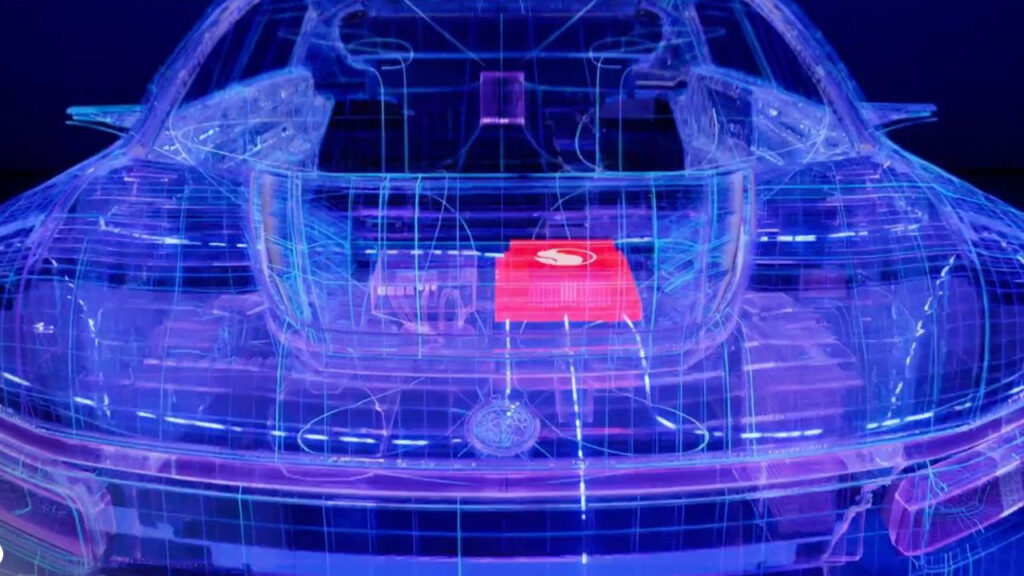
Snapdragon 8797 Cockpit Chip Cars — “Why 8797 is a Gen 5 Moment”
Understanding why Snapdragon 8797 cockpit chip cars matter requires context about where automotive computing currently stands. The Snapdragon 8797 vs 8295 comparison reveals a generational leap in capability. The 8295, built on a 5nm process with 30 TOPS of AI performance, was already a massive improvement over the ubiquitous 8155 chip. But the 8797 takes things to another dimension entirely.
According to information shared at CES 2026, Snapdragon 8797 cockpit chip cars utilize the same Oryon CPU architecture that powers Qualcomm’s flagship Snapdragon Cockpit Elite and Ride Elite platforms. These Elite-tier solutions promise 3x faster CPU performance and up to 12x greater AI performance compared to previous-generation cockpit platforms. While Qualcomm hasn’t released exact specifications for the SA8797P specifically, its positioning as part of the Elite family suggests computational capabilities that approach or exceed many consumer PCs.
The Snapdragon 8797 vs 8295 gap becomes even more pronounced when examining real-world applications. Where 8295 systems excel at handling multiple high-resolution displays and basic AI assistants, Snapdragon 8797 cockpit chip cars can run transformer-based large language models locally, process feeds from 40+ multimodal sensors simultaneously, and handle advanced computer vision tasks for both cabin monitoring and ADAS functions. The neural processing unit alone delivers performance that makes previous automotive NPUs look quaint by comparison.
Leapmotor’s decision to build dual Snapdragon 8797 cockpit chip cars for its D19 flagship model provides the clearest evidence of Gen 5 silicon entering production. This represents the automotive industry’s first commercialized cross-domain controller using Elite-tier platforms, unifying intelligent cockpit, driver assistance systems, body control, and gateway functions into a single high-performance computing unit. It’s exactly the kind of centralized architecture that defines software-defined vehicles.
| Feature | Snapdragon 8295 | Snapdragon 8797 (Est.) |
|---|---|---|
| Process Node | 5nm | 4nm/3nm (Elite tier) |
| CPU Architecture | Kryo 695 | Oryon (custom) |
| AI Performance | 30 TOPS | 12x higher (360+ TOPS estimated) |
| Generation | Gen 4 | Gen 5 (Elite tier) |
Snapdragon 8797 Cockpit Chip Cars — “Naming, Silicon, Positioning”
The nomenclature surrounding Snapdragon 8797 cockpit chip cars can be confusing, so let’s decode it. The official designation is SA8797P automotive platform, where “SA” denotes Snapdragon Automotive, “8797” indicates the model number, and “P” typically signifies the premium or performance tier. This naming scheme aligns with Qualcomm’s broader automotive portfolio, which includes chips like SA8295P, SA8255P, and SA8775P.
The SA8797P automotive platform sits at the pinnacle of Qualcomm’s Snapdragon Digital Chassis ecosystem. Unlike consumer mobile processors that prioritize peak performance in short bursts, the SA8797P automotive platform is engineered for sustained compute loads under extreme environmental conditions. It must function reliably from -40°C to +105°C, handle electromagnetic interference from vehicle systems, and maintain deterministic latency for safety-critical functions. Achieving automotive-grade certification (ASIL-D for certain subsystems) requires extensive validation that consumer silicon never undergoes.
What distinguishes Snapdragon 8797 cockpit chip cars from their predecessors is the underlying silicon architecture. The SA8797P automotive platform incorporates Qualcomm’s Oryon CPU cores—the same custom ARM-based architecture that powers the company’s flagship Snapdragon X Elite laptop processors and 8 Elite smartphone chips. Oryon represents years of development following Qualcomm’s acquisition of Nuvia, a startup founded by former Apple chip architects. The result is a CPU architecture that delivers exceptional single-threaded performance and power efficiency, crucial attributes for automotive workloads that range from microsecond-critical safety functions to computationally intensive AI inference.
Within Qualcomm’s product hierarchy, Snapdragon 8797 cockpit chip cars occupy the “Elite” tier alongside Snapdragon Cockpit Elite and Snapdragon Ride Elite. This positioning signals that these aren’t entry-level or mid-range automotive solutions. They’re flagship platforms designed for premium vehicles where computational capability directly enables differentiated features. Automakers deploying the SA8797P automotive platform are making a statement about their vehicle’s technological sophistication and future-proofing their architectures for over-the-air updates and feature expansion throughout the vehicle’s lifespan.
The market positioning of Snapdragon 8797 cockpit chip cars reflects broader trends in the automotive industry. As vehicles become increasingly software-defined, the silicon at their core becomes a strategic differentiator. Brands like Leapmotor, Li Auto, NIO, and Zeekr—all confirmed users of Elite-tier Snapdragon platforms—are competing primarily on their software experiences, advanced driver assistance capabilities, and AI-powered features. For these manufacturers, the SA8797P automotive platform provides the computational foundation necessary to deliver premium experiences that command higher price points.
Cars are becoming software platforms, and software platforms run on contracts—supplier deals, partnerships, and endless legal fine print. If you want to move fast without getting burned, Spellbook is worth a look: it reviews, redlines, and drafts contracts inside Microsoft Word with AI-powered risk spotting. Details here: https://aiinnovationhub.shop/spellbook-ai-contract-review/
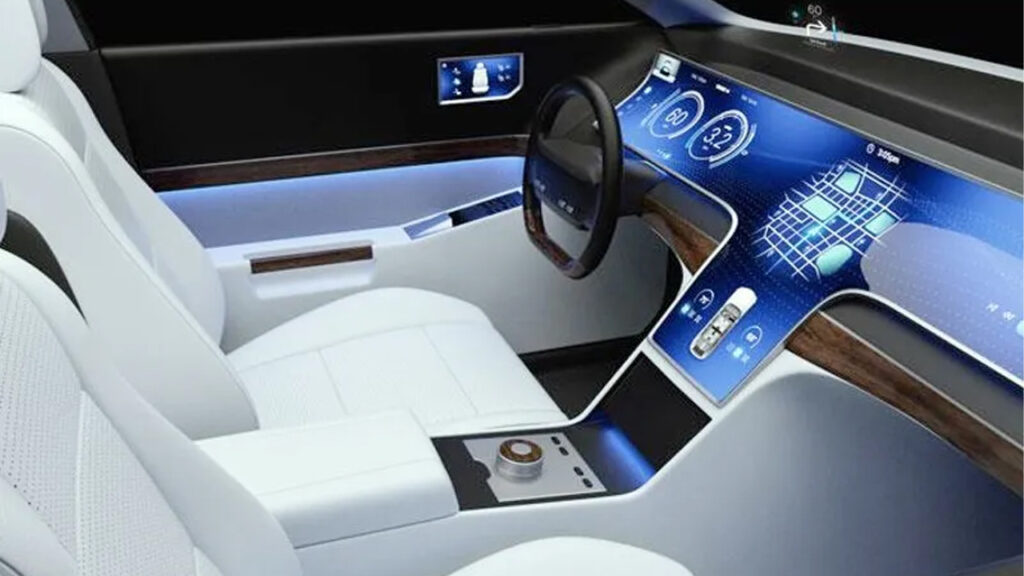
Snapdragon 8797 Cockpit Chip Cars — “Cockpit = Not Just a Screen Anymore”
When discussing Snapdragon 8797 cockpit chip cars, it’s essential to understand that modern cockpit systems have evolved far beyond simple infotainment displays. The Snapdragon Cockpit Elite platform that powers these vehicles represents a comprehensive computing solution for every aspect of the in-cabin experience. This includes everything from instrument clusters and center screens to head-up displays, passenger entertainment systems, and even ambient lighting controlled by AI algorithms.
The Snapdragon Cockpit Elite architecture enables Snapdragon 8797 cockpit chip cars to support up to 16 displays simultaneously, all running at 4K resolution. This capability matters because premium vehicles increasingly feature multiple screens for different passengers, along with high-resolution digital side mirrors and augmented reality head-up displays that project navigation and safety information directly onto the windshield. The upgraded Adreno GPU in Snapdragon Cockpit Elite delivers graphics performance that includes real-time ray tracing, enabling photorealistic 3D interfaces and immersive visualization that would have been impossible in automotive contexts just a few years ago.
What truly separates Snapdragon 8797 cockpit chip cars from previous generations is the integration of on-device AI capabilities. The dedicated Neural Processing Unit (NPU) in Snapdragon Cockpit Elite can execute multimodal AI models locally, without relying on cloud connectivity. This enables features like natural language processing for voice assistants that understand context and intent rather than just keywords, computer vision for gesture recognition and driver monitoring, and personalization engines that adapt the vehicle’s interface to individual users automatically. These AI workloads happen in real-time with minimal latency, creating responsive experiences that feel genuinely intelligent.
The multimedia capabilities of Snapdragon 8797 cockpit chip cars extend to advanced audio processing as well. The platform supports “zonal audio” technology, which can create distinct audio zones within the vehicle. Imagine the driver hearing navigation instructions and phone calls while rear passengers enjoy a movie with full surround sound—all processed and managed by a single cockpit controller. The system can also analyze acoustic signatures to cancel road noise selectively, apply equalization based on passenger positions, and even detect emergency vehicle sirens in the external environment while music is playing.
Personalization represents another frontier for Snapdragon Cockpit Elite. Snapdragon 8797 cockpit chip cars can maintain individual profiles for different drivers and passengers, automatically adjusting seat positions, climate control, display layouts, preferred navigation routes, and media settings. More sophisticated implementations can learn behavioral patterns over time, proactively suggesting routes based on time of day, automatically switching to low-distraction modes when passengers are present, or even adjusting ambient lighting based on circadian rhythms to reduce fatigue on long drives.
Snapdragon 8797 isn’t just a chip rumor—it’s already tied to a real vehicle story. Leapmotor’s upcoming D19 has been spotted looking huge, and leaks point to a wild setup: dual Snapdragon 8797 chips aimed at a next-gen “smart cockpit” experience. Catch the latest spy shots and specs here: https://autochina.blog/leapmotor-d19-spy-shots-specs-snapdragon-8797/
Snapdragon 8797 Cockpit Chip Cars — “Driving Stack & Autonomy Vibes”
While cockpit functions grab headlines, Snapdragon 8797 cockpit chip cars also incorporate advanced driving assistance capabilities through Snapdragon Ride Elite. This platform handles the complex sensor fusion, path planning, and control logic necessary for advanced driver assistance systems and automated driving features. The distinction between “cockpit” and “driving” platforms is becoming increasingly blurred as automakers adopt centralized computing architectures, but understanding each platform’s role helps clarify the overall system design.
Snapdragon Ride Elite brings substantial computational horsepower to ADAS functions in Snapdragon 8797 cockpit chip cars. The platform can process inputs from over 40 multimodal sensors simultaneously, including up to 20 high-resolution cameras for 360-degree environmental perception and in-cabin monitoring. This sensor suite might include front-facing stereo cameras for depth perception, side and rear cameras for blind-spot monitoring and automated parking, surround-view cameras for bird’s-eye perspectives, infrared cameras for driver attention tracking, plus radar and potentially lidar sensors for redundant environmental detection.
The AI capabilities in Snapdragon Ride Elite are specifically optimized for the unique demands of autonomous driving. The NPU includes transformer accelerators designed to execute end-to-end neural networks that can process raw sensor data and output steering, throttle, and braking commands directly. These transformer-based models represent the cutting edge of automated driving AI, capable of learning complex driving behaviors and adapting to novel scenarios in ways that traditional rule-based systems cannot. The platform’s vector engines provide the massive parallel processing capability necessary for real-time point cloud processing from lidar and radar sensors.
In Snapdragon 8797 cockpit chip cars, particularly Leapmotor’s dual-chip implementation, one SA8797P handles cockpit functions while the other manages ADAS workloads. This separation ensures that safety-critical driving functions operate independently from infotainment systems, meeting functional safety requirements while still enabling deep integration where beneficial. For example, the driving stack can share detected objects with the cockpit system to display augmented reality warnings on the head-up display, while the cockpit system can provide high-level navigation instructions to the path planning algorithms.
Advanced driver assistance in Snapdragon 8797 cockpit chip cars includes features like adaptive cruise control with stop-and-go capability, lane centering assist, automated lane changes, traffic sign recognition, and predictive emergency braking. More sophisticated implementations enable highway pilot functions where the vehicle handles steering, acceleration, and braking on well-mapped roadways, though with driver supervision requirements that vary by market and regulatory framework. The computational capacity of Snapdragon Ride Elite provides runway for future capabilities through over-the-air software updates, allowing features to evolve throughout the vehicle’s ownership period.
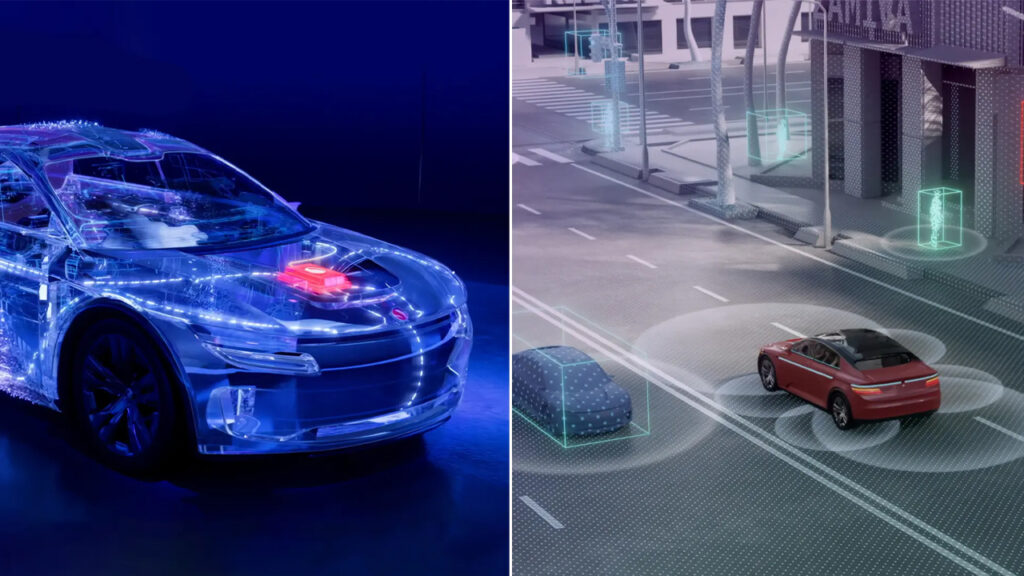
Snapdragon 8797 Cockpit Chip Cars — “Two Chips? Yes. Because One Is Not Enough.”
One of the most interesting architectural decisions in Snapdragon 8797 cockpit chip cars is Leapmotor’s implementation of dual Snapdragon 8797 chips. This approach, first revealed at CES 2026, represents the industry’s first commercialized cross-domain controller using two Elite-tier automotive platforms in tandem. Understanding why dual Snapdragon 8797 chips make sense requires examining the computational demands of modern software-defined vehicles and the constraints of automotive functional safety.
The rationale for dual Snapdragon 8797 chips centers on workload segregation and safety isolation. Modern vehicles must simultaneously handle dozens of complex tasks: rendering multiple high-resolution displays, executing AI models for voice assistance and personalization, processing feeds from 20+ cameras and sensors, running ADAS algorithms for automated driving, managing body control functions, handling cybersecurity monitoring, and maintaining connectivity to cloud services. While a single Elite-tier platform possesses tremendous computational capability, distributing these workloads across two specialized chips provides clearer safety boundaries and more predictable latency profiles.
In Leapmotor’s dual Snapdragon 8797 chips architecture, one SA8797P focuses on intelligent cockpit functions—everything related to user interfaces, multimedia, connectivity, and passenger-facing features. The second SA8797P concentrates on advanced driving assistance, sensor processing, and safety-critical control systems. This separation means that even if the cockpit system encounters a software fault or needs to restart, the driving systems continue operating normally. Conversely, the cockpit can implement aggressive software experimentation and frequent updates without risking safety-critical functions.
The dual Snapdragon 8797 chips approach also enables sophisticated power management strategies. During highway cruising with active driver assistance, the driving-focused chip operates at full capacity while the cockpit chip can reduce power consumption if passengers aren’t actively using infotainment features. When parked with occupants using multimedia functions, the situation reverses. This dynamic power allocation helps manage thermal constraints and extends electric vehicle range—critical considerations in premium EVs where every kilowatt-hour of battery capacity translates to driving range that customers value highly.
From a development perspective, dual Snapdragon 8797 chips provide flexibility for automakers to iterate on cockpit software independently from driving systems. Different teams can work on different domains with reduced risk of unintended interactions. This separation also facilitates regulatory approval processes, as safety-critical driving functions can be validated independently from frequently-changing infotainment features. The architecture supports mixed-criticality workloads within each chip while maintaining clear domains at the system level, satisfying both functional safety requirements and the desire for rapid software iteration that characterizes modern automotive development.
| Aspect | Single Chip Approach | Dual Snapdragon 8797 Chips |
|---|---|---|
| Safety Isolation | Software partitioning | Hardware separation |
| Development Flexibility | Coupled domains | Independent iteration |
| Power Management | System-wide states | Domain-specific control |
| Cost | Lower silicon cost | Higher upfront, better flexibility |
Snapdragon 8797 Cockpit Chip Cars — “Car as a Data Center: Unified Architecture”
The concept of Snapdragon 8797 cockpit chip cars as mobile data centers represents a fundamental shift in automotive architecture. Traditional vehicles contained dozens of electronic control units (ECUs), each handling specific functions like engine management, transmission control, body electronics, climate control, and infotainment. This distributed architecture made sense in an era of mechanical vehicles with some electronic features. But as vehicles become software-defined, the limitations of distributed computing become painfully apparent: inefficient communication between controllers, software integration nightmares, and massive wiring harnesses that add weight and cost.
The central compute platform car approach that Snapdragon 8797 cockpit chip cars exemplify consolidates these distributed functions into a small number of high-performance domain controllers. Instead of 80+ ECUs communicating over multiple network protocols, the vehicle might contain just five main computers: a central cockpit/ADAS controller (like Leapmotor’s dual SA8797P system), a propulsion/chassis controller, one or two zone controllers handling localized I/O, and a gateway managing external connectivity. This centralization reduces the vehicle’s computing architecture to something resembling a modern data center, with powerful central servers and thin edge nodes.
For Snapdragon 8797 cockpit chip cars specifically, the central compute platform car architecture enables sophisticated resource sharing. The Oryon CPU cores can execute real-time operating system tasks for safety-critical functions with microsecond-level determinism, while simultaneously running a full Android Automotive OS stack for infotainment, Linux containers for specific applications, and virtualized environments for third-party services. Hypervisor technology ensures that these different software environments remain isolated from a safety perspective while sharing the underlying hardware efficiently. This is fundamentally different from the dedicated single-purpose ECUs of traditional automotive architecture.
The implications of this central compute platform car design extend throughout the vehicle. Automotive Ethernet replaces traditional CAN and LIN buses, providing gigabit-per-second bandwidth for high-resolution camera feeds and software updates. Zone controllers near the wheels, doors, and rear of the vehicle handle local sensor and actuator interfaces, then communicate with the central Snapdragon 8797 cockpit chip cars controllers over high-speed Ethernet backbones. This reduces wiring harness complexity dramatically—a point-to-point wiring architecture might contain over 5 kilometers of copper wire, while the zone-based approach can reduce this to under 2 kilometers, saving significant weight and cost.
Software development transforms under the central compute platform car model that Snapdragon 8797 cockpit chip cars represent. Instead of dozens of teams developing firmware for individual ECUs with bespoke toolchains and limited processing power, automakers can deploy large software teams working with modern development practices: continuous integration and deployment, containerized applications, cloud-based simulation environments, and standardized APIs. The computational headroom in Elite-tier Snapdragon platforms means that even computationally inefficient high-level programming languages become viable, dramatically expanding the talent pool available to automotive software teams and accelerating innovation velocity.
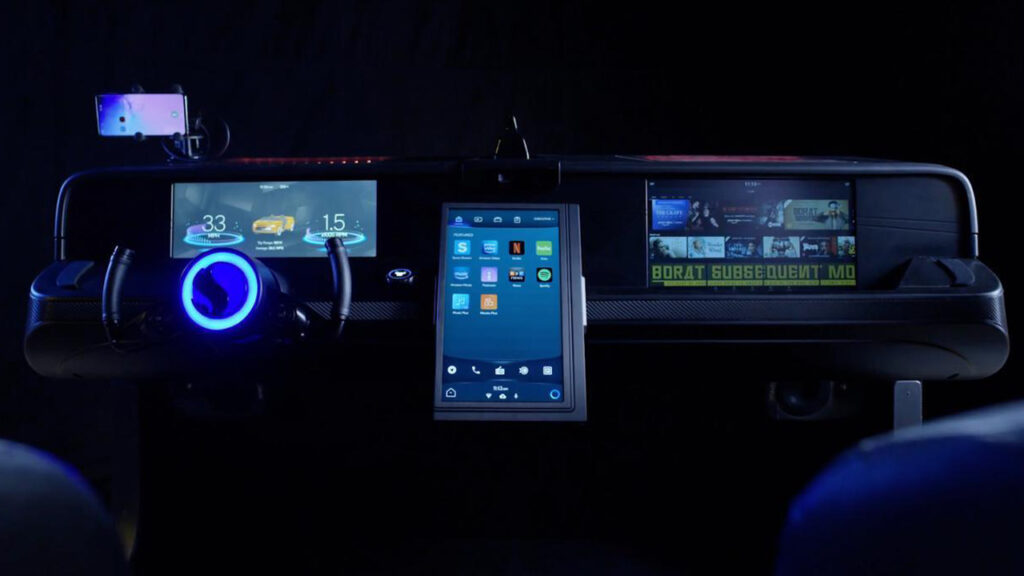
Snapdragon 8797 Cockpit Chip Cars — “Domain Controller Explained for Tech Geeks”
To truly appreciate Snapdragon 8797 cockpit chip cars, it helps to understand the automotive domain controller SoC concept at a technical level. A domain controller consolidates all computing functions within a specific vehicle domain—such as cockpit, ADAS, chassis, or propulsion—into a single high-performance system-on-chip. This contrasts with distributed architectures where individual functions had dedicated control units. The domain controller approach represents a middle ground between fully distributed systems and theoretical “vehicle supercomputers” that handle everything centrally.
The architecture of an automotive domain controller SoC like the SA8797P is fascinatingly complex. At its heart sits the Oryon CPU cluster, containing multiple high-performance cores for general-purpose computing alongside efficiency-oriented cores for background tasks. Surrounding the CPU are specialized accelerators: the Adreno GPU for graphics and general-purpose GPU computing, the Hexagon DSP for signal processing, the NPU for AI inference, the Spectra ISP for camera processing, dedicated video encode/decode engines, and display processing units that can drive multiple screens simultaneously. Each subsystem has its own memory interfaces and can operate semi-independently, allowing true parallel processing of diverse workloads.
What makes the automotive domain controller SoC particularly challenging compared to consumer silicon is the functional safety architecture. Snapdragon 8797 cockpit chip cars incorporate safety islands—dedicated monitoring subsystems that oversee the main computing elements and can detect faults or unexpected behaviors. These safety managers implement diverse redundancy schemes: running critical calculations independently on multiple processing elements and comparing results, continuously checking memory integrity with error correction codes, monitoring power supply and thermal conditions, and maintaining watchdog timers that detect software lockups. For ASIL-D certified functions, the safety architecture can automatically transition to fail-safe states if anomalies are detected.
The software stack on an automotive domain controller SoC reveals multiple layers of abstraction. At the lowest level, a real-time operating system (often QNX or Linux with RT extensions) manages hardware resources with deterministic latency for safety-critical functions. Above this sits a hypervisor layer that enables multiple operating system instances to coexist on the same silicon: perhaps QNX for driving functions, Android Automotive OS for infotainment, and Linux containers for specific services. Each OS instance believes it has direct hardware access, but the hypervisor mediates all interactions to maintain isolation and safety boundaries. This architecture allows Snapdragon 8797 cockpit chip cars to run wildly different software environments simultaneously without conflicts.
Communication architectures within automotive domain controller SoC implementations leverage advanced networking protocols. Time-Sensitive Networking (TSN) extensions to Ethernet provide deterministic, low-latency communication paths for safety-critical data even on shared physical networks. AVB (Audio Video Bridging) ensures that high-bandwidth media streams never interfere with control messages. Service-oriented architectures built on standards like SOME/IP enable dynamic service discovery and communication between software components, regardless of which processing element they’re executing on. For developers, this creates an environment where software can be deployed flexibly across the domain controller’s resources without hardcoding physical addresses or interfaces.
Snapdragon 8797 Cockpit Chip Cars — “AI Inside the Cabin: Real Workloads”
Perhaps the most transformative aspect of Snapdragon 8797 cockpit chip cars is the in-vehicle AI compute capability they enable. Previous automotive generations could execute relatively simple neural networks for specific tasks like face detection or wake-word recognition. But the massive AI performance of Elite-tier Snapdragon platforms—12x improvement over previous cockpit platforms—opens entirely new categories of on-device AI applications that were previously impossible or required constant cloud connectivity.
The in-vehicle AI compute in Snapdragon 8797 cockpit chip cars powers natural language understanding that approaches human-level comprehension. Modern large language models can run locally on the vehicle’s NPU, enabling voice assistants that understand context, intent, and even emotion in natural speech. These systems don’t just execute commands; they engage in genuine dialogue, answer complex questions about vehicle features by referencing the owner’s manual, provide recommendations based on preferences, and even adjust their communication style to individual users. Because all processing happens locally, these interactions have minimal latency and work reliably even without cellular connectivity.
Computer vision represents another frontier for in-vehicle AI compute in Snapdragon 8797 cockpit chip cars. Cabin-facing cameras can recognize individual passengers, detecting their emotional states through facial expression analysis and adjusting the environment accordingly—perhaps softening lighting and lowering music volume when fatigue is detected, or switching to a more engaging interface when attention wanders. Gesture recognition enables touch-free control of various functions, particularly valuable in driving contexts where taking hands off the wheel or eyes off the road creates safety concerns. These vision models process dozens of video frames per second across multiple cameras simultaneously, a workload that would overwhelm previous-generation automotive hardware.
Personalization engines leverage in-vehicle AI compute to create deeply individualized experiences in Snapdragon 8797 cockpit chip cars. Reinforcement learning algorithms observe user behaviors over time, learning preferred routes, media choices, climate settings, and even driving styles. These models can predict needs proactively: preheating the vehicle on cold mornings before the user typically leaves, suggesting coffee shop stops based on schedule patterns, or adjusting regenerative braking strength based on learned preferences. Because these models train continuously on-device using local data, they can adapt to changing preferences without exposing sensitive behavioral information to cloud services—a critical privacy consideration.
The latency advantages of in-vehicle AI compute become particularly apparent in safety-critical applications. Driver monitoring systems in Snapdragon 8797 cockpit chip cars can detect distraction, drowsiness, or impairment within milliseconds, enabling immediate interventions like seat vibration warnings or proactive ADAS activation. Processing this computer vision workload locally eliminates the 100+ millisecond round-trip latency of cloud inference, potentially providing crucial additional reaction time in emergency scenarios. Similarly, the driving assistance models in dual-chip configurations benefit from local inference latency that makes the difference between smooth, predictable vehicle behavior and the slightly delayed, jerky responses that characterize cloud-dependent systems.
| AI Workload Type | Function | Benefit of Local Processing |
|---|---|---|
| Natural Language | Voice assistants, dialogue | Low latency, offline capability |
| Computer Vision | Gesture control, emotion detection | Real-time response, privacy |
| Personalization | Adaptive preferences, predictions | Continuous learning, data privacy |
| Safety Monitoring | Driver attention, impairment detection | Minimal latency for interventions |
Snapdragon 8797 Cockpit Chip Cars — Final Verdict: Why This Changes 2026 Cockpits
As we evaluate the landscape of automotive computing entering 2026, Snapdragon 8797 cockpit chip cars represent a clear inflection point in capability and ambition. The convergence of several technological trends—custom ARM CPU architectures optimized for efficiency and performance, massive AI acceleration through dedicated NPUs, advanced process nodes enabling high transistor density, and sophisticated software architectures managing mixed-criticality workloads—has created platforms that genuinely deserve the “Elite” designation. These aren’t incremental improvements over previous automotive chips; they’re generational leaps.
The Snapdragon Digital Chassis 2026 ecosystem that encompasses Elite-tier platforms like the SA8797P provides automakers with unprecedented flexibility in how they architect vehicles. The decision space has expanded dramatically: single powerful chip versus dual-chip configurations, integrated cockpit-ADAS solutions versus segregated domains, cloud-heavy approaches versus edge-centric processing, custom software stacks versus standardized platforms. Qualcomm’s partnerships announced at CES 2026—with Google for standardized Android Automotive OS integration, with Li Auto and NIO and Zeekr for production deployments, with ZF for scalable ADAS solutions—indicate that the Snapdragon Digital Chassis 2026 strategy is gaining serious traction across the global automotive industry.
For consumers, Snapdragon 8797 cockpit chip cars signal the arrival of genuinely intelligent vehicles. The experiences enabled by 12x AI performance improvements, triple-digit-TOPS inference capability, and sophisticated on-device models represent a qualitative difference from previous generations. Voice assistants that actually understand context and nuance. Computer vision that recognizes passengers and adapts environments automatically. Personalization that learns continuously without exposing behavioral data to the cloud. Driver assistance that processes sensor feeds with near-zero latency for smoother, safer operation. These aren’t theoretical future capabilities; they’re production features in vehicles like Leapmotor’s D19 that will reach customers in 2026.
The competitive dynamics in the premium EV segment will increasingly revolve around software experiences enabled by computational platforms like the SA8797P. Chinese automakers have already recognized this reality, which explains why brands like Leapmotor, NIO, Li Auto, Zeekr, and Xiaomi are racing to implement Elite-tier Snapdragon platforms in their flagship models. Western automakers—with notable exceptions like Mercedes-Benz, which has announced Elite platform adoption—risk falling behind if they remain committed to previous-generation silicon for their 2026-2027 product cycles. The performance gap between Gen 4 and Gen 5 automotive platforms is simply too large to ignore.
Looking forward, Snapdragon 8797 cockpit chip cars establish the computational foundation necessary for the next decade of automotive innovation. Over-the-air software updates can continuously enhance these vehicles’ capabilities throughout their ownership lives. As AI models improve and new use cases emerge, the abundant computational headroom in Elite-tier platforms ensures that early adopters won’t face premature obsolescence. The central compute architecture and software-defined approach mean that features can evolve dynamically, adapting to regulatory changes, incorporating user feedback, and responding to competitive pressures—all through software updates rather than hardware refreshes.
The transition to Snapdragon 8797 cockpit chip cars and similar Elite-tier platforms marks the point where the automotive industry’s software-defined vehicle aspirations become technically credible. The computational capability is finally sufficient. The AI performance supports genuinely useful on-device intelligence. The architectural flexibility enables diverse implementations. And the ecosystem momentum—with tier-one suppliers, automakers, and software providers aligning around platforms like Snapdragon Digital Chassis—suggests that this transition will accelerate throughout 2026 and beyond.
For enthusiasts following automotive technology developments, Snapdragon 8797 cockpit chip cars deserve close attention as bellwethers of where the industry is heading. Every major announcement from automakers about their next-generation platforms, every partnership between chip companies and car manufacturers, every new AI capability demonstrated in concept vehicles—these all connect back to the underlying computational substrate that makes such features possible. And right now, Elite-tier Snapdragon platforms are setting the pace.
Stay updated on developments in automotive computing and next-generation cockpit platforms at www.autochina.blog, where we track the rapid evolution of software-defined vehicles and the silicon that powers them.
Discover more from AutoChina
Subscribe to get the latest posts sent to your email.