Skip to content
Hey guys, welcome back to the channel! If you’re into electric rides that pack a punch without breaking the bank, buckle up because today we’re talking about the Nissan N6 PHEV specs. This bad boy is Nissan’s first PHEV sedan tailor-made for China, and let me tell you, it’s causing a massive stir in the auto world. Why all the hype? Well, it’s dropping into a market dominated by local giants like BYD, bringing Japanese reliability with killer efficiency and tech that screams future-proof.
Launched by Dongfeng Nissan, this joint venture beast is built on the cutting-edge Tianyan architecture, blending a 1.5L engine with a hefty 21.1 kWh LFP battery for up to 180 km CLTC EV range. Imagine zipping through city traffic on pure electric power, then seamlessly switching to hybrid mode for those long hauls – all while sipping fuel like it’s nothing.
Prices start at just around 91,900 RMB after discounts, positioning it as a budget-friendly rival to the BYD Qin L. But is it just another sedan or a game-changer? Stick around as we break it down point by point, from design to performance. If you’re excited, smash that like button and subscribe for more EV deep dives! Let’s jump in.
If you think automotive design is evolving fast, wait until you see how creators now build clean logos, sharp icons, and brand-ready graphics in minutes. That’s exactly why Recraft V3 is blowing up among designers and marketers. Here’s the full review with real use cases and examples: https://aiinovationhub.com/recraft-v3-ai-vector-generator-aiinnovationhub/
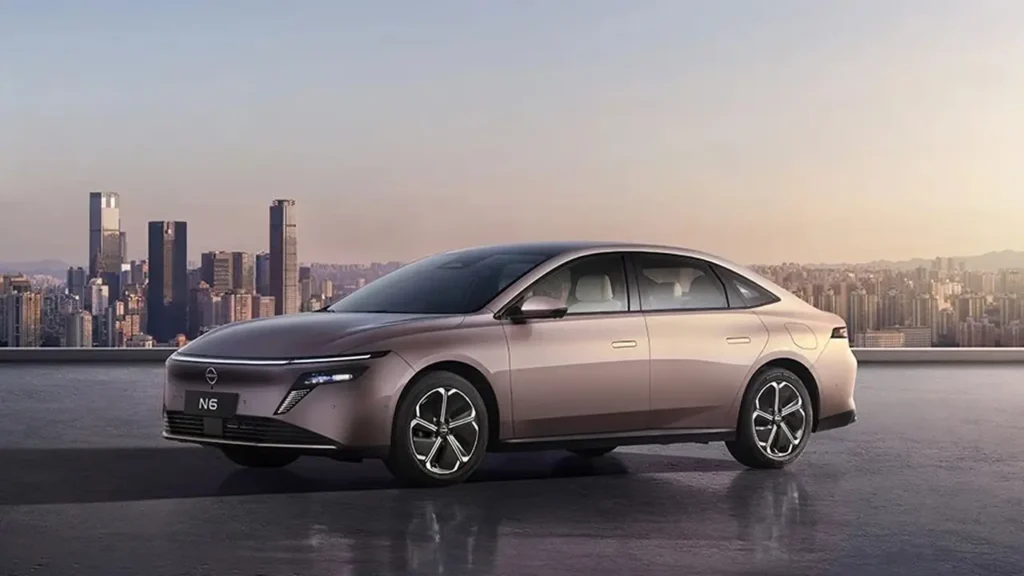
Nissan N6 Wind Trace design. Nissan N6 PHEV specs
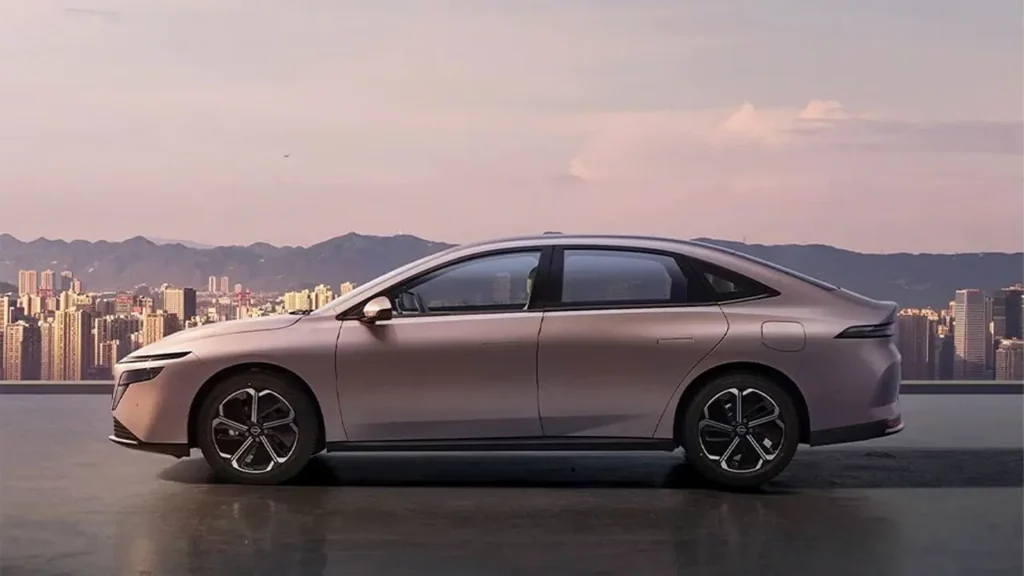
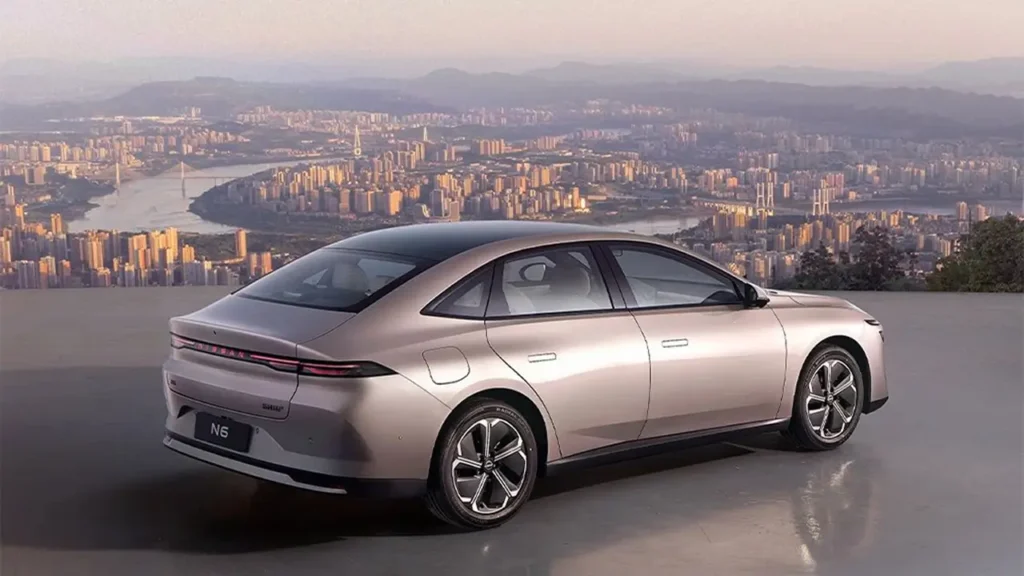
Yo, car fam! Let’s geek out over the Nissan N6 Wind Trace design – this thing is a visual stunner that’s got everyone talking. What sets the “Wind Trace” apart from your typical global Nissan models? It’s all about that aerodynamic, fluid aesthetic inspired by wind flows, giving it a sleek, coupe-like silhouette that’s more premium than you’d expect in this price range. Unlike the boxier designs on some international Nissans like the Altima, the N6 rocks a V-Motion grille with expressive LED lights front and rear, creating a dynamic presence that screams sophistication.
The “hurricane-eye” taillights add 3D depth, and the slipstream profile rivals luxury C-segment sedans. Why does this matter? In China’s hyper-competitive market, design isn’t just looks; it’s about standing out in traffic jams and appealing to young families who want style without sacrificing space. Measuring 4,831 mm long with a 2,815 mm wheelbase, it offers roomy interiors wrapped in soft-touch materials covering 85% of the trim. Colors like Sunlight Gold and Hyacinth Purple pop, and those whirlwind 18-inch wheels with red calipers? Total eye-candy. But it’s functional too – the streamlined shape boosts efficiency, helping achieve that sub-2L/100 km fuel sip.
Compared to global Nissans, this China-tuned design incorporates local tastes for elegance and tech integration, like the adaptive high-beam system for safer night drives. It’s Nissan’s way of saying, “We’re serious about China.” If you’ve seen it in person, drop a comment – does it live up to the hype? This design elevates the Dongfeng Nissan N6 PHEV from basic commuter to aspirational ride, proving Nissan can blend heritage with innovation. Stay tuned for more!
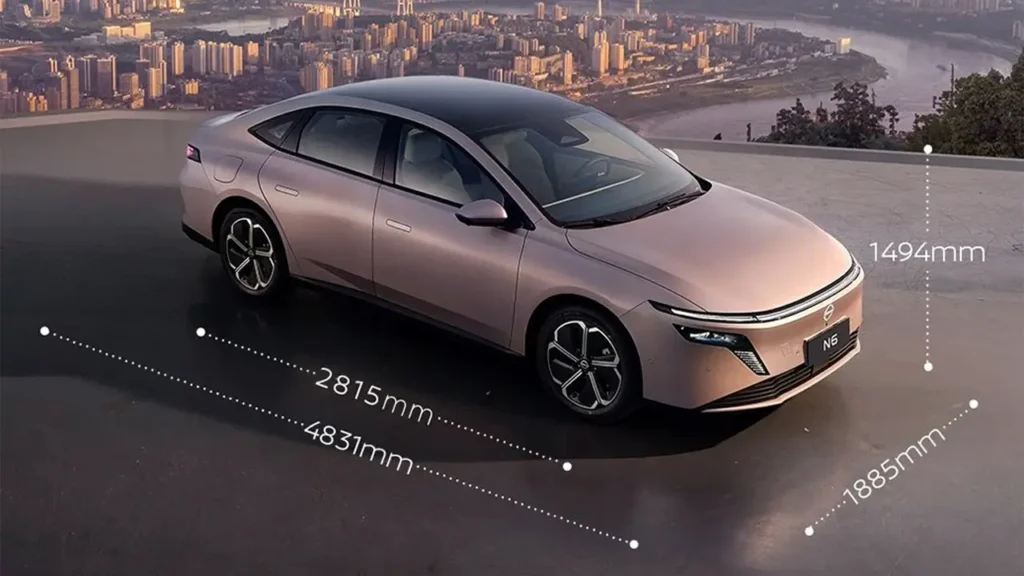
Dongfeng Nissan N6 PHEV
Alright, squad, time to unpack the Dongfeng Nissan N6 PHEV – what’s the deal with this JV origin and why it’s laser-focused on China? Dongfeng Nissan is Nissan’s powerhouse joint venture in China, blending Japanese engineering with local manufacturing smarts to crank out vehicles that hit the sweet spot for Chinese buyers. This isn’t some global hand-me-down; the N6 is the first PHEV sedan from this partnership, built on the Tianyan architecture shared with the electric N7.
That means it’s engineered for China’s unique needs – think insane traffic, long commutes, and a push for green tech. Why tailored for China? The market here is all about affordability, range anxiety killers, and smart features, and the N6 delivers with a 1.5L NR15 engine paired to a 155 kW motor and 21.1 kWh LFP battery. It’s got that 180 km CLTC EV range for daily urban runs, plus rapid charging in 17 minutes from 30% to 80%. The JV setup allows Nissan to localize production, keeping costs down – prices kick off at 91,900 RMB post-discounts.
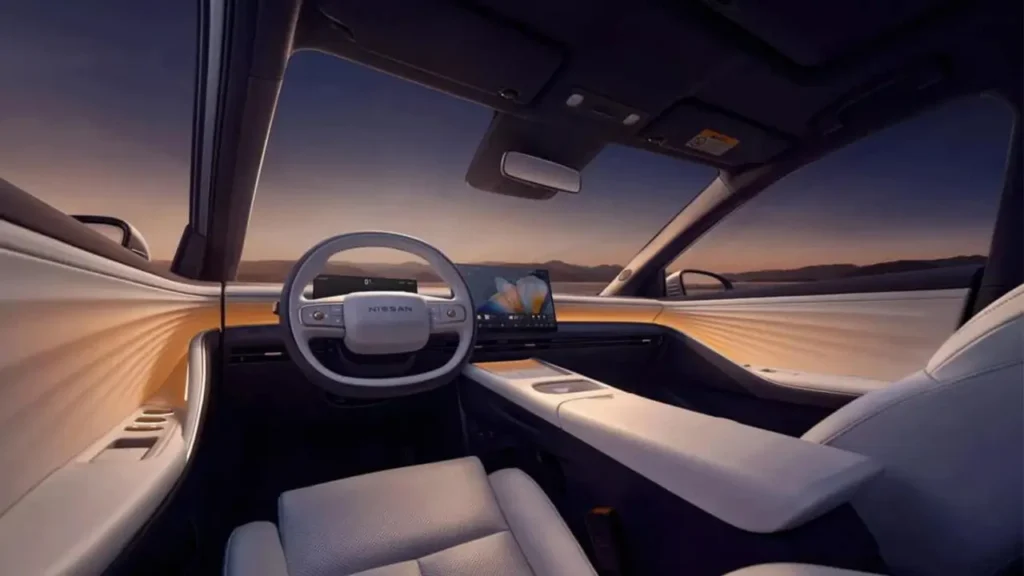
This positions it against heavyweights like the BYD Qin L, but with Nissan’s reliability edge. Inside, it’s family-friendly with AI Zero-Pressure seats and a whisper-quiet cabin for karaoke sessions.
The partnership empowers quick innovation, like integrating Huawei tech in siblings, but the N6 sticks to Nissan’s infotainment for seamless vibes. For China, this means jobs, tech transfer, and vehicles that feel custom-made. Is this the start of Nissan dominating PHEVs here? You tell me in the comments! This JV beast is proof global brands can thrive by going local.
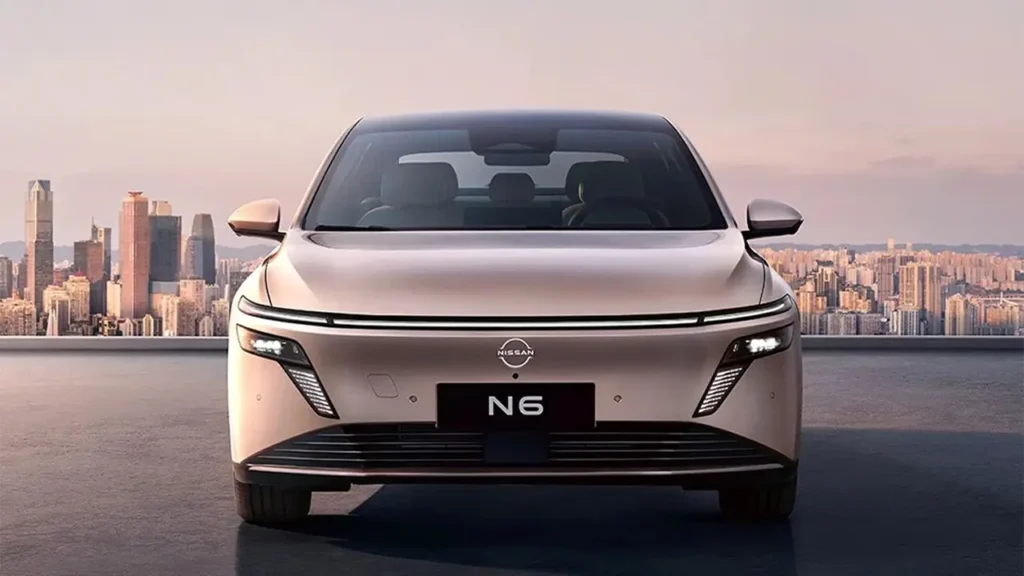
Nissan N6 price in China
What’s cracking, team? Let’s talk cash – the Nissan N6 price in China is straight fire for what you get. This PHEV sedan starts at an official 99,900 RMB, but with limited-time discounts, it’s down to 91,900 RMB ($13,000) for the base 180 Air trim. That’s aggressive positioning, making it a steal for a mid-size hybrid loaded with tech. There are five versions: 180 Air (91,900 RMB), 180 Pro (101,900 RMB), 180 Max (106,900 RMB), 180 Max+ (113,900 RMB), and the flagship 170 Max+ (121,900 RMB). Each step up adds goodies like bigger screens, ADAS, or premium seats. For your money, you’re getting a 4,831 mm sedan with 180 km EV range, fast charging, and fuel efficiency under 2L/100 km.
aimed at young families who want value – think beating the BYD Qin L on battery size while keeping prices competitive. The “for its money” vibe? Entry levels have LED lights, reversing cams, and a 14.6-inch screen; top trims throw in L2 assist, panoramic roofs, and 540-degree views. In China’s cutthroat market, this pricing undercuts some rivals, especially with the JV efficiencies from Dongfeng Nissan.
Pre-sales started at 109,900 RMB, but incentives dropped it further, showing Nissan’s hunger to grab market share. Why important? It makes PHEV tech accessible, reducing EV hesitation. If you’re budgeting, the Pro trim hits the sweet spot with extra safety. Drop your thoughts – is this pricing a win? For me, it’s Nissan’s smart play to disrupt.
| Version | Price (RMB) | Discounted Price (RMB) |
|---|---|---|
| 180 Air | 99,900 | 91,900 |
| 180 Pro | 109,900 | 101,900 |
| 180 Max | 114,900 | 106,900 |
| 180 Max+ | 121,900 | 113,900 |
| 170 Max+ | 129,900 | 121,900 |
Nissan N6 1.5L NR15 engine
Hey everyone, engine nerds unite! Diving into the Nissan N6 1.5L NR15 engine – how does this ICE + electric combo work in simple terms? Picture this: the NR15 is a 1.5-liter naturally aspirated four-cylinder pumping out 75 kW (101 hp) and 135 Nm torque. It’s not the star; it’s the backup singer to the 155 kW (211 hp) electric motor with 320 Nm torque. In hybrid mode, the engine acts as a range extender, generating power for the battery or directly assisting the motor via the Dedicated Hybrid Transmission (DHT).
Pure EV? Motor takes over for silent, zero-emission drives up to 180 km. Need more? Engine kicks in seamlessly for extended trips, achieving 0.69-0.79 L/100 km combined. Simple words: electric for city zips, engine for highways, blending for efficiency. No direct drive like some hybrids; it’s series-parallel, optimizing for low emissions (China VI). Why cool? It keeps costs low while delivering 6.8-sec 0-100 km/h acceleration. In real life, this means less gas station stops and smoother rides.
to rivals, it’s tuned for reliability, with aluminum block and direct injection. Nissan produced this engine locally for the N6, ensuring supply. For drivers, it’s effortless – no manual switching, just smart AI managing it all. If you’re into tech, this is Nissan’s PHEV gateway. Thoughts? Does this setup excite you? It’s the heart of why the N6 rocks.
Nissan N6 21.1 kWh LFP battery
What’s up, battery buffs? Let’s charge up on the Nissan N6 21.1 kWh LFP battery – what does this size mean for real-world use? First off, LFP (lithium iron phosphate) is safe, durable, and cheaper than ternary, perfect for China’s cold winters and hot summers. At 21.1 kWh (or 20.3 kWh in some trims), it’s beefier than many PHEVs, delivering 170-180 km CLTC EV range.
talk: in city driving, expect 120-150 km depending on traffic, AC, and style – enough for most commutes without gas. Suppliers like Rept Battero or CATL ensure quality. In practice, it supports energy recovery, preheating, and external discharge for camping or emergencies. Combined with the 1.5L engine, total range stretches far, with sub-2L/100 km efficiency. For families, this means weekend trips on electric, saving bucks – annual costs under 2,000 RMB. Fast charging? 17-20 mins for 30-80%, ideal for quick stops. Real use: urban dwellers love the silence, while highway warriors appreciate the hybrid fallback.
Unlike smaller batteries in rivals, this gives true EV freedom. Drawbacks? Slightly heavier (1,675-1,730 kg curb), but suspension handles it. Overall, it’s a game-changer for PHEV adoption, blending range with affordability. If you’re PHEV shopping, this battery seals the deal. Comment your EV range stories!
Nissan N6 180 km CLTC EV Range
The Nissan N6 offers a certified electric vehicle range of 180 km under the China Light-Duty Vehicle Test Cycle (CLTC) standard. As this is a laboratory-based measurement, real-world performance typically varies, with achievable distances ranging from 130 to 160 km based on factors such as driving speed, ambient weather conditions, and vehicle load.
This range is well-suited for routine urban activities, including commuting to work, school transportation, and daily errands, enabling zero-emission operation in electric mode. It is particularly advantageous for professionals in densely populated cities like Beijing or Shanghai, where charging infrastructure is readily available and fuel costs are elevated. For families, the vehicle’s spacious rear seating enhances comfort during these drives. In terms of expectations, colder winter conditions may reduce the range to approximately 120 km, though battery preheating features can mitigate this impact.
Conversely, warmer summer temperatures may allow performance closer to the maximum certified figure. When combined with the 45-liter fuel tank, the hybrid system extends the total range beyond 1,100 km under CLTC conditions. Unlike the fully electric N7 model, the N6 provides a balanced PHEV solution that outperforms many competitors in its price segment for electric-only capability. This configuration appeals to environmentally conscious commuters seeking the flexibility of hybrid operation without committing to a pure EV.
In comparison to rivals with shorter electric ranges, the N6 excels in extended urban circuits. Nissan has validated its durability through a 14,000 km cross-China test. Overall, this range promotes practical PHEV adoption by facilitating home charging and minimizing reliance on fuel stations.
Nissan N6 Fast Charging 17 Minutes
The Nissan N6 supports fast charging from 30% to 80% battery capacity in approximately 17 to 20 minutes at a 42 kW DC charging rate, which is notably efficient for a plug-in hybrid electric vehicle. This capability is analyzed across various usage scenarios to highlight its practicality. In urban environments, where traffic congestion is common, a brief stop at a commercial charging station—such as during a short break—can restore sufficient range for continued daily activities.
On highways, a 17-minute charging session can add over 100 km of electric range, seamlessly integrating with the hybrid system to maintain efficiency during extended travel. In winter conditions, low temperatures may slightly extend charging times to under 25 minutes due to reduced battery performance, but the lithium iron phosphate (LFP) battery’s stability and preheating options ensure reliability. These features are exemplified in Nissan’s extensive 14,000 km testing across diverse Chinese provinces, demonstrating consistent performance in mixed urban and interprovincial routes.
Complementing this, the 45-liter fuel tank allows for rapid refueling when needed. This charging speed minimizes downtime, making the vehicle ideal for time-constrained parents or professionals who require minimal interruptions. Compared to competitors with slower charging profiles, it provides a competitive advantage. A recommended practice is to charge within the 30% to 80% range to optimize battery longevity. Ultimately, this attribute enhances the overall usability of the N6 in everyday and long-distance applications.
Nissan N6 Tianyan Architecture
The Nissan N6 is constructed on the Tianyan architecture, translated as “Heavenly Eye,” which serves as Dongfeng Nissan’s foundational platform for new energy vehicles. This modular framework, initially introduced with the N7 electric model and now extended to the N6 as its first PHEV application, emphasizes advanced integration for enhanced efficiency and adaptability across PHEV and EV configurations.
intelligent features include Momenta’s end-to-end advanced driver assistance system (ADAS) for highway, urban, and parking scenarios; a Qualcomm Snapdragon 8155 processor driving a 15.6-inch 2.5K display; and the Xiao Ni AI assistant, capable of processing regional dialects and multi-zone voice commands. For Nissan in China, this architecture facilitates localized technology development, accelerating product launches and reducing production costs—critical in the rapidly expanding EV market.
It adheres to four core standards: fuel consumption below 2 liters per 100 km, an electric range of 180 km, rapid charging capabilities, and cost-effective operations. Tailored to Chinese consumers, it delivers smarter and safer driving experiences through features like adaptive assistance and enhanced connectivity. This positions Nissan as an innovative player rather than a traditional automaker, potentially supporting future exports. The Tianyan platform represents a significant advancement, enabling Dongfeng Nissan to compete effectively in the new energy sector by combining efficiency, intelligence, and market-specific optimizations.
Verdict — Nissan N6 vs BYD Qin L
In evaluating the Nissan N6 against the BYD Qin L, both mid-size plug-in hybrid sedans priced between approximately 13,000 and 19,000 USD, the N6 emerges as a formidable competitor without fully displacing the market leader. The N6’s 21.1 kWh battery surpasses the Qin L’s 15.9 kWh capacity, enabling a 180 km CLTC electric range compared to the Qin L’s 120 km. Additionally, the N6’s 155 kW electric motor provides superior power over the Qin L’s maximum of 120 kW, resulting in quicker acceleration at 6.8 seconds from 0 to 100 km/h.
, the Qin L excels in total hybrid range, achieving up to 2,100 km, whereas the N6’s combined efficiency is strong but not explicitly quantified beyond 1,100 km CLTC. Dimensions are comparable, though the N6’s extended wheelbase offers marginally more interior space. Pricing favors the N6 with a lower entry point after discounts. In terms of build quality, the N6 benefits from Nissan’s joint venture reliability, while the Qin L leverages BYD’s domestic innovation strengths.
The N6’s Tianyan architecture and Wind Trace design convey a premium feel, complemented by advanced features; the Qin L’s DiPilot system is equally robust. Objectively, the N6 is a strong contender, poised to capture market share through its larger battery and refined Japanese engineering, yet the Qin L maintains dominance via superior sales volume and extended hybrid endurance. For those prioritizing electric-focused driving, the N6 is preferable; for maximum overall range, the Qin L holds the edge. Both models are commendable, with the N6 presenting a credible challenge.
| Spec | Nissan N6 | BYD Qin L |
|---|---|---|
| Battery (kWh) | 21.1 | 15.9 |
| EV Range (CLTC km) | 180 | 120 |
| Motor Power (kW) | 155 | 120 |
| Starting Price (USD) | 12,990 | 13,750 |
Japan just waved a “white flag”… at least in software. 😅 The new Toyota bZ7 is the kind of headline that would’ve sounded like sci-fi five years ago: Japanese engineering + a Chinese digital brain. And yes — we’re talking about Toyota bZ7 Huawei HarmonyOS integration, plus a smart-life ecosystem vibe that feels like “Human x Car x Home” going mainstream.
Why does it matter? Because 2025–2026 isn’t only about batteries and range anymore. It’s about who owns the cockpit: apps, voice assistant, navigation, OTA updates, and the whole “your phone → your car → your home” loop. If Toyota really pushes a HarmonyOS-based smart cockpit, that’s a signal to the entire industry: traditional automakers are done pretending software is “just a screen”.
In our breakdown on www.autochina.blog, we explain what this shift could mean for:
- daily usability (menus, voice, ecosystem sync),
- long-term updates and services,
- competition vs. BYD/Huawei-powered rivals,
- and why this could be a turning point for Toyota in China.
Full story (read it here):
https://autochina.blog/toyota-bz7-huawei-harmonyos-integration/
Discover more from AutoChina
Subscribe to get the latest posts sent to your email.