Leapmotor D19 spy shots specs — what leaked and why it matters
The Chinese EV market never sleeps, and Leapmotor just proved it again. Recent spy shots and leaked specifications of the Leapmotor D19 spy shots specs have sent waves through automotive forums and social media. This isn’t just another electric SUV announcement—it’s Leapmotor’s ambitious push into the premium full-size segment with technology that could redefine what we expect from intelligent vehicles in 2026.
What makes this leak particularly interesting is the confusion around the model designation itself. Some sources refer to it as the D16, while others insist on D19. This naming ambiguity is typical during the pre-launch phase of Chinese EVs, where internal codes often shift before official marketing names are revealed. For now, we’re sticking with D19 as the most commonly referenced identifier in recent reports.
The timing couldn’t be more strategic. With the Leapmotor D19 release date 2026 targeting a Q1 launch window, the company is positioning this flagship to compete head-on with established players like NIO’s ES8 and emerging rivals such as the ONVO L90. Leapmotor has already proven its capability with the B10 and C-series models, but the D19 represents something bigger—literally and figuratively. This is Leapmotor declaring it can play in the premium space where margins are higher and brand perception matters most.
Early indicators suggest this won’t be just another badge-engineered variant. The dual-chip architecture, massive battery capacity, and full-size proportions point to a ground-up approach to creating a genuine flagship. For enthusiasts and potential buyers, these Leapmotor D19 spy shots specs offer the first concrete glimpse into where Leapmotor sees its future—and it’s pointing decidedly upmarket.
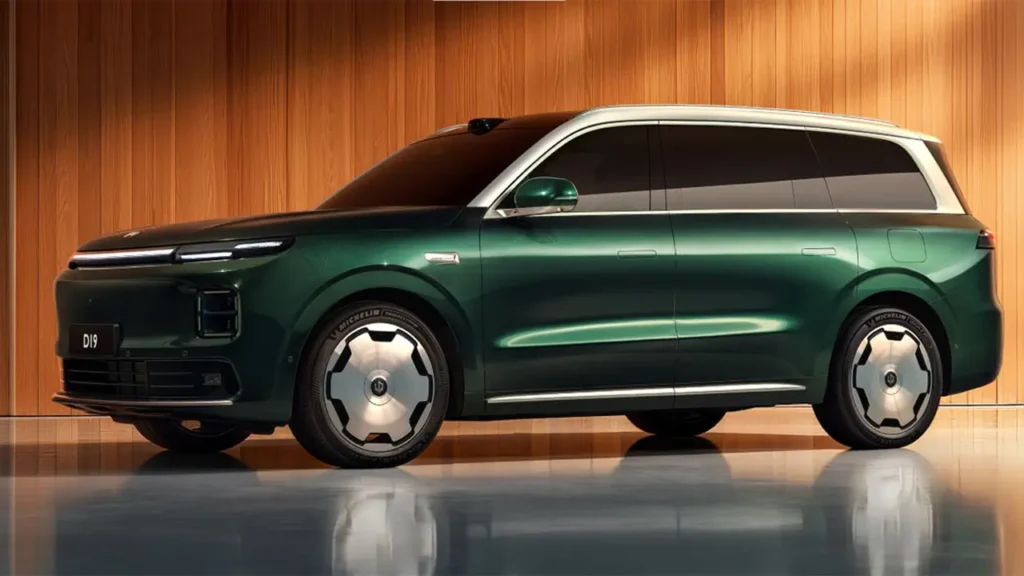
Leapmotor D19 spy shots specs — quick fact-check table
Before diving deeper into the details, let’s organize what we actually know versus what remains speculation. The table below summarizes the confirmed information and areas where we’re still waiting for official clarification from Leapmotor.
| Item | Details |
|---|---|
| Segment | Full-size SUV |
| Launch window | Q1 2026 (expected) |
| Chips | Dual Snapdragon 8797 (cockpit + ADAS) |
| EV battery / range | 115 kWh / up to 720 km (reported) |
| EREV option | Yes (reported) |
| Price | ≈300,000 CNY (rumored range) |
| Key rivals | ONVO L90, Deepal S09 (reported) |
This snapshot of Leapmotor D19 full size SUV specifications reveals an interesting pattern: Leapmotor is targeting the sweet spot where premium meets accessibility. The estimated 300,000 CNY price point (roughly $41,000-42,000 USD) positions it below traditional luxury brands while offering comparable or superior technology.
The dual-powertrain strategy—offering both pure EV and Extended Range Electric Vehicle (EREV) variants—shows Leapmotor has learned from the market. Chinese consumers, particularly those considering full-size SUVs for family use and occasional long-distance travel, appreciate having the range-anxiety safety net that an EREV provides. The 115 kWh battery for the pure EV version is substantial, suggesting Leapmotor isn’t compromising on capability even in the all-electric configuration.
What’s particularly noteworthy in these Leapmotor D19 spy shots specs is the chip configuration. Most manufacturers at this price point use a single system-on-chip (SoC) that handles both infotainment and driver assistance. Leapmotor’s decision to deploy two Snapdragon 8797 chips—one dedicated to the cockpit experience and another to ADAS processing—signals serious ambitions in the autonomous driving space.
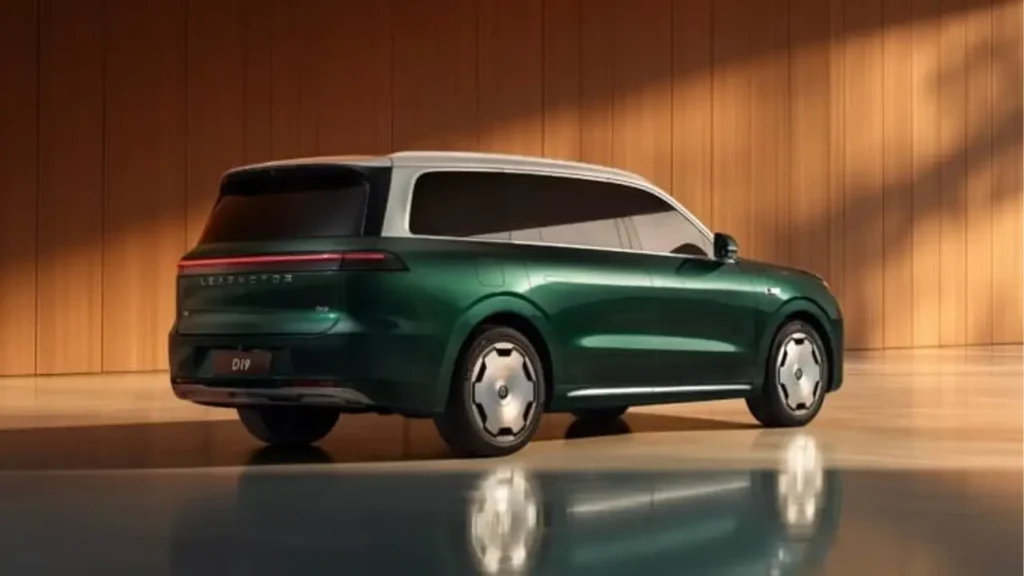
Leapmotor D19 spy shots specs — design from spy photos
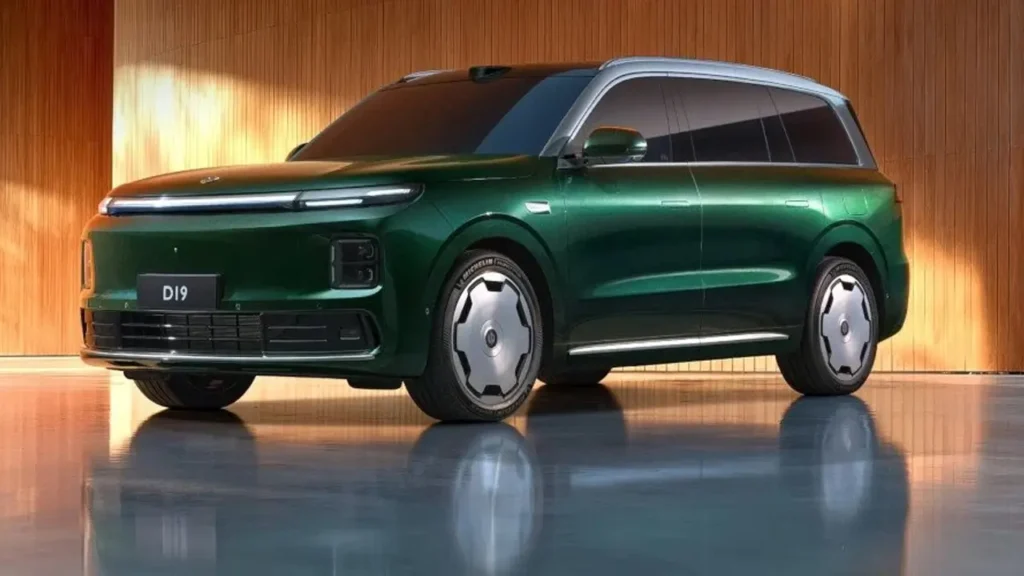
Heavy camouflage can’t hide everything, and the leaked spy photos of the D19 reveal several crucial design elements. The proportions immediately stand out: this is unmistakably a full-size SUV with a long wheelbase and substantial overhangs front and rear. Unlike the more compact B10, the D19’s silhouette suggests serious interior volume, particularly in the third-row area where many competitors compromise.
The front fascia, while wrapped in typical black-and-white test pattern cladding, hints at Leapmotor’s evolving design language. You can make out a full-width light bar that’s become somewhat standard in Chinese EV design, but the headlight clusters appear more sophisticated than what we’ve seen on the C11 or B10. The grille area—or rather, the closed-off panel where a grille would traditionally sit—seems to have a textured or patterned surface, possibly integrating sensors or simply adding visual interest to an otherwise flat surface.
From the side profile visible in these Leapmotor D19 spy shots specs images, the window line rises toward the rear, creating a slightly coupe-like roof treatment that’s popular in the premium SUV segment. This design choice typically improves aerodynamics at the cost of some third-row headroom, so it’ll be interesting to see how Leapmotor balances style with practicality. The wheels appear to be 20 or possibly 21 inches—substantial rubber that further emphasizes the vehicle’s premium positioning.
The rear three-quarter view shows a relatively upright D-pillar despite the sloping roofline, and what looks like a substantial rear overhang. This suggests Leapmotor prioritized cargo space, which makes sense for a full-size family SUV. The taillights appear to follow the full-width LED theme, connecting across the rear hatch. Overall, while the camouflage prevents us from seeing final surface details, the Leapmotor D19 price positioning seems justified by the premium proportions and apparent attention to design refinement.
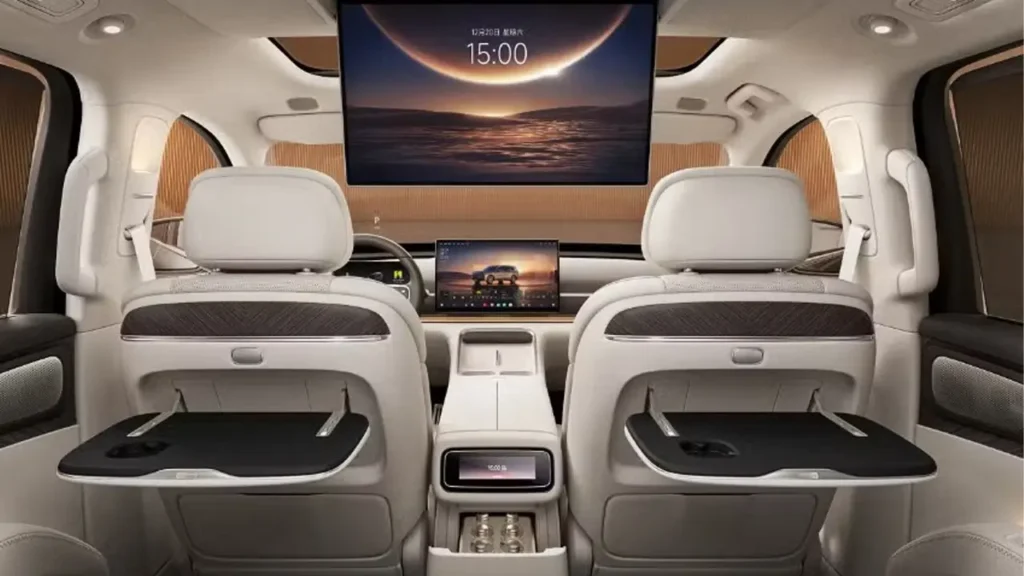
Leapmotor D19 spy shots specs — B10’s bigger sibling: positioning strategy
Understanding where the D19 fits requires looking at Leapmotor’s broader product strategy. The B10, launched in 2024, occupies the mid-size SUV segment with competitive pricing and solid technology. It’s been reasonably successful, appealing to young families and tech-savvy buyers who want modern features without premium brand prices. The D19 takes that formula and supersizes it—literally.
This isn’t just about making a bigger vehicle; it’s about brand elevation. Chinese automakers have learned that you can’t build brand value by staying in budget segments forever. Geely did it with Zeekr, BYD is doing it with Yangwang and Denza, and now Leapmotor is making its move upmarket with the D19. By creating clear differentiation between the B10 and D19, Leapmotor avoids internal cannibalization while giving existing B10 owners a natural upgrade path.
The Leapmotor D19 vs Leapmotor B10 comparison reveals strategic positioning across multiple dimensions. Where the B10 targets compact-to-midsize family needs with standard smart features, the D19 aims at buyers who need genuine three-row capability, want flagship-level technology, and are willing to pay a premium for it. Think of it as the difference between a Volkswagen Tiguan and a Volkswagen Atlas—same brand philosophy, different size class and price tier.
Market research suggests there’s substantial demand in China for well-equipped, technologically advanced full-size SUVs that don’t carry traditional luxury brand premiums. The success of vehicles like the Li Auto L9 and Zeekr 009 (technically an MPV but competing for similar buyer wallets) demonstrates that Chinese consumers will pay 300,000-400,000 CNY for the right combination of space, technology, and brand perception. Leapmotor clearly believes the D19 can capture some of that market.
What makes this positioning particularly interesting is the timing. By launching in Q1 2026, the D19 arrives as the Chinese EV market shifts from explosive growth to more mature competition. Buyers are becoming more sophisticated, less impressed by gimmicks, and more focused on real usability, build quality, and after-sales service. These Leapmotor D19 spy shots specs suggest the company understands this evolution and is building accordingly.
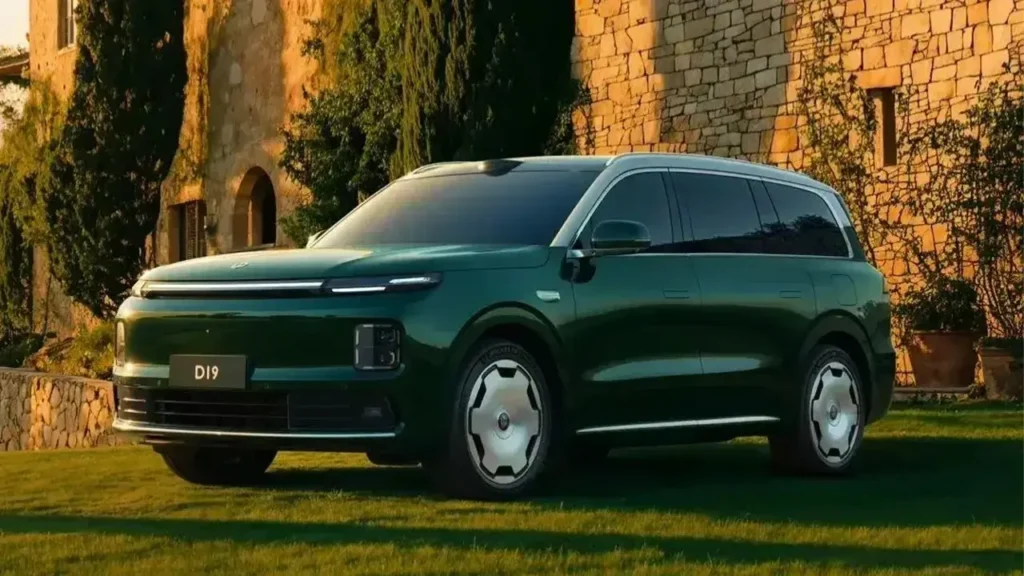
Leapmotor D19 spy shots specs — interior reveal
December 2025 brought unexpected gifts for Leapmotor watchers: a set of interior photos that appear to show the D19’s cabin in near-production form. While Leapmotor hasn’t officially confirmed these images, their quality and detail strongly suggest they’re legitimate—possibly from a dealer preview event or supplier facility.
The centerpiece is immediately obvious: a massive landscape-oriented touchscreen that dominates the dashboard. Measuring what appears to be around 17-18 inches diagonally, this display handles virtually all vehicle functions beyond basic driving controls. The Leapmotor D19 interior photos show the screen runs Leapmotor’s latest interface software, with large, clear icons and what looks like improved graphics compared to current models. The system appears to support split-screen functionality, allowing simultaneous display of navigation, media, and vehicle settings.
But screens aren’t the only story here. The material quality visible in these leaked images suggests Leapmotor has stepped up its game significantly. The dashboard appears to use a combination of soft-touch materials, what looks like genuine leather or high-quality synthetic on seating surfaces, and aluminum or aluminum-effect trim pieces. The stitching is prominent and appears to be actual stitching rather than printed or embossed lines—a detail that matters more than you might think for perceived quality.
Second-row comfort gets serious attention in the D19, as it should in a full-size SUV. The photos show what appear to be captain’s chairs for the second row (at least in some configurations), with substantial bolstering and integrated headrests. There’s clear evidence of second-row climate controls, USB ports, and what might be individual entertainment screens—though the resolution of the leaked images makes it hard to confirm this definitively. The floor appears to be flat or nearly flat, improving foot space for middle passengers if the bench seat option is chosen.
The third row is harder to evaluate from these Leapmotor D19 interior photos, but the visible portions suggest it’s a genuine third row rather than the token jump seats some manufacturers offer. The headliner appears to have adequate clearance, and the window size looks reasonable for passengers back there. Leapmotor would be wise to make this space genuinely usable, as competitors like the Li Auto L9 have set high standards for third-row comfort in this segment.
Leapmotor D19 spy shots specs — 2× Snapdragon 8797: the SUV’s brain
Here’s where things get technically interesting. The decision to use dual Snapdragon 8797 chips represents a significant architectural choice that separates the D19 from most competitors. Let’s break down what this actually means in practical terms.
The Snapdragon 8797 is Qualcomm’s automotive-grade system-on-chip designed specifically for next-generation vehicles. In the D19’s implementation, one chip is dedicated entirely to the cockpit domain—handling the infotainment system, digital instrument cluster, passenger displays, connectivity, voice commands, and all the user-facing smart features. The second 8797 is assigned exclusively to ADAS (Advanced Driver Assistance Systems) processing—managing sensor fusion, object detection and classification, path planning, and driver assistance feature execution.
This separation of concerns brings several advantages. First, it provides true redundancy: if one computational domain experiences issues, the other continues operating independently. This is crucial for safety-critical ADAS functions that must maintain reliability even if the entertainment system crashes. Second, it eliminates resource competition. In single-chip architectures, heavy infotainment usage (like rendering complex navigation graphics or playing high-resolution video) can theoretically impact the computational resources available for safety systems. The dual-chip Leapmotor D19 spy shots specs architecture prevents this entirely.
Performance-wise, each Snapdragon 8797 brings serious computational capability. The chip features an AI-optimized architecture capable of trillions of operations per second (TOPS)—essential for processing the enormous data streams from cameras, radar, lidar, and ultrasonic sensors in real-time. The GPU cores handle graphics rendering for displays while the AI accelerators tackle the neural network inference required for modern object recognition and scene understanding.
From a user experience perspective, this dual-chip setup should deliver noticeably smoother operation. Screen transitions should be instant, voice commands should process quickly, and navigation rendering should be fluid—all without any concern that these activities might affect the vehicle’s ability to detect obstacles or maintain lane keeping. It’s the kind of under-the-hood decision that might not make it into marketing materials but significantly impacts daily satisfaction with the vehicle.

Leapmotor D19 spy shots specs — platform and compute: why 8797 matters
The choice of the Snapdragon 8797 automotive platform isn’t just about raw processing power—it’s about ecosystem and future-proofing. Qualcomm’s automotive platforms come with extensive software development kits, cloud connectivity features, and over-the-air update capabilities that enable continuous vehicle improvement throughout its lifecycle.
Modern vehicles increasingly resemble smartphones on wheels: the hardware provides a foundation, but the software determines actual capabilities and user experience. The 8797 platform supports this paradigm with robust update mechanisms that allow Leapmotor to add features, improve existing ones, and fix bugs without requiring dealer visits. This is crucial in the Chinese market, where consumers expect their vehicles to improve over time through software updates, similar to how their smartphones receive new features.
The platform also enables Leapmotor to integrate with Chinese digital ecosystems more seamlessly. Support for services like WeChat, AliPay, native voice assistants, and integration with smart home systems requires deep platform-level cooperation. Qualcomm has worked closely with Chinese automakers and tech companies to ensure the 8797 provides the necessary hooks and APIs for these integrations.
From a centralized computing perspective, the Leapmotor D19 spy shots specs dual-8797 configuration represents what the industry calls a “domain controller” architecture. Rather than having dozens of separate electronic control units (ECUs) scattered throughout the vehicle, each handling specific functions, the D19 consolidates compute into two primary domains: cockpit and ADAS. This reduces wiring harness complexity, decreases weight, improves reliability by reducing connection points, and simplifies software development.
Looking ahead, this architecture positions the D19 well for the evolution of autonomous driving regulations in China. As higher levels of automation become legally permissible, Leapmotor can potentially unlock additional capabilities through software updates rather than requiring hardware retrofits. The computational headroom provided by two 8797 chips means the vehicle shouldn’t be limited by processing power for several years, protecting the investment of early adopters.
Leapmotor D19 spy shots specs — battery, charging, and range
The powertrain specifications remain somewhat fluid in these Leapmotor D19 spy shots specs, but the reported numbers are impressive if they prove accurate. The pure EV version allegedly features a 115 kWh battery pack—among the largest currently used in Chinese EVs. This massive capacity enables the claimed 720 km range on the CLTC cycle, which, while more optimistic than EPA or WLTP testing, still suggests real-world capability in the 550-600 km range under normal driving conditions.
Battery chemistry hasn’t been officially confirmed, but educated speculation points toward either CATL’s Qilin pack technology or possibly one of CALB’s latest high-density lithium-iron-phosphate (LFP) or nickel-based solutions. The 115 kWh capacity in a package that fits under a full-size SUV floor suggests energy density has reached at least 180-190 Wh/kg at the pack level—solid performance that balances energy capacity with cost and safety.
Charging specifications remain unclear from current leaks, but expectations for a premium 2026 EV would include 800-volt architecture supporting 400+ kW peak charging rates. This would allow the D19 to add substantial range during quick stops—potentially 350-400 km range added in a 15-20 minute charging session under ideal conditions. The Leapmotor D19 range 720 km claim becomes much more practical if charging is genuinely fast and convenient.
The EREV version adds complexity but also versatility. Extended-range electric vehicles use a smaller battery (typically 40-50 kWh) for daily electric driving, backed up by a gasoline generator that extends total range to 1,000+ km. This configuration appeals to buyers who want electric efficiency for city driving but need the flexibility for long trips without charging infrastructure concerns. The generator doesn’t mechanically drive the wheels—it simply charges the battery, which then powers the electric motors. This maintains the EV driving experience while eliminating range anxiety.
Real-world efficiency will depend heavily on vehicle weight, aerodynamics, and motor efficiency—all unknowns at this point. However, a full-size SUV achieving genuine 600+ km real-world range would be competitive with the best in class and address one of the primary concerns preventing wider EV adoption: the ability to handle spontaneous long trips without extensive charging planning.

Leapmotor D19 spy shots specs — ADAS, real intelligence, and FAQ
The Leapmotor D19 ADAS 1280 TOPS specification deserves unpacking. TOPS—Tera Operations Per Second—measures computational throughput, essentially how many calculations the ADAS system can perform each second. The claimed 1,280 TOPS figure likely represents the combined capability of both Snapdragon 8797 chips when their AI accelerators are fully utilized.
To put this in context: Tesla’s Hardware 3 autonomous driving computer delivers 144 TOPS; Hardware 4 reaches approximately 720 TOPS. Chinese competitors like Xpeng with the XNGP system use chips delivering 508 TOPS. So 1,280 TOPS would be genuinely high-end, enabling the D19 to process data from numerous sensors simultaneously while running complex neural networks for object detection, path prediction, and decision-making.
The practical implication isn’t just marketing numbers—it’s what the car can actually do. Higher computational capability enables the ADAS system to handle more complex scenarios, respond faster to unexpected situations, and process higher-resolution sensor data. It also provides headroom for future software improvements that might require more processing power as algorithms become more sophisticated.
Expected ADAS features for the D19, based on these Leapmotor D19 spy shots specs, likely include highway pilot systems similar to Navigate on Autopilot or Xpeng’s NGP, urban pilot for city driving with automatic navigation, automatic parking in complex spaces, and traffic jam assistance. The sensor suite probably includes multiple cameras (likely 11-13 around the vehicle), several millimeter-wave radar units, ultrasonic sensors for close-range detection, and possibly lidar for improved depth perception in challenging conditions.
FAQ: Your D19 questions answered
What is Leapmotor D19 ADAS 1280 TOPS and does it matter in daily driving?
The 1,280 TOPS specification refers to the combined computational power dedicated to processing data from the D19’s sensors and cameras. In daily driving, this translates to more reliable lane keeping, smoother adaptive cruise control, better object detection in complex traffic situations, and faster reaction times for collision avoidance systems. You probably won’t notice the TOPS number directly, but you’ll benefit from more confident and capable driver assistance features that feel more natural and less intrusive.
When is the Leapmotor D19 release date 2026 expected?
Current information points to a Q1 2026 launch window in China, which typically means announcements in January or February with deliveries beginning by March. However, Chinese automakers sometimes adjust timing based on regulatory approvals, supply chain readiness, or marketing considerations. Leapmotor will likely begin taking deposits 2-3 months before first deliveries, so expect pre-order information by late 2025 or early 2026.
Are there real confirmations for dual Snapdragon 8797 chips?
Multiple industry sources have reported the dual-chip configuration, and it aligns with leaked specification documents, but Leapmotor hasn’t issued official confirmation yet. The consistency across different reporting sources (automotive media, supplier chain information, and spy photos showing computational hardware) suggests this specification is accurate. We’ll have certainty when Leapmotor makes official announcements, likely at an auto show or dedicated launch event.
What do we know about Leapmotor D19 interior photos from December 2025?
The December leak showed a premium interior with a large central touchscreen, high-quality materials, second-row captain’s chairs in some configurations, and what appears to be a functional third row. The photos suggested significant attention to detail in fit and finish, including visible stitching, multiple material textures, and thoughtful storage solutions. However, until Leapmotor confirms these images officially, some details might change before production.
How realistic is Leapmotor D19 range 720 km for the EV version?
The 720 km figure is based on China’s CLTC testing cycle, which tends to produce more optimistic results than EPA or WLTP testing. A reasonable expectation would be 550-600 km of real-world range under normal driving conditions—highway speeds, climate control in use, and typical traffic patterns. The 115 kWh battery capacity is large enough to support these numbers, and modern electric SUVs from other manufacturers with similar battery sizes achieve comparable results.
Leapmotor D19 price: what seems realistic versus noise?
The rumored 300,000 CNY starting price (approximately $41,000-42,000 USD) aligns with Leapmotor’s positioning strategy and competitive landscape. The B10 starts lower, and Leapmotor needs clear differentiation while remaining accessible compared to established premium brands. Expect the base EV configuration around 300,000-320,000 CNY, with the EREV version possibly starting 20,000-30,000 CNY lower. Top-spec versions with all options could push toward 380,000-400,000 CNY. These estimates assume Leapmotor maintains its value-positioning philosophy while accounting for the D19’s flagship features.

Leapmotor D19 spy shots specs — final verdict
So should you be excited about the Leapmotor D19? The answer depends on what you’re looking for. If you need a genuinely spacious three-row SUV with cutting-edge technology, competitive range, and pricing that undercuts traditional luxury brands, the D19 deserves serious consideration—at least on paper. The Leapmotor D19 spy shots specs we’ve analyzed suggest a thoughtfully engineered vehicle rather than a rushed me-too product.
The dual Snapdragon 8797 architecture is particularly encouraging. It shows Leapmotor thinking beyond the immediate launch and building a platform that can evolve. The computational overhead means the D19 shouldn’t feel outdated in three years when competing vehicles have caught up to 2026 technology. This kind of future-proofing matters when you’re spending serious money on a vehicle you plan to keep.
However, some caution is warranted. Leapmotor is still establishing its reputation in premium segments. Build quality, long-term reliability, after-sales service, and software update consistency all remain question marks. Early adopters of any new model from any manufacturer take on some risk, and that’s doubly true for brands still proving themselves in higher price tiers.
The competition won’t be sitting still either. By the time the D19 launches in Q1 2026, rivals like the ONVO L90, Deepal S09, and possibly new entries from Geely or Chery will be in market or announced. The Chinese EV segment moves at breathtaking pace, so what seems impressive in leaked specs today might be merely competitive by launch time.
For those tracking Chinese automotive innovation, the D19 represents an important data point in Leapmotor’s evolution from value brand to mainstream contender. Whether it succeeds commercially will depend on execution details we can’t yet evaluate: actual build quality, real-world efficiency, ADAS system refinement, and whether the company can deliver premium customer experience to match the premium price.
Stay tuned to www.autochina.blog for updates as official specifications are revealed and we get closer to the actual launch. The Leapmotor D19 spy shots specs story is just beginning, and the complete picture will emerge over the coming months as Leapmotor transitions from spy photos to showroom reality.
Voice is becoming the new keyboard, and tools like Wispr Flow make it feel effortless. If you want faster notes, cleaner emails, and less typing fatigue, start here: https://aiinovationhub.com/wispr-flow-dictation-tool-voice-productivity/
Discover more from AutoChina
Subscribe to get the latest posts sent to your email.