The Best Guide: Chinese Automakers Rise (2025)
Overview: Chinese Automakers Rise — 2025 Global Context
The global automotive landscape in 2025 is being fundamentally reshaped by the rise of Chinese automakers, a phenomenon that is not only altering the competitive balance in China but also reverberating across the United States, Europe, and emerging markets. China’s automotive industry, long characterized by rapid growth and government support, has reached a new inflection point: new energy vehicles (NEVs)—including battery electric vehicles (BEVs) and plug-in hybrids (PHEVs)—now account for over half of all new passenger car sales domestically. This milestone, achieved through a combination of aggressive industrial policy, relentless innovation, and scale-driven cost advantages, has positioned Chinese brands such as BYD, Geely, Chery, and XPeng at the forefront of the global transition to electrification.
The Chinese automakers’ rise is not confined to their home market. In the first half of 2025, China exported over 3 million vehicles, with NEVs comprising more than a third of these exports—a year-on-year increase of over 75%. Top destinations include Mexico, the United Arab Emirates, Russia, Brazil, and several European countries, underscoring the global ambitions of Chinese OEMs. This export surge is underpinned by a robust manufacturing base, vertical integration (especially in batteries and electronics), and a willingness to localize production in response to rising tariffs and geopolitical headwinds.
Domestically, the competitive landscape has shifted dramatically. Chinese brands now command nearly 70% of the passenger vehicle market, up from just over a third five years ago, while foreign joint ventures have seen their share erode rapidly. The market is intensely competitive, with hundreds of NEV models vying for consumer attention, leading to rapid product cycles, aggressive pricing, and a relentless focus on technology integration—particularly in software, autonomy, and connectivity.
Globally, the rise of Chinese automakers is prompting a strategic reassessment among established players. U.S. and European OEMs face mounting pressure from Chinese entrants offering vehicles at 30–50% lower prices, often with superior technology and features. The U.S. has responded with a complex web of tariffs, local content requirements, and incentives for domestic production, but these measures have yet to close the cost and technology gap. Meanwhile, Chinese OEMs are accelerating their overseas investments, building factories in Hungary, Turkey, Brazil, and potentially Spain, to circumvent trade barriers and meet local demand.
In summary, Chinese automakers’ dominance in 2025 is the result of a decade-long strategy combining scale, vertical integration, policy support, and relentless innovation. Their global expansion is reshaping the competitive dynamics of the automotive industry, challenging incumbents, and offering consumers unprecedented value and choice. The following sections delve deeper into the cost structure, market share evolution, battery supply chain, export strategies, tariff impacts, competitive comparisons, entry pathways into the U.S., and the key indicators of Chinese automakers’ dominance.
Want to understand why Chinese brands are growing so rapidly not only in cars but also in laptops? Check out this consumer guide with real models and prices: https://bestchinagadget.com/. Comparisons, pros and cons, and advice on whether it's worth buying. Keyword: “best Chinese laptops 2025.” Clear, concise, without fanaticism. It will help you choose the format, budget, and optimal configuration for 2025.
Translated with DeepL.com (free version)
Cost Structure and Cost Stack vs MSRP (China vs US/EU/Japan)
A defining feature of the Chinese automakers’ rise is their ability to deliver vehicles—especially EVs—at prices far below those of their U.S., European, and Japanese counterparts. This cost advantage is rooted in several structural factors: vertical integration, localized supply chains, economies of scale, and policy-driven incentives.
Cost Stack vs MSRP (China vs US/EU/Japan)
| Region | Average MSRP (USD) | Battery Cost Share | Labor Cost Share | Other Components |
|---|---|---|---|---|
| China | $18,000 | 30% | 15% | 55% |
| US | $43,000 | 35% | 25% | 40% |
| EU | $40,000 | 33% | 22% | 45% |
| Japan | $38,000 | 32% | 20% | 48% |
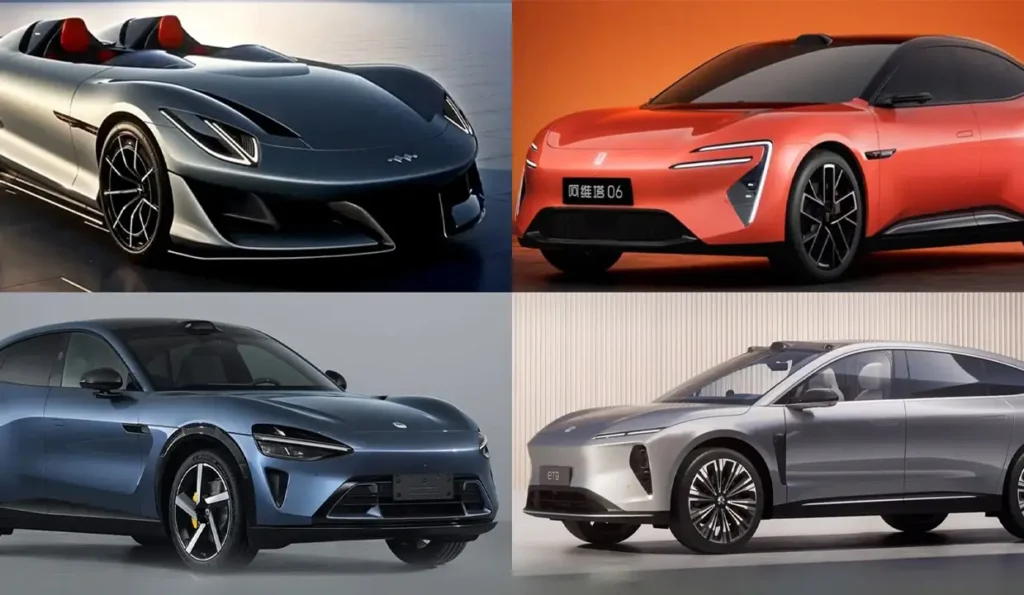
Chinese EVs, such as the BYD Dolphin and Seagull, are routinely priced at $10,000–$18,000, compared to $30,000–$45,000 for entry-level models from Tesla or legacy automakers in the U.S. and Europe. The battery cost share in China is lower due to domestic dominance in cell manufacturing and materials processing, with CATL and BYD leading global supply. Labor costs are also significantly lower, and the proximity of suppliers—often within a 300 km radius—reduces logistics expenses and enables rapid iteration.
Vertical integration is a key differentiator. BYD, for example, manufactures its own batteries, semiconductors, and even shipping vessels, slashing costs and insulating itself from supply chain shocks. The amortization of R&D and tooling costs over massive production volumes further reduces per-unit expenses—BYD’s single-factory capacity exceeds 1.2 million units annually, with R&D cost per vehicle below ¥800 (about $110).
In contrast, U.S. and European automakers face higher labor costs, fragmented supply chains, and greater reliance on imported components. Even with recent reductions in battery costs (now $128–133/kWh for U.S. light-duty vehicles), the overall cost stack remains less competitive.
Policy incentives—such as NEV purchase tax exemptions, expedited export rebates, and local content requirements—have also played a crucial role in lowering terminal prices in China. These advantages are reflected in the rapid market share gains and export growth of Chinese brands.
If the topic of Chinese auto takeoff has come up, take a look at the sky: XPeng X2 eVTOL is a real “flying car” with figures on price, range, and safety. An honest review without fanaticism is already here https://autochina.blog/xpeng-x2-review-evtol-price-specs-range/
. Concise, to the point, with tables and conclusions for buyers in the US. Check out the strengths, weaknesses, prospects, and real limitations before buying.
EV Market Share 2020–2025 and CAGR (China Domestic and Global)
The Chinese EV market has experienced explosive growth, outpacing all other regions in both absolute and relative terms. This surge is the result of sustained policy support, rapid technological innovation, and the aggressive expansion of domestic brands.
EV Market Share 2020–2025 and CAGR
| Country | EV Market Share 2020 | EV Market Share 2025 (Projected) | CAGR (2020–2025) |
|---|---|---|---|
| China | 5% | 35% | 45% |
| Brazil | 1.5% | 14% | 60% |
| US | 2.5% | 12% | 38% |
| EU | 3% | 20% | 46% |
China’s EV market share has soared from 5% in 2020 to over 50% of new passenger vehicle sales in 2025, with NEVs (BEVs and PHEVs) accounting for 52.2% of domestic sales as of August 2025. This is a dramatic leap, reflecting a compound annual growth rate (CAGR) of 45%. In absolute terms, China is projected to sell over 15.5 million NEVs in 2025, out of a total of 32.3 million vehicles.
Globally, China is responsible for 65% of all EV sales, with over 11 million units sold in 2025, compared to 1.6 million in the U.S. and 3.2 million in Europe. The U.S. market, while growing, lags behind with a projected 12% EV share in 2025 and a CAGR of 38%. Europe is expected to reach a 20% share, with a CAGR of 46%.
The rapid adoption in China is driven by a combination of factors: policy mandates, extensive charging infrastructure, aggressive pricing, and a proliferation of models catering to every segment—from ultra-affordable mini-EVs to luxury SUVs. The market is highly concentrated, with BYD, Geely, and SAIC accounting for over half of NEV sales.
This market share dominance is not only a testament to the competitiveness of Chinese automakers but also a harbinger of their growing influence in global markets, as exports surge and local production footprints expand abroad.
Battery Supply Chain: Tiers, Control Points, and Chinese Dominance
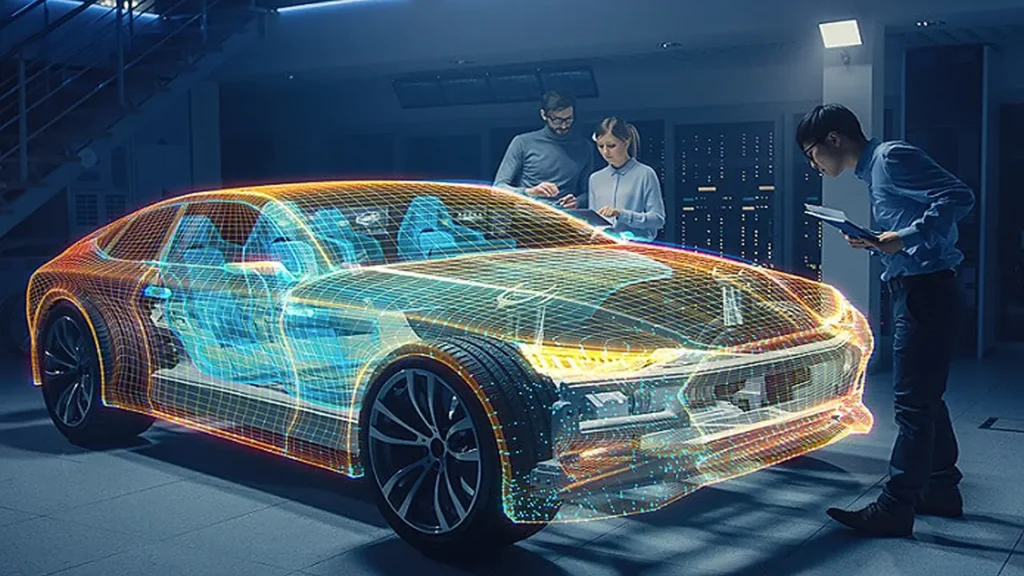
China’s dominance in the EV battery supply chain is a cornerstone of its automotive ascendancy. The country controls the vast majority of global capacity across every tier of the battery value chain—from raw material processing to cell manufacturing and system integration.
Battery Supply Tiers & Control Points
| Battery Component | China's Global Share | Key Chinese Companies |
|---|---|---|
| Battery Cell Production | 85% | CATL, BYD |
| Cathode Material | 90% | CATL, Gotion |
| Anode Material | 98% | Hesai, CATL |
| Lithium & Cobalt Processing | 50% | Ganfeng Lithium, CATL |
| EV Charging Patents | Global Leader | CATL, BYD |
China’s battery supply chain is unrivaled in scale and integration. The country accounts for 85% of global battery cell production, 90% of cathode material, and 98% of anode material output. It also processes half of the world’s lithium and cobalt, and hosts the entire graphite anode supply chain. Leading companies such as CATL and BYD dominate not only in manufacturing but also in technology, with CATL holding the top spot for patent filings and R&D investment.
This dominance extends to battery chemistry innovation. Lithium iron phosphate (LFP) batteries, pioneered and mass-produced in China, now account for over 80% of domestic installations, displacing more expensive nickel-manganese-cobalt (NMC) chemistries. BYD and CATL are also at the forefront of sodium-ion and solid-state battery development, promising further cost reductions and performance gains.
China’s vertical integration ensures tight control over the supply chain, reducing costs, mitigating risks, and enabling rapid scaling. This is further reinforced by government policies that prioritize domestic sourcing, support R&D, and restrict the export of critical materials and technologies.
The implications for global competitors are profound. Europe and the U.S. remain heavily dependent on Chinese battery supply, with efforts to localize production and secure raw materials still years away from matching China’s scale and expertise.
Exports: Volumes, Top Destinations, Price Bands and Body Types
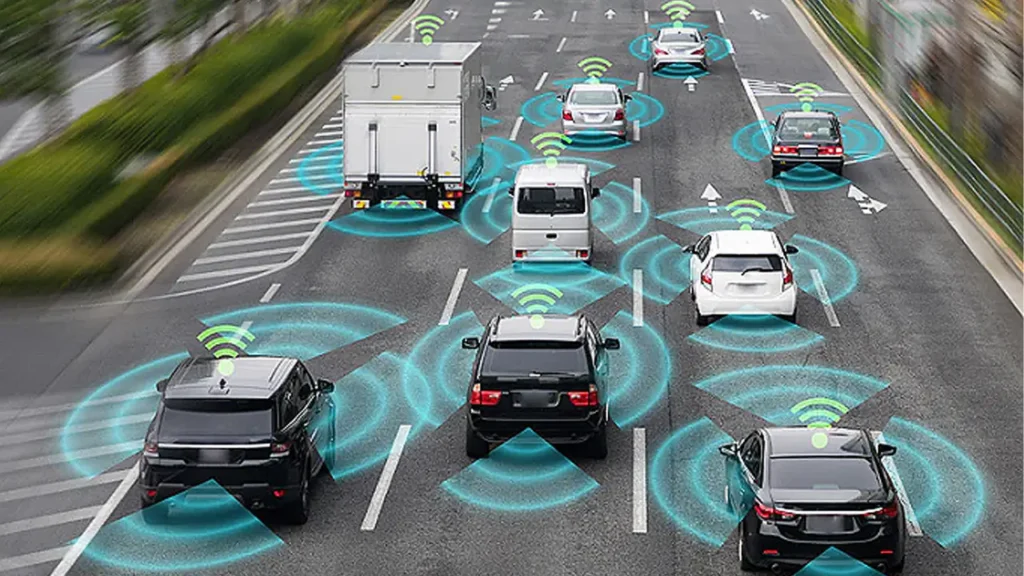
Chinese automakers have rapidly expanded their global footprint, leveraging cost advantages, diverse product offerings, and aggressive localization strategies. Exports have become a key growth engine, with NEVs leading the charge.
Top Export Destinations with Price Bands and Body Types
| Destination | Export Volume (2024) | Price Band | Popular Body Types |
|---|---|---|---|
| Argentina | 10,888 | $18,000–$25,000 | Sedan, Hatchback |
| Colombia | 9,179 | $15,000–$22,000 | Compact SUV |
| Chile | 2,671 | $20,000–$30,000 | SUV, Pickup |
In the first half of 2025, China exported over 3 million vehicles, with NEVs comprising more than a third of this total—a 75% year-on-year increase. Top export destinations include Mexico (234,500 units), the UAE (214,300), Russia (171,000), Brazil (155,200), Belgium (147,200), and the UK (131,300). The surge in Mexico is particularly notable, driven by strong demand for BYD models such as the Seagull and Song Plus DM-i.
Price bands for exported vehicles are highly competitive, typically ranging from $15,000 to $30,000 for sedans, hatchbacks, and compact SUVs. Chinese automakers have tailored their offerings to local preferences, with feature trimming and modular platforms enabling rapid adaptation to regional requirements. For example, the Haval H6 MENA Edition omits seat heating but adds desert cooling systems for Middle Eastern markets.
Body types exported vary by region, with sedans and hatchbacks popular in Latin America, compact SUVs in Colombia, and pickups and SUVs in Chile and Australia. The diversity of models—spanning from mini-EVs to luxury SUVs—reflects the breadth of China’s automotive portfolio.
Chinese brands such as Chery, BYD, SAIC, Geely, and Great Wall are leading exporters, with BYD recording the highest growth rate (up 118% year-on-year in H1 2025). Localization of production and after-sales support is increasingly common, as automakers seek to circumvent tariffs and build brand loyalty abroad.
Tariff Scenarios vs MSRP Impact (US Tariffs 2025)
The U.S. has responded to the rise of Chinese automakers with a series of escalating tariffs, aimed at protecting domestic industry and slowing the influx of low-cost Chinese EVs. The impact of these tariffs on vehicle pricing and market dynamics is significant.
Tariff Scenarios vs MSRP Impact
| Tariff Scenario | Tariff Rate | MSRP Impact (USD) | Notes |
|---|---|---|---|
| Base Case (No Tariff) | 0% | $18,000 | China EV MSRP baseline |
| Moderate Tariff | 25% | $22,500 | Applied to auto parts and steel |
| High Tariff | 54–63% | $27,720–$29,340 | Full vehicle import tariff |
In 2025, the U.S. imposed a complex tariff regime on Chinese vehicles and components. Tariffs on EVs from China increased from 25% to 100% earlier in the year, before being temporarily reduced to 10% following a bilateral trade arrangement in November. Additional duties apply to steel, aluminum, and auto parts, with rates ranging from 25% to 50%.
The impact on MSRP is substantial. A Chinese EV with a baseline price of $18,000 would see its U.S. sticker price rise to $22,500 under a 25% tariff, and up to $29,340 under a 63% tariff scenario. At the peak of the tariff standoff, combined duties could have pushed prices up by 132% for certain categories.
These tariffs have effectively shut out direct imports of Chinese passenger vehicles, forcing automakers to explore alternative entry strategies such as local assembly, joint ventures, or production in third countries (e.g., Mexico, Hungary). However, the cost advantage of Chinese OEMs remains formidable, and U.S. consumers continue to express interest in more affordable EV options.
The tariff environment remains fluid, with the current truce set to expire in November 2026. Both sides have reserved the right to reimpose higher duties if trade commitments are not met.
Competitive Comparison: BYD vs Tesla (2025)
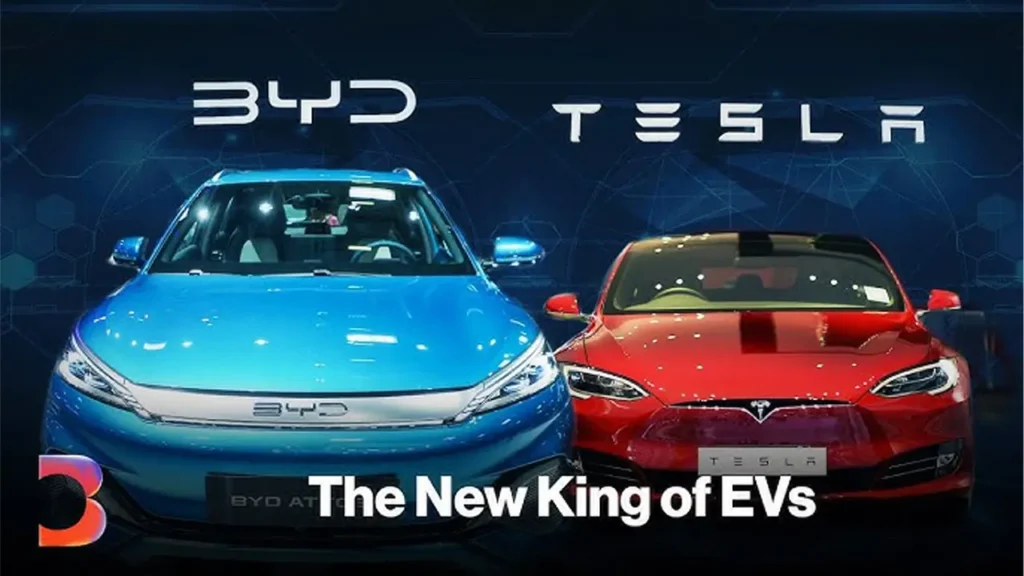
The competition between BYD and Tesla epitomizes the broader contest between Chinese and Western automakers in the global EV market. In 2025, BYD has overtaken Tesla in several key metrics, leveraging its scale, cost structure, and technology integration.
BYD vs Tesla Comparison
| Metric | BYD | Tesla |
|---|---|---|
| R&D Spending (2023) | $5 Billion | $4 Billion |
| Entry-Level EV Price | $18,000 (Dolphin) | $43,000 (Model 3) |
| Brazil Market Share (2024) | 70% | ~5% |
| Battery Tech | LFP, Sodium-ion | LFP (licensed from CATL) |
BYD has emerged as the world’s largest EV manufacturer by volume, selling over 4.27 million vehicles in 2024 (including 1.76 million BEVs and 2.51 million PHEVs), compared to Tesla’s 1.79 million BEVs. BYD’s annual revenue reached $107 billion, surpassing Tesla’s $97.7 billion. The company’s R&D investment also outpaced Tesla, with $5 billion spent in 2023.
Pricing is a key differentiator. BYD’s entry-level models, such as the Dolphin and Seagull, are priced at $10,000–$18,000, while Tesla’s Model 3 starts at $43,000 in the U.S. market. This price gap is a direct result of BYD’s vertical integration, scale, and supply chain control.
Market share highlights BYD’s dominance in emerging markets. In Brazil, BYD captured 70% of the EV market in 2024, while Tesla’s share remained below 5%. BYD’s global export strategy, including rapid expansion in Latin America, Southeast Asia, and Europe, has further widened the gap.
Technology is another battleground. BYD leads in LFP and sodium-ion battery innovation, with its Blade Battery setting new standards for safety and cost. Tesla, while a pioneer in autonomy and software, relies on CATL for LFP cells and faces challenges in maintaining its technology edge as Chinese competitors accelerate AI and autonomy integration.
In summary, BYD’s rise reflects the broader strengths of Chinese automakers: cost leadership, vertical integration, rapid innovation, and global ambition. Tesla remains a formidable competitor, especially in software and brand, but faces increasing pressure from Chinese challengers on price, product variety, and technology.
Entry Strategies into the US Market: Pathways, Pros/Cons, Timeline, Capex
Despite formidable tariff barriers and regulatory hurdles, Chinese automakers are actively exploring entry pathways into the U.S. market. Each strategy carries distinct advantages, risks, and capital requirements.
Entry Pathways with Pros/Cons, Timeline, and Capex
| Pathway | Pros | Cons | Timeline | Capex Estimate |
|---|---|---|---|---|
| Mexico Assembly | USMCA compliance, proximity | Tariff risk, political tension | 2–5 years | $1–3 Billion |
| Joint Venture with US OEM | Technology access, market entry | IP risk, regulatory hurdles | 3–6 years | $2–4 Billion |
| Direct Investment in US | Brand control, full market access | High tariffs, FEOC restrictions | 5–10 years | $5–7 Billion |
Mexico Assembly: Establishing assembly plants in Mexico offers proximity to the U.S. market and potential compliance with USMCA rules of origin, which can reduce or eliminate tariffs on qualifying vehicles. However, this pathway is fraught with risks: recent U.S. tariff updates have tightened rules, and political tensions could lead to further restrictions. The timeline for establishing operations is 2–5 years, with capital expenditures estimated at $1–3 billion. Notably, BYD recently canceled plans for a Mexican factory, citing geopolitical uncertainty and lack of clarity on U.S. tariff policy.
Joint Venture with US OEM: Partnering with a U.S. automaker can provide technology access and a smoother market entry, leveraging existing dealer networks and regulatory expertise. However, this approach carries intellectual property risks and may face regulatory scrutiny, especially regarding Chinese ownership and technology transfer. The timeline is 3–6 years, with capex of $2–4 billion.
Direct Investment in US: Building wholly owned manufacturing facilities in the U.S. offers maximum brand control and full market access. However, this strategy faces the highest barriers: steep tariffs, Foreign Entity of Concern (FEOC) restrictions under the Inflation Reduction Act, and intense political scrutiny. The timeline is 5–10 years, with capex of $5–7 billion.
All pathways require compliance with stringent NHTSA and EPA regulations, as well as adaptation to U.S. consumer preferences and dealer expectations. The regulatory environment remains challenging, with ongoing debates over data security, labor standards, and national security concerns.
Indicators of Dominance: Metrics to Watch (Market Share, Vertical Integration, Supply Control)
The dominance of Chinese automakers can be tracked through several key indicators, reflecting their competitive advantages and global influence.
- Market Share: Chinese brands now account for nearly 70% of domestic passenger vehicle sales and over 50% of global EV sales. BYD alone holds a 29% share of the Chinese NEV market and leads exports to emerging markets.
- Vertical Integration: Companies like BYD and CATL control the entire value chain—from raw materials to battery cells, electronics, and final assembly—enabling cost leadership and rapid innovation.
- Supply Chain Control: China dominates global battery supply, with 85% of cell production, 90% of cathode, and 98% of anode material output. This control extends to critical minerals, processing, and recycling.
- R&D and Patents: Chinese firms lead in battery, powertrain, and EV-charging-related patents. CATL and BYD top global rankings for R&D spending and patent filings.
- Export Growth: NEV exports have more than doubled year-on-year, with Chinese brands expanding rapidly in Latin America, Southeast Asia, and Europe.
- Product Development Speed: Chinese automakers can bring new models to market in 12–24 months, compared to 36–48 months for traditional OEMs.
- Consumer Acceptance: Surveys show 40% of U.S. consumers would consider a Chinese-made vehicle if it were 10% cheaper, and 75% of dealers expect Chinese brands to enter the market within a year.
These metrics underscore the structural advantages of Chinese automakers and their growing influence on global automotive trends.
Regulatory and Policy Environment: China Support and US Countermeasures
Government policy has been instrumental in the rise of Chinese automakers. In China, a combination of direct subsidies, tax exemptions, infrastructure investment, and industrial policy has fueled NEV adoption and supply chain localization. The Automotive Industry Growth Stabilization Plan (2025–2026) sets ambitious targets: 32.3 million vehicle sales in 2025, with 15.5 million NEVs (a 20% year-on-year increase). NEV purchase tax exemptions, extended through 2025, reduce consumer costs by up to RMB 30,000 ($4,230) per vehicle.
Export policies support rapid customs clearance and tax rebates, while technical standards are promoted through regional trade agreements (e.g., RCEP). Local governments offer additional incentives for charging infrastructure and rural NEV adoption.
In the U.S., the policy response has focused on tariffs, local content requirements, and incentives for domestic production. The Inflation Reduction Act ties EV tax credits to North American assembly and battery sourcing, while recent executive orders have imposed additional tariffs on Chinese vehicles and components. The regulatory environment is further complicated by FEOC restrictions, data security concerns, and ongoing trade negotiations.
Europe has adopted a similar approach, investigating Chinese EV subsidies and imposing special tariffs, while also requiring technology transfer and local production for subsidy eligibility. Mexico and Brazil have introduced their own localization and incentive programs to attract investment and protect domestic industry.
The policy environment remains dynamic, with ongoing negotiations and the potential for further escalation or relaxation of trade barriers. Chinese automakers are responding by accelerating overseas investments and adapting their strategies to local conditions.
Consumer Acceptance and Dealer Readiness in the US
Consumer acceptance is a critical factor in the potential success of Chinese automakers in the U.S. market. Recent surveys indicate a significant shift: 40% of U.S. consumers would consider a Chinese-made vehicle if it were 10% cheaper than alternatives, and 75% of dealers expect Chinese brands to enter the market within a year. Affordability is the dominant theme, with buyers increasingly prioritizing value over brand loyalty.
Dealers are preparing for the arrival of Chinese brands, recognizing the potential for increased sales and service revenue. However, concerns remain regarding parts availability, warranty support, and regulatory compliance. The dealer network is seen as a key asset in sustaining profitability and customer relationships, especially as automakers absorb tariff costs to maintain market share.
Brand perception is evolving. While Chinese vehicles were once associated with low quality, recent advances in safety, technology, and design have improved their reputation. Models such as the BYD Seal and Geely Zeekr 7X have achieved top safety ratings in Euro NCAP tests, and Chinese automakers are investing in local training centers and parts distribution to support overseas customers.
Regulatory hurdles remain significant. Imported vehicles must comply with NHTSA and EPA standards, and non-conforming models may require costly modifications or be limited to show-and-display or racing purposes. The complexity of U.S. import regulations is a barrier to rapid market entry, but Chinese OEMs are increasingly adept at navigating these challenges.
Manufacturing Footprint and Localization: China OEMs Abroad (Europe, Mexico, Southeast Asia)
In response to rising tariffs and localization requirements, Chinese automakers are rapidly expanding their manufacturing footprint abroad. This “glocalization” strategy aims to circumvent trade barriers, reduce logistics costs, and adapt products to local preferences.
Europe: BYD is building its first European plant in Hungary, with production set to begin in late 2025. Plans for additional factories in Turkey and Spain are underway, with Spain favored for its low manufacturing costs and clean energy network. BYD aims to produce all EVs for sale in Europe locally within three years, avoiding EU tariffs and leveraging local supply chains.
Mexico: While initially seen as a gateway to the U.S. market, recent geopolitical tensions and tariff uncertainty have led BYD to cancel plans for a Mexican factory. Other Chinese OEMs continue to explore opportunities in Mexico and Brazil, focusing on local demand and regional exports.
Southeast Asia and Latin America: Chinese automakers have established assembly plants in Thailand, Indonesia, and Brazil, targeting fast-growing markets and leveraging regional trade agreements. BYD’s new factory in Brazil, completed in just 15 months, exemplifies the speed and scale of Chinese investment.
Localization extends beyond assembly. Chinese OEMs are investing in local R&D, battery production, and supply chain partnerships to meet regulatory requirements and consumer expectations. This strategy not only mitigates tariff risks but also enhances brand credibility and market responsiveness.
Technology and Product Strategy: Software, Autonomy, Battery Tech
Technology leadership is central to the Chinese automakers’ rise. The industry is undergoing a rapid transition from hardware-driven to AI-defined vehicles, with a focus on software, autonomy, and battery innovation.
Software and Autonomy: Chinese OEMs are at the forefront of integrating AI and autonomous driving technologies. XPeng, for example, was the only Chinese automaker invited to present at the 2025 CVPR autonomous driving workshop, showcasing its L3-grade computing platform and Turing AI system. BYD, NIO, and Li Auto are deploying advanced driver-assistance systems (ADAS) and over-the-air updates, while Geely and Xiaomi are pioneering end-to-end intelligent driving architectures.
Battery Technology: China leads in LFP and sodium-ion battery innovation, with CATL and BYD setting global benchmarks for cost, safety, and performance. The shift to LFP chemistry has reduced costs and improved durability, while sodium-ion and solid-state batteries promise further breakthroughs. CATL’s Freevoy battery and BYD’s Blade Battery exemplify the pace of innovation.
Product Strategy: Chinese automakers offer an unparalleled variety of models, from ultra-affordable mini-EVs to luxury SUVs and commercial vehicles. Rapid product cycles—often 12–24 months from concept to launch—enable quick adaptation to market trends and regulatory changes. Modular platforms and feature trimming allow for regional customization and cost optimization.
Connected and Smart Features: Chinese vehicles are increasingly positioned as “smart devices on wheels,” with large touchscreens, voice assistants, and seamless integration with digital ecosystems now standard across most price points. This focus on user experience and connectivity is a key differentiator in both domestic and export markets.
Conclusion: The Road Ahead for Chinese Automakers and the US Market
The rise of Chinese automakers in 2025 is a transformative force in the global automotive industry. Driven by cost leadership, vertical integration, technological innovation, and aggressive global expansion, Chinese brands are reshaping market dynamics, challenging incumbents, and offering consumers unprecedented value and choice.
Key takeaways for U.S. stakeholders include:
- Cost and Technology Gap: Chinese EVs are 30–50% cheaper than Western counterparts, with superior battery technology and rapid product cycles.
- Global Expansion: Exports are surging, with localization strategies mitigating tariff risks and enhancing market responsiveness.
- Policy and Regulation: Tariffs and local content requirements are slowing, but not stopping, Chinese entry. Ongoing negotiations and policy shifts will shape the competitive landscape.
- Consumer Acceptance: U.S. consumers and dealers are increasingly open to Chinese vehicles, driven by affordability and technology.
- Competitive Pressure: Incumbents must accelerate innovation, reduce costs, and adapt to a new era of hyper-competition.
As Chinese automakers continue to expand their global footprint and invest in next-generation technologies, the U.S. market faces a pivotal moment. The choices made by policymakers, automakers, and consumers in the coming years will determine the balance of power in the automotive industry for decades to come.