 Skip to content
Networks Overview — Finding the Fastest and Cheapest Charge
BYD Charging Australia’s public charging infrastructure is growing rapidly, dominated by a few key networks. For BYD owners, all of whom use the CCS2 (for DC fast charging) and Type 2 (for AC charging) standards, the major ultra-rapid and fast charging networks are fully accessible. The primary difference between networks often boils down to pricing, accessibility, and reliability.
The three major players are Chargefox, Evie Networks, and the Tesla Supercharger network (now largely open to non-Tesla vehicles).
Chargefox & Evie Networks
Chargefox and Evie Networks operate the largest public network of ultra-rapid DC chargers (350kW) and fast DC chargers (50kW to 150kW). They are critical for interstate travel and quick top-ups.
- Chargefox: This network offers a mix of wholly-owned ultra-rapid sites and partner-owned stations (including NRMA, RACV, and others). Pricing typically ranges from $0.45 to $0.60 per kWh for DC charging, varying by speed (50kW vs. 350kW). Some older or AC stations may be free.
- Payment: Primarily via the Chargefox app, which requires a linked credit card. Users with memberships from partner motoring clubs (like NRMA) can receive a discount, which must be activated in the app before starting a session.
- Evie Networks: Known for its widespread coverage in metropolitan areas and its commitment to 100% renewable energy. Evie’s DC pricing is competitive, often ranging from $0.58 per kWh for 50kW chargers to around $0.73 per kWh for 350kW ultra-rapid chargers.
- Payment: Evie offers the most flexible payment options:
- Evie App: Link a debit/credit card for app-based start and stop.
- Evie Pass (RFID Card): A physical card linked to your account for charging without mobile reception.
- Tap & Go: At many sites, you can simply tap your debit/credit card on the terminal to start charging without needing an app or account. A pre-authorisation hold ($50) is typically applied and later refunded for the unused portion.
- Payment: Evie offers the most flexible payment options:
Tesla Superchargers
The Tesla Supercharger network is lauded for its high uptime and reliable charging experience. Many Supercharger sites across Australia are now open to all CCS-compatible EVs, including all BYD models.
- Access: Non-Tesla EVs must use the Tesla app to start a session. Find an open “Charge Your Other EV” location, plug in, select the stall in the app, and start charging.
- Cost: Pricing is variable, depending on location, time of day, and demand. Non-Tesla drivers generally pay a higher rate (e.g., $0.79 per kWh) compared to Tesla owners. However, non-Tesla drivers can sign up for a monthly membership fee (approx. $9.99 AUD) to access a lower per-kWh rate (e.g., $0.64–$0.66 per kWh), which is often competitive with other ultra-rapid networks.
- Compatibility Note: While the network is generally open, some early model BYDs, particularly certain Atto 3 and Dolphin units, historically encountered issues with Tesla V3 Superchargers. Newer BYD Seal and post-March 2024 production models are reportedly receiving hardware/software updates to ensure full compatibility, so it is always wise to check on forums or with your dealer if your specific vehicle has the latest fixes.
Finding the optimal station for your BYD is easily done using apps like Plugshare, which provides live availability, user reviews, and accurate pricing links for all major networks. Always check the provider’s dedicated app (Chargefox, Evie, Tesla) for the most current tariffs before charging, as pricing is dynamic.
Next EV Frontier: Zeekr 7 GT!
While BYD dominates the Australian market, the global EV landscape is constantly evolving. Looking ahead, performance-focused luxury brands like Zeekr are setting new standards for speed, range, and technology. If you’re interested in what the next generation of premium Chinese EVs offers, including cutting-edge $800 \text{V}$ architecture and ultra-fast charging, don’t miss our deep dive into the high-performance sedan.
Read the review now: https://autochina.blog/zeekr-7-gt-review-europe-wltp-800v-charging/
BYD Models & Charging Specs — Optimising Your Pit Stop
Maximising charging speed requires understanding your specific BYD model’s limitations and capabilities. While all current BYD EVs in Australia use the standard CCS2 port for DC charging and a Type 2 connector for AC charging, their internal charge controllers vary significantly, impacting peak speeds and charge curve efficiency.
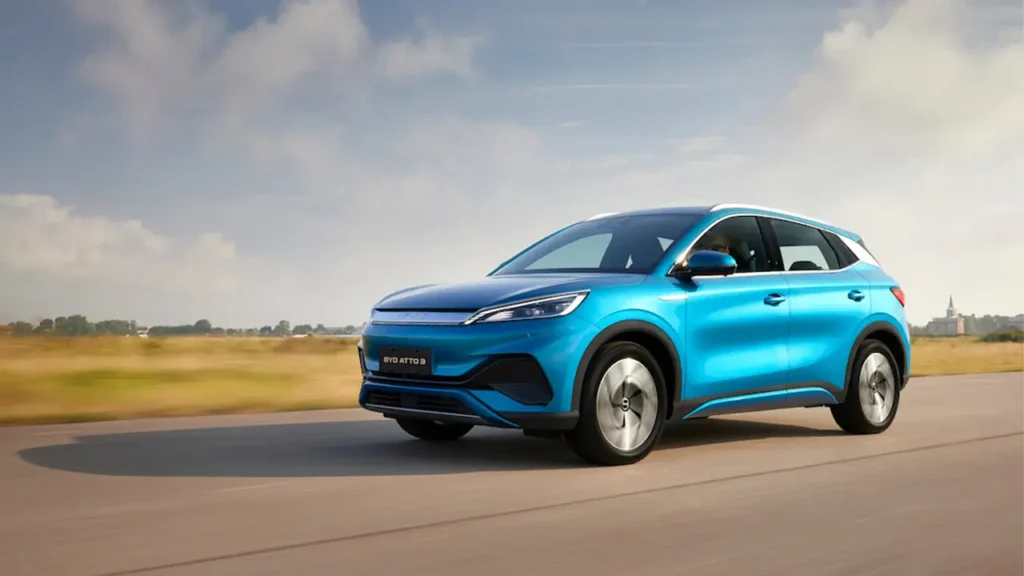
BYD Atto 3 — The DC Sweet Spot
The BYD Atto 3, available in Standard Range (50.1 kWh) and Extended Range (60.4 kWh), is Australia’s most common BYD. Understanding its charge rate is essential for road trips.
- AC Charging: Both variants are limited to 7 kW AC charging. This means installing a 7.4 kW single-phase wallbox at home is optimal; a more expensive 22 kW three-phase unit will not charge the Atto 3 any faster. Charging from 0–100% at home typically takes around 9.5 to 10 hours for the Extended Range.
- DC Fast Charging: The peak DC charging speed is approximately 88 kW. This rate is achieved around 30% State of Charge (SoC) and typically begins to taper down above 60–70% SoC.
- Real-World Pace: The Atto 3 does not fully utilise the 150kW or 350kW chargers available on ultra-rapid networks, but its reliable 80–88 kW peak means it still performs well. An estimated 10–80% charge takes about 45–50 minutes on a high-speed charger.
- Road Trip Tip: Because the peak is below the charger’s maximum, you are less likely to be slowed down by other vehicles sharing the power cabinet, making 150kW or 350kW stations the preferred choice for reliable, fast charging.
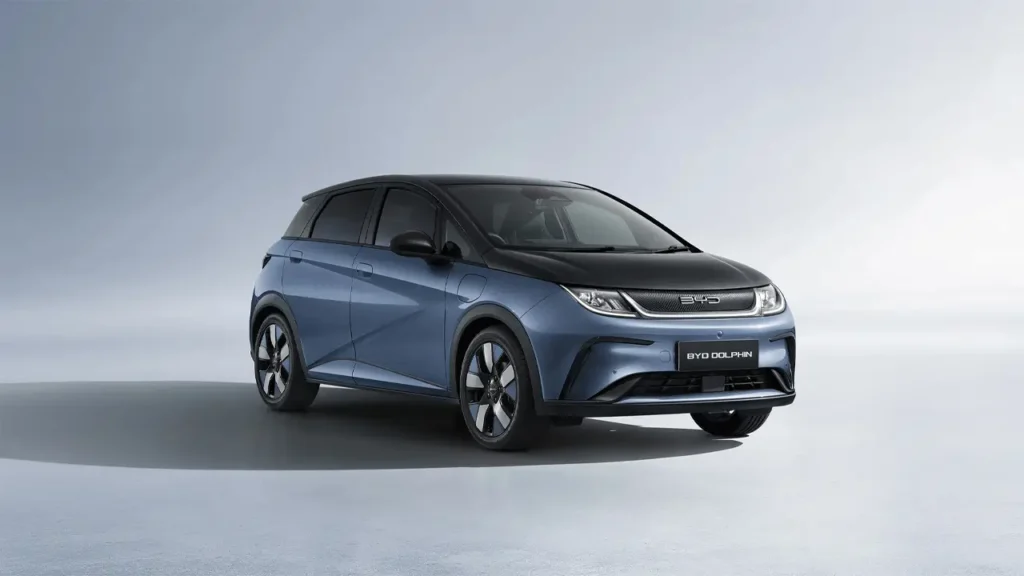
BYD Dolphin — AC/DC and Estimated Time 30–80%
The compact BYD Dolphin, in Dynamic (44.9 kWh) and Premium (60.48 kWh) versions, is focused on urban use but is capable of road trips with proper planning.
- AC Charging: Like the Atto 3, all Dolphin variants are limited to a maximum of 7 kW AC charging. For the larger Premium battery, a full 0–100% AC charge will take around 8.5 to 9 hours.
- DC Fast Charging: The Dolphin’s DC peak speeds are slightly lower than the Atto 3.
- Dynamic (44.9 kWh): Peaks around 60 kW DC.
- Premium (60.48 kWh): Peaks around 80 kW DC.
- Approximate 30–80% Time: The Dolphin’s smaller batteries mean that despite the lower peak speed, the time to add a usable amount of range is competitive. A 30–80% charge is estimated to take between 35 to 45 minutes on a DC fast charger for the Premium model. For both variants, charging past 80% is inefficient and should be avoided unless absolutely necessary for range completion.
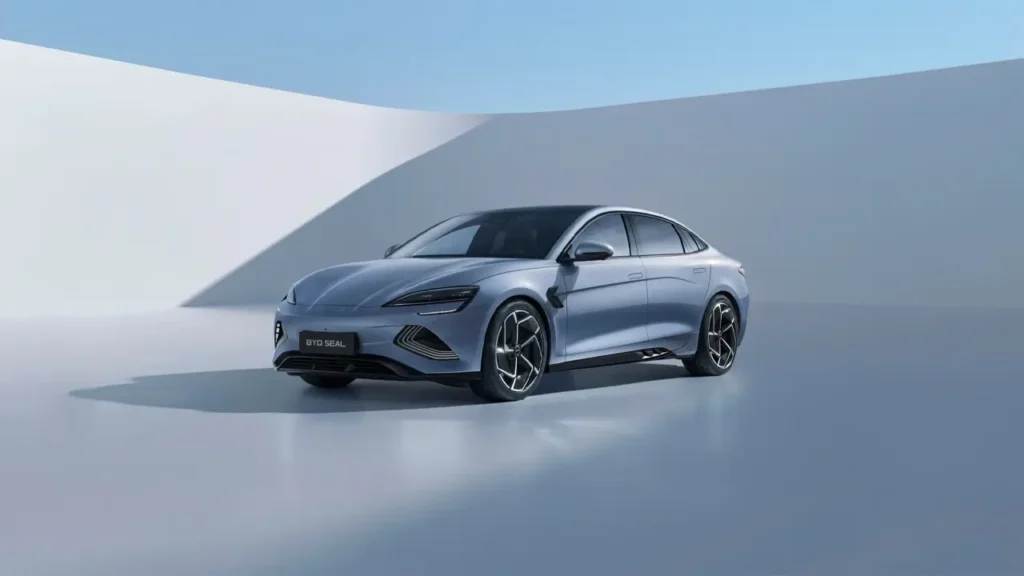
BYD Seal — High Peak DC and Road Trip Efficiency
The BYD Seal sedan, particularly the Extended Range and Performance variants, is built on a higher-voltage platform than its siblings, allowing for significantly faster DC charging and better road trip capabilities.
- AC Charging: Standard Range and Extended Range models are typically limited to 7 kW AC in Australia, though some international specs feature 11 kW AC. Always confirm the vehicle’s compliance plate or local dealer information. For a home charge, the 7 kW limit means an overnight charge is necessary for the large battery packs.
- DC Fast Charging: The Seal’s performance elevates it above the Atto 3 and Dolphin.
- Standard Range (61.4 kWh): Peaks around 110 kW DC.
- Extended Range/Performance (82.6 kWh): Peaks around 150 kW DC.
- Road Trip Nudges: The Extended Range/Performance model’s ability to hit 150 kW is a game-changer, placing it in the top tier of charging EVs. An estimated 10–80% charge on the largest battery takes only 35–40 minutes when connected to a 150kW or 350kW charger. The high peak and sustained curve make it highly efficient on Australia’s ultra-rapid networks. Given its large battery capacity, the Seal is an excellent platform for covering long distances with minimal downtime.
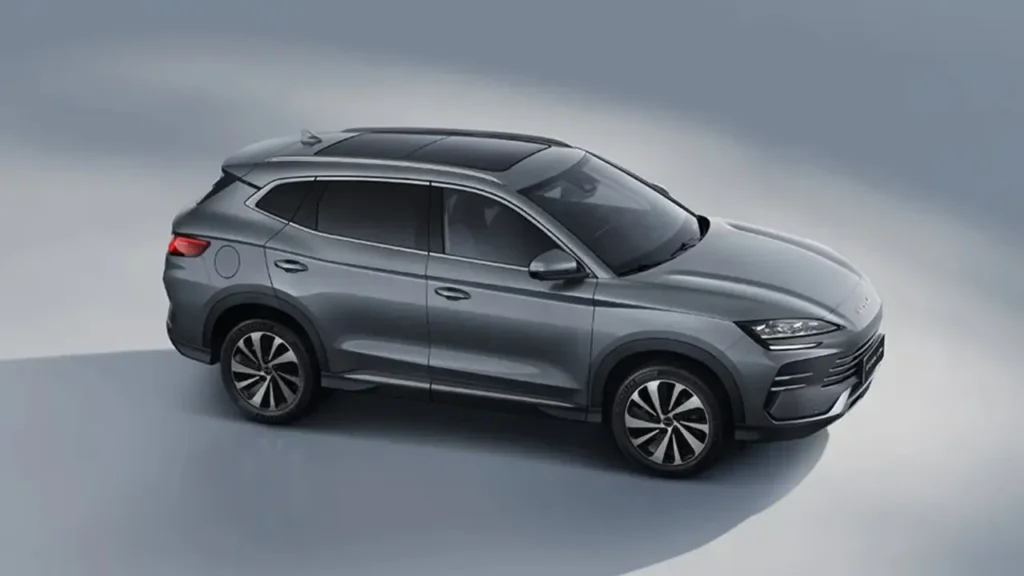
BYD Sealion 6 — PHEV Specifics: When to Charge and When to Refuel
The BYD Sealion 6 (previously Seal U DM-i) is a Plug-in Hybrid Electric Vehicle (PHEV), and its charging strategy differs entirely from the full EVs. It features a smaller battery (e.g., 18.3 kWh) for a short, pure-electric range (around 92 km WLTP).
- AC Charging: The Sealion 6 has a maximum AC charging speed of 7 kW (Type 2 connector). Charging the small battery from empty to full at this speed takes approximately 2.5 to 3 hours.
- DC Charging: Crucially, the Sealion 6 does not support DC fast charging (CCS2). It is designed solely for AC charging.
- Optimal Strategy:
- Home is Best: The primary charging location should be at home overnight on an AC wallbox or standard power point, using the cheap off-peak electricity rates. This makes daily local driving entirely electric and very inexpensive.
- Public AC: Charging at public AC chargers (e.g., 7 kW or 22 kW chargers in shopping centre car parks) is viable but only worthwhile if the energy is cheap or free. Given the low cost of the energy required, paying high public AC rates might offset the fuel savings.
- Road Trips: For long-distance travel, it is almost always more cost and time-efficient to run on the hybrid (petrol) system. Spending 3 hours at a 7 kW public charger to gain 90 km of range is not a practical use of time when the combustion engine offers instant refuel and extended range. The Sealion 6 should be viewed as a petrol car with a massive electric range buffer for daily use, not a primary public charger user.
Beyond the Car: AI in the Home
Shifting gears from EV performance, the next major revolution is happening right inside your house! AI-powered home assistant robots are transitioning from science fiction to reality, promising unparalleled convenience and automation. Discover how the latest generation of smart machines is using advanced AI to manage tasks, secure your home, and integrate seamlessly with your smart devices.
Explore the future of domestic AI: https://aiinovationhub.com/ai-home-assistant-robots-category-aiinnovation/
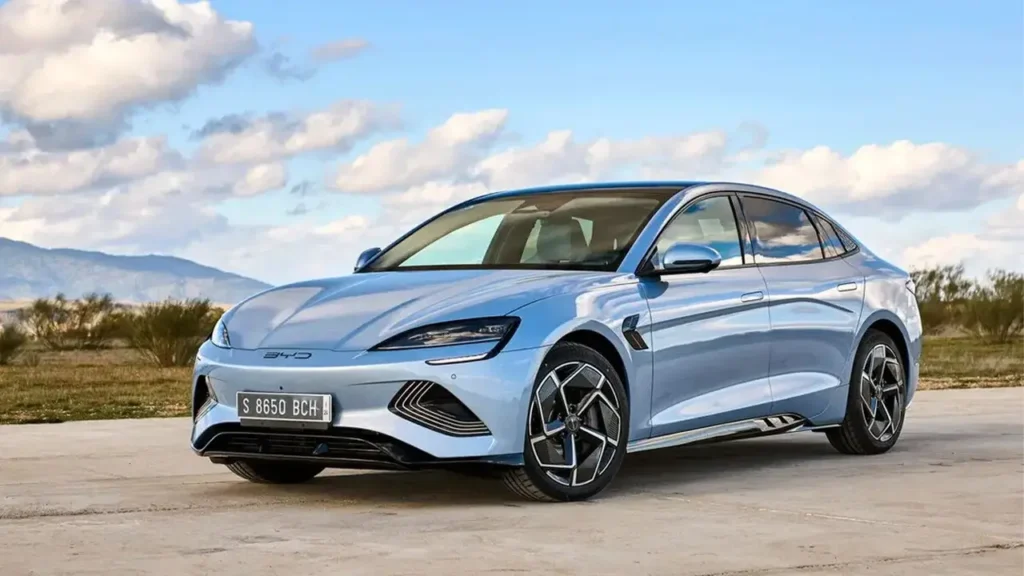
Cost Calculator (Examples) — AUD Charging vs. Fuel
To illustrate the cost and time savings of driving a BYD EV in Australia, we compare the cost of public DC charging a popular model (e.g., BYD Atto 3 Extended Range with 60.4 kWh battery) against a comparable petrol SUV (assuming a consumption of 8.5 L/100km and average petrol price of $2.00 AUD/L). We aim for a net 70% increase in range (30% to 80% SoC).
BYD Atto 3 Extended Range Specs (used in calculation):
Charging Time (30-80%): $\approx 45 \text{ minutes}$
Battery Capacity (usable for 30-80%): $60.4 \text{ kWh} \times 50\% = 30.2 \text{ kWh}$
Charging Efficiency Loss: Assume 10% loss at public DC charger. Energy Drawn: $30.2 \text{ kWh} / 0.9 = 33.5 \text{ kWh}$
Estimated Range Added (WLTP): $420 \text{ km} \times 50\% \approx 210 \text{ km}$
| Route Segment (Distance) | Energy Cost (AUD/kWh) | Energy Drawn (kWh) | BYD Charging Cost (AUD) | Petrol Cost (AUD) | Time at Stop (Minutes) |
|---|---|---|---|---|---|
| Sydney–Canberra (280 km) | Chargefox/Evie Ultra-Rapid (Avg. $0.65) | 33.5 kWh | $21.78 | 47.60 AUD | 45 min |
| (Required for one top-up) | Tesla Supercharger (Non-Member Avg. $0.79) | 33.5 kWh | $26.47 | 47.60 AUD | 45 min |
| Melbourne–Geelong (75 km) | Public AC (Avg. $0.40) | 33.5 kWh | $13.40 | 12.75 AUD | 3–4 hours (Not practical) |
| (If attempting to charge at a Fast Charger) | Evie/Chargefox Fast (Avg. $0.50) | 33.5 kWh | $16.75 | 12.75 AUD | 45 min (Overkill) |
| Brisbane–Gold Coast (80 km) | Jolt (Free 7 kWh + $0.46) | 33.5 kWh | $12.23 | 13.60 AUD | 45 min |
Formula for Cost Calculation:
$$\text{Charging Cost (AUD)} = \frac{\text{Battery Size (kWh)} \times \text{Charge Window (\%)} \times \text{Cost per kWh (AUD)}}{\text{Charging Efficiency (Decimal)}}$$
Example for Sydney-Canberra (Chargefox):
$$\text{Cost} = \frac{60.4 \text{ kWh} \times 0.5 \times 0.65 \text{ AUD}}{0.9} = \$21.78 \text{ AUD}$$
Conclusion on Cost:
For the 280 km Sydney-Canberra route, a single public DC charge for the BYD Atto 3 is less than half the cost of filling a comparable petrol SUV, even at premium public charging rates. While the petrol car is faster to “refuel” (5 minutes), the 45-minute stop for the EV aligns perfectly with a meal or coffee break, offering significant cost savings on long-distance travel. For daily commuting, home charging at off-peak rates (e.g., $0.20/kWh) is the cheapest option, costing only around $6.70 AUD for the same amount of energy.
Charging Tips — Maximize Speed and Minimize Hassle
Optimising your BYD charging experience is as much about planning and etiquette as it is about technical specs. Mastering these tips can significantly reduce your charging costs and stop times.
1. Plan Your State of Charge (SoC) Window
The speed at which a BYD can charge is highly dependent on the battery’s current State of Charge. All modern EVs, including the BYD models, follow a charging curve where speed (kW) is highest when the battery is low and tapers off sharply as the battery fills.
- Optimal Window (10% to 80%): This is the sweet spot for maximum efficiency and speed. When planning a road trip stop, aim to arrive with an SoC below 30% to capture the highest possible charging rate (88 kW for Atto 3, 150 kW for Seal). Never charge past 80% on a DC fast charger unless absolutely necessary, as the final 20% can often take as long as the first 70%, leading to high “idle fees” and long queues.
- The 90–100% Rule: Reserve the last 10–20% of charging for cheap, slow AC charging at home or your destination.
2. Time-Based Charging: Night and Off-Peak Rates
The single most affordable charging strategy is to use cheap, off-peak home electricity. Public DC charging, however, can also vary by time.
- Tesla Variable Pricing: Tesla Superchargers often employ variable pricing, with lower rates offered late at night or early in the morning when demand is lowest. Check the Tesla app for these discounted hours.
- Charging Apps and Promotions: Always use the dedicated apps (Chargefox, Evie, Tesla) to check for current promotional rates or time-of-day discounts. Some networks, like Jolt in urban areas, offer a small amount of free energy (e.g., 7 kWh per day), which is perfect for a quick, free top-up.
3. Avoiding Queues and Managing Etiquette
Australian charging infrastructure is still building out, and queues at popular locations are common, particularly during holiday periods.
- Use Live Maps: Always check the live status (available/in-use) of chargers on the provider’s app (Chargefox/Evie) or on a consolidated app like Plugshare before driving to a station.
- Charging Etiquette:
- Move On: As soon as you hit your target SoC (ideally 80%) or your session is complete, unplug and move your vehicle. Do not use the charging bay as a parking spot.
- Idle Fees: Be aware that most DC charging networks enforce idle fees (e.g., $0.40 to $1.00 per minute) after a short grace period (often 10 minutes) once charging completes. These fees are designed to enforce etiquette and keep the chargers moving.
4. Maximise AC Charging
Remember that while DC charging is for road trips, AC charging is your cost-saving workhorse.
- Destination Charging: Utilise free or low-cost AC chargers at hotels, shopping centres, or workplaces. The BYD Atto 3 and Dolphin, limited to 7 kW AC, can add significant range during a shopping trip or work day without the high cost of DC charging. Always keep a Type 2 to Type 2 cable in your boot for these opportunities.
FAQ (6 Q&A)
Here are the most common questions from BYD owners regarding charging in Australia.
Q1: Can BYD use Tesla Superchargers in AU?
A: Yes. Tesla has opened most of its Supercharger network in Australia to all CCS-compatible EVs, including the BYD Atto 3, Dolphin, and Seal. Access is managed via the Tesla app, and non-Tesla drivers must plug in first, select the stall in the app, and start charging. Note that some early model BYD vehicles may require a minor software/hardware update to reliably use the newer V3 Superchargers.
Q2: How to pay at Evie Networks chargers?
A: Evie Networks offers three convenient payment methods: 1) The Evie App (linked credit/debit card); 2) The Evie Pass (RFID card linked to your account); and 3) Tap & Go (for most sites), which allows you to start and pay for a session simply by tapping your debit or credit card on the charger’s terminal without needing the app.
Q3: What’s the best State of Charge (SoC) window for DC charging a BYD?
A: The most efficient and fastest charging window for all BYD models is between 10% and 80% SoC. Charging past 80% results in a significant reduction in charging speed, leading to longer stop times and often incurring idle fees. Aim to arrive at a DC charger with an SoC below 30% for the fastest initial charging curve.
Q4: Is it worth installing a 22 kW AC charger at home for my BYD Atto 3 or Dolphin?
A: No, it is generally not worth it unless you plan to get a different EV in the future. The BYD Atto 3 and Dolphin are both limited to a maximum AC charging speed of 7 kW (single-phase). A more cost-effective 7.4 kW single-phase wallbox will charge these vehicles just as quickly as a more expensive 22 kW three-phase unit.
Q5: Where is the charging port located on BYD models?
A: For the BYD Atto 3, Dolphin, and Seal, the charging port (which houses both the AC Type 2 and DC CCS2 connectors) is located on the front right-hand side of the vehicle, near the front wheel arch.
Q6: Should I DC fast charge my BYD Sealion 6 PHEV?
A: No. The BYD Sealion 6 (PHEV) does not support DC fast charging (CCS2). It is limited to AC charging (Type 2 connector). For long-distance driving, it is far more efficient to rely on its petrol hybrid system rather than stopping for hours at a slow public AC charger.
📊 BYD Charging Specs and Costs Summary (Australia)
The following table provides a quick reference for the essential charging specifications and estimated costs for the current BYD line-up in Australia, based on publicly available specifications and average charging rates.
| BYD Model | AC Max (kW) | DC Peak (kW) | 10–80% Time (est.) | Preferred Networks | Typical Cost 10–80% (AUD) |
|---|---|---|---|---|---|
| Atto 3 (Ext. Range) | 7 kW | $\sim 88 \text{ kW}$ | $\sim 45 \text{ min}$ | Chargefox, Evie, Tesla | $20 – $25 (Public DC) |
| Dolphin (Premium) | 7 kW | $\sim 80 \text{ kW}$ | $\sim 40 \text{ min}$ | Chargefox, Evie, Jolt | $18 – $23 (Public DC) |
| Seal (Ext. Range) | 7 kW | $\sim 150 \text{ kW}$ | $\sim 35 \text{ min}$ | Tesla (Best Value), Evie | $25 – $30 (Public DC) |
| Sealion 6 (PHEV) | 7 kW | N/A (AC Only) | $\sim 2.5 \text{ hours}$ (0-100%) | Home AC, Free Public AC | $3 – $6 (Public AC) |
Would you like me to find the nearest Chargefox, Evie, or Tesla charging station on the Sydney to Canberra route for a BYD Atto 3?
