Wuling Bingo EV: Why This Wuling Bingo electric car Became a City Hit
The Wuling Bingo EV has rapidly cemented its position as one of China’s most significant and intriguing urban electric vehicles. Produced by SAIC-GM-Wuling (SGMW), a joint venture renowned for its high-value, highly popular models, the Bingo EV is more than just another entry in the crowded Chinese EV market; it represents a major shift in what consumers expect from an affordable electric city car. Its success is not accidental but stems from a potent combination of attractive, retro-inspired design, remarkable interior space for its class, and an extremely competitive price point.
This Wuling Bingo electric car has consistently landed in the top tier of monthly sales charts, often challenging bigger, more established models. It appeals broadly, capturing the imagination of younger, first-time car owners looking for a stylish and economical ride, while simultaneously attracting ride-share drivers and urban commuters who prioritize low running costs and easy maneuverability.
The Bingo EV succeeds where many others fail by being genuinely practical without feeling overly utilitarian. Its four-door layout and relatively generous boot space set it apart from smaller, two-door city EVs, making it a viable primary vehicle for small families or individuals with active lifestyles. The model’s widespread acceptance by the market underscores a deeper trend: the maturity of China’s EV sector, where sophisticated, high-quality vehicles are now accessible at budget prices. Its straightforward, reliable technology, paired with SGMW’s extensive service network, further enhances its appeal to a mass market segment that values dependability.
The immediate success of the Bingo EV serves as a powerful testament to the consumer demand for affordable, functional, and stylish electric mobility solutions, positioning it as the current gold standard for urban EVs. To discover more game-changing models from the rapidly evolving Chinese automotive landscape, and to see how the Bingo EV stacks up against its rivals in greater detail, we invite you to explore the expert analysis and reviews available on www.autochina.blog.
If you like how the Wuling Bingo EV nails city life, you’ll probably enjoy our deep dive into the larger, family-friendly Leapmotor C10. Check out range, comfort, charging options and smart tech in both EV and REEV versions here: https://autochina.blog/leapmotor-c10-review-europe-ev-reev/ and see how it compares in real life.
💡 Wuling Bingo EV: A Quick Wuling Bingo EV review for the Curious
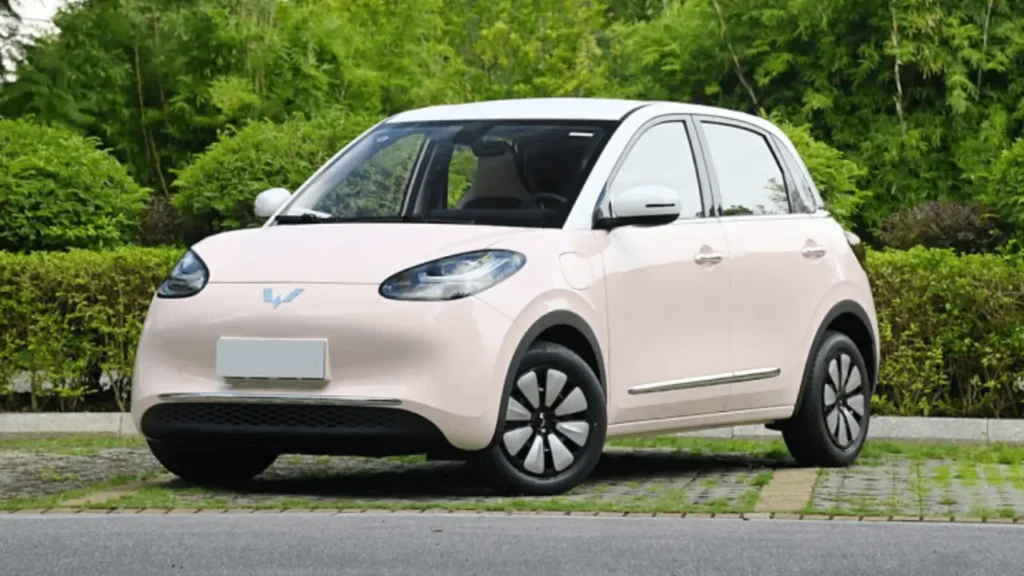
For those only recently introduced to the phenomenon that is the Wuling Bingo EV, a quick review reveals why this model has captured such a significant market share. In essence, the Bingo EV is designed as the ultimate urban runabout, offering maximum utility within a compact, easy-to-park footprint. It is ideal for city dwellers, students, and anyone needing a reliable, low-cost second family car.
The key strengths lie in its surprisingly spacious cabin—a feature rarely seen in this segment—and its aesthetically pleasing, bubble-like design that stands out from the often-generic budget EV crowd. Power-wise, the Bingo EV offers two main motor options: a base model with $30 \text{ kW}$ (approximately $41 \text{ hp}$) and a more powerful version delivering $50 \text{ kW}$ (about $68 \text{ hp}$). This latter version offers more confident highway driving, but both are perfectly adequate for stop-and-go city traffic.
Battery options include a $17.3 \text{ kWh}$ pack and a larger $31.9 \text{ kWh}$ pack, which translate to usable real-world city ranges. The driving experience is characteristically electric: quiet, immediate torque, and smooth acceleration. Handling is light and geared towards low-speed maneuverability, making tight parking spots non-issues. A mini-summary test-drive impression would be: it’s intuitive, easy to operate, and surprisingly comfortable. Unlike some ultra-budget EVs, the Bingo EV feels robust, with an interior that, while utilizing hard plastics, is well-assembled and features dual large screens for a modern feel.
The major upsides are its exceptionally low purchase price, minimal energy consumption, and fun-to-drive nature. The primary drawbacks are the inevitable compromises on high-speed stability and the basic nature of its non-DC fast charging options on certain trims. Overall, this Wuling Bingo EV review confirms its status as a compelling package for value-conscious buyers prioritising city usability over long-haul capability, positioning it as a significant disruptor in the affordable EV space.
If you enjoy how Chinese brands break the rules in the EV world, you’ll love what they’re doing with laptops. Meet the ultra-slim Huawei MateBook Fold, probably the thinnest foldable notebook right now: https://bestchinagadget.com/ — a futuristic AI-ready machine that still fits in your bag for everyday work and travel.
🎨 Wuling Bingo EV: Design, Cabin, and the cheap Chinese electric city car Format
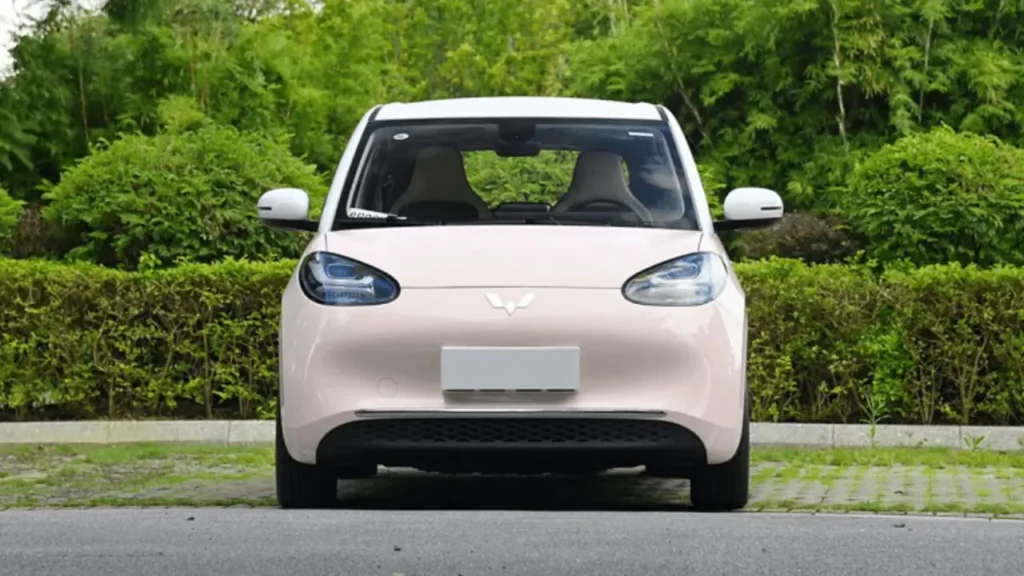
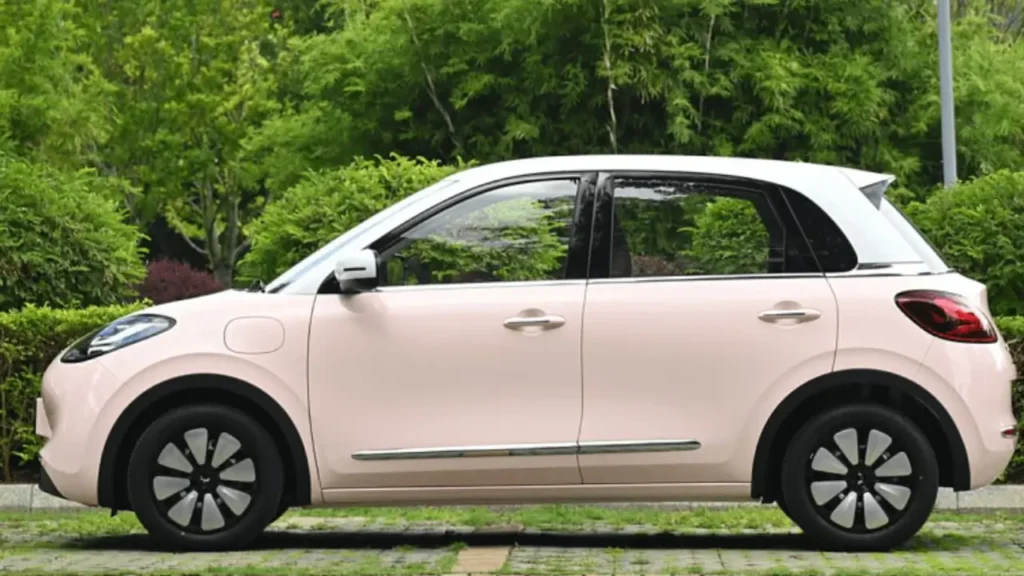
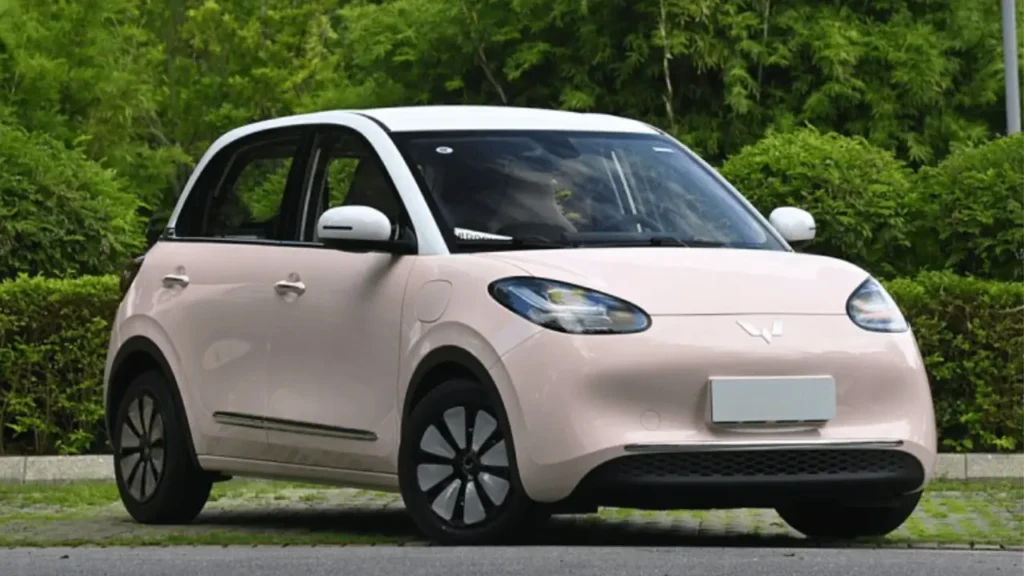
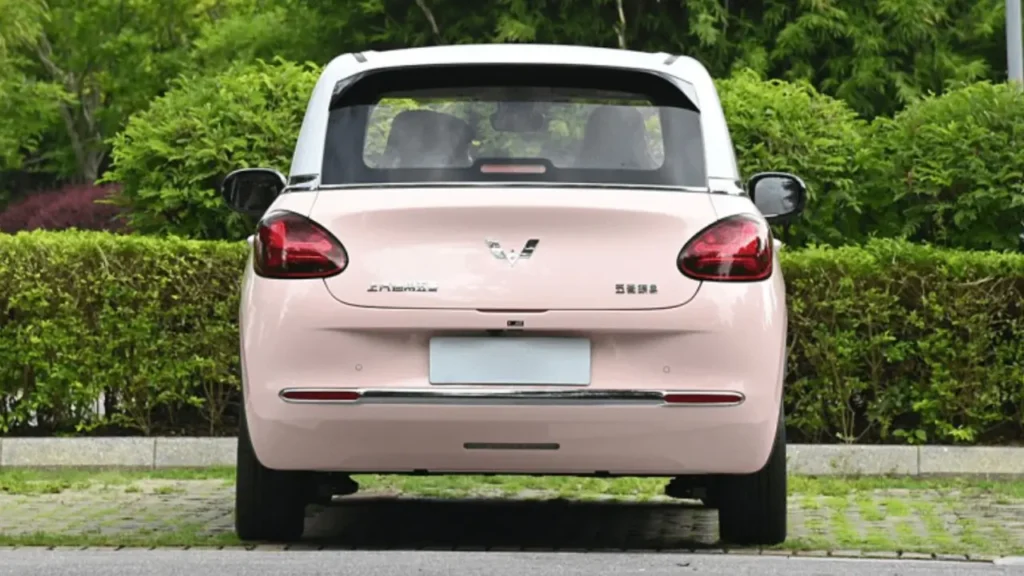
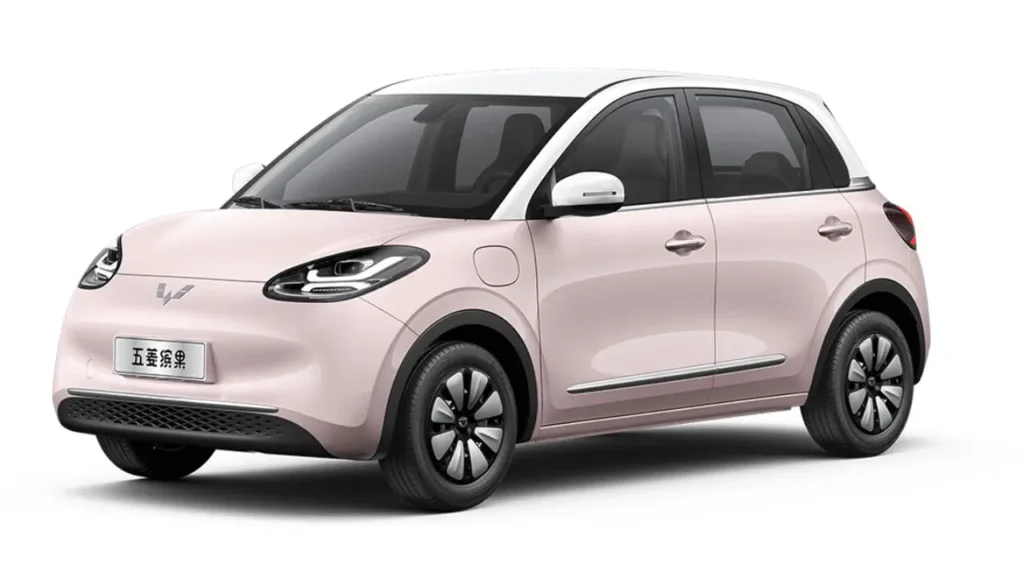
The visual appeal and interior architecture of the Wuling Bingo EV are key differentiators, effectively transcending the typical utilitarian look associated with a cheap Chinese electric city car. Its design adopts a smooth, rounded, and slightly retro aesthetic that has proven incredibly popular with younger buyers. The “bubble” shape, complete with large circular headlamps and a smiling front grille, lends it a friendly, non-aggressive character. Available exterior colours often lean towards pastel or vibrant dual-tone schemes, further enhancing its youthful charm and making it a fashion statement as much as a mode of transport. However, the true genius lies inside the cabin.
Despite its compact exterior dimensions ($3950 \text{ mm}$ length), the Bingo EV boasts an unexpectedly roomy interior, a benefit of its dedicated EV architecture. The four-seater configuration is practical, offering comfortable seating even for average-sized adults in the rear for short to medium journeys. More remarkably, the model features an innovative reclining seat design that can flatten the front and rear seats to create a fully connected sleeping or leisure area, a quirky feature that resonates well with the youth demographic and adds significant recreational value.
Luggage capacity is also impressive; the standard boot volume is $310 \text{ L}$, which can expand to a massive $790 \text{ L}$ when the rear seats are folded down, providing practicality far beyond what its appearance suggests. This blend of clever packaging and appealing design explains why it excels as a cheap Chinese electric city car for students, small urban families, and the car-sharing economy. It offers a low barrier to entry while delivering a quality of life—in terms of comfort and usability—that is far superior to many of its budget rivals, effectively showing that affordability does not have to mean an uninspired or impractical driving experience.
🔋 Wuling Bingo EV: Real Figures of Wuling Bingo EV range in City and Highway
Understanding the real-world Wuling Bingo EV range is crucial for potential buyers, as the gap between advertised CLTC (China Light-Duty Vehicle Test Cycle) figures and actual driving conditions can be substantial.
The model is offered with two primary battery packs: the $17.3 \text{ kWh}$ version, which yields a CLTC range of $203 \text{ km}$, and the more popular $31.9 \text{ kWh}$ version, rated at $333 \text{ km}$ CLTC. In practical, mixed city driving conditions in mild climates, the smaller pack is generally expected to provide a realistic range of $140$ to $160 \text{ km}$, while the larger pack should reliably deliver $250$ to $280 \text{ km}$. This performance makes the latter a true week-long commuter for the average urban driver.
Consumption patterns are heavily influenced by driving style and auxiliary use. Constant, aggressive acceleration, high speeds, and the use of the air conditioning or heating system can notably diminish the range. High-speed highway driving, where the car’s aerodynamic limitations become more pronounced, sees the most significant drop-off. For the $31.9 \text{ kWh}$ model, sustained highway speeds (around $100 \text{ km/h}$) can pull the effective range closer to $200 \text{ km}$.
Conversely, slow-moving, regenerative braking-friendly city traffic maximizes efficiency. Low temperatures are another factor, as cold weather can reduce the available battery capacity and increase the need for cabin heating. The following table illustrates the anticipated real-world Wuling Bingo EV range performance for the $31.9 \text{ kWh}$ variant under different typical driving scenarios.
| Driving Mode | Speed Profile | Consumption Estimate (Wh/km) | Real-World Range (approx.) |
|---|---|---|---|
| City Commute | Low-speed, stop-and-go | 95–110 | 280 km |
| Mixed Urban/Suburban | Moderate speeds, occasional highway | 110–130 | 250 km |
| Highway Cruise | Sustained high speed (100 km/h) | 150–170 | 200 km |
| Winter City Driving | Cold climate, heater use | 130–150 | 220 km |
This Wuling Bingo EV range assessment highlights the car’s primary design goal: to be an ultra-efficient urban vehicle. While it is capable of occasional highway journeys, its true efficiency and practicality shine brightest in the urban jungle, where its range is more than adequate for daily demands.
💰 Wuling Bingo EV: Trims and Wuling Bingo EV price – How Much Does the City Bestseller Cost?
The highly attractive Wuling Bingo EV price is arguably the single most important factor driving its phenomenal sales success and positioning it firmly as a contender for the best budget EV 2025 China. Wuling’s strategy involves offering multiple trim levels to appeal to a wide spectrum of budget-conscious consumers, ensuring there is a Bingo EV for almost every pocket.
The model is typically segmented into versions based on battery capacity and motor power. The entry-level model, often equipped with the $17.3 \text{ kWh}$ battery and the $30 \text{ kW}$ motor, is priced remarkably low in the Chinese market, generally starting below $\text{CNY } 60,000$ (approx. $\text{USD } 8,500$). This incredibly low barrier to entry makes it accessible to first-time buyers and families looking for a pure utility vehicle.
The mid-range and top-tier versions, featuring the larger $31.9 \text{ kWh}$ battery and the more powerful $50 \text{ kW}$ motor, naturally command a higher Wuling Bingo EV price, extending into the $\text{CNY } 80,000$ to $\text{CNY } 100,000$ range (approx. $\text{USD } 11,000$ to $\text{USD } 14,000$). These higher trims include crucial upgrades like DC fast charging capability (a vital feature for longer trips), more sophisticated interior materials, larger infotainment screens, and enhanced driver assistance features.
The difference in price between the base and top-tier versions represents a significant jump in range and features, highlighting Wuling’s effort to offer distinct “value propositions” at each level. The concept of “value for money” is intrinsic to the Bingo EV’s DNA. Even the most expensive variant is significantly cheaper than entry-level international EVs. Its aggressive pricing, combined with its high utility and stylish design, effectively makes the Bingo EV a strong candidate for the best budget EV 2025 China. This value proposition is the foundation of its marketing appeal and consumer trust, indicating that for the features and practicality offered, the price is not just low—it is genuinely competitive against both domestic and international rivals.
🆚 Wuling Bingo EV: Honest Comparison of Wuling Bingo vs BYD Dolphin for City and Suburb
The comparison of Wuling Bingo vs BYD Dolphin is a crucial benchmark for the Chinese urban EV market, pitting the ultimate budget champion against a well-rounded segment leader. The Wuling Bingo EV is laser-focused on city use and affordability, while the BYD Dolphin, a part of BYD’s popular ‘Ocean’ series, is positioned as a slightly more premium, multi-purpose compact hatchback. In terms of price, the Bingo EV is undeniably the winner, typically starting at a much lower price point than the Dolphin.
Size is another key differentiator: the Bingo EV is significantly shorter, making it superior for navigating and parking in congested urban centers. The Dolphin is longer and wider, translating to slightly better shoulder room and a more stable feel at higher speeds, making it the better choice for suburban commuting with regular highway stretches.
In performance and range, the BYD Dolphin (especially its long-range versions) has the upper hand, offering more powerful motor options, larger batteries, and consequently, greater range and better highway passing capability. The Dolphin also generally features more sophisticated standard equipment, including advanced safety features and higher-quality interior materials. However, the Bingo EV counters with its unique utility: the ability to transform the cabin into a large, flat leisure space, and its surprisingly large boot capacity (standard $310 \text{ L}$ vs Dolphin’s $345 \text{ L}$).
For a driver whose commute is strictly within the city limits and who prioritizes low purchase price and easy maneuverability, the Bingo EV is the clear choice. For those needing higher speeds, longer range, and a more refined, all-around package for city and intercity travel, the BYD Dolphin justifies its higher cost. The table below summarizes the key differences in the matchup of Wuling Bingo vs BYD Dolphin.
| Feature | Wuling Bingo EV (Top Trim) | BYD Dolphin (Entry/Mid Trim) | Advantage |
|---|---|---|---|
| Primary Use | City driving, utilitarian | City & suburban, all-rounder | Dolphin (Versatility) |
| Starting Price (CNY) | Sub CNY 100,000 | Over CNY 110,000 | Bingo EV (Affordability) |
| Length | 3950 mm | 4290 mm | Bingo EV (Maneuverability) |
| Max Range (CLTC) | 333 km | 420 km or more | Dolphin (Range/Battery Tech) |
| Max Power | 50 kW | ∼70–130 kW | Dolphin (Performance) |
| Unique Feature | Folding leisure space seats | Blade Battery technology | Tie (Different value) |
🥊 Wuling Bingo EV: The Battle of Wuling Bingo vs BYD Yuan Up in the Budget Segment
The head-to-head competition of Wuling Bingo vs BYD Yuan Up (also known as the Yuan Pro or a similar compact crossover variant) defines the sharp end of the budget electric segment, highlighting the choice between a compact car and a small crossover.
The Yuan Up, often characterized by its slightly rugged SUV styling and larger vehicle dimensions, targets consumers who desire the raised ride height and perception of greater safety that a crossover provides, whereas the Bingo EV remains firmly committed to the compact hatchback form factor. In this budget-focused battle, the Wuling Bingo EV leverages its lower entry price and superior urban usability. Its smaller size makes it easier to navigate narrow streets and congested parking lots, which are daily realities in major Chinese cities.
Conversely, the BYD Yuan Up appeals to a slightly different audience: young families or drivers who value a higher driving position and a more substantial road presence. The Yuan Up, being a crossover, naturally offers a bit more ground clearance and a potentially more comfortable ride over poor road surfaces. In terms of performance, similar to the Dolphin, the Yuan Up typically starts with a more powerful motor and a larger battery pack than the Bingo EV’s entry-level trims, giving it a performance edge on the open road.
The decision of Wuling Bingo vs BYD Yuan Up ultimately boils down to two distinct scenarios. The Bingo EV is the optimal choice for the true urbanite, the student, or the individual looking for a supremely efficient, easy-to-park, and incredibly cheap second family car. The Yuan Up, on the other hand, is better suited for a first-time family car, a suburban commuter, or anyone who frequently travels on mixed roads and desires the flexibility and slightly better visibility of a small SUV. Both models offer tremendous value, but the Bingo EV’s focus on affordability and city-specific design makes it the budget segment’s most focused and efficient urban companion.
✨ Wuling Bingo EV: Why This Is Truly the best budget EV 2025 China for Young Drivers
The Wuling Bingo EV deserves serious consideration as the best budget EV 2025 China, particularly for the critical demographic of young, first-time car buyers.
Its claim to this title rests on a compelling calculation involving low initial outlay combined with minimal ownership costs. For a young driver or recent graduate, the financial burden of car ownership is a primary concern.
The Bingo EV’s aggressively low purchase price makes it instantly accessible, often costing less than a high-end electric scooter or a used internal combustion engine (ICE) vehicle. Beyond the sticker price, the operational costs are exceptionally low. As an electric vehicle, fuel costs are drastically reduced compared to gasoline. Charging at home, especially during off-peak hours, can cost mere dollars for a full charge, translating to significant monthly savings.
Furthermore, maintenance costs for the Bingo EV are inherently lower than those for an ICE car, as EVs have fewer moving parts, eliminating the need for oil changes, spark plug replacements, and complex transmission maintenance. Insurance premiums are also typically favorable for this type of lower-power, mass-market city car. The cumulative effect of these low costs—purchase, energy, maintenance, and insurance—makes the Bingo EV an incredibly sensible financial decision for the youth market. It offers reliable, modern, and stylish personal mobility without the financial stress associated with larger, more expensive vehicles.
The fun, customizable design and the unique interior features that encourage leisure and utility also resonate strongly with the lifestyle demands of this audience. By offering a stylish, practical, and dependable car that minimizes the total cost of ownership, the Wuling Bingo EV truly embodies the status of the best budget EV 2025 China, providing genuine freedom and independence to a new generation of drivers.
📈 Wuling Bingo EV: The Phenomenon of Wuling Bingo EV sales and Chinese Consumer Trust
The extraordinary trajectory of Wuling Bingo EV sales is a powerful indicator of its market success and the deep trust it has earned from Chinese consumers. Since its launch, the Bingo EV has consistently featured in the top-selling EV lists, often surpassing competitors with larger marketing budgets or more established global reputations.
The sheer volume of its sales is not merely an achievement; it is a market phenomenon that underscores the perfect alignment of product, price, and consumer need. This explosive sales dynamic is fueled by several factors. Firstly, the Wuling brand, under the SGMW umbrella, already commands massive respect in China for producing reliable, high-value, and incredibly popular vehicles like the Wuling Hongguang. This brand legacy provided an immediate foundation of trust for the Bingo EV.
Secondly, the geographical distribution of Wuling Bingo EV sales shows high demand not only in megacities, where EV adoption is high, but also in tier-two and tier-three cities, where budget and utility are paramount. This broader appeal demonstrates its effectiveness as a mass-market product. The model ‘shot up’ the charts primarily because it solved a critical consumer problem: the need for an affordable, stylish, and practical car that can handle urban life without range anxiety, all while being a significant upgrade from smaller, less functional mini-EVs. Mass sales are a consequence of a well-executed product strategy, not just low pricing.
High sales volumes lead to economies of scale, which further help Wuling keep the price competitive, creating a virtuous cycle of affordability and popularity. This clear success story solidifies the Bingo EV’s position as a dominant force in the Chinese EV landscape and showcases the sophistication of the Chinese consumer who is keenly focused on getting the highest utility for their investment.
✅ Wuling Bingo EV: Conclusions, Target Audience, and Next Steps in Chinese EVs
The Wuling Bingo EV emerges from this comprehensive analysis as a landmark vehicle in the global shift towards mass-market electric mobility. It is a car that excels because it clearly defines its mission and executes it flawlessly: to be the ultimate, highly-affordable, and surprisingly spacious urban electric hatchback.
Who is the Wuling Bingo EV perfect for?
- The Urban Commuter: Its low running costs, compact size, and adequate range for daily travel make it the ideal primary vehicle for city dwellers.
- The First-Time Buyer/Student: Its aggressively low purchase price and minimal maintenance costs alleviate the financial barriers to car ownership.
- The Second Family Car: It serves as a perfect, practical, and economical runabout for errands, school runs, and short trips, complementing a larger family vehicle.
- Ride-Share/Car-Sharing Operators: Its robust build and low operating costs make it a highly profitable asset in fleet services.
Who might need to look at alternatives (e.g., BYD)?
- Long-Distance Travelers: Drivers who frequently undertake highway journeys over $200 \text{ km}$ would be better served by the longer range and higher performance of models like the BYD Dolphin or Yuan Up.
- Luxury/Performance Seekers: Those who prioritize high-end interior features, advanced safety systems, and fast acceleration will need to explore more premium offerings from brands like BYD’s Seal or other international rivals.
In conclusion, the Wuling Bingo EV is a market bestseller because it represents the most sensible intersection of value, practicality, and design in the current city EV segment. It is a genuine game-changer that has redefined expectations for budget electric vehicles. If you are captivated by the pace of innovation and the sheer value emerging from the Chinese automotive sector, your journey should not end here. For in-depth comparisons, breaking news, and full feature reviews of the Wuling Bingo EV and its rivals from BYD, Nio, Xpeng, and many others, a wealth of expert information awaits you.
Would you like to visit www.autochina.blog now to explore detailed specifications and comparisons for the Wuling Bingo EV and other top-selling Chinese electric vehicles?
Discover more from AutoChina
Subscribe to get the latest posts sent to your email.