1. Zeekr 7 GT Review — Introduction and Context
The arrival of the Zeekr 7 GT review marks a pivotal moment in the European electric vehicle landscape. For too long, the premium compact EV segment has been dominated by a few established players, but the 7 GT promises to inject fierce competition by delivering performance, cutting-edge 800V technology, and a practical shooting brake body style, all underpinned by a compelling value proposition. This vehicle is more than just a new model; it represents the second, more aggressive wave of premium Chinese EVs from the Geely Group, which also owns brands like Volvo and Polestar. European consumers are now faced with a genuine high-performance, ultra-fast-charging alternative that challenges the existing status quo.
Zeekr, a young brand, is systematically rolling out its models across Europe, initially focusing on countries like Sweden, the Netherlands, and Norway. The 7 GT, derived from the highly successful Zeekr 007 sedan (which it is often cross-referenced with as the Zeekr 007 GT review), has been redesigned as a sleek, performance-oriented wagon to appeal directly to the European penchant for practical yet stylish vehicles.
In this comprehensive review, we will dissect every critical aspect of the Zeekr 7 GT. We will examine its class-leading aerodynamics and build quality, scrutinise its revolutionary 800V charging profile and real-world range, compare its value proposition against direct competitors like the Tesla Model 3 and Polestar 2, and ultimately determine if this high-tech shooting brake is the right EV for you. Our analysis is based on official specifications and early market data, providing an informed perspective on what European buyers can expect.
Curious how AI shapes EV launches, pricing, and viral content? Explore fresh guides, monetization playbooks, and hands-on tools at https://aiinovationhub.com/ — our hub for practical AI workflows, YouTube/Spotify policies, and growth hacks. Learn to script reviews, automate posts, and track KPIs like a pro. Bookmark now and level up fast.
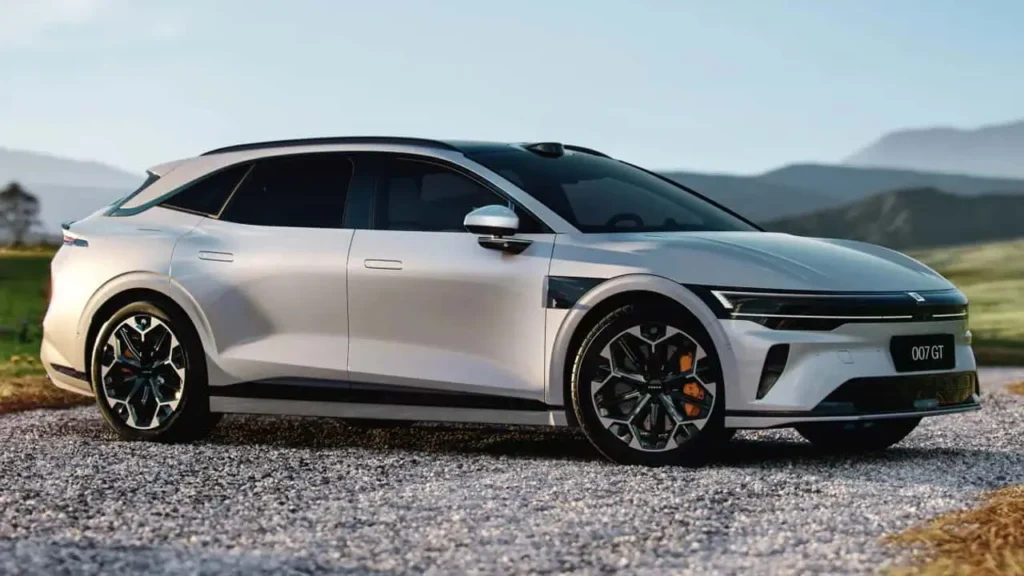
2. Zeekr 7 GT Review: Positioning and Audience (including: Zeekr 007 GT review)
The Zeekr 7 GT is strategically positioned as a premium, high-performance electric shooting brake (or liftback wagon), aiming squarely at the discerning EV buyer who demands exceptional speed, range, and advanced technology without sacrificing practicality. It essentially takes the core engineering brilliance of the Zeekr 007 sedan, which earned high praise in its initial Zeekr 007 GT review for its performance and tech, and re-packages it into a more versatile, yet equally sleek, form factor. This positioning is critical: it offers a compelling alternative to premium electric sedans and compact SUVs, catering to those who desire the dynamic driving characteristics of a car with the cargo utility of a wagon.
The key versions available showcase this dual focus on efficiency and outright performance. The Long Range RWD variant, with its large 100 kWh battery, targets the long-distance commuter who prioritises maximum range. Conversely, the Dual Motor AWD version is for the enthusiast who values blistering acceleration (0–100 km/h in under 3 seconds) and all-weather traction. The target audience includes tech-savvy professionals, young families needing space without compromising style, and early adopters looking for the fastest-charging EV platform available today.
Zeekr’s strategy for the European Union is one of aggressive quality and technology-led market penetration. Backed by Geely, the brand leverages established supply chains and engineering prowess (shared with Volvo, Polestar, and Lotus) but operates with the agility of a new, digitally-native company. This allows them to bring 800V architecture and advanced battery technology to market faster and at competitive price points. The goal is not just to sell cars, but to establish Zeekr as a credible, premium electric alternative to the established German and American brands.
Shopping for a Chinese laptop that actually delivers? Jump to https://bestchinagadget.com/ for clean reviews, real benchmarks, and smart buying guides on Huawei, HONOR, Lenovo, Chuwi, and more. Compare CPUs, batteries, and screens, find accessories, and catch honest pros/cons before you buy. Fast, practical, no fluff—bookmark it for future laptop wins.
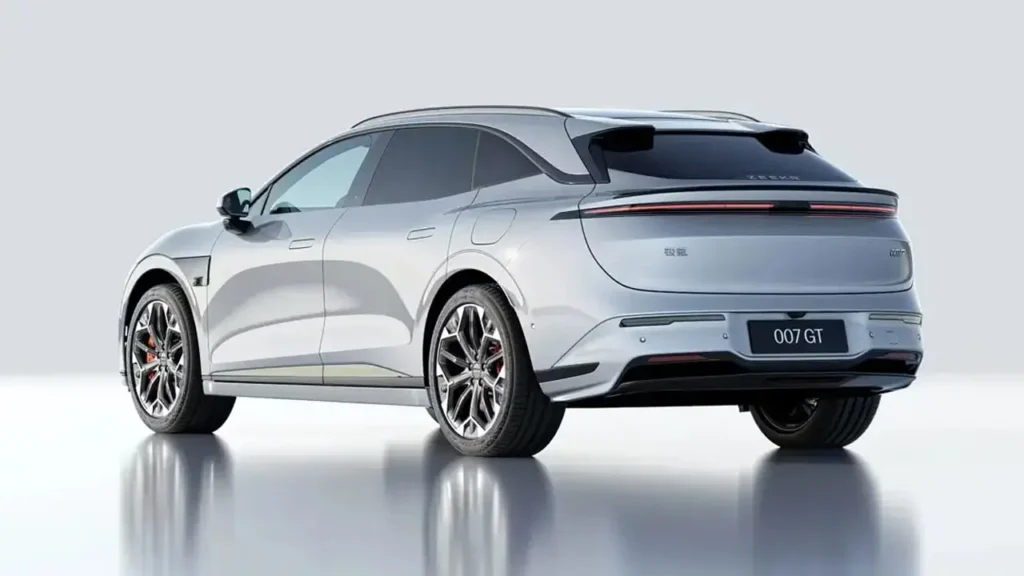
3. Zeekr 7 GT Review: Design and Aerodynamics (including: Zeekr 7 GT aerodynamics)
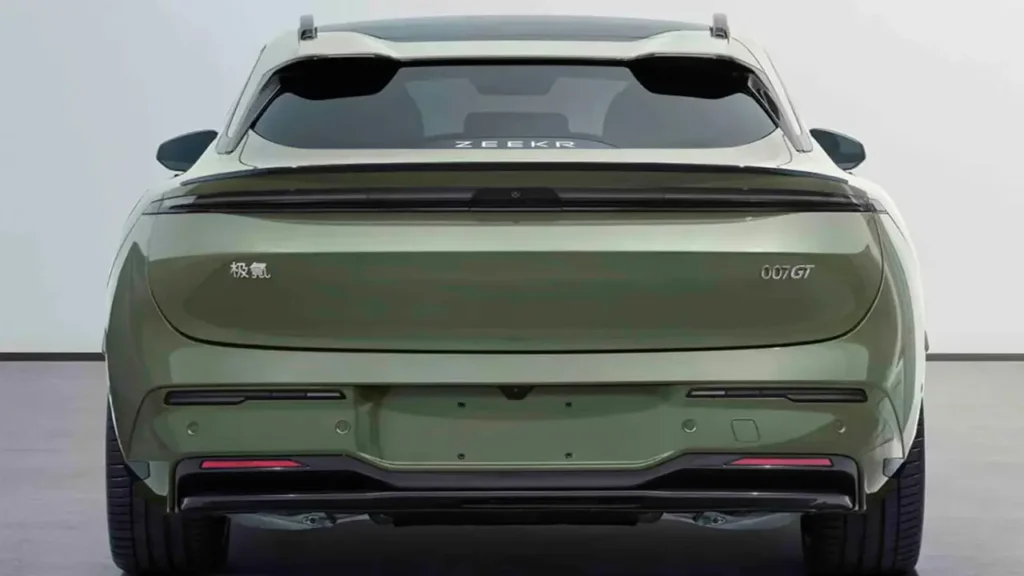
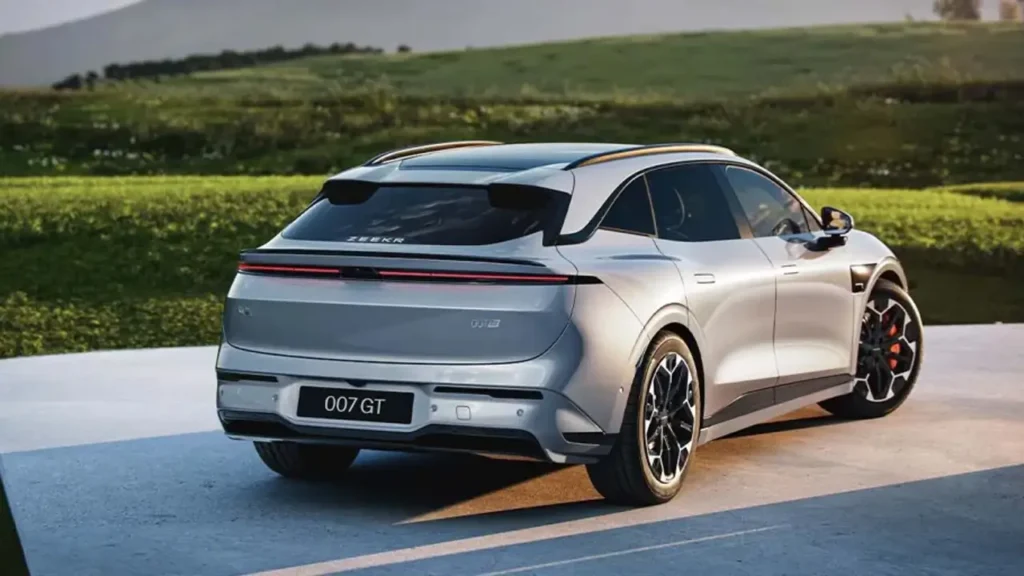
The design of the Zeekr 7 GT is a masterclass in combining aesthetic appeal with functional efficiency, a key factor in its impressive range figures. Its form factor is officially a shooting brake, offering a low-slung, coupé-like roofline that tapers gracefully to a large rear liftgate. The design adheres to Zeekr’s “Hidden Energy” philosophy, characterised by clean, smooth surfacing and minimal, purposeful lines. The front end is dominated by a distinctive ‘Smart Curtain’ LED light system, which seamlessly integrates into the bodywork when not active.
Crucially, the Zeekr 7 GT aerodynamics are truly class-leading. The car achieves an exceptionally low drag coefficient ($C_d$) of approximately 0.198, placing it among the most aerodynamically efficient vehicles in the world, rivaling bespoke models like the Lucid Air. This figure is achieved through meticulous engineering, including frameless doors, retractable door handles, a full underbody panelling, and an active three-layer aerodynamic kit. This kit includes a grille that can open and close to manage airflow and an active rear spoiler that deploys at speed to improve downforce and stability. The low $C_d$ is instrumental in extending the vehicle’s real-world range, especially at higher highway speeds.
Materials & Body Rigidity
The chassis is based on Geely’s Sustainable Experience Architecture (SEA), a dedicated 800V electric platform. The body structure is a high-strength steel-aluminum hybrid, resulting in exceptional torsional stiffness—reportedly up to $43,500 \text{ Nm/deg}$. This high rigidity is fundamental to the car’s dynamic handling, passenger safety, and noise/vibration isolation. The materials used inside, including optional Nappa leather and Alcantara, further cement its premium positioning.
| Aerodynamics & Dimensions | Specification |
|---|---|
| Body Style | 5-door Shooting Brake / Liftback |
| Drag Coefficient (Cd) | ≈0.198 |
| Length | 4864 mm |
| Width | 1900 mm |
| Height | 1445 mm |
| Wheelbase | 2925 mm |

4. Zeekr 7 GT Review: Charging and 800V Architecture (including: Zeekr 7 GT charging speed 800V)
The Zeekr 7 GT’s most revolutionary feature is its full-stack 800V electrical architecture, which fundamentally changes the ownership experience, particularly regarding long-distance travel. The 800V system allows for a dramatic reduction in charging times by enabling significantly higher charging power than the typical 400V setups used by many competitors.
The core technology is the proprietary “Golden Battery,” an in-house developed LFP (Lithium Iron Phosphate) pack for the standard range version, or an NMC (Nickel Manganese Cobalt) pack for the long-range model. The LFP battery, in particular, has been engineered for extreme charging rates, with the company claiming a world-leading $5.5C$ charging capability (where $C$ is the battery capacity in Amp-hours). The advertised Zeekr 7 GT charging speed 800V capability is simply staggering: a 10% to 80% state of charge (SoC) refill in just 10.5 minutes. This figure is achieved under optimal conditions using an ultra-fast DC charger capable of delivering over $400 \text{ kW}$ of power.
This rapid charging is facilitated by sophisticated thermal pre-conditioning of the battery, which can be automatically activated en route to a charger or manually via the infotainment system. Maintaining the optimal battery temperature is essential to unlock and sustain peak charging power, protecting the battery’s longevity while maximising speed. For the European market, where most public chargers do not yet offer $400 \text{ kW}$ peak power, the benefit remains substantial; the 7 GT can hold a high charging curve for longer at the typically available $150 \text{ kW}$ to $350 \text{ kW}$ stations, significantly outperforming 400V rivals.
Real-World Charging Curve
While the official $10.5 \text{ minute}$ figure represents a near-ideal profile, real-world testing will focus on how well the 7 GT sustains a high charging rate across the critical 20% to 70% range. Even if the peak power is only available briefly, the overall charging time should remain sector-leading, effectively making a 20-minute coffee break a full charge stop. This shift from 30-45 minute stops to genuinely sub-15 minute stops is the game-changer the 800V architecture promises.
5. Zeekr 7 GT Review: Range and Efficiency (including: Zeekr 7 GT WLTP range)
Range and efficiency are paramount concerns for European EV buyers, and the Zeekr 7 GT leverages its large battery options and superior aerodynamics to deliver compelling figures. The Chinese CLTC (China Light-Duty Vehicle Test Cycle) figures are often ambitious, listing up to $825 \text{ km}$ for the 100 kWh long-range variant. However, for Europe, the more realistic Zeekr 7 GT WLTP range is what truly matters.
Based on projections and comparison with other SEA platform models, the 7 GT Long Range (100 kWh NMC) is expected to achieve an official WLTP rating of approximately $600 \text{ km}$ to $630 \text{ km}$. The standard range model (75 kWh LFP) is likely to post a WLTP figure closer to $500 \text{ km}$. These are premium-class figures that offer true long-distance capability.
The car’s excellent aerodynamic performance ($C_d \approx 0.198$) is the primary driver of its impressive efficiency. Drag is the largest energy consumer at highway speeds, so the low $C_d$ translates directly into lower energy consumption, often expressed in $\text{kW}\cdot \text{h}/100 \text{ km}$. We expect the combined WLTP efficiency to be in the region of $17.0 \text{ to } 18.5 \text{ kW}\cdot \text{h}/100 \text{ km}$ for the long-range model. Real-world range is, of course, heavily influenced by driving style, speed, and environmental factors. Cold climate conditions and high-speed motorway cruising can significantly reduce the range, sometimes by 20% to 30%. However, the car’s advanced heat management system for the battery helps mitigate the cold-weather penalty.
Highway vs City Consumption
In city driving, where regenerative braking and lower speeds are common, the efficiency can easily dip below $15.0 \text{ kW}\cdot \text{h}/100 \text{ km}$, resulting in a city-biased real-world range that could exceed $650 \text{ km}$. Conversely, sustained Autobahn driving at $130 \text{ km/h}$ or higher will push consumption above $20.0 \text{ kW}\cdot \text{h}/100 \text{ km}$, bringing the effective range for a single highway stint closer to $450 \text{ km}$. The 7 GT’s efficiency is competitive not just due to battery size, but due to the platform’s overall engineering focus on energy conservation.
6. Zeekr 7 GT Review: Price and Equipment in Europe (including: Zeekr 7 GT price Europe)
The critical factor in the 7 GT’s success in the competitive European market will be its pricing strategy. While Chinese domestic prices are very aggressive, the Zeekr 7 GT price Europe will necessarily be higher due to import duties, VAT, shipping, and the cost of establishing dealer and service networks. Based on the pricing of the Zeekr 001 and Zeekr X in initial European markets, the starting price for the 7 GT is anticipated to be extremely competitive against premium rivals.
Industry estimates place the starting price for the entry-level RWD variant with the 75 kWh battery around €53,000 to €57,000. The top-tier Dual Motor AWD 100 kWh version, which includes all performance and luxury options, is expected to start in the €65,000 to €70,000 range. This pricing is designed to undercut premium competitors while offering superior standard technology, particularly the 800V architecture and the comprehensive ADAS suite.
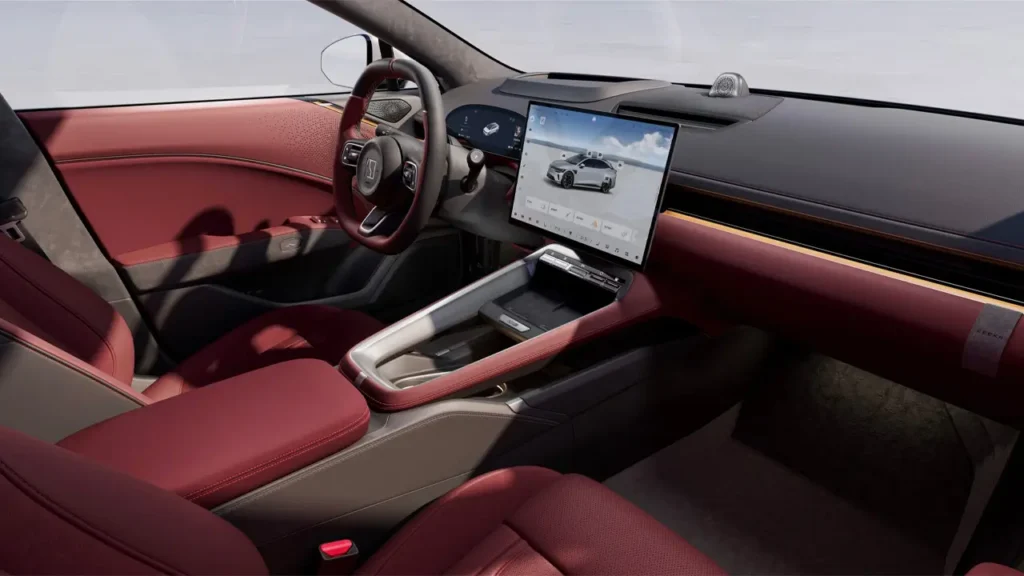
Standard equipment is expected to be extensive, including the 15.05-inch 2.5K OLED infotainment screen, a massive AR-HUD, a premium sound system, and a suite of advanced driver assistance systems (ADAS) powered by Nvidia Orin chips and Lidar. Options will likely focus on premium interior materials (Nappa leather, carbon fibre trims), dynamic chassis control (such as air suspension/CDC dampers), and larger wheel/brake packages. Zeekr is also expected to offer a comprehensive warranty package, typically including an 8-year/200,000 km warranty on the high-voltage battery. The initial availability will be focused on Zeekr’s launch markets—Sweden, the Netherlands, and Norway—before a broader rollout to Germany and other major European territories.
Europe Pricing & Trims
| Trim | Powertrain | Battery (kWh) | Key Options (Expected Standard) | Price (EUR Estimate) |
|---|---|---|---|---|
| RWD Long Range | Single Motor (310 kW) | 100 (NMC) | 15.05″ OLED Screen, AR-HUD, ADAS (Lidar Ready) | ≈ €57,000 |
| AWD Performance | Dual Motor (475 kW) | 100 (NMC) | Air Suspension, Performance Brakes, Premium Interior | ≈ €69,000 |
7. Zeekr 7 GT Review: Comparison with Tesla (including: Zeekr 7 GT vs Tesla Model 3)
The direct and inevitable rival for the Zeekr 7 GT is the category-defining Tesla Model 3, particularly the Performance and Long Range versions. The Zeekr 7 GT vs Tesla Model 3 comparison is a high-stakes battle between established software dominance and cutting-edge hardware capability.
In terms of Performance and Drive, the top-spec Dual Motor 7 GT is marginally quicker off the line (sub-3.0s 0-100 km/h) than the Model 3 Performance, but the driving feel is distinct. The Zeekr, with its potentially optional air suspension and high body rigidity, is likely to offer a more compliant and luxurious ride, erring toward Gran Turismo comfort, whereas the Model 3 is known for its taut, sporty, and somewhat stiffer setup.
The most significant difference is Charging. The Model 3’s advantage lies in the pervasive and seamless Supercharger network. However, the Zeekr’s 800V architecture delivers a superior charging rate on high-power CCS chargers. The Zeekr’s 10-80% time of $\approx 10.5$ minutes is almost half that of the Model 3, even on a peak V3 Supercharger. While the Model 3 is incredibly efficient, the 7 GT’s longer WLTP range (due to the larger 100 kWh battery option) may offer a slight edge in total distance between stops.
In Software and Assistants, Tesla still sets the benchmark for its integrated, minimalist infotainment and its Autopilot/FSD suite. The Zeekr counters with the advanced Qualcomm 8295 chip-powered infotainment, a larger AR-HUD, and a more comprehensive sensor suite (including Lidar), which promises highly capable, L3-ready ADAS functionality, potentially offering a more reliable and feature-rich assisted driving experience outside of North America.
| Spec | Zeekr 7 GT AWD (100 kWh) | Tesla Model 3 Performance |
|---|---|---|
| Powertrain | Dual Motor (475 kW) | Dual Motor (Est. 375 kW) |
| 0–100 km/h | 2.95 s | ≈3.3 s |
| Range (WLTP) | ≈600 km+ | ≈530 km (Performance) |
| Charging (10–80%) | ≈10.5 mins (on 400 kW+) | ≈20 mins (on V3 Supercharger) |
| Infotainment | 15.05″ OLED + 35.5″ AR-HUD, 8295 Chip | 15″ Central Screen |
| Warranty (Battery) | 8 yrs/200,000 km (Expected) | 8 yrs/192,000 km |
8. Zeekr 7 GT Review: Comparison with Polestar (including: Zeekr 7 GT vs Polestar 2)
Another key European rival is the Polestar 2, a car that shares its corporate parentage with Zeekr (Geely Group) but represents a more established, Scandinavian-styled approach. The Zeekr 7 GT vs Polestar 2 comparison highlights the rapid evolution of EV technology within the same corporate family.
The 7 GT is significantly larger, lower, and more aerodynamic than the Polestar 2, which has a more rugged, crossover-like stance. This size difference translates directly into interior and luggage space—the 7 GT’s shooting brake design offers superior practicality.
Regarding Suspension and Comfort, the Polestar 2 is known for its firm, disciplined handling, especially in versions with the optional Öhlins dampers. The Zeekr 7 GT, particularly with the available dual-chamber air suspension and CDC electromagnetic dampers, is engineered to offer a more luxurious and adaptable ride, capable of balancing sportiness with superior long-distance comfort, appealing to a broader premium audience.
In terms of Efficiency and Powertrain, the 7 GT’s 800V architecture is a generation ahead of the Polestar 2’s 400V system, leading to its much faster charging speed and superior WLTP range figures thanks to its larger battery options. The Polestar 2, while efficient, cannot compete with the Zeekr’s ultra-fast charging capability or its potential long-range figures.
The Ecosystem is where Polestar’s integration of Google’s Android Automotive OS offers a user-friendly and familiar experience. Zeekr’s in-house operating system is also highly capable, leveraging high-end hardware (Qualcomm 8295) for a feature-rich, high-resolution experience, though its long-term third-party app ecosystem may take time to mature in Europe.
Ownership Costs & Servicing
As a newer brand, Zeekr’s servicing network is still developing, primarily relying on partnerships (often with Volvo/Geely service centres). The Polestar 2 benefits from a more established network. However, the 7 GT’s superior energy efficiency and faster charging profile could translate into marginally lower running costs, offsetting any initial service network anxiety. The extended warranties offered by both brands are competitive.

9. Zeekr 7 GT Review: Body Styles and Practicality (including: Zeekr 7 GT shooting brake)
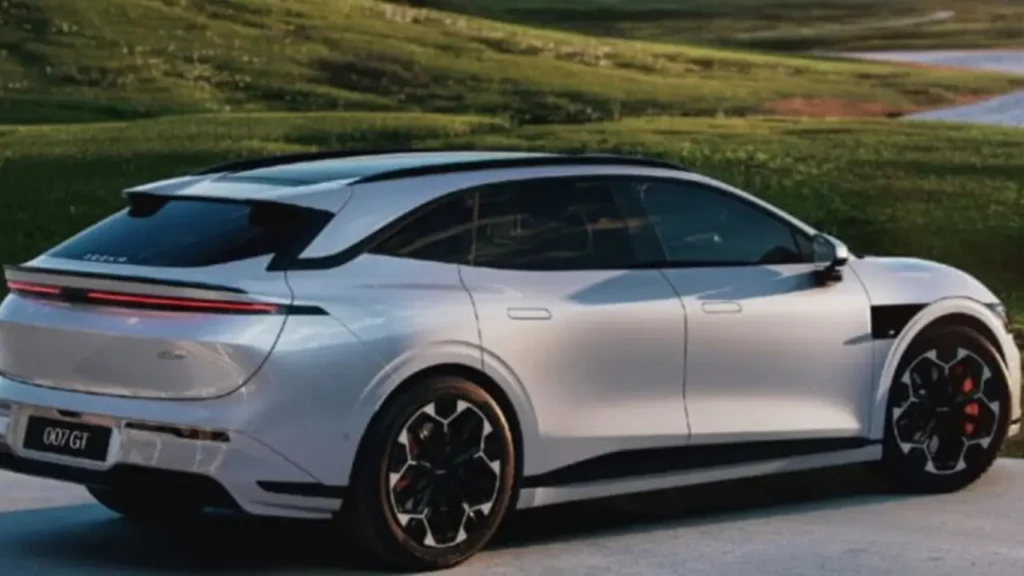
The choice of a shooting brake body for the Zeekr 7 GT is arguably one of its most compelling selling points in the European market, contrasting it with its sedan sibling (Zeekr 007). The Zeekr 7 GT shooting brake design marries the aesthetic appeal and dynamic performance of a low-slung car with the crucial practicality of a wagon.
The primary benefit is in cargo capacity and accessibility. The 7 GT offers a quoted trunk capacity of $645 \text{ litres}$ with the rear seats up, which is a substantial figure for the segment and significantly more practical than any traditional sedan. With the rear seats folded down, the space expands to a cavernous $1737 \text{ litres}$, rivaling many mid-sized SUVs. The large, electrically operated rear liftgate and low loading lip make loading bulky items, such as prams or large suitcases, notably easier.
In the Rear Row, the shooting brake profile, despite its sleek roofline, maintains excellent rear headroom. The $2925 \text{ mm}$ wheelbase ensures ample legroom for rear passengers, making the 7 GT a true long-distance cruiser for four adults. Visibility is generally good for a modern EV, though the sloping rear window and thick D-pillars typical of the shooting brake style mean a reliance on the car’s 360-degree camera and ADAS for parking and manoeuvres. Noise insulation is a hallmark of the premium SEA platform, with excellent suppression of road noise, though wind noise around the frameless doors may become noticeable at very high speeds, as is common with this door style.
Daily Usability (Parking, ADAS, OTA)
For daily usability, the 7 GT is packed with features designed to simplify the driving experience. Its advanced ADAS suite, which includes Lidar, enables advanced parking assistants that can take the stress out of parallel and perpendicular parking. The suite is also geared for high-level assisted highway driving (NZP—Navigation Zeekr Pilot). Over-The-Air (OTA) updates are a core feature, ensuring the infotainment system, ADAS functionality, and power management systems are continually improved, protecting the vehicle’s long-term technology relevance. Despite its size, the four-wheel steering option (on performance trims) significantly reduces the turning circle, making city parking surprisingly manageable.
10. Conclusion and Verdict (including: Zeekr 007 sedan review)
The Zeekr 7 GT enters the European market not just as a competitor, but as a technological disruptor. It takes the established strengths praised in the Zeekr 007 sedan review—namely, its blistering performance, sophisticated 800V architecture, and high-tech interior—and enhances them with the crucial practicality of a shooting brake body style.
The main advantages of the Zeekr 7 GT are its revolutionary charging speed ($\approx 10.5 \text{ mins}$ 10-80%), which is a true game-changer for long-distance travel; its class-leading aerodynamics ($C_d \approx 0.198$), which underpins its excellent efficiency and range; and its compelling value proposition, offering a premium, high-performance package with advanced ADAS (Lidar, 8295 chip) at a price that aggressively undercuts similarly sized and specced European rivals.
The main disadvantages are the current developing service and dealer network in Europe, which may cause initial anxiety for buyers outside the launch markets, and the fact that its ultra-fast charging advantage requires the availability of $400 \text{ kW} +$ chargers, which are still rare across the continent. Additionally, some buyers may prefer the established, proven software ecosystem of a Tesla or Polestar.
Verdict: The Zeekr 7 GT is an exceptional choice for the tech-forward buyer who values performance, efficiency, and cutting-edge charging technology above all else. Buy now if you are an early adopter who prioritises the 800V charging speed and is willing to manage a potentially smaller dealer network. Wait for a refresh if you are a conservative buyer who prefers to wait until the European dealer and service networks are fully established and the car has received its first major OTA software maturity updates.
Want to read more in-depth analyses, news, and reviews on the latest models from China and Asia?
Visit us for more materials on Chinese automotive trends: www.autochina.blog