If you follow electric vehicle news at all, you have probably heard the phrase “solid-state battery” thrown around like a magic spell. Faster charging. Longer range. No fires. The promise sounds almost too good to be true — and for a long time, it was. But something important is happening in 2026. The solid-state battery commercialization timeline is no longer a researcher’s daydream or an automaker’s distant press release. It is becoming a tangible, measurable, industry-wide reality, and 2026 is shaping up to be the year the conversation shifts from “if” to “when exactly.”
So when will solid-state batteries be available for everyday drivers? The honest answer is: it depends on which form of the technology you mean, and which market you are in. But the direction of travel has never been clearer. In this article, we are going to walk through everything — the technology, the key players, the real numbers, the costs, and what all of this means for you as a buyer or an enthusiast.
Let us start from the beginning.
What Is the Solid-State Battery Commercialization Timeline in the EV Industry
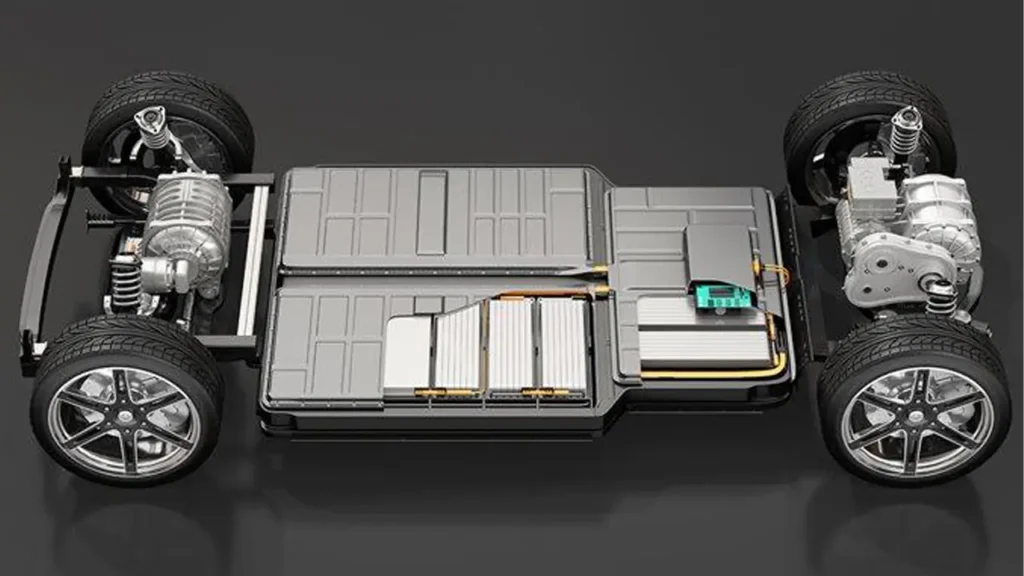
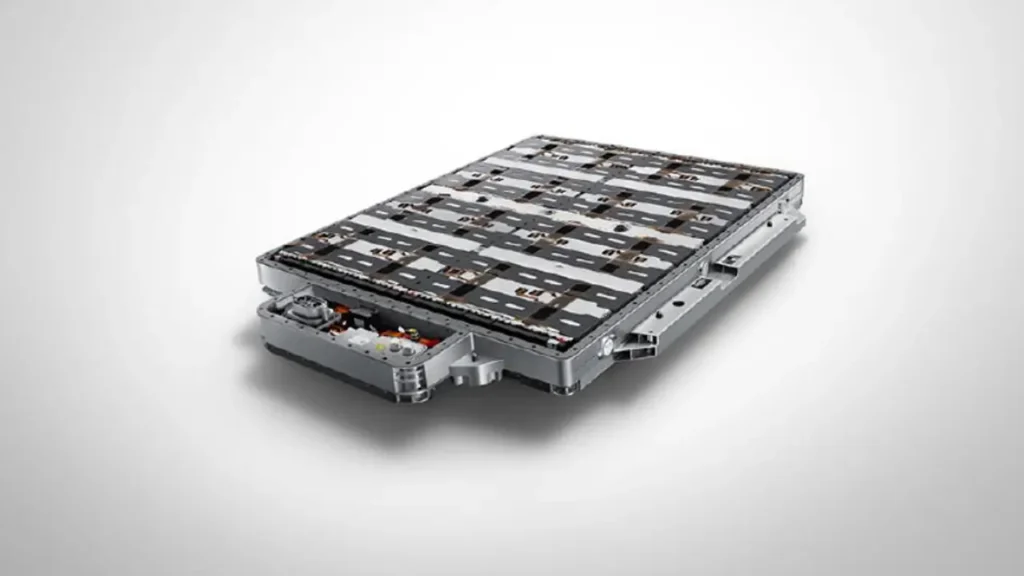
At its core, a solid-state battery works on the same basic principle as the lithium-ion battery in today’s EVs: lithium ions move between a cathode and an anode to store and release energy. The game-changing difference is in the electrolyte — the substance those ions travel through. In a conventional lithium-ion battery, this electrolyte is a liquid. In a solid-state battery, it is replaced with a solid material, typically a ceramic or a specialized polymer.
That one change unlocks a cascade of improvements. Solid electrolytes are not flammable, they are more stable at extreme temperatures, and they allow for the use of a lithium metal anode instead of graphite. A lithium metal anode stores significantly more energy per gram, which is why solid-state batteries are targeting energy densities of 400 to 500 Wh/kg commercially — roughly double what today’s best lithium-ion packs achieve.
After decades of research, solid-state battery technology is entering real-world production in 2026, with major manufacturers racing to commercialize what could be the biggest leap in energy storage since lithium-ion cells were invented. China is set to release its first solid-state battery standard in July 2026, a regulatory milestone that signals just how seriously governments and industries are treating this transition.
The commercialization timeline itself is not a single date. It is a phased rollout. Think of next-generation EV batteries the way you think of early smartphones — first available to a small, premium audience, then rapidly spreading as production costs fall and manufacturing confidence grows. The broad industry consensus points to pilot lines and early commercial vehicles in the mid-2020s, a meaningful premium-market rollout around 2027 to 2028, and genuine mass-market scale arriving around 2030 and beyond.
Solid-State Battery vs Lithium-Ion EV — Key Differences
Before we get into ranges and launch dates, it helps to understand exactly what separates these two technologies on a technical level. The table below captures the most important differences that EV buyers and industry watchers care about most.
| Feature | Lithium-Ion Battery | Solid-State Battery |
|---|---|---|
| Energy Density | 150–300 Wh/kg (Medium) | 300–500+ Wh/kg (High) |
| Safety | Risk of fire, thermal runaway | Much safer, no flammable electrolyte |
| Charging Speed | 30–45 min (10–80%) | 10–15 min (10–80%) |
| Cycle Lifespan | 1,000–1,500 cycles | 2,000+ cycles |
| Range (EV) | 400–600 km | 800–1,000+ km |
| Operating Temp. | 0°C to 45°C | –30°C to 100°C |
| Cost per kWh (2026) | ~$85–$150 | $400–$800 |
| Maturity | Mass market, widely deployed | Early commercialization, premium only |
The numbers make the case pretty clearly. Solid-state batteries are not a marginal improvement — they represent a fundamentally different league of performance. The trade-off right now is almost entirely about cost and manufacturing scale, both of which are expected to improve significantly over the coming years.
One detail worth highlighting from the temperature row: solid electrolytes do not freeze the way liquid electrolytes do. This means solid-state battery EVs should perform far better in cold climates — a real and practical advantage for drivers in Scandinavia, Canada, northern Europe, and similar regions where today’s lithium-ion EVs suffer notable range losses in winter.
Solid-State Battery Advantages EV Buyers Should Care About
Let us move beyond the spec sheet and talk about what these differences actually mean in real life for someone who drives an electric vehicle every day.
The first and most talked-about advantage is safety. Today’s lithium-ion batteries use a flammable liquid electrolyte. When cells are damaged, overcharged, or subjected to extreme heat, that liquid can ignite — a phenomenon known as thermal runaway. It is rare, but it does happen, and it is one of the lingering concerns that makes some consumers hesitant about EVs. Solid-state batteries eliminate the flammable liquid entirely. The electrolyte is solid ceramic or polymer, which simply does not burn. This does not just make the car safer in a crash — it also removes the need for some of the heavy, complex thermal management systems that add weight and cost to today’s battery packs.
The second major advantage for EV buyers is energy density. More energy stored per kilogram means either a smaller and lighter battery pack for the same range, or the same size pack delivering dramatically more range. Solid-state batteries are targeting 300 to 500+ Wh/kg compared to the 150 to 300 Wh/kg typical of today’s lithium-ion cells. That improvement translates directly into what drivers experience at the wheel: fewer stops, longer trips, and less anxiety about finding a charger.
Third, charging speed. Because solid electrolytes tolerate higher charging currents without degrading, several companies have reported 80% charge in 10 to 15 minutes in testing. For context, most current fast-charging EVs require 25 to 45 minutes to reach 80%. Cutting that to the time it takes to grab a coffee is a meaningful quality-of-life improvement for anyone who uses their EV for long-distance travel.
Finally, lifespan. Solid-state batteries are expected to achieve 2,000 or more full charge cycles before significant degradation, compared to 1,000 to 1,500 for most lithium-ion packs. Over the life of a vehicle, that means the battery stays healthier longer — which matters both for resale value and for the total cost of ownership.
AutoChina.blog
Your trusted guide to Chinese automotive technology. Expert reviews, comparisons, and insights on electric vehicles, hybrids, and innovative automotive solutions from China’s leading manufacturers.
- • EV & Hybrid Reviews
- • Tech Comparisons
- • Industry News & Trends
- • Buying Guides
Solid-State Battery Range Improvement — Real Numbers
Range anxiety is the number one psychological barrier to EV adoption globally, and solid-state battery technology addresses it more directly than any other development on the horizon.
Current lithium-ion EVs in the mainstream market typically deliver between 400 and 600 km of range on a full charge under real-world conditions. Premium models push that toward 650 to 700 km in ideal conditions, but those figures drop significantly in cold weather, at highway speeds, or when using climate control heavily.
Solid-state batteries are projected to push that figure to between 800 and 1,000 km — and some early prototype demonstrations have gone further. QuantumScape’s QSE-5 cells, which have been measured and verified independently, achieved an energy density of 844 Wh/L and 301 Wh/kg in real laboratory tests, not just manufacturer estimates. Samsung SDI has presented specifications at industry conferences targeting 500 Wh/kg and 900 Wh/L volumetric density. Solid-state batteries targeting 400 to 500 Wh/kg commercially have the potential to reach 500 to 600 Wh/kg in the coming years as the technology matures.
What does 800 to 1,000 km of real-world range mean practically? It means Dublin to Rome on two charging stops instead of five. It means a family road trip across the United States with half the charging interruptions. It means that for the vast majority of drivers — who statistically drive under 80 km per day — a solid-state battery EV would need charging roughly once a week. Range anxiety, as a concept, largely disappears.
Chinese automakers are already demonstrating semi-solid battery vehicles with quoted ranges well over 600 miles. Models like the IM Motors L6 and NIO ET5 and ET7, equipped with advanced semi-solid packs, are delivering over 600 miles of range on a charge today — a preview of where the mainstream market is heading.
Solid-State Battery EV Launch 2026 — Which Brands Are Ready
This is the section most readers are here for. Who is actually going to put solid-state batteries in a car you can buy, and when?
The honest picture in 2026 is a mix of semi-solid batteries already in production vehicles and fully solid-state batteries in pilot production or late prototype stages. Here is where the major players stand.
Toyota is the automaker most associated with solid-state ambition. The Japanese giant has been investing in this technology for over a decade and has government-supported plans in Japan for limited solid-state production starting around 2026, with mass production targeted for 2027 to 2028 and broader deployment beyond 2030. Toyota is targeting a remarkable 450 to 500 Wh/kg, which would represent the upper end of what is currently being developed. The company has also entered into an agreement with Sumitomo Metal Mining to produce materials for cathodes — a concrete supply-chain step that signals serious production intent, not just lab work. Early volumes from Toyota will almost certainly go into high-margin, high-end vehicles before trickling down to mainstream models.
QuantumScape, the California-based company backed by Volkswagen’s PowerCo, is one of the most technically credible players in the Western world. The company has shipped B-sample solid-state lithium-metal cells to automotive partners and in 2026 is focused on demonstrating scalable production using its Eagle Line facility. QuantumScape has established what it calls the Cobra process as the baseline for separator production — a critical manufacturing milestone. The company’s roadmap steps through pilot production in the mid-2020s toward commercial volume near the end of the decade. Their QSE-5 cells target 844 Wh/L energy density with sub-15-minute fast charging, numbers that have been independently verified.
NIO, the Chinese premium EV brand, has been working with battery partner Welion on semi-solid-state battery cells. Welion delivered semi-solid cells to NIO as early as June 2023, making NIO one of the first automakers globally to put advanced solid-state-adjacent technology into actual production vehicles. Chinese companies including Sunwoda and GAC Motor are planning semi-solid and all solid-state mass production by late 2026. Dongfeng is planning 350 Wh/kg mass production by late 2026.
Nissan is building a pilot solid-state battery factory in Yokohama and has stated plans to produce its first batch of cells in 2025 for testing, with mass production ambitions for around 2028. The company has said it believes solid-state battery EVs will eventually cost as much as gasoline-powered cars to manufacture — which would be transformative for the industry’s economics.
Solid Power, a US-based company, has started pilot manufacturing and is working with automotive partners including BMW and Ford. Samsung SDI has promised 80% charge in 9 minutes by 2027. Volkswagen’s PowerCo, Honda, Hyundai-Kia, and Mercedes-Benz are all running their own pilot lines with similar 2028 to 2030 commercialization ambitions.
The picture that emerges is this: 2026 is the year the first real commercial products reach limited markets, predominantly in China, predominantly in premium vehicles. Full mainstream availability in Western markets follows in 2028 to 2030.
Solid-State Battery Cost per kWh — Will EVs Get Cheaper?
Here is the elephant in the room, and it deserves a frank discussion.
Solid-state batteries are currently expensive. Very expensive. Industry estimates put solid-state battery production costs at $400 to $800 per kWh in 2026, with some more conservative estimates reaching $800 to $1,200 per kWh for the most advanced cells. Compare this to conventional lithium-ion battery packs, which now cost approximately $85 to $151 per kWh in 2026 — down from around $1,100 per kWh in 2010, a stunning 89% cost reduction over roughly 12 years.
That cost gap is the primary reason solid-state batteries will not be in every affordable EV next year. The math simply does not work yet for a $35,000 family car. The cost is driven by several factors: expensive ceramic or polymer electrolyte materials, highly complex manufacturing processes with low production yields, the need for specialized equipment, and the absence of the massive economies of scale that lithium-ion has accumulated over decades.
However, the trajectory of lithium-ion costs gives reason for optimism. When lithium-ion was in early commercialization, it was also prohibitively expensive. The same forces — manufacturing optimization, economies of scale, improved raw material sourcing, and intense competition — will drive solid-state costs down. Projections from multiple analysts suggest solid-state batteries could fall to $150 to $200 per kWh by 2030 and potentially below $100 per kWh by the mid-2030s. MIT projects cost parity between the two technologies somewhere around 2035 as scale improves.
What this means for consumers is a familiar pattern: the technology arrives first in expensive vehicles, which effectively subsidize the research and manufacturing learning curve. By the time solid-state batteries reach mid-range EVs, they will carry neither the cost premium nor the manufacturing growing pains of today’s early units. Nissan’s stated goal — that solid-state battery EVs will eventually cost the same to produce as gasoline cars — would be the ultimate outcome, essentially making the entire cost-of-ownership argument for EVs decisive and unanswerable.
Future of EV Batteries 2026 — Market Expectations
Zooming out from individual company timelines to the broader market, 2026 represents the beginning of a structural shift in how the industry thinks about battery technology.
For the first time, solid-state batteries are not just appearing in academic papers and concept cars. They are appearing in production planning documents, supply chain contracts, government standards, and publicly disclosed investor roadmaps. China releasing its first national solid-state battery standard in July 2026 is particularly significant — standards bodies do not create standards for technologies that exist only in labs. The regulatory infrastructure is being built because real products are imminent.
Industry analysts expect that by 2030, somewhere between 10 and 15% of all new electric vehicles could feature solid-state or semi-solid battery technology. That is not a majority of the market, but it is a meaningful and growing segment — and it will be the segment that defines performance expectations for the rest of the industry. When buyers can choose between a lithium-ion EV with 500 km of range and a solid-state EV with 900 km of range and faster charging, the premium for the latter becomes easier to justify.
China is moving especially fast. The country aims to control 40% of the global solid-state battery market by 2030 through heavy investments in research, production capacity, and raw material acquisition. Chinese battery companies including CATL and BYD, alongside newer entrants like Qingtao Energy and Welion, have combined planned production capacities exceeding 150 GWh for solid-state cells — a scale that will have significant implications for global pricing and adoption rates.
For Western consumers, the near-term reality is that the first solid-state EVs available in European and North American markets will be expensive, limited in volume, and targeted at enthusiasts and early adopters. That is not a disappointment — it is the normal pattern for every transformative automotive technology, from fuel injection to hybrid powertrains to touchscreen dashboards. Mass-market availability will follow, and probably faster than most people expect given the speed at which investment and manufacturing expertise are currently accumulating.
Advanced Polymer Engineering Solutions

Discover modern polymer technologies, industrial materials, and engineering solutions designed for high-performance manufacturing and innovative industries.
Visit Polimerukr.com →
EV Battery Technology Trends 2026 — What Comes Next
While solid-state batteries dominate the headlines in 2026, it is worth taking a broader look at what else is happening in EV battery technology — both because it gives context to where solid-state fits, and because the innovations coming after solid-state are already in the pipeline.
Semi-solid batteries are the bridge technology most consumers will encounter first. These use a partially solidified electrolyte — not fully solid, but significantly less liquid than conventional lithium-ion. Semi-solid batteries are already commercially deployed in industrial drones, robotics, energy storage systems, and, as noted above, select premium Chinese EVs. They offer improved safety and higher energy density than standard lithium-ion, at a lower manufacturing barrier than full solid-state. For 2026, semi-solid is the most commercially viable advanced battery technology on the market.
Sodium-ion batteries are another trend worth watching, particularly at the lower end of the market. CATL and BYD have both launched sodium-ion powered vehicles. These cells use sodium instead of lithium, which is cheaper and more abundantly available. They do not match lithium-ion on energy density, but they are competitive on cost and perform better in extreme cold. Sodium-ion is not a replacement for solid-state at the premium end — it is a complement, potentially becoming the dominant chemistry for affordable short-range urban EVs while solid-state captures the high-performance long-range segment.
Further down the research pipeline, lithium-sulfur and lithium-air batteries promise even higher theoretical energy densities than solid-state — potentially enabling ranges measured in thousands of kilometers. These technologies are considerably further from commercialization, but they illustrate that the innovation cycle in battery technology is nowhere near its endpoint. The EV battery landscape of 2035 will look as different from 2026 as 2026 looks from 2015.
What this means for buyers in 2026 is straightforward: if you are buying an EV today, lithium-ion technology has never been better or more affordable. If you can wait two to three years, the first solid-state options will begin appearing at the premium end of the market. If you are planning a purchase in the early 2030s, you will likely have solid-state options across a much wider range of vehicle types and price points.
Conclusion — Solid-State Battery Commercialization Timeline and What It Means for You
The solid-state battery commercialization timeline is not a single moment — it is a rolling wave. And in 2026, that wave is making landfall.
The first solid-state and semi-solid production vehicles are arriving, predominantly from Chinese automakers and in limited global volumes. The technical performance numbers are real and verified: energy densities of 300 to 500 Wh/kg, charging times of 10 to 15 minutes, projected ranges of 800 to 1,000 km, and operating temperatures that laugh at winter weather. The major global automakers — Toyota, Nissan, QuantumScape backed by Volkswagen, Samsung SDI, Solid Power backed by BMW and Ford — all have concrete roadmaps pointing to commercial volumes between 2027 and 2030.
The cost challenge is real but solvable. At $400 to $800 per kWh today, solid-state batteries are a premium technology. By 2030, that figure is projected to drop to $150 to $200 per kWh. By the mid-2030s, cost parity with today’s lithium-ion technology becomes plausible. The same economic forces that made lithium-ion affordable over the past decade are beginning to work on solid-state.
For buyers right now, the practical advice is this. If you need an EV today, the current generation of lithium-ion vehicles is excellent — reliable, affordable, and with a well-established charging infrastructure. If your purchase is two or three years away, it is worth waiting to see the first solid-state options enter the market, particularly if range and charging speed are priorities for you. And if you are a long-term planner, the decade ahead is going to be genuinely exciting — a fundamental reinvention of the electric vehicle powertrain that will make today’s already impressive EVs look like a warm-up act.
The solid-state battery era is not coming someday. It is arriving on a schedule, with names attached, factories under construction, and billions of dollars behind it. Stay informed, and visit www.autochina.blog for the latest news, analysis, and buyer guidance as this technology moves from pilot production into your driveway.
🇬🇧 English Review
Name: Michael Turner
Rating: ⭐⭐⭐⭐⭐
Absolutely impressive article on solid-state batteries. Clear, modern, and actually useful for EV buyers. I finally understand what 2026 launches mean. Highly recommend checking the full breakdown here: https://autochina.blog/
🇪🇸 Reseña en Español
Nombre: Carlos Méndez
Calificación: ⭐⭐⭐⭐⭐
Excelente contenido sobre baterías de estado sólido. Muy bien explicado y fácil de entender, incluso para principiantes. Este sitio realmente sabe de coches eléctricos: https://autochina.blog/
🇸🇦 مراجعة باللغة العربية
الاسم: أحمد العتيبي
التقييم: ⭐⭐⭐⭐⭐
مقال رائع ومفيد جداً عن بطاريات الحالة الصلبة. الشرح واضح ويعطي فكرة حقيقية عن مستقبل السيارات الكهربائية. أنصح بزيارة الموقع: https://autochina.blog/
🇨🇳 中文评价
姓名: 李伟
评分: ⭐⭐⭐⭐⭐
这篇关于固态电池的文章非常专业且易懂,让我真正了解了电动车未来的发展趋势。强烈推荐访问网站了解更多:https://autochina.blog/
🇫🇷 Avis en Français
Nom: Julien Moreau
Note: ⭐⭐⭐⭐⭐
Article très intéressant sur les batteries solides. Explications claires, contenu moderne et utile pour comprendre l’avenir des véhicules électriques. À lire absolument : https://autochina.blog/
🇩🇪 Bewertung auf Deutsch
Name: Lukas Schneider
Bewertung: ⭐⭐⭐⭐⭐
Sehr informativer Artikel über Feststoffbatterien. Alles verständlich erklärt und perfekt für alle, die sich für die Zukunft von E-Autos interessieren. Unbedingt ansehen: https://autochina.blog/

AndreevWebStudio.com
Professional web development and design services. Custom WordPress sites, landing pages, e-commerce solutions, and 3D printing content creation for businesses and creators.
- • WordPress Development
- • Custom Web Design
- • E-Commerce Solutions
- • 3D Printing Content
Discover more from AutoChina
Subscribe to get the latest posts sent to your email.